A Word on Reality
What is it about an image, a narrative or poem, tactile only to the eye and mind, that has the power to move us so? Why do we let artistic contrivances fool us into thinking they represent reality? What about them gives us a spiritual lift when we know they frame, pan, or use sharp focus in soft light for visual effect? How do the contrived words of a writer arouse emotion? I can’t answer these questions, but I want to interrogate a few things to see what’s beneath this lovely flush of waterlilies.
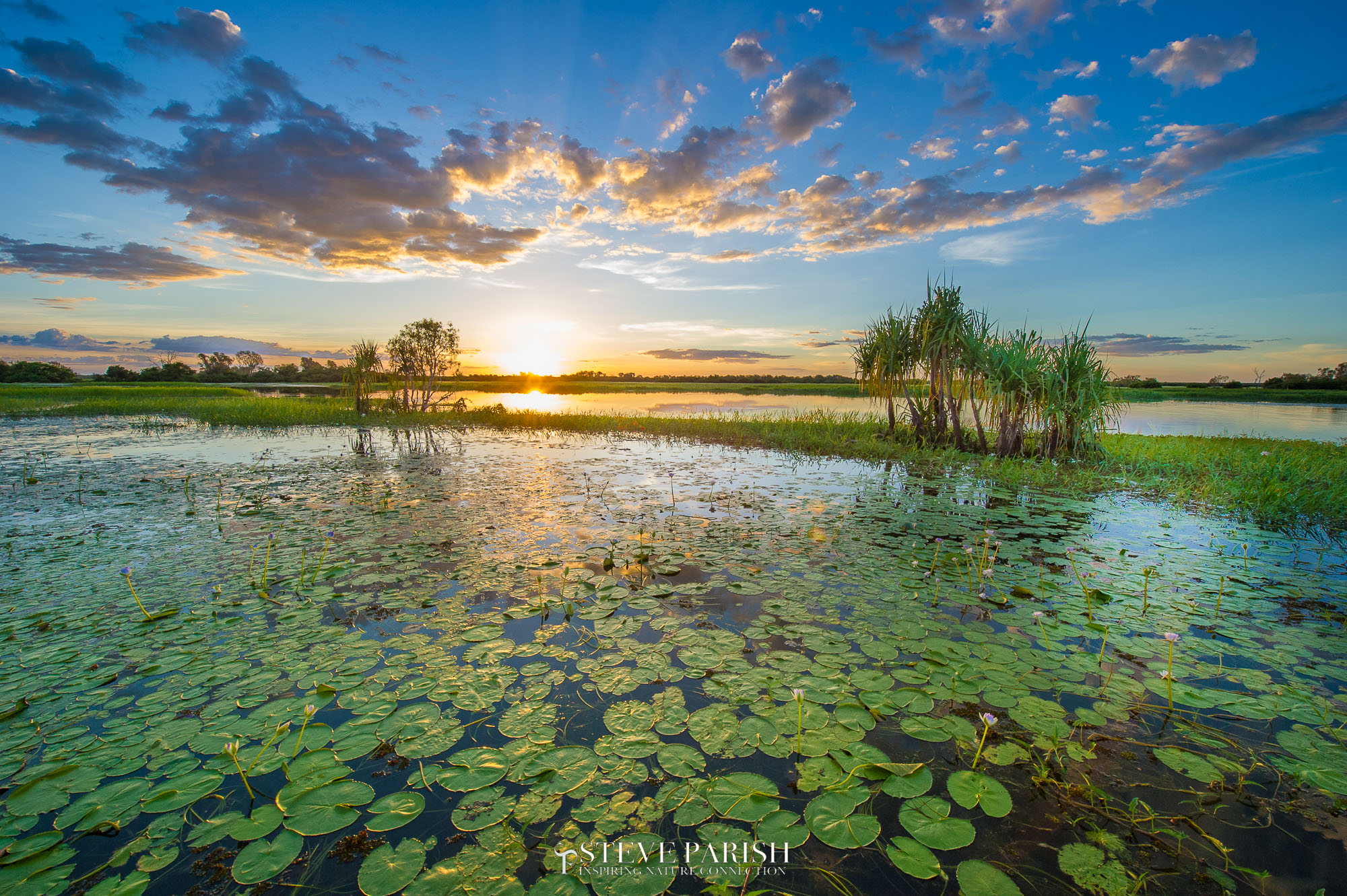
Our response to photos amuses me. ‘That’s the real me’, we say, eliding dimension from a small flat, shiny photograph. How is any representation real? Are words the things they represent? Indeed, isn’t reality a mystery? Is there not magic in this beautiful photo of a waterlily wetland with the sun rising (I think), as though imbued by divine power? Whether divine or not, there is magic in those glorious lilies.
I often wonder at the way the tourism industry has parcelled the planet we live on and the landscape we love into products. We always see the flower, not the watery murk beneath. TV advertising works hard to elicit yearning in potential customers with artificial constructs. For example, the promotional imagery for outback Australia fails to prepare us for the scorching heat, prickly grasses, sticky flies or the fine red dust in our baggage. Sound, smell, taste and touch don’t get a look-in. As anthropologist Michael Taussig tells us —
…the strange thing about this silly if not desperate place between the real and the really made-up is that it appears to be where most of us spend most of our time as epistemically correct, socially created and occasionally creative beings. We dissimulate. We act and have to act as if mischief were not afoot in the kingdom of the real. (Mimesis and Alterity 1992)
Engaging an Audience


Which of these two gorgeous photos by Steve Parish is the real Burrungkuy or Nourlangie Rock? Both are beautiful, and both are of that rock and its surroundings from different vantage points, but Burrungkuy is a sacred place not because it is natural but for the culture it hosts. The numinous quality we experience when visiting such a place comes from both nature and culture, and First Nation sacred sites remove any boundary between the two.
On Representation
Any representation is framed, parcelled, limited, and directed to an idea or a feeling in the producer; it is a contrivance, as anyone who has painted, taken photos, or written creatively knows. I still say I am a ‘realist’ writer, but have you ever read anything real? I once saw two versions of a story in a literary journal, one ‘real’ and the other contrived, a fascinating read. The purportedly real version was overly long on the page, confusing and boring to the point of making little sense. The representation or contrivance, by contrast, evoked a believable reality that was a pleasure to read.
I was a court reporter (stenographer) many years ago, an experience that taught me that people do not speak in ‘lines’ in court as they might in film or a novel where dialogue has multiple purposes such as conveying character, evoking emotion, heightening tension, building suspense, moving the action along or heralding something. On the page, dialogue is not about two people communicating. It is the author communicating with a reader. Writing and photography are similar; both are directed at an unknown gaze.
Nevertheless, when I taught life writing, I got people to write from their guts in exercises that provoked them to pour their reality onto the page. Splat. Like that. It is then easy to get to the kernel of things. The gold is always there, to be polished with the contrivances of the literary craft to give it style and embellish to turn the story around to face a reader, to show, not tell. This work must be done because to say, ‘It broke my heart’ talks about the narrator but has little to no effect on a reader seeking their own experience.
Heart and Mind
Stories and images can linger in one’s mind or heart and assume a flag’s numinous, almost spiritual qualities. A flag is really (sic) a piece of colourful fabric, but people have laid down their lives for one they love while burning one is an expression of rage. Why? Because, flags, like photos and stories or poems, are symbols that condense inchoate meanings in a way that arouses emotion.
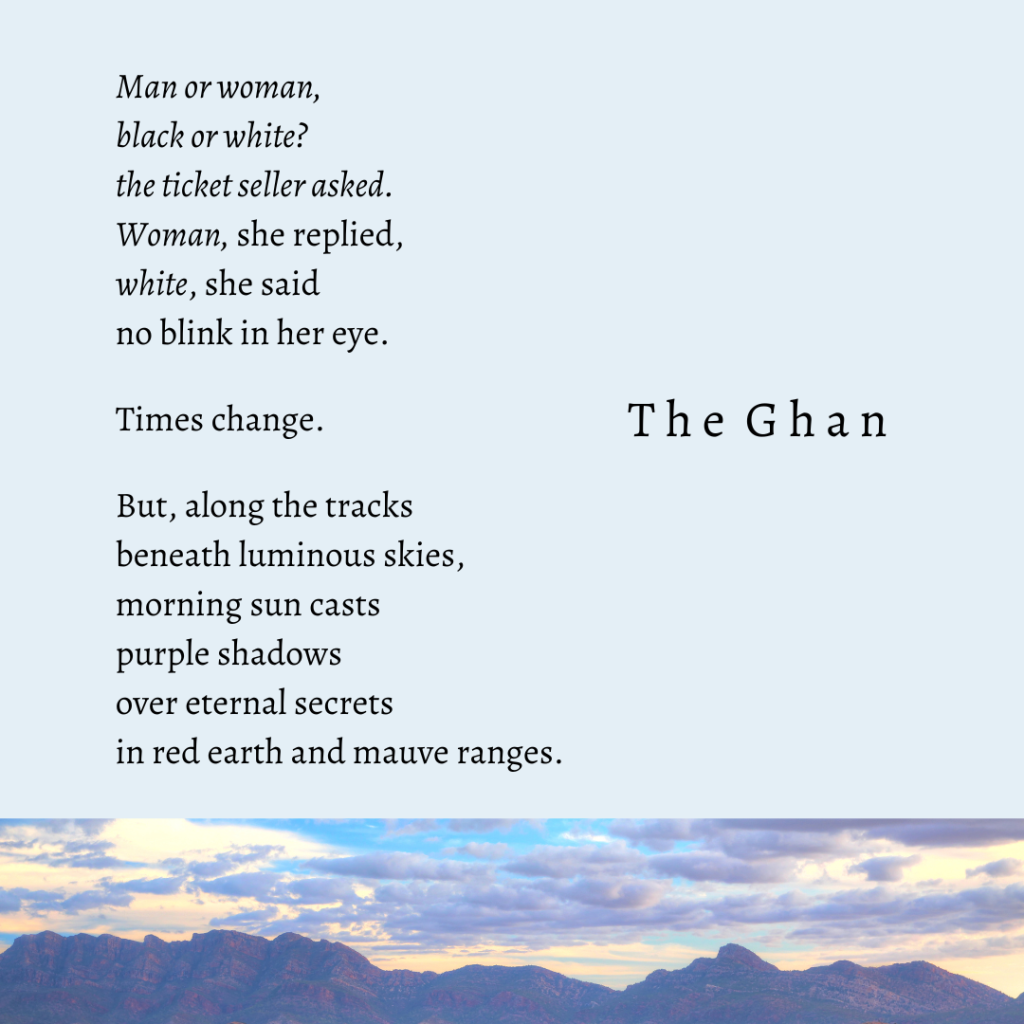
To return to nature. When I lived in Oodnadatta in my youth, we often travelled up and down to Adelaide on The Ghan. There was no romance in buying a ticket, for they used to ask if we were male or female, black or white, so as not to permit the mingling of what then was supposed to be kept separate in cabins. True!
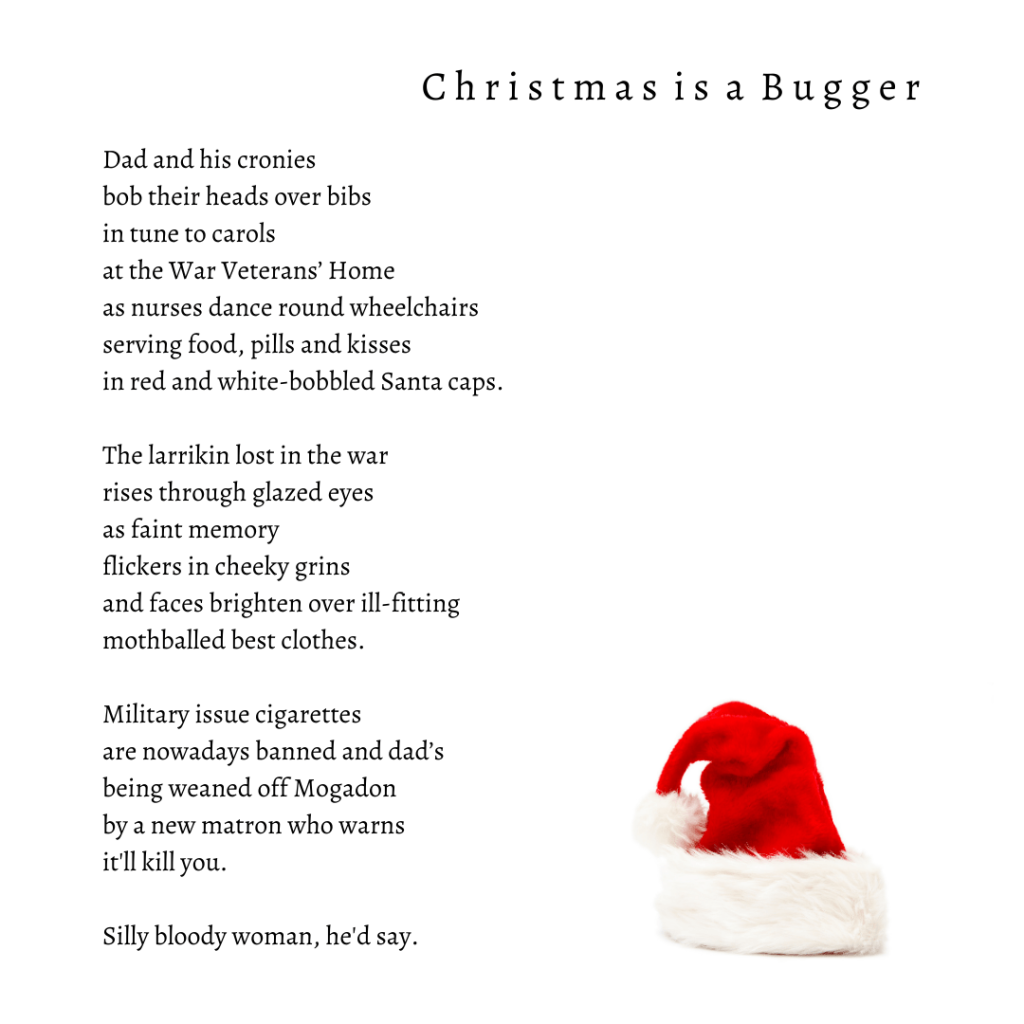
But, waking up to the mauve and purple glory of the Flinders Ranges against a red earth foreground in the morning was one of those views that, 60 odd years later, is still as alive in my heart now as it was then as you can see in this little poem, written in 2017.
Outback SA
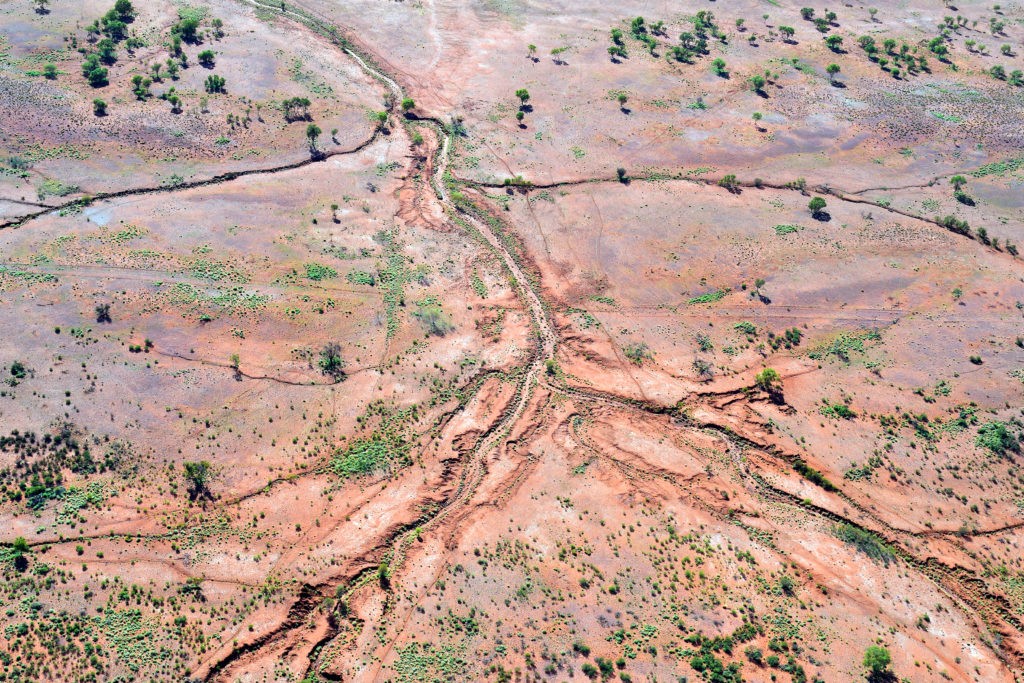
Take a moment. What do you see in this arial mage of the Lake Eyre and Simpson Desert area?

Over the years, in different parts of the country, I have been lucky enough to fly over our vast landscape, witnessing a multitude of configurations not unlike this delightful photo of South Australia. The Queensland channel country and the Diamantina that flows towards Lake Eyre are most spectacular when it rains. I’ve always thought that such country, riven with channels, tree lines and multicoloured earth, is what inspired the original Coogee woollens I wrote about in this eponymous poem in my second chapbook.

Being There — Kakadu
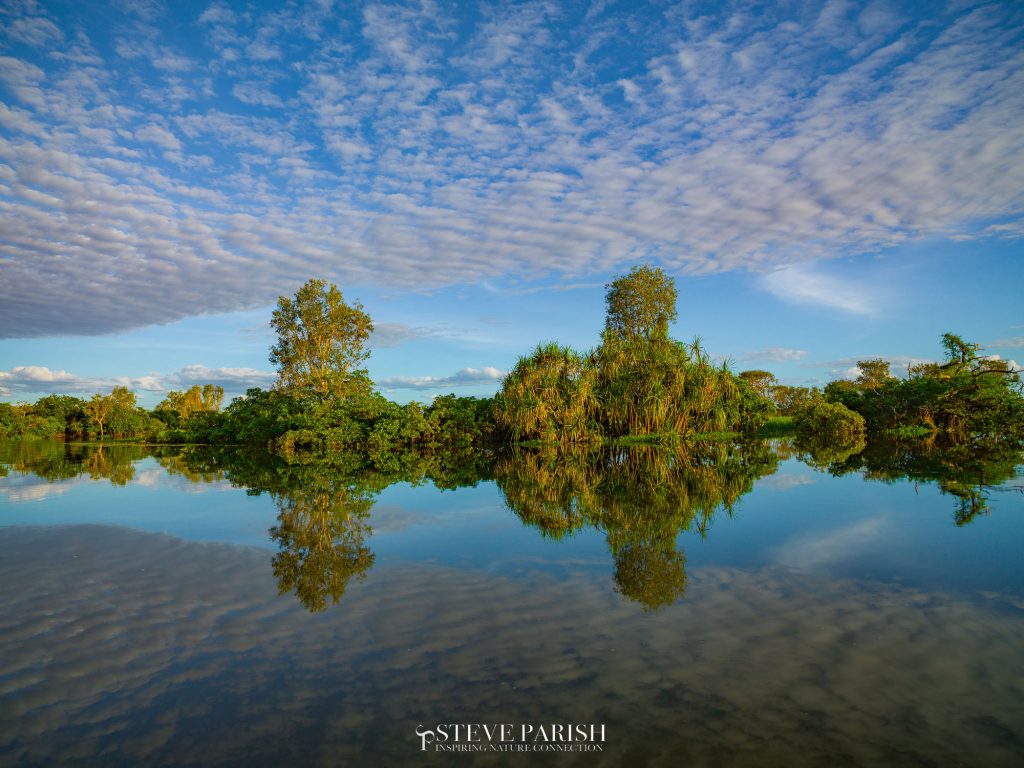
Believe it or not, when I was in my early twenties, we used to water ski on Yellow Waters in Kakadu National Park during the Top End Dry Season. Crocodile hunters abounded back then and advised that it was safe. Crocodiles mate and produce their young between October and April — at the same time when waterlilies grow. If it does nothing else, this is a testament to the fact that surfaces cannot always be trusted.
In the early 1960s, the notion of national parks was seminal — if that — even among the educated classes. We knew nothing of the sacred nature of Kakadu.
If you think about it, it has taken over 200 years for this nation to publicly begin to recognise the numinous beauty of our land as understood by First Nations people. Steve Parish’s ground-breaking nature photography in particular has been instrumental in developing our appreciation of that and I was recently honoured when he invited me to write a piece for his website.
Then There’s Litchfield

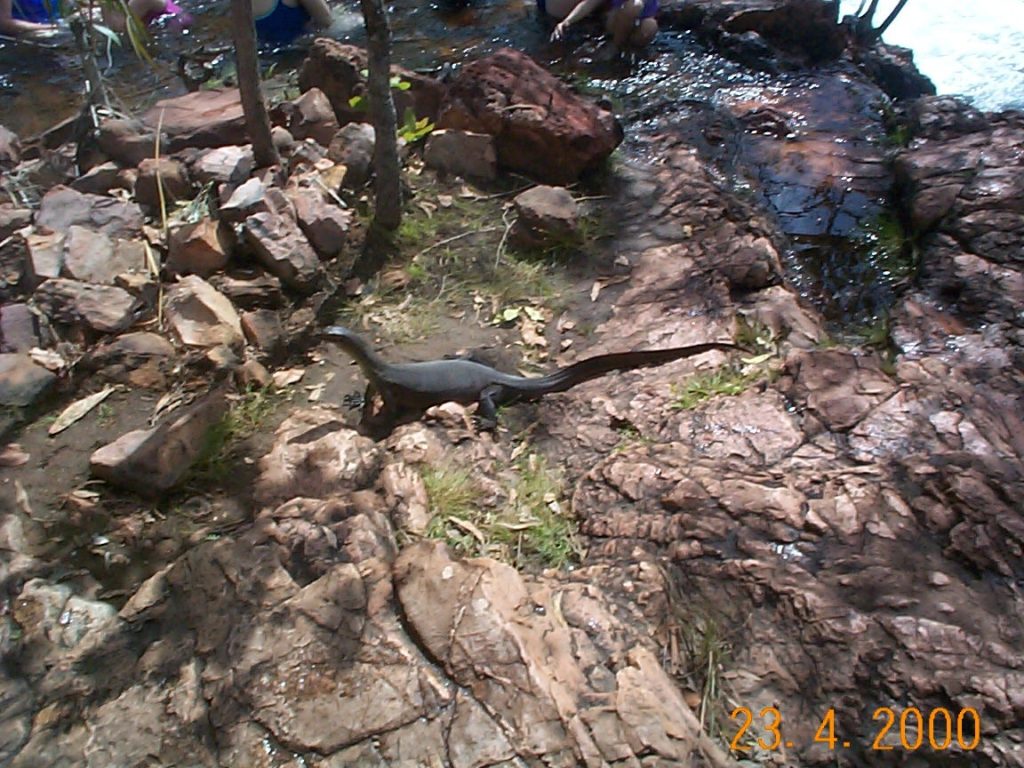
On the other side of the track (the Stuart Highway) and a bit closer to Darwin is the magnificent Litchfield National Park, where I regularly swam for many years when I lived in the Territory. I took my eldest son Grant to the Buley Rockhole nearby when he once visited me from the UK, and he revelled in its beauty and took this photo of a black water goanna.
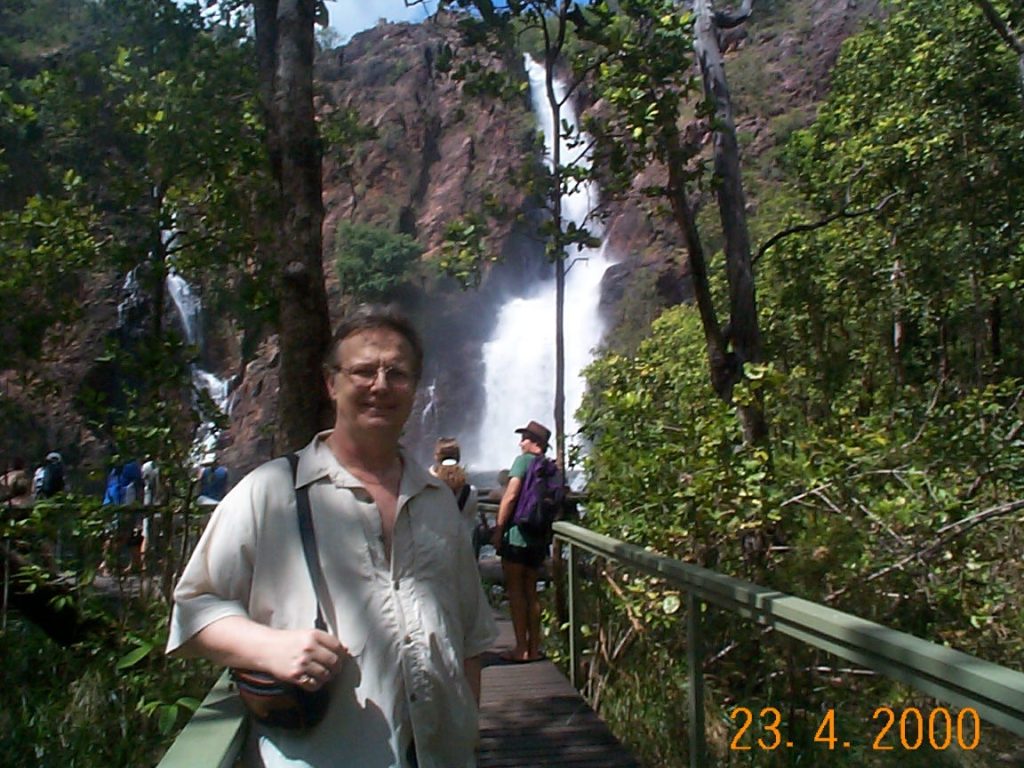
My favourite place to swim in Litchfield until I left the Territory was Wangi Falls which was closer to home than Florence Falls, and I mention this because Steve Parish’s photo elicited memories. Memories of sitting for hours beneath the fall, allowing the pounding rush of water to cleanse, destress, and make me feel whole again when I felt terrible. I loved that place, that fall and pool, which I understand to have traditional feminine associations.
A photograph often has the power to trigger memories, and take us back to love, and that is a decidedly spiritual experience.
Numinosity, I would argue, lies in the interaction between the contrivance or creation and the observer or reader, even with tourism ads. Bugger the flies the heart says; I want to go there.
The tropical Top End of the Northern Territory is one of my great loves. The desert in the far north of South Australia is another. They are my history. Both exist as characters in my life, vibrant, living, breathing and giving. I mourn that I cannot be there now even where there might be green frogs in the toilets.
My brother died in 2004, and Grant in 2014. It was long ago that they visited me in the Top End where I always felt most like my true self. I have since renewed, of course, but I often wonder why I’m the one who has had the privilege of living a longer life.
ACKNOWLEDGEMENTS
I thank Steve Parish for sharing his photographs with me for this post.