

Cultivating a Gardener and Poet
I was born in Victoria’s high country, where there was always water, wetland, spring, weir, river or creek and misted mountains in hues of lavender and blue. The Great Dividing Range wound into the distance, a background presenting unrepeatable beauty. Imprinted within me was an inseparable connection to nature.

For a while, during the sixties, we lived in Melbourne’s eastern suburbs. Like most back yards, ours had fruit trees, a veggie patch and a chook house. My grandfather built the home and garden. I loved the bright colours, especially juicy apricots in January.
When I was eight, we moved to a sixteen-acre lot in the Dandenong Ranges. The most inspiring and wondrous place I could imagine; lush green farms surrounded by temperate rain forest, towering eucalypts and scrub.
Although a puny specimen compared to my strapping family, suffering periods of fatigue and migraines, I was never afraid of hard physical work, and there was plenty of that.
I was often found up trees, down holes, wading through water.
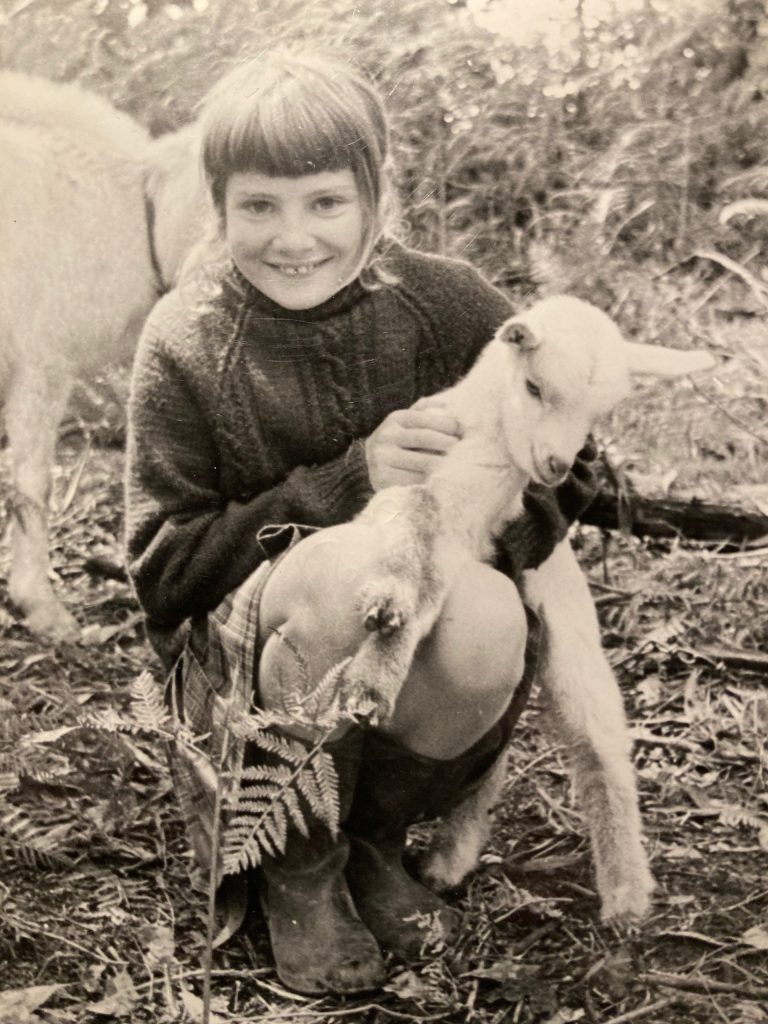

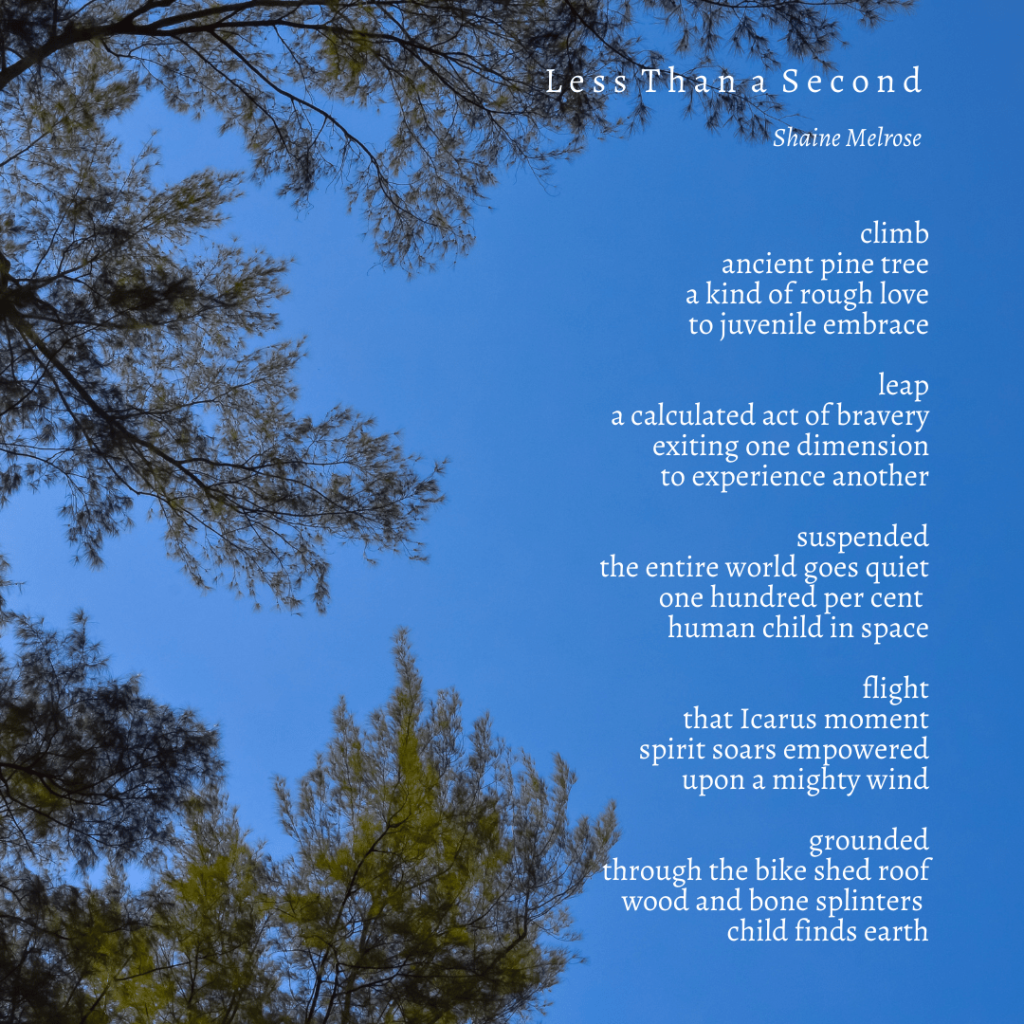
In my last year of primary school, I was unfortunate to crash through the bike shed roof during a customary leap from a nearby tree. Among other things, I dislocated my coccyx. It was sports day, and the fastest runner in the school in less than a second could hardly walk at all. As a result, I suffered from chronic pain and vertigo for many years.
Writerly Beginnings
I was a chatterbox. With so much to know, heaps of questions, and ideas and babble in my head, I devoured books. I found an outlet for confusion at the loss of family and friends in writing stories and poetry. I kept a journal. Writing and performing plays also helped me understand but not articulate I was queer and inclined to self-destruction. The only place I felt grounded and whole was in nature.
Nursery Work
It seems inevitable that I ended up in the horticultural trade. At first, the work was mostly seasonal, and I always had a few gardens to maintain. I also worked with dried flowers—growing, preserving and making bouquets that were very popular in the eighties.
I spent one freezing winter on steep hillsides of heavy red clay, planting Buxus for the bare root trade, but the views over the Warburton Ranges, spectacular and energising.
Relief came with the arrival of a QLD semi-trailer full of plants such as giant cactus in pots to be unloaded and moved into the glasshouses. Thick leather gloves, hessian sacks, bravery and a strong back, were necessary.
Adding Advocacy
I went on to work in advocacy, training men with disabilities within a five-acre indoor/outdoor plant production nursery. The gift was the location, right on the Yarra Riverbanks, 32 km north-east of Melbourne.
We worked through the elements wrapped in yellow PVC outdoor gear or broad hats and shorts. Working in small groups along the far-reaching rows, weeding, staking and cutting back stock, our banter superfluous to the wildlife. Finches and blue wrens flitted all over the plants.
Then the Creatures
Massive red-backs tucked between the black plastic pots. Snakes in the sunny warm aisles. Eagles over paddocks of cattle. Royal spoonbills and many water birds gathered on the river’s mudflats, lavender-blue ranges in the distance.
And a Growing Love of Australian Natives
In these early years, my passion grew for Australian plants, Camellias and cultivation in general. The nursery boasted several hundred varieties of Camellia, thousands of natives, including Callistemon, Acacia, Grevillea, and Eucalyptus.
I delighted in watching cuttings and seedlings develop into sturdy flowering specimens ready for the retail sector. Masses of people would purchase our plants for their gardens.
My soul was sorry to leave this truly magnificent place. Still, I was headhunted into a new retail nursery, with a landscape design and construction branch, in Melbourne’s south-eastern suburbs, with management training prospects and becoming the green-life buyer.
I spent four years building my way up to manager. In my fifth year, I received an offer to become a company director.
By this time I had been through a shattering personal crisis and was living inner city with a new partner. Insane traffic and a yearning to get back to nature led us to move to the Adelaide Hills in South Australia
Botanical Friendships
Plants and friendship involve a wonderful exchange of botanical treasures, cuttings, bulbs, divisions and seeds. Most gardeners carry a herbaceous memoir of these exchanges. I love walking around our garden and acknowledging the provenance of particular plants and, in turn carrying on the tradition.
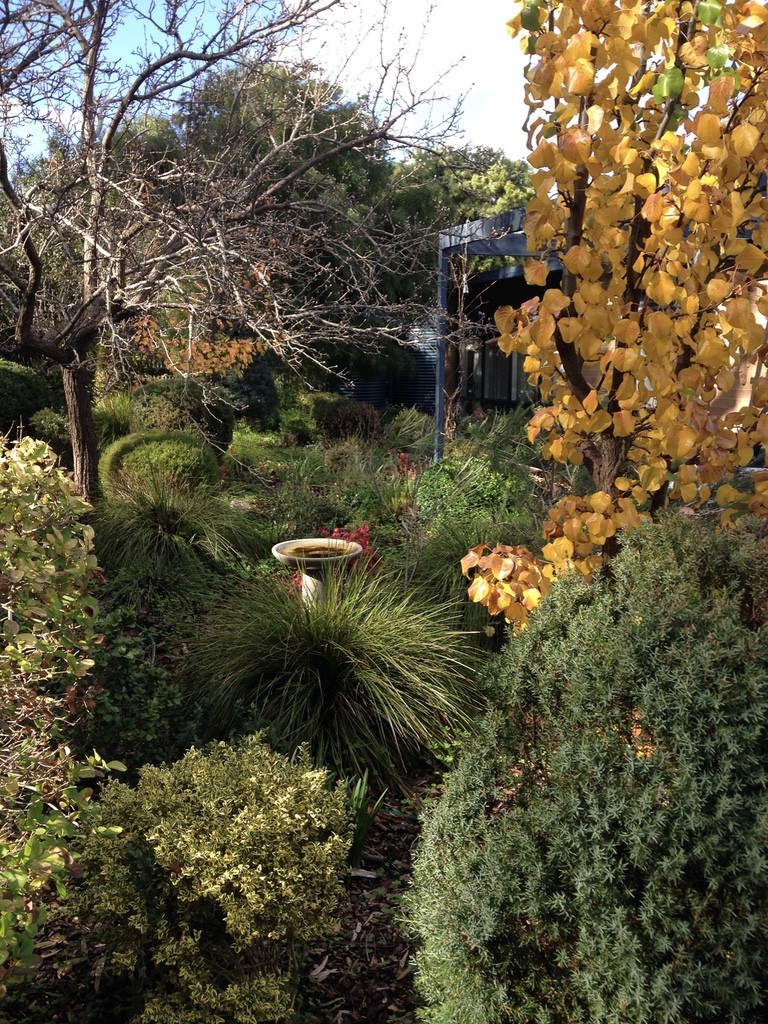
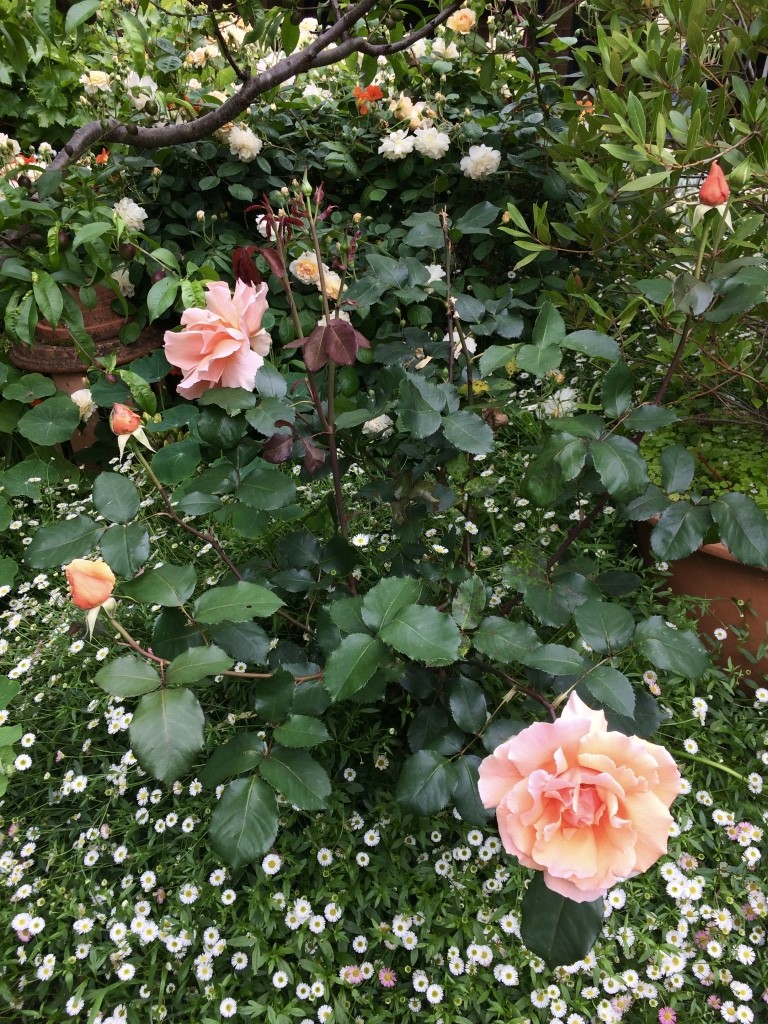
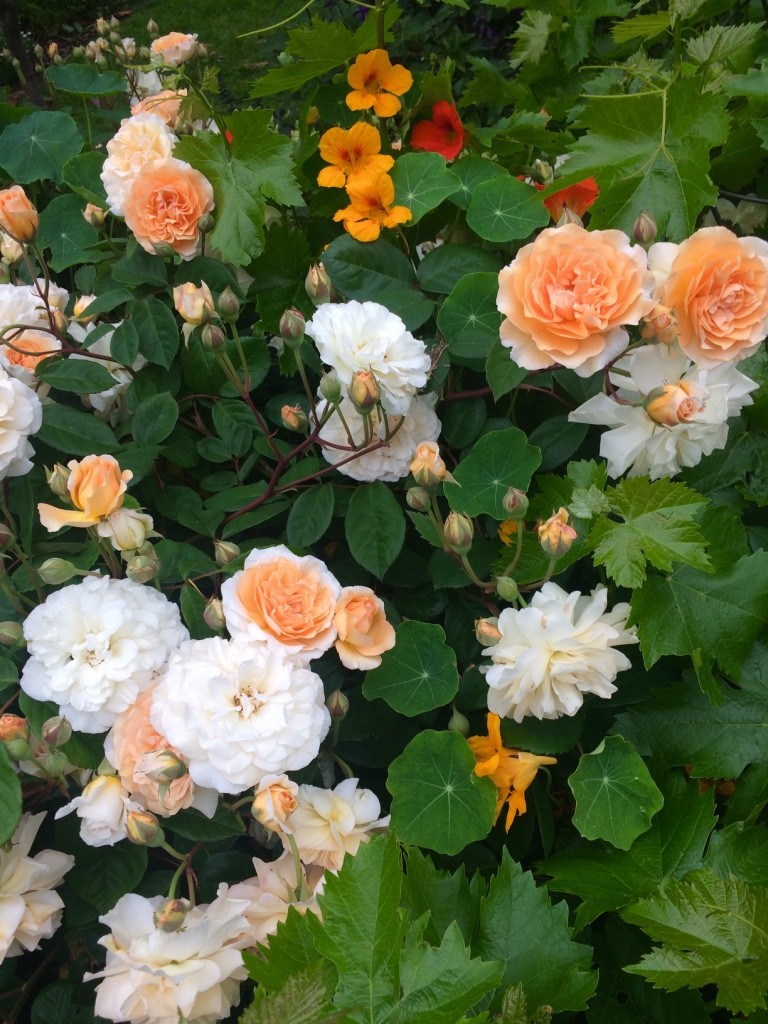
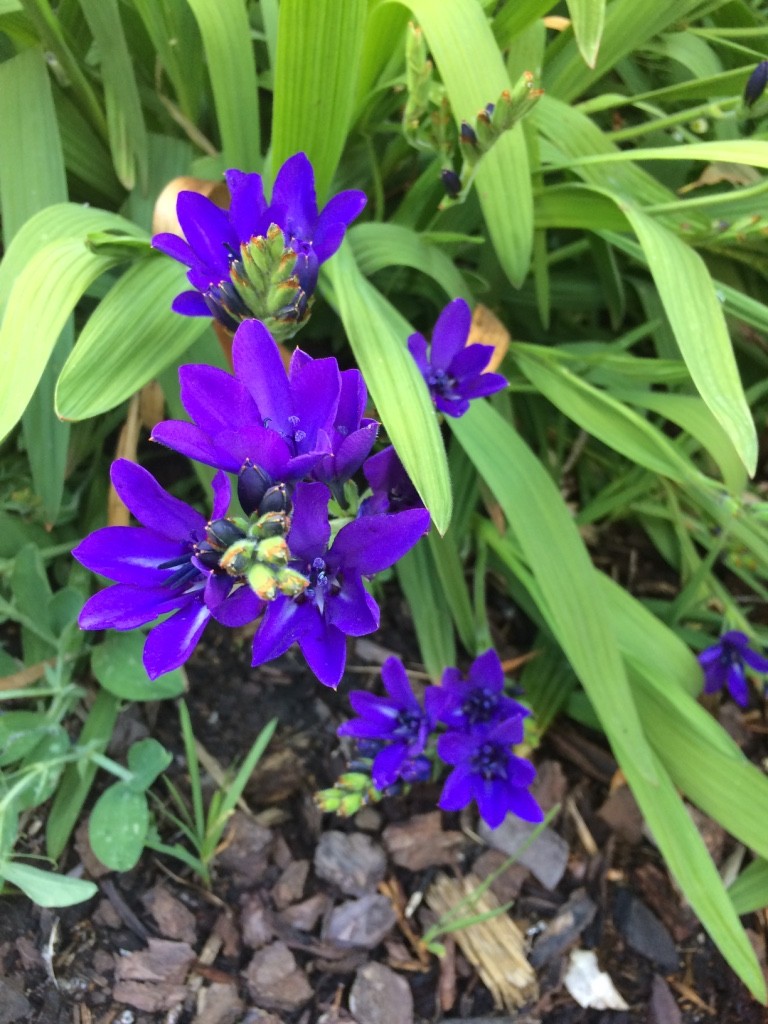
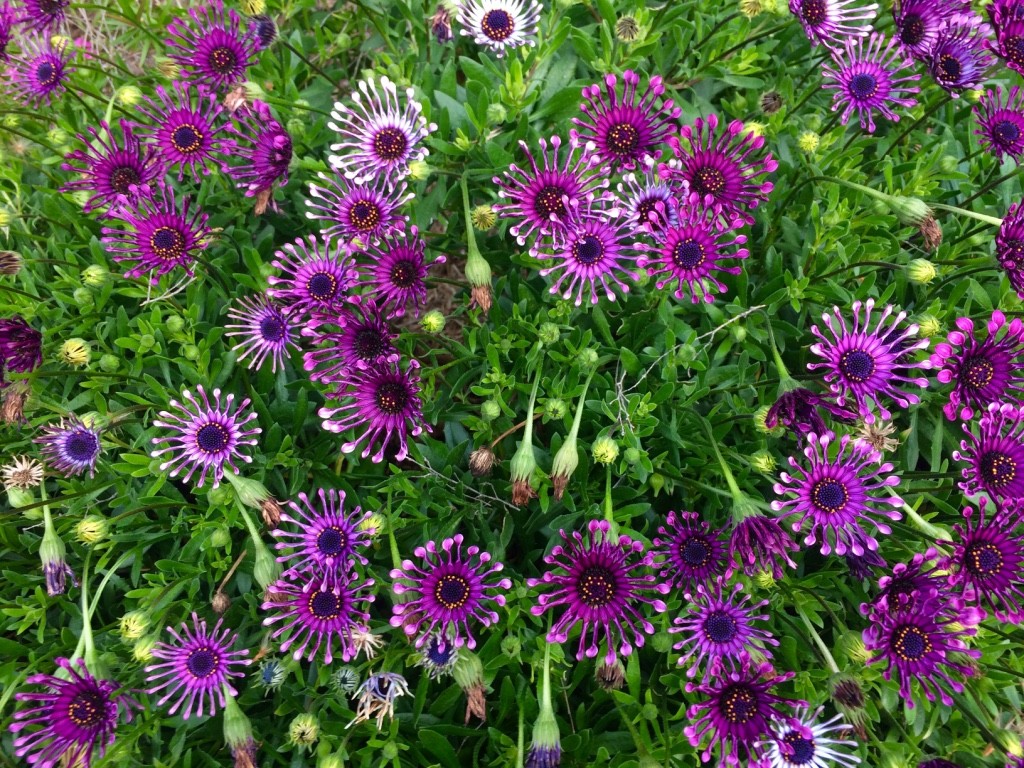
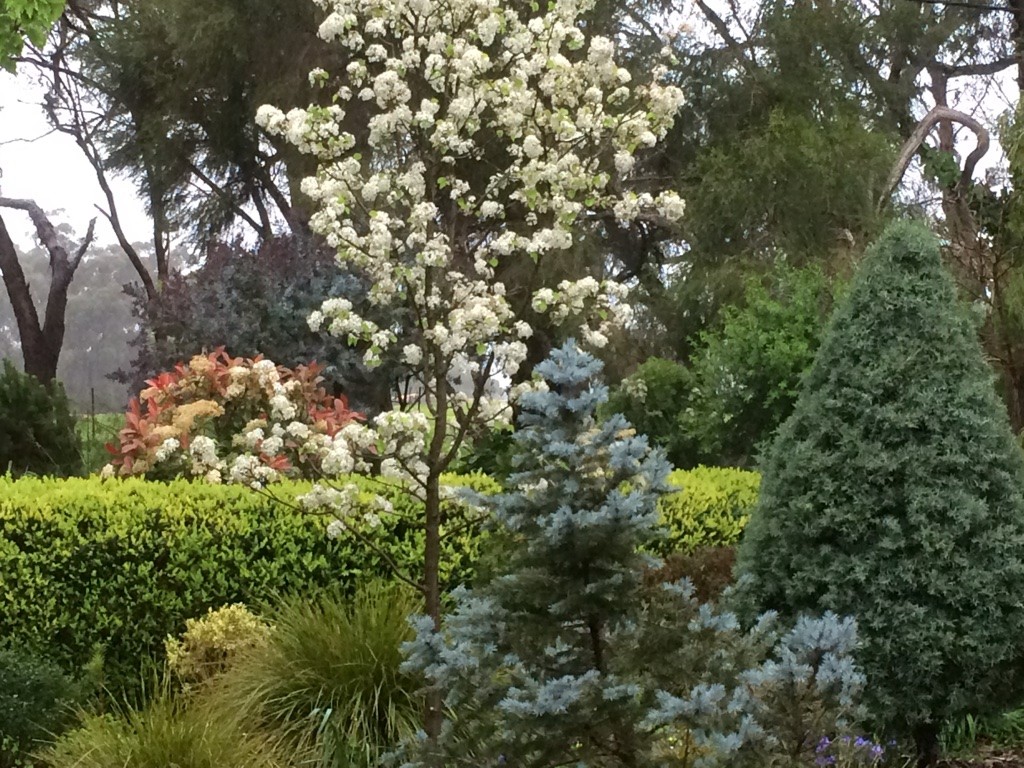
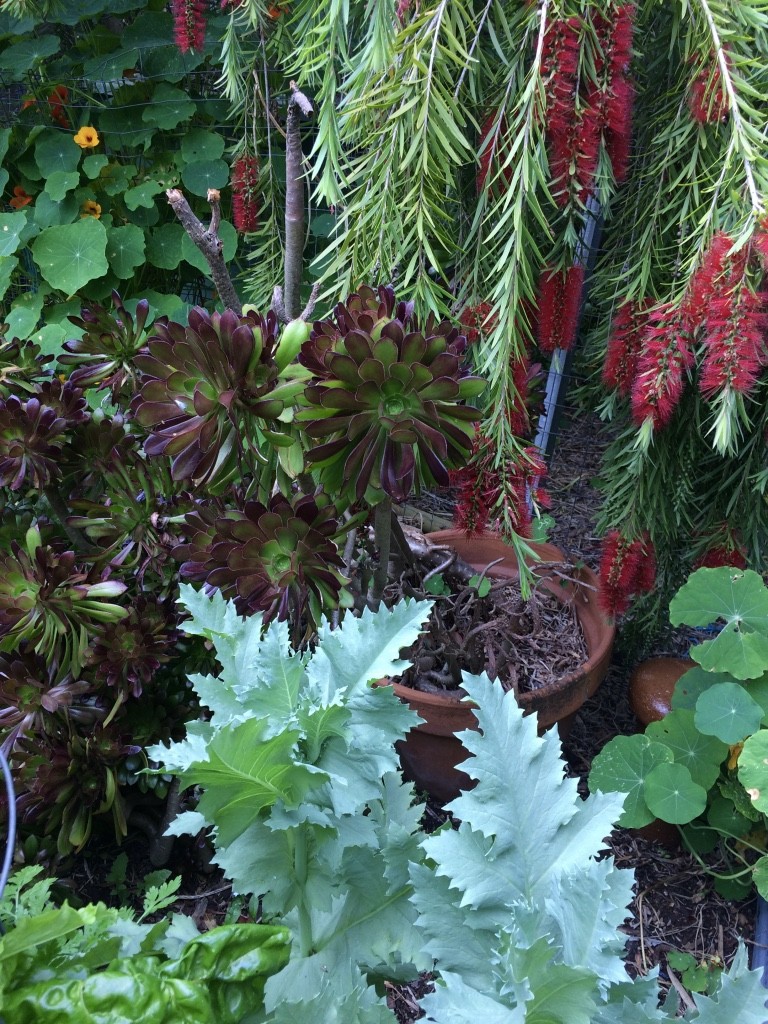
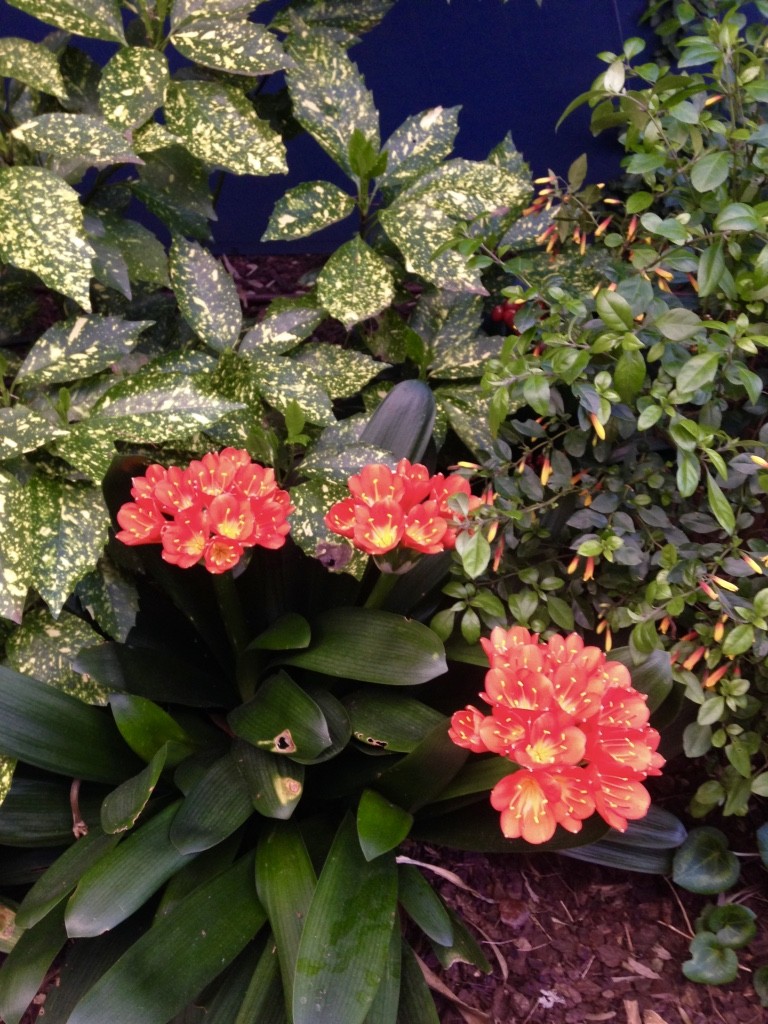
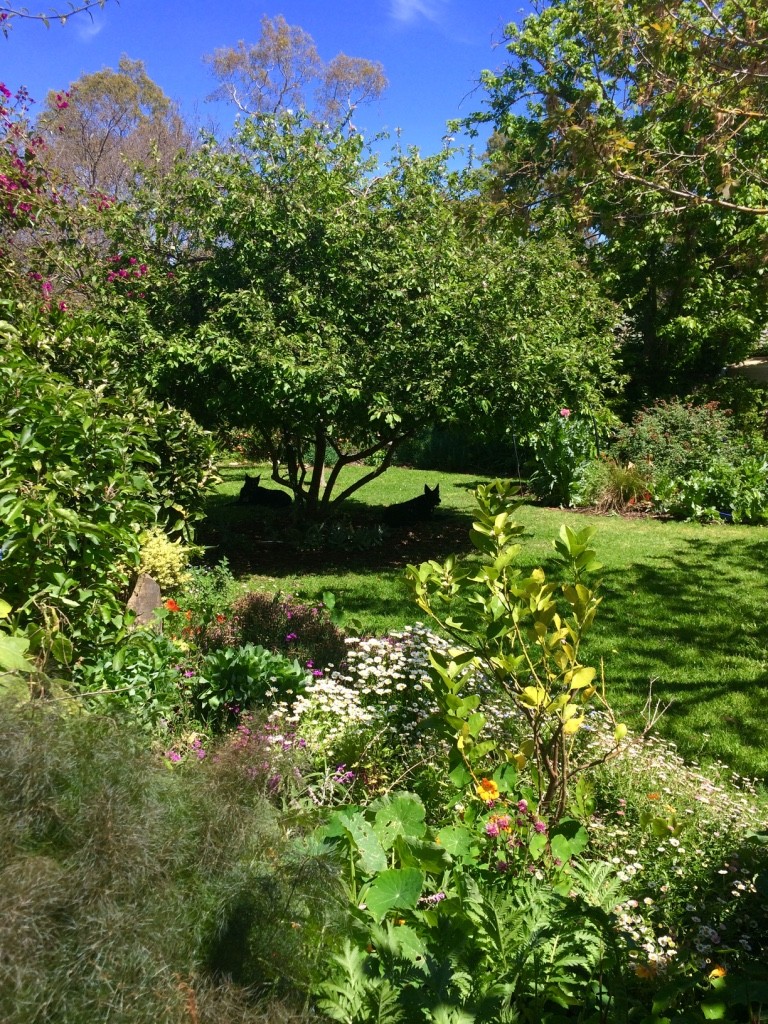


I have begonias, orchids, chain of hearts plants that belonged to my grandmother, mother and elderly customers from my gardening days who have long since returned to earth. Our plants and gardens often long outlive us. Through gardening and the nursery trade, I have made many friends with a passion for plants and gardening.
Drought, Climate Change and Illness
I have lived in Adelaide for 24 years now, working in wholesale and retail nurseries and as a private gardener. The Mediterranean climate is a contrast to Melbourne’s garden state, which meant spending twice as much effort on soil improvement. The most demanding period was the extended hot dry, and drought between 2006-2010.
There was a renewed interest in native plants, and the common lawn took a beating. Most were dug up and replaced with artificial grass or hardy plants. I spent my days as a gardener advising people about survival strategies, installing drip irrigation systems, replacing lawns and spreading tons of mulch. As the relentless dry went on, many trees and plants started to die.
Drought reduced our garden to a desert, and my health slowly deteriorated. I succumbed to an unidentifiable illness exacerbated by constant back issues after falling down an embankment while attached to my brush cutter. The unrelated loss of an uncle and aunt to suicide compounded with drought, pain and illness, led to a long period of depression.

Water In a Dry Land
The natural environments, parklands, street trees, animals and humans alike, thirst for water. All life needs water. One of the biggest problems with ailing garden and house plants is under or over watering.
A journey to the UK, Denmark and France in 2008 to see family and friends highlighted how I had under-estimated my yearning for moisture and plant life that wasn’t suffering. We spent weeks in lush gardens and forests, by rivers, fjords and great bodies of water.
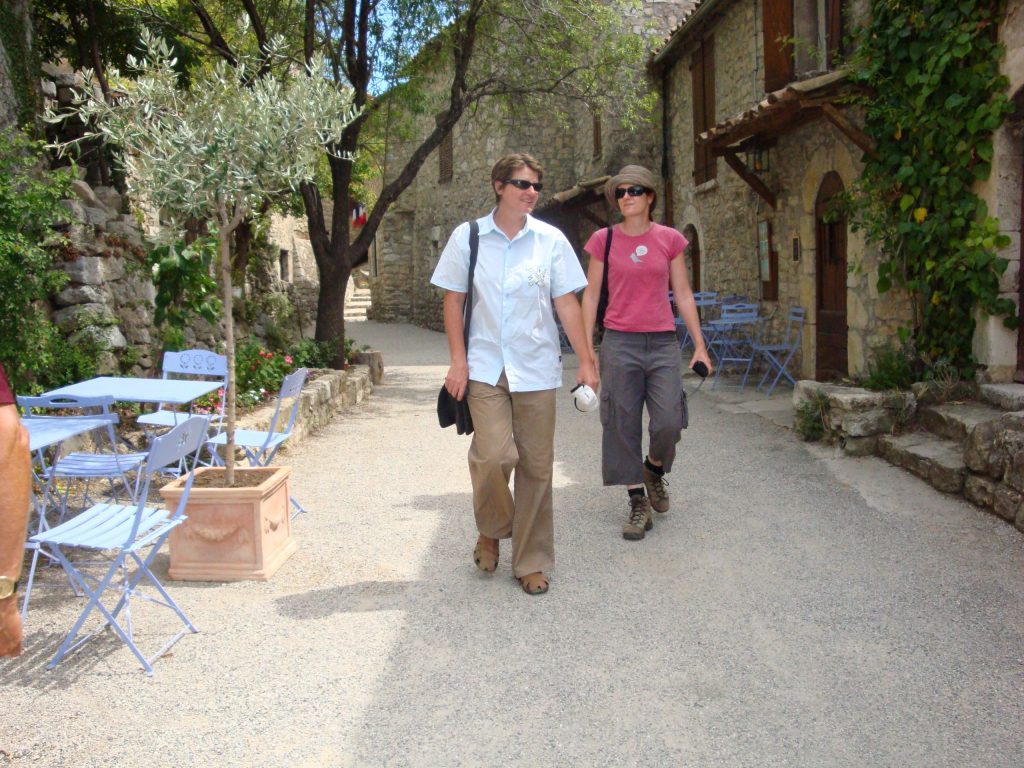
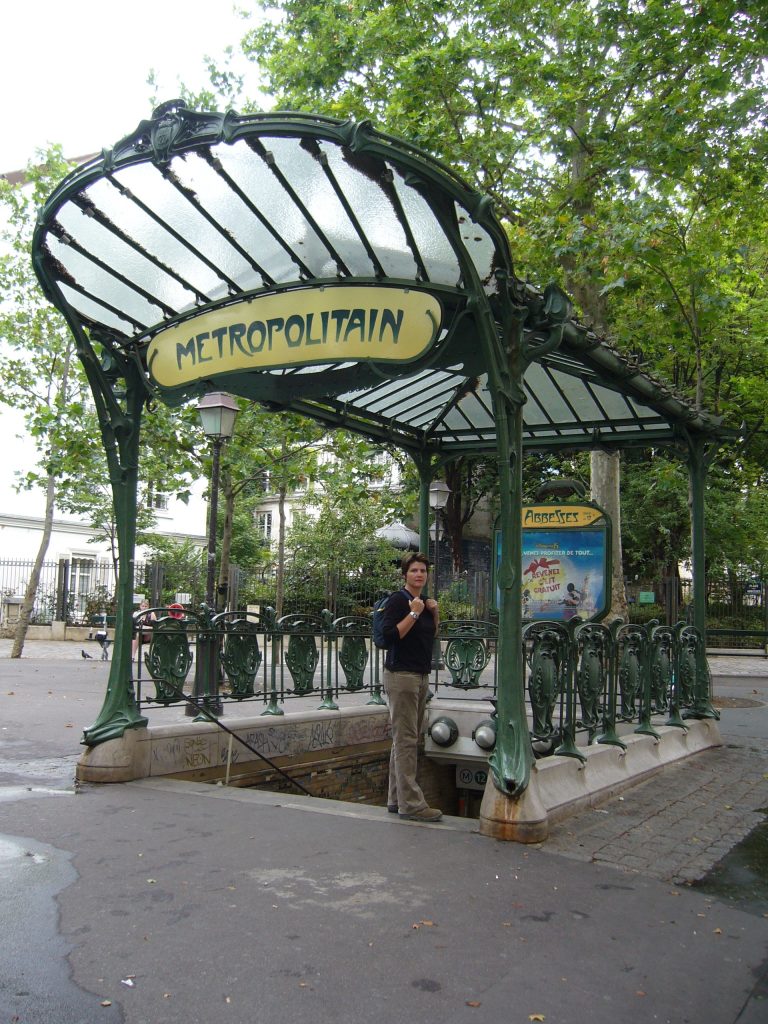
Twice caught in a deluge, my partner and I rejoiced, the torrents provoking excitement and laughter. In Paris, soaked through and shrieking with joy we tumbled through a café door into a small bar.
A group of locals stopped talking and stared at us, wild as we were, intoxicated by the rain. Unfazed, we explained we had come from southern Australia where it had hardly rained for years.
Hours later, toasting the regulars with apple brandy, we wandered through warm, steamy Parisian streets to our accommodation by the Luxembourg Gardens. The dried prune in my soul began to swell.

Now
No doubt, change in the climate today demands a different approach to gardening, and the COVID-19 pandemic has given rise to a greater appreciation and a need for parks and gardens.
I potter in our garden, write poetry, sleep an unnatural amount (due to a condition called Fibromyalgia) and grow edible plants.

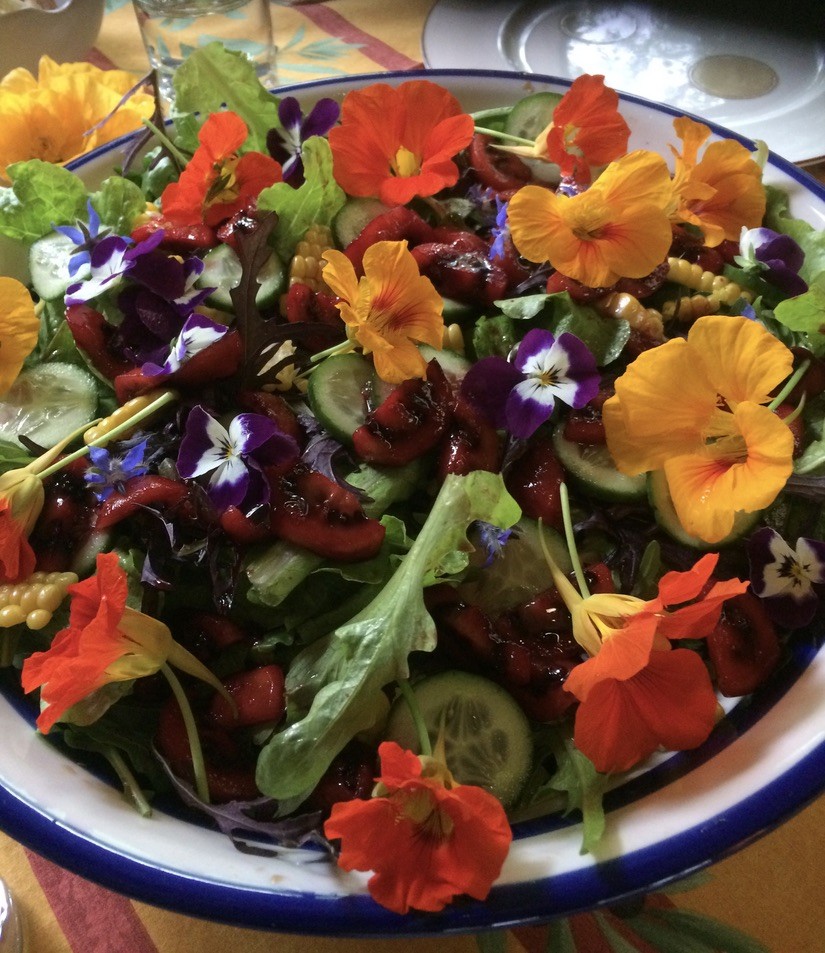
My untamed style of gardening has never led to the rows of abundant crops of my childhood. Leaf structure, foliage colour and diversity please my eye. We persist with herbs and salad greens to make meals tasty and alive. These days the wildlife seems to win the fruit harvest most often.


Author Bio

Shaine Melrose is an emerging poet and retired gardener learning to live with chronic illness. Her poems have been published in anthologies, journals and online. Shaine’s poem Seer was highly commended in the 2020 Adelaide Plains Poetry Competition. She was runner-up in the 2018 Goolwa Poetry Cup and finalist in 2019.
Shaine is currently writing a poetry manuscript about growing up queer in the bush and how a deep connection to nature gave her strength to rise above life’s challenges.
ACKNOWLEDGEMENTS:
‘The Words’ first published in Friendly Street Reader 43 Alchemy in 2019.
‘Life in Water’ previously published in InDaily 12 February 2020
Photographs and text remain the property of the Author.
FOR MORE WATTLETALES WITH RELATED THEMES
A truly remarkable human – creating a strong impact upon the reader.
I found myself recounting ‘The Words’ and ‘Life in Water’ out loud, to feel the words roll off my tongue and meet my ears again.
Shaine is a gem! #shainemelrose
Fur
Hi Chelsey,
thanks for coming to Wattletales to read my story and leaving the lovely comments.
Great to hear you have your writing space and your pen is at the ready. You must be settled in now.
cheers
Shaine
Fiona,
such a beautiful reply. Love how you recall the events of the last leap. Ha Ha. I have always been grateful for your encouragement, typing, and feed back. Thanks for reading and enjoying x Shaine
Your mini-memoir was as inspiring, lyrical and engaging to read as your poetry. Thank you for sharing your highs, lows and the path you tread with grace and determination in between. I’ve just set up my writing space in our new home in Ballarat and after a trip to the local community gardens, I’ve got a date with pen and paper. Chelsey Reis
Hey Shaine,
I just loved reading all of this, but especially the leap to the bike shed roof. I can still see it in my mind’s eye. The top half of you above the shed and the rest hanging through below. The boys brought a ladder, making siren noises as they ran. To us kids it was funny and naughty at the same time, but who would have thought you would carry the pain for so many years.
You have always been a poet to me, so it’s no surprise that other people are finally getting to share the magic you weave with your words. Fiona Rawson
Thanks Steve,
we all need plants and art in my opinion.
I appreciate your comments.
cheers
Shaine
Thank you for a delightful insight into your past, your relationship to plants and gardening, and to the way that both find expression in your art. Steve Evans
Maria vouis,
We are infinite, carbon, water. We are extinction, resurgence.
We are plateaus of light. Our reflections shimmer and waver.
The vibrations of our present beings hum through dark and light, the songs we choose to sing define us only in that moment, but the ripple travels eternally.
I have lived with this distinction of illness and injury you speak of much of my life. Depression, a conjoined twin of unpredictable seasons.
Oops — went down a rabbit hole there. Thanks, Maria, for your good wishes, we all need best wishes really, so many of us have had our struggles. It makes me happy to know you are enjoying my words and plants.
Our earth – our bodies are a loop, inescapable ,fertile and sometimes punishing. So rich your writing Shaine with transparency and compassion for self, others and earth. Nature is giving, giving, giving and our health, illnesses are hers too. Your metaphors are blooming good – ha, ha! I adored: ‘Icarus moment; herbacious memoir, the throat of your universe’ and many others, which goes to show you can write lyrically in prose as well as poetry. I too am thrilled by the luscious herstory of cuttings and plants gifted, inherited etc from family and friends. I have a few of yours which I am adoring as they grow. Love to read the development of your work. All the best with your manuscript publication and health. And by the way, when we lose a lot in our lives, I believe we experience grief and not depression. Depression is an illness, grief an injury. Depression for me is often complex grief, a normal madness repackaged with pills. You can recover from grief. May we all be well. Thanks Lindy for a window into the blossoming poetry in SA.
Hey Geoff,
Thanks,
cheers
Shaine
Carolyn Cordon
Thanks for your kind words and appreciation.
My first article, it was a bit challenging, but I got there in the end and Lindy did a wonderful job with the layout
cheers
shaine
Julie Cahill
I loved the ‘tech-licious’, picture slide too.
Thank you for your connection and enjoying my poems.
I love the garden, even if some days it means lying motionless spread eagled on the grass, just sucking up the vibes…
Inez Marrasso, Love your enthusiasm.
As you well know, gotta have a good backbone to get through.
Thanks for reading and enjoying. Poetry rocks hey?
Shaine x
Hey Veronica, Glad you enjoyed the article. Yes some days it is very sad to have rotten pain and crippling fatigue and I have trouble accepting the limitations, but I have a fabulous partner who supports me immensely, along with great medicos, yogis and friends. Curiosity keeps me motivated. This world is full of so many amazing things!
Cheers
Shaine
Shaine, it’s lovely to read some of your back story, but also sad about your health. It seems you are doing all you can to push through it, so best of luck. I’m sure you and Helen have a fabulous future together.
The poetry is lovely, poignancy with Less than a Second and the wonderful The Words. It was thrilling and unexpected to see the slide show.
Thank you for sharing.
Veronica
Shaine,
What a glorious life dedicated to gardens and poetry. This has made you a philosopher too!
So many take-home lines for me: A kind of rough love ‘In Less than a Second’ describes youth and coupled with your Bravery and a strong back WOW! This is necessary for life itself: for work, for writing, for love and for snakes OMG! And you have this in spades… see what I did there 😊
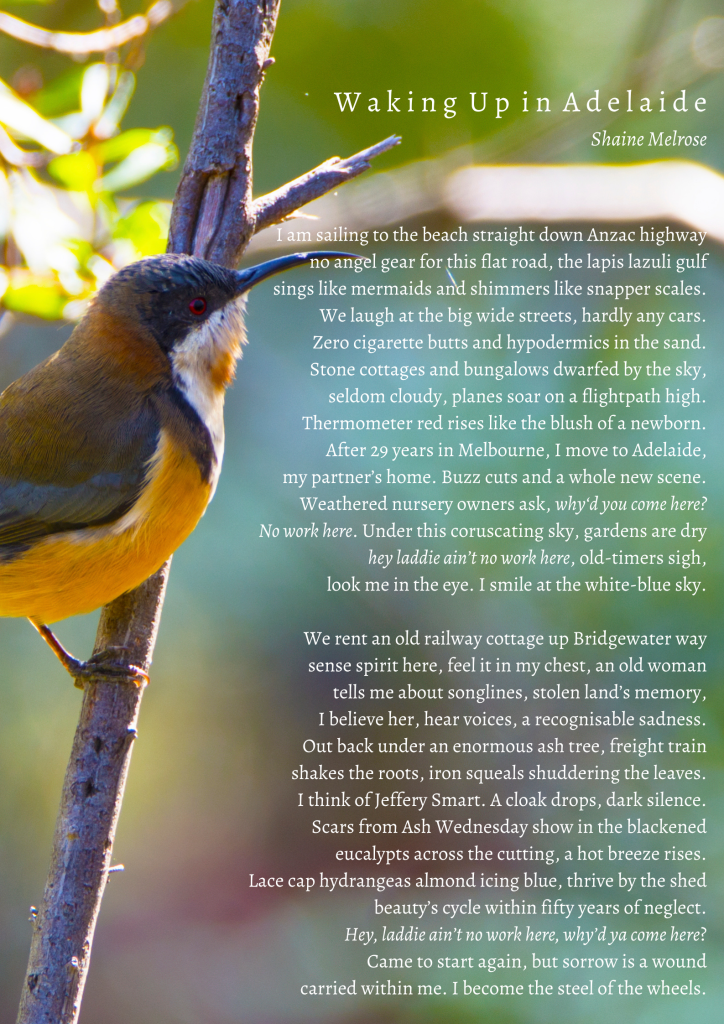
The poem ‘Waking up in Adelaide’ is pure pleasure and ‘The Words’ is sad and beautiful. The things we love can often destroy us, but true love sees us stand up for it regardless looking for nothing in return. This poem is a treasure.
Thank you for your words, and for touching so many souls with your wisdom and love.
Inez
Thank you once again, Lindy, for presenting a wonderful read. The picture slide is tech-licious.
Thank you, Shaine, for your honest and raw evocations. I identified with you before your mention of Fibro.
So you too find solice writing and in the garden.
Emerging poet? You have already emerged. Your passion for life, your powerful contrasting images, your creativity- WOW.
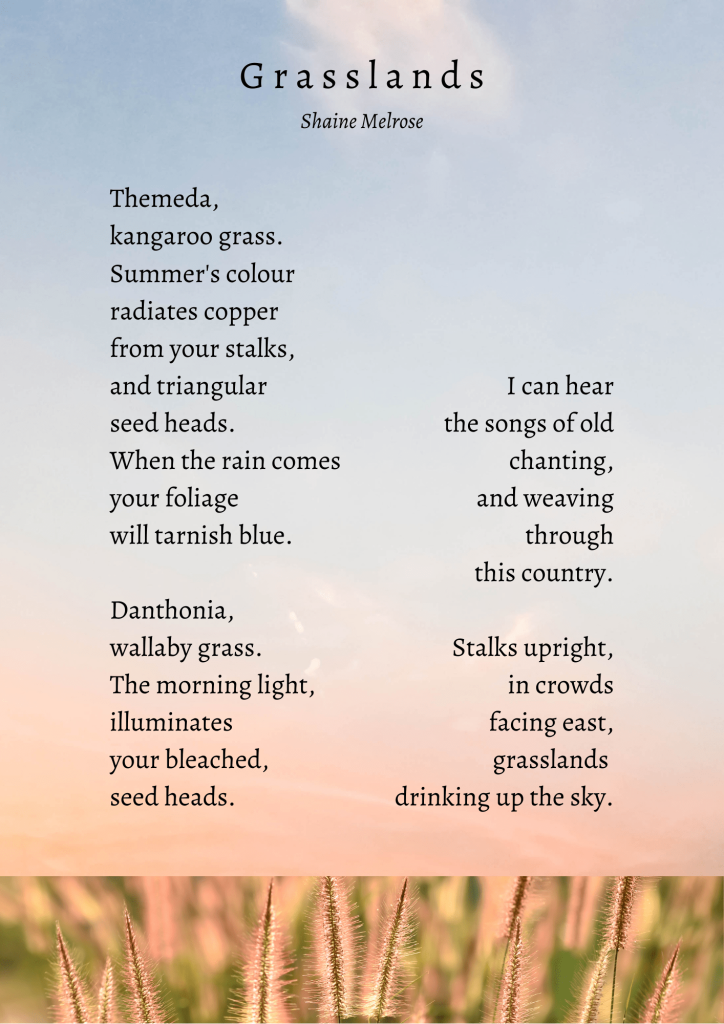
. . . stalks upright in crowds . . .
. . . wild as we were intoxicated by the rain . . .
the dry prune in my soul began to swell . . .
Bravo.
Julie Cahill.
This is a beautifully true and honest piece, I thank you both, Shaine and Lindy, for bring out this lovely exploration of how and why Shaine is, the beautiful person she is.
Plants, Nature, and time spent out there, exami ing, and growing to understand the honest truth of what they are, reflects beautifully in your words, Shaine, and I thank you for showing them to the reader. Carolyn
The outstanding new talent that you are Shane recommends the very best for you and your fantastic words. An excellent read. Thanks for sharing. Geoffrey