

Introduction
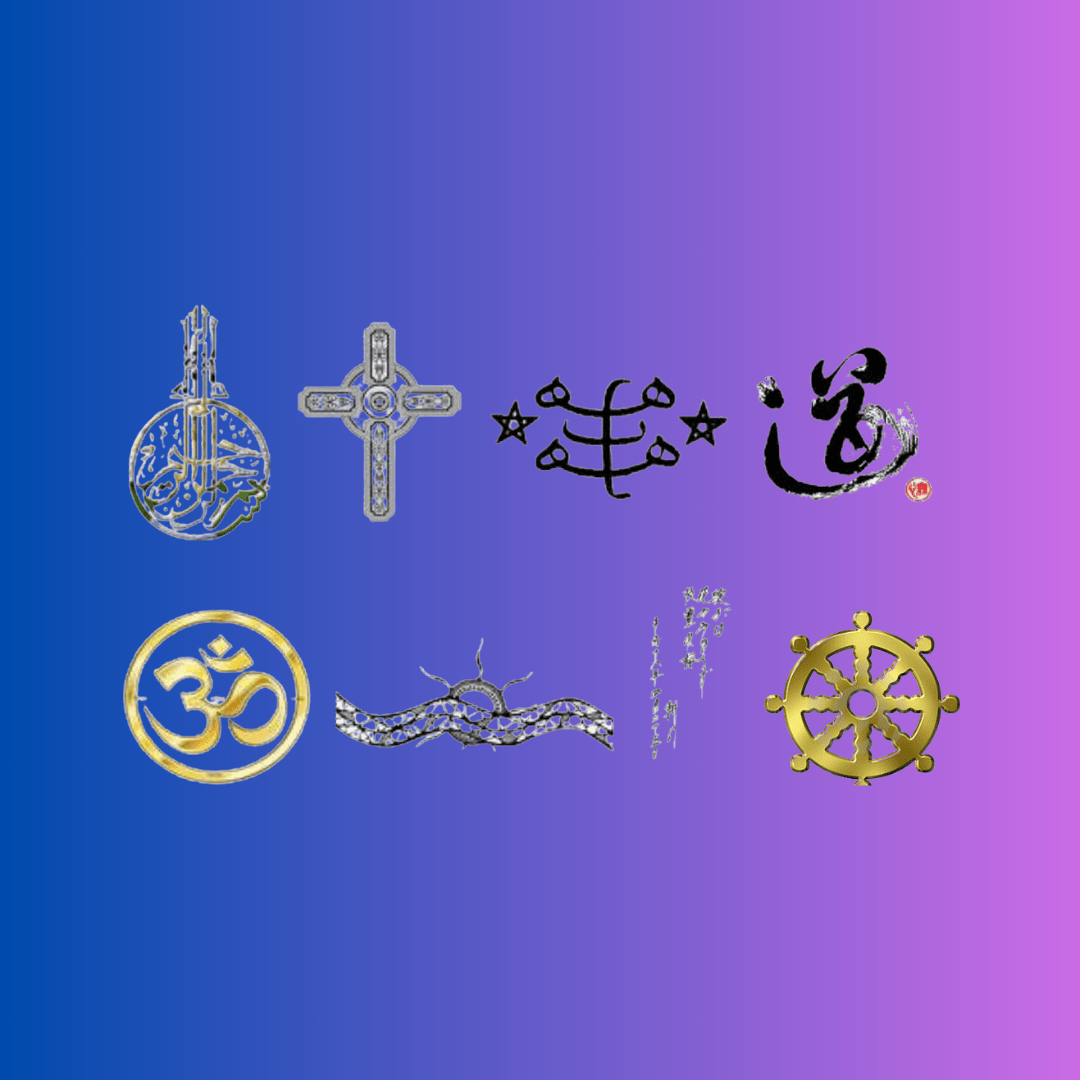
In 2010, I presented a paper called ‘Religious Poems from Around the World’ to Aldinga U3A. The compilation is downloadable below. Drawing on it today, I explore ways in which spiritual love is evoked in the present by ancient words. I was inspired to do this after being profoundly moved by the work of poet friends. Poetry, to me, is at its finest when a poem radiates love — religious or secular, if there is such a distinction — even when speaking of war or disaster.
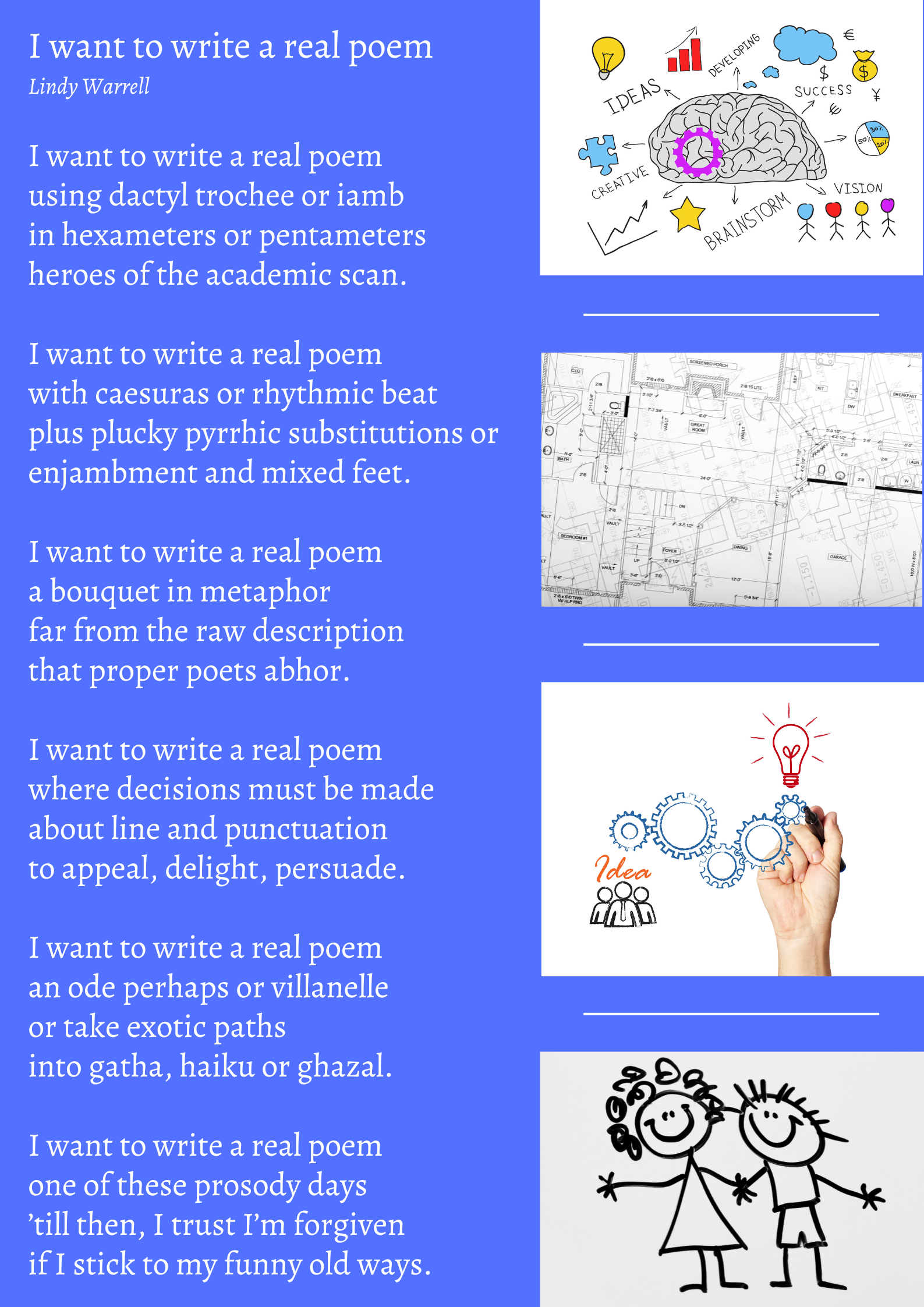
I’ve heard say a number of times that poetry is composed of the best words in the best order. I can’t cite the origin of this phrase, but it causes me to wonder what is best and how that can be judged in anything, let alone poetry. I include this little poem in protest against prescriptive definitions.
Personally, I love poetry or any work of art that moves me, invites me to think, laugh and empathise or illuminates the ineffable. Hence my predilection for spiritual works.
We Don’t Own the Land, the Land Owns Us
I start with a First Nations poem about what is to be inextricably part of the land. The religious quality of this poem is in the claim, ‘I am Australia’; Aboriginal being is of the land.

Love is in Humour
Religious poetry often turns to humour, which I think of as beseeching us not to take ourselves too seriously. Here are two poems, the first from the Bahá’í Faith, named after its founder, Bahá’u’lláh (1817-1892).
The second poem is from Ryokan Taigu (1758-1831), a quiet and eccentric Zen Buddhist monk who lived much of his life as a hermit. Ryokan shows great humility by refusing to accept labels such as a priest or poet. But, even as he decries the vanities of his peers in this short poem, he recognises his weakness for comfort.

If you think of the Dalai Lama for a minute or have met a Buddhist monk of any tradition, you will have encountered their complete absence of judgment. Their acceptance of life as it is and the spontaneous warmth that goes with it are manifestations of joy. Acceptance allows one to open up to self and others. It makes us vulnerable but is extraordinarily powerful. It is love.
Like Ryokan, Japanese Zen Poet Ikkyu (1394-1481) also celebrated the ironies of life in wry observations of reality. Once again, his words show acceptance of things as they are and the spiritual love that implies. Ikkyu may observe the peccadilloes of his more stick-to-the-rules counterparts but is as accepting of them as he is honest about his dismissiveness and fleshly needs. I feel fresh air in that.

To Hear and Speak of True Nature
Rabindranath Tagore
Most people will have heard of Rabindranath Tagore (1861-1941) if not from his poetics, then perhaps from a marvellous recent Netflix series, ‘Stories by Rabindranath Tagore’. As a poet, novelist, musician, and playwright, Tagore reshaped Bengali literature and music in the late 19th and early 20th centuries by spurning classical forms. Tagore won the 1913 Nobel Prize in Literature and penned the anthems of Bangladesh and India. God, that is to say, love is the sound of the flute and the flow of the River Yamuna, life and surrender; if only we paid attention.

Tich Nath Hahn
Thich Nath Hahn (1926-2022) was a much-loved Vietnamese Zen Buddhist monk, poet, scholar and activist who joined a monastery at 16. During the Vietnam War, he worked tirelessly for reconciliation between North and South Vietnam but was exiled for many years. His lifelong efforts to generate peace moved Martin Luther King, Jr. to nominate him for the 1967 Nobel Peace Prize.
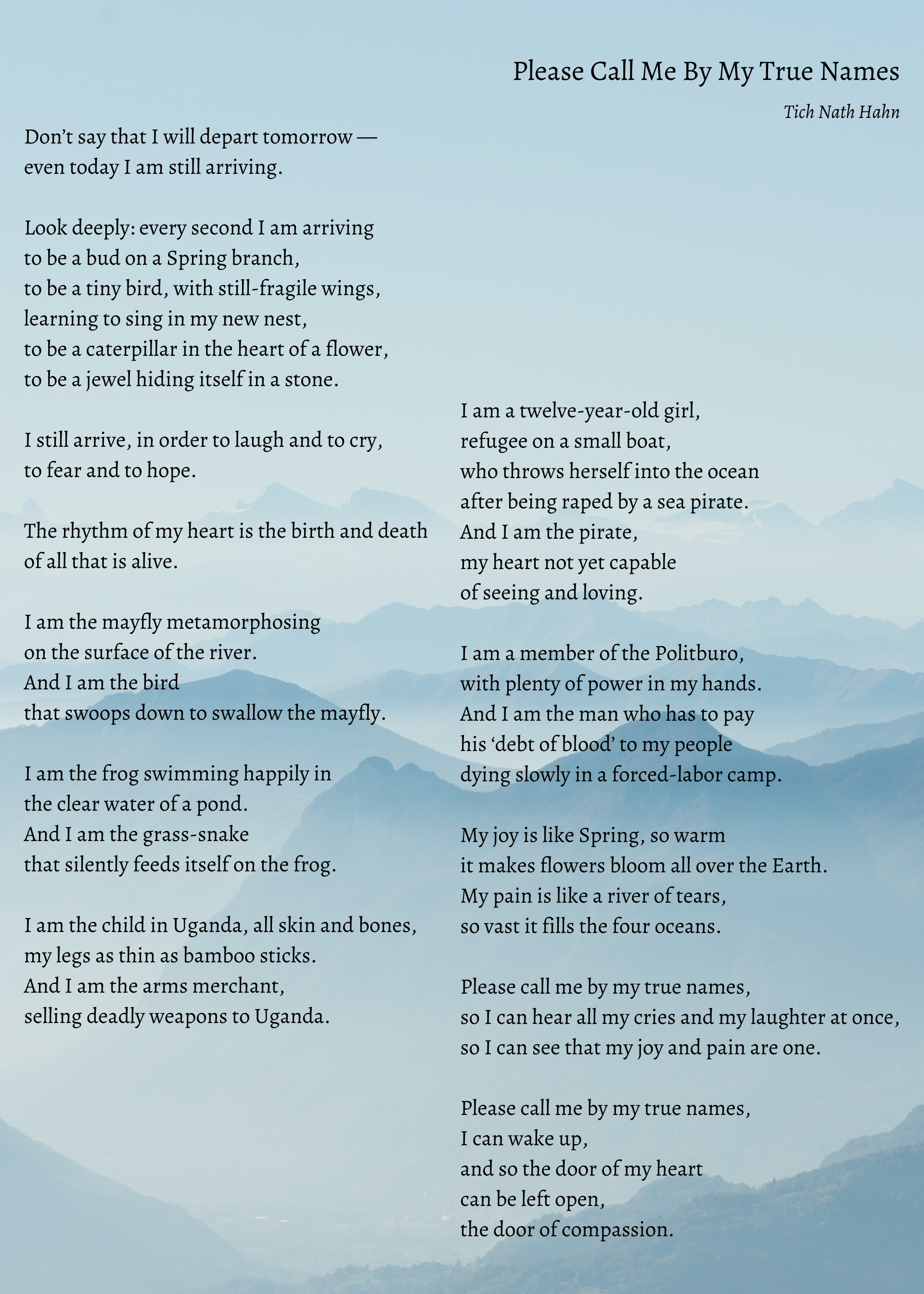
In 2022, finally repatriated, Thich Nath Hahn died in his country of birth, leaving a profound legacy to Buddhists and laypeople across the world who know his marvellous body of work. I include two of his poems. The first should be read alongside Tagore’s poem. They complement each other, resonating as they do in accepting what is, but he also shows in this poem that, seen clearly, accepting reality’s many faces is spiritual love.
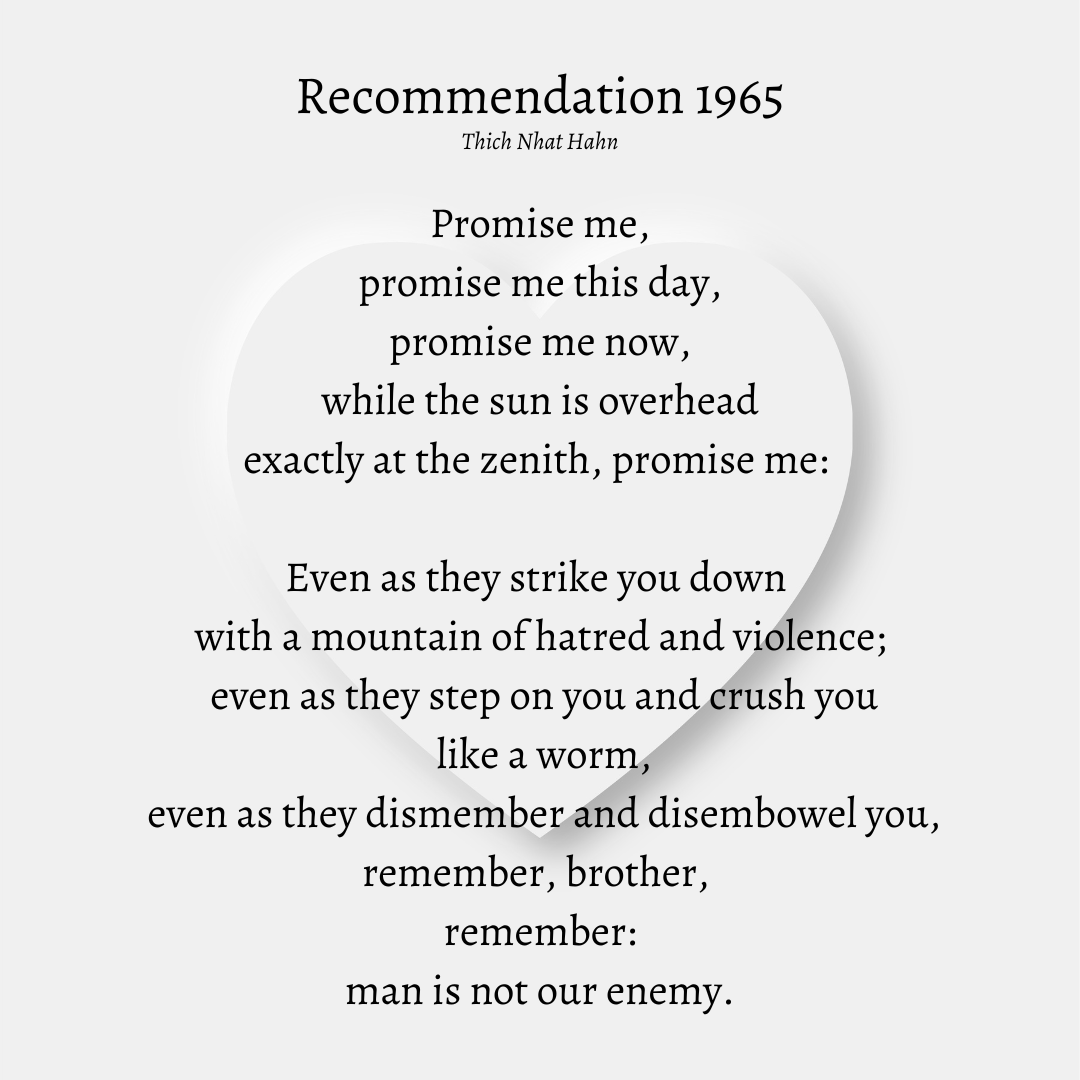
The second poem from Thich Nath Hahn is a loving prayer he wrote to prepare the young who risked their lives during the Vietnam War to die in peace. The love in this poem always moves me. As with all of this Master’s work, it reverberates with compassion.
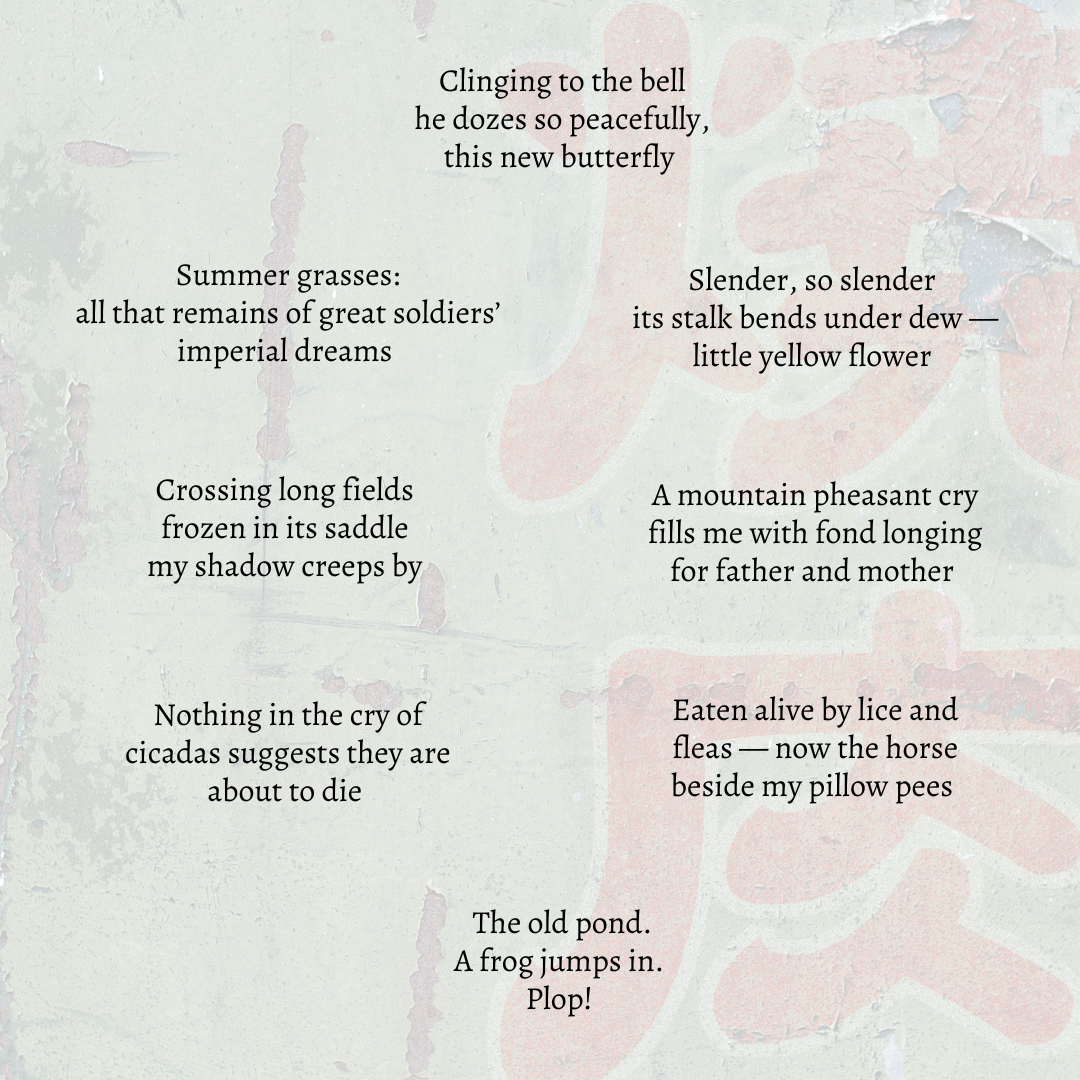
Haiku Potpourri — Basho (1644-1694)
Most poets today have heard of Matsuo Basho. His work is profound, and its relevance persists across centuries. A Japanese warrior-poet, not a monk, Basho nevertheless had profound respect for and love of nature. Reading his concise words can make us smile, but it is spiritually uplifting because it is emotionally honest. Basho’s keen eye for concrete ways to open our hearts is a high spiritual art. Each of his word-image-moments offers profound insight into the beauty and fragility of life, inviting acceptance and love for all that exists.
Religious Poetry
Please feel free to download my U3A presentation. Forgive, if you will, typos that I can no longer correct as my only copy is a .pdf. In my introduction to this piece, I wrote, ‘I personally found more commonalities than differences across the major religions and through the centuries. The poems often refer to the immersion of the self into God or nothingness, and they speak of blood and the body, nature and light, and, most of all, of love.’
Your blog post was engaging and informative. I appreciated the real-world examples and anecdotes you shared, as they helped me relate to the topic on a personal level. To explore more, click here.
Dear Alison, thank you for you generous feedack. I’m so pleased you enjoyed the post. I am sorry but I simpl cannot remember where I found those poems who translated them. They possibly come from a book called Classic Haiku edited and illustrated by Tom Lowenstein that includes Basho, Buson, Issa=, Shiki and their followers.
Wonderful, Lindy. Your commentary, like the poems you’ve selected, is enlightening.
I wonder, have you read much Sikh poetry? The Sikh faith is fascinating. There are some wonderful translations from the Punjabi into English available, I believe.
I also appreciate your selection of Basho’s haiku. Your choices reveal much about your marvellous sense of humour and your grace. It’s a beautiful couple: felicity and grace.
Who translated those poems from the Japanese?
Looking forward to reading your next post!
Dear Val, I’m so pleased you see love in these poems as I do. Thank you for reading, and taking time to comment. I Want To Write a Real Poem was written when I was with Ochre Coast 🙂
Thank you for sharing your insightful comments Lindy. The poets mentioned make one think deeply about spirituality and love. No matter what denomination, the poets can express the hope, gratitude and love of a beautiful world superbly.
Loved your poem ‘ I want to write a poem ‘
I also want to write a poem that everyone will remember.
Thank you, Veronica, I’m glad you foound it interesting. Haiku is a special art, I love it at its best 🙂
Dear Lindy, thanks once again for an insightful piece.
I haven’t heard of some of the poets you talk about, save Basho, but I found them beautiful.
I loved Spiritual Song of the Aborigine. Impatience is short, to the point and lovely.
Please call me by my True Names is certainly profound and very thought provoking. The Haiku, brilliant.
DEar Sudan,
Tthank you for your insightfu comment on this post. The spiritual commonalities do tend to encompass all humanity; I love that. Thank you for Att at its that some might think. The words you quote from Atatürk, wrtten in 1934 do just that. That sort of love and wisdom is timeless and I try to remember it is there, it exists, despite the many evils in this world.
A thought-provoking discussion, Lindy. I have the imposter syndrome when I write/present my own poetry. I question myself about it being ‘real’ poetry. Your poem ‘I want to write a real poem’ reflects my own thoughts, although I couldn’t have expressed them in such a brilliant way.
Hyllus Maris & Thich Nha Hahn’s poems reminded me of the words attributed to Ataturk, carved into a stone memorial at Anzac Cove.
‘Those heroes who shed their blood and lost their lives! You are now lying in the soil of a friendly country. Therefore rest in peace. There is no difference between the Johnnies and Mehmets to us where they lie side by side here in this country to of ours. You, the mothers, who sent their sons from far away countries wipe away your tears; your sons are now lying in our bosom and are in peace. After having lost their lives on this land they have become our sons as well.’
Atatürk, 1934
All three pieces are different in form yet, for me, have a common theme – human beings are one & we belong to the land. I haven’t thought deeply about this, but I found it interesting that Ataturk’s words came immediately to mind when reading your blog. Thank you, Lindy.
Thank you, Julie.
Thank you, Lindy.
‘I want to write a real poem,’ well you did, brilliant. Your poems are often cradling.
Poetry that speaks of love is something we can never have too much of.
Love always
Julie Cahill.
Thanks for reading, Tess. Love your haiku too 🙂
Thanks Lindy…..love the Haiku
sun shines
birds sing
radio booms disaster