

Before I started work on my novel High Rise Society, I often outlined the concept to friends and tabled it in workshops to great feedback. ‘I’d read that’, they’d say. But early into the first draft my enthusiasm flagged which led to the idea of spicing it up with a touch of magical realism.
As though to affirm my decision, the universe brought me a WritersSA workshop on just that topic. Sadly, days before it was due, COVID-19 shut it down. It was a blow because I am not naturally inclined to write magical realism and don’t pretend that I can. Indeed, as an anthropologist, I’m more of a realist. But I decided to carry on.
As I began to read up on the topic myself, my excitement grew. I had only to figure out how to weave magic into a tale about poor people living in high rise public housing. The answer was already there in the book; tree-hugging.

Tree-hugging
On the face of it, hugging a tree is not a magical event. Indeed, some might call it silly. But like regular humans, the characters in my novel don’t hug trees at random. They hug trees they like because taste has a social or cultural background*. Now that is an anthropological truism; call it ‘data’ if you will.
* A marvellous book on the social construction of taste is Distinction: A Social Critique of the Judgement of Taste written with fabulous insight and foresight in 1979 by sociologist Pierre Bourdieu.
It wasn’t such a leap from hugging trees to deciding to have trees and characters talking to each other.
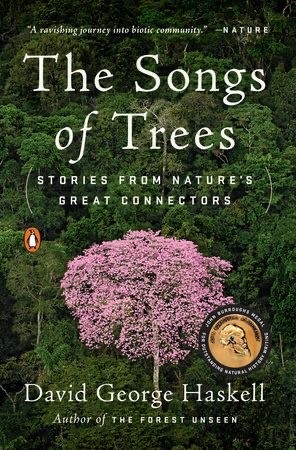
To test the viability of this idea, I read The Songs of Trees by David George Haskell, a book rich in botanical and scientific information which, at the same time is lyrical in creating a remarkable story about trees. Inspirational stuff.
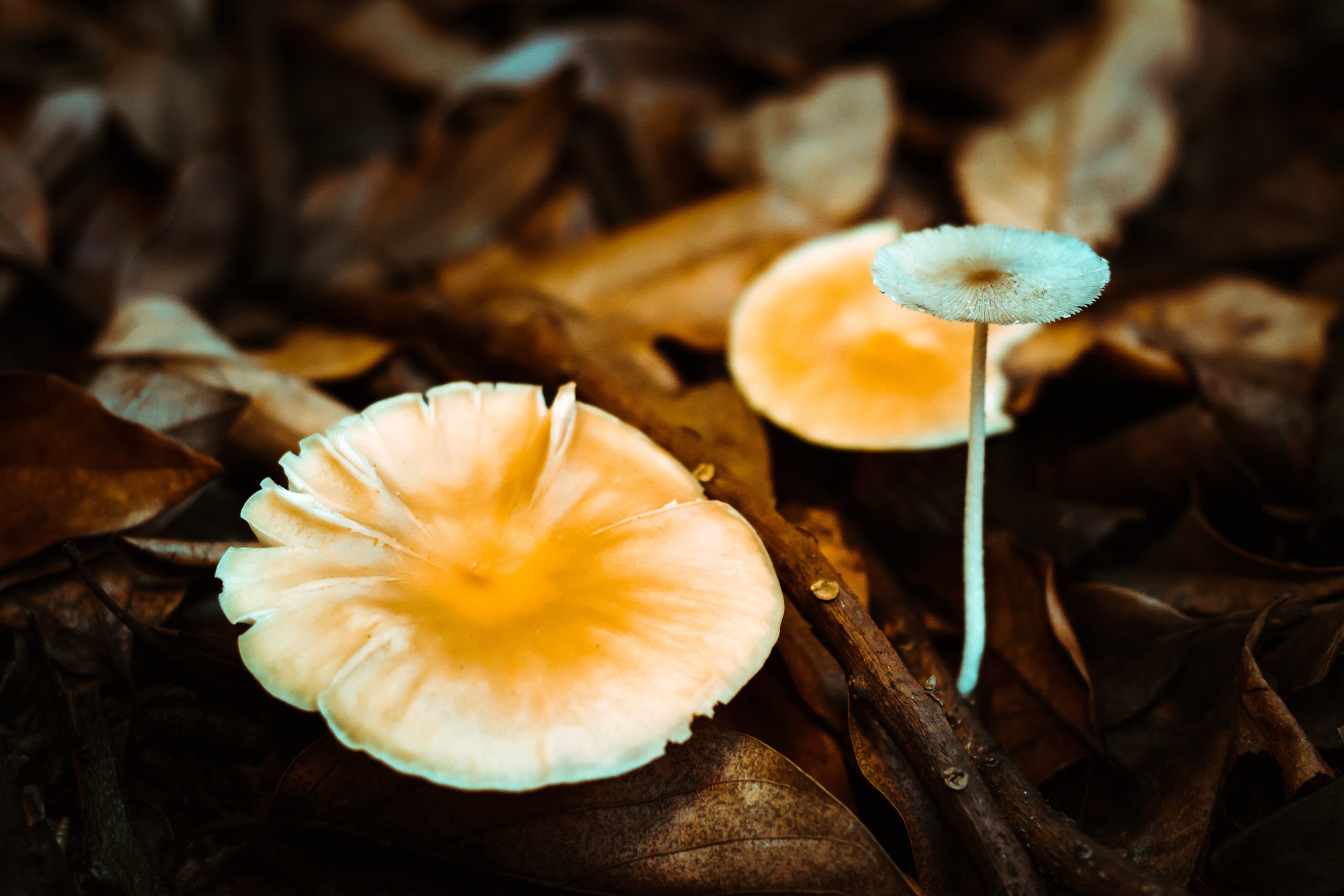
The Song of Trees also led me into the realm of fungi which are vital to tree life, living, as they do, in and among tree roots.
What is magical realism?
In his article, ‘Writing magical realism: The Ultimate Guide‘, Jack Smith explores magical realism in literature. It variously involves the inclusion of ghosts, rain that lasts five years, fabulism, the fantastical and improbable, the supernatural, paranormal, surreal, uncanny and the marvellous — not forgetting magic, myth and dream — all used to construct worlds at a tilt.
Further, Smith argues that the magical elements of life are fundamental to it, linked as they universally are to death. In his words —
mortality disposes us to an interest in magic, so until the conundrum of death is solved, we’ll likely always have an appetite, in art, for exceeding the limitations of what is observably possible.
Jack Smith
Many people think not only of Colombia as in the image below, but Latin America as a whole when they think of magical realism. However, Colombia may come to mind first if only from the 1982 Nobel prize-winning Hundred Years of Solitude by Gabriel Garcia Marquez.

My brush with the genre
Initially, I was smitten by magical realism in Salman Rushdie’s 1981 Booker Prize-winning novel, Midnight’s Children. Here are his opening lines —
I was born in the city of Bombay … once upon a time. No, that won’t do, there’s no getting away from the date: I was born in Doctor Narlikar’s Nursing Home on August 15th, 1947. And the time? The time matters, too. Well then: at night. No, it’s important to be more … On the stroke of midnight, as a matter of fact. Clock-hands joined palms in respectful greeting as I came. Oh, spell it out, spell it out: at the precise instant of India’s arrival at independence, I tumbled forth into the world.
See how Rushdie plays the fairy-tale phrase, ‘once upon a time’ against reality in the first sentence? He then imports an equally magical if not fantastic quality by saying the clock struck ‘on the stroke of midnight’. He weaves his magic into a real moment again by having clock-hands joining palms. The midnight arrival of this baby later teased with awful names is the portentous moment of India’s independence. Yet, what lightness of being is in these few words. What an intellect, too.
Scholars may debate whether Nigerian novelist Ben Okri writes magical realism or spiritual realism. Yet, he is another of my favourites in this genre, starting with The Famished Road that won him the 1991 Booker Prize.
I remain a fan of both Okri and Rushdie. I am in awe of their extraordinary if sometimes enigmatic talent to evoke and take readers on a rollicking ride; in the case of Rushdie certainly. When I was at university, I used to say you had to read him like Karl Marx, who is only understandable if you don’t fixate on words but instead, roll with their tide. Magical realism as a genre does not necessarily have a clear beginning, middle and end; it has a slightly breathless quality in the way it invites you to suspend disbelief.
Jack Smith’s who’s who of magical realism, of course, includes Isabel Allende, Jorge Luis Borges and Japanese author, Haruki Murakami among others. You will remember Murakami for his 1997 novel, Wind Up Bird Chronicle. All are acclaimed writers, so there must be something special going on. Could it be magic?
The realism of magic
In general, I prefer feet-on-the-ground realism. At the same time, as an anthropologist, I am bound to think of the world, as not actually real, but — following Michael Taussig, one of my guiding anthropologists as mentioned earlier — as really made up.
You might like to read Taussig’s groundbreaking work set in Colombia, Shamanism, Colonialism, and The Wild Man. As the review on Amazon says, he explores ‘not the magic of the shaman but that of the politicising fictions creating the effect of the real.’
I remember too, how excited I was when I read Peter Berger and Thomas Luckman’s book at university. First published in 1966, The Social Construction of Reality the idea that we create our realities changed my world.
As Jack Smith asks, if realism is about ‘impressions of lived experience’, what is magical realism? And, here’s the twist. The magic in magical realism is part of reality, part of the lived experience of characters within the genre called magical realism. Magic is embedded in our lives, but we don’t always notice it.
It’s all about perception
Readers of magical realism are encouraged to understand the world somewhat anthropologically. They may not believe in ghosts, witches or the living dead, talking trees or five-year rain, but must suspend their everyday assumptions to accept that such entities are real to characters. And, often enough, writers may have grown up in worlds where the numinous and ethereal exist and are often honoured as real.
We could suggest that the term, ‘magical realism’ is a Western construct predicated on a rational, scientistic cosmology that does not allow for the reality of ‘magic’. The name alone carries this distinction.
Think about this. When we say, ‘that’s a myth’ aren’t we saying something is untrue? Similarly, many in the scientistic West altogether dismiss, not only myth but also religion, without ever asking why every known human culture contains a religious, spiritual and mythological dimension.
In anthropology, myth is truth. Mythology embodies the wisdom by which cultures and people live. In Australia, we have myths about nation, motherhood and mateship to name a few, and we judge others in these terms. When someone says ‘That’s un-Australian’ we all know what it means against the background of our myths. Myths, like symbols such as a national flag, are real. They carry huge emotive power and they construct our reality. And, we construct our reality in their terms.
A flag, after all, is only a piece of cloth yet people lay down their lives for theirs. A flag’s mythological and symbolic value carries the immensity of who we believe we are. In this sense, any story without fantastical bits is probably a bit dry.
Techniques
Whether writing in the magical realism genre or including only the occasional magical moment in your narrative, your character must think there is nothing at all untoward about the event or situation confronting or engaging them. We may think tree-hugging is kooky, but can we make our readers believe in trees that talk?
Using techniques drawn from this genre allows for a character to ‘know’ things that others don’t, and for which the narrative otherwise does not provide scope. Magical realism is known to lend itself to issues such as inequity and power imbalance as in a recent novel by Shokoofeh Azar, The Enlightenment of the Greengage Tree (shortlisted for 2018 Stella Prize).
We have to ask what is real. I recently re-read Mae Gibb’s Snuggle Pot and Cuddle Pie. When I was a child, the Big Bad Banksia men terrified me; they were as real to me as the Devil as proselytised by the church, always behind me, ready to sneak up on me. To me, that was as real as the suppressed anger I saw on the faces of people with false smiles. We only have to exaggerate that a bit, and bingo, we have a mask! Mae Gibbs gave me hope with her gum nut babies, there was always someone to help.
On my Welcome page, acacias scream at me in a poem. Is that a metaphor, anthropomorphosis, the malevolence of nature or a touch of magic? It came from an authentic moment driving through the Adelaide Hills in those snappy-cold days of early Spring. There is always a fine line between reality, imagination and magic.
Try This
- Choose your favourite tree type and find one close to where you live.
- Wherever it is, take courage and hug it. Press your chest and forehead on its marvellous trunk and stand stock still.
- Notice how your heartbeat becomes more important than the sounds around you but note too, any changes if, for example, someone walks past. Does it begin to pound?
- Just observe your body leaning into the tree, hold the tree in your arms. Are you separate from the tree or do you meld into it?
- Give your tree a name. (An act of separation)
- Ask your tree a question and listen, deeply. What do you hear?
- Write this experience down and create a short story about whatever came up for you.
If you do the exercise, I’d love to hear about it.
Tell me in a comment.
Lindy
wattletales
Oh! That’s marvellous Carolyn. They are such special things, trees. Thanks so much for letting me know.
After reading this particular blog post, or perhaps another on some of the same topics, I actually did go outside and hug a tree. It was a Casuarina tree (Sheoak). The hug didn’t last for a long time, but it was a satisfying experience. If this tree was in a less obvious place, the hug may have lasted longer, but this tree is one of three only a metre or so from our front fence, and cars drive past sometimes. I don’t want my neighbours and others thinking I’m completely weird! Carolyn Cordon