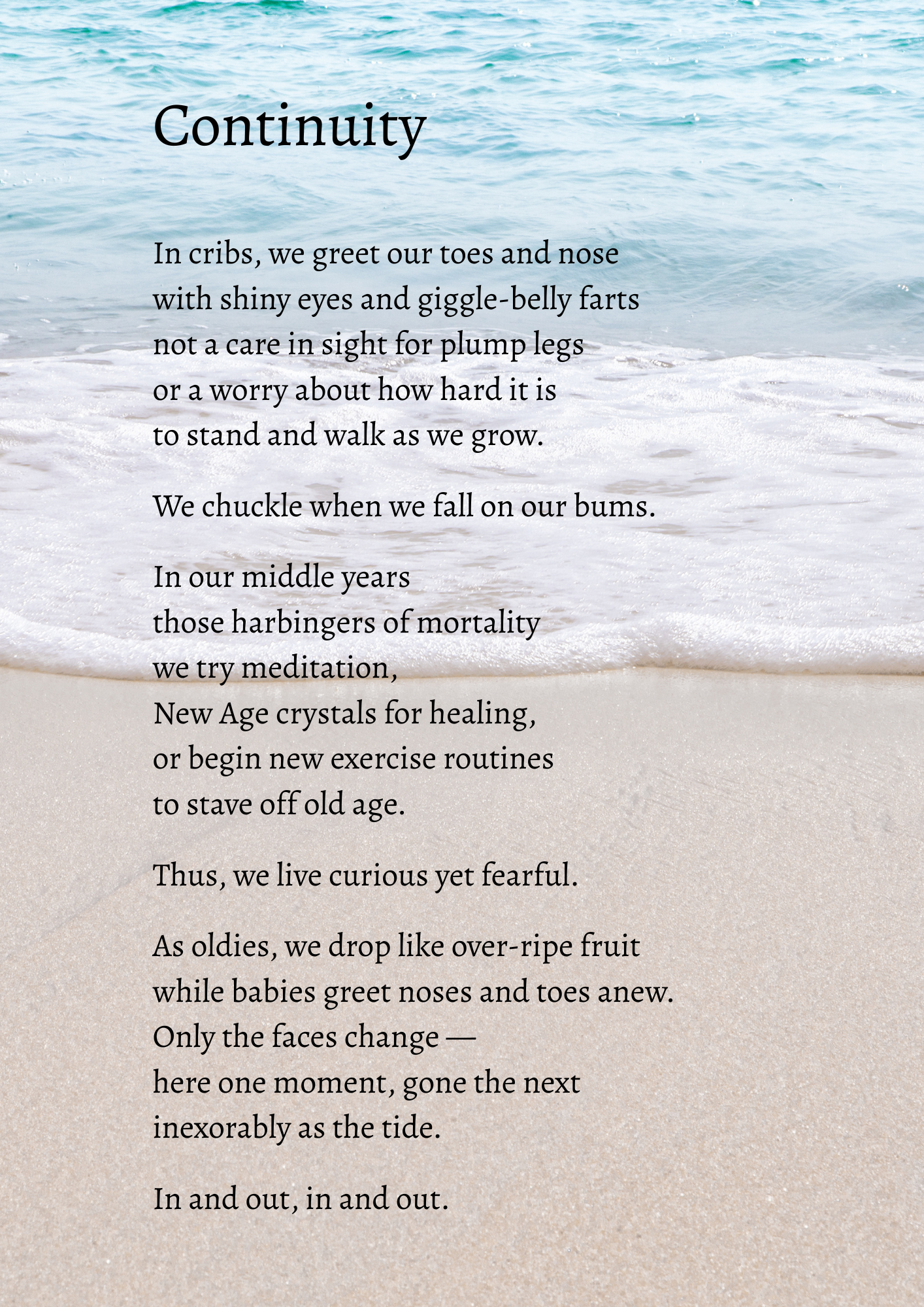
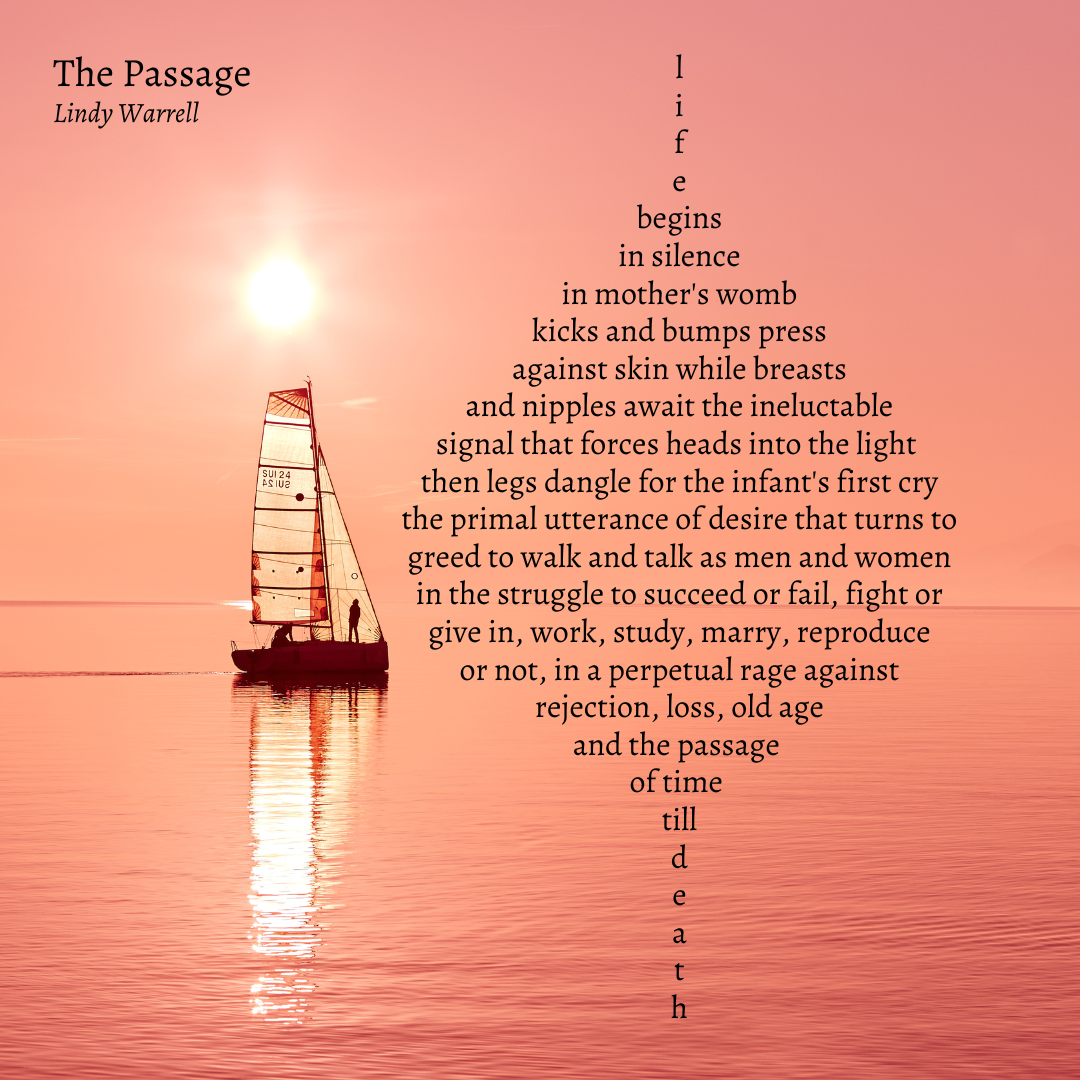
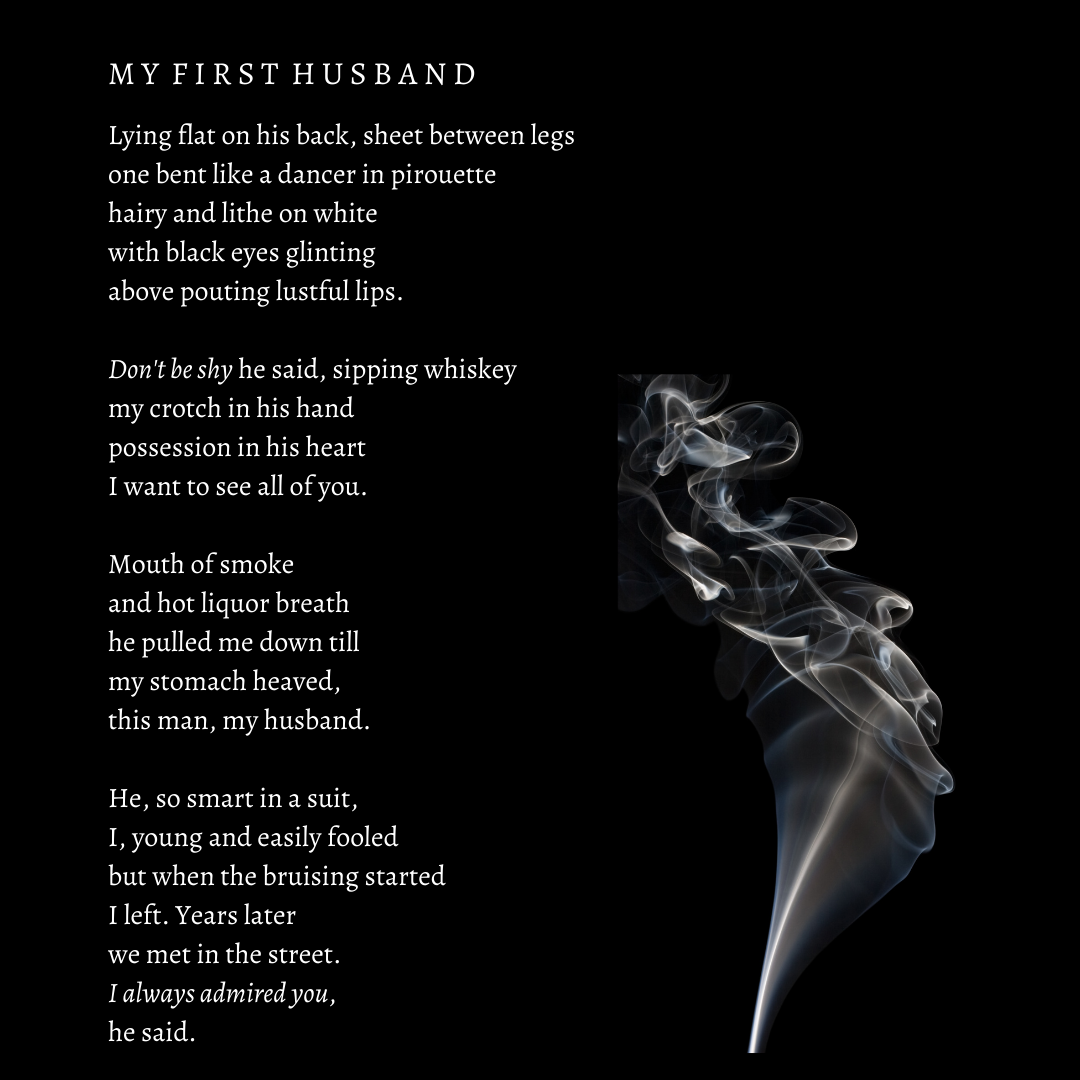
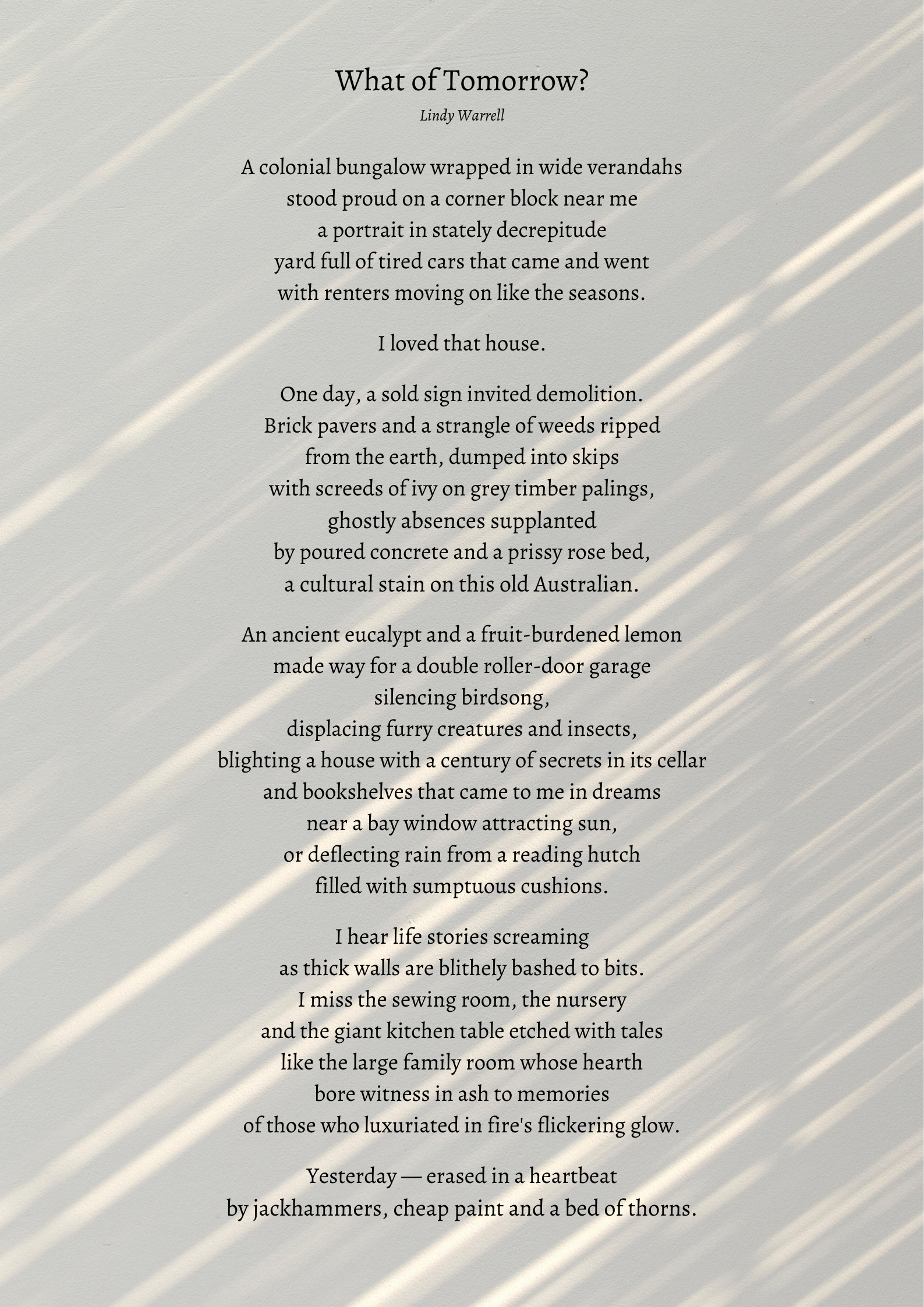
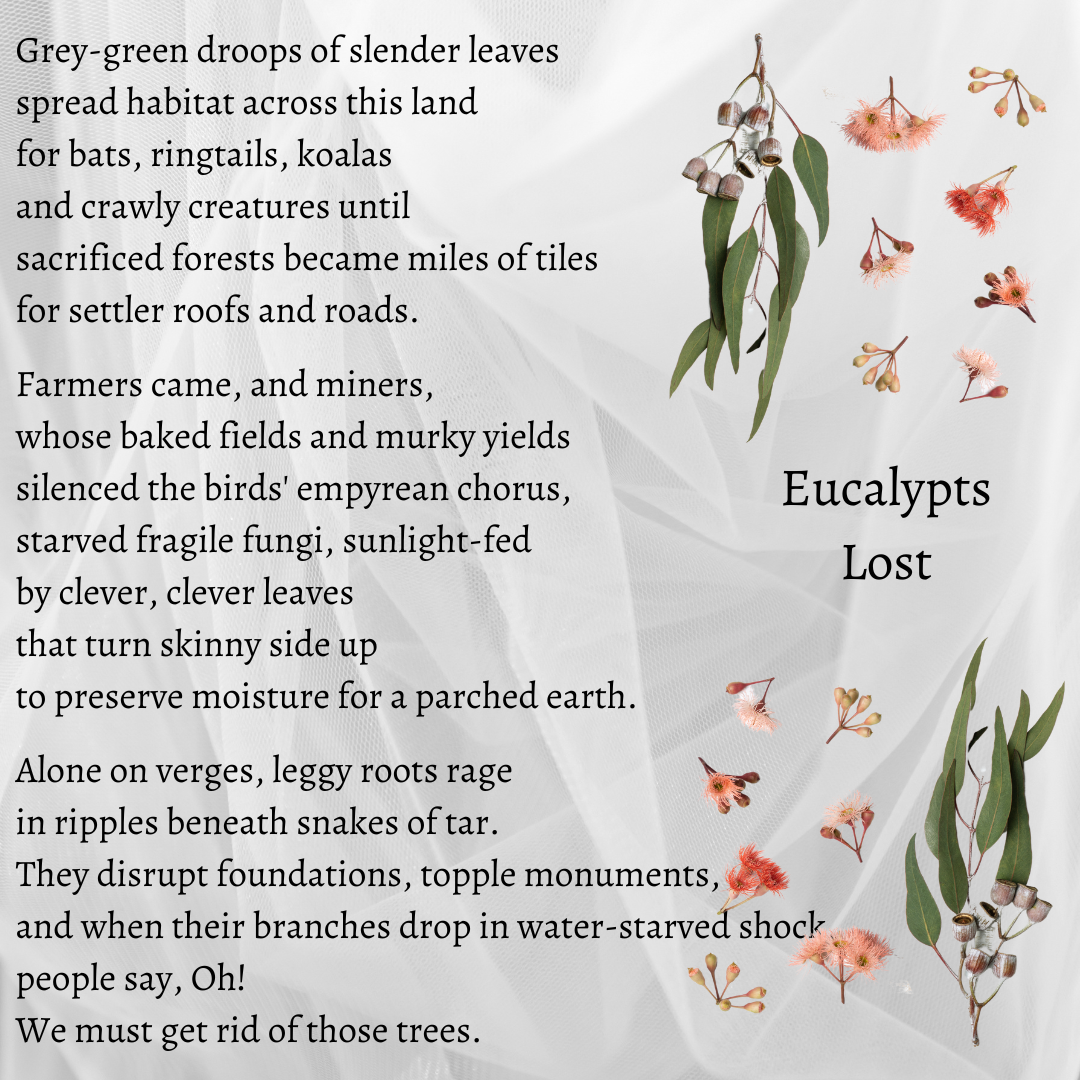
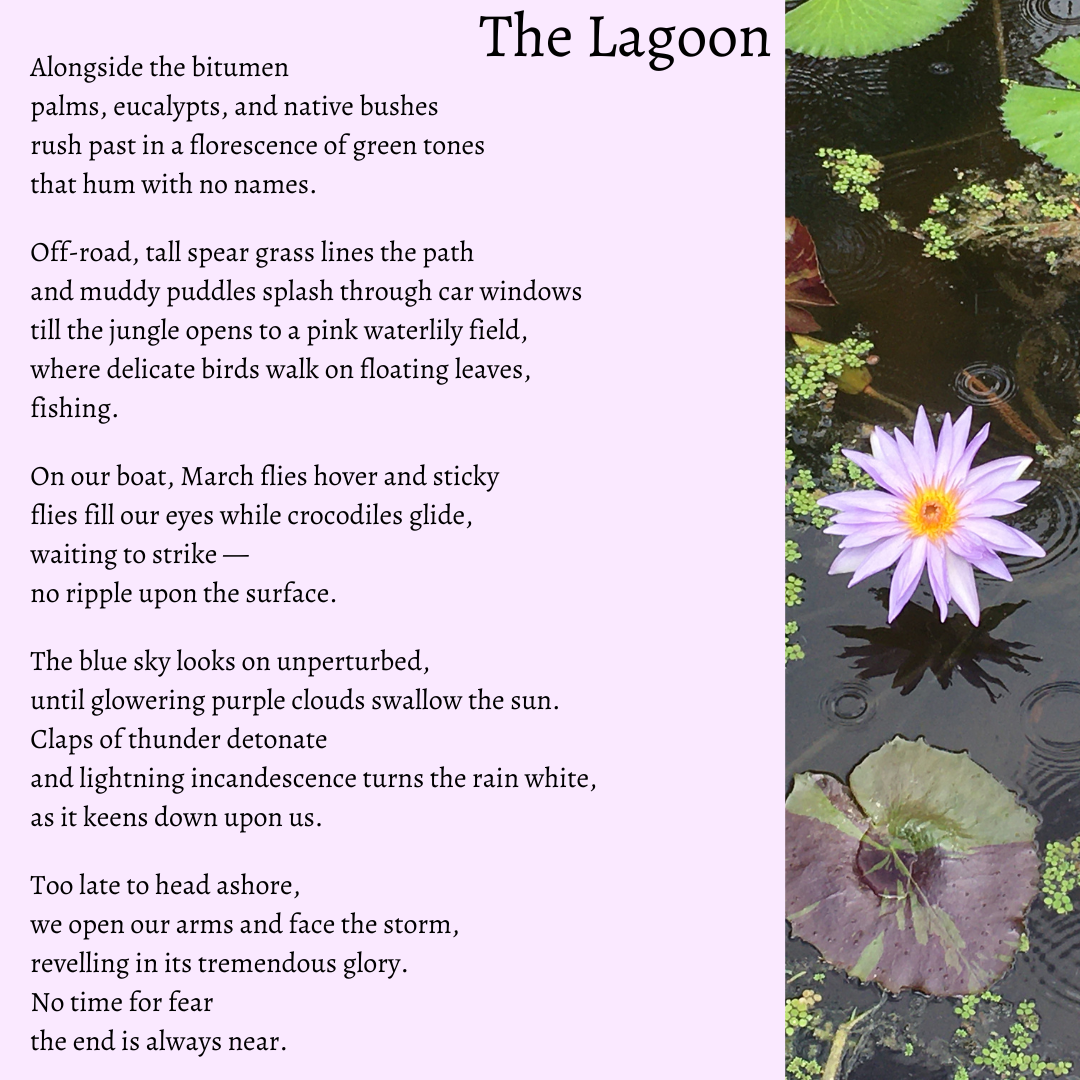
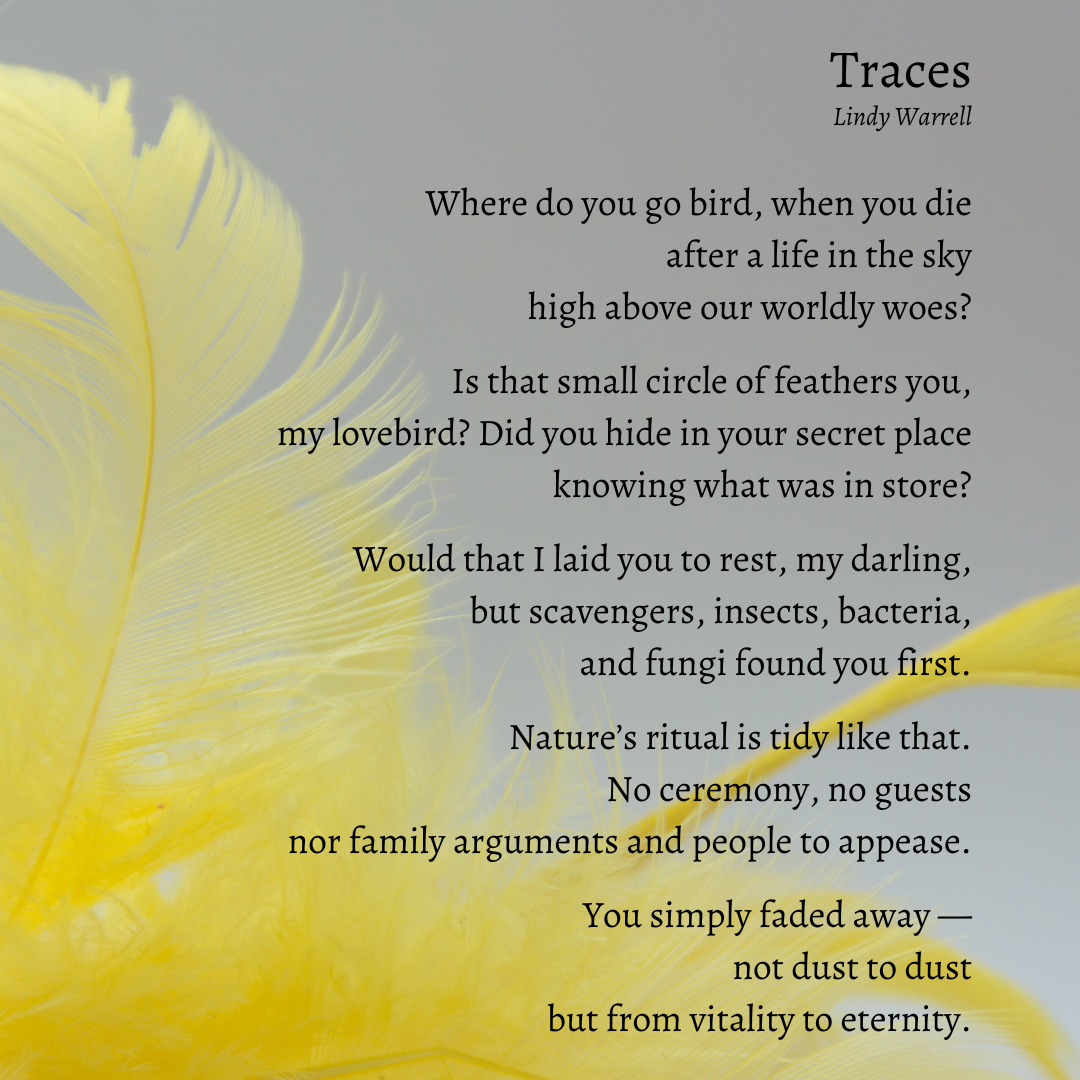
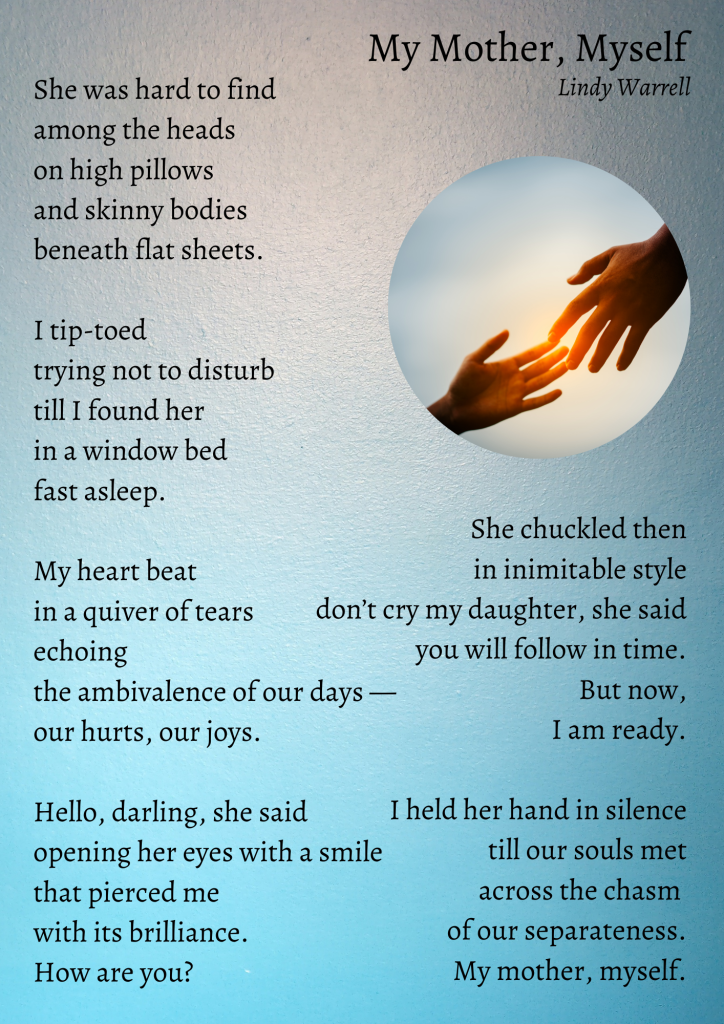
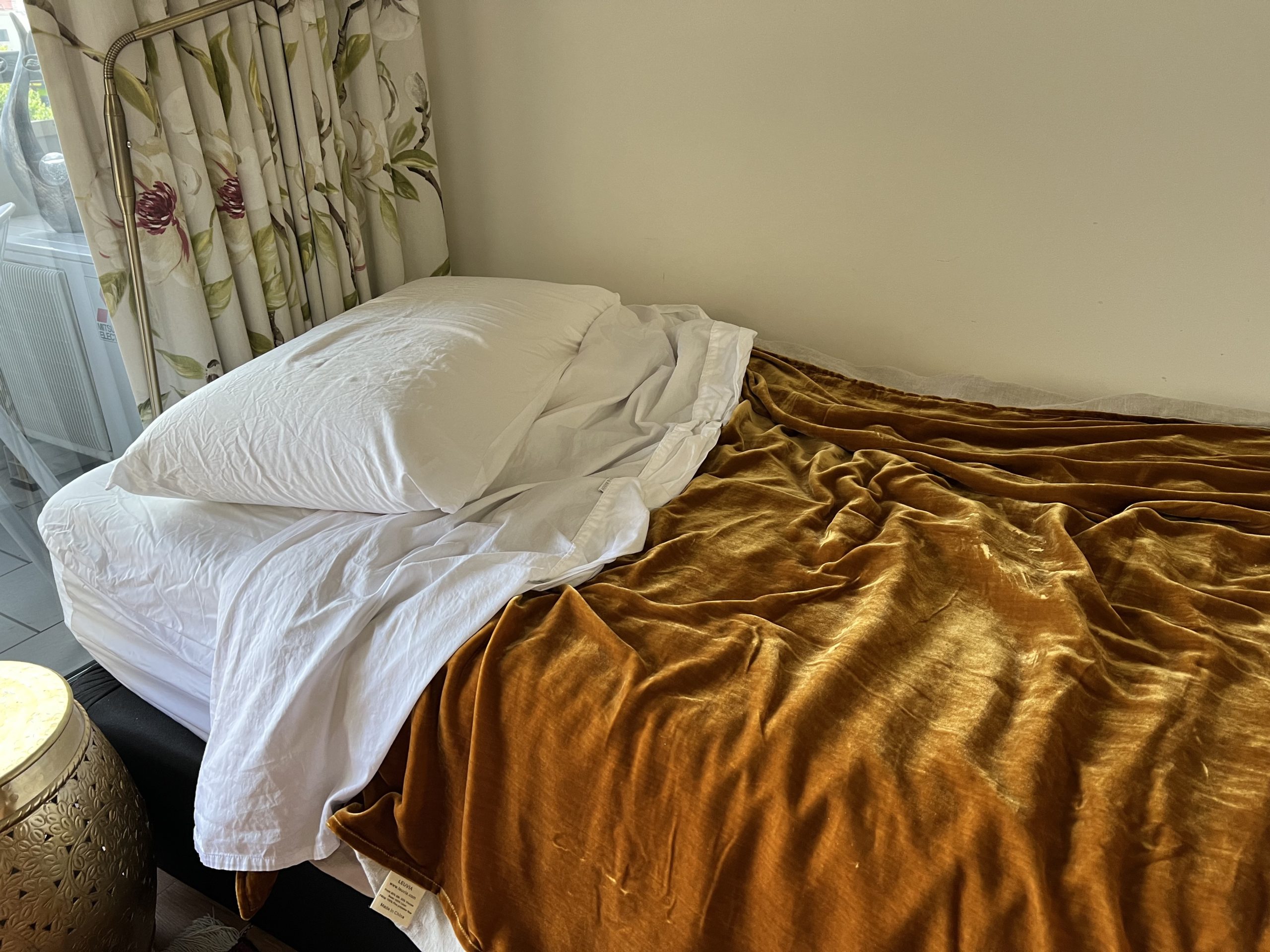
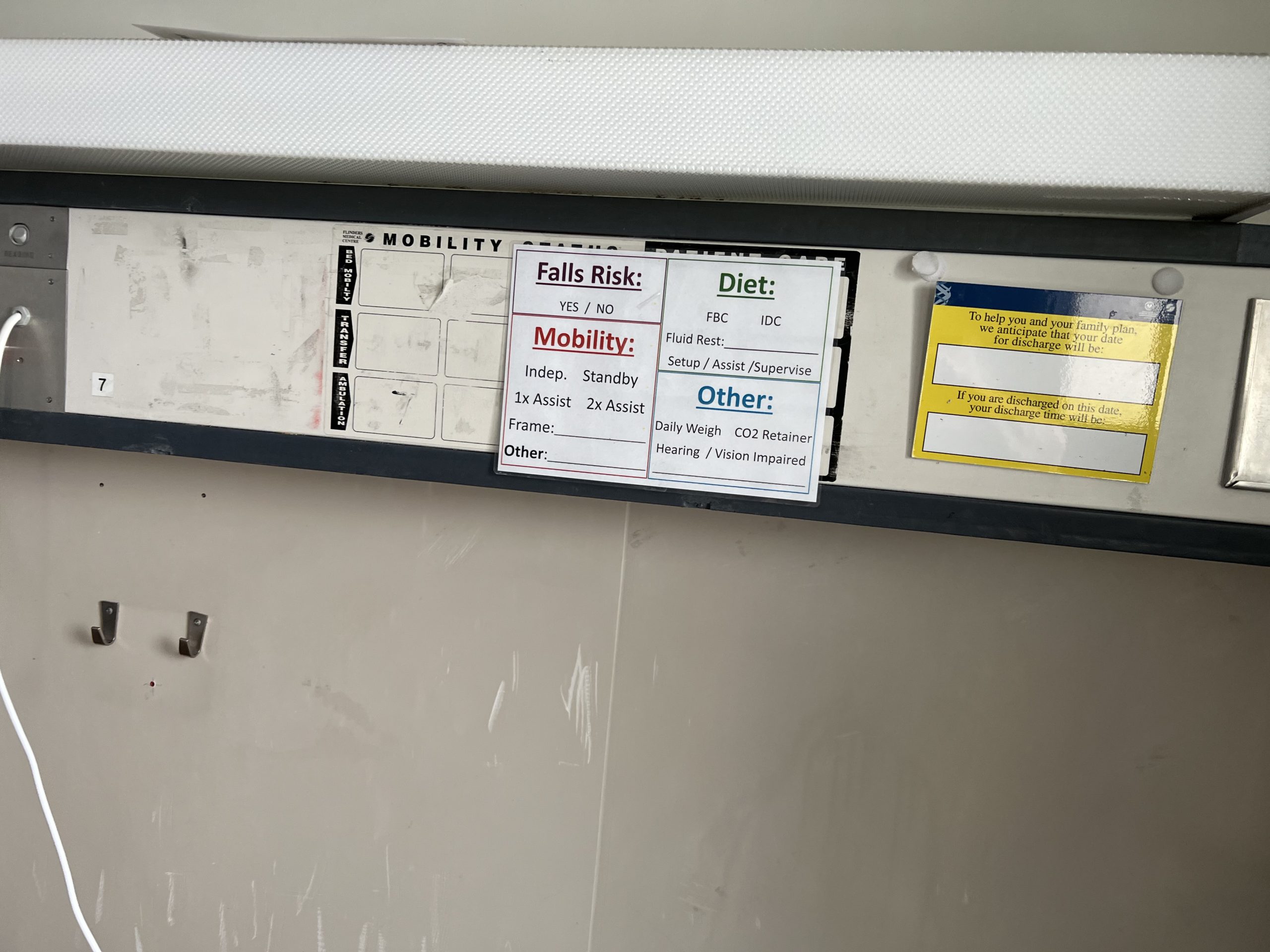
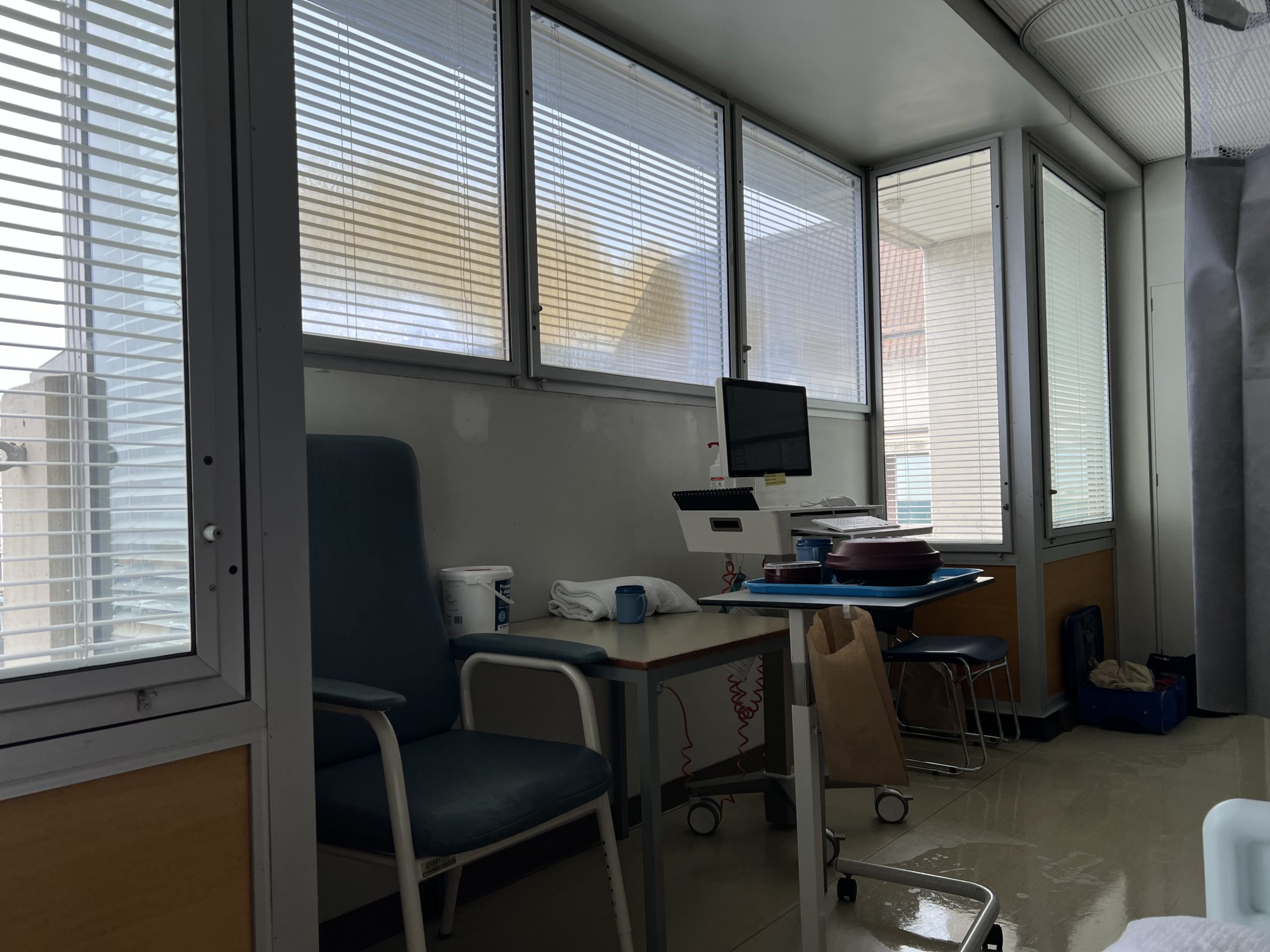
Lately, I seem to write a lot about ageing and old age. It makes me wonder if I’ve exhausted my earlier life as a source of ideas or whether, indeed, old age brings the focus home to the body in ways that others might only experience during illness. Old age may not be a sickness, but it is the gradual breakdown of one’s body, which increasingly demands more attention and time. It certainly brings focus into the now.
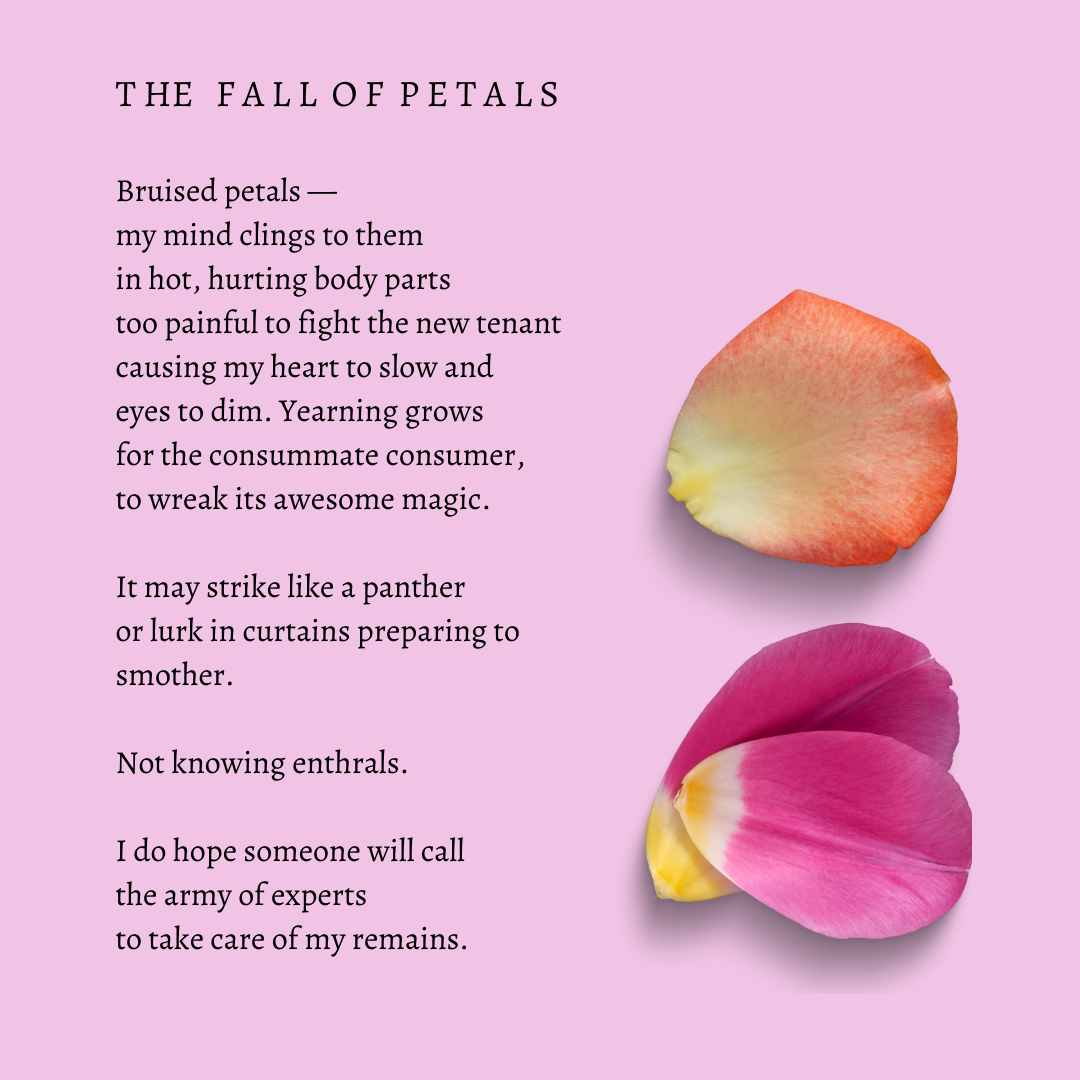
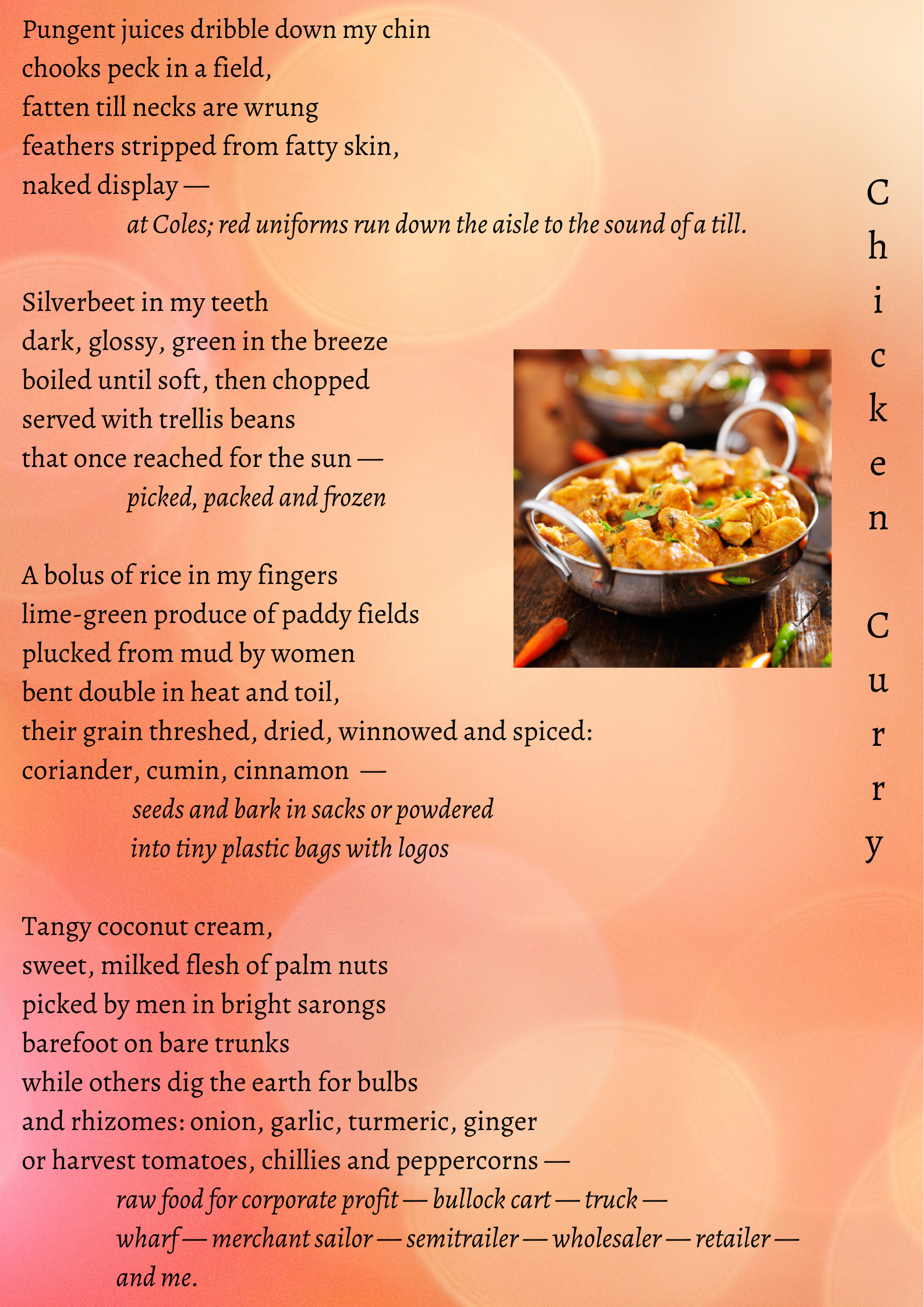
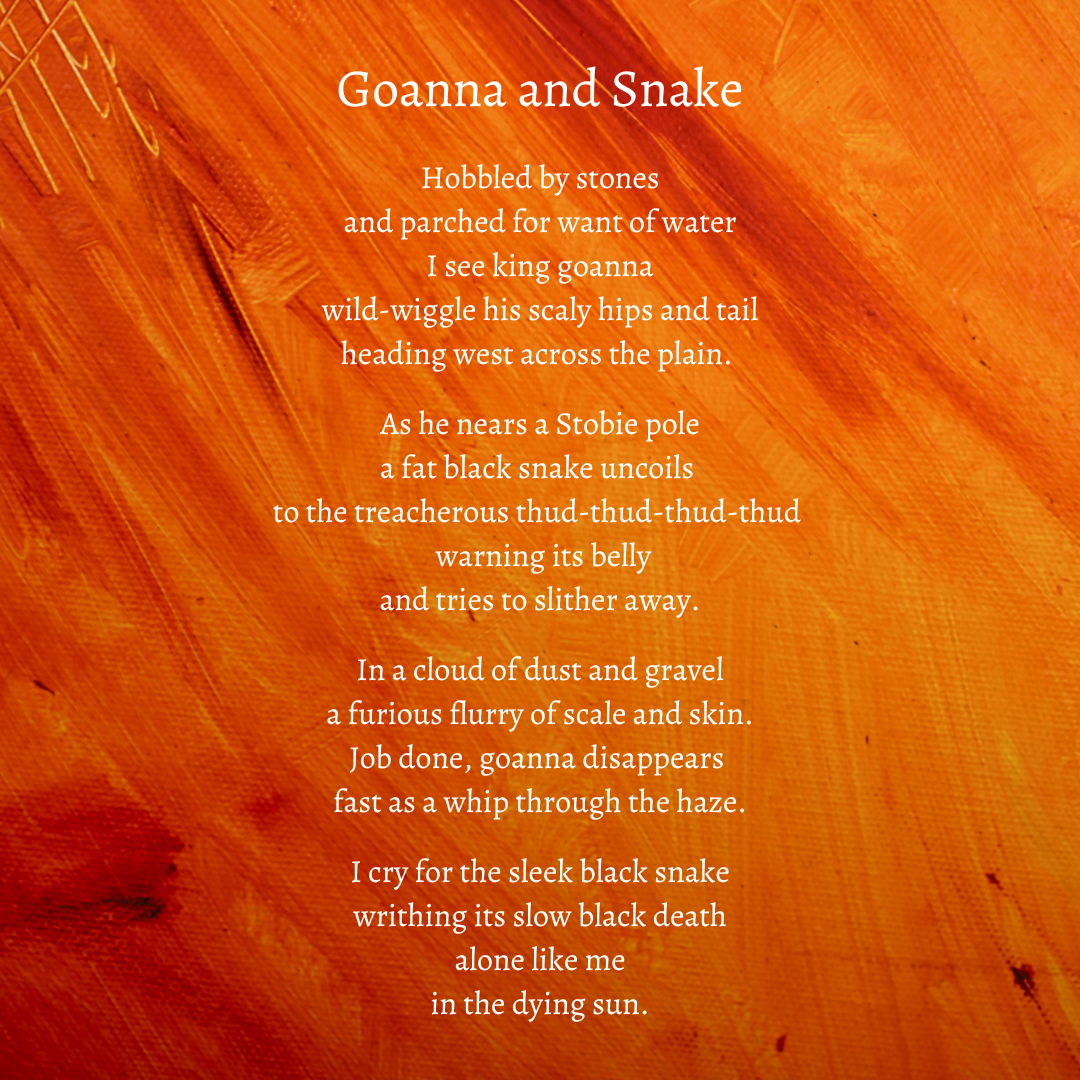
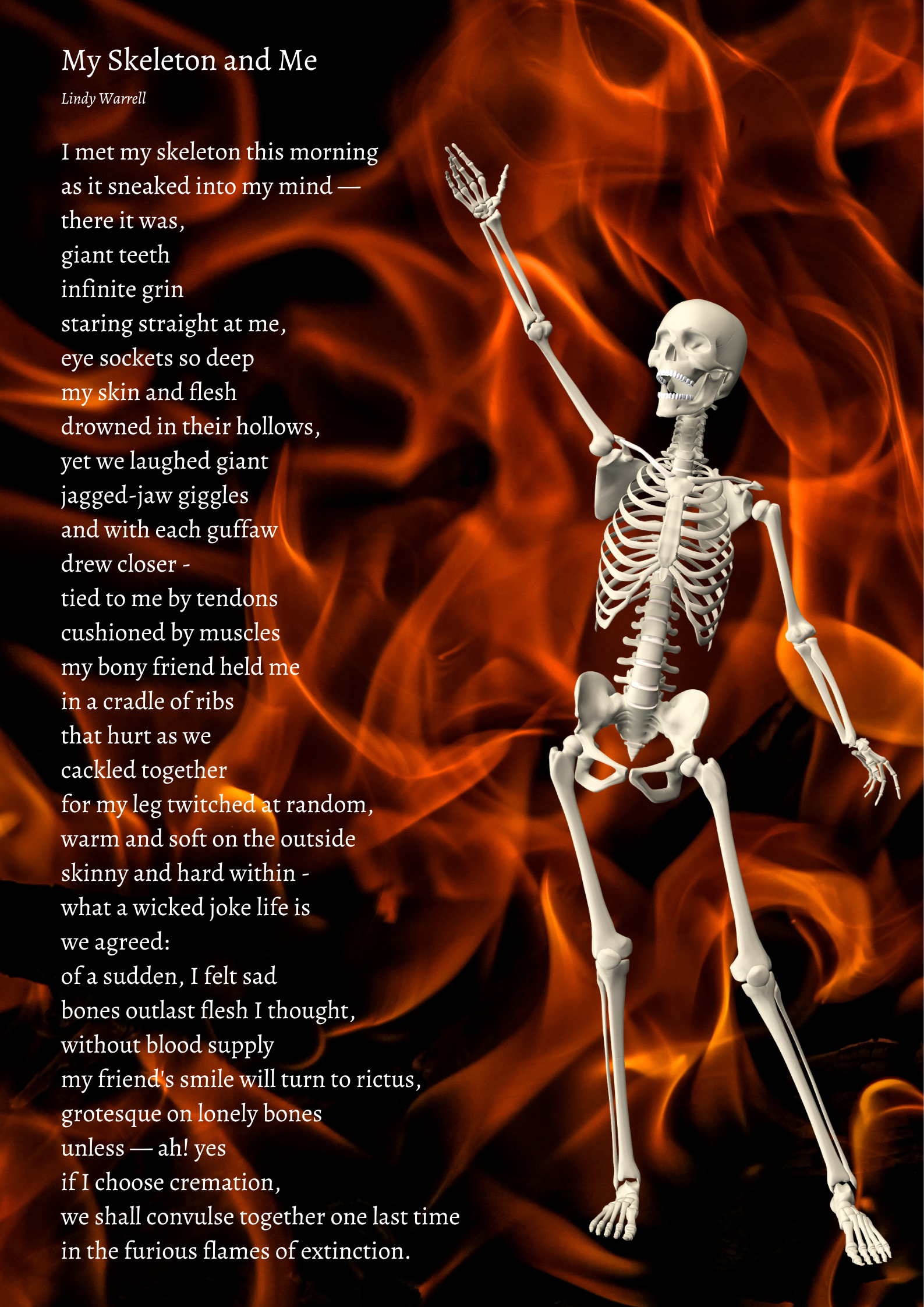
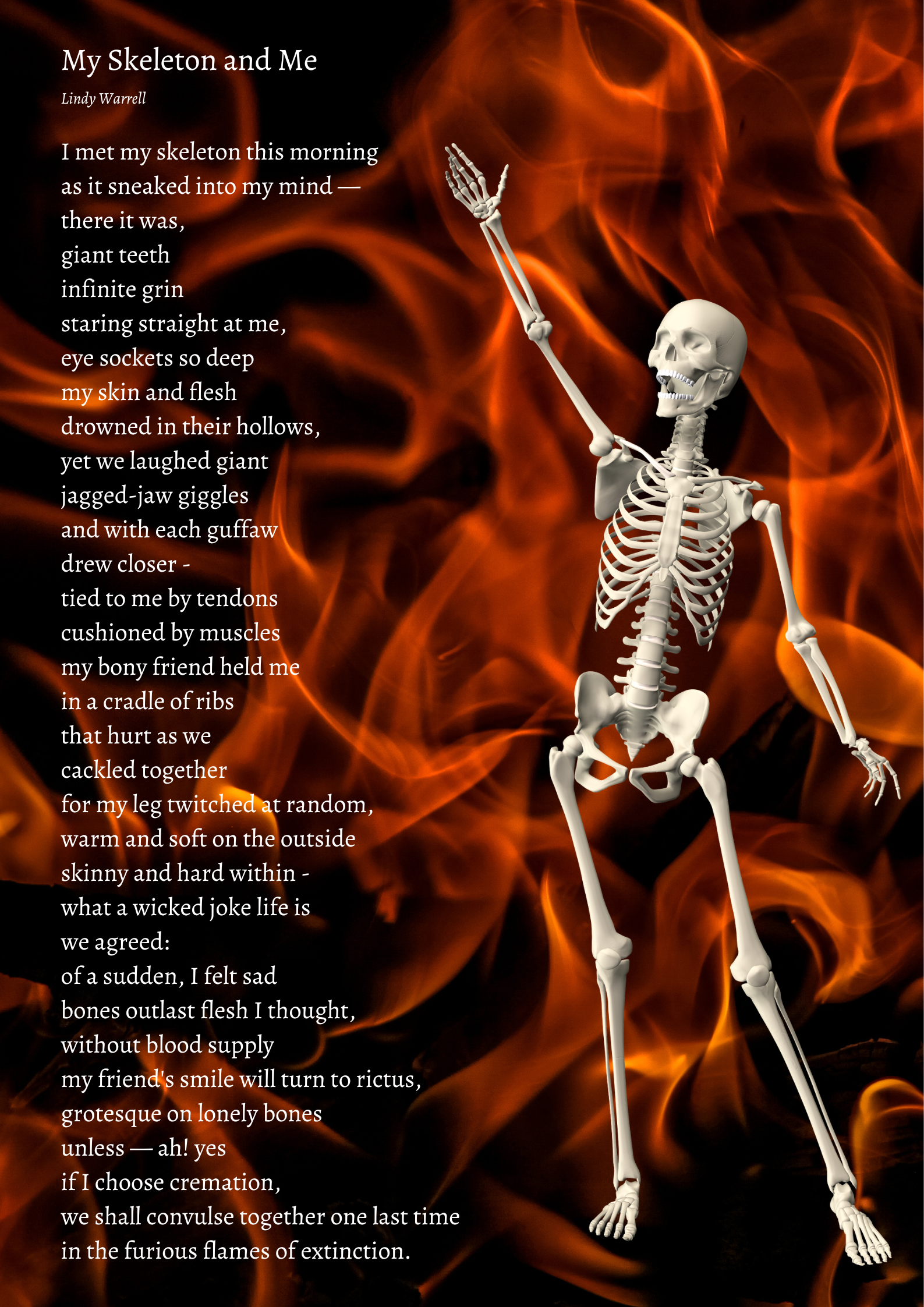
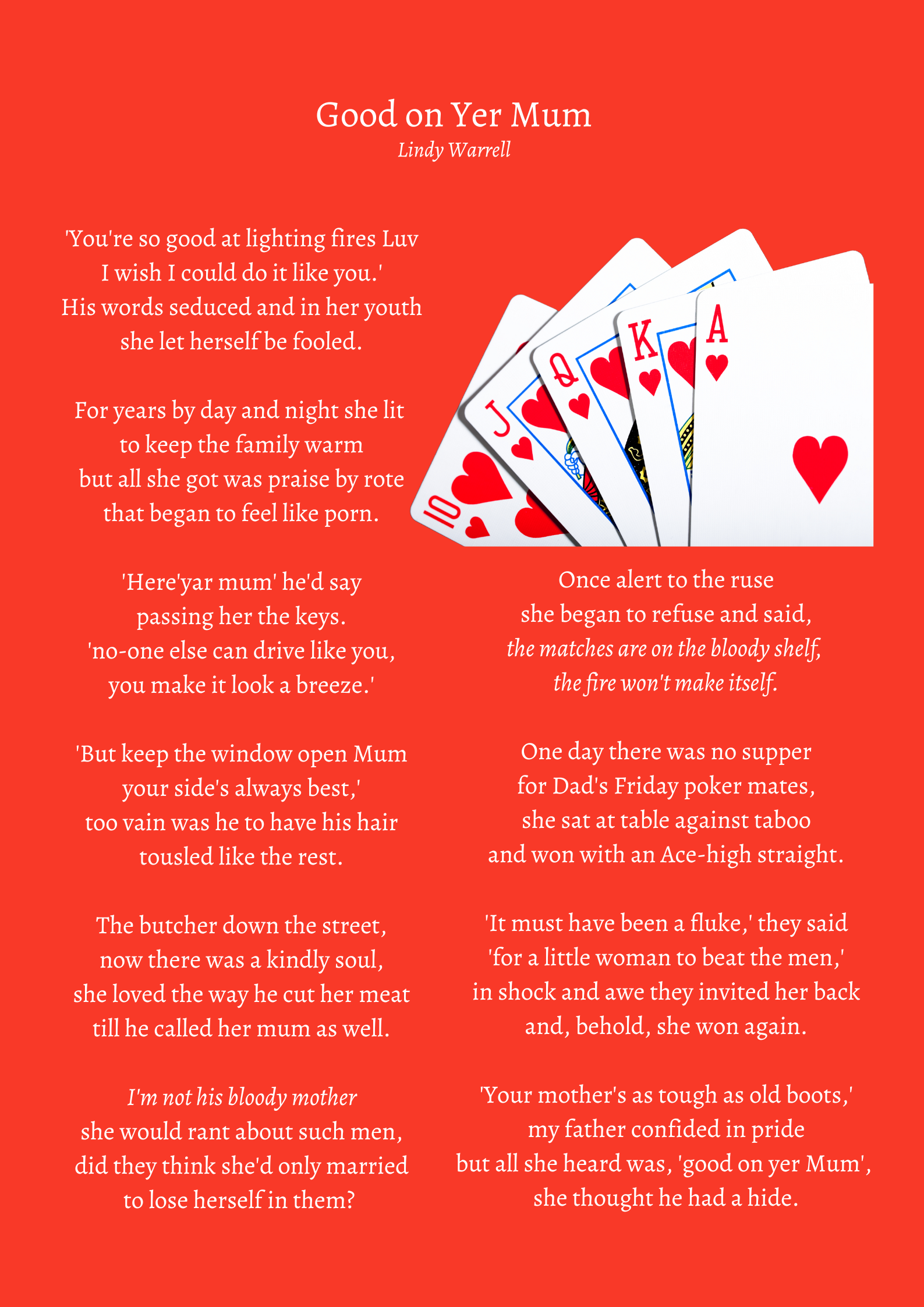
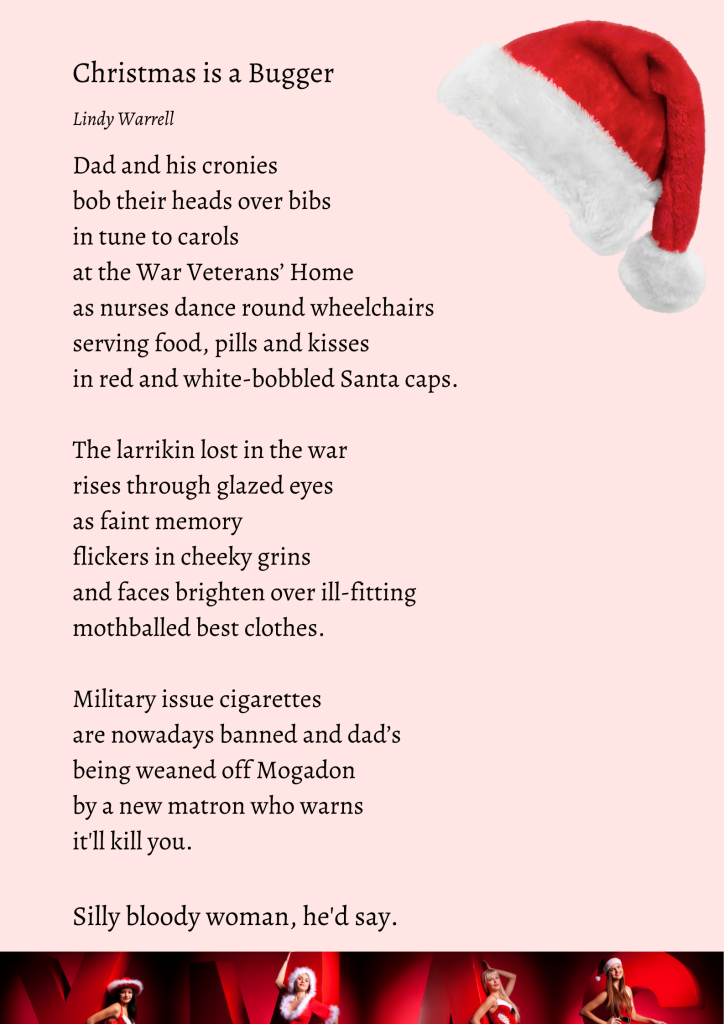
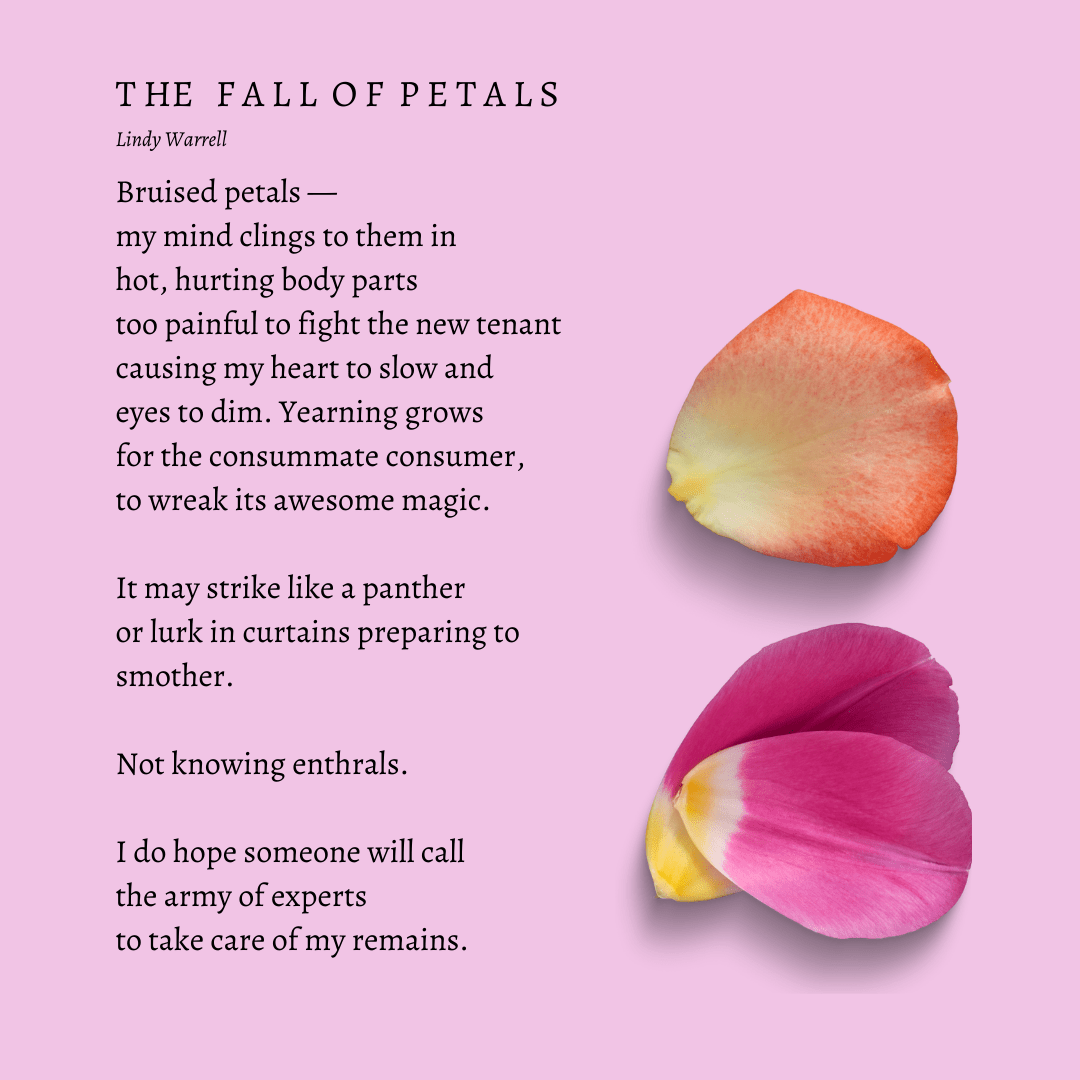
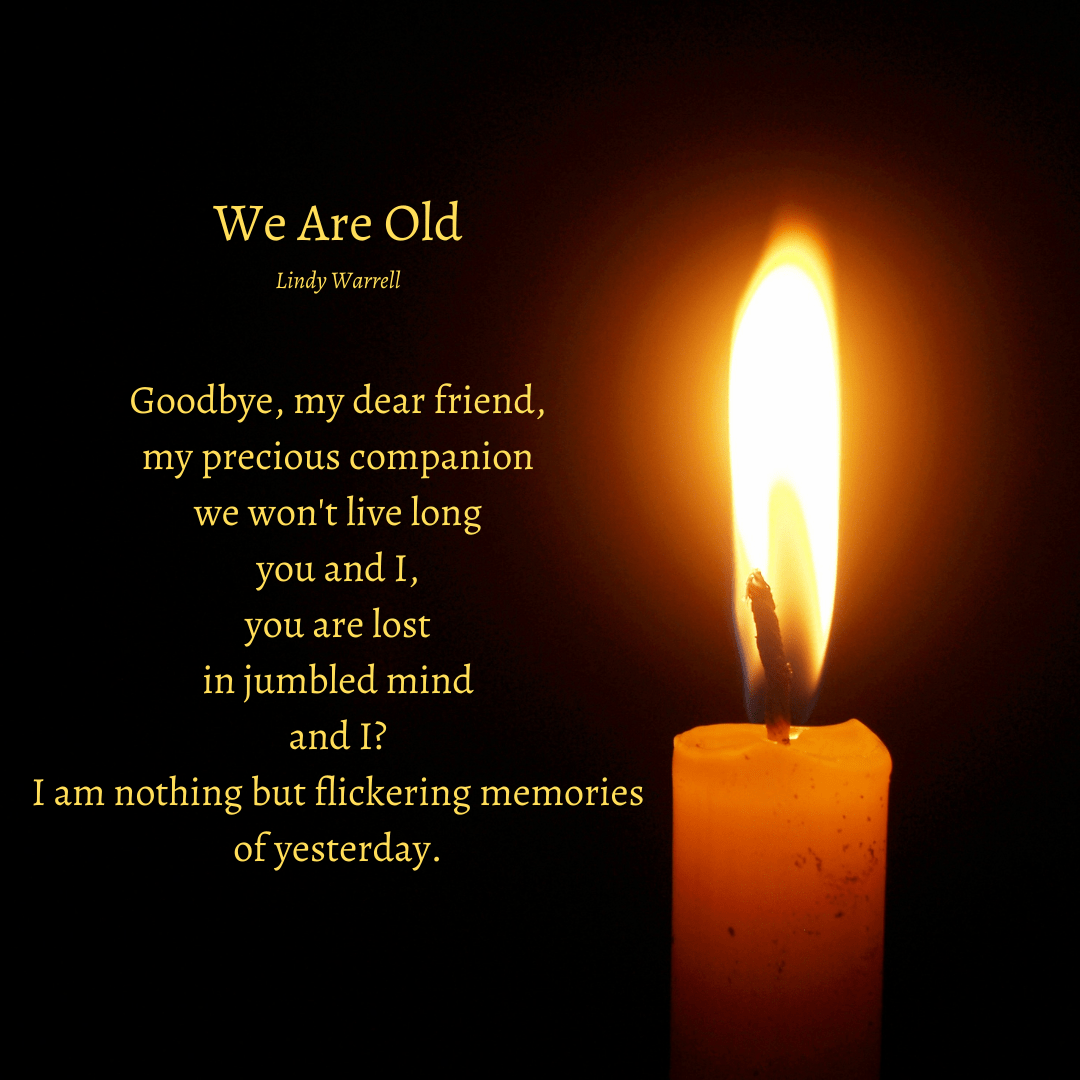
I realise old age is unromantic, often unattractive and, for some, a taboo subject like death; something they’d prefer to avoid. So, rather than rabbit on, today I’ve decided to post six of my most recent poems on some of the awkward truths of old age without comment. Make of them what you will.
Six Poems for your Consideration and Entertainment
It tickles me to write about being old. At times, I suspect people may find my interests a bit odd or of no interest whatsoever to anybody under the age of 50, 60, or even 70, when bodies are still relatively intact. But if I don’t talk about the last bit of life, who will? For what it’s worth, here are my contributions for today.
To me, stories come from the sandpit of life. When you dig your hands in, sift grains through your fingers, fleeting images and ideas appear. You try to grasp these ephemeral moments with words that may at first be inchoate. Yet your mind soon flashes with what feels like brilliance, and off you go with a story. Capturing these flashes is more complicated than it seems, but oh! what fun trying.
Sometimes, a story comes to you complete, and you quickly write or record its bones as though you are channelling. It is not yet literature, but it is the germ from which a poem or novel might grow. Unwritten ideas can dissipate fast, so it’s worth hanging onto them. I tend to record my flashes of brilliance (as they initially seem) on my iPhone when driving or those times when I wake at night. It scares me a bit to hear my sleep-ridden, old woman’s voice, but my clever Voice Memo app allows me to later save what I caught in print without having to type it up.
Ideas and Stories
I can’t remember for the life of me (sic) why I chose to write anything resembling a memoir, but my work in progress, entitled Call Me Marigold, is a novella-length piece I’m calling autofiction until someone corrects me. The only way I could think of to tackle this material was to unsettle the protagonist as a posthumous narrator, an 81-year-old woman who could not rest in death until she understood life.
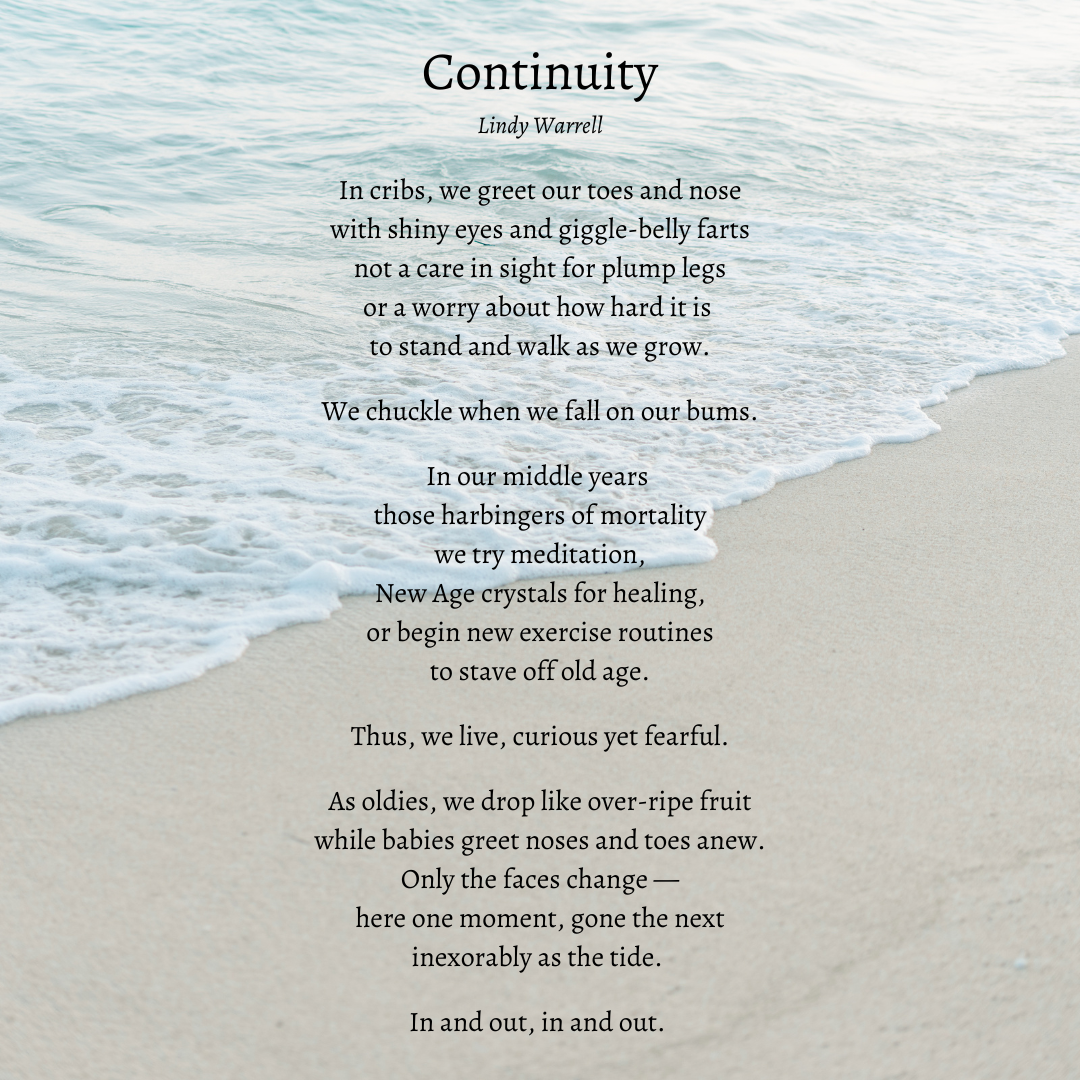
As I so often do on Wattletales, I decided to write from experience about the changes that take place between childhood and old age, using my life as an example. In other words, I wanted to explore the arc of life, similar to that depicted in the following poem, to ask what it really means to grow, age and die. We can’t know death, of course, but old age is a unique journey to consider anyway, as we move from the inside out. Or, as time goes on, outside in.
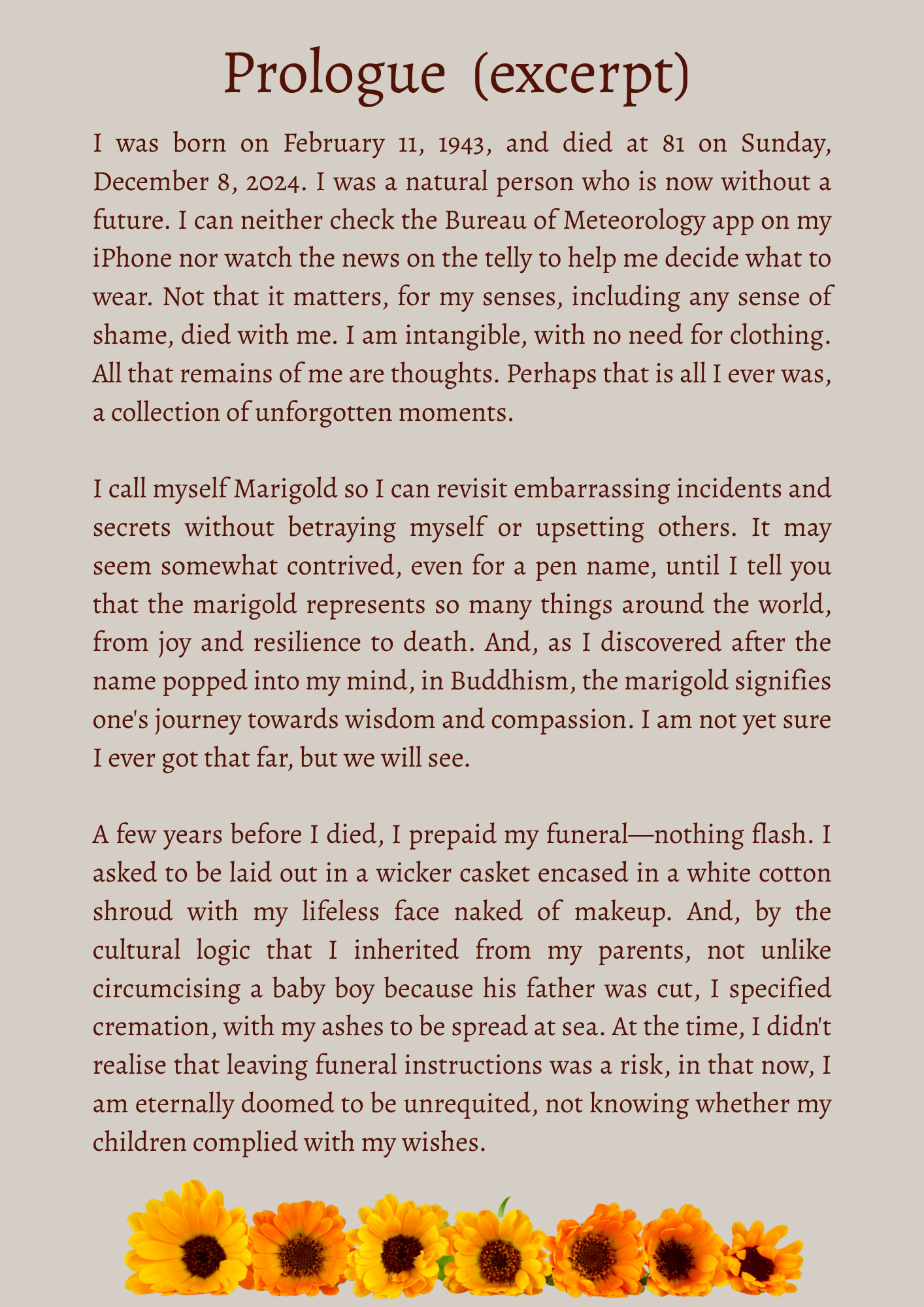
The Prologue
In the novella, Marigold (clearly not her real name) is a somewhat unreliable narrator stuck in a liminal space between life and the everafter with nothing more than memories. The story unfolds as a series of vignettes, texts and poems. Marigold refuses to name her characters. In her view, she is telling her story, so others are included only by role in relation to her. This is important because although she speaks of the joy of having children, she does not want to talk about them. After all, as she tells us, their lives are not hers to discuss.
Here is an excerpt from Marigold’s Prologue.
The most significant other character in this tale is Marigold’s mother, to whom she speaks in an italicised throughline called Conversations with Mother.
As a Writer
There is no doubt that writing from one’s life while alive is no easy task. When writing close to the bone, finding the words and purpose of each story you tell takes you deeper into your emotions. Strangely enough, this teaches you what you have forgiven and what you still need to let go of. Writing intimately about your past is a bit like time travel; it takes you there, often with intense emotional impact.
Although I’m nearing the end of the first draft of Call Me Marigold, when I got bogged down a while ago, I decided to start a new novel for respite. Sometimes, letting one story rest for a while is refreshing.
Something New
My imaginary sandpit occasionally yields the oddest things for poems and stories. Still, my writing in general tends to explore ways in which we fall through the cracks. Under the heading Questions Over Coffee in my introduction to Wattletales, I ask what it means to become broke, mad, ill, destitute, deserted, disillusioned, or denounced. What happens to our sense of self and our identity when life wreaks havoc with our intentions, plans and happiness? How porous is our mind? Is there really a line between sanity and insanity, and how do we know when we tip over the edge?
In that vein, the first idea for a new novel was to write about gaslighting in marriage. My two previous books, The Publican’s Daughterand They Who Nicked the Sun, lived in me as ideas for years before coming to be on the page. Why, then, when I was seeking respite from the emotional drag of writing Marigold, did gaslighting come up?
Gaslighting
Part of me feels that the notion of gaslighting has haunted me ever since I watched the 1944 movie, Gaslight, with Ingrid Bergman and Alfred Hitchcock’s 1954 Dial M for Murder with Grace Kelly. I have no idea when I did that, but the portrayal of gaslighting by both actresses whom I admired and adored remains clear in my mind to this day. Another part of me knows the idea came from being raised on the idea ‘what will other people think’ which inclines one to disbelieve in oneself, and my first marriage, bearing in mind my husband was 13 years older than me at 17.
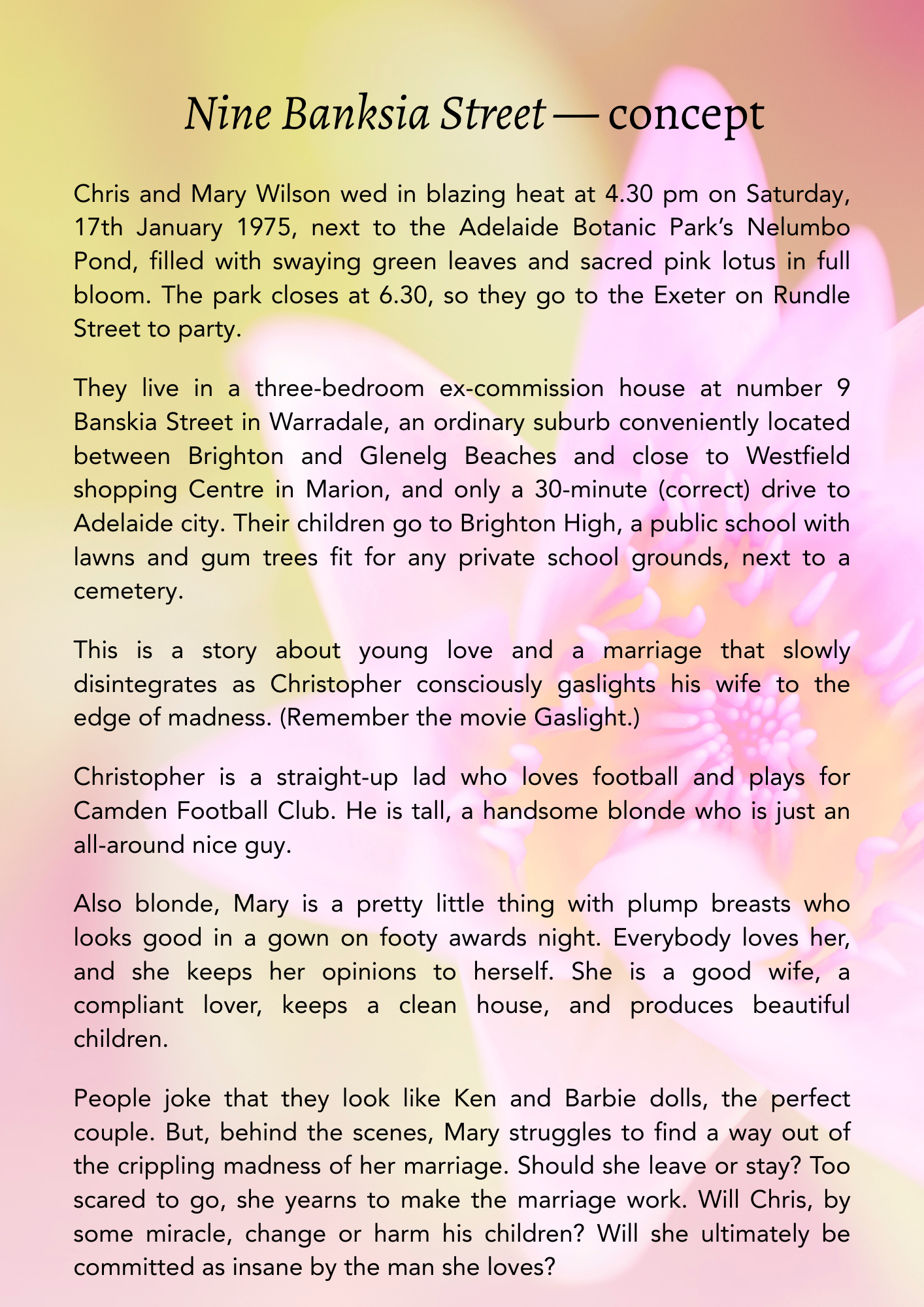
Nine Banksia Street
My gaslighting book’s working title is Nine Banksia Street. The main characters appeared in my mind simultaneously with the basic story concept, which came to me in a sandpit rush, pretty much word for word, as below. The story entices but remains unwritten for the time being.
The Latest from Lindy’s Sandpit
I was talking to a friend a couple of weeks ago, asking why I tend to focus on misery in my writing. When I suggested I might write something humorous about old age, she agreed.
One title that emerged from my sandpit years ago is The Grizzle and Giggle Club, which I’ve had in mind since middle age, when my women friends and I used to feel better after a grizzle and giggle together. But the more I think about it now, I’d rather use something like The Secrets Old Girls Take to Their Grave.
After several recent conversations with age-mates while waiting to see doctors and specialists, and in the Manson Towers Retirement Village, I’ve learned that we all have experiences that most of us would prefer to keep to ourselves. When I finish Call Me Marigold, it may come down to a toss-up between this idea and gaslighting.
This post is a slightly modified excerpt (in other words, a ripoff) from my work-in-progress, Call Me Marigold, a novella-length piece of autofiction. I’ve chosen from a section called My Six Buddhas and Three Husbands. While I may refer to husbands indirectly here, details will not be revealed until the book’s publication. However, I leave the references in because they indicate that husbands are treated in that book (in a literary sense) somewhat like ornaments, albeit with a modicum of respect.
I’m talking about ornaments because our ornaments refract time, memories and emotion. Our favourites satisfy us for years, if not a lifetime. While my Buddha figurines and statues are not my only ornaments, I have decided to discuss them primarily because they collectively create a presence or aura in my living space.
My Six Buddhas
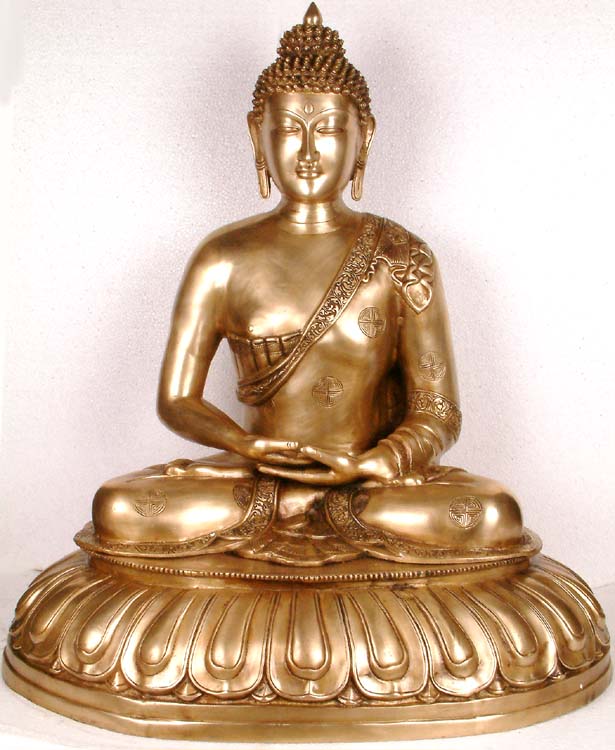
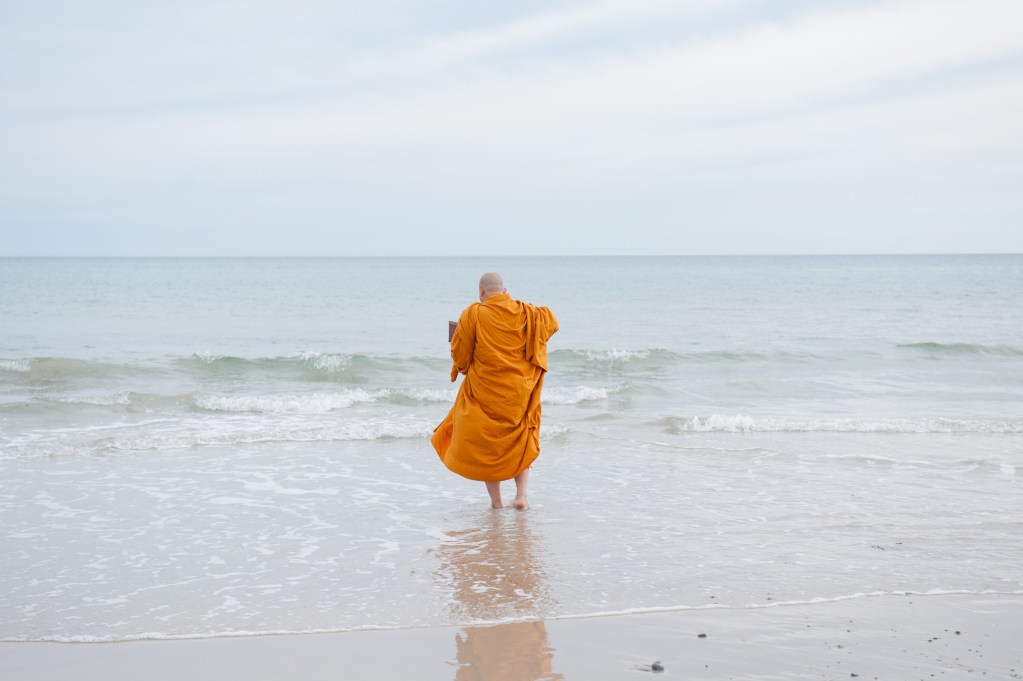
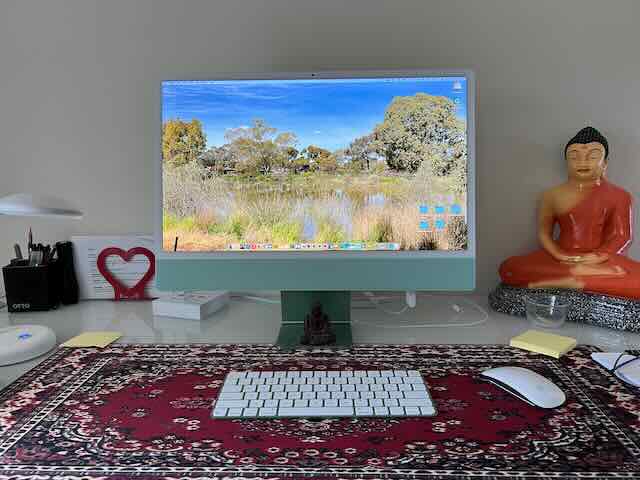
By the time I moved into my retirement village with the mass murderer’s name (Manson Towers), I only had six Buddha statues. I donated a large brass sitting Buddha, similar to the one pictured above, which was important for teaching meditation in my post-retirement days, to a Cambodian Buddhist monk, Bhante Ly, who was a dear friend. He blessed my eldest son’s ashes before we spread them at Aldinga Bay.
A small, transparent resin statue pictured later, given to me by the head monk of Adelaide’s Sri Lankan Buddhist Vihara, found a new home with my youngest son.
My First Buddha Statue
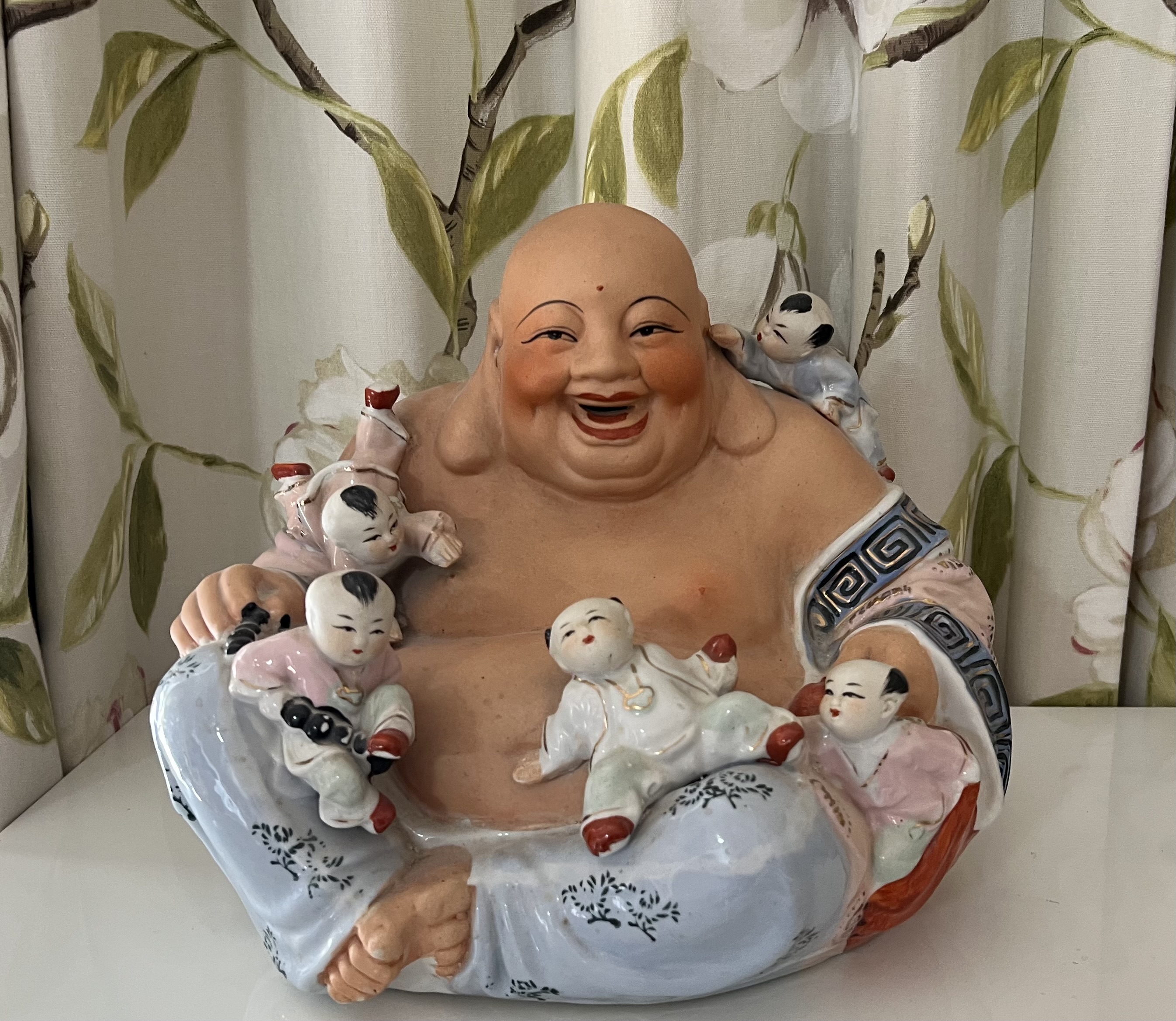
My first Buddha statue, shown in the lead photo of this post, entered my life half a lifetime ago, when I was in my early forties. I bought it in Chinatown while in Sydney to attend my first academic conference as a postgraduate. (My paper entitled ‘The Booze, the Bouncer and Adolescence Down Under’ (1994) was accepted immediately for publication and is still often accessed.)
Looking back, I fell in love with it, not because it sort of reminded me of my second husband’s desertion, but because this rotund Chinese laughing Buddha in blue robes has five little children crawling all over his bare shoulders, a profound symbol of the love and joy I felt for my three young children. At the time, I had not discovered Buddhism; my choice was both aesthetic and emotional.
Place is Important
The place of purchase carries more significance. I found the blue Buddha near Paddy’s Markets, where I worked when I was about 18, after the first of my three failed marriages ended. I found a job there with Pardy Providors as a stenographer and cord-and-plug telephone console operator. My boss was a tall, well-statured man who constantly hitched his brown trousers at the crotch. Being in my late teens, I had to stifle the urge to giggle at this unfortunate habit.
Still, I never mocked, as he was a kindly soul who looked after me when I had a telephone flirtation on the console with a supply officer from Ingleburn Army Camp, a WWII, purpose-built training centre that was wound down in the mid-1990s. I don’t recall his name, but we flirted when he called to place an order. The soldier finally persuaded me to meet him, until my darling boss saved me by telling me the guy was married with two little ones.
I was going to suggest we meet at The Broadway Hotel on George Street, where I worked a second job as a barmaid at night. Being a publican’s daughter had its benefits for much of my life; I could always get a pub job for extra money. In Sydney at the time, I first lived with my aunt, my father’s sister, in North Ryde, which was then considered the countryside. We had an outhouse and a dunny can.
Much as I loved my aunt, I disliked going to the loo on cold or wet nights with spiders and newspaper for toilet paper, or travelling to work and back each day, which entailed long, hilly walks, trains, and trams. With a second job, I was able to move into a rooming house right on the curve of Bondi Beach, next to the saltwater pool.
My first Buddha holds all of these memories.
In My Sixties
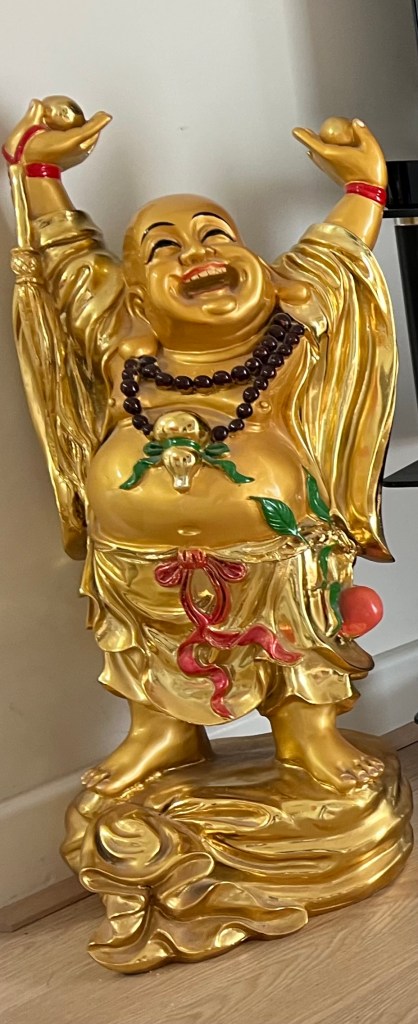
When I was in my sixties, after encountering Buddhism in Sri Lanka, I bought a 60cm-high, gold-coloured resin standing Buddha, with a ball aloft in each hand, held high, representing prosperity, happiness, and good luck. I found it one day after wandering the length of Melbourne’s Victoria Markets, already a lost soul after leaving the Northern Territory and the workforce for what seemed like forever, and looking for my car on the wrong side of the vast, sprawling marketplace. The statue’s golden smile winked at me from the window of a shop, drawing me in.
Inside, the shop was cool and calming. The old Chinese shopkeeper was dressed in what I guessed was traditional Chinese rural garb of loose trousers and a top made of rough hemp or cotton. He greeted me with a smile. ‘You like?’ he asked. ‘I’ll give it to you for a special price. You are my first customer, and that is my good luck.’ It was good luck for me, too, at a time when I was utterly drained by life, having found myself on an invalid pension and living in high-rise public housing in Prahran.
The luck of my gold Buddha was pivotal. It served me well in my transition from anthropology to a retirement filled with meditation, poetry and writing. And, as it turned out, the high-rise experience was a special time that both led to and informed my second novel, launched in 2024, They Who Nicked the Sun, set in Prahran, in Melbourne.
What may seem bad at the time often augurs better times to come.
From Sri Lanka
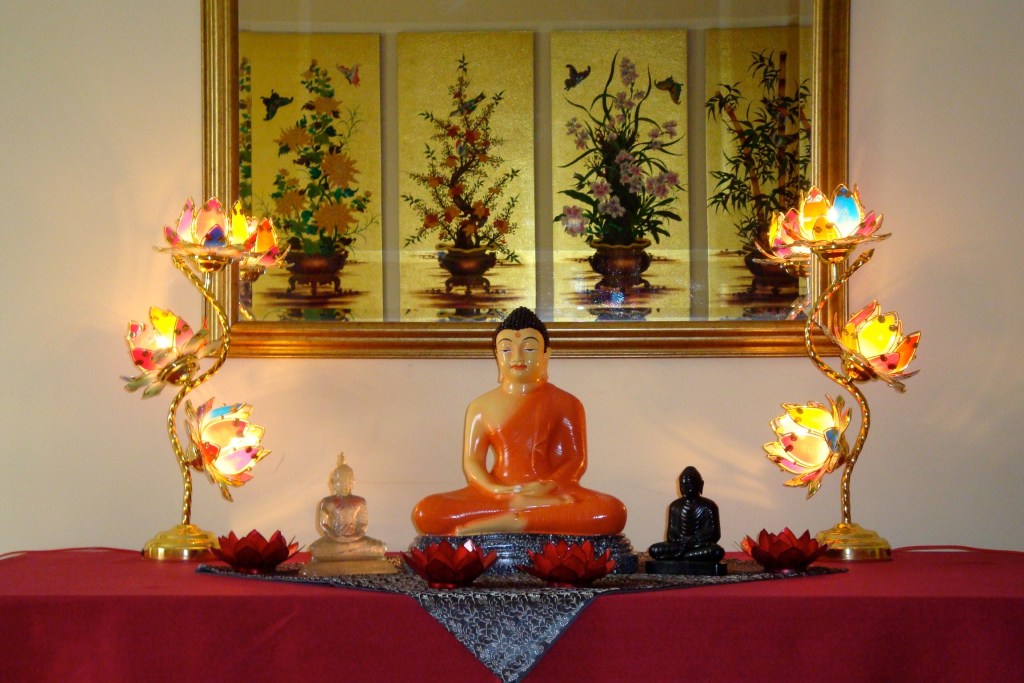
I concede there was an aesthetic impulse behind the purchase of the beautiful King Ebony figurine seen to the right below, which I bought for Rs 900 in the early 1980s from an expensive jeweller close to Colombo’s vibrant outdoor market, the Pettah. It is exquisitely carved to the correct proportions for a sitting Buddha and represents a country I lived in and loved, and where I met my third husband. On the left is the clear resin Buddha now treasured by my son.
From my meditation room at Aldinga Beach
The central Buddha in the photo above is a traditional Sinhalese Buddhist statue crafted by artisans as a gift from the man who was my research assistant back in the 1980s, with whom I became friends during my PhD research in Sri Lanka—a time and place that changed my life. My friend went on to become an international consultant and lifelong friend. He sent the statue unannounced, close to 30 years later. Even in our old age, we email a few times a year to stay in touch. He has a very special place in my heart.
Aldinga Beach
The Chinese gold and white porcelain meditating Buddha in the next photo evokes memories of my 16 years in Aldinga Beach. After being blocked for many years by local protests and the Council’s ignorance, the Nan Hai Pu Tuo Temple was built at Sellicks Beach.
At that time, I led three meditation groups: one at Aldinga U3A, another at the Aldinga Community Centre, and a private group at home. With my meditation students, I occasionally visited the Temple on Sundays to participate in the Temple’s Dana lunch. They were good years. People from all three groups also came together at my place monthly to share a vegetarian meal.
Childhood Memories
A few years ago, I scoured the internet to find a miniature Daibutsu Buddha, a replica of the giant bronze statue in Kamakura, Japan, built during the Kamakura period. It was first constructed in wood in 1243 and later recast in bronze circa 1252. We visited the giant Daibutsu Buddha when I was an Army kid, and I adored it even then. My tiny bronze statue, at 60mm high, is smooth, cool, and weighty in the palm of my hand. It calms me.
There’ll be more about my three husbands in Call Me Marigold, coming as fast as I can write it. They, too, have times and places that evoke experiences that, in retrospect, were transformative. Even taking into account the sad and bad bits, my memories come together in glistening vignettes, like brilliant gems of life. Till then —
On Ornaments
Ornaments are serious business. While I’ve focused on my Buddha statues today, my home contains a number of other special artefacts from my life, including wall hangings passed down to me by my mother, brother, and lost son, as well as gifts from my other children. We also keep mementos, such as letters, emails, and perhaps books by friends, as well as our own publications.
Just as museums are a testament to a culture, our ornaments give witness to our lives. What do you see when you look around at home? Do you have a favourite item that tells a deep story? Which pieces do you hope your children will cherish when you’ve gone? Do they know your history?
I was going to call this post Things I Ponder and had to change to ‘think about’ because there are so many ways of using ‘ponder’; ‘ponder upon’ (a little old fashioned), ‘ponder on’, which, like ‘ponder’ suggests particular topics and is therefore constraining), and ‘ponder about’ which is silly because the word ‘ponder’ means’ think about’, but after reading these variations online, I decided that, if I leave the word ponder dangling, it might be confusing. These are a few things that literally stick in my mind.
I mention this tiny research moment on pondering as a way to show how my mind works. Where once, post-childhood, when I daydreamed a lot, I didn’t ponder anything much, preferring to think I was right (which I often was, although it made me unpopular). Now, in old age, I find I second-guess myself to the extent that I search the World Wide Web to check most thoughts that may, to my shame, go viral if they’re wrong, like my poor failing body, so often told it’s not right by medical science. While I don’t like to be incorrect, I am aware that few things in life are straightforward, as my little ponderings today exemplify.
Welcome to Country
The Idea
The idea to ponder Welcome to Country ceremonies in a post originated from my son, who encouraged me. These traditional ceremonies got a lot of bad press in the pre-election political discourse. Unlike me, he has travelled to New Zealand, where he was impressed by the way traditional Māori culture is integrated into daily life, from a visitor’s perspective. He wishes Australia could be like that towards First Nations culture and peoples here, as do I.
I am not an authority on this matter, but I am, as many know, an anthropologist and have worked with First Nations people across Australia. So, while it is not my place to speak for them or on their behalf, I can say, both as an anthropologist and as a publican’s daughter who was raised and worked in pubs for the first half of my life, I understand Australian culture at various levels. Well enough, I trust, to make a few general observations while sidestepping the specifics of recent journalistic and political discourse and similarly grossly ill-informed social media discourse.
It’s All To Do With Semantics
Much like my earlier discussion on the effective use of the word ‘ponder’. The term ‘country’ appears to be the main sticking point for those who perhaps operate under the notion that it means the same thing as ‘nation’. Such a flawed conflation leads many people to ask why the Australian population at large should be invited to their own country. They find it offensive.
The answer depends on what you mean by ‘country. Failing to understand this fuels racism.
Welcome Ceremonies
Bear with me if you know this already. A Welcome to Country ceremony is offered by a small group of people whose ‘country’ is defined by the stories they hold for a particular tract of land. The traditions of that land are part of their being, defining First Nations people as who they are. Tradition places the responsibility on them to take care of that land, their ‘county’, just as we look after ourselves and our homes.
Seen like this, it is easy to see that Welcome Ceremonies are more like opening the front door to welcome someone into your home than taking over Australia or speaking on behalf of the nation to which we all belong equally. Indigenous country is the literal territory of ‘their mob’ or ‘my mob’, and it does not threaten anybody’s rights as a citizen one iota. Everyone should know this by now. Those with a public megaphone should report it that way instead of fuelling division. After all, most of us are by now familiar with the name of the First Nations area in which we live.
Compiled over many years of research by the anthropologist Norman Tindale, the Adelaide Museum’s Map of Tribal Australia shows us the traditional lands occupied before conquest. You can find what is likely to be an updated version of this map in the Aboriginal and Torres Strait Islander Studies Library (AIATSIS) if you want to scroll through it for a closer look.
Other historical maps show First Nations songlines crisscrossing the entire continent like a great big web. It is a shame that these trade and ceremony routes are rarely shown or talked about by the mainstream media, as they would encourage understanding and a greater respect for First Nations traditions.
Smoking ceremonies are a special gift from those who still live in or know the ancient stories handed down over generations about the lands of their ancestors. It is the gift of welcome to a history that precedes the nation we all compose, and now resides within the island of Australia defined by national borders.
In Conclusion
I think the confusion comes because we tend to think of Australia as a country, our country. Whereas we are, strictly speaking, a nation, which is a nation-state. It says so on our passports. And, as an aside, the whole concept of nation and nationality is itself fraught when you look into it. We all get into high dudgeon about ‘my country’ and ‘my nationality’, but, after all, as Benedict Anderson said long ago in 1983, nations are imagined communities.
Historically and politically, a nation is far removed from the face-to-face networks of traditional community life, where kinship-bound people together as political entities. We divide ourselves by class, political persuasions, sports affiliations, and other cultural identities, including race, as well as age. Such cultural distinctions serve capitalism’s marketing purposes well. Extended kinship ties would be a threat to that.
Our island provides a natural national boundary, and our states are clearly delineated by jurisdictional boundaries. Anyone wishing to cross our national border must hold a passport or have the necessary right of entry (and exit) documentation. Crossing state lines requires us to comply with that state’s jurisdiction on entry. If our move is permanent, we must change our electoral entry, our driving licence and so on. Though we roundly resisted carrying a national ID card when the idea was mooted in the 1980s, we take all this jurisdictional ID stuff for granted. Our strings are pulled by bureaucracy.
In traditional Aboriginal society, as I understand it in the simplest of terms, groups passing through the ‘country’ of others don’t simply crash the campfire; they wait to be invited in. Now, all Australians are welcomed into traditional local areas (a First Nation’s traditional ‘country’) with a smoking ceremony that has transformed to meet the contemporary world. Things have to change to stay the same (a phrase that stuck with me from a book I read many years ago about Sicily as it moved away from landlords and peasants, giving rise to the Mafiosi and political bureaucracy).
Thoughts that end up in poems
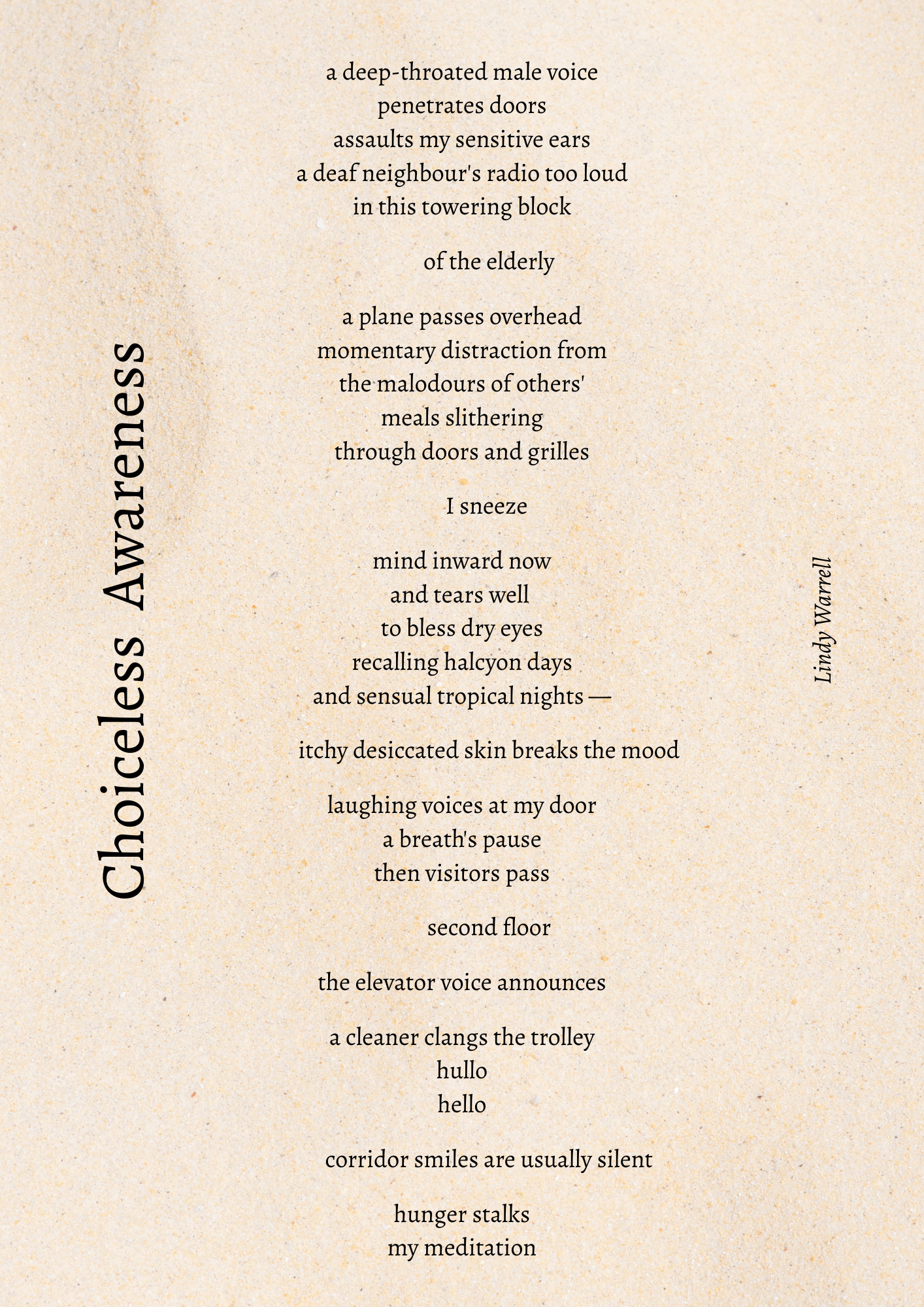
This first poem came from my meditative ponderings on living in a high-rise retirement unit that was built before soundproofing became a thing. It reminds me of old hotels in George Street and Chinatown in Sydney, many, many years ago. You didn’t need a glass to the wall to hear what was going on next door or anywhere else, for that matter. Even pipes creaked.
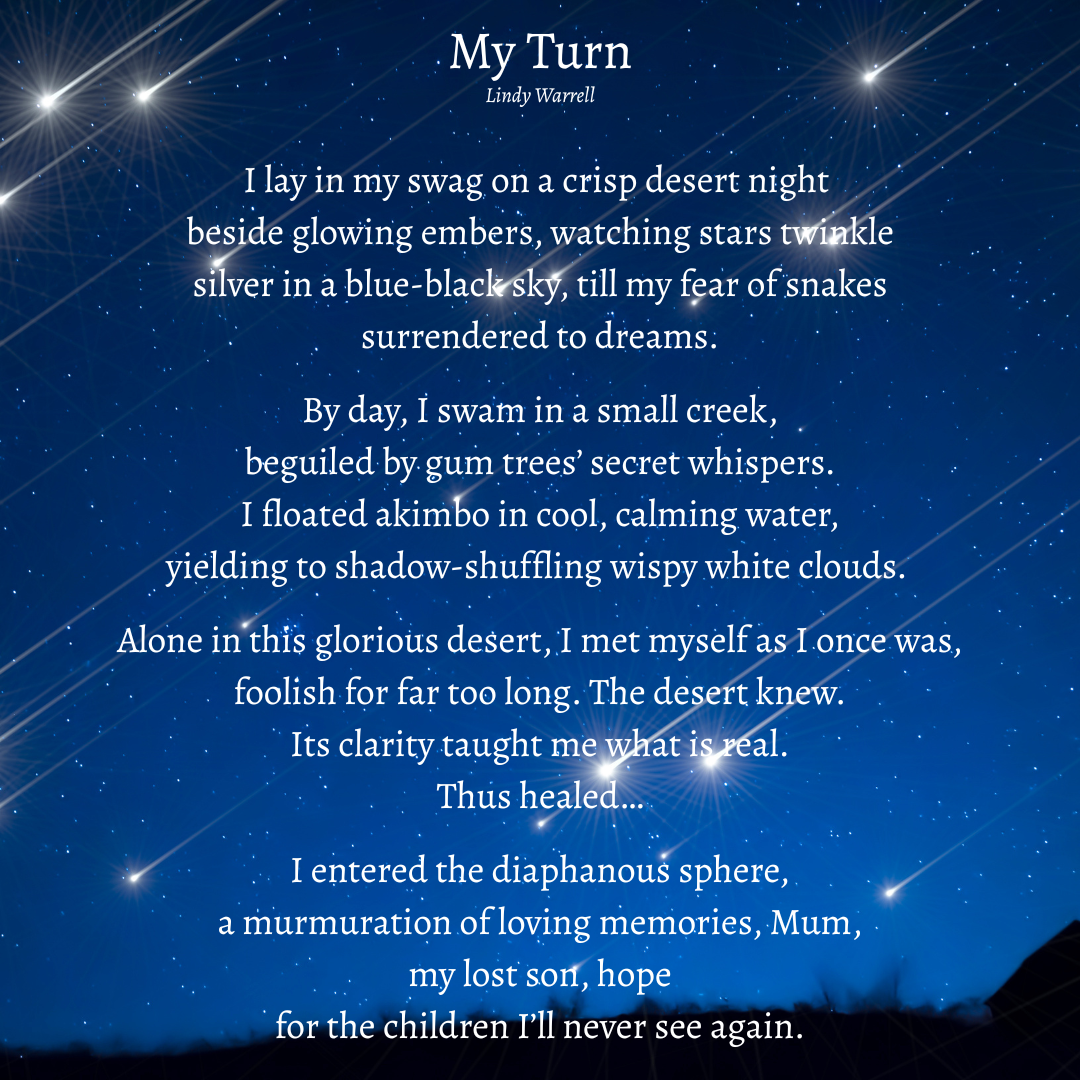
My Turn is something of a contemplative dream sequence predicated on my love for and experience of camping in the outback, often when working with First Nations people on their country. How could anyone forget such a privilege?
Thoughts about Hospital Stays
Toast
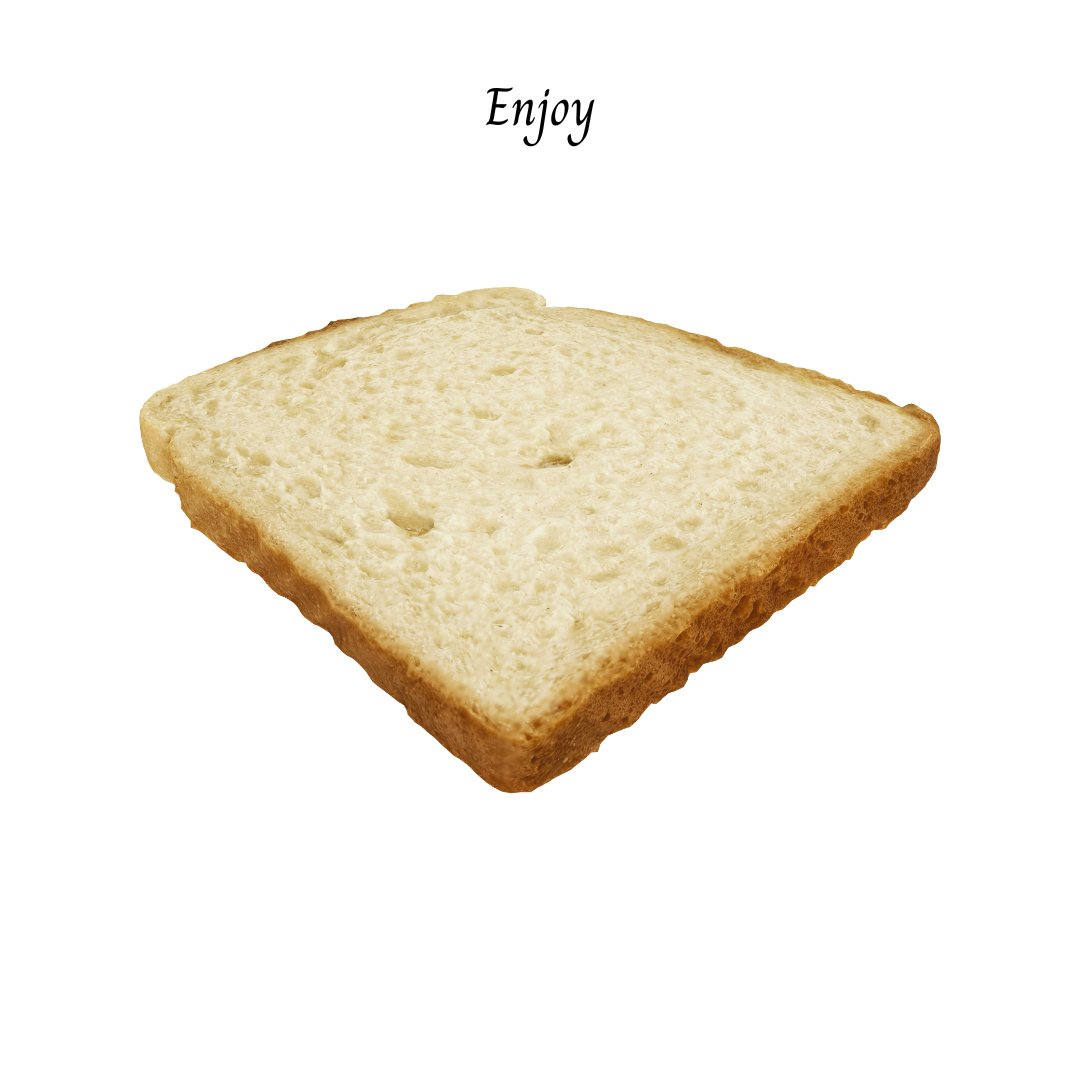
Toast has vanished from Flinders Medical Centre’s (FMC) breakfast menu.
Nobody will starve with cereal, fruit and a cuppa, but who eats pale white bread, butter and jam for breakfast? That was a treat (sans butter) for my father, born in 1910 to an impoverished family living in Sydney’s Glebe, then a slum, after his barefoot walk of three miles each way to school. To me, therefore, a single slice of white plastic bread is tantamount to workhouse food. Have hospital authorities never heard of croissants or muffins? I don’t like either—I’m a toast girl in the morning—but hey, I’d put that dislike aside in favour of flavour.
Showering
What has also disappeared, at least from the public wards at FMC, are white shower-chairs for the frail and elderly. Instead, some bright spark in finance has decided to give commodes a second use, minus the potty.
At 152 cm nowadays, I’m not very tall, so my feet do not hit the floor when I’m perched on the front edge of a bariatric-sized commode. (Most wheelchairs nowadays are bariatric too.) Furthermore, because of its size, the commode must face outwards from the cubicle, which requires you to shower sideways using a handheld shower rose; your arms are constrained by high armrests from which soap slips to the floor. A commode might almost be acceptable when someone else is washing you, but on your own, it’s a bugger. And yukky, too.
FMC’s commodes also feature shiny metal footrests resembling those of a wheelchair. Without a counterbalancing weight, these make it extremely hazardous to stand up. They cut into the back of your legs as you reach for the floor. You dare not put weight on them.
I was so appalled by this turn of events that the matter went beyond mere pondering. I wrote a letter of complaint to SA Health.
Unexpected Germs
I’ve since learned that I have been colonised, yes, that’s the right word, by pneumonitis. Although it is a non-contagious inflammation of the lungs, I must now advise hospital staff of this, if and when I am admitted again, as it can exacerbate other afflictions. I also had to undergo tests for a bug that colonises the digestive tract because SA’s Local Area Health Network (SAHLHN) advised that I may have been exposed during my last stay at FMC. Fortunately, that little bugger did not gain traction in my old body.
Ironically, hospitals were historically built to remove the populace from infectious community environments to promote healing and reduce the spread of disease. It would appear that this cycle is reversing.
Another Surprise
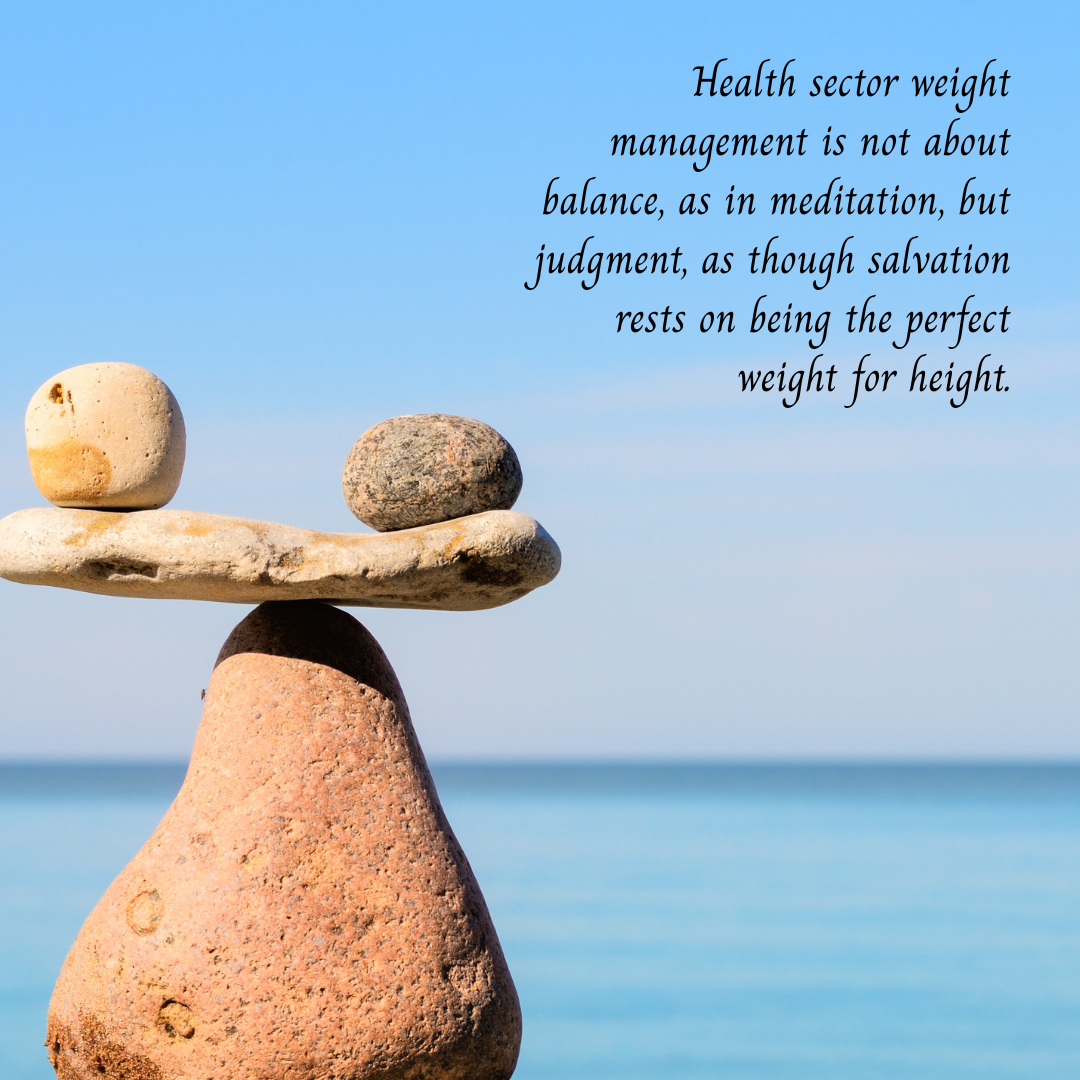
In addition to sneaking in their mandatory cognitive test for the elderly and the insane, no matter how cogent and intelligent you might be, one is always weighed on admittance to a ward at FMC.
It turned out that I had lost 6 kilos since my previous stay a few months earlier, without realising it. (I gave up on home scales 40 years ago.) Instead of congratulations, however, I was advised that I would be put on a special diet, because such rapid weight loss indicated that I was malnourished.
The nurse and I had been talking about white bread for breakfast until her remark about my weight loss had me roaring with incredulous laughter.
‘At least you’ll get scrambled eggs for breakfast,’ she said, laughing with me.
Can you imagine scrambled eggs on plain white sliced bread?
Happy Writing
Wattletales
If you'd like to be added to the Wattletales post mailing list, make a request in the comments below, your email address is always hidden from public view. Lindy
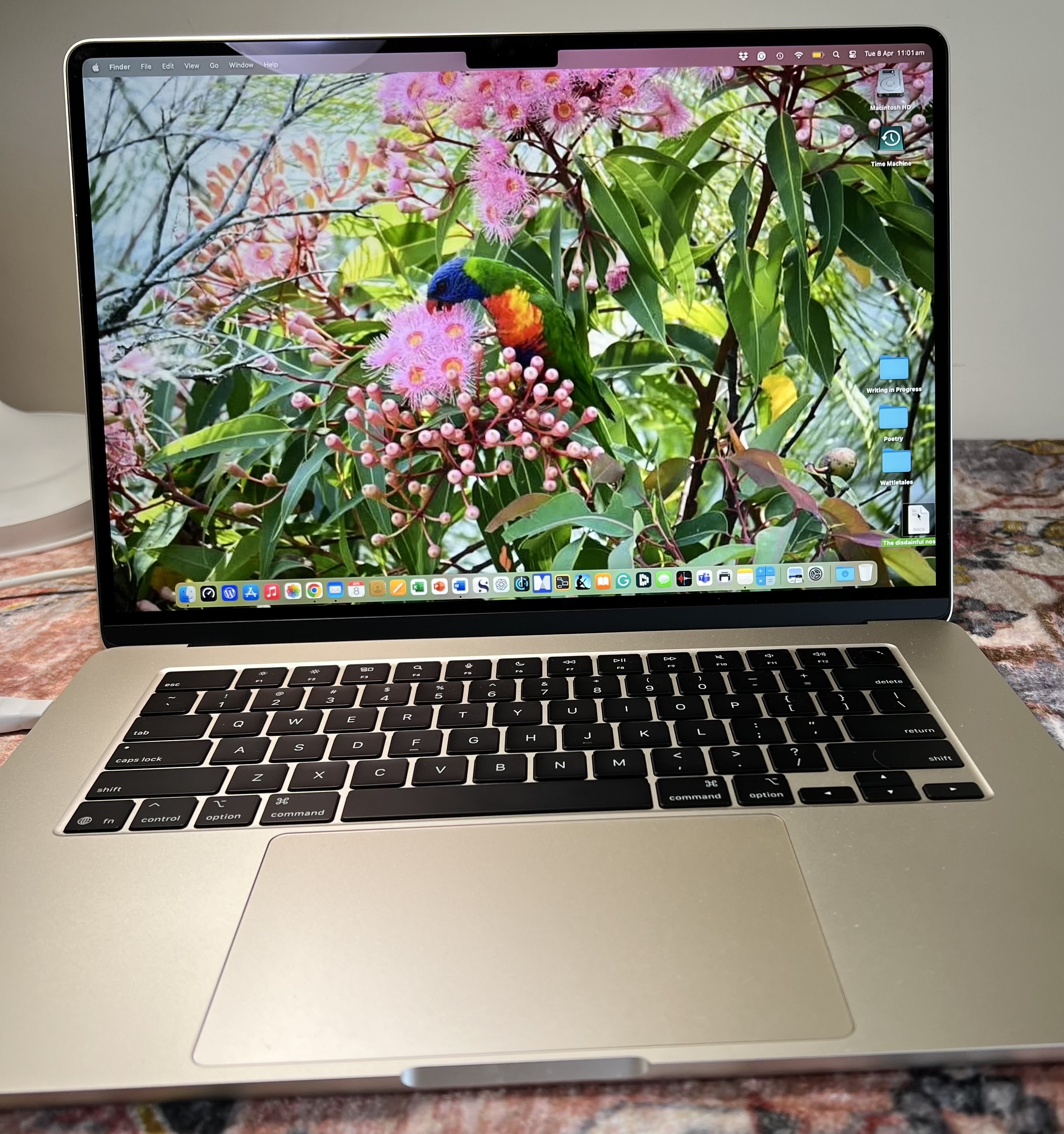
We oldies must first give thanks for being here. For those like me, with bodies burdened by the limitations doctors call multiple comorbidities, the best luck in the world is having a strong mind. By that, I mean I am still curious about the world; I get upset by wickedness and excited when good things happen. I follow politics with a keen eye and am lucky to have a good education, a computer and the will to write. I thank my new MacBook Air for inspiring me this month to showcase what I’ve been up to, both reading and writing-wise.
Many computers have centred my world and orchestrated my daily life for a long time. In fact, I spend more time on one in retirement than I did at work years ago, but I’ve been lusting for a new laptop as they served me well for many years as a roving anthropological consultant. Although I’d been saving for one, my son, who lives far away in Queensland, surprised me with his generous gift of a new MacBook Air. As I’d hoped, it makes the act of writing more intimate, more like handwriting. I like that.
This Time Last Year till Now
Although it seems like yesterday, this time last year, I was busy with the launch of my novel, They Who Nicked the Sun, a delightful occasion with Devonshire Tea. As the poem Braindead, written in March 2024, tells you, I was utterly lost for a while after that, with no book to work on.
Slowly, an idea seeped into my mind for a story about ageing. Initially, I came up with the title By Way of Dying, a story about a woman who could not rest in death until she understood life. It took time to formulate and find its shape, but now I think I have it!
Meanwhile, the title, By Way of Dying, morphed into Call Me Marigold. It is a novella, and yes, the narrator is posthumous; and yes, it is about me, despite the pseudonym, because, clearly, I am still alive, while Marigold is stuck in limbo and can only look back on life.
Call Me Marigold also morphed from memoir into autofiction, a genre that combines elements of true stories with fictional tools. We all draw on our lives when writing fiction, but memoir and autofiction should be distinguished from each other. To quote from the linked article —
The label of memoir comes with a promise: that the events described happened to you. Autofiction, on the other hand, promises an exploration of self. It is not just a fictionalized account of the author’s life, but a rendering of true experience in the midst of fictionalization, in which embellishments or deviations from reality may provide a commentary on the author’s journey. (my emphasis. American spelling in the article.)
What I am Reading
The universe is supporting Marigold. A dear friend gave me a book this week that I had borrowed from the library but had badly wanted to own: Nobel Prize-winning Orhan Pamuk’s wonderfully illustrated Memories of Distant Mountains. I’ve only read two of his earlier novels, My Name is Red and The Museum of Innocence, but I am a fan. In this 2025 coffee-table delight, he draws on a lifetime of personal notes and paintings to offer insight into his writing and himself. It is neither memoir nor novel, yet through his reflections, he shares his inner world.
Another genre-bending, multi-award-winning writer I admire is Australian author Michelle de Kretser, whose recent work, Theory & Practice, according to author Nicole Abadee in the Australian Book Review (Nov.2024), is not autofiction but a novel that introduces ‘a splinter’ of memoir. My de Kretser favourites are The Hamilton Case and Questions of Travel.
Last on my recent reading list, although I read it first, is The Chinese Postman by Brian Castro, a former Professor of Creative Writing at the University of Adelaide. I love this book because it also challenges taken-for-granted literary assumptions and reflects on ageing. I could not do justice to Castro’s story in a few words, so here is the publisher’s blurb (I have the eBook).
Abraham Quinn is in his mid-seventies, a migrant thrice divorced, a one-time postman and professor, a writer now living alone in the Adelaide Hills. In The Chinese Postman he reflects on his life with what he calls ‘the mannered and meditative, inaction of age. God, offering up memories and anxieties, obsessions, and opinions, his thoughts on solitude, writing, friendship, and time. He ranges widely with curiosity and feeling, digressing and changing direction as suits his experience, and his role as a collector of fragments and a surveyor of ruins. He becomes increasingly engaged in an epistolary correspondence with Iryna Zarebina, a woman seeking refuge from the war in Ukraine. As the correspondence opens him to others, the elaboration of his memories tempers his melancholy with a playful enjoyment in the richness of language, and a renewed appreciation of the small events in nature. This understanding of the experience of old age is something new and important in our literature. As Quinn comments, ‘In Australia, the old made way for the young. It guaranteed a juvenile legacy.’ (my emphasis)
I came across a sensitive and insightful article, “The Chinese Postman,” by Professor Tony Hughes-d’Aeth, Chair of Australian Literature at the University of Western Australia. In case you missed it in ‘The Conversation’ last year, Hughes-d’Aeth identifies a key ambiguity in the narrative, emanating from Castro’s transposition of his biographical data — ‘born in Hong Kong of mixed European and Chinese heritage’ — onto the protagonist, Abe Quinn. Is it Castro’s story, which Hughes-d’Aeth sees as a lament, or is it fictional to the core?
I am reading these books by authors who brilliantly cross genre boundaries to understand how top writers do it. Truth be told, I find the various ways they upend convention both fascinating and freeing. Their works gave me the confidence to experiment in my Call Me Marigold narrative, which takes a scrapbook approach to various aspects of my life, serving as an exploration of the self — a defining feature of autofiction.
A New Novel
During the lull that followed the publication of They Who Nicked the Sun, when I was floundering and trying to figure out how best to tell my story as autofiction, I began to yearn for a new novel to work on. My earlier novel ideas came to me long before I started writing them. I then met a fellow writer who works on several projects, alternating between them. I’ve usually stuck to one at a time, but as soon as I wished for a novel idea to come to me, an idea burst upon me in rough synoptic form, and I am now alternating between Marigold and a fictional story.
In the Welcome pages of Wattletales, I write about what fascinates me as a person and writer—
What does it mean to fall through the cracks, to become broke, mad, ill, destitute, deserted, disillusioned or denounced? What happens to our sense of self, and our identity when life wreaks havoc with our intentions, plans and happiness? How porous is our mind? Is there really a line between sanity and insanity, and how do we know when we tip over the edge?
So, it should not come as a surprise to say that I’m fascinated by gaslighting, which is what my new novel is about. The provisional title, On Banksia Street, tells the story of an everyday couple, Wendy and Peter Wilson, who live with their children in Warradale, where I raised my children (ordinary suburban life!). There is no real Banksia Street in Warradale, so the setting is fictional, as is the story. The Banksia reference is, of course, about our lovely native Banksia flowers and the scary Big Bad Banksia Men of Mae Gibb’s marvellous imagination that terrified me as a child.
New Poems
In between writing projects, including this blog, I have recently written a few new poems. Here is a small selection as part of this show-and-tell post for April 2025, my favourite month of the year for its promise of cooler weather.
Before you go, why not check out our wonderful Guest Posts, featuring some great stories and poems from local Adelaide poets? For a complete list, click here.
Happy Writing
Wattletales
If you'd like to be added to the Wattletales post mailing list, make a request in the comments below, your email address is always hidden from public view. Lindy
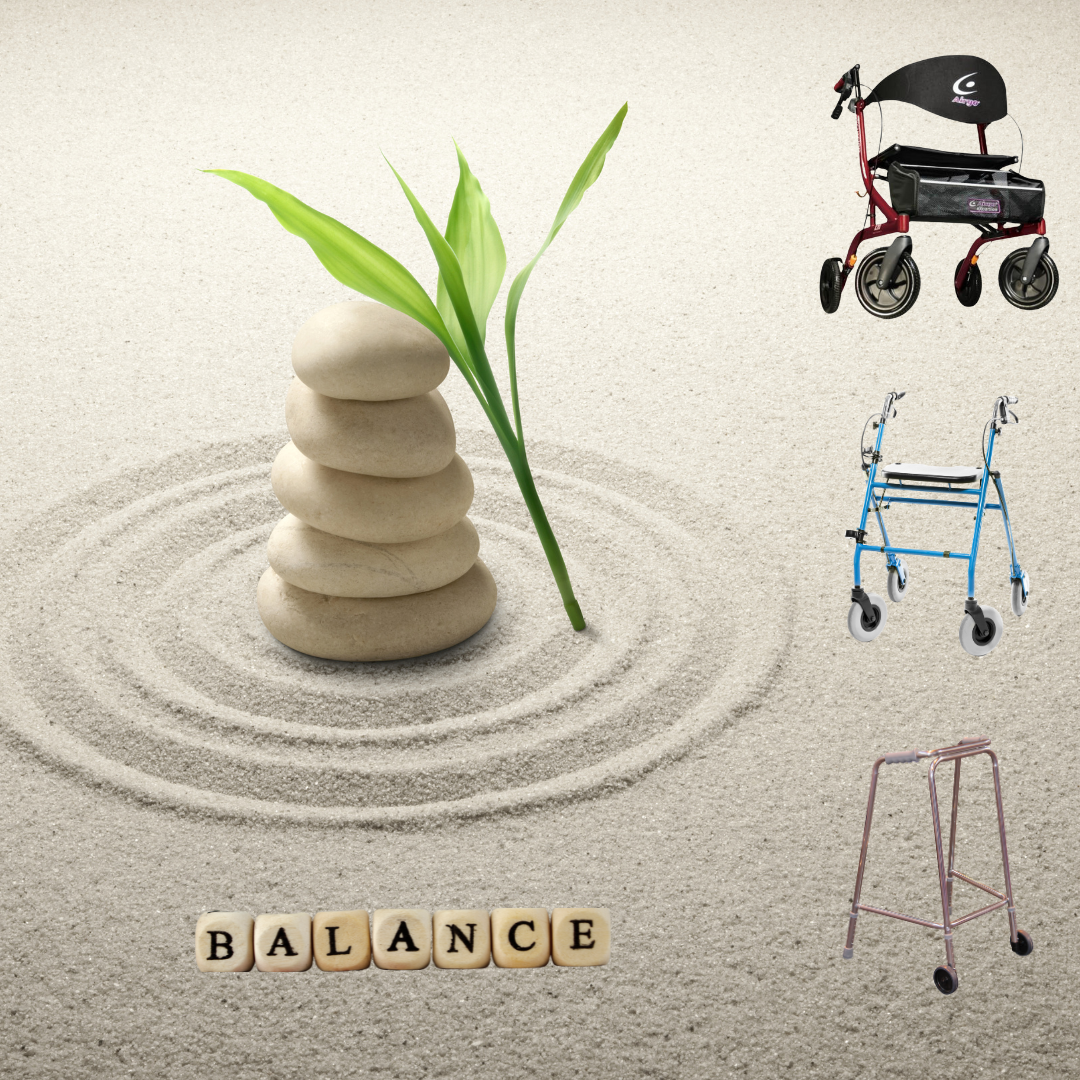
I recently wrote a little poem about my walking stick that tickled people. So today, I thought I’d write about my walker. Whether you use a walking stick or a walking frame, aids add dignity to one’s ageing perambulations. Whether your sticks are strong, found on the ground or traditional, goatherder-crook style, they make a poetic statement. Flash metallic fancy coloured sticks with ornately carved handles often match the style of their user’s wardrobe and glitzy spectacles. I now prefer my walker to a stick, but either way, an aid is all about balance.
Unlike walking sticks, walkers — known as rollators — are defined by having four wheels. They come in different shapes and sizes too.
Medically speaking, where a walking stick offers comfort when one feels a bit shaky, a walking frame is used for convalescence, especially post-surgery, to support our weight against pain. A rollator, in contrast, like a walking stick, has the potential to make a statement, if only in terms of colour and wheel size. Indeed, this very morning I spied a rollator online with a leopard-skin frame. Very snazzy, not, unlike sexy nightwear for the ladies.
A convalescence walker used to be called a Zimmer frame, and it is for use indoors while the rollator takes us onto the streets with its four wheels. It has a portable seat to rest on along the way and has a handy shopping basket.
Liberators or Lethal Weapons
My father loved his you-beaut Zimmer frame when he was in The War Veteran’s Home in Myrtlebank many years ago after undergoing massive surgery at age 83. It was a hybrid model with wheels at the front and stick legs at the back, and he zoomed around on pebbly paths in striped flanellette pyjamas, navy plaid dressing gown and leather half-slippers so fast I was terrified he’d fall. He didn’t. His skinny old legs must have been a great deal stronger than I thought. ‘I’m alright, Luv’, he used to reply to my remonstrations. Looking back now, I reckon the old bugger was full of glee not to have the cancer pain he endured before surgery, not that he’d ever admit such a thing.
I began using a rollator about seven ago when my left hip gave up. Even after waiting forever to see a specialist in the public system, I had a two-year wait after that for hip replacement surgery, and the pain by then was truly bad.
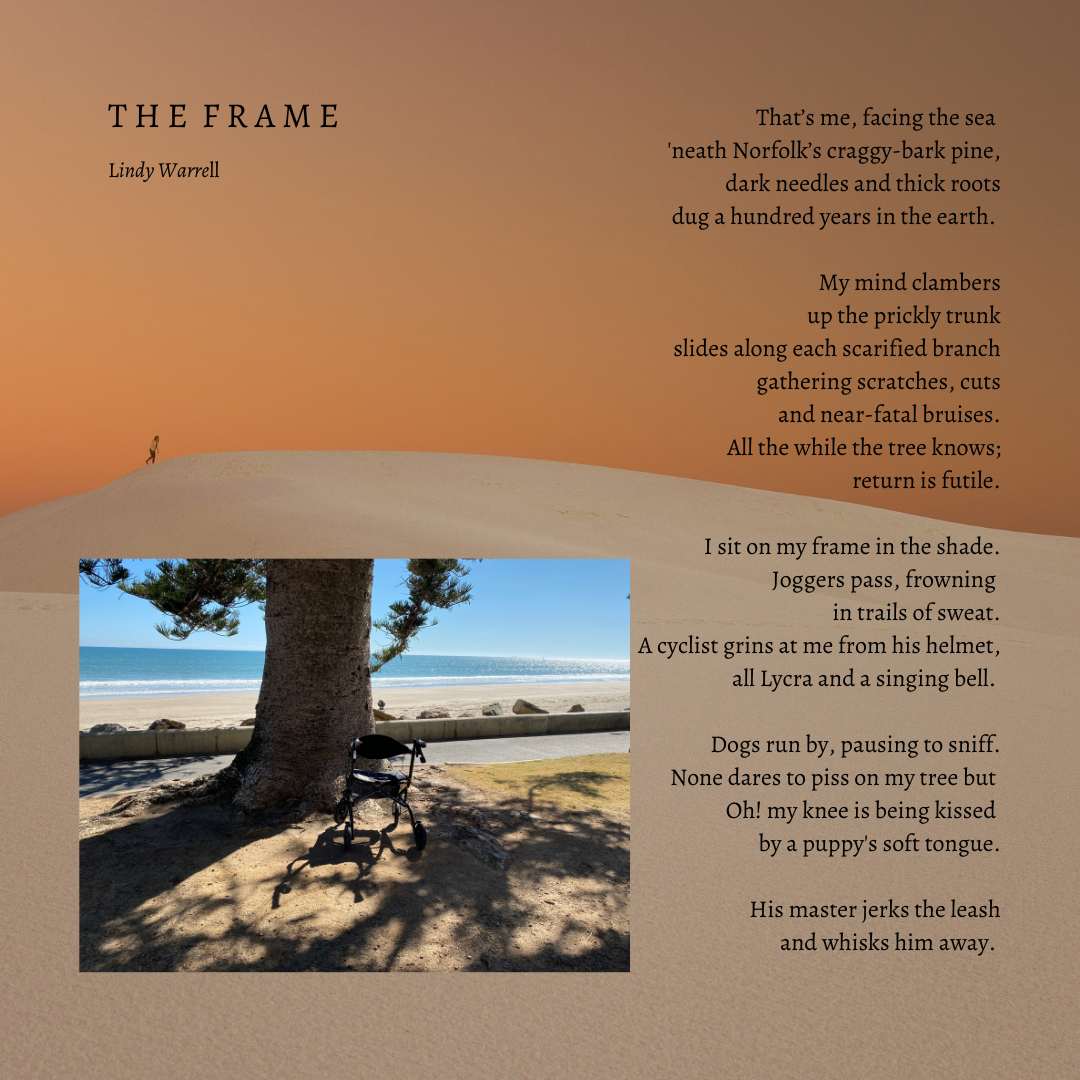
When I first chose my rollator, I hid it in the storeroom opposite my unit because I was embarrassed about having to use such an outwardly visible sign of my decline. But the freedom it gave soon overcame my misgivings. I became proud of my first one, an AirGo I called Pearl Black. People commented what a good-looking companion it was, so here it is, under a tree in a photograph taken with pride on the Glenelg Esplanade.
I now have the same model in burgundy as featured in today’s lead image. I call it Bella Burg.
In between the two, I tried one from Aspire, a brand that has now taken over the Adelaide market. Mine was lightweight at 6.5 kg and had a short wheelbase. For reasons unknown, Aspire calls their rollators wheelie walkers, which is catching on online — an innovation for marketing novelty. It’s hard to keep up. Aspire’s range includes the relatively inexpensive small-wheeled walkers sold by pharmacies pictured earlier through to those for the street made of lightweight aluminium or carbon fibre, ranging in price from around $190 to over $700.
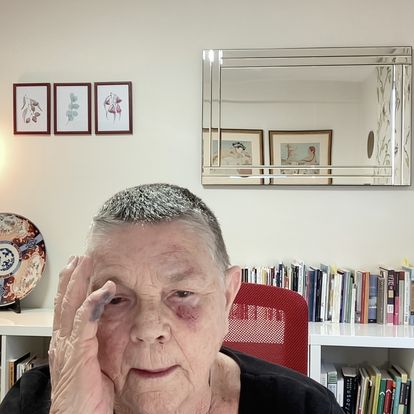
How people get about on their tiny, wiggly-wheel frames from the chemist (or Aspire), I do not know, but I blamed my expensive Aspire’s short wheelbase for my street tumble last October when I fell flat on my face. A short wheelbase is a design fault that makes it hard to navigate up and down gutters.
The lightweight aluminium is even more of a risk for lesser footpath obstacles. I recorded the early bruising on Facebook with this pic.
Like a Tortoise Shell
Why do I go through rollators so fast? Well, as my left hip became insufferable, my lungs also pleaded for respite. Thus the handsome Pearl Black, the perilous Aspire, and the delightful Bella Burg have all supported me in both ways, such as worsening spinal arthritis. Even with supplemental oxygen, I now need to sit every 50 meters to rest. (Pearl and Bella have the best seating).
Given that a medical oxygen bottle has usurped the front shopping basket, my walker now looks like a packhorse when I go out. It carries my handbag with ID, iPhone, purse, and stuff on the left arm, as well as shopping bags on the right. The seat is often filled with shopping spoils or blankets for the dry cleaner. Notably, the oxygen bottle weighs close to half the weight of both the AirGo and Aspire rollators. Neither brand offers space for medical equipment. In the old squiggly-wheel walkers, you can add an attachment beneath the seat, which is probably why they are stocked in pharmacies.
Still, Bella Burg is my home away from home. With Bella, I can go out, I can walk. Without a walker, rollator or whatever you want to call it, I’d be housebound. From an insider’s point of view, it offers independence, and that is the gift of dignity.
On the Streets
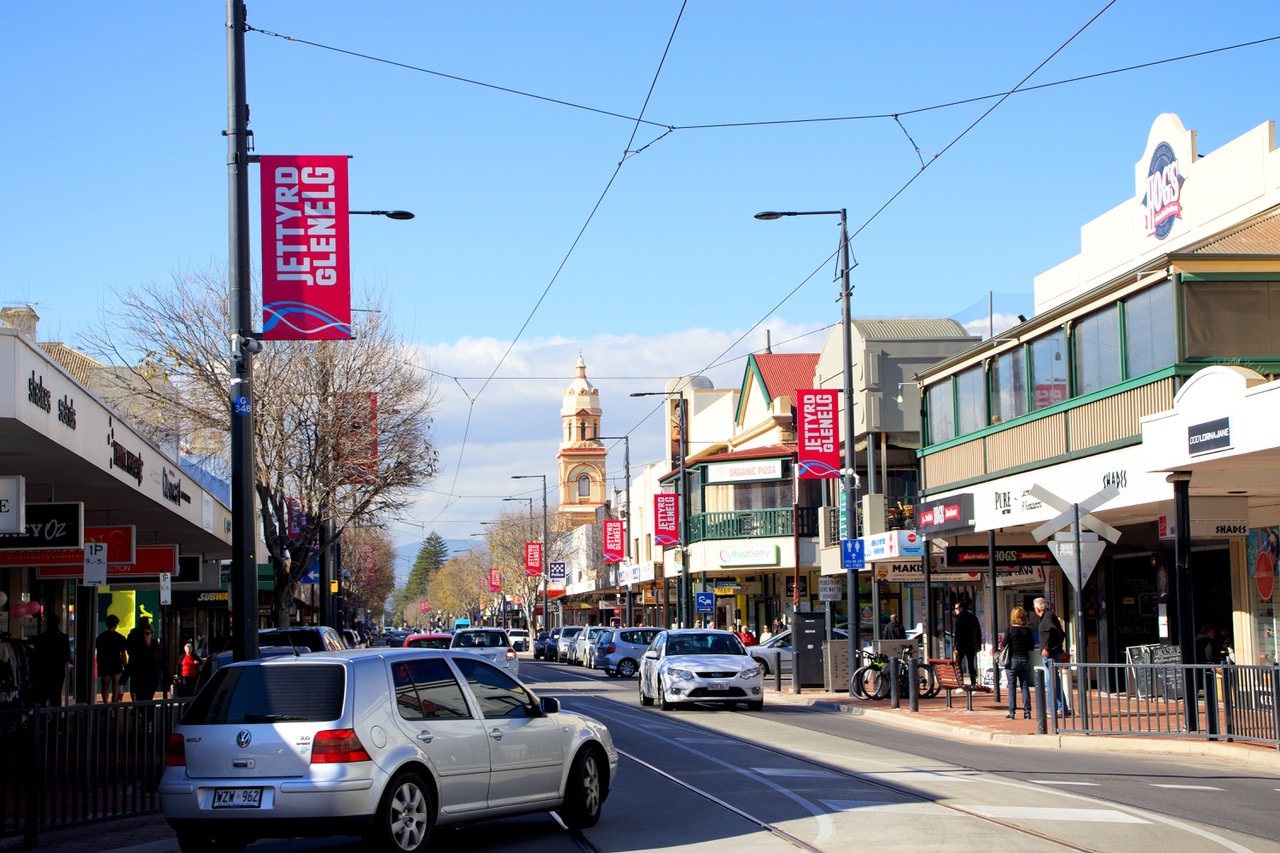
Jetty Road Glenelg Photo by Martin Christmas
On the footpath, walkers do not make friends. Prams, in particular, are a force to be reckoned with. They carry the future, and a walker defines us as the past. It’s all a matter of street etiquette of who gives way to whom and why. Some parents herd their children away from the frame with polite smiles as their kids scream past, unaware.
Romantic couples (I am speaking summer on Jetty Road, Glenelg here) in various forms of undress rush past in erotic glee fuelled by booze and waves. They are all more than a foot (oops, 30+ centimetres) taller than me, reminding me that, with Bella Burg, I am now a footnote to life. But, there is decidedly more to it. When a walking aid such as a rollator conjures debility and old age in the imagination of the young and able, it triggers a message that we are in the way. Worse than that, they turn away from the appearance of old age and decline, which are hints of their own mortality.
In retaliation, I now bow my head to oncoming foot traffic and stick to my path. Bella Burg is right there in front of me, ready to mow anyone down. I jest, of course, but such are my thoughts at times. We oldies are entitled to a bit of the footpath. And the young would do well to respect the possibilities of their futures!
Cafes are Tough
Walking sticks, skinny little things that they are, don’t intrude upon the public consciousness like a rollator does. They irritate their owners but are small and often attractive enough not to incur censure from the majority of a café’s clientele.
Rollators, on the other hand, are larger than space-saving cafe chairs and won’t fit between tables set close, which means wrangling chairs this way and that before you can park the thing and sit down at a table. Your process interrupts shouty conversations and turns heads with staring eyes full of irritated pity your way. Still, we set the example. Some come around after seeing that even old girls with rollators do interesting things out and about, like having lunch or coffee with friends.
They wave at you as they leave, looking you in the eye with kind, no-longer patronising smiles. I could be cynical and ask whether their estimation of me increases when they recognise that my companions are all whole, unimpaired, and we make interesting shouty conversation ourselves. But I won’t. I am thankful for the concern they send my way upon parting.
I feel good when I am out and about, like a natural person. With that in mind, my next move will be to a motorised mobility scooter, and the answer to my question about how we maintain dignity with a walking aid is that it depends on attitude. More succinctly, just as we need to change in order to stay the same throughout life, as we become old, we must accept the way things are in order to stay independent with a modicum of dignity.
Happy Writing
Wattletales
If you'd like to be added to the Wattletales post email list, make a request in the comments below, where your email address is hidden. Lindy
In case you missed it, which wouldn’t be hard, given that the matter lasted only a day or two in the news after police started to investigate. Year 11 boys (aged 16-17) at Yarra Valley High classified 40 of their female peers on a spreadsheet with photos as wifies, cuties, mid (average), (sexual) object, get out (dismissal) and, finally, unrapable. They shared the spreadsheet on social media. So, what does it mean for our culture when young males classify their female peers as unrapable?
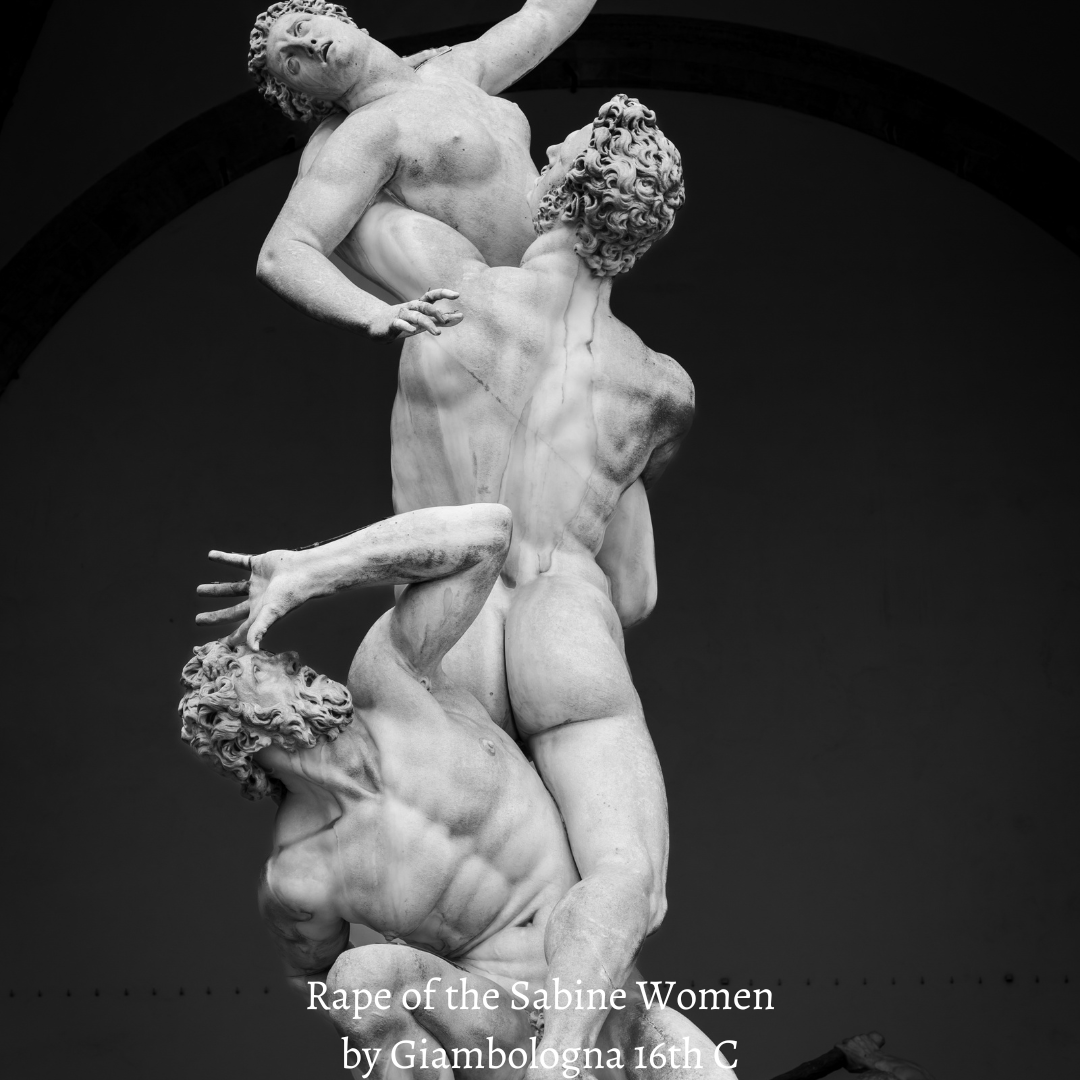
Also known as the Abduction of the Sabine Women.
For centuries across the globe and in mythical heavens, we have heard stories about women taken by force. Typically, stealing women from another tribe to wed, as depicted in the statue above, is an offence against the men of the defeated village. Similarly, the rape of women in war is arguably as much about causing affront to the fallen by the victor as anything else.
Although we can only speculate on their aspirations in creating it, the Year 11 boys’ spreadsheet was not particularly original, as a friend pointed out to me. The movie about the rise of Mark Zuckerberg’s Facebook, ‘The Social Network’ (Netflix), depicts the Zuckerberg character creating a website called Face-Crush, designed to rate girls on their appearance. Notably, Face-Crush is fictional. Even so, the very name, Face-Crush, was enough for me. I couldn’t watch the whole movie after I saw that, but film is a powerful way to put an idea out there.
An Appalling Lack of Judgement?
What hooked me about the Yarra Valley classificatory system was the term ‘unrapable’. An article in Nine’s ‘Today’ suggested the term could be a potential threat, making me curious. Wouldn’t being unrapable make a girl safer, untouchable? Let me quote the school’s headmaster from that article —
“We are going to be consulting the police because the language used could be an inferred threat. I don’t think it was, but we need to get further advice on that … I’m hoping it was an appalling lapse in judgment.”
Classifying women in terms of desirability or its absence is to objectify them. That act is appalling, not a terrible lapse in judgment. In my view, the headmaster’s response is as deeply embedded in the sexist ideology that both informs and protects boys in our culture and which underpins the sense of entitlement that probably led to the spreadsheet.
Note the headmaster’s hesitancy: ‘going to’ consult the police, ‘could be inferred’, ‘get further advice’ and ‘hoping’. Nothing decisive there. No expression of concern for the girls. He just ‘hoped’ the boys didn’t really mean it rather than calling them to account.
The article also has a lot to say about adolescent male hormones affecting their judgement, that sort of thing, indirectly finding justification for an act that denies female humanity. Girls and women do not exist solely to satisfy male desires, even though, apart from the notion that someone is ‘unrapable’, the idea that they are is not new, as I’ve already said. Either way, a spreadsheet is not a threat, but its creation is a ghastly indication of privilege and a sense of the right to dominate. Why? Because the underlying assumption is that males have the right to define, which means both stereotype and dehumanise.
A proviso here. My eldest son once told me when he was in Year 11 that the girls don’t like ‘nice boys’. With his words in mind, I must accept the whole game is fraught but, as the following poem suggests, it starts with pink and blue. (Even though yellow is now popular, nothing much has changed.)
How do the girls feel?
I have yet to hear or see anything written about how such a classification might affect young women today and why it is so easy to dismiss. In my day, the primary categories were ‘good enough to f…k but not enough to marry’, and we were treated accordingly. Unsurprisingly, I rejoiced to learn I was not alone when in 1975, the incredible Anne Summers identified that very dichotomy in her groundbreaking classic, Damned Whores and God’s Police. The title tells the tale.
There is another thing that makes the Yarra Valley youths’ classificatory system worse than earlier iterations: they don’t speak of ‘wives’ — an honourable thing to be even if we now say ‘spouse’ — but of ‘wifies’. How infantilising is that when talking about half the human race that bears and raises children?
At My Peril
Today, we believe in equality; we no longer speak of husbands and wives but spouses. But equality is not real. When a woman steals another’s husband, she is castigated in the same way as a man who has it off with his mate’s wife. But if a man takes many women from other men, we tend to lionise his randiness jokingly. Famous political figures and sports examples leap to mind. On the other hand, a woman who sleeps around is called a harlot or a slut.
Violation
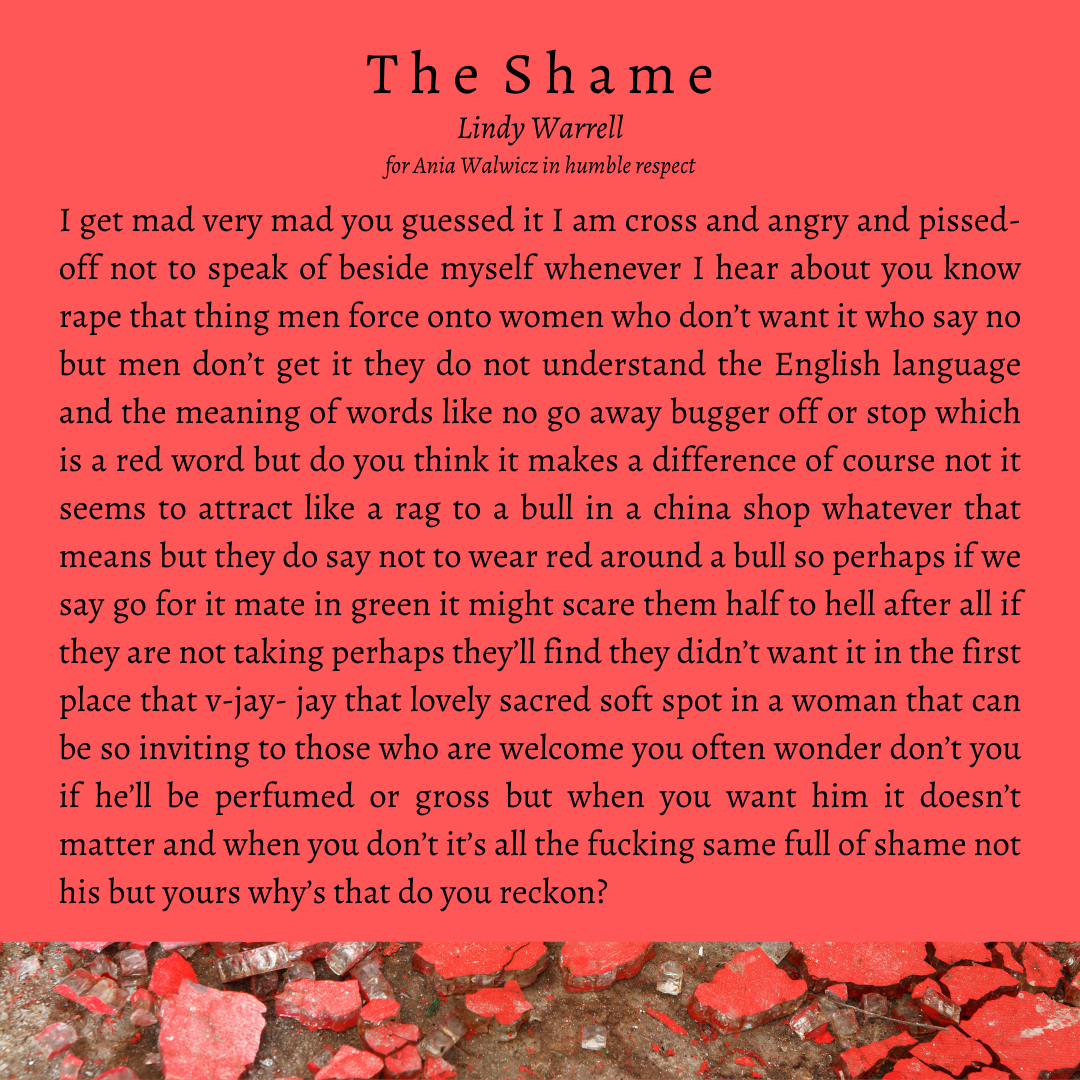
Interestingly, when women are raped in our culture, they tend to feel shame.
Of course, rape shames both men and women. But do rapists feel shame? Well, there’s one glaring example from recent goings-on in Parliament House that suggests they do not. Does it follow that being classified as ‘unrapable’ should make a girl feel good or safe from the trauma of rape? Well, no.
The notion that we are sexually attractive is important to young women and girls. In this context, such disqualification from desirability would be mortifying for a 16 or 17-year-old. You can’t deny the insult factor, and such things cut deep in youth. The term ‘unrapable’ has the potential not only to shame a young woman but also to lead her to feel sexually ostracised by the male gaze. How’s that for appalling? Isn’t it simply another form of violation?
What Others Say
One 40-year-old man interviewed for ‘Mamamia’ recalled having thought of a girl at school as hot but unlikeable. In his words as a youth, he thought, ‘Chloe’s really hot, but she’s the kind of girl you’d just rape.’ He acknowledged that boys separate physical attractiveness from other characteristics in a girl.
In the same article, a spokesperson from Relationships Australia justified this as follows —
People (sic) of that age group are saying things because they actually have no understanding about what it really is like. They’re aware that it’s wrong but they’re not part of their realm or their life so they start to become things you can bandy about.
She was speaking (ungrammatically) about boys, not all people. Presumably also, she means by ‘they’, the girls they know who they identified and shamed publicly by spreadsheet. The man who regretted categorising Chloe at school put his indiscretion down to hormones, much like the general thrust of the ‘Mamamia’ article.
I’ll let Relationships Australia have the last words justifying the boys’ behaviour.
The cool kids in school for boys, are the ones the girls like. It’s all filtered through a prism of sex. Why do I want to be cool as a teenage boy? It’s because I think chicks will like it. That is the one currency that there is.
What she does not note is that if the same works in reverse, i.e., that the cool girls are those the boys like, goodness help any school girl classified as unrapable. The power to define has far-reaching consequences.
The Last Word
I tried to think what might make a girl unrapable: too fat, too skinny, too old or young, disabled, disfigured, too clever. Or, maybe it refers to race, skin colour, religion, gender or social class. Was there a consensus among the boys about the unrapable criteria? How, exactly, do privileged boys in private schools define desirability? All sorts of prejudice may be in play, but everybody forgives boys for obeying their hormones instead of encouraging good sense.
In many traditional societies, adolescent male hormones were channelled into manhood by initiation rituals that we don’t have in ours. I once wrote an article about adolescent drinking as being a self-imposed rite of passage for boys and girls in this country, ‘Flirting with Morality and the Law: the Booze, the Bouncer and Adolescence Down Under‘*.
As I argue in that article, girls also have hormonal changes in adolescence, so I ask again whether anyone interviewed the girls who found themselves on the Year 11 boys’ spreadsheet. I would have liked to learn how they felt about being identified online as unrapable. How would you respond?
Happy Writing
Wattletales
If you'd like to be added to the Wattletales post list, make a request in the comments below, where your email is hidden. Lindy
*Flirting with Morality and the Law: the Booze, the Bouncer and Adolescence Down Under was first published in Anthropological Forum Vol.7 No. 1 pp.31-53 (1995)
We live in a world that encourages us to grow, follow our dreams, develop our creativity or achieve goals, pushing on to change, renew or better ourselves, but is there a time to stop? Moneymakers. powerbrokers and insane world leaders governed by iron egos don’t change as they wreak havoc upon us all. But as mere mortals, should we persist in seeking acclaim or find acceptance by turning inwards as we face the inevitability of death?
Does moving into a retirement home develop or limit our potential? What does it say about our society that the elderly gather, locked away, albeit in comfortable circumstances? We may be isolated from family, but we can reach out and do community work and creative stuff despite being subtly pointed towards the grave the moment we retire. TV ads don’t tell the full story.
We move into retirement living voluntarily in the expectation that smaller dwellings might save us from a nursing home. People in my building certainly live longer. One man will be 100 in February 2025. But who are we, really, when we leave our houses and pets behind? The overarching aura of independent retirement living often feels more like being institutionalised than independent, as I’ve written before.
What Does it Mean to be Old?
I first thought I was old at 30, fearing I’d lose my figure with my imminent third baby (born on Cyclone Tracy’s cusp of fury). When I turned 50, that same baby boy gave his mother a single red rose when I hosted a party for women friends; a powerful women’s party. After a tipple or three, some guests broke down at the thought that they had, indeed, achieved power and insight through tertiary education yet wondered who they’d become and mourned the innocence they’d left behind. Others bemoaned their failure to follow suit with excuses for not having achieved anything because of children and bad choices in men. It was an interesting evening.
Rejuvenated at 75, I published my first poetry chapbook with two novels and several other poetry collections to follow. Living the dream. I turned 80 on the Marina Boardwalk in Glenelg over lunch with my daughter, but this year, my 81st has seen me turn inwards. I find myself wondering whether that is a natural progression or a portend of decline.
I have come to believe we tend to settle into ourselves more as we age, but is that by adaptation, cultural isolation as we drop out of social things or something else altogether? When I see elderly friends who are younger than me but with healthy pockets and living partners tripping around the world or visiting interstate all the time, going places and doing things as though nothing has changed, I can’t help but wonder if the changes I see in myself are peculiar. But, changed I am.
Change Brings Grief
When I look back over the posts I’ve written over the years on Wattletales, I realise that I have often summarised those parts of my life that I’ve most valued, using them as a trigger to make a point about something that was niggling me at the time.
Recently, however, I’ve worried because, since the publication of my second novel, They Who Nicked the Sun and its recent launch at Manson Towers, where I live, I have not written a word until today. An article on grief gave me a clue as to what’s going on.
When I told my doctor recently that I often cried for no apparent reason first thing in the morning, she looked at me blankly. The topic got lost in the more important stuff that she thought a test or a different pill might assuage. It must be hard being a GP for the elderly in a discipline predicated on the heroics of scientific medicine more suited to acute conditions. You simply cannot fix ageing; most conditions thereof resist the force of nature.
But the grief article showed me that I am grieving for parts of myself now defunct, and living in the confined space of my independent unit seemed the most suitable thing to grizzle about. Instead of taking pride in myself for being content with my lot and commending myself as I usually do for not fearing death, I sought to blame.
Like those women at my powerful women’s party years ago who blamed husbands and children for their failure to achieve, I have been blaming retirement living for pretty well all the changes my mind and body have experienced of late. My tears dried up the moment I understood that fact and once again accepted who and what I am at this moment. Then, my words —these words — began to flow.
The Truth Is
I grieve the diminishment of my mental acuity, my way with words (when speaking), and the decline of my physical strength and energy. I have been independent for so many years and now have to go slow, take it easy and ask (or pay ) others to help. Yikes! We need to listen when they say ageing is not for cissies. Frailty and weakness are simply not valued in our world, and I’m not too shy to report that old age sucks at times. But, then, so can life.
Nevertheless, old age has rewards. I am content not to be on the constant ‘doing and going’ merry-go-round. Even if I had the money and energy, I know I’ve had my turn, and I’m still here. My mental meanderings always find answers, and there’s nobody around to tell me I’m wrong. In writing, I found my home, and that is true freedom.
Happy Writing
Wattletales
If you'd like to be added to the Wattletales post list, make a request in the comments below, where your email is hidden. Lindy
I ask the title’s question because I have long known that my words reveal me, they are keys to knowing who I am. Some people hide behind their words. I guess it comes down to whether you write from the heart or the intellect. Either way, as a reader, I tend to believe I have a poet’s measure from their words. This is, of course, an introductory palaver because I haven’t really got a proper topic today. Rather, I’m posting a few of my recent poems because, being a creature of habit, I find it hard to skip a month when I’ve been writing regular monthly posts for around five years, and this month, I have nothing to say.
Poems Past
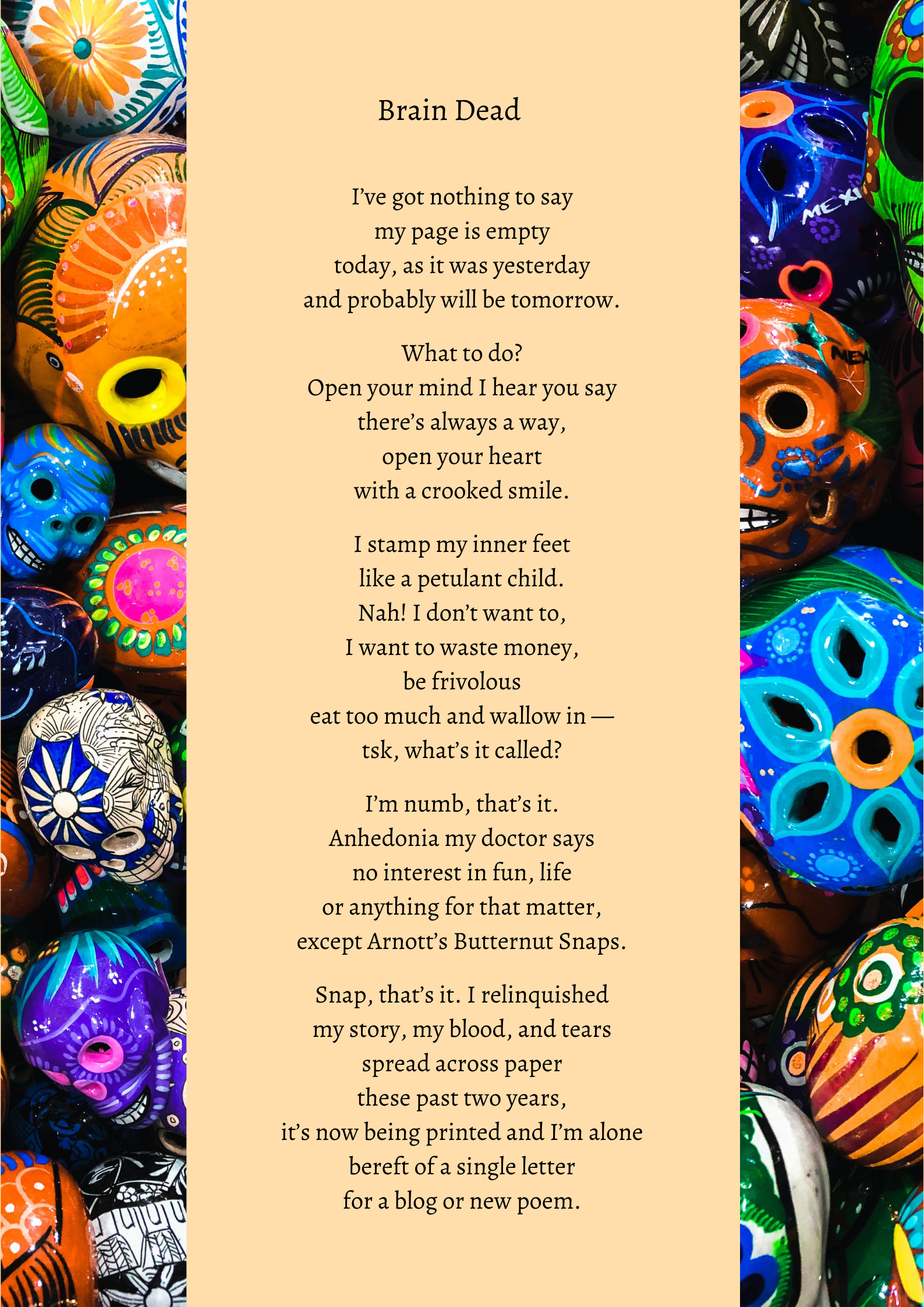
Some of the poems here will be familiar to those who follow me on Instagram. Some are new, and the first one, ‘Brain Dead’, sums up my current situation quite nicely. I have just finished my second novel, They Who Nicked the Sun, which (see below) will become available soon, and until its launch in May, I feel in limbo.
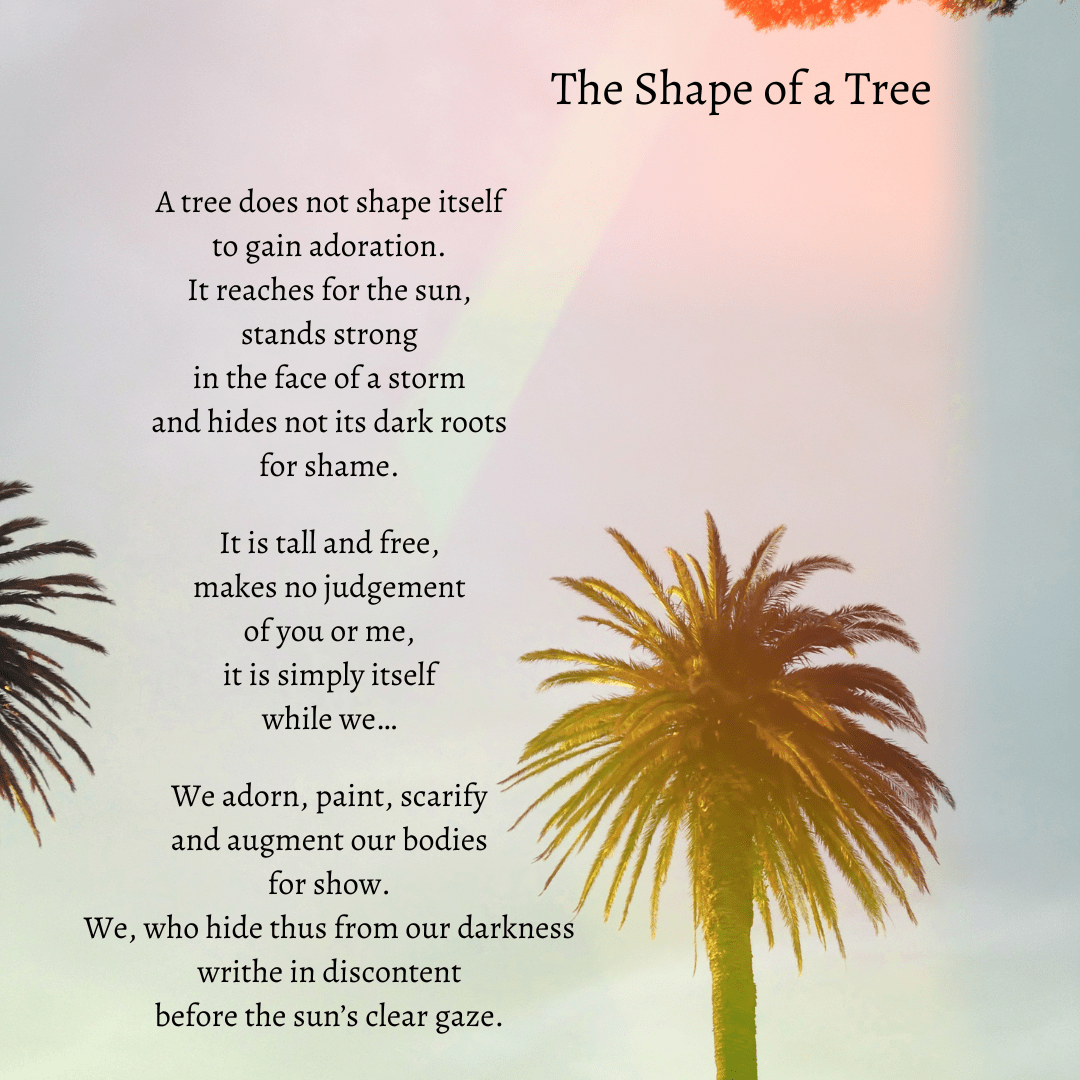
‘The Shape of a Tree’ was written just before I finished my novel. Trees feature in my book, but the way the poem developed, I can now see, describes me writhing away, hiding from criticism, not that I knew it at the time of writing.
The next poem comes from meandering around the streets of Glenelg and the transformation of a lovely old colonial house that I dreamed of living in for many years. As I read it now, I think it is also a metaphor for ageing or being supplanted.
The next two poems are about trees. Funny that they formed in my mind as I wrote my tree-full novel.
I hope the following two poems are not too bleak. Death and dying have become central to my thinking as I age, and reflecting upon them fills me with love for this wonderful planet we share. My life has been enriched by many different landscapes, from the desert to the tropics.
It is a truism to say that life is fleeting, but I remember something the Dalai Lama once said when a journalist asked him if he got lonely travelling all the time as he then did. The monk replied, how could he be lonely, for every chair he sat on connected him to the carpenter who made it, every mouthful of food put him in the company of a farmer. I wish I could recall his actual words, but his point is that the world around us is alive with the history, activities and even personalities of people who are integral to our surroundings and his argument was therefore a question. How can we be lonely if we pay full attention?
Although this last poem was not consciously written with the Dalai Lama’s philosophy in mind, it echoes it.
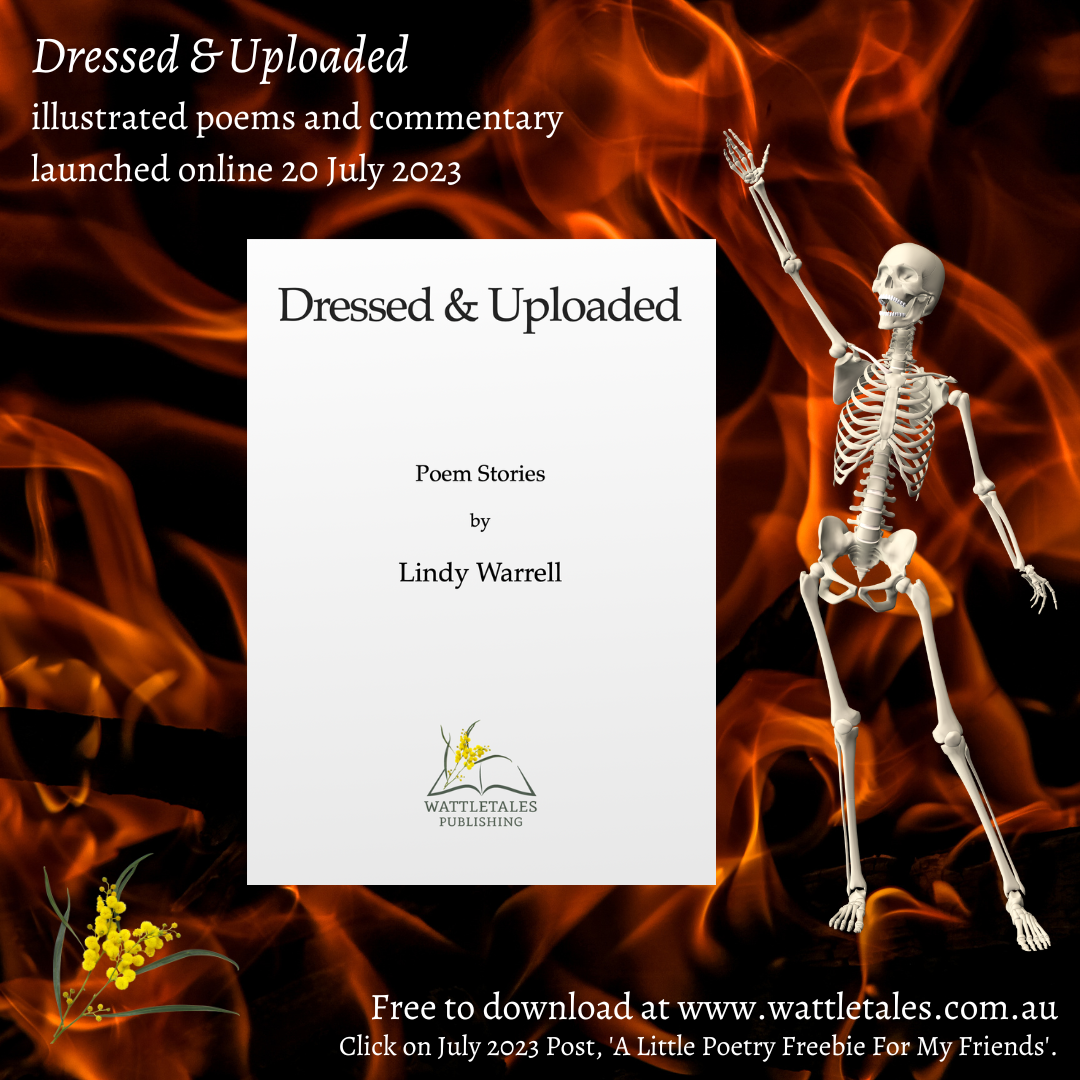
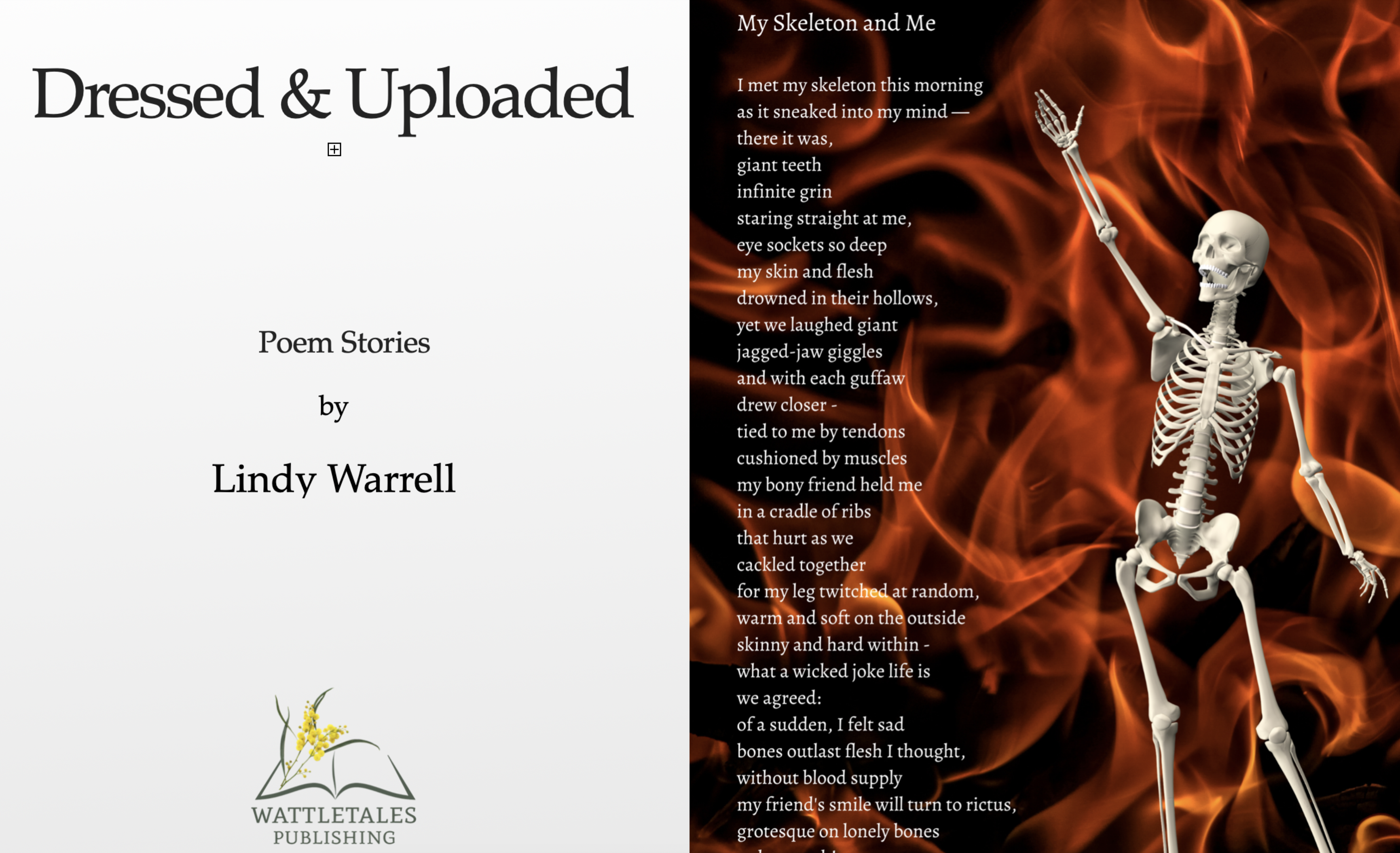
So, did these poems tell you something about me or offer something to you? Please click below to download a free ebook collection entitled Dressed & Uploaded, where I offer the stories that underpin many of the illustrated poems on Wattletales and Instagram.
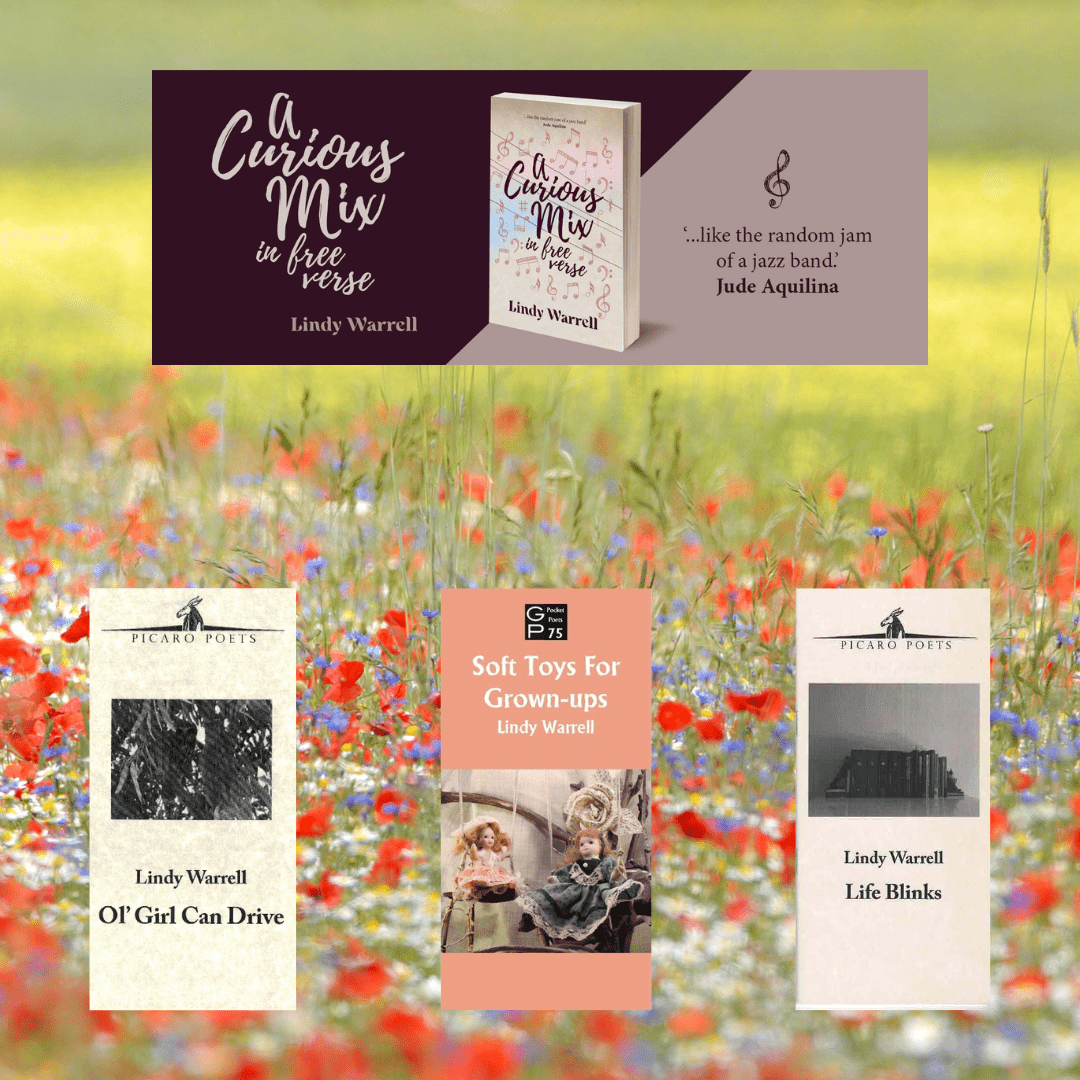
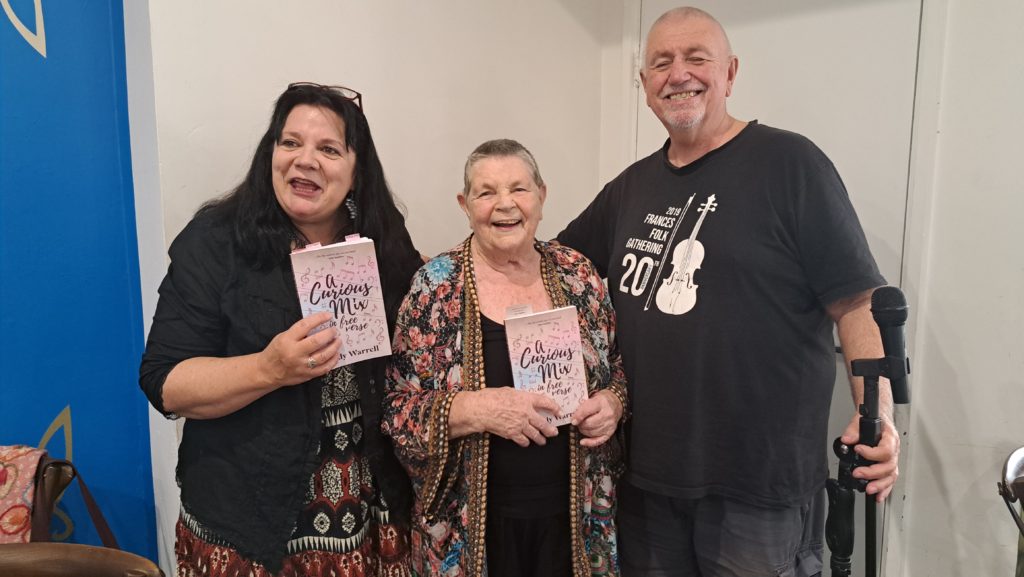
If you wish to purchase any of my other poetry books featured in the opening image, leave a message in the comments section below, and I’ll get in touch.
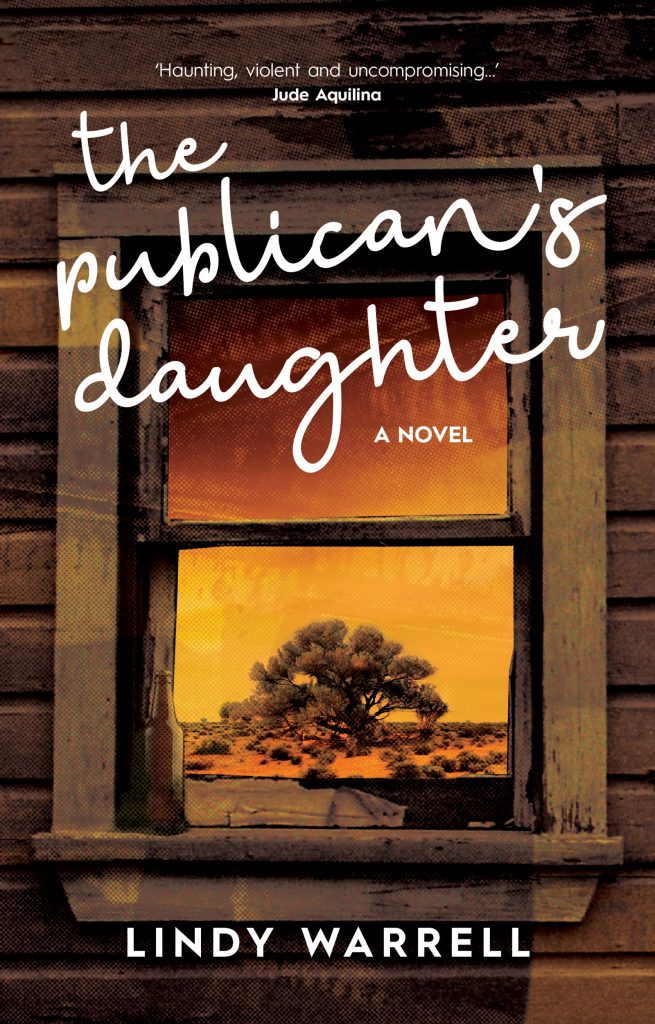
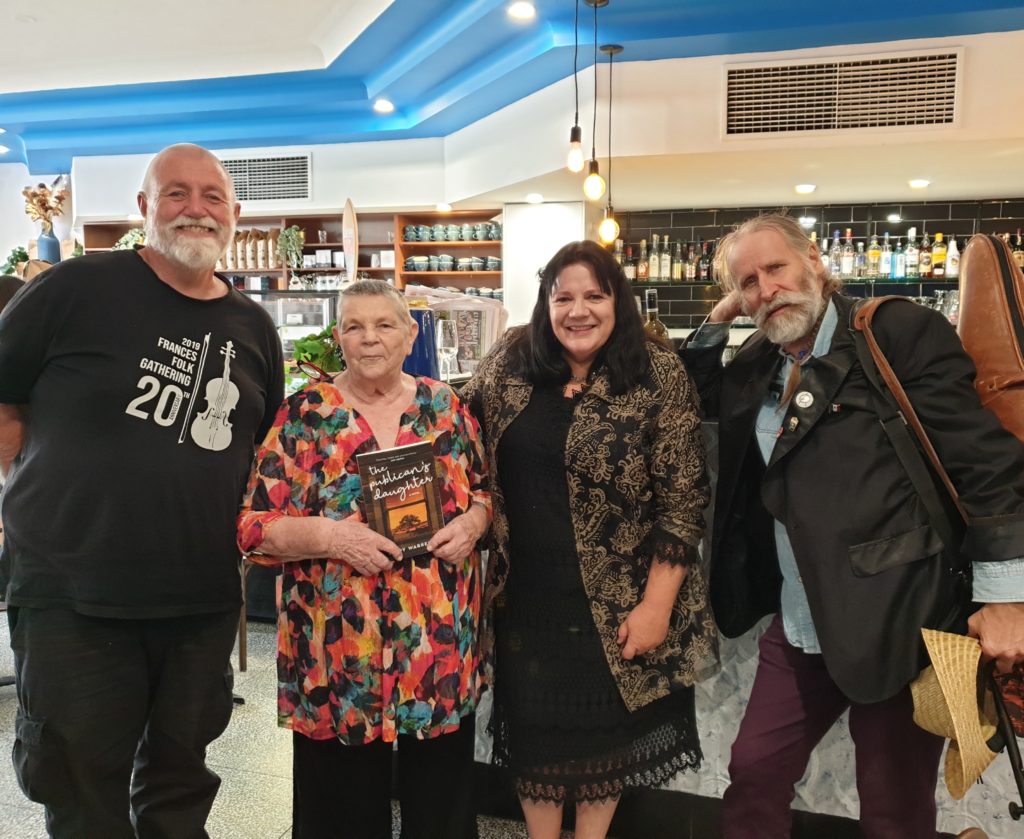
My novel, The Publican’s Daughter is available from Amazon and other print-on-demand outlets and Kindle. They Who Nicked the Sun will similarly be available as of 21 April. However, you can also purchase either or both books directly from me by leaving a message in the comments below or emailing me at lindy@wattletales.com.au.
Novel
Happy Writing
Wattletales
If you’d like to receive Wattletales posts regularly, drop a word in the comments below, and I’ll add you to the list.
Have you ever heard of the Native American potlatch or the Kula ring of the Trobriand Islands? I read about these practices with awe and excitement in the French sociologist Marcel Mauss’ 1950s classic, An Essay on the Gift. In that little book, which you can download below, Mauss describes the moral, social and political power of personal gifts and communal feasts. I take my cue from him. Gifts are magic because they are never morally, socially (politically) or emotionally neutral.
Do you agonise over what to give or how much to give to various people in your life? Should we give what we like, what they want, or guess? Can we give someone a book we think they should read? What does that say about us? Do we secretly wish people might treasure our gift over others?
Giving or gifting, as it is now known, is a fraught area of social life, especially now, with Christmas bearing down upon us. Gifts magically pull our strings or push our buttons, and wherever you find magic, danger also resides, as this little poem suggests.
The Vulnerability of Receiving
My father used to say, ‘Thank you, Luv’, with such warmth to everyone, even when receiving presents he had no use for and was a pleasure to give to. Once, my brother gave him an expensive pure silk dressing gown. Some months later, I noticed another resident wearing it at Adelaide’s War Veteran’s Home in Myrtle Bank, where Dad lived. I didn’t tell my brother, who then lived in Canberra. It would have smashed him. It was Dad’s way to please in the moment.
On the other hand, Mum declared it straight up when she didn’t like a gift. She became cold with what felt like criticism to me when I was younger. I now understand that disappointment runs deep when we yearn to be understood as Mum did — as we all do — and a wrong gift can signify how alone we really are in this world. Gifts of love are often complicated.
Giving as an Act of Dominance
Some people shower us with valuable gifts as an overt statement of care that is often subliminally about control. Some do it to mask guilt or compensate for years of neglect, but this type of gifting is more about controlling the recipient’s perception. It says, look at me; I’m being good to you.
I dislike being lavished with gifts. I use the passive phrase, ‘being lavished’ advisedly, as it perfectly expresses the impact of such giving. Even with my cynicism, it makes me feel so vulnerable I have to resist squirming. Without naming names, a couple of significant people over my lifetime smothered me in that way as a distraction designed to divert and confuse, which is a type of gaslighting. In the extreme, it is an abusive ploy.
Overdoing it with gifts is a big no-no, except when words fail because our hearts truly go out to a beloved to whom we wish to express deep feelings. Such giving is fine when the intention is pure — as long as the recipient shares our feelings; otherwise, from a recipient’s perspective, it can feel oppressive or appear foolish. Gifting is a risky business.
Giving and Receiving
Giving and receiving are, of course, the two sides of the same coin. You can’t have one without the other. This is where the Native American practice of potlatch and the Trobriand Island ceremonial exchange Kula ring teach us what is really going on.
Potlatch
Mauss argues that there is no such thing as a ‘free’ gift. He argues that in traditional societies, ‘gift cycles engage persons in permanent commitments that articulate the dominant institution’ — they are political. Unlike purely economic exchanges such as barter, the potlatch is ‘totalised competitive giving’ involving gifts and feasts — the display of wealth — on an annual or social cycle to create or strengthen ties between people and groups.
Ironically, the conspicuous consumption of a potlatch is succeeded or crowned by conspicuous destruction. The point of a potlatch is not to demonstrate who has more. Rather, it is about who can afford to destroy the most, with wealth items like blankets, canoes, and precious artefacts being thrown into the sea or burned in a competitive display of power like no other.
We might find this strange, but I can’t help but think of today’s extravagant and opulent weddings, often held overseas in luxury tourist spots. We may not burn canoes, shoot firearms into the sky or bomb cars, but as a culture, we certainly rob from the future when a wedding costs more than the deposit on a house or, worse still, we find ourselves in debt. Such indulgences are the very definition of conspicuous consumption, succeeded by less conspicuous but just as real destruction as a potlatch. Status is always hard-won.
Kula Ring
Traditionally, Trobriand Islanders circulated abalone shells among groups, people and islands. They named their beautiful shells. Each shell increased in political and spiritual value as tales of its circulation between groups and islands accumulated through time. Anthropologist Bronislaw Malinowski, the first to undertake a participant observation methodology, wrote about this complex system of ceremonial exchange in his classical work, The Argonauts of The Western Pacific(1922).
I do not know if Kula is still practised, but in its many manifestations, gifting was typically inherent in most traditional societies’ social and political structures. The gift, in all its forms, articulates relationships between people and place. You can read other examples in Mauss’ essay.
Politics, religion, and economics are separate institutions in our world. Yet, an Australian study by Diane Bell (1987) called Generations: Grandmothers, Mothers and Daughters documents one of the many ways family treasures accrue value when passed through time, in this case, by women. Our ‘shells’ take many forms, but antiquity and provenance — an object’s story — still create value, as is well documented in the British TV production The Antiques Roadshow. Also, museums and art galleries display a culture’s most treasured items — the older, the better — as state property.
Our economic and political systems may have transformed, but human beings have changed little.
The Feast
There are many other forms of giving, from donations and philanthropy to votive offerings and alms, but feasting is worthy of discussion at this time of year. At one level, eating together or commensality is a form of social bonding. But in contemporary society, families are often separated or fragmented, so we find ourselves haggling over who goes to whose place, who is the rightful head of the family, and who can and can’t or won’t go where they are invited. And who is snubbed?
Christmas is a case in point. Even as adults, childhood sibling rivalries surface when we do get together. Expectations and desires are often met with unpleasant realities, and painful arguments erupt. Whether for feast gift, we often overspend because we think we must or to show off, which, again, has the touch of the potlatch about it. Or we might offer gifts to mask unexpressed resentments.
It is well known that emotions run highest, and suicide rates peak during the festive period, which is not known as the silly season for nothing. So, it may be helpful if we practice gratitude this year as the Venerable Thich Nath Hanh encouraged us to. His teachings on mindful eating invite us all to reflect with each bite on where our food comes from and who ploughed the earth or sowed the seed. This poem engages that advice.
Acceptance
While we may have difficulty accepting trivial, unwanted, prolific or extravagant gifts, we usually muster our manners enough to reward the giver with gratitude, albeit tempered by a niggling unease that we probably have to repay. Although it does happen, few of us throw gifts back in someone’s face. Gifts, by definition, require reciprocity of equal or greater value, depending on relationships and status.
At a personal level, there is magic in the way gifts create connection and sustain affection. While Mauss argues there is no such thing as a free gift, if I recall gift theory correctly, the only genuinely altruistic gift is seen to be from parent to child, where there is or should be no expectation of return. We may argue with this, but it is a thought to end on.
For more on my favourite books and classics, click here.
The question for today is, what is it like to be an anthropologist in the field? So, I decided to explore my experience as a consultant working with Australia’s First Nations People. I write personally yet in general terms because I can’t divulge details not in the public domain. The reasons for this are manifold, but it is primarily because I am not authorised to speak for Aboriginal people or tell stories that are not mine to share.
Tranquility
To elaborate, when undertaking site mapping and gathering social history for environmental impact studies and related projects, sacred and historical sites must be documented if they are to be protected. Whatever a report’s findings, the document masks the differential power between traditional knowledge, copyright, and intellectual property rights. The first must be respected, but the latter wins at law.
For example, if I record oral histories or stories about places, the copyright in the report is mine by virtue of writing it. The physical report, however, belongs to the commissioning body, while the information recorded is First Nations people’s cultural and sacred knowledge — oral traditional knowledge. Tension is inherent.
Definitions
I use the term Country in my title advisedly because it is often susceptible to misinterpretation as meaning ‘all of Australia’ by those wishing to excite fear and cause harm, as happens in the media around the forthcoming Referendum on the First Nations Voice to parliament. Wherever I worked, Aboriginal people spoke of Country as the place on the land(scape) they and their Mob belonged to. To them, the word defines the areas they are required by tradition to look after.
I could have included ‘nation’, an entity we often conflate in everyday speech with Australia as a country. However, while patriotism is fine, I didn’t want to introduce the concept of nationalism and its associated politics. It is enough to say that all citizens of this nation are Australians. Belonging to Country in the Indigenous way is something else altogether.
Wangi Falls, Litchfield NP NT
Nuts and Bolts
Being a consultant anthropologist requires business acumen to tender for projects against a brief, specifying costs, timelines and deadlines. You must carry professional indemnity insurance. While some lucky folk had their own Toyota or Mitsubishi four-wheel drive, as they were once called, I hired mine from Hertz. Vehicles then didn’t have the marvellous GPS coverage of today’s systems. I had to reset my clunky portable device every time I crossed state borders or moved outside the range of a previous pivotal setting. The old devices could put accurate site mapping at risk unless set correctly.
Consultancy projects frequently take you into remote areas. Basic bush tackle includes a gas bottle, a portable stove, a billy, matches, enamel plates and mugs, cutlery, a torch, batteries, a decent first aid kit, toilet paper and food. Plus, your bag, laptop and swag.
Outside Silverton, NSW
Project participants often took me to places only they knew where they’d hidden blackened barbecue hot plates. A feed of steak, onions, and snags with tomato or Worcestershire sauce cooked on old iron is the best, as is tea made in a tannin-stained billy boiled over a smoking fire to chatter and laughter.
I am grateful to the women Elders in the Northern Territory who encouraged me early on to wear loose-fitting dresses like them to let even the lightest breeze keep me cool in summer’s heat. I wore an Akubra and strong hiking sandals but avoided my profession’s jungle green fashion in favour of comfort. Like the women, I carried a strong stick, beating the ground to warn curious snakes of our impending presence.
On the Road
I love driving, but long hauls driving alone from Adelaide to the Queensland Gulf country via the Murray-Darling River basin or up and down The Track, as the Stuart Highway in the NT is fondly known, are exceptional. Experiencing the silence, the changing scenery, the solitude and an occasional off-road frisson of fear is awesome. I used to be proud as punch when my four-wheel drive got covered in red dust or mud; it spoke to me of adventure.
The Track
In my mid-sixties, I decided it was no longer wise to take other people, often older women and little kids, out bush alone. I have to say I was blessed never to blow a tire. However, I did get bogged in sand and mud a few times on longer trips, but stronger people (men and youths) got us out of trouble, thank goodness. One of my favourite poems came from a trip over the NT’s Daly River Crossing with a group of women, which resulted in one of my favourite poems, Ol’ Girl Can Drive.
The Wider Context
When First Nations People tell family and Dreaming stories to consultants hired for site clearance work, they are asked to prove who they are in kinship and biographical terms and demonstrate that they have the traditional right to speak for an area. Just imagine that for a moment. It is so invasive. Their traditional authority is questioned in favour of legal definitions.
Little wonder it causes deep concern to think that the information people provide might be misused or made public against their wishes; for example, in a court of law, should what they say be contested by another stakeholder’s legal representative. Such matters (think Native Title claims) can drag on for years. Can you imagine the stress?
Community Intrusion
Researchers often turn up in communities, expecting people to drop everything. Many remote communities are regularly bombarded by light planes and SUVs full of people wanting something from them: government officials, police, social and medical researchers, media and others. Visitors on a strict schedule often get frustrated (and show it) when the people they want to see are unavailable. In my day, few considered the inconvenience their visit might cause.
When you work with women, as I often did in places with no resident doctor, they care for others and often need to attend long-awaited medical and specialist appointments regardless of your schedule. A community may be in the middle of its ceremonial season, preparing a funeral or be in crisis. My point is that few of us experience the intrusions that Aboriginal people endure all the time. The context we enter when working in the field is life.
Droving, Qld
Going Fishing
In my day, sharing knowledge of stories and sites rewarded most First Nations participants little more than a free ride or two to an outstation and a modest day payment for their time. Longer trips were not too different in that regard. This may have changed, but as strangers, we should not be surprised to learn that we had to earn trust to achieve anything.
In anthropology, making sure we talk to the right people is vital, but at first, someone will point you in one direction, and another will send you to someone else, and this may continue until you think you’ll get nowhere.
I later learned that ‘going fishing’ is the metaphor for hanging around, being patient, and having a cuppa and casual conversation with whoever is willing so that people have time to observe and assess you before they decide whether to work with you. This happens even when you write well ahead, seeking permission and attaching a project outline with dates and times. Although you write to what you think is the right entity — an Aboriginal Association or Community Manager or call a recommended person — you still have to go fishing. It’s a different process.
Before long, someone with the authority to speak on behalf of the community takes you under their wing, and you know it’ll all be OK, just like that.
Dust Storm
First Nation’s people understand well what most projects need, and they take the lead to show you what has to be recorded. Apart from your analysis, what you write is, in that sense, determined by them. After all, it is their knowledge you are recording. Once your report is written, you present it as a draft at a meeting of the entire community for discussion and approval before submission.
The involvement of lawyers at such meetings introduces another layer of complexity. All I can say here is — if the notion of ‘going fishing’ disrupts the gaze of professional anthropology’s participatory observation method — who is looking at who — the law has different eyes again.
Accommodation
The best accommodation in the world is a swag around a campfire. Falling asleep beneath a sky of lambent stars awakens awe. Further delight comes when someone in an adjacent swag tells you tales about Venus, the Morning and Evening Star, and the Milky Way. As you drift off to sleep, other stories might be told about snakes slithering into vehicles and swags to pretend-frighten you. First Nations people have a wicked sense of humour.
A Bush Dream of Mine
Some jobs entail repeat day trips from town. That’s the time for motel accommodation, which varies in quality nationwide. As they get to know you, a few people might visit to talk things over, explain further or just sit down for a while; at other times, you are entirely alone with your computer and poor TV reception.
Staying in a community is different again. Most have visitor accommodation with basic facilities, and when it’s time to eat, you quickly learn how poorly stocked the community store is for people for whom fresh food is a luxury.
A Sample of Projects
While I mention only consultancy projects here, I was lucky enough to also work with First Nations people at different times in different capacities out of Katherine towards the Kimberley region, on the Tiwi Islands and in the Queensland Gulf country.
Site Clearance
A government or developer typically commissions site clearances for environmental protection work. My first site clearance consultancy with First Nations people was in Port Augusta. I learned women’s stories about the Pleiades, known as The Seven Sisters Dreaming and the significance of ceremonial dancing. My report was one of the first to document this.
I also worked for a long time down The Track when I lived in Darwin, travelling to places like Rum Jungle (I love that name), Yellow Waters in Kakadoo, Litchfield Park and the Daly River crossing mentioned earlier.
Family Histories
When recording family histories, I was fascinated to see how people deferred to each other to recount different aspects of their biography, history and traditions. Complex kinship rights and obligations are enacted in this way.
One project funded by a National Estate Grant gave me great joy. My brief was to document women’s knowledge in the far north of South Australia. Anthropology had, till then, largely ignored women’s knowledge. Although the women were well-known and often related to each other, at their request, I documented their stories in seven separately bound reports under the encompassing title, This is Women’s Business: An Anthropological Report on Aboriginal Women’s Cultural Knowledge in the North of South Australia. They imposed the condition that their stories could not be read by anyone without formal consent.
A senior woman who became my friend wanted me to share her tragic family history of inter-racial love, war and loss with my mother, who grew up in inner-city poverty and experienced WWII. Mum was fading from life at the time. Such a profound gift.
Despite the initial awkwardness of getting to know people, I made many friends as a consultant and, over the years, had some of the most memorable experiences of my life in the field, professional challenges notwithstanding. Although my task was to take notes and ask questions of others, in the end, I learned more about myself from First Nations people than I could have imagined.
Pastoral Lease Forensics
I spent periods in and around Mount Isa recording sites, stories and family histories for an Aboriginal organisation wanting to assert formal ownership of a pastoral property. I thoroughly enjoyed that project and was thrilled when I finally got the news that their claim was successful. The stony landscape in that part of the world is unique, different from the gibber plains of far north South Australia, but equally stunning in changing colours.
Cloncurry to Mount Isa, Qld
A Test Case
The NSW government commissioned me to undertake research along the route of a Bronzewing Pigeon story between the Flinders Ranges and Broken Hill. I was not to socialise at all with the participants or other parties after our field excursions. I was there to record stories and take photographs — no fishing required. The government had pre-selected the participants in consultation.
After the fieldwork, my brief mandated that I eat alone and isolate day and night for ten days to write up my findings. It was a tough gig. The government was keen to have a pristine piece of work as a test case to underpin proposed new sacred site legislation in NSW along the lines extant in South Australia. It was later enacted.
Flinders Ranges SA
I documented the South Australian stretch of the storyline as we travelled by bus from Port Augusta to Broken Hill, stopping along the way. The NSW participants then shared their knowledge of the same story on sites out of Broken Hill. While working in Queensland a couple of years later, I learned that Bronzewing Pigeon also travelled up to Mount Isa and beyond. The next poem is my take on that story. The detail I use is on the public record; the poem is eclectic.
Research reports of any nature are peer-reviewed. Despite a moment of controversy when women in anthropology caught media flak in the wake of the Hindmarsh Island affair, my report achieved its aim. I was delighted to learn it was later lodged in the Aboriginal Institute of Aboriginal and Torres Strait Islander Studies (AIATSIS) Library by the authority of those with whom I worked for being a comprehensive record of the Bronzewing Pigeon story. It is available to view (not borrow) on request from any library.
Memories Linger
Often, we don’t understand an experience until it is in the past. We don’t analyse how we feel while dancing in a nightclub late at night. Only when we reflect in the morning can we see ourselves clearly. At times in my years as a consultant, I felt defeated, mainly by the politics of the scene, but when I look back, I see how fortunate I am to have had the experiences First Nations people gave me. It remains a miracle that they greet researchers so well.
It is thrilling to be taken to places you’d never otherwise see, drive across a landscape that breaks your heart with its diversity and rugged beauty and be entrusted with private family and sacred stories. That is to say, to learn some of the deeper meanings in the landscape. I cherish that experience and am grateful for the warmth, charm and care I received, often in difficult circumstances all around.
My mother died when I was a total stranger in far west Queensland, yet people there treated me with great compassion. There, and in other places, people often took me to the back of beyond, far outside the scope of my brief, to show me secret places especially significant to them, a privilege I shall never forget.
Stuart National Park, New South Wales
Homage to a Life’s Work
I first came across Steve Parish’s work at the University of Adelaide in the 1980s, a photographic record of the outback I fell in love with as a child who lived in books. I often gave his beautiful publications as gifts.
Last year, Steve invited me via Facebook to contribute a piece of writing to his webpage. I was both honoured and thrilled. He then generously offered his photos for use on my website, a perfect fit for this post in particular. Steve has spent his life capturing the beauty and diversity of the land and the creatures we all love and want to save from destruction by overdevelopment, mining and climate change.
Steve describes the photo below as one of his most treasured images. It is of a young bloke from Oodnadatta coming in last, riding like a winner at the William Creek races. Read Steve’s account here.
Thank you, Steve. Your photos bring this land alive. Here, they hint at the areas where I worked and demonstrate what it must be like for First Nations people to belong to and care for Country.
ACKNOWLEDGEMENT
All Photographs by Steve Parish.
‘A Distinctly Aussie Morph’ first appeared in 2013 in Jill Sampson’s Brindlebox Nature Reserve Project: Brindlebox Birds 153 (also read on Radio Adelaide with Julia Wakefield) and in Life Blinks, Ginninderra Press, 2019.
‘Goanna and the Snake’ in Life Blinks, Ginninderra Press 2019
‘Of Heat and Flies’ in Alchemy Friendly Street Poets Anthology 43, 2019
As life forces me inwards in old age, I find I have less and less to talk about. We complain, of course, that society renders us invisible as we age, and so it does, but are we complicit in that process when we make our world smaller?
I first noticed this turning-in business in my mother years ago. Even though her phone (a dial-up) might ring only once a week — if that — she used to take it off the hook for morning and afternoon tea and at mealtimes. She would say, “As sure as eggs if the phone rings, it will do so when I’m busy”.
Even if you are lucky enough to find yourself in old age (I don’t say ‘reach’, for few of us aspire to that state), the decline is likely to be there in one form or another, like it or not and retreating inward is probably a natural part of that process, as is resisting onslaughts that prevent peace.
Why is My Life Limited?
Mum also took the phone off when she showered because the sensuality of hot water flowing over her ageing body brought comfort by dissolving the rest of the world, as it does for me. Still, when you are alone in a limited social and physical space, your sensitivity to others and outside forces increases. I hope articulating my irritations here will alleviate boredom, if only for a moment.
Electronic Communications
The Imperious Buzzer
Living as I do in a multi-storey retirement village, I am often on tenterhooks when a delivery is due, waiting for the imperious buzzer that tells me I must let someone into the building. When I’m expecting a delivery, I’m scared to go to the loo in case I miss it.
From buzzers to ring tones, my new iPhone rings as infrequently as Mum’s old green handset used to. Yet it beeps with endless messages around deliveries, first of all advising me something is due. A second message telling me a parcel has been delivered comes after delivery, as though I couldn’t guess that from buzzing someone into my building.
Mum’s Life as PalimpsestWe think we have time to do it all.
I signed up for an Australia Post Parcel Locker to avoid the tension of waiting beside the buzzer. Like other deliverers, Australia Post texts to say something is ready for collection, then emails a thank you once I collect, as though I’ve done it a service. The first two texts are followed, often by email and text, by a request for a rating. These nuisance texts — misnamed communications — allow the source of goods to give itself points for good customer relations.
As I order most things online, this triple electronic bombardment surrounding deliveries is bloody invasive. Does it forestall loneliness? No! It is not communication but an interruption to one’s peace on par with noisy neighbours.
Noisy Neighbours
I am often subjected to the continuous sound of someone’s radio or television in the background when I am trying to write. Not quite loud enough to hear what is being said or played, it is a muffled but insane-making thrum of media cadences that penetrates not ears but the mind. For someone like me who loves silence, it touches all the wrong buttons. It may seem odd if I tell you that identifiable sounds, like traffic and trams outside, don’t bother me. I can even withstand the weekend invasion of motorbikes, but I’m allergic to evidence of neighbours.
One person on my level is 97. She leaves her door open day and night unless she goes out, which is rare. Every morning, two people from Meals on Wheels shout cheery greetings at her door at 11:30 as though they are Father Christmas. She is deaf, and her TV regularly drowns mine out through my tightly locked door, as does the indecipherable chatter and laughter that erupt from her unit on weekends and the late afternoon gossip fest she seems to host with others on our level every afternoon — in the corridor outside my door.
When I hear Meals on Wheels’ daily happy-clappy voices, the word patronising leaps to mind. It’s fine to feel good for doing good, serving the elderly as a volunteer, but I prefer the genuine friendliness of my harried commercial delivery drivers from Coles, Lite & Easy and Uber Eats, for they treat you like a person in control of your faculties. That said, if the day comes that I need or want Meals on Wheels, I may allow myself to enjoy that jollity.
Then There’s the Laundry
I used to silently mock my mother in Glenelg’s Kapara Nursing Home when she begged me to wash her tiny nighties (she was four and a half stone when she died) because she didn’t want her clothes washed “with the dementia patients’ stuff”.
My problem is similarly laundry-related. I loathe the cloying odours of someone else’s stale fabric softener and soap scale lining the rim of the shared washing machine’s barrel. I wonder if the offending residents believe there is a magical staff member who will appear in a cloud of stardust to clean up after them. I should write a poem about that.
Does anybody remember these old clotheslines and machines or days when the poles fell over, and wet washing hit the lawn?
Not everybody on my floor is inconsiderate, but one new resident adds insult to injury. Despite a prominent laundry roster, she seems to think her washing can stay in the dryer, in the machine or on the line forever. I could go on about my laundry blues, but I don’t want to bore myself so much that I won’t finish this post.
My Solutions
How do I turn inward? In the laundry, I limit myself by washing around 5 or 6 in the morning when nobody else is around. It’s not hard as I am always awake at that time. I also refuse to store anything in each floor’s small residents’ storeroom. (I don’t want my stuff leaning against theirs!) I lock myself in to luxuriate in solitude and comfort to write or look out at the City of Glenelg from my balcony.
In recent months, I’ve had two new friends across the way, two cranes. One is blue and the other yellow. I watch in wonder as the operators work high in the sky with such precision. What a job. They must climb hundreds of zig-zagging fire escape-style steps in a small vertical cage to get into their pod.
Seeing novel things up close like that is a delight. My balcony view excites my imagination. Sadly, the yellow crane disappeared last week as its building nears completion, but the blue one will be there to entertain me for months to come.
External Factors
While hiding or retreating (looking out from within) offers a solution at home, external factors also play a role in diminishing one’s quality of life.
Health Checks for the Elderly is a doozy. Like Meals on Wheels, the intention of geriatric (75 and up) checkups is good, but they create a profile for posterity denuded of history and personality. All identity is effaced as formal detail constructs a failing body for management.
In my sixties, I scorned the idea of these tests, but by 75, after my first, I learned that they could help provide access to support services and funding. Recently, I asked for an 80-year-old assessment. The completed 10-page form appears in the photo. After seeking consent, the assessor probes your life against these headings —
Background information (domicile) — Medical History — Relevant Family History — Medications — Immunisation Status — Allergies — Alcohol — Smoking History — Social History (a misnomer)— Other Health Care Providers — Mobility/Activity — Home Safety (can you bathe yourself)— Nutrition — Frailty Screen — Oral Health — Vision — Hearing — Personal Wellbeing and Safety Assessment — Cognition — Continence — Skin and Feet — Assessor Comments and Assessment. (my inserts in brackets)
Wow! What a profile it makes. I have now been screened as pre-frail.
Not so long ago, I was also required to undertake a supplementary assessment with My Aged Care. They lost the original done seven years ago to access subsidised ancillary services such as podiatry, physiotherapy, a nutritionist and exercise classes. The recent assessment took 1.5 hours. The assessor had no medical or nursing training, yet the last thing the questionnaire asked of me was to demonstrate how I get in and out of bed. That took me by surprise.
Forgive me for breaching taboo by writing about these things. I cannot imagine having a scintillating conversation over wine about the potential impact all this measuring of ageing bodies can have. Faced with such facts, it is instinctive to fall silent and turn further inward. These are not popular topics for lunchtime chit-chat chat, even though they start to fill one’s life in old age.
Time
Ageing disorganises our success calendar as book launches, theatre, concerts, poetry gigs, parties, and coffee or lunch on the sidewalk with friends give way to a merry-go-round of medical appointments. The slow loss of social identity that ensues tends to limit acceptable topics of conversation. Relatedly, people increasingly speak to or address us by age grade rather than in terms of our character or personality, which is painfully patronising.
I say we turn inward as we age, and I certainly have. It may not happen to everyone or at the same time for all. The sad thing is that it would be so easy to succumb to the official view that we are nothing more than our failing bodies. It is a form of silencing when people cease to find our history, achievements and experience interesting because of our age.
For Sanity’s Sake
In the meantime, I have poetry and creative friends in my life with the TramsEnd Poets critique group. I run a poetry workshop at the local community centre, and the first draft of my new novel is nearing completion. Then, there is Facebook, and I have Wattletales. While my writing keeps me happy, I am once again pretending I can paint.
Paints and the beginning of something on my kitchen bench.
I prefer sketching, but the Glenelg Community Centre offers a watercolour group at a good time, so painting it is. I thought it was a sign of regression to use block paints as we did in childhood, albeit in a plastic ‘tin’ as pictured above, but I’m told they are more acceptable now.
Playing with desert colours — unfinished and naive but lots of fun
When I moved into my retirement unit, I gave away hundreds of dollars worth of art supplies I’d accumulated over the years. So, I nearly died of shock to discover that a small tube of Winsor & Newton watercolour paint now costs around $23. Still, paint is paint, and I’m no artist, so what the heck? You’ve gotta live while you can.
To read more about Retirement Living, click here. For further insight into old age, click here.
In the past few years, I’ve so enjoyed finding suitable background images for the poems in my posts (and those of my guests) that they started to appear together in a colourful, recurring dream that gave me the idea of creating a little eBook. This month, that dream became a new publication called Dressed & Uploaded. The subtitle, Poem Stories, refers to how I reverse the way I illustrate poems in my posts to comment instead on each poem’s significance to me.
A Small Gift
Dressed & Uploaded is free to download below as my little gift. You are also welcome to share the file if you wish. Many of you will recognise some poems, but I hope you find the presentation and commentary titillating.
The eBook is also available to purchase through Apple, Kobo, Libreka, OverDrive and Scribd or to borrow from SA Libraries on Libby.
The Launch
This post is Dressed & Uploaded’s official launch, giving me a chance to publicly thank my daughter, Vanessa Warrell, for copy editing and Jude Aquilina, Veronica Cookson and Susan Thrun Willett for writing wonderful promotional words for the inside cover. To give you a taste, this is from Jude —
Dressed and Uploaded speaks from the big fiery heart of a poet whose raw honesty, original imagery and no-holds-barred subject matter make for memorable reading. Lindy Warrell gives voice to the people of our era, to women, to the marginalised and to the forgotten. Lindy’s poetry also speaks to the inner self, especially through this genre of poetic memoir. Knowing yourself is the beginning of all wisdom, wrote Aristotle. Lindy’s blog Wattletales and this collection, Dressed and Uploaded, are visually attractive records of our time and valuable additions to South Australia’s poetic wealth. Jude Aquilina
Formal acknowledgements are, of course, in the book itself. Here is the cover poem writ large.
While You’re Here
As this is a short post, I decided to celebrate the launch of Dressed & Uploaded by promoting my other publications, starting with my three chapbooks published in 2018 and 2019 by Ginninderra Press. To read a little more about each, click on the links below. To buy a copy, email me at lindy@wattletales.com.au. The books are $5 each, and postage for a single item is $1.50.
My poetry collection and debut novel were both self-published in 2022 under my imprint, Wattletales Publishing. The link for A Curious Mix takes you to a record of its wonderful launch party. The Publican’s Daughter link offers several reader reviews.
You will find these books in the South Australian Libraries collection in paperback and ebook.
You can also purchase both books (or eBooks) from your favourite supplier. Dymocks has priced the paperbacks of A Curious Mix at $29.33 and The Publican’s Daughter at $42.78. Booktopia is closer to the mark at $23.50 and $32.63.
To celebrate the launch of Dressed & Uploaded, I offer A Curious Mix and The Publican’s Daughter at the author price of $20.00 and $25.00, respectively, plus postage — email me at lindy@wattletales.com.au.
I am a doggy person who has never written a doggy poem. Today’s post, therefore, rests on photos and snippets about the dogs in my life. Humans have always lived with animals. I remember learning as an undergraduate that African herders love their cattle. Although the size of a herd signifies wealth, men name and know every beast intimately by its markings. Throughout history, people have cohabited with or domesticated goats, chickens, camels, birds of prey, and more. As city dwellers, we now live in the era of fur babies and experience dogs (and cats) as part of the family.
Meet Clarrie
The cost of keeping a pet in food and health has risen proportionately to the degree we anthropomorphise them. We may no longer safely chuck the dog a lamb chop or chicken bone from our plates. They have dietary requirements. We can’t get away with flea collars from Coles. Instead, we pay substantial monthly amounts to protect our pets from fleas, worms, ticks, and other parasites. Like our children, pets get regular inoculation against disease. They sleep with us. We buy specialised cleaning equipment to rid our homes of fur, and good councils provide free plastic bags so we can scoop their poop. Stepping in dog poo is an almost forgotten experience.
First Loves
Even the friendliest dogs bite. I grew up without pets. We lived in hotels and moved a lot. When I was ten, I fell in love with my best friend’s Cocker Spaniel. One day, I tried to hug him with all my yearning, and he snapped and bit my face. I had 13 stitches, and although the scar got lost in wrinkles over time, my right cheek sagged slightly after that. The emotional damage was a fear of dogs that persisted for many years, with one or two exceptions.
We had a greyhound in Albury. Well, Dad, a gambling man, had a greyhound, and for the life of me today, I cannot recall his name, although I remember vividly how soft his silver-grey fur was to the touch. He was a gentle creature with pleading eyes, and I hated muzzling him for walks. I felt for him when he was chasing the electronic hare and wished he had a better life. He used to look after Petty-Pie, our hen who was so clucky she happily laid on old golf balls. What sad creatures they were. After laying an egg one day, Petty Pie finally had a single chicken, and my infant brother, bless his soul, loved it to death. We were a needy pair, all right.
Mum’s Dog
Jump years to Oodnadatta, where Mum and Dad had the Transcontinental Hotel for over a decade. A station owner gave Mum a puppy, a little ball of white, a Bull Terrier-Blue Heeler cross she named after the giver. I was charged with his care. He slept in my room and went everywhere with me until I fled the nest at 19 to live in Darwin. He was a happy, gentle soul and a damn fine watchdog.
Oodnadatta, dog and jeep.
I should mention that I also had a pet budgerigar in Oodnadatta. He had a cage, but we let him loose when we were in the kitchen, playing cards or games like Monopoly, Scrabble and Dominoes. He loved to sit on the lip of a glass of beer and often got drunk — awful animal husbandry on our part.
You may notice that my early life had a paucity of pets. They were not then considered essential to well-being as they are today. Nor were they officially considered sentient or to have feelings like us. It is one of life’s cruelties that my generation was raised long before the lessons of interconnection and the Gaia principle came to the fore, believing humans were a superior species, not part of the animal kingdom.
Doomed Creatures
My first dog as a married woman was a Silky Terrier. We lived in Glenelg then and bought it for my mother as a gift. She didn’t want it. Warnings about buying pets for others were yet to be on the radar. That dear little puppy ran under the front wheel of the garbage truck in front of our house as my husband, children, and I watched on helplessly. It was devastating.
I must add that our piglet died in the same house. My husband brought that tiny creature home one day after rescuing him from a truck to the abattoir. What a dear little poppity he was, but so small, so frail and as always, I had no idea how to look after it properly.
That house was doomed. My marriage broke up there as well, and I left it soon after with my kids.
Absences
The Kid’s Dog and Cat.
In our new home, sans father and husband, I felt my children should have a dog and a cat. We got Melly first, a little poodle-bitser from the RSPCA in Lonsdale. His mother was dumped when she was about to burst with puppies. We met her when she was pregnant and selected our puppy as a newborn. We visited him every week until it was time to take him home. That was a special time. The cat came later, and the first thing it did as a kitten was destroy our Christmas tree. We called her Christmas.
Vanessa with Christmas, Mark in the middle and Grant with Melly
It broke my children’s hearts that we had to let Melly and Christmas go to a new family — our neighbour — when I needed to take them to Sri Lanka, where I undertook 18 months of fieldwork in a tropical world of drums, myth and ritual. Life was different for us all after that.
Half a Life Later
When I was young, I thought of myself as a cat person. I loved their independence. In my late 50s, while living in Darwin, I began to yearn for the companionship of a dog, something to lean on and love me. Once back in Adelaide, I hiked back and forth between two pet shops at Marion Shopping Centre, one at the Myers end, the other near Woolworths, trying to decide whether to go with a Scottie or a little Maltese-Poodle. I chose the latter because of his non-allergenic woolly coat.
Just as I had no idea how to look after a newborn baby — my three children are lucky indeed to have survived — I had no idea how to look after the tiny little puppy that he was. Soon enough, he was riddled with fleas. What an awful admission, but I took the vet’s advice and began to look after him properly after that initial scare.
Poor Lolo came into my life in Adelaide. I invented the name as a twist on Lulu, which my father called me when I was young, but the ‘l’ and ‘o’ were in memory of my brother whose star sign was Leo. One day, a derelict fellow on Wrigley Park asked what I called my dog, and when I told him, he got angry. How dare I call him ‘low’? Later, I discovered that Lolo is a Dutch girl’s name.
Lolo in the Territory
After an out-of-work stint in Adelaide, my lovely routine with Lolo got pushed out of shape. A job came up in Katherine in the Northern Territory. The move meant I had to put him in kennels for several weeks while he was still very young. He was such a darling, and I missed him, but he was excited to see me when I finally got him back. In Katherine, we lived in a furnished domestic garage during the week and spent weekends in my flat in Fannie Bay. Lolo and I became roadies, driving between the two towns twice or sometimes three times a week when I had to visit the head office.
Our next stop was the beginning of retirement — on a Disability Pension — in Melbourne, where the clever little fellow learned to go down two flights of stairs to do his business and return without me going with him. Lolo died in Aldinga Beach.
Along Came Clarrie
With Lolo gone, I missed having a heartbeat in the house, so I set out to find a puppy. I’d decided on an Australian Terrier. I bought from a breeder this time and visited regularly until the pup was ready to leave his mother. All my mistakes with pets over the years made me a far better dog owner, and Clarrie was spoiled, but he was an independent little soul. Still, I thought of him as my pussy-dog because he did love to snuggle. I called him Clarrie after CJ Dennis or Clarence James (Michael Stanislaus) Dennis, whose poems my father recited to me when I was little.
Clarrie at Aldinga Beach.
Clarrie died last year, but he had a long life, albeit only the first half with me. After I moved into a retirement unit where pets are banned, he spent the second half with my dear friends Rowan and Tina, who loved him as their own. I knew I could visit him any time, but that was painful at first. Still, we met up from time to time till the end, and Clarrie always seemed to remember me.
In Retirement
Nowadays, I get lots of love watching passing dogs on fine days when I can sit in Moseley Square and pat those who come close. I also have my daughter’s dog, Obi, who is always pleased to see me when I visit, or he comes to me. Her other fur baby, Paisley, is no longer with us, but she knew Clarrie well. They were puppies together, and I loved her to bits. Obi still misses his companion.
Paisley as a puppyObi as he is now.
Being old licences me to take pleasure from a distance in the parade of dogs (and other creatures) that find their way to my Instagram. Ugly dogs, clever dogs, old dogs and puppies and before and after videos of animals brought back from near death. It seems trivial, but these photos and their sharing bring joy. Some are a bit over the top, puffed-up poodles and the like, but hey, it is reassuring to know the whole world is as enamoured of dogs, koalas, pandas, sloths and other animals as I am.
A Final Word
Love others unconditionally, as your fur babies love you. And, be kind. We can never give enough love and kindness.
When the going gets tough, my mind and memories take me to the Murray River. I sit on a fallen ancient river red gum, dangle my toes in the murky brown waters and close my eyes. I can feel the breeze blowing against my skin. I hear the chatter of bird life in the trees; I listen to splashes on the water as a big fish chases a smaller one.
River and Saltbush
I open my eyes and see the ripples break the mirror surface. A sleek black cormorant surfaces and perches on a log spreading its wings out to dry. Growing in the sandy soils are rows of blue-grey saltbush. Surrounding them are paper daisies and delicate wildflowers.
The outback landscape of my childhood inspires my writing; the thread of the bush and the memories are a repeating theme. A love of solitude, resilience and self-reliance skills learned as soon as I could walk. My experiences of the landscape are so deeply ingrained that their subtle influence is almost cellular.
I enjoy exploring the way the bush makes some afraid and others relax. Its indifference challenges our sense of self, and how characters respond fascinates me. The bush is always an organic part of my stories, another character.
Home
My earliest years were spent on a station called Wilkurra. Home was a caravan and an annexe, a four-hour drive from town. The first part of the road was bitumen which changed to a graded dirt road half an hour into the journey, then into a dirt track. The surface was deeply corrugated, potholed or covered in red dirt as fine as talcum powder and as difficult to drive on. The old Bedford truck carried a winch and a shovel to get us out of trouble. Two large canvas water bags hung from the bull bar. In the back, a couple of jerry cans of fuel.
We had no running water, and apart from a diesel generator run only at night, no power. A Coolgardie safe hung in the branches of a nearby brush box tree. At the end of a dirt path was a long drop loo. No washing machine, and in an emergency, the nearest neighbours were an hour away over dirt roads which were impassable after rain. This is the situation my mother returned to with a six-week-old baby in tow.
My mother loved and feared the landscape in equal measure. She loved it because my father did, feared it because of the threat it could present to her daughter.
My father fenced in a space surrounding the caravan with chicken wire — a barrier to prevent me from exploring further. Dad understood the lure of the bush in a way my city-born mother couldn’t. He would sit me in my own small chair and squat opposite in the apparently restful position of the experienced bushman who rarely came across chairs and refused to sit on the ground where scorpions lurked.
‘Don’t go outside the wire.’ His work-roughened hand would gesture, outlining the boundary. ‘Children can drown in dams or be eaten by wild dogs.’ He never taught me to be afraid, never turned my love for the landscape into fear because with fear comes panic, and with panic comes death.
Blackie the chook and me at my favourite vantage point.
When I was three, my father told me a story. He’d been working at a nearby station and part of a search party looking for a lost child about my age. It had been the middle of summer when the temperatures were over 40C for days on end, and scorching winds whipped up the sand. No trace of the child was found until a year later when fabric fragments were discovered blown into saltbush. Nearby were tiny pieces of bone.
The Power of Stories
I learned at a very young age that stories taught and entertained me. Mum would often read to me, and I’d close my eyes and let my imagination take me to places I’d never been. Hinnie would stretch out alongside, waiting patiently until we could go and play. Hinnie was a bitser, a mixture of cattle-dog and who knows what. His origins were not important. All that mattered to a lonely child was that I was his, and he was mine. Someone who was there, who would sit patiently alongside me while I told him stories of the things we’d seen. We’d discuss interesting sounds or the meaning of animal prints in the soft sand, and he would listen intently.
With Hinnie, my best friend.
Mum and I moved into Mildura so I could go to school. Dad remained working on the station, coming to town every couple of weeks. I went to preschool first which was a shock to my system. I was expected to talk to people and make friends without knowing how you went about such a thing! Other kids made it look easy, chattering away like a flock of corellas. In a group, I’d remain silent. The skill of socialising is learned very early in life. By the time I went to school, the pattern of being a quiet, self-contained individual was firmly set. It still is. I have wonderful friends as an adult, but I still find group situations uncomfortable though I’ve learned the skills to manage. I still prefer the written word and stories as a way to communicate.
Telling Stories
My mother encouraged me to tell stories, to look at something and see where my imagination took me. Stamps, paintings, the pattern on a piece of fabric, someone walking along the street. Moving into Mildura meant there was a library. My happy place. Somewhere where there were more books than I could read. Mum and I would go every Saturday morning to renew our supply. The wonderful librarians never restricted me to the children’s section but allowed me to roam.
Mum loved stories with happy endings. Dad loved adventure stories or thrillers and introduced me to Arthur Upfield. Upfield was an Englishman who travelled and worked in the outback, the creator of Bony. I was hooked and read every book I could lay my hands on. Desmond Bagley and Alistair Maclean followed. I loved the way they all used landscapes or the setting as crucial characters in the story.
The Weir at MilduraRiver Red Gum, Apex Park Mildura
The first thing I ever published — at the ripe age of 15 — was a poem in a school magazine. My mother was thrilled to see my work in print. I felt awkward and uncomfortable — I was letting someone into my head. The poem has only my initials and not my name. My mother was disappointed that I wouldn’t take credit for something she loved.
Recently I rediscovered the poem, and reading it took me instantly back to the classroom and the feeling of wonderment as my imagination took fire and flew.
The Importance of Writing
There have been periods in my life when I haven’t written and have lacked motivation, confidence, or time. There were always stories running through my mind and a pile of books to read. At the time, they were enough. I was married to someone who was dismissive of my desire to write. Somehow, despite him, I kept writing. Planning to become single, I decided to go to university and study social work. For five long years, all I wrote were essays. There were often comments from markers about the quality of the writing interspersed with suggestions to keep to the topic, and remember I was giving analysis, not telling a story.
Finishing my studies, I paused. I’d moved, was living alone and needed some time to work out what came next. Stories that had been lurking flooded my mind. I decided to follow my dream and write. The first story published changed my direction totally. Then a couple of years ago, I won a writing competition; the first prize was a publishing contract. My direction was set.
Dawn on the Murray River
Being Published
Having a book published was a life-changing experience in ways that I was not expecting. I thought it would be the pinnacle of my life, and I’d done what I set out to do, and there were my stories in print. If you believe being published will remove your anxiety that what you write is good enough and that you’ll never be troubled by your mind telling you that what you write is rubbish, you’re in for a shock.
I write because I can’t be happy if I’m not writing. I write because I have stories within that need to see daylight. When a story comes together, the characters work, and the setting is evocative of the country I love — that’s writing. That’s creativity fulfilled. Seeing it in print is a bonus, and my internal muse will say loudly, that’s done – next!
The Hanging Tree, Mildura
AUTHOR BIO
Ruth spent the first years of her life on Wilkurra Station, near Pooncarie in outback New South Wales. The red sand and blue saltbush have made an indelible impression on Ruth’s imagination.
Currently living in Northern New South Wales, Ruth tells stories of the characters and country she knows and loves. Her preference is crime fiction with a twist. The landscape is a crucial character in the stories, along with criminals and the police who hunt them. Themes of retribution, revenge, love and redemption are set along the Murray River, the Hay Plains and surrounding towns and countryside.
Learn more about Ruth and. her work at these sites —
I am of the view that poetry refracts who we are. If stories constitute us as humans, then poetry’s words and lines distil and distort them, yet find truth through variations of content, tone, imagery, and style. In this way, I am often my father’s ventriloquist, my mother’s mood or even an earlier self as I write. Such complexity bears no resemblance to frozen moments captured in photos like the one below. Our poetic voice works with a rich recollection of sensory details, people, places, and times.
The Essential Me
My favourite poem is ‘My Skeleton and Me’, where I appear alone, albeit with my skeleton. I post it here in contrast with other poems below. This one is just me. The poem earned a High Commendation certificate for the Nova prize thanks to Murray Alfredson, one of the Friendly Street Anthology Editors, in 2016.
This poem wrote itself in my mind during a lazy afternoon on my couch, where I experienced my skeleton as integral to my being and as my lifelong compatriot. It came to me during a period when I meditated regularly, so it was a close-to-the-bone moment of clarity, which made me giggle with delight. It still does.
Change and Continuity
My parents seemed unchanged throughout my childhood and much of my adult life. Their gradual ageing became noticeable only after an absence. The setting for the following poem is a downstairs, inner-city flat in Melbourne where my parents lived after they married in 1938. Dad was a kitchen hand at the Hotel Windsor in Spring Street before becoming restaurant manager, and Mum was an apprentice hairdresser.
I was not yet born, but their oft-repeated words about those days allow me to portray something about the treatment of women in their time. My father’s voice and Mum’s reply still reverberate in me.
The poem records two actual moments but is not ‘real’. For example, nobody in my parents’ circle had a car until 30 years later. What is true is how Dad persuaded Mum she was the best at anything he didn’t want to do himself and that Mum joined the men’s poker school. Such remembered fragments make the whole.
As Confidence Grew
Only a few years later, the Australian Army promoted my father to Major in the Catering Corps and sent him to Japan with his family to refurbish and manage the Marunouchi Hotel in Tokyo, commandeered by British Occupation Forces.
As a girl from inner-city Melbourne, Mum arrived in a world of top military brass wearing a fox fur stole to socialise with generals, high-ranking political figures, and their arrogant aides and staff. She stands in the second shot, full of confidence in mink. In her mid-to-late forties, the third photo is from Oodnadatta, which Mum always said was the best time of her life.
Fox FurMink (with American brass)Shorts (with her sister)
Here is my elderly take on Japan with a child’s eye triggered by a penchant for Arnott’s Gingernut biscuits and clotted cream; my little-girl romance with the post-war era in Japan is clear. (Should I live long enough, I hope to write a third novel about that period. My title is Beyond Ginza, and my protagonist is a seven-year-old girl with synesthesia. It is OK to wish.)
Found Things Go Deep
People always think the following poem is literally about my mother and me, and they respond to it with sympathy, kind voices, and even tears, but, strictly speaking, it is not real. Of course, relationships between mothers and daughters and, most likely, fathers and sons talk to universals, and I hope the poem does that. However, this poem arose from a random line I read somewhere about hands touching across the abyss.
To Finish
For ‘Nana in Sepia’, I used an old photo and shards of memory about my maternal grandmother and a child’s perspective to evoke an image of an earlier time.
I have talked mostly about my mother and maternal grandmother, the women who made me who I am. Indeed, like Mum’s mother, I raised three small children alone, albeit in different circumstances. My father’s voice only appears through words he gave me as I grew up, so I’d like to end with a poem about his parents for a bit of balance. It is another heritage-style poem about an old photograph, more ekphrastic than anything else. And, so, I give my father the final say.
For Reflection
We now know that memories are not fixed or frozen, like Proust’s jars of preserves in a larder, but are transformed, disassembled, reassembled, and recategorized with every act of recollection.
My doctor recently sent me to the Emergency Department (ED) at Flinders Medical Centre as my oxygen saturations were extremely low. I have a lung condition, and I was struggling. It is not unreasonable to be jaundiced in one’s view of a hospital when ill. Pain, debility and loss of dignity in that environment all contribute to bias, even, I suggest, for those in private rooms in private hospitals. Forgive me then if I sound a little dark as I expose the borderline farce of my recent night in a public hospital ward.
My Sick Bed
The Journey Begins
I called a taxi on the day to take me to the ED to avoid being ramped in an ambulance. The waiting room was relatively quiet, and because I wasn’t too good, I was quickly ushered into a cubicle where a thoughtful specialist respiratory registrar admitted me. I then waited. And waited for a bed.
The nursing staff breezed in and out, regularly checking my oxygen status and heart rate and taking my temperature. Fortunately, even after being there for many hours, I wasn’t hungry as nobody offered sustenance, not even a cuppa, and I had to ask for water.
Once the hospital found a bed, an orderly wheeled me to a four-bed ward, each bay delineated by dark grey, folded all-around privacy curtains. The first hint that things might not be OK came when the orderly brought the ED blanket to the ward with me. Was it always like that, or was it a new cost-cutting measure? Worse was to come, and this is the tale.
The Setting
The Ward
According to the headboard in my bay, I didn’t exist. Indeed, it looked as though nobody had been in that bay for a considerable time. It was a grungy, scrappy affair.
Client Information Board in Bay
The next photo is of the ward taken from my bed. It may seem familiar or unsurprising, but closer inspection shows a large, suspicious puddle on the floor. The staff said the roof leaked. Indeed, rain during the night was heavy enough to wet my walking frame and the foot of my bed, let alone create a slip hazard for the infirm.
Please note the mysterious yellow stain on the ward’s windows.
Ward Clutter and Yellow Windows
The following two photos combine with the first to show a forgotten ward with dirty, peeling skirting beside my bed, plywood on the wall, and piles of pigeon poo on the ledge outside my window. At least I had a window!
Disintegrating Skirting Pigeon Poo View (peep between the blinds)
The Bathroom & Toilet
The solid doors on the ward’s bathroom were so heavy I could barely slide them open and shut, especially while holding a walking frame with one hand. The door’s tiny, out-of-date snib was nigh on impossible to manoeuvre with arthritic fingers like mine. Standard accoutrements like a pad disposal unit, rubbish bin and spare toilet rolls were absent.
A further challenge confronted me about how to move the clumsy, over-the-toilet commode left in situ by the previous occupant. Even when the cleaners finished in the morning, they replaced it over the toilet as though that was where it belonged.
There appeared to be no daily bed-making routine or effective cleaning in the ward while I was there. One cleaner ran a dry mop over the floor, skirting around rather than under chairs and beds. Another came before lunch to remove the accumulation of unsanitary hospital gowns on the table under the yellow-stained window.
The Cast
Stage Lights Up
Let me introduce this little drama’s key players. Opposite me was an extremely unwell elderly man who slept heavily unless roused for treatment or food (which he refused). The aged woman beside him was desperately ill, too, constantly calling to go home. Although hooked up to oxygen and pumped full of pills and potions, I was comparatively fine.
Then there was the star, a mystery man in the bay to my right. Let me call him Jim, who kept his bay curtains closed tight day and night. He was the invisible man.
The Invisible Star
The Drama
Scene 1
My first encounter with Jim was indirect. I needed the toilet. I’d completely forgotten Jim’s earlier announcement to the ward that he was going to take a shower. Indeed, he made a loud, sound spectacle of the fact, but I hadn’t expected him to be in the bathroom for two hours. A kindly nurse led me to a different ward on the other side of the building, quite a long walk, even with my walking frame, when I could hardly breathe. She explained he was ‘like that’.
In earlier times, senior nursing staff or even an orderly under a nurse’s direction might have marched the Jims of the world to and from the shower within an allotted time. But, according to a reliable source, the client (sic) nowadays can do no wrong.
Scene 2
Being separated from Jim by barely two metres and a thin curtain, I was intimately privy to his non-stop cacophony of self-pitying self-talk, shouts to nurses, wailing about pain, crying or moaning and screaming to unknown demons in his head, alternating with tuneless singing and ugly bursts of laughter. It was unpleasant, loud, and persistent.
At one stage during the night, I woke in shock at the sight of someone taking my walking frame from beside my bed. The poor bugger was trying to walk backwards with it. Not understanding who it was in the dark, I called out that it was my frame and pressed the nurse’s button. Jim then shouted at the nurse who came, saying they should take no notice of me because I was a mean bitch.
I detest nastiness, so I ‘made friends’ with Jim through the curtain, being conciliatory for not having realised that the walking frame ‘thief’ was the elderly man opposite’. Jim played along, being affable and understanding.
Later, a nurse explained that the older man opposite me, whose frame sat beside his bed, was severely disoriented and confused. All rather sad.
Scene 3
I got my first and only fleeting glimpse of Jim in the early hours, short and wiry, like an ageing jockey, lifting the chair beside my bed to take into his bay. He already had two, and with bleary eyes, I said the chair belonged in my bay. He raved, saying I thought I owned the place, then rang the nurse’s bell incessantly. In high victim mode, he bad-mouthed me to her in a loud whisper. Boy, did he give it a go?
Later in the morning, he attempted to seduce the young nurse as she discussed his imminent discharge. He wanted her telephone number and had some peculiar logic for why she should give it to him. A cunning manipulator, Jim knew the poor girl was out of her depth yet became obsequious when a senior nurse came to put an end to that bit of nonsense.
Shortly after that incident, I overheard the discharging doctor listing Jim’s ailments, and I felt sorry for him. We may all have multiple comorbidities as we age, but Jim was not that old, and he had a lot going on and should have been in a ward better equipped to deal with his idiosyncrasies. This was a failure of an underfunded and understaffed health facility that was probably severely over-stretched well before COVID.
Denouement
I confess to finding the ward’s disrepair and overall uncleanliness distasteful. The nighttime walking frame and chair antics entertained me. But, remember, I was a sick old lady too, and these things rattle you a bit.
As for Jim’s incessant noise, I am lucky to sleep through most sounds, probably from growing up in pubs. More so, perhaps because years of meditation taught me how to switch off the irritation factor. Noise, the Buddha might say, is merely sound — be grateful you can hear the world and the myriad ways it makes itself known.
The nurse who walked with me to the loo twice because of Jim’s periodical co-opting of the bathroom told me that nursing staff must also use ward toilets because black mould had taken over in the only staff toilet within cooee. She also confided that Jim had been in her ward for six weeks.
I asked why Jim got away with so much, and she replied it was easier to give in to clients like him. We laughed. The situation would be ludicrous if it were not so serious, as his needs took up so much of the limited nursing capacity.
Secrets in Plain Sight
In the abstract, we all know the health system is in crisis. But the secret in this tale is that neglect is now visible in crumbling facilities and probably was so before COVID. It takes time to get as bad as it is, and it reminded me of the sorry state of the old Adelaide Airport before we got the new one.
That is sad for me. I typed the mechanical and electrical tender specifications for the FMC prepared by Mark Tostevin & Associates of North Adelaide in the early 1960s, when I was in my early twenties. Back then, the future looked so bright.
While I have no complaints about the medical care on this one night over the 24-hour period I’ve described, I must also mention the 10-hour wait I had the last time I headed to the ED with four crush fractures in my spine in 2020. Ignoring my pain level, the ED doctor, who consulted me in a corridor at 2 am, sent me home at 5 am. I arrived at 5 pm the previous evening.
The x-rays didn’t show what an MRI subsequently proved, that T6, T7, T8, and T9 had broken down. One was a 60% fracture, and the other three were slightly less severely crushed. That was tough.
The Moral of the Story
Getting old is inevitable, and bodily decline is an increasing part of that journey. Three of the players in my little drama, including me but excluding my friend ‘Jim’, were elderly, not to put a finer word on it, to appease grammar editors. When sick, we are often not in complete control of our faculties. I am lucky enough not to have lost it altogether yet, but time is closing in, so I wrote a futuristic poem about being in a nursing home. Let me end this story with that.
As for the Future
Flinders Medical Centre Precinct
Of course, SA Health has recently delivered two magnificent extensions to FMC, the Centre for Innovation in Cancer, which shines proudly over old buildings. Along Flinders Drive is a new, state-of-the-art Aged Care Rehabilitation and Palliative Care block joined by walkways from the old hospital and a discrete Older Persons Mental Health Unit.
The new Federal Labor Government has committed substantial funding for upgrading, and the SA Labor Government is also determined to create world-class facilities. May these welcome fixes come soon to rectify the maintenance decline I allude to here, which coincided with SA’s previous LNP government’s privatisation of hospital maintenance. No surprise there.
PS I noticed that the 2023 forward plan for Southern Health, which embraces FMC, speaks of patients in bureaucratic terms, not as clients as nurses are now required to do, but as consumers — a fascinating philosophical change.
A couple of years ago, after discovering a website that hosted guests, I expanded Wattletales, initially my author page, to hear more about other people’s creative journeys. At first, I asked close friends to contribute to my blog as guests. When that proved successful, I found the confidence to invite others whose stories I fancied reading, and Wattletales is now a growing showcase of Adelaide’s artists, writers and poets, and I wish you all a very Merry Christmas and Happy New Year.
An Invitation
If, on reading this post, you are interested in including your creative story in the Wattletales creative showcase, please message me on Facebook or email me at lindy@wattletales.com.au.
2022 Guest Roundup
Four of my five guests this year — Steve Bell, Warren Porter, Susan Thrun Willett and Roger Rees — are from Sand Writers, a Goolwa-based writing group I enjoyed immensely as a member for a few years. Academic, artist and author Kathryn Pentecost, who hosts the South Coast Writers and Friends Facebook group, recommended Jade Wyatt.
February
Steve Bell
Our first guest this year was renowned mountaineer, now writer and public speaker Steve Bell. In his remarkable piece, Reaching for the Highest Fruit, Steve describes the perils and rewards of climbing to the highest points on our planet, the dangers and deprivations of which ‘open the mind to regions inaccessible in everyday life.’ Always a reader and good at English at school, Steve’s new adventure is writing, which he describes as a challenge similar to climbing.
March
Warren Porter
In his first article on Wattletales in 2021, Heading Out Along the Line, Warren told a story about finding a job in his youth as a fettler on the Trans-Australia railway line that crosses the Nullarbor. While the fettler story is a slice of almost-forgotten social history, Warren’s 2022 contribution, Blood on Their Hands, offers profound insight into the violence he experienced in state-run institutions as a child. It is a harrowing but necessary read, but Warren writes to help things change.
June
Susan Thrun Willett
In her poignant tale, The Free Pom, Susan Thrun Willett, evokes the poverty into which she was born in the UK before her parents migrated to Australia as Ten Pound Poms. Susan was only five, so she travelled for free, but her story shows she also has a free spirit. After putting herself through university, Susan became a teacher and deputy principal, teaching literature and language. She later taught English as a Second Language in the UK, the United Arab Emirates, Turkey and China. Now, she is exploring her creative writing seriously.
August (a)
Jane Wyatt (aka Elizabeth Snow)
The Scent of Hope by Jane Wyatt (aka Elizabeth Snow) is a delicate story that starts with the ‘unashamedly ostentatious nature of lilies’. Their scent, she tells us, fills her with hope. Jane finds inspiration in flowers and words, which she describes as magic, and in her children and family. Jane’s prose is as poetic as her poetry, and any attempt to capture its beauty here is bound to fail but leaves us with the message that ‘hope is where flowers bloom’.
August (b)
Roger Rees
My last guest for 2022 was Flinders University Emeritus Professor and multi-talented sailor, musician and writer Roger Rees, who talks of science and creativity in People and Their Lives are Fascinating. Roger is a riveting writer of what I think of as literary portraits. In prose and poetry, he praises others for their achievements, personal courage, and creative contributions to life. Roger’s energy and original thinking are inspirational; as a pioneer in his field, he has shown how creativity contributes to healing.
A Memorable Year
Despite losing creative time doing ‘business’, this year has been one of the most satisfying of my life, almost up there with being blessed with three children. At Wattletales Publishing, I saw my first novel, The Publican’s Daughter, and my first book-length poetry collection, A Curious Mix in Free Verse, in print. Both books are in the South Australia public libraries catalogue.
Launch 2Rade and MeLaunch 1
Jude Aquilina launched both books with Nigel Ford as MC at the Elatte Café and Restaurant in Glenelg. I thank Rade and the Elatte staff for looking after us so well on busy Saturday afternoons on both occasions.
Meeting Steve Parish
This year, I also had the distinct honour of being invited by acclaimed nature photographer Steve Parish to write about how the Australian landscape enters my writing. You can read what I wrote on Steve’s brilliant web page, Inspiring Nature Connection, which holds an encyclopaedic visual collection of Australian landscapes, flora and fauna.
Cawnpore Lookout South West Queensland — A Steve Parish Photograph
Steve used this image of the Cawnpore Lookout in Queensland as the feature photo for my story. I fell so in love with it I followed up with a post entitled, Photos & Words — Is Their Creative Contrivance Numinous? Using Steve’s generously shared photographs, I asked what it is about images, be they art and photos or words in narrative and poetry, that is moving. Why did this photo bring me to tears?
Image as Symbol
The short answer lay on the map Steve sent me, pinpointing where Cawnpore Lookout is. It is at the heart of all the places in Queensland where I’ve been lucky enough to work with First Nations people, from the Cape of Carpentaria in the far north to Mount Isa, Cloncurry and Julia Creek and further south, past Boulia and the Cawnpore Lookout, to Eromanga, Quilpie, Charleville and other places to the east.
But the image symbolises more for me. While working out from Windorah, from Dajarra in the north to Boulia and Bedourie in the south, I returned to my hotel room after being incommunicado out bush for three days to a message saying that my mother had died. The people I was working with knew that she was old and unwell, and I’ll never forget the solace one man offered when he said with great kindness, ‘That old girl couldn’t wait, hey?’
Special Posts
This year’s posts include two reflective pieces, one honouring a dear friend and another to commemorate the passing of Queen Elizabeth II.
The second revisited Adelaide’s first International PEN‘s Day of the Imprisoned Writer on the lawns of the State Library in the city. Several internationally renowned poets living in Adelaide, Juan Garrido Salgado, Yahia Al Samawi and Adeeb Kamal Ad-Deen, allowed me to reproduce their poems for this retrospective.
In March, I commemorated my dear friend Margaret Luginbhul who died in Paris a few months after leaving Australia to live with her children. COVID prevented her from migrating two years earlier, then took her life three months after she moved.
Queen Elizabeth’s death moved me to write about the pomp and splendour of the royal funeral and the ritual surrounding her death with a focus on the opposing voices of grief and derision they aroused. As I show, her life loomed large as a background to my generation. These things are complex indeed.
A Recurring Wattletales Theme
While I wouldn’t usually cover all of my posts in a Wattletales annual roundup, I wanted to include those that covered issues in old age this year, as my most-read post on Independent Living did in 2021. As we all know, ageism is rife in today’s world, and it needs to be exposed, so I’ve included links to two new pieces that refer explicitly to the issue and two that explore what it means to have a long life.
Forgive me if I finish with a poem I’ve posted before about having Christmas Dinner with my dear old dad in Adelaide’s War Veteran’s Home at Myrtlebank close to the end of his life.
A little girl, aged 23 months, recently smiled at me from beneath her bonnet as she toddled by with her parents on Glenelg Jetty in a fashionable pink gingham dress. I smiled back, saying, ‘hello baby,’ and the family stopped to chat. The little girl was carrying a baby-sized boy doll in preparation for her new brother, due to arrive soon. That moment was as satisfying for me as it was going to nightclubs, achieving professional goals or, more recently, standing up in front of an audience to get its take on my poetry.
My daughter, Vanessa, at the same age in a party dress made by her Oma.
To see such a happy family brought memories of my childbearing years. By the time I was 31, I had two toddlers, thirteen months apart, and a miscarriage soon after. A year later, I had a third child who liked to poke his head high under my ribs for the last few months of the pregnancy. My mother scolded me for breeding like a rabbit. I wondered as I waddled past a dress shop in discomfort one day if I’d ever get back into the sleek little number on display. I did until time took its chance with me.
A Long Life Has Benefits
The diversity of baby bumps around today fascinates me; some protrude naked from bikinis, others are swathed in Lycra, and a few, perhaps less fashionable, reside beneath loose summer dresses. I wonder whether appearing sexy while pregnant is easy.
Being pregnant was not all about baby bumps or glamour in my generation. We wore maternity dresses that hung stiff as an A-frame from neck to knee to hide our changing bodies with what felt like shame. On reflection, I give thanks that we were at least physically comfortable.
I reflect a lot now. My mind bobs from present to past and back in a way that revises views. There’s much to play with after a long life, and it brings joy to view things in perspective to find they don’t matter too much now. Shame diminishes with age, too, when one’s vital force has pretty much left the building, like Elvis.
Body image has always been an issue for women, but I suspect it is a transforming one. When I was 13, I wore a blue check halter-neck dress once before throwing it away. So ashamed was I of my budding breasts that 50 odd years later, I wrote this poem.
The Inevitability of Ageing
Most people my age quit work long ago, and what younger people may not know is that being old is itself a job; it takes work to maintain body and mind. It does not matter how good one’s diet is, how well we exercise or follow health rules. The aging body declines.
In the medical world of the ageing and elderly, not everything is as it seems.
So, I decided to introduce the article below entitled ‘Body Ritual Among the Nacirema’, which was on the syllabus as a cruel joke to tease first-year anthropology students in my day. ‘Nacirema’ is, of course, ‘America’ spelt backwards, but the detail is precisely how an anthropologist might render the lives and activities of what was once called primitive society.
Taking an indirect queue from the article, I describe below some taken-for-granted medical processes to explore their power to disempower the elderly.
Age Stripped Bare…
Patients must strip then don a blue gown that opens at the back for day surgery. Our heads sport a blue mob cap, with feet covered in matching disposable slippers, like those used at crime scenes.
Thus clad, patients are invited into a nurse’s room for a consult about ailments and medications. This is followed by cognitive testing. My nurse told me she had to ask some ‘silly questions’ without advising me that she was actually measuring my mental acuity. Notably, cognitive testing is a treat reserved for concussion patients and, without discrimination or consent, the elderly.
When the nurse is finished with us, we return to the waiting area to be summoned next by an anaesthetist. My young male doctor explained what he would do to me in breathless haste designed to defray questions. So keen was he to be in command, he literally arced up when I asked what sedative he proposed to use.
At the Noarlunga Hospital’s day surgery hub (which offers a splendid service), patients (young and old) in blue are each issued a warm white cotton blanket to keep them from shivering while they wait in anonymity to be called for their procedure. I counted about 20 blue and white figures sitting in rows on straight back chairs with me, facing a blank wall with blank eyes as though attending the theatre. I experienced a strong urge to take a photo, but my iPhone was under lock and key. The identity strip is complete.
The only trace one leaves as an oldie, it seems, is the unknown result of an involuntary cognitive test.
…then Trapped
Whatever our age, as humans, our backs are vulnerable. We keep them to the wall when confronted, and most people don’t like having an open door behind them, but on the operating table, our backs and bums are exposed under bright lights, open to the gaze of several strangers.
Whether for day or life-saving surgery, the moments before you lose consciousness are curious. As you lie on the operating table, unable to move, a nurse’s hand creeps beneath your gown to affix sticky heart monitor leads to your chest while the anaesthetist inserts a cannula in your arm from behind. Your masked surgeon hovers above, asking if you consent to the procedure. Another nurse tells you to recite why you are where you are, what is about to take place and to repeat your full name and date of birth for the umpteenth time while checking your armband; probably a good idea.
Recovery team members are always friendly. It is nice to come back into the world to the sound of your name, a call that proves you’ve survived. That first cuppa is sweet and hospital sandwiches remain one of my favourite old-fashioned foods.
Medical Pin-ball
At home, we oldies begin to feel like the ball in a pinball machine as our declining bodies usurp our time. Our calendars fill with appointments; for the GP, specialist clinics, podiatrists, dentists, ophthalmologists, physiotherapists and more. Hospital admissions become more frequent, and the possibility of ending up in a nursing home lurks.
Death is on the horizon as we spin from one speciality to the next, none of which communicates with the other. The risk is high for losing our sense of identity in proportion to the increasing height and weight of our medical files. The myriad determinants of what we are in various doctors’ notes in these bulging documents begin to define us.
Measuring the Mind
In youth and middle years, a therapist might be helpful as we confront disturbing things or need to find direction. However, at my age, it becomes tedious to repeat well-rehearsed stories that have long lost heat, as it were. Time, as they say, does heal even though memories linger and are frequently triggered, as I found with my little girl in pink gingham.
We spend more time reflecting on the past, but that does not mean that we have abdicated our former intelligent self. Indeed, it would be nice at times if others would treat us as people. Being old suffers more than invisibility; being unseen and unheard is dehumanising.
Yes, we make typos in emails and social media, but they are arguably more signs of deformed, arthritic fingers than a loss of faculties. Failing eyesight and forgetting the specs don’t help. And, senior moments are trivial in the scheme of things when one’s memory has reached capacity.
Comprehensively ignored is the wisdom that accumulates in a long life. Few are interested. We live in ‘going forward’ mode where specialist and expert knowledge abounds; reified. We search Google before we ask an older person anything of note. Valuing the experience of elders does not pertain.
Care
The assumption that we are unsafe to ourselves and others increases in medical circles as we age. At 70, 75 and 80+, we are again measured like we were as babies. Our General Practice nurse visits us at home to make sure we are coping with things like shopping, diet, personal hygiene, etc. These jollified interviews with kind practitioners make for a nice visit and may produce official supports you didn’t know about. But, it all adds up as a way of seeing old people as diminished physically and mentally.
Any recognition of intellect is predicated on age. Our achievements are deemed significant because we are old (aren’t you clever for your age), not because we are good at what we do. For the elderly, such thinking infantilises; denies old people their full status as adults.
Most people think I’m nuts when I say these things, but how could we describe it when someone asks with a false smile and the royal plural, ‘how are we today?’ Well, lady, I’m fine, I want to say, and I don’t care a whit about you. But we behave. We accept and say nothing. It’s easier than fighting with people in power who cannot understand or won’t listen (as my aunt used to say when her husband abused her). Any sign of anger risks a mental health assessment.
Of course, dementia can take us away.
Current studies are ongoing into the extent of ageism in health care in Australia. The health sector is the second most likely place for the elderly to experience ageism.
Over Time
When my children were little, I remember thinking about how they first moved out from my body and into the room, then moving from cradle to school in graduated steps towards the wider world. Being old — if we are lucky enough to make it to this unlikely state of grace — is the reverse.
I watched my mother approach her dying by closing in on herself. Where previously she walked longish distances every day, she ordered Meals on Wheels. No more shopping, no need to go out.
She started taking the phone off the hook to make a cuppa, eat and shower. ‘Sure enough,’ she’d say of a phone that never rang, ‘someone will ring the minute I can’t get to it.’ Bit by tiny bit, she moved closer to her inner world where there was no more worry. She didn’t entertain, had less need for people and towards the end, became peaceful in herself.
My gradual social withdrawal over the past couple of years could be due to COVID or be the result of my having to take greater care of my pennies. The pension doesn’t stretch to as many coffees and lunches with friends as I would like. But there’s also the fact that my calendar is filled with increasing numbers of medical appointments. Given how long it takes to get to the top of a specialist’s list, you can’t mess with those.
A Last Word
We who live long lives are lucky to experience the distress and wonder of human life. We are also fortunate to have the health care system that exists in Australia. Abroad, I once witnessed a patient die alone on a corridor floor, mewling in vain for succour. Here, infants, children, young people and adults of all ages with chronic and life-threatening conditions have a robust medical system that works well most of the time; often for free. It has its flaws, but doesn’t everything?
Writing Tip
Never fear grovelling in the underbelly of things when you write. It is so important to reveal what goes on beneath the surface, to open wounds and have a good look. We would never know what the sunnyside is, without the rain.
Warren Porter became an involuntary Ward of the State when he was four years old and was institutionalised and nicknamed Rocky in what he calls hellholes until he turned 18. For a lad who had no formal schooling, Warren is now a long-term member of Sand Writers in Goolwa, South Austalia and has written two books. The first, Brutalised is pictured below, the second is A Tormented Life. Blood on Their Hands is a holding title for this, the synopsis of Warren’s third book.
You can find more on Warren’s adult life and discover his joy as an adult, even in hardship as he tells his story of working on the Trans Australia Line as a railway fettler in his piece called Heading Out Along the Line. Warren has led a remarkable life, and his stories highlight and expose essential aspects of Australia’s history.
The Synopsis — Blood on Their Hands
Upwards, and possibly more than 500,000 boys and girls during the last century spent most of their childhood growing in institutions run by governments and the churches; hellholes as they were known. Four-hundred and fifty thousand of these children were Australian, 40,000 Indigenous and 10,000 were those sent out to Australia from England under the child migration scheme. How these children were dealt with by bureaucracies and laws meant to protect them is encapsulated in what’s written below.
For good or bad, many, many children were sent forth into the unknown, with a brief history of each one being presented to the superintendent in charge of the institution they were to remain in. There had been many reasons for why this happened to children: being born to single mothers, domestic violence, divorce, separation and family poverty. And for those made Wards of the State, it was mainly because these children were deemed uncontrollable, neglected or in mortal danger that landed them in institutions.
But, not all children finished up in these hell holes for having done something wrong. No. It was just the circumstances in which they found themselves; they were classified as status offenders!
For most children sent to these hell holes like me, life for them was never the same ever again. Years of sexual, physical and emotional abuse, neglect, and backbreakingly hard child slave labour forever live within our minds. We cannot escape the memory of the shocking atrocities we were forced to endure throughout those childhood years of ours.
There are also the memories of the hundreds of once innocent boys and girls who disappeared from out of those hell holes, never to have been seen or heard of ever again. They are buried there, in unmarked graves beneath those very grounds! The blood of these missing boys and girls is in the hands of the bureaucrats responsible for their disappearance.
Forgotten Children
By the time it came for us to be released back out into the community, we’d gained an inheritance of moral confusion, abiding anger, psychological scars, depression, distrust, recurring nightmares and the determination never again to allow anyone to treat us the way those criminals treated us as children!
It was sickening to learn that many who developed severe emotional problems and depression committed suicide. Others became addicted to hard drugs and alcohol; many went on to become some of Australia’s most hardened violent criminals. A lot of girls became prostitutes. Many to this very day, are wasting their lives away in prisons and mental institutions! And there are others I know of who still carry a chip on their shoulders, even after all these years.
Over the years, there have been many inquiries into the abuse of us children. It was found that most had suffered all forms of abuse (some not mentioned above). Children were left so hungry they were forced to eat scraps out of bins; others were only permitted to take a bath once a week and in shared water, same with taking a shower.
Children were locked in dark places to be punished so severely as to draw blood.
No Escape
Children were used as guinea pigs by the Commonwealth Department of Health, injecting us with full adult doses of vaccines, mainly to trial influenza vaccines and antigens for toxic effects. Tests were done first on us before allowing them to be used on children out in the wider community. These vaccines failed to protect us, the institutional children. Instead, we developed adverse reactions, mainly that of vomiting and abscesses.
There weren’t too many of us when as children in those fucking institutions, ever got the chance of receiving an education!
Over the many years I spent growing up in those notorious hell holes, I got to know hundreds of children and found most had been honest, decent boys and girls, who should never have been in these miserable joints in the first place. The authorities believed that these children were neglected and abused in their own homes.
Those fucking Morons! Why couldn’t they’ve gotten into those stupid heads of theirs, that even if these children were being abused at home, the abuse they suffered at home was nothing compared to the rapes and the brutality committed by the parasites in charge of the hell holes these innocent children were sentenced too.
This story is dedicated to the thousands of boys and girls who, like my dear brother Graham, sadly never had the chance to tell their stories about the rapes and the brutality they endured while as prisoners in those concentration camps. Concentration camps for children!
I blame these atrocities for so many children now laying graves. May they RIP.
Rest in Peace
AUTHOR BIO
It was the 24 of May 1948 when my mother dumped my brother Graham and me at W R Black Home for Girls in Chelmer QLD. Our lives changed forever. It burdened Graham until his early death in 1974 aged 28 and affects me to this day. I later found myself in the Presbyterian, the Salvation Army’s and for no reason Mt Penang Juvenile Justice Centre in Queensland. There was no schooling in those places.