

Science and Creativity
I have had a fortunate academic and professional career, strands of which persist in my creative fascination with other people and their lives. In particular, I love to explore the power of creativity to heal.
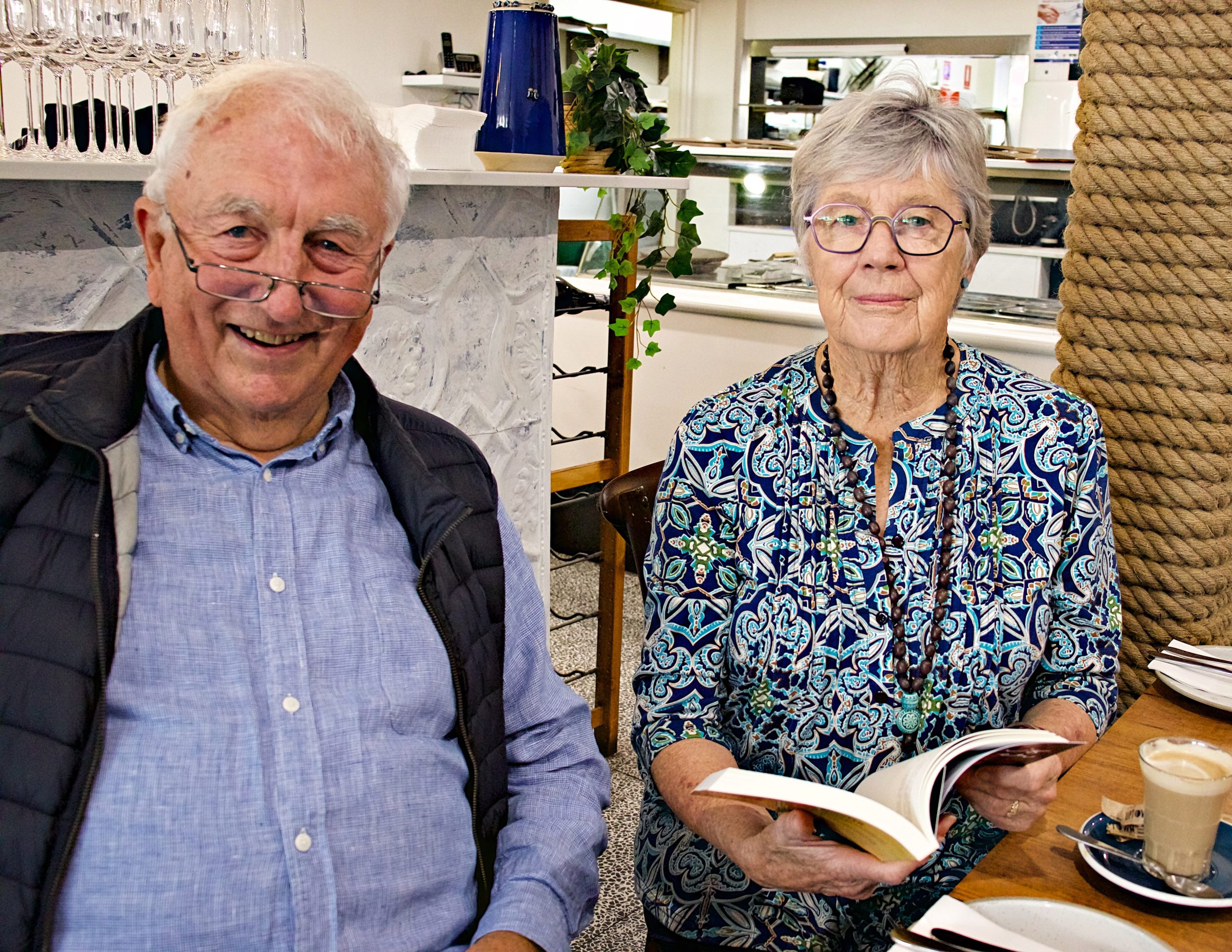
For 30 years, I was both the designer and Director of South Australia’s Community Rehabilitation Program for People with Brain Injury and the Institute for the Study of Learning Difficulties. During that time, I adopted a positive approach to people suffering from brain injury and related neurological disorders, using language which nurtured whichever brain system was impaired.
As a pioneer in this method, I passed new skills to students and wrote and broadcasted twelve scripts for the ABC Radio Science Show. These include Sailability and Recovery from Stroke, Music and the Mind, about strategies that helped Gabriel Gifford recover after an assassin’s bullet destroyed her entire left temporal lobe. Humour as Medicine demonstrates the extent to which the brain’s emotional circuits are nourished by humour.
Also, there is the script called Oliver Sacks — Virtuoso, a collaboration with Sacks that explores the way music, dance, and poetry play a significant role in the rehabilitation process.
Motor Neurone Disease (MDN)
My time with people with MND again demonstrated the power of the arts to make a significant difference, something I shared with the scientist Peter Scott-Morgan, diagnosed with incurable MND in 2018. He defied this disease by pushing the boundaries of science to transform himself with robotics to extend his life.
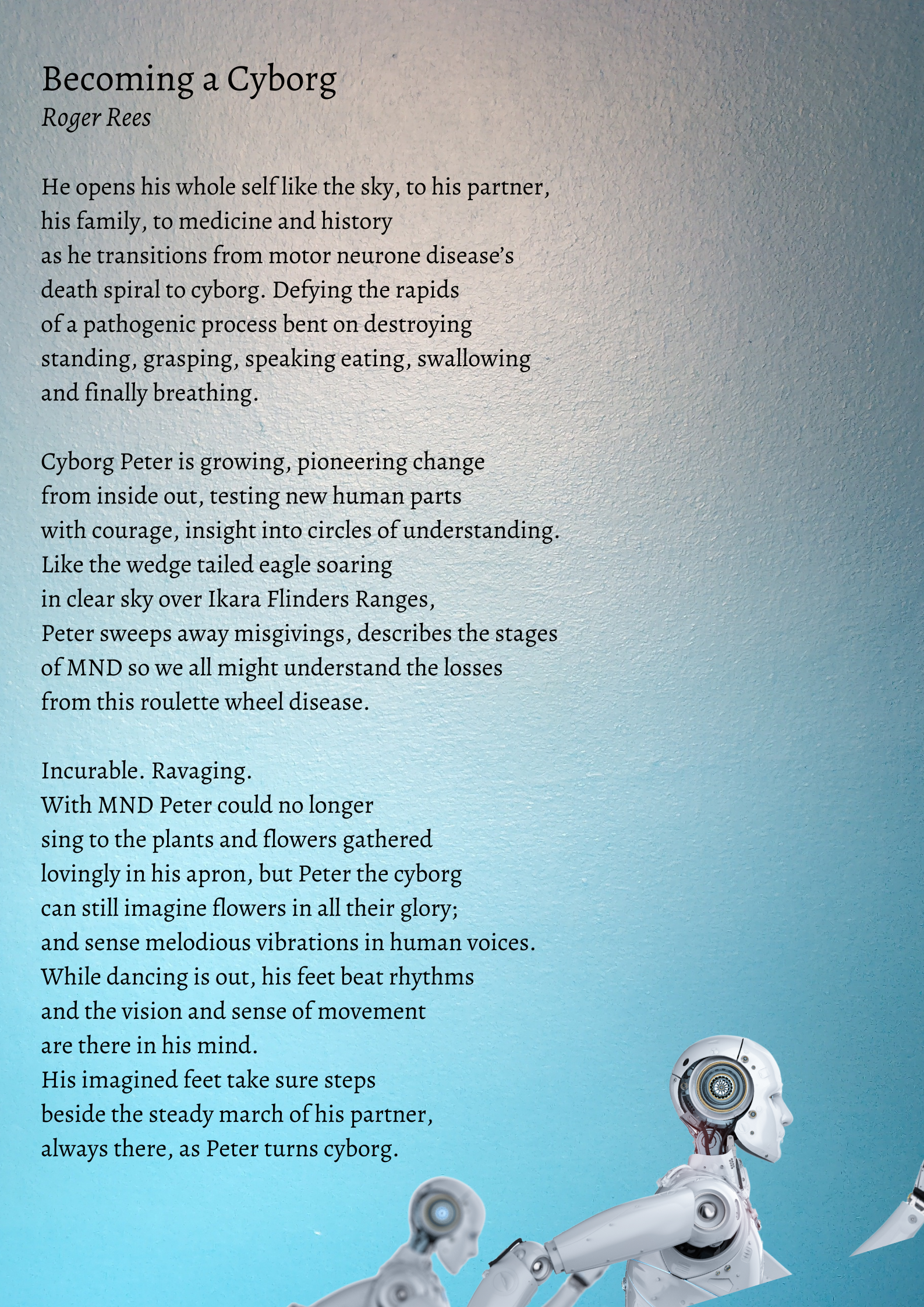

After becoming a Cyborg, Peter responded most warmly to this poem. A significant factor about writing it is that it provides both my students and me with an understanding of the stage-related process of this illness. Poetry is to the fore in the diagnosis of MND.
Demob Suitcase
In ‘Demob Suitcase’, I write to my father about what it was like to see him maimed by war and endure a brave but slow recovery. As a child, this was my first clear indication of what constitutes the uniqueness of the human spirit and how it can best be nurtured. Here is an excerpt.
On a Far East 1943 Pacific morning, as dawn broke, explosions heralded another battle. An erupting torpedo shell wound its way, a direct hit. You held your hands and forearms to protect your face; your chest became bloodied and ripped. That day your world changed, the sky descended, acrid smoke and tribes of clouds passed overhead as your flesh tore.

You were carried below the battle deck to your bunk. There would be no more handshakes, no more holding children aloft, no more piano playing, no more doing up buttons or tying shoelaces. You could no longer reach out and touch your case as it told of home and upon its canvas floated your hope, its contents, your dreams. But it took more than a shell strike to bring about your ruin.
You can read, print or download the full article here.
Suffering and Beauty
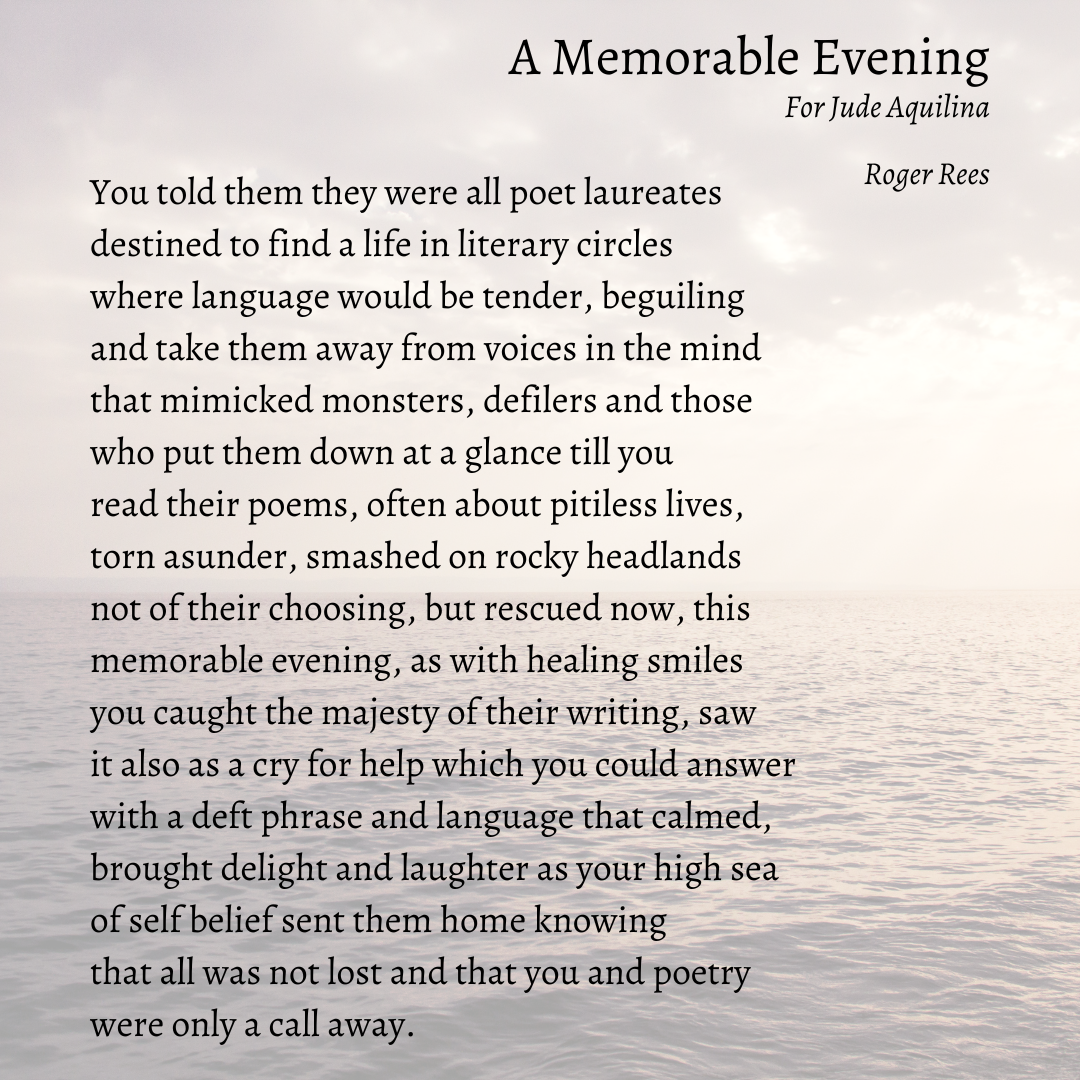
With Adelaide poet Jude Aquilina I had the satisfaction of being involved in SA’s Mental Health Week, which entailed working with, and presentations for people with mental health difficulties: depression, anxiety, bipolar disorders, alcoholism and schizophrenia. This little poem commemorates that occasion and expresses my admiration for Jude’s wonderful work.
Lindy Warrell often comments that I write a lot in admiration of creative people and others who inspire me with their courage and fortitude, as I do in this poem about someone who suffered indescribable pain.
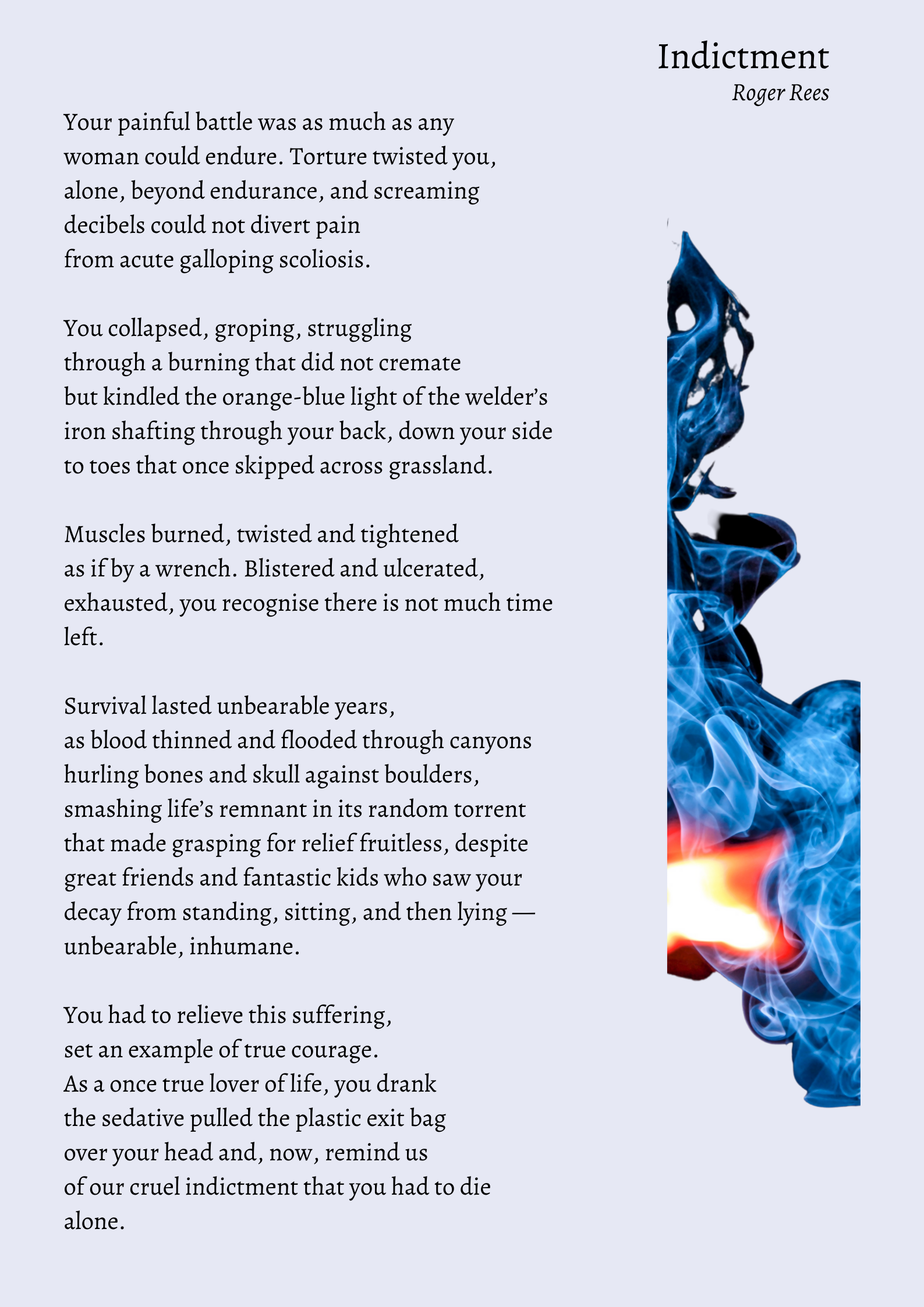
Whether in prose or a poem, I am often inspired to write about suffering, whether from mental incapacity, ill health, war or incarceration.
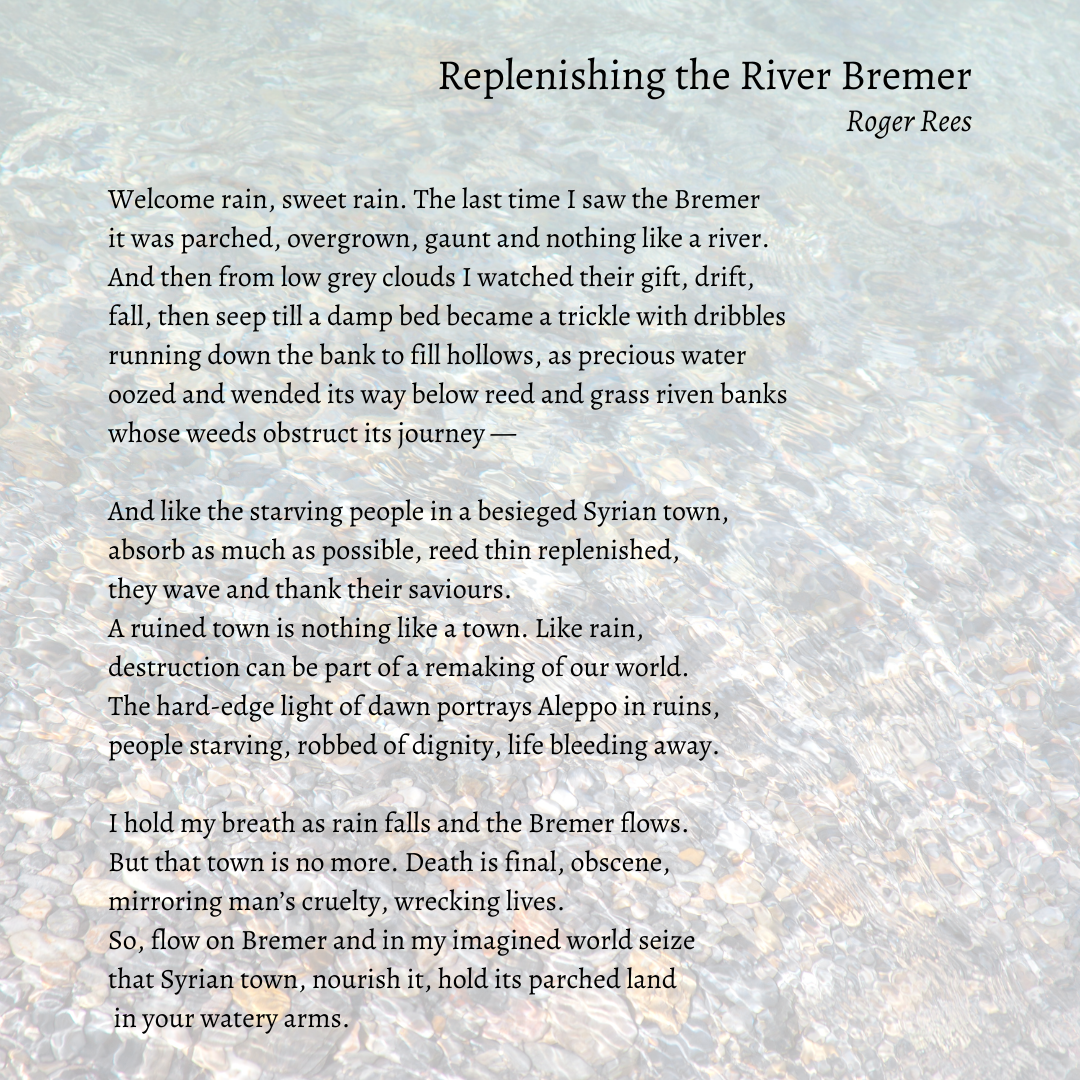
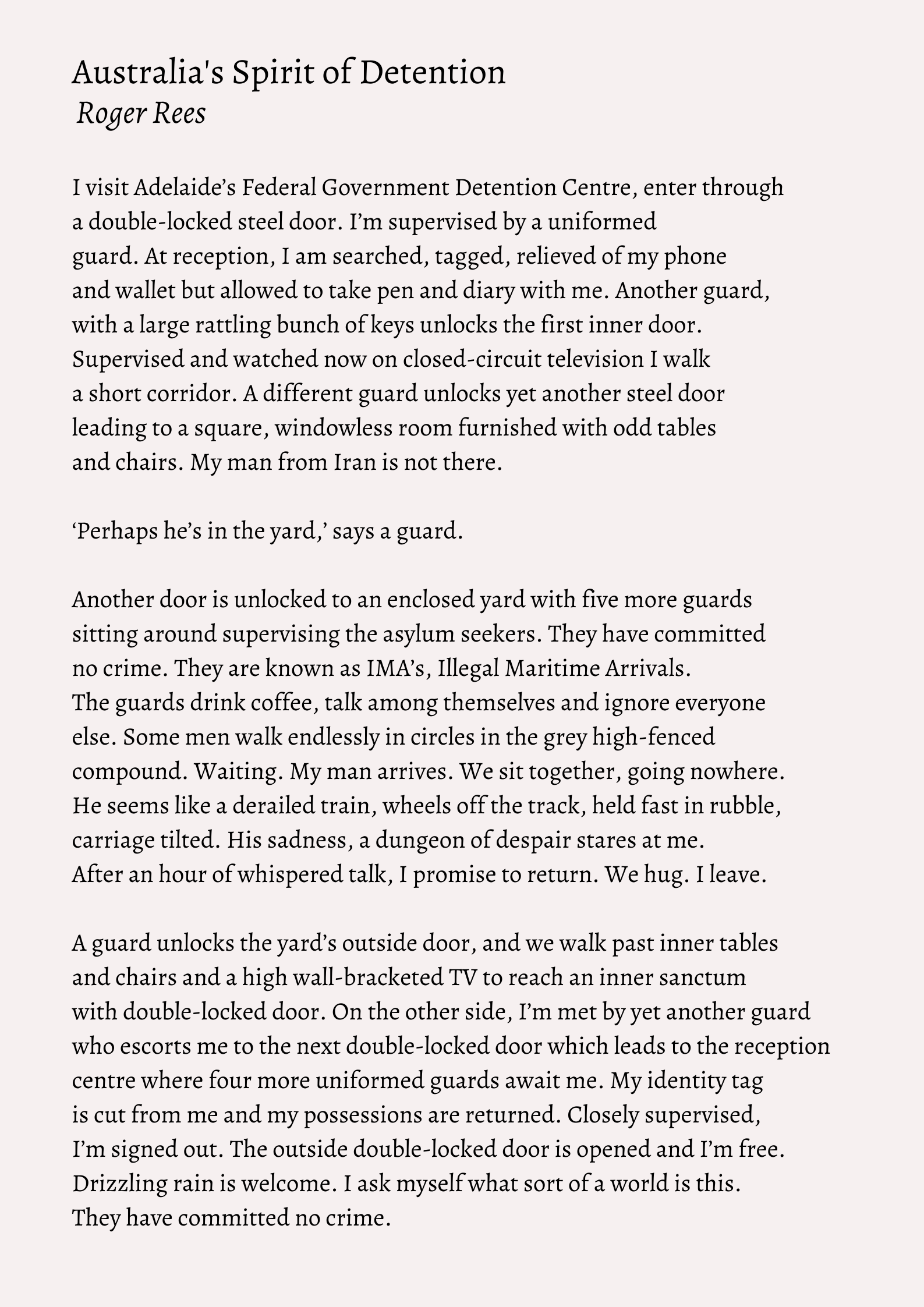
The human spirit in the face of adversity is, in the end, what constantly fascinates me, as I hope these two poems attest.
My Life Today
I continue to work and write in retirement with the sense that I’ve led a charmed life with Tricia, my beloved wife, friend and companion. Living in Goolwa close to the sea is soul-satisfying.
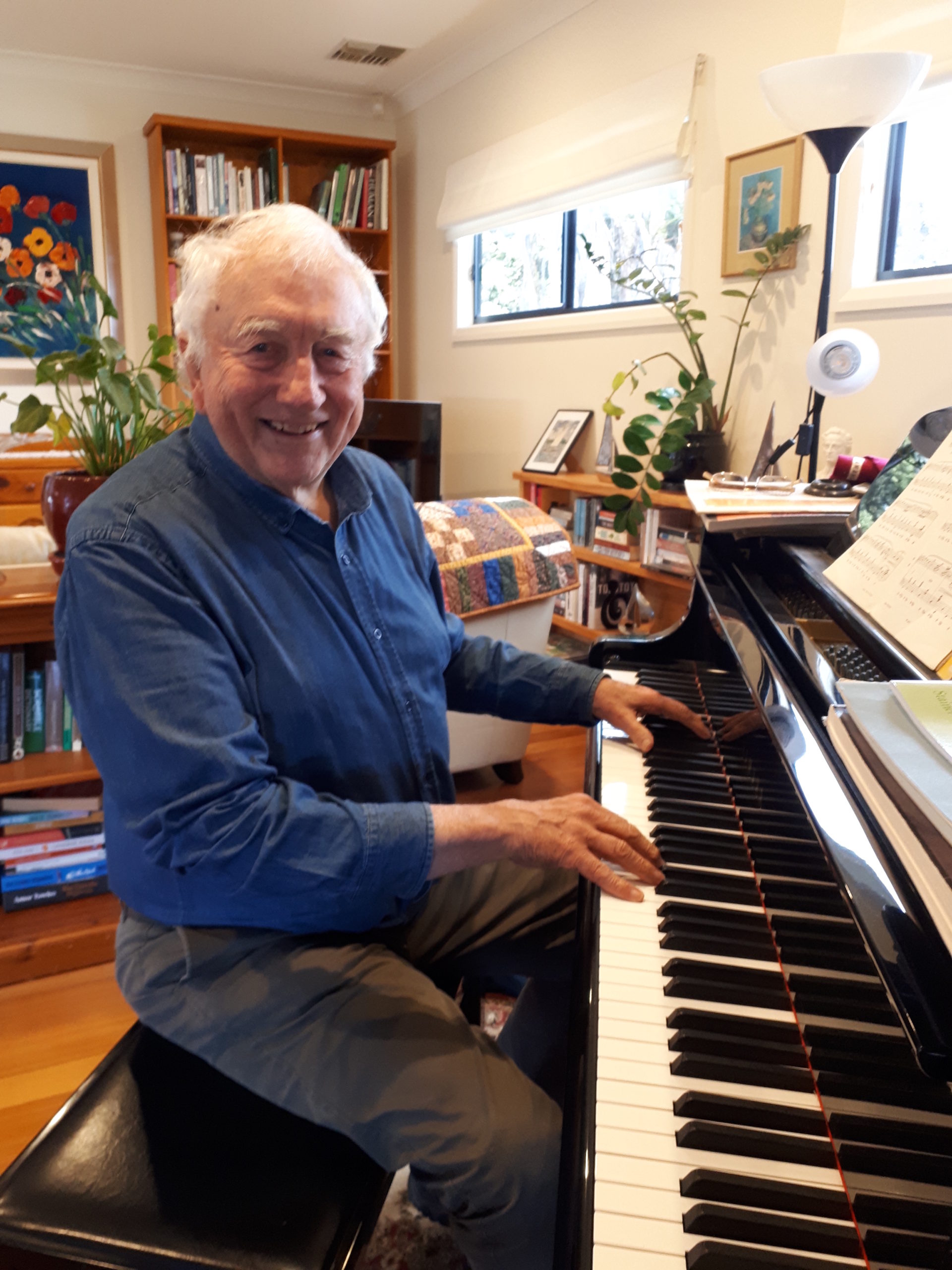
I welcome each day at the piano, playing Chopin’s nocturnes, waltzes and mazurkas. I enjoy sailing my 25ft yacht, Wind in the Willows, where I am Toad, who bosses his crew. And I am grateful to have the opportunity to appreciate the world around me.
More fortunate than many, I live daily with the joy of knowing how nurturing language can give people courage in difficult times.
AUTHOR BIO

Flinders University Emeritus Professor of Disability Research, Roger Rees, is fascinated by neuroscience. He has written, broadcast and made videos about the effects of trauma on the brain. Roger likens people who experience brain injury to tight rope walkers since both need a safety net to survive. Roger’s shelves are filled with the poetry of Pushkin, Akhmatova, Blok, and Pasternak, Russian poets who, for centuries, endured the state’s hegemony. He has evidence that words and positive human contact, lubricated with laughter, offer the best safety net for brain injury victims, just as poetry helps people cope with cruelty and tyranny.
I’ll pass on to Roger that you have found his post, Valerie. He is a marvellous writer.
What a privilege to be given an entry into this world. Roger Rees reminds us that courage, endurance and compassion are what make us human – and the silver thread he talks of is what gives us joy.
I’ve got to know you better through this wonderful piece, Roger. I am always amazed and in awe of the writing and stories you share at Snad Writers, and this piece has expanded on what I already knew about you. Thank you for sharing this with us.
Thank you Jenny,Roger is quite a special person with the work he does, and his writing.
Hi Roger, your writing speaks about you ..a compassionate man. I am moved by it all, but in particular your prison visit. What kind of people are we, that we incarcerate innocent people?
Thank you. Jenny Donovan
I’m so pleased you read Roger’s piece, Veronica. I thought you might and to find resonance is remarkable, isn’t it? Having Roger contribute to Wattletales is a privilege.
Roger, I’m staggered at what you’ve gone through. So poignant about your father. Mine was a merchant seaman and although two of the ships he was on were torpedoed, he survived unscathed. It isn’t till we read about others’ plight we realise how random and long-lasting injury can be. Your writing exemplifies the triumph and resilience of the human spirit and the valuable work you’ve been involved in – your positive attitude is commendable. Your poems are sad but delightful. I agree with you wholeheartedly about the plight of those arriving here by boat, locked up having done nothing wrong. We should be better than that.
Thank you for sharing and thank you Lindy.
Dear Julie, thanks for your comment. Roger really is one of a kind and I’m so grateful that he posted with us on Wattletales.
What a wonderful man you are, Roger, hilighting and encouraging those with disabilities.
A great read. Your poem, Indicatment, is breath-taking.
Thank you, Lindy, for showcasing Roger Rees, the man with empathy, understanding, and a superb grasp of language.
Julie Cahill. Xx
Congratulations Roger on this fabulous profile and your mingling of science and the creative arts. I look forward to when you publish a poetry collection! Jude Aquilina