

The Productivity Illusion
We live in a world that invites us to plan, develop, strive, grow, improve and make things better on the assumption that we can right all wrongs. We compare today with yesterday when we exclaim — how can such and such still happen? It’s 2021— as though history somehow will deliver — or ought to have delivered us — from ignorance and evil. We tend to use history as a measure of progress. Yet, we play with time to hold it in place.

How long since you just allowed your mind and attention to alight upon anything that took your fancy? Were you able to pay full attention without a guilty voice saying you must be somewhere, doing something? We always seem too busy for stillness.
Even if we are not industriously engaged, we create habits and routines that shore ourselves up with the appearance of being so. As any monastic will tell you, it takes routine — and discipline — to find the time to do or produce nothing with equanimity.
Common Routines
We play with time without knowing that is what we do. For example, most of us move unconsciously through daily routines that cradle us from morning to night, week to week or year to year. If we don’t have behaviour patterns, why do we drive the same way to work and get upset if roadworks block our path? Why do we panic if we miss our regular bus or tram?
We tend to either have a packed lunch or go to a favourite café every day. After work, we go home anticipating what we must do and how others should do things. When our expectations are not met, we are discomforted. On weekends, we patronise our favourite pub or club. Saturdays are religiously dedicated to beloved codes, and Sundays see many family get-togethers. Variations exist, of course, but this is the collective pattern.
Of course, annual events like Christmas, New Year, anniversaries and birthdays are negotiated or fought over. Still, the imperative to celebrate, to mark out those times, remains part of the festive routine that helps us feel like we are part of something bigger than ourselves.
Many of us, especially writers who write about this stuff, get stuck somewhere between the routines of daily living and wanting to be disciplined enough to write a set number of words every day. The need to clean or cook or do household chores makes procrastination acceptable whenever we allow habit or a different routine to prevail over the active discipline of writing at a set time. Most of us struggle with priorities.
Contemplative Routines
I admire those who can live in profound peace with their habits and routines. I first pondered these things years ago in Sri Lanka, where I became fascinated by a grandfather who lived with his daughter and her family in a place where I stayed for a while. The old man took tea (made by his daughter) at the same time every morning, read the paper, then meditated before settling into a day of rumination, alone and in silence, albeit sometimes in the village square. His uncomplaining dignity has inspired me ever since.
Maybe I’ve taken less notice of women. I mean, the Sri Lankan daughter had a domestic routine that included giving her father his tea at the right time. But there is something about these male practices that stand out for me. I think because they occur more often in public spaces.
The practices of bushmen I have worked with and old bushies living in single-men’s quarters are a case in point. Making their first cup of tea bordered on ritual, such was the reverence given to each moment: fill the billy, roll a cigarette, stoke the fire and stare at the embers in contemplative silence until the water boils. My cuppa, when it came, tasted like nectar.
Even in towns and suburbs in various parts of Australia, I’ve noticed men (again), not only the old but younger men, with an early-morning routine of walking to the service station to pick up a pack of cigarettes and the day’s paper. This was during my bush-working years when I filled the SUV tank before heading out.
Habits Become Routines
When I lived for a year in high-rise housing in Melbourne in 2005, I settled into a park routine with doggy-loving souls to walk my dog Lolo every day. The novel I’m writing now, High Rise Society, is based on that time.

One man, a Vietnam veteran in his early 70s, always headed to Coles after walkies to buy the paper and a day’s supply of beer. After the evening doggy-walk, he’d settle in to drink himself to sleep. He proudly informed me that he changed his own bed linen and did the washing every Monday at 9 am. And, on the last day of every month, he defrosted his refrigerator without fail.
This man had no family or friends apart from his dog-walking companions. It made sense to me that a solitary person might create a routine to give meaning to an otherwise disconnected life. It is as if having to do something makes one feel needed. The absence of structure leaves humans emotionally adrift, and that can be terrifying.
As she aged, my mother got into the habit of lifting the phone off the hook (no mobiles then) for various activities. It might not ring all week, but Mum insisted it would inevitably do so at mealtimes or when she was taking a shower or having morning tea. She certainly didn’t like surprises or changes of plan, which left her feeling out of control. Vulnerable.
Although I have a daily writing habit, age has commandeered the content.
Turning Inwards
For some, habits might be age or circumstance-induced or sub-consciously selected for comfort or sanity. Our nature may determine how we establish control over our environment. Monks choose an inward journey, and religions of all persuasions provide the monastic context. Monastic discipline forces one to confront fears, guilts and regrets, to come to know ourselves with all our failings.
I’ve always been attracted by silence and recommend the three-hour silent documentary, Into Great Silence if such things appeal to you. A related but far more relaxing look at a Buddhist contemplative tradition in Nepal is the movie Samsara, now on Netflix.

For ordinary mortals, having the discipline to meditate may bring about healing, but like any habit or routine that involves withdrawing from distraction, making time for it requires the same prioritising as making time to write.
Living as we do frenetically outside of ourselves through selfies and self-representations of one sort or another at work and play, we are often distracted to the point that we lose a sense of who we are. Meditation can bring us back into the present moment, which is really all there is.
It’s Like This
In many ways, the world is too big for any of us to comprehend, so we fixate on our trajectories, our beginnings, futures and possible endings. Along the way, we order time to bring chaos under control, and that is called routine. The moral of this story is to enjoy the ride – it is, as they say, the only one we get.
As for me, I like to dream, and this little poem is me. I love to write. I abhor the use of sepia to make things look authentic (as against real sepia photos). I grizzle about everything, but in the end, I come back to a lullaby my father crooned to me called Lula, Lula, Bye, Bye. It always brought tears of love.

If You Love Writing
Do it whenever you want to. Routines are good but not essential as long as you write from the heart. Just dump stuff on the page without that critical editor peering over your shoulder. Cast the editor out, your teachers, mothers, fathers, tell them all to bugger off while you write.
Then sift through your words for the gems. Collect them all, polish them and make them into a thing of beauty for others to enjoy. If you trust the process, they will tell you what you are trying to say. Writing is a bit like painting. You keep changing things until they make sense.
Most of all, explore what you love.
Thank you Maria. Yes, it does take courage to be still, but it’s worth it in the end. don’t tell your students you cheat on them LOL.
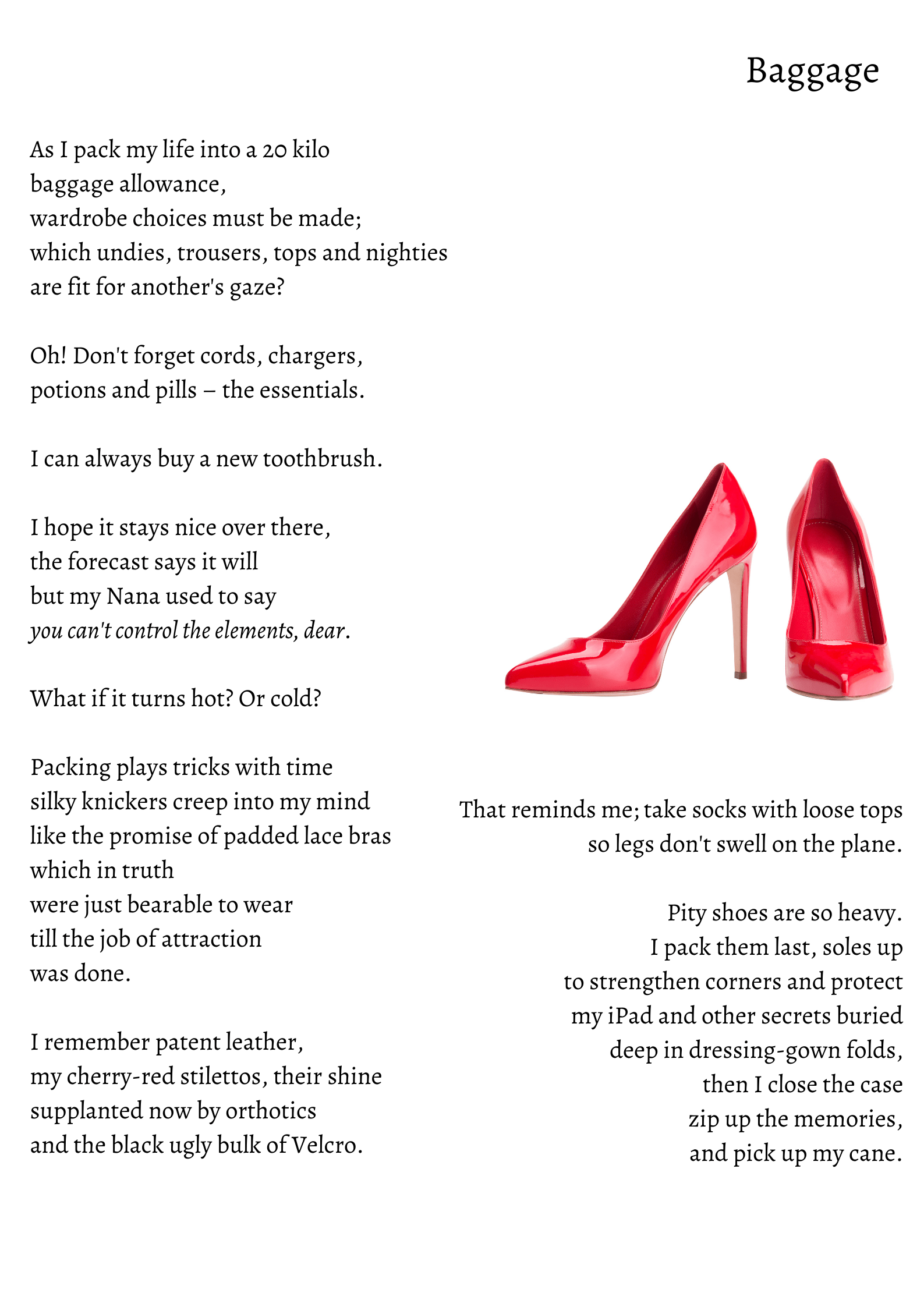
Meditation is a must I do not do now but when I did so regularly my brain was calmer and my ceative process blossomed. It takes courage to do nothing but sit when the world demamds do-do-do. Routine is a lifeboat in times of loss and fragmentation but a straightjacket at others. Love your metaphors: ‘zip up memories’ and the ambiguity of destination in Baggage. In ‘Silence’ I loved ‘brain hum’ and vitality’s orchestral rhythm and ‘oscillating in a binary dound scale.’
I enjoyed this read which happened as I babynsat a class at a TRT gig. We all had masks on – a new routine. Maria V
Thanks for reading, Steve. Yes, I often jot down bits and pieces, even for a poem…you never now what it might trigger later.
Thank you, Lindy. Amen to writing when you feel like it, and not turning away from little moments in what might seem less than ideal places. A few words jotted down can become the stepping off point for something expanded on and edited later. Better than forgetting. Steve Evans
Oh, thank you Veronica. Yes, we are creatures of habit and mostly take it for granted…Perhaps it’s the way things should be?? Time spent in stillness is valuable but when I first started half a lifetime ago, it terrified me LOL
Lindy, I love your first poem and always loved Baggage. It’s funny how we are creatures of habit, as when we sit in the same places at meetings or sit by the same person, whether or not it’s right for us. You’re quite right saying we don’t really have time for reflection, apart from when we are incapacitated and don’t have a choice. Then it seems we fidget until we get back to doing things that stop it. Veronica Cookson
Thank you for reading, Julie. The site had a bit of a crash yesterday, so I’m pleased to see your comment that tells me it’s ok again.
Thank you so much, Lindy. A marvellous analogy on time.
Time and memory- consciousness.
I love that you mentioned we are too busy for stillness. At least in old-age as our bodies rust, there is time for reflection.
I’ll toddle off now before my rust settles-in for good. ♥️