

Introduction
This post is a slightly modified excerpt (in other words, a ripoff) from my work-in-progress, Call Me Marigold, a novella-length piece of autofiction. I’ve chosen from a section called My Six Buddhas and Three Husbands. While I may refer to husbands indirectly here, details will not be revealed until the book’s publication. However, I leave the references in because they indicate that husbands are treated in that book (in a literary sense) somewhat like ornaments, albeit with a modicum of respect.
I’m talking about ornaments because our ornaments refract time, memories and emotion. Our favourites satisfy us for years, if not a lifetime. While my Buddha figurines and statues are not my only ornaments, I have decided to discuss them primarily because they collectively create a presence or aura in my living space.
My Six Buddhas
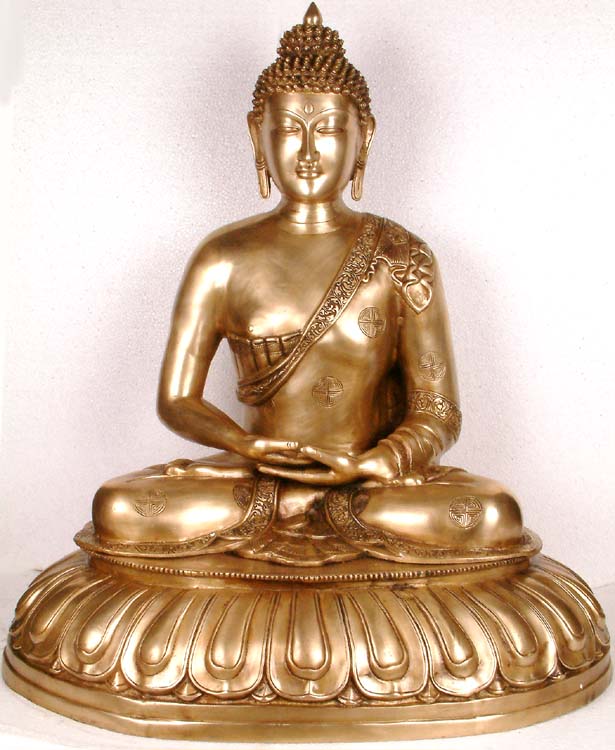
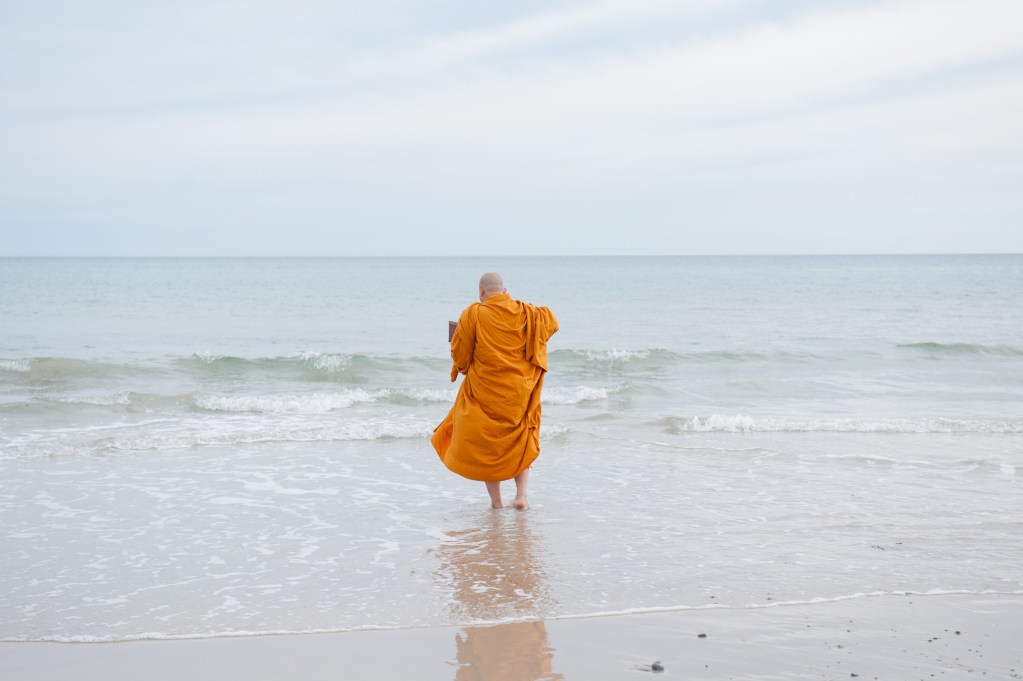
By the time I moved into my retirement village with the mass murderer’s name (Manson Towers), I only had six Buddha statues. I donated a large brass sitting Buddha, similar to the one pictured above, which was important for teaching meditation in my post-retirement days, to a Cambodian Buddhist monk, Bhante Ly, who was a dear friend. He blessed my eldest son’s ashes before we spread them at Aldinga Bay.
A small, transparent resin statue pictured later, given to me by the head monk of Adelaide’s Sri Lankan Buddhist Vihara, found a new home with my youngest son.
My First Buddha Statue
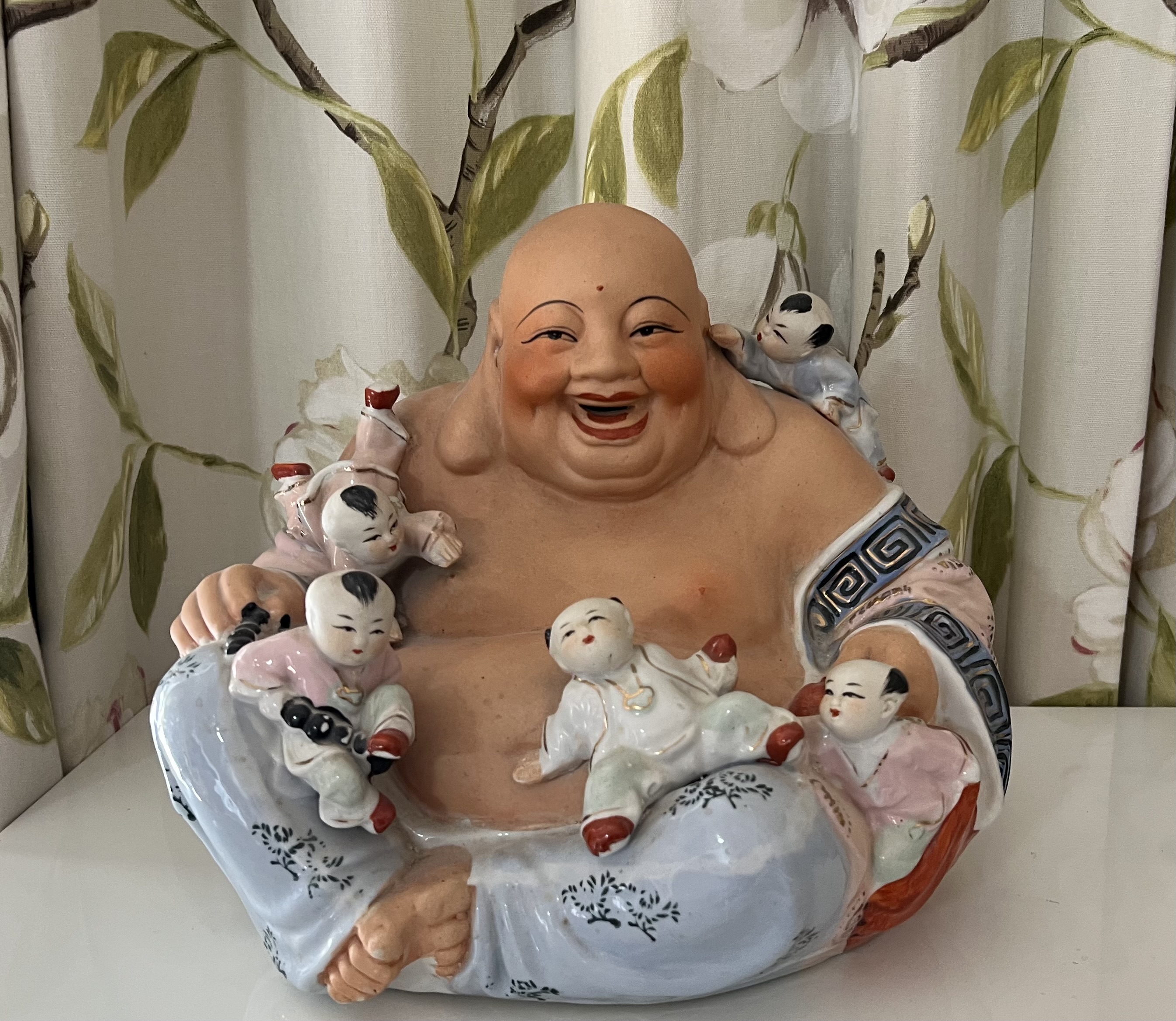
My first Buddha statue, shown in the lead photo of this post, entered my life half a lifetime ago, when I was in my early forties. I bought it in Chinatown while in Sydney to attend my first academic conference as a postgraduate. (My paper entitled ‘The Booze, the Bouncer and Adolescence Down Under’ (1994) was accepted immediately for publication and is still often accessed.)
Looking back, I fell in love with it, not because it sort of reminded me of my second husband’s desertion, but because this rotund Chinese laughing Buddha in blue robes has five little children crawling all over his bare shoulders, a profound symbol of the love and joy I felt for my three young children. At the time, I had not discovered Buddhism; my choice was both aesthetic and emotional.
Place is Important
The place of purchase carries more significance. I found the blue Buddha near Paddy’s Markets, where I worked when I was about 18, after the first of my three failed marriages ended. I found a job there with Pardy Providors as a stenographer and cord-and-plug telephone console operator. My boss was a tall, well-statured man who constantly hitched his brown trousers at the crotch. Being in my late teens, I had to stifle the urge to giggle at this unfortunate habit.
Still, I never mocked, as he was a kindly soul who looked after me when I had a telephone flirtation on the console with a supply officer from Ingleburn Army Camp, a WWII, purpose-built training centre that was wound down in the mid-1990s. I don’t recall his name, but we flirted when he called to place an order. The soldier finally persuaded me to meet him, until my darling boss saved me by telling me the guy was married with two little ones.
I was going to suggest we meet at The Broadway Hotel on George Street, where I worked a second job as a barmaid at night. Being a publican’s daughter had its benefits for much of my life; I could always get a pub job for extra money. In Sydney at the time, I first lived with my aunt, my father’s sister, in North Ryde, which was then considered the countryside. We had an outhouse and a dunny can.
Much as I loved my aunt, I disliked going to the loo on cold or wet nights with spiders and newspaper for toilet paper, or travelling to work and back each day, which entailed long, hilly walks, trains, and trams. With a second job, I was able to move into a rooming house right on the curve of Bondi Beach, next to the saltwater pool.
My first Buddha holds all of these memories.
In My Sixties
When I was in my sixties, after encountering Buddhism in Sri Lanka, I bought a 60cm-high, gold-coloured resin standing Buddha, with a ball aloft in each hand, held high, representing prosperity, happiness, and good luck. I found it one day after wandering the length of Melbourne’s Victoria Markets, already a lost soul after leaving the Northern Territory and the workforce for what seemed like forever, and looking for my car on the wrong side of the vast, sprawling marketplace. The statue’s golden smile winked at me from the window of a shop, drawing me in.
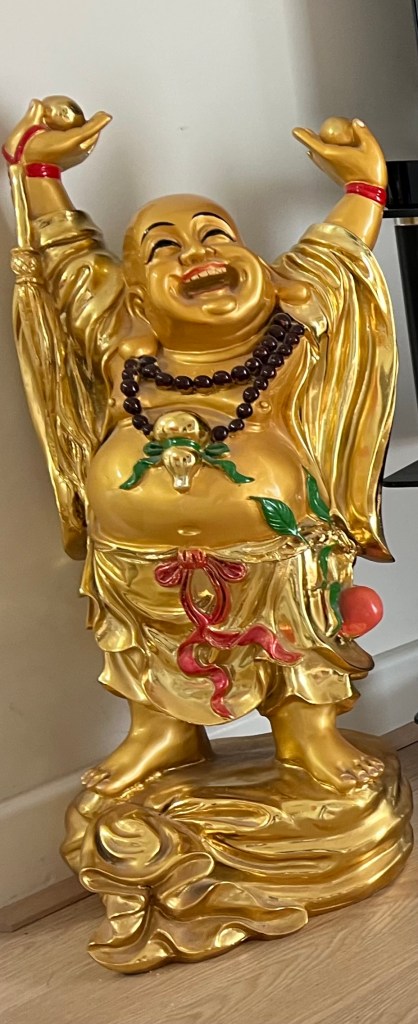
Inside, the shop was cool and calming. The old Chinese shopkeeper was dressed in what I guessed was traditional Chinese rural garb of loose trousers and a top made of rough hemp or cotton. He greeted me with a smile. ‘You like?’ he asked. ‘I’ll give it to you for a special price. You are my first customer, and that is my good luck.’ It was good luck for me, too, at a time when I was utterly drained by life, having found myself on an invalid pension and living in high-rise public housing in Prahran.
The luck of my gold Buddha was pivotal. It served me well in my transition from anthropology to a retirement filled with meditation, poetry and writing. And, as it turned out, the high-rise experience was a special time that both led to and informed my second novel, launched in 2024, They Who Nicked the Sun, set in Prahran, in Melbourne.
What may seem bad at the time often augurs better times to come.
From Sri Lanka
I concede there was an aesthetic impulse behind the purchase of the beautiful King Ebony figurine seen to the right below, which I bought for Rs 900 in the early 1980s from an expensive jeweller close to Colombo’s vibrant outdoor market, the Pettah. It is exquisitely carved to the correct proportions for a sitting Buddha and represents a country I lived in and loved, and where I met my third husband. On the left is the clear resin Buddha now treasured by my son.
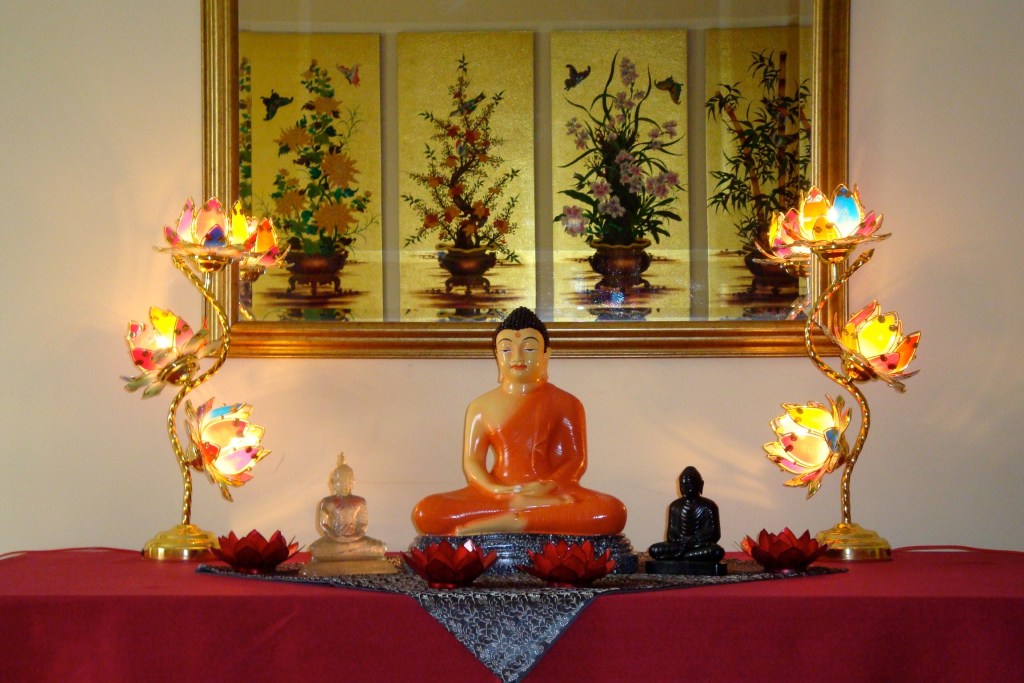
The central Buddha in the photo above is a traditional Sinhalese Buddhist statue crafted by artisans as a gift from the man who was my research assistant back in the 1980s, with whom I became friends during my PhD research in Sri Lanka—a time and place that changed my life. My friend went on to become an international consultant and lifelong friend. He sent the statue unannounced, close to 30 years later. Even in our old age, we email a few times a year to stay in touch. He has a very special place in my heart.
Aldinga Beach
The Chinese gold and white porcelain meditating Buddha in the next photo evokes memories of my 16 years in Aldinga Beach. After being blocked for many years by local protests and the Council’s ignorance, the Nan Hai Pu Tuo Temple was built at Sellicks Beach.
At that time, I led three meditation groups: one at Aldinga U3A, another at the Aldinga Community Centre, and a private group at home. With my meditation students, I occasionally visited the Temple on Sundays to participate in the Temple’s Dana lunch. They were good years. People from all three groups also came together at my place monthly to share a vegetarian meal.

Childhood Memories
A few years ago, I scoured the internet to find a miniature Daibutsu Buddha, a replica of the giant bronze statue in Kamakura, Japan, built during the Kamakura period. It was first constructed in wood in 1243 and later recast in bronze circa 1252. We visited the giant Daibutsu Buddha when I was an Army kid, and I adored it even then. My tiny bronze statue, at 60mm high, is smooth, cool, and weighty in the palm of my hand. It calms me.

There’ll be more about my three husbands in Call Me Marigold, coming as fast as I can write it. They, too, have times and places that evoke experiences that, in retrospect, were transformative. Even taking into account the sad and bad bits, my memories come together in glistening vignettes, like brilliant gems of life. Till then —
On Ornaments
Ornaments are serious business. While I’ve focused on my Buddha statues today, my home contains a number of other special artefacts from my life, including wall hangings passed down to me by my mother, brother, and lost son, as well as gifts from my other children. We also keep mementos, such as letters, emails, and perhaps books by friends, as well as our own publications.
Just as museums are a testament to a culture, our ornaments give witness to our lives. What do you see when you look around at home? Do you have a favourite item that tells a deep story? Which pieces do you hope your children will cherish when you’ve gone? Do they know your history?
A Poem To End

Thanks for reading, Veronica. I remember those Chinese figutines from your story on here.
Dear Lindy
Thanks for your memento memories. Looking around, I have various bits and bobs given by various family members, including grandchildren, and friends: a teddy, bearing ‘Best Nanna’, and an angel statue with a quote about the love between a mother and a daughter. There’s a pair of wooden Chinese figurines, the only things left from when my father brought home 12 British sailors, un-announced, for their first visit to an Australian home. The men returned the next day with thankyou gifts from foreign ports. I inherited these figures when my mother died. There are far too many more to mention, but they all have a place.
Thank again, Lindy.
Dear Julie, Thank you so much for your lovely feedback. What you’ve said energises me to keep going with Call Me Marigold 🙂
What an interesting life, Lindy, filled with story.
‘My memories come together in glistening vignettes, like brilliant gems of life.’
So looking forward to Call me Marigold. ❤️
Oh, Carolyn, thanks for reading. Unicorns are magical creatures. I love them. You’ll have to share some photos on Facebook one day. What a wonderful memory of The Rocks and your aunt and uncle.
Thank you for sharing this, Lindy, it was fascinating to hear read the stories of these important Buddhas in your life! I have a collection of Unicorns, the first collected at The Rocks, on a holiday trip to visit my Aunt and Uncle in Sydney. It is a prized possession still, and was the first of what has become quite a large collection of different Unicorns.
My Aunty was involved with an art group in Sydney, and after I was home again, she actually painted a Unicorn for me, with the painting on the wall next to the cabinet holding the rest of my Unicorns.