

Facing the Day
It would be fanciful to say that this is a day in the life of a writer, because, at my age, the first order of things is to attend to my body. Forget the morning alarm, offices, gyms, and parties, in one’s eighties, your diary is more likely to be filled with allied health, medical and specialist appointments, and days organised around a regimen of medications. So, if I say to you that I write in the mornings, that means after breakfast, and an hour or so of telly, which I watch until I’m awake enough to prime my body with pills and potions. And that’s before getting showered and dressed, which is no easy matter. I am trapped in a demanding body.

My morning routine is also hampered by having to stop to catch my breath every step of the way. Everything takes so much longer than it did in youth and the prime of life. I have no recollection of having noticed the various steps involved in facing the day when I was younger. In the moments after I woke, my mind would run through what was on for the day, and I’d choose what to wear. After a shower, coffee, and toast, I was out the door. Old age demands your time and more than a tad of mindfulness, or you risk going bonkers.
Somatic Memory is a Trap Too
They say routines are made to break. Most days, I wake at 5 am. Even living alone, I notice that when I stray from routine, I feel uncomfortable. For example, I usually struggle to stay in what my father called evening wear all day. The lessons of gossip about women taking their children to the bus stop for school in dressing gowns set me straight on that very early in life.
Nor will my body let me forget responsibilities; it has its own memory, inculcated by life. When I had children, if I happened to be out of the house, by mid-afternoon, my body impelled me to get home before 3.30 to be there when they got home from school. It was a powerful feeling.
Routine Interruptus
We all have routines of one sort or another. I remember over 20 years ago in Darwin when I had to fill my 4-4 (or SUV if you’ve not heard of four wheel drives) for a long stint working out bush, I noticed a stream of solitary men who I guessed lived alone, many old, but not all, who turned up at the servo (gas station) to by fags (cigarettes) and the day’s papers in the early morning.
I see a similar stream of men heading early to a nearby newsagent now, from my second-storey balcony.
When I had a dog in Melbourne’s Prahran, I’d see familiar faces hit the parks with dogs like me at the same time each day. However, unlike the solitary men at the petrol stations and news agencies, friendships often formed from this type of routine.
Those who travel to work have routines to ensure they arrive on time, just as I have my buzz cut every four weeks on a Monday or Wednesday. My Wattletales blog posts appear regularly on the 20th of each month. We take these little routines for granted, yet they serve to make us secure. They give life purpose and structure, without which we are often at a loss.
Nevertheless, unless we choose to do so, being diverted from our routine or even running late can make us—especially those of us living alone—uncomfortable.
To gain a sense of control over her life, my mother took her phone off the hook (no mobiles then) for morning tea, lunch and dinner. If she was lucky, her phone might only ring once a week, and it was probably me, but she did not like to be interrupted. Her life was extremely solitary and isolated until she decided to move into Kapara Nursing Home, which she loved. She loved the birds outside her window and ‘the girls’ who looked after her. If I visited while she was using her nebuliser or taking an assisted shower, I broke the institutional care routine that made her feel safe in her final years, secure enough to look at the birds and smile more often.
Puppetry
I’m sure everyone has heard of Karl Marx, the German philosopher who taught as early as the 1860s that capitalism alienated the masses from the means of production, hence themselves. I don’t think today’s corporate capitalism would surprise him in the least. Instead of being self-sufficient today (i.e, having control over the means of production), we have become nations of consumers, now controlled (and manipulated) by massive corporate entities like Coles and Woolworths for our basic needs. In Marx’s terms, we have indeed become alienated.
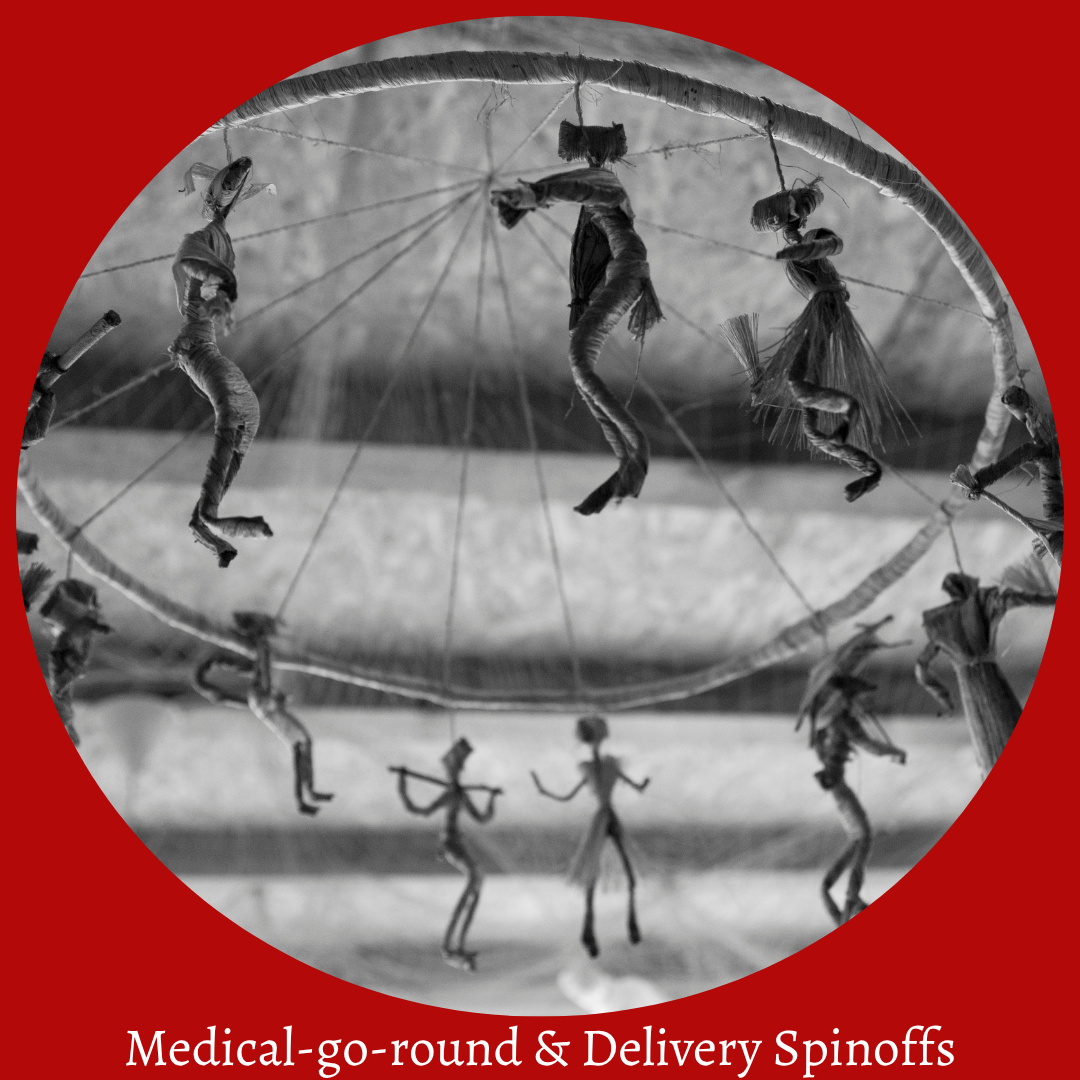
I simplify, of course, but alienation arises when we are controlled by externals, a bit like puppetry. It leaves one with a sense of agency deprivation, which is a danger to our health and well-being. When you start to find it too hard to go out and about to shop, you increasingly feel the power of external controls. For example, I no longer cook, so I regularly order meals, groceries and even clothes online, which sets up a whole different lot of puppet strings called deliveries.
Now scheduled by corporate computers and AI, deliveries make us puppets. While Meals on Wheels, run by actual humans, delivers to clients at the same time every day, Lite and Easy, which I use, has installed a new e-rostering system for its drivers that my regular driver of nearly 10 years told me has sent them all mad. As self-employed contractors, they are now being manipulated by a computer system. They can choose neither their routes nor their delivery schedules, and, like many other workers with little or no control over their work environment, they are technology’s slaves. (When I say that, call centres come to mind, too.)
Even though Australia Post’s electronic system delivers within an efficient two-hour window, few other delivery arrivals are predictable, which traps those of us isolated at home for hours, waiting. I live in a gated property and am too afraid to go to the loo when a delivery is due in case I need to buzz in a driver. Because they are on the clock, most will not wait more than a few seconds and missing a weekly meal delivery or a precious parcel arrival is extremely tiresome.
Just remember, if you ever get frustrated with your entrapments, close your eyes and go inside to find yourself.

First World Problems
To borrow from Gough Whitlam, ‘well may we’ joke about first-world problems, but there is a real sense of stress going on in these small everyday ways that can undermine one’s self-esteem and confidence, all of which are exacerbated for the aged and lonely by their relative isolation.
When I start to feel sorry for myself, my father’s words remind me to imagine how the other half lives. We are not being bombed to smithereens like Palestinians and, as of this week, Iran, where people have no control over their lives and are deprived of the means to protect their children. Can you imagine how exhausted they must feel, not to speak of being brutally alienated from not only their homes but also their livelihoods, their homeland, and any means to hold onto what they cherish?
While I manage my relatively trivial constraints by simply letting go. As my grandmother used to say to my mother, ‘You can’t control the elements, dear’. It is just as futile to try to control what is beyond your capacity to do so. So, when I need to find my alienated self, I have the luxury of being able to escape into my writing, where I always feel whole. This week, ChatGPT gave me a lift with this.

To Conclude
I have used puppets as the primary symbol for what I am pointing to in this post about alienation in our modern world. Clearly, there are many areas I’ve not touched on, but the idea came to me that the popularity of End Of Financial Year and Black Friday sales makes sense in these terms. They pull our strings or, in other words, alienate us from ourselves.
On the one hand, they are corporate events that offer the thrill of the hunt, so when people find a bargain, they experience a sense of control and mastery, just like any organised sporting hunt might offer. On the other hand, big sales are actually bait. We are both the hunter and the hunted because big sales are designed by corporations to entice us to buy things we may not need, allowing them to offload unwanted goods, while writing off bargain losses with inflated prices all year round—tricky stuff.

Thanks, Belinda 🙂
I like the final version of the poem Lindy. I can’t explain why it has taken me a month to read it. But I am glad I have gotten around to it.
Thanks for reading, Susan. I appreciated your comments and, yes, thank goodness we are human enough to realise what’s going on LOL – for aa while yet, hopefully!
Dear Julie, thank you for reading. Glad you liked it.
A walk through my Mind
I may no longer be who I was,
but I remain all that I have ever been.
Brilliant. ❤️
What an astute lady you still are Lindy, despite your body’s frailty.
A great read.
Love always
Julie Cahill. Xx
Thanks for another beautifully written and thought-provoking piece, Lindy. I empathise with the health and condition of our ageing bodies dictating many routines in our daily lives. My medical appointments seem to occur in clumps, and the timing of medications rules my morning routine. It was interesting to read how we (human beings) are as puppets to automation and technology. We must arrange ourselves within the confines of ‘rules’ imposed upon us. As we age, it becomes more difficult for most of us to fit into those rules, as per your example of waiting for parces and other deliveries. However, Lindy, we manage, we’re adaptable, we are human – not machines.