

Definitions
I recently wrote a little poem about my walking stick that tickled people. So today, I thought I’d write about my walker. Whether you use a walking stick or a walking frame, aids add dignity to one’s ageing perambulations. Whether your sticks are strong, found on the ground or traditional, goatherder-crook style, they make a poetic statement. Flash metallic fancy coloured sticks with ornately carved handles often match the style of their user’s wardrobe and glitzy spectacles. I now prefer my walker to a stick, but either way, an aid is all about balance.
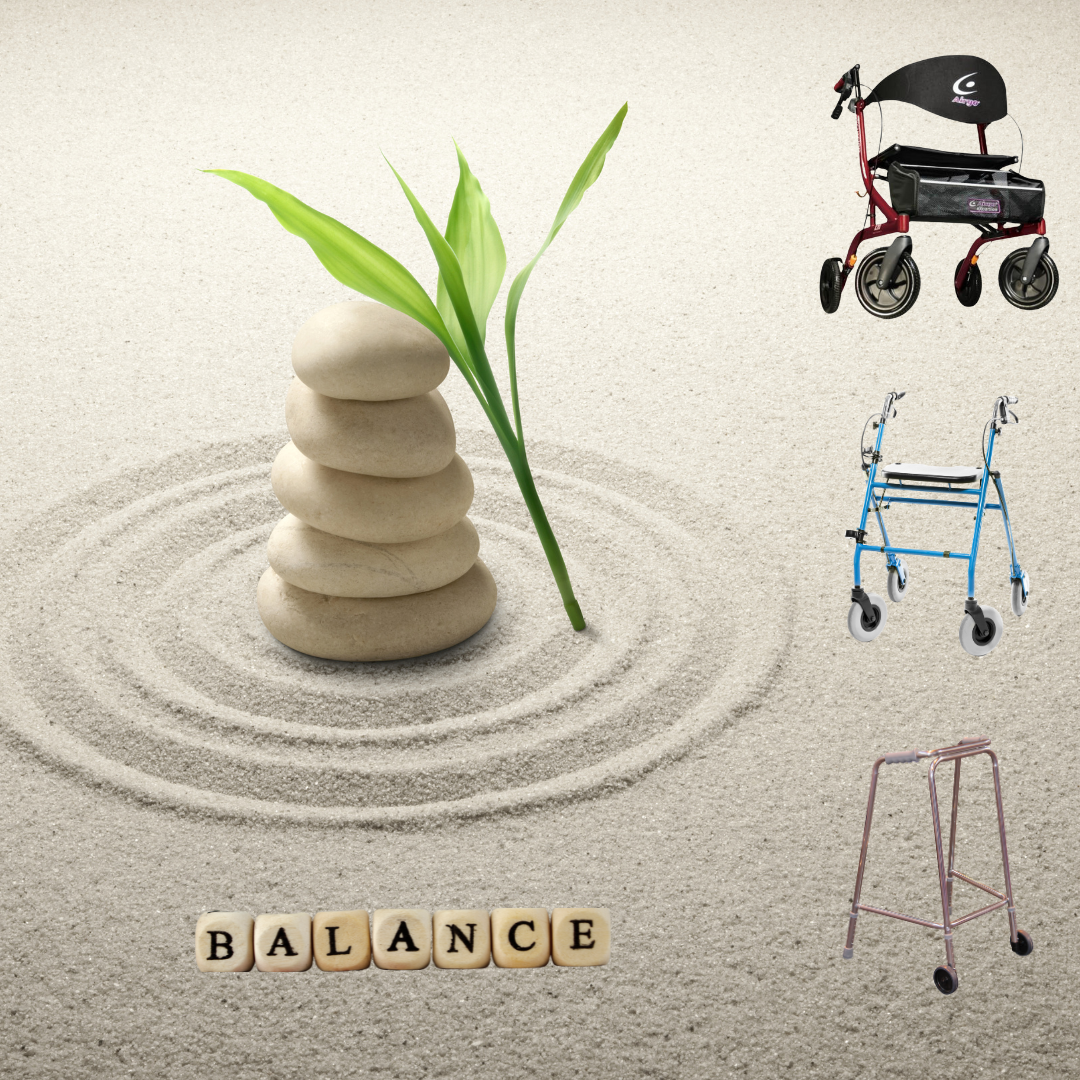
Unlike walking sticks, walkers — known as rollators — are defined by having four wheels. They come in different shapes and sizes too.
Medically speaking, where a walking stick offers comfort when one feels a bit shaky, a walking frame is used for convalescence, especially post-surgery, to support our weight against pain. A rollator, in contrast, like a walking stick, has the potential to make a statement, if only in terms of colour and wheel size. Indeed, this very morning I spied a rollator online with a leopard-skin frame. Very snazzy, not, unlike sexy nightwear for the ladies.
A convalescence walker used to be called a Zimmer frame, and it is for use indoors while the rollator takes us onto the streets with its four wheels. It has a portable seat to rest on along the way and has a handy shopping basket.
Liberators or Lethal Weapons
My father loved his you-beaut Zimmer frame when he was in The War Veteran’s Home in Myrtlebank many years ago after undergoing massive surgery at age 83. It was a hybrid model with wheels at the front and stick legs at the back, and he zoomed around on pebbly paths in striped flanellette pyjamas, navy plaid dressing gown and leather half-slippers so fast I was terrified he’d fall. He didn’t. His skinny old legs must have been a great deal stronger than I thought. ‘I’m alright, Luv’, he used to reply to my remonstrations. Looking back now, I reckon the old bugger was full of glee not to have the cancer pain he endured before surgery, not that he’d ever admit such a thing.
I began using a rollator about seven ago when my left hip gave up. Even after waiting forever to see a specialist in the public system, I had a two-year wait after that for hip replacement surgery, and the pain by then was truly bad.
When I first chose my rollator, I hid it in the storeroom opposite my unit because I was embarrassed about having to use such an outwardly visible sign of my decline. But the freedom it gave soon overcame my misgivings. I became proud of my first one, an AirGo I called Pearl Black. People commented what a good-looking companion it was, so here it is, under a tree in a photograph taken with pride on the Glenelg Esplanade.
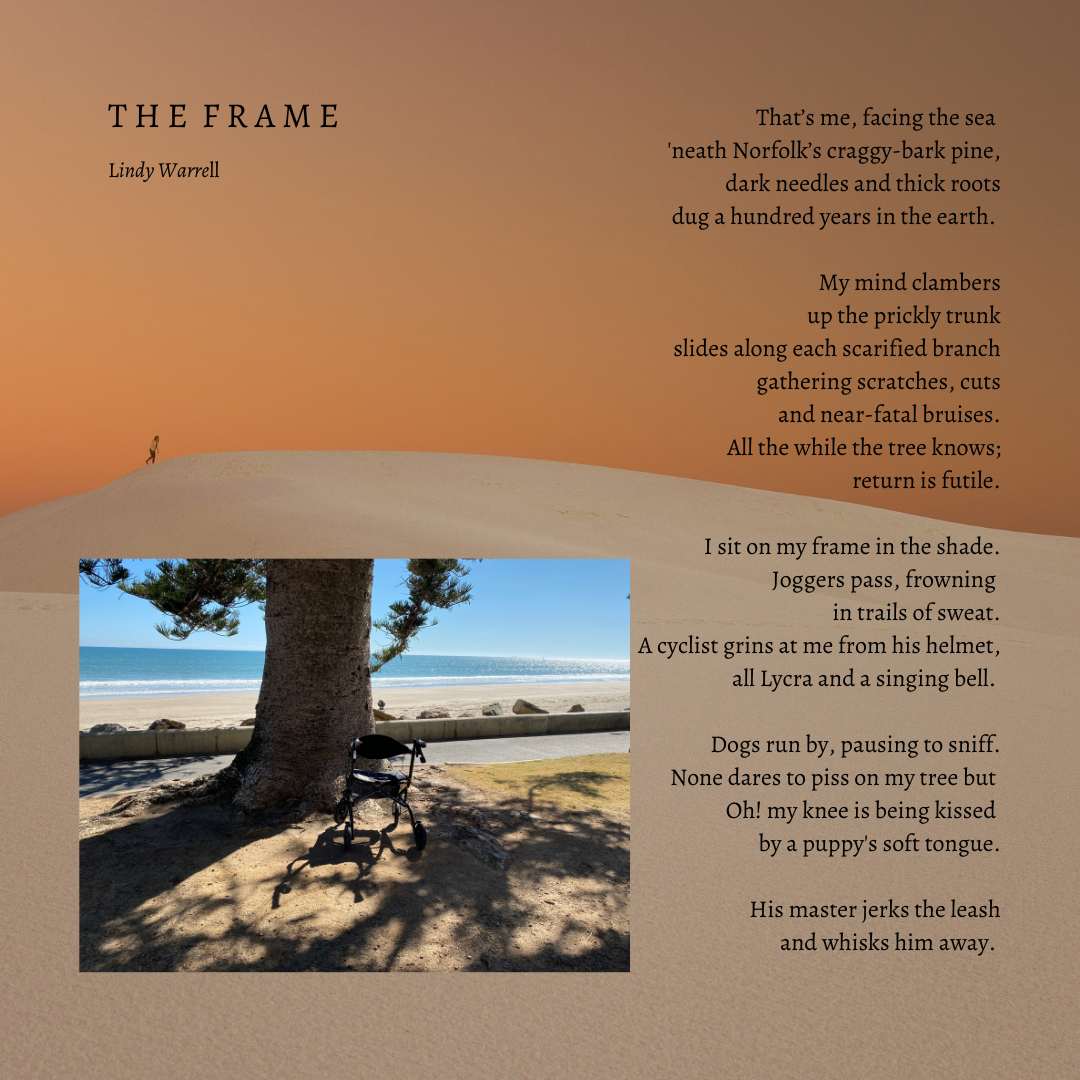
I now have the same model in burgundy as featured in today’s lead image. I call it Bella Burg.
In between the two, I tried one from Aspire, a brand that has now taken over the Adelaide market. Mine was lightweight at 6.5 kg and had a short wheelbase. For reasons unknown, Aspire calls their rollators wheelie walkers, which is catching on online — an innovation for marketing novelty. It’s hard to keep up. Aspire’s range includes the relatively inexpensive small-wheeled walkers sold by pharmacies pictured earlier through to those for the street made of lightweight aluminium or carbon fibre, ranging in price from around $190 to over $700.
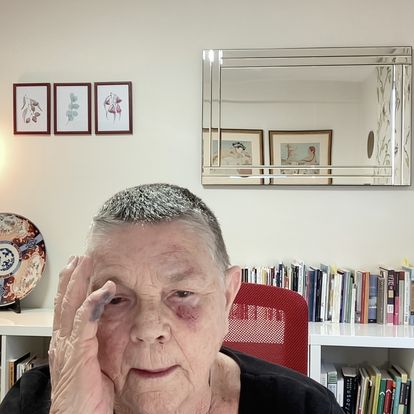
How people get about on their tiny, wiggly-wheel frames from the chemist (or Aspire), I do not know, but I blamed my expensive Aspire’s short wheelbase for my street tumble last October when I fell flat on my face. A short wheelbase is a design fault that makes it hard to navigate up and down gutters.
The lightweight aluminium is even more of a risk for lesser footpath obstacles. I recorded the early bruising on Facebook with this pic.
Like a Tortoise Shell
Why do I go through rollators so fast? Well, as my left hip became insufferable, my lungs also pleaded for respite. Thus the handsome Pearl Black, the perilous Aspire, and the delightful Bella Burg have all supported me in both ways, such as worsening spinal arthritis. Even with supplemental oxygen, I now need to sit every 50 meters to rest. (Pearl and Bella have the best seating).
Given that a medical oxygen bottle has usurped the front shopping basket, my walker now looks like a packhorse when I go out. It carries my handbag with ID, iPhone, purse, and stuff on the left arm, as well as shopping bags on the right. The seat is often filled with shopping spoils or blankets for the dry cleaner. Notably, the oxygen bottle weighs close to half the weight of both the AirGo and Aspire rollators. Neither brand offers space for medical equipment. In the old squiggly-wheel walkers, you can add an attachment beneath the seat, which is probably why they are stocked in pharmacies.
Still, Bella Burg is my home away from home. With Bella, I can go out, I can walk. Without a walker, rollator or whatever you want to call it, I’d be housebound. From an insider’s point of view, it offers independence, and that is the gift of dignity.
On the Streets
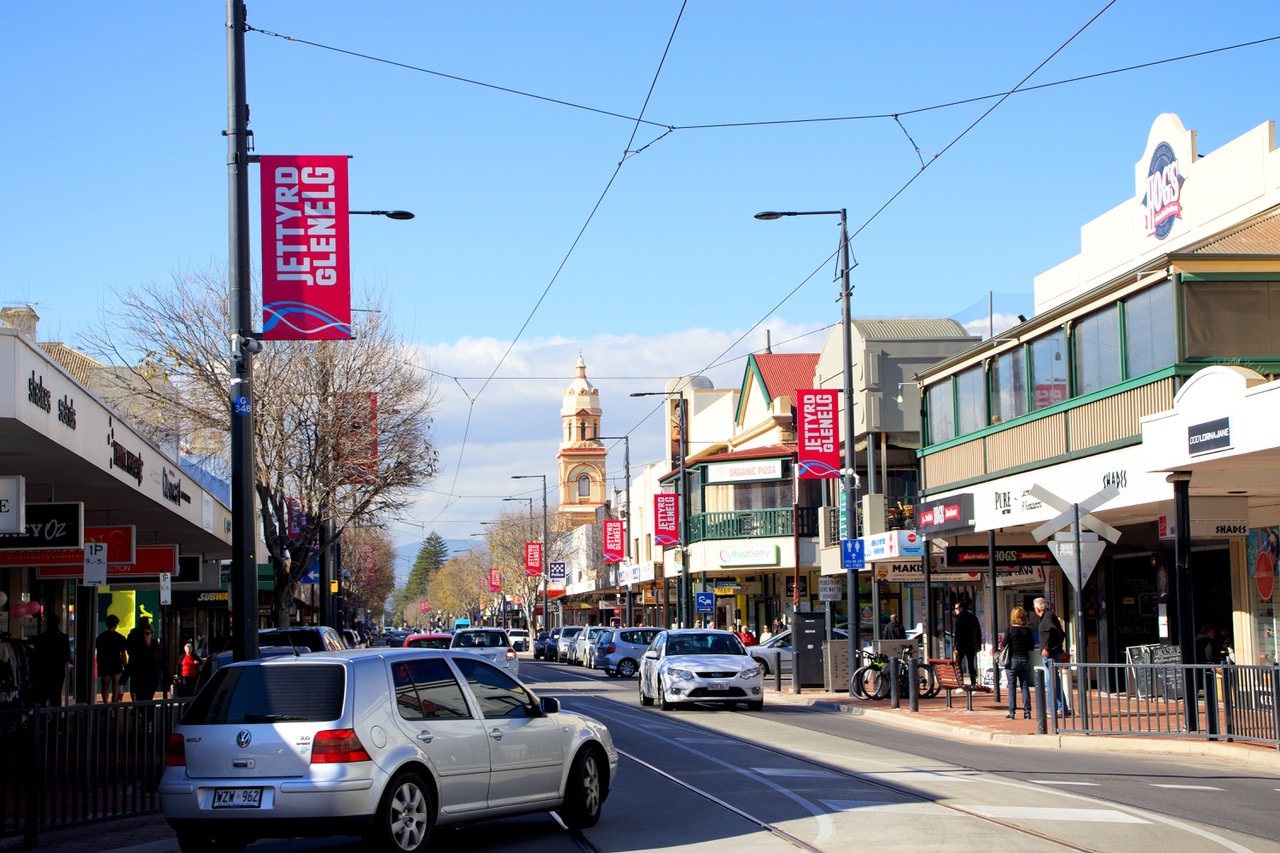
On the footpath, walkers do not make friends. Prams, in particular, are a force to be reckoned with. They carry the future, and a walker defines us as the past. It’s all a matter of street etiquette of who gives way to whom and why. Some parents herd their children away from the frame with polite smiles as their kids scream past, unaware.
Romantic couples (I am speaking summer on Jetty Road, Glenelg here) in various forms of undress rush past in erotic glee fuelled by booze and waves. They are all more than a foot (oops, 30+ centimetres) taller than me, reminding me that, with Bella Burg, I am now a footnote to life. But, there is decidedly more to it. When a walking aid such as a rollator conjures debility and old age in the imagination of the young and able, it triggers a message that we are in the way. Worse than that, they turn away from the appearance of old age and decline, which are hints of their own mortality.
In retaliation, I now bow my head to oncoming foot traffic and stick to my path. Bella Burg is right there in front of me, ready to mow anyone down. I jest, of course, but such are my thoughts at times. We oldies are entitled to a bit of the footpath. And the young would do well to respect the possibilities of their futures!
Cafes are Tough

Walking sticks, skinny little things that they are, don’t intrude upon the public consciousness like a rollator does. They irritate their owners but are small and often attractive enough not to incur censure from the majority of a café’s clientele.
Rollators, on the other hand, are larger than space-saving cafe chairs and won’t fit between tables set close, which means wrangling chairs this way and that before you can park the thing and sit down at a table. Your process interrupts shouty conversations and turns heads with staring eyes full of irritated pity your way. Still, we set the example. Some come around after seeing that even old girls with rollators do interesting things out and about, like having lunch or coffee with friends.
They wave at you as they leave, looking you in the eye with kind, no-longer patronising smiles. I could be cynical and ask whether their estimation of me increases when they recognise that my companions are all whole, unimpaired, and we make interesting shouty conversation ourselves. But I won’t. I am thankful for the concern they send my way upon parting.
I feel good when I am out and about, like a natural person. With that in mind, my next move will be to a motorised mobility scooter, and the answer to my question about how we maintain dignity with a walking aid is that it depends on attitude. More succinctly, just as we need to change in order to stay the same throughout life, as we become old, we must accept the way things are in order to stay independent with a modicum of dignity.
Happy Writing
Wattletales
If you'd like to be added to the Wattletales post email list, make a request in the comments below, where your email address is hidden. Lindy
Thanks for reading and commenting, Veronica. This is one of those topics I felt uncertain about but, it’s pertinent for our age group. I remmber when David used a walker for a while, a while back but I don’t recall seeing his walking sticks LOL Matcing gophers sound pretty flash to me and you’ll be able to take up the whole footpath LOL
Lindy, I found this article interesting. David bought a walker for himself some years ago when he had some sort of stenosis. Nowadays, he uses a walking stick, one of three, after a knee replacement. Two of the sticks he carved himself from Mallee, and the other was found by a granddaughter and bought for $5.00. He still uses the walker at night to sit in while watching TV. I think it’s awfully uncomfortable as it has a rail at the back that digs into my back when I’ve sat in it. I think if I had one (not at that stage yet), it would have to be one like yours with the soft band at the back.
We joke about having matching gophers with racing stripes. Thankfully, neither of us is at that stage yet.
Oh,thank you, Inez. I appreciate your comment and I’m glad I wasn’t too harsh on the young!
What a great piece and poems Lindy! I love how you name your rollator. It feels like a close companion. Like walking aids your writing exudes dignity, pride and wisdom. It’s so good. And with so much insight into what younger people might be thinking when they look way, scared to face their own mortality.
love your work
Inez x
Thank you Susan. I hoped it might be useful to people who are hoping not to ever use a wheelie walker (I like the new name better than rollator!). It truly does give us independence — not the freedoms of before, perhaps, but without mine, I’d be stuffed. I’m glad your husband has grown familiar with his.
What a great piece, Lindy. It’s personal yet relevant for all. My husband has recently started using a wheelie walker. Months ago he scoffed at the idea, now, like you, he is proud of his ‘vehicle’. Your walking stick poem made me smile. I knew exactly what you meant. Those sticks seem to have a mind of their own at times, especially when they want attention. Since a walker has become part of our household, I find myself inspecting the aids of others in shopping centres etc. How large is the basket? Does the seat look sturdy? Some are cushioned, solid pieces while others look like some sort of man-made canvasy sling. I watch walkers being loaded into cars to see how difficult it is to cram them into back seats or boots. I wonder if they’re heavy and cumbersome to fold and lift and shove into place. Because I’m guessing it won’t be long before I will have to walk (slowly) into a shop unaided and walk out with wheels to help me roll along.
Thanks, Julie, for reading, and for your neverending generosity in praise and humour in reply.
Oh Lindy, your legs and lungs may be in decline but your sense of humour is stoic.
So glad you have suppodtive friends, Pearl and Bella are aptly named.
Love always,
Julie Cahill.
Dear Val. Thank you so much for teading my posts. I appreciate your comments, especially today as I think people shy away from these topics and we need to normalise the changes that happen to us as we get older, not hide away from them. Much appreciated 🙂
Dear Lindy, I always enjoy your writing and this topic is of great interest to me and many others in our age group particularly those with Arthritis.
I like how you write with humour in difficult situations and admire your determination to keep on the move no matter what.
The poem about the walking stick made me smile and I remember when I bought my first walking stick. I chose a cheap plain one, thinking I would only need it for a short while. How wrong I was. After a hip and a knee operation I often rely on my trusted walker as my best friend. These aids help us remain independent cheers and good health from Val.
All of this is very pertinent Lindy. I particularly relate to your poem ‘continuity’.
I wonder about decline and what’s next ..
thank you,
Jenny