

The Sandpit
To me, stories come from the sandpit of life. When you dig your hands in, sift grains through your fingers, fleeting images and ideas appear. You try to grasp these ephemeral moments with words that may at first be inchoate. Yet your mind soon flashes with what feels like brilliance, and off you go with a story. Capturing these flashes is more complicated than it seems, but oh! what fun trying.

Sometimes, a story comes to you complete, and you quickly write or record its bones as though you are channelling. It is not yet literature, but it is the germ from which a poem or novel might grow. Unwritten ideas can dissipate fast, so it’s worth hanging onto them. I tend to record my flashes of brilliance (as they initially seem) on my iPhone when driving or those times when I wake at night. It scares me a bit to hear my sleep-ridden, old woman’s voice, but my clever Voice Memo app allows me to later save what I caught in print without having to type it up.
Ideas and Stories
I can’t remember for the life of me (sic) why I chose to write anything resembling a memoir, but my work in progress, entitled Call Me Marigold, is a novella-length piece I’m calling autofiction until someone corrects me. The only way I could think of to tackle this material was to unsettle the protagonist as a posthumous narrator, an 81-year-old woman who could not rest in death until she understood life.
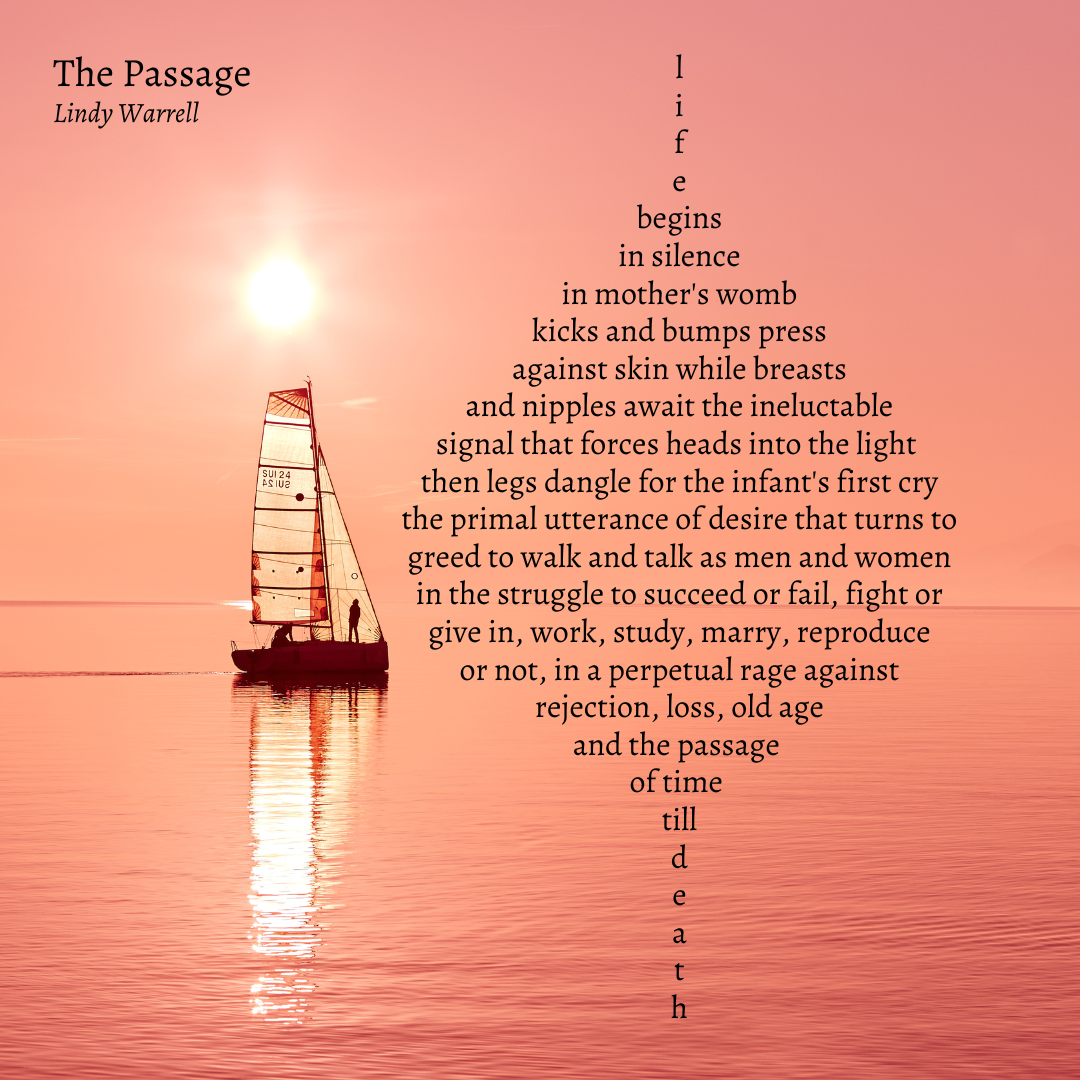
As I so often do on Wattletales, I decided to write from experience about the changes that take place between childhood and old age, using my life as an example. In other words, I wanted to explore the arc of life, similar to that depicted in the following poem, to ask what it really means to grow, age and die. We can’t know death, of course, but old age is a unique journey to consider anyway, as we move from the inside out. Or, as time goes on, outside in.
The Prologue
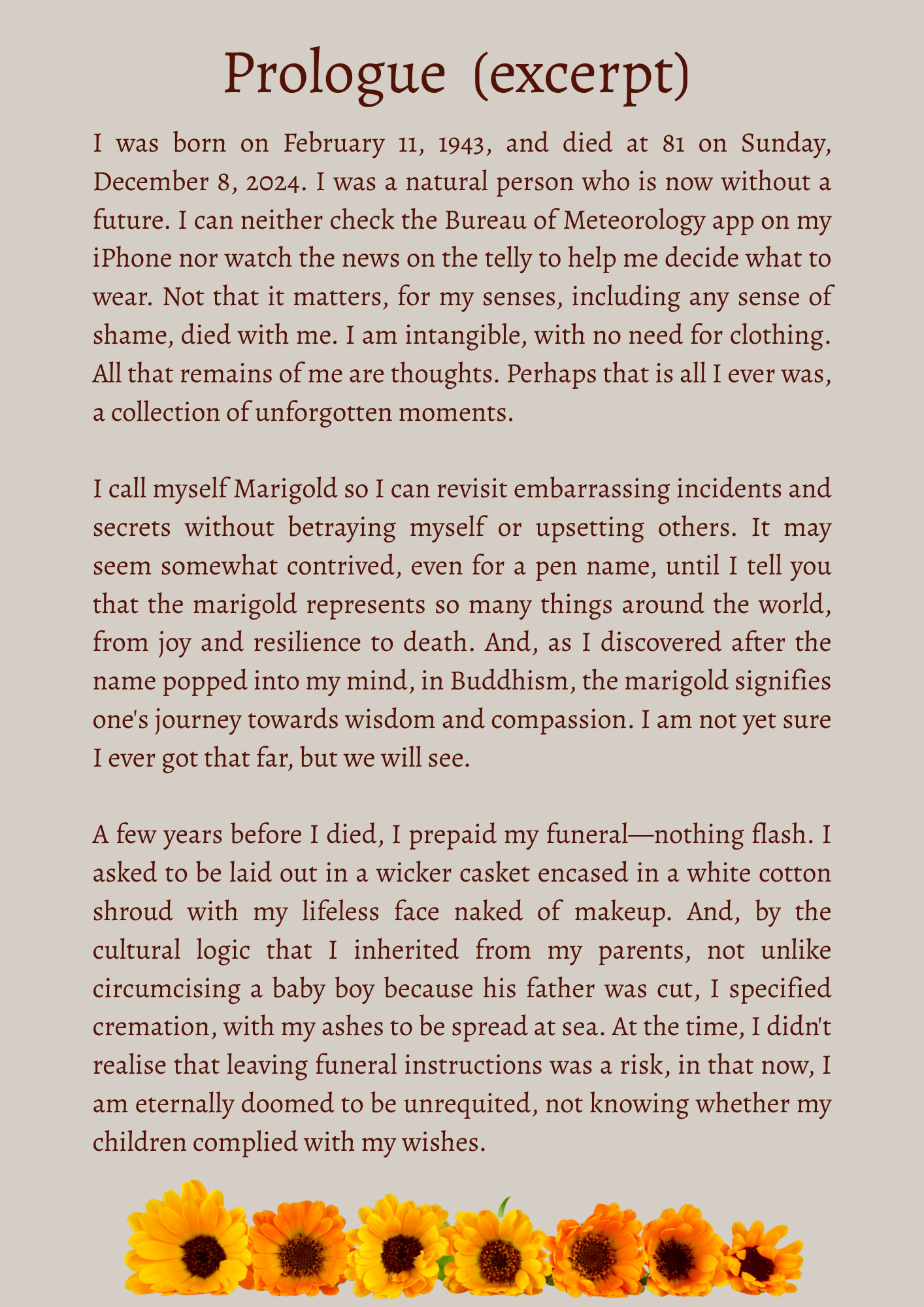
In the novella, Marigold (clearly not her real name) is a somewhat unreliable narrator stuck in a liminal space between life and the everafter with nothing more than memories. The story unfolds as a series of vignettes, texts and poems. Marigold refuses to name her characters. In her view, she is telling her story, so others are included only by role in relation to her. This is important because although she speaks of the joy of having children, she does not want to talk about them. After all, as she tells us, their lives are not hers to discuss.
Here is an excerpt from Marigold’s Prologue.
The most significant other character in this tale is Marigold’s mother, to whom she speaks in an italicised throughline called Conversations with Mother.
As a Writer
There is no doubt that writing from one’s life while alive is no easy task. When writing close to the bone, finding the words and purpose of each story you tell takes you deeper into your emotions. Strangely enough, this teaches you what you have forgiven and what you still need to let go of. Writing intimately about your past is a bit like time travel; it takes you there, often with intense emotional impact.
Although I’m nearing the end of the first draft of Call Me Marigold, when I got bogged down a while ago, I decided to start a new novel for respite. Sometimes, letting one story rest for a while is refreshing.
Something New
My imaginary sandpit occasionally yields the oddest things for poems and stories. Still, my writing in general tends to explore ways in which we fall through the cracks. Under the heading Questions Over Coffee in my introduction to Wattletales, I ask what it means to become broke, mad, ill, destitute, deserted, disillusioned, or denounced. What happens to our sense of self and our identity when life wreaks havoc with our intentions, plans and happiness? How porous is our mind? Is there really a line between sanity and insanity, and how do we know when we tip over the edge?
In that vein, the first idea for a new novel was to write about gaslighting in marriage. My two previous books, The Publican’s Daughter and They Who Nicked the Sun, lived in me as ideas for years before coming to be on the page. Why, then, when I was seeking respite from the emotional drag of writing Marigold, did gaslighting come up?
Gaslighting
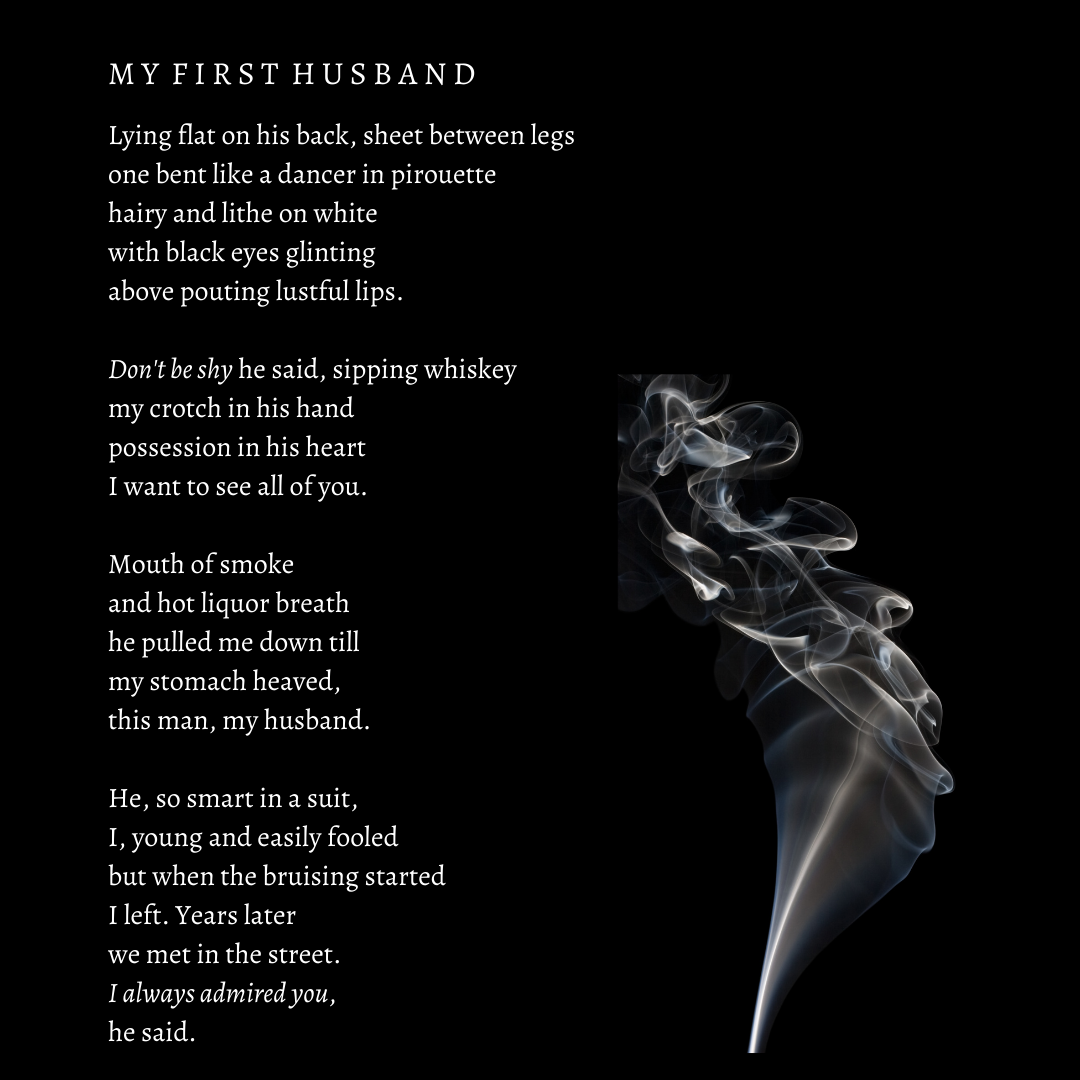
Part of me feels that the notion of gaslighting has haunted me ever since I watched the 1944 movie, Gaslight, with Ingrid Bergman and Alfred Hitchcock’s 1954 Dial M for Murder with Grace Kelly. I have no idea when I did that, but the portrayal of gaslighting by both actresses whom I admired and adored remains clear in my mind to this day. Another part of me knows the idea came from being raised on the idea ‘what will other people think’ which inclines one to disbelieve in oneself, and my first marriage, bearing in mind my husband was 13 years older than me at 17.
Nine Banksia Street
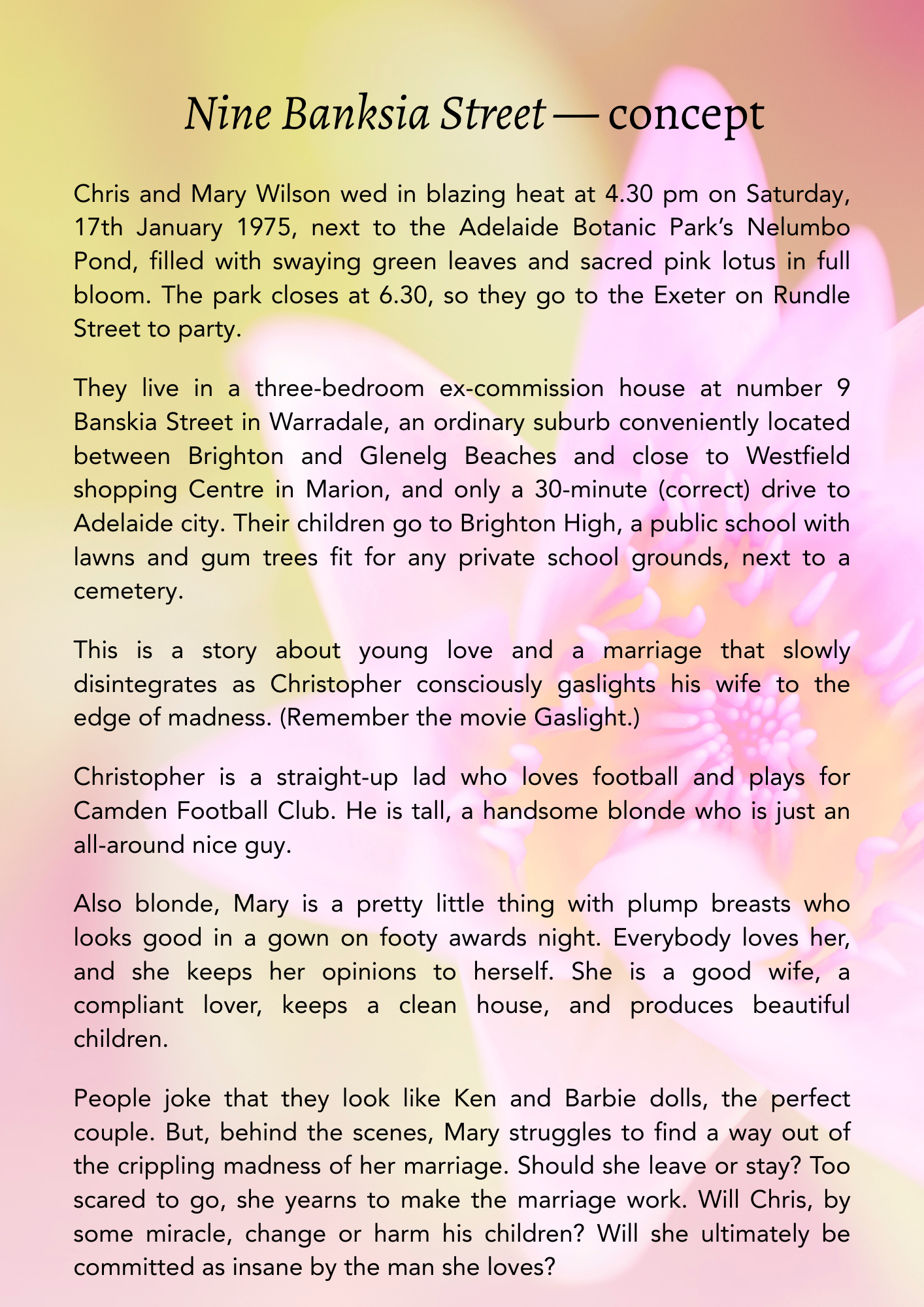
My gaslighting book’s working title is Nine Banksia Street. The main characters appeared in my mind simultaneously with the basic story concept, which came to me in a sandpit rush, pretty much word for word, as below. The story entices but remains unwritten for the time being.
The Latest from Lindy’s Sandpit
I was talking to a friend a couple of weeks ago, asking why I tend to focus on misery in my writing. When I suggested I might write something humorous about old age, she agreed.
One title that emerged from my sandpit years ago is The Grizzle and Giggle Club, which I’ve had in mind since middle age, when my women friends and I used to feel better after a grizzle and giggle together. But the more I think about it now, I’d rather use something like The Secrets Old Girls Take to Their Grave.
After several recent conversations with age-mates while waiting to see doctors and specialists, and in the Manson Towers Retirement Village, I’ve learned that we all have experiences that most of us would prefer to keep to ourselves. When I finish Call Me Marigold, it may come down to a toss-up between this idea and gaslighting.
On that note, let me leave you with a new poem.


Thanks for reading, Veronica. Not everyone will be interested in what Lindy Warrell is working on to read this post, so I appreciate your comments. Although it has touched me here and there gaslighting is not something I experienced to the extent of madness but, honestly, I can’t wait to get into the story to make it and pray I’ve got time to write it LOL
Dear Lindy
You began with a brilliant shaped poem ‘The Passage’ and as usual you have set down a lot of ideas for a reasoning person to go through. There is much to think about, or not, whichever way your mind goes. But it is interesting and I liked the premise of writing about gaslighting. It will be hard not to compare it to a person’s own experiences.
Thank you
Thank you, Julie for your kind remarks. It makes my day when someone says good things about my writing. Sometimes, I get a bit lost without that.
Dear Lindy,
your writing never ceases to amaze. What a brilliant concept writing from death.
Your poems haunt, your dedication to story motivates the weary.
Love it all.
Love always
Julie Cahill. Xx