

Layers
Beneath the tourist map of rolling hills, wineries, vineyards, art and walking trails, boating, golf, cliff-hidden beaches, and other delights on the Fleurieu Peninsula are ancient geological riches and deep First Nations histories. Closer to the surface, my story touches the Fleurieu lightly. It is a medley of memories from different points in my life that skim across the peninsula.
Then and Now
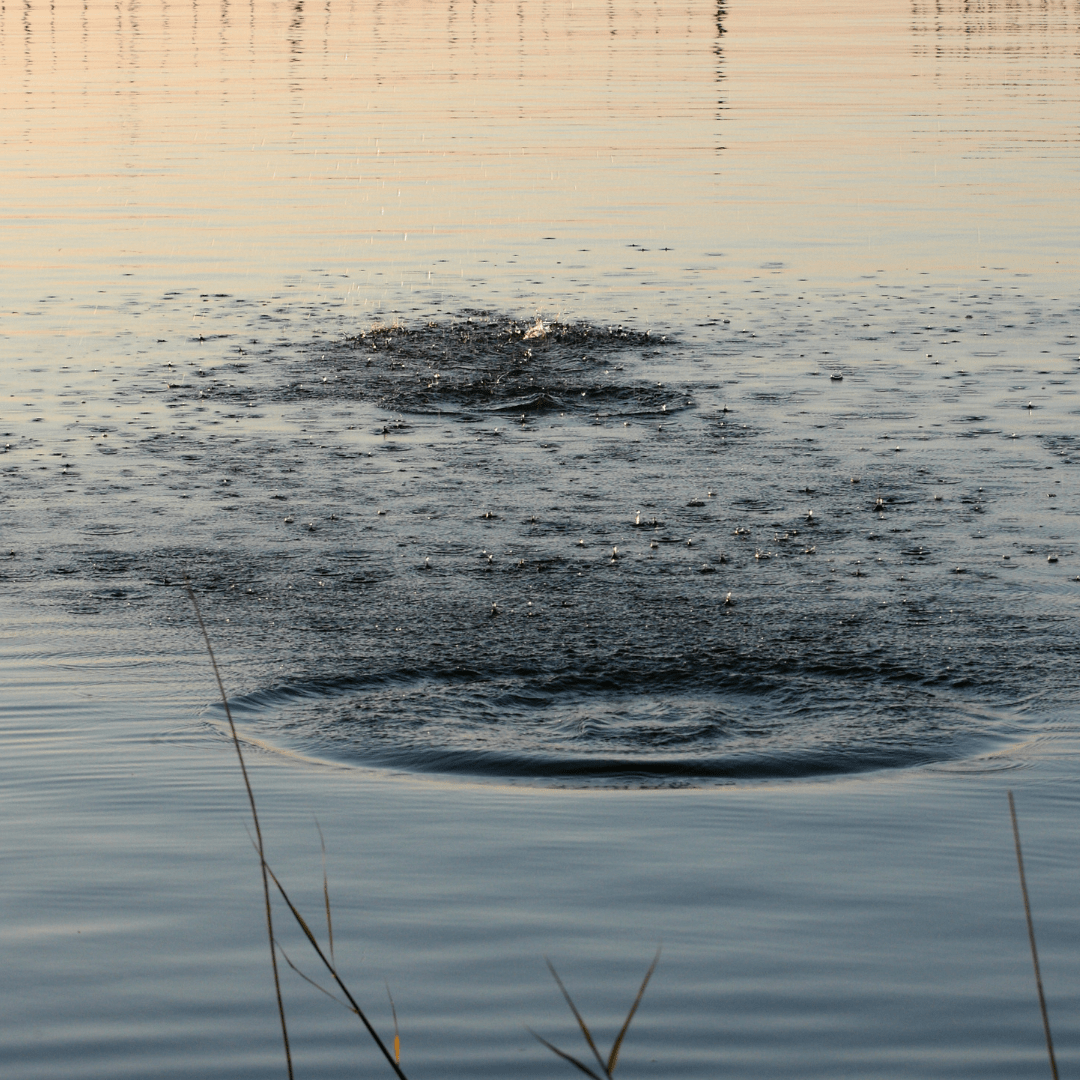
Goolwa and Strathalbyn, mid-1960s. Boys who worked with stud horses bought me beers on weekends. I was pretty; they were lusty. We knew each other from Oodnadatta; me, the publican’s daughter, an outsider, they, the bushmen belonging. Early on Monday mornings, I drove to work in North Adelaide to dream all week of boys with horses and beers.
Now, over 50 years later, when I drive to Goolwa, alpacas have appeared, but the cows, brown, black and white, and lambs still litter the fields in season. Eucalypts droop from verges in all manner of bark, green and trunk.
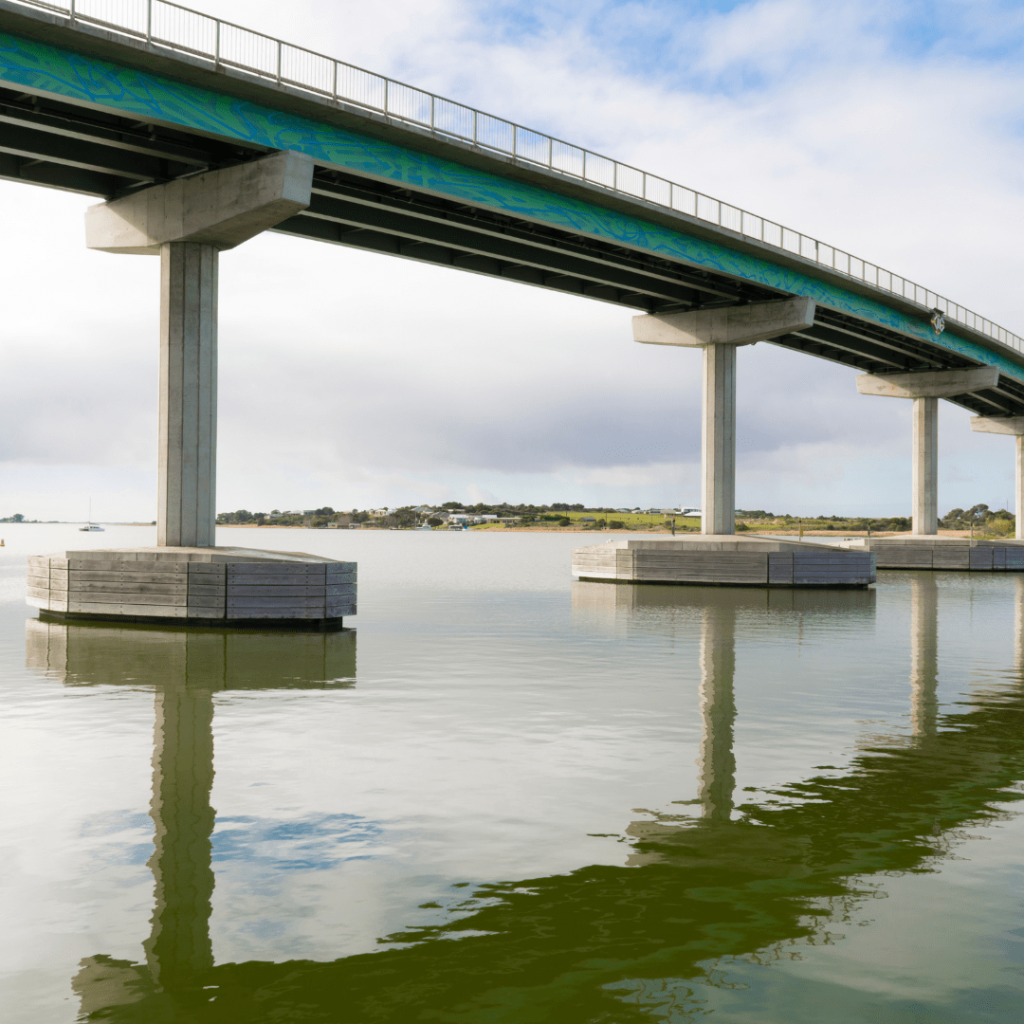
Little has changed except that today, words entice me to Goolwa’s Signal Point Gallery poetry readings and a merry band of creatives called the Sand Writers. The launch of my first chapbook by Jude Aquilina saw us reading from the Prisoners Box in the Old Goolwa Gaol, close to where I often stayed in the ’60s, well before any thought of a bridge to Hindmarsh Island.


Broken in the Middle
In the early ’90s, soon after my mother died, I bought a block of land for $30,000 at Carrickalinga Sands. I built a house with a white Colorbond roof to match frothing waves and bricks the colour of sandy rocks. Inside, I laid black slate and plush pink carpet with a blush of the palest pink on walls. I had a combustion heater, a dishwasher, a spa and a writing room — clearly the house of a hopeful woman. With no front window, the west-facing stained-glass front door threw a kaleidoscope of filtered light into an open lounge with a glass wall facing a pergola and my fledgling garden at the side. I lived there for only three months.
My childhood dream of writing and adult intention of living an alternative life on the Fleurieu in that house were dashed when I became peripherally embroiled in a political saga that grabbed this nation’s attention.
Both traditional Aboriginal Women’s Business and women anthropologists became everybody’s salacious affair. What was in those documents marked Secret and Sacred in the Hindmarsh Island affair? That it could not know drove the establishment mad and, to this day, I say, good job.

The 1995 Hindmarsh Island Royal Commission Report found against the Aboriginal Women’s knowledge that underpinned Minister Tickner’s 25-year ban on bridge development between Goolwa and Hindmarsh Island. It did not support the view that I was instrumental in inventing that knowledge yet, a Lindy Warrell story appeared in public discourse and in books and articles written by people who never spoke to me. Devastated, I sold my house of promise and fled to Darwin to find work.
Moments
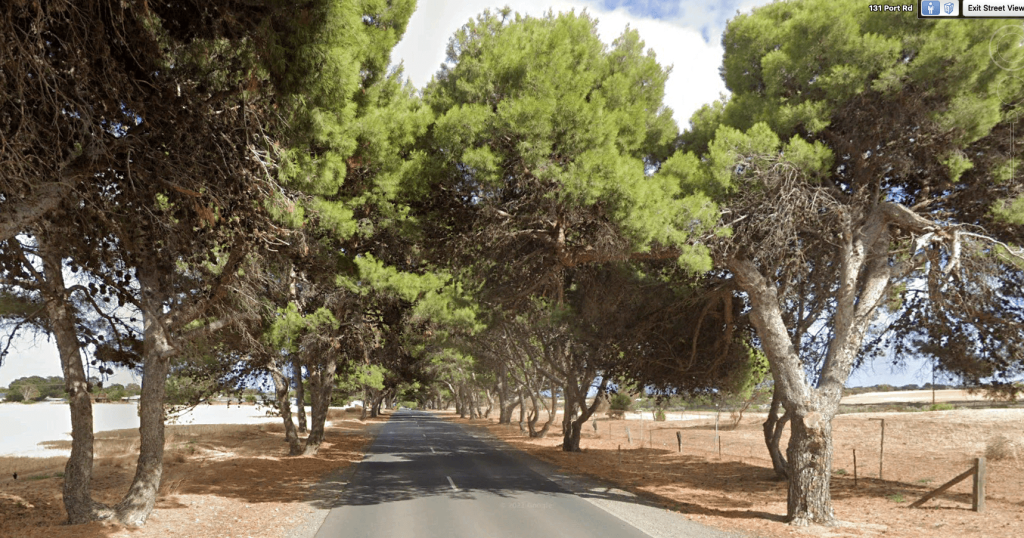
I was 17 when Port Willunga entered my consciousness. My first husband taught me to drive on the Aleppo pine-lined Old Port Road. (School children planted the trees in 1907-8.) He bought me a black FJ Holden — no heater — the all-weather signal, an arm out the window.
In my Goolwa travelling twenties, my North Adelaide boss used to take me to Port Willunga at lunchtime. He swam, I watched. It seemed strange, but I suspect he saw himself offering me a chance to improve myself by absorbing the Fleurieu atmosphere. His wife offered to teach me French after I had dinner with them once. They asked if I’d like a piece of cheesecake. I replied, ‘I don’t eat cheese.’
Not wanting to miss out on the experience, I swam nude once at Maslin Beach in my middle years. I wanted to feel free. Being shy, I dropped my floral sarong at water’s edge — no promenade for me. Unfortunately, I float like a cork and my white boobs and belly, rising to the surface in the shallow swell, attracted a couple of naked men. ‘Are you new?’ they asked, standing alongside too close, ‘Do you want a hand?’ I declined.

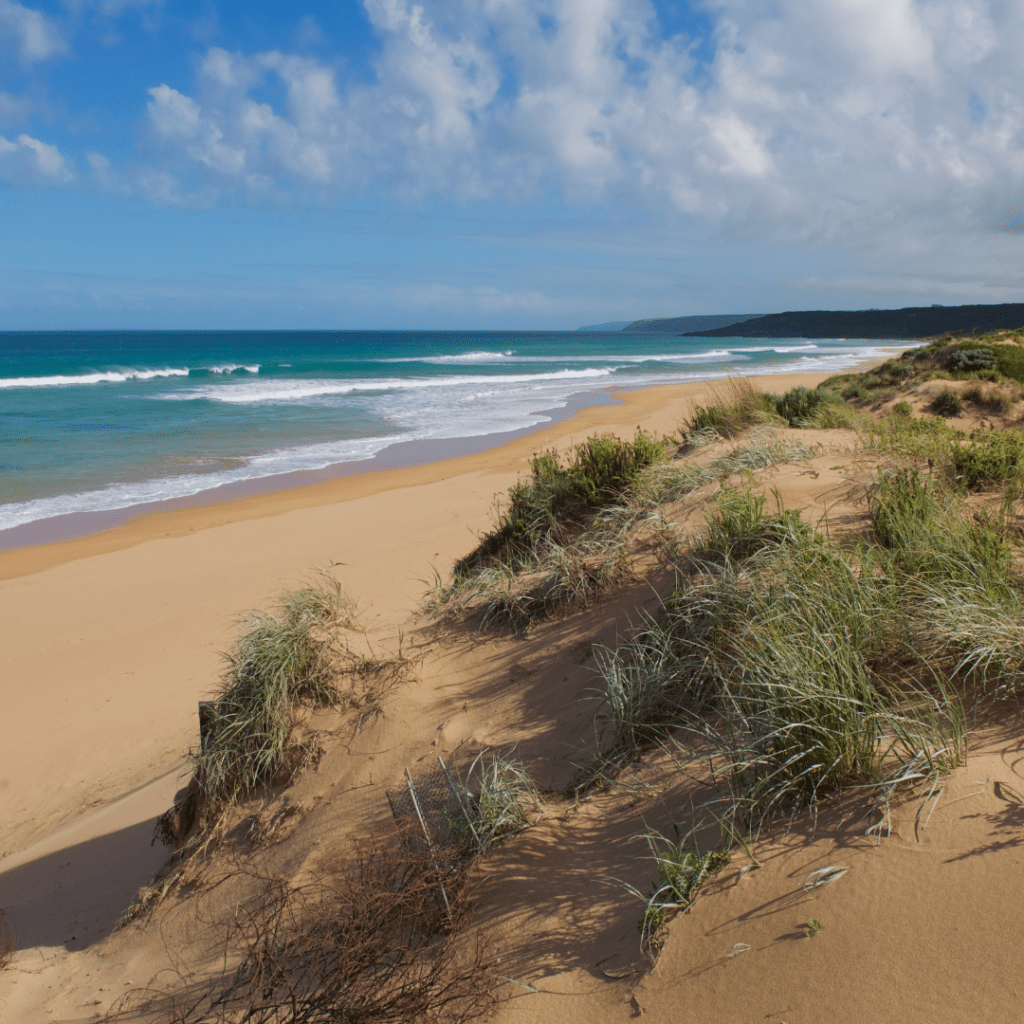
My favourite moody beach has always been Waitpinga, where I’ve walked many times alone along that pristine coastline. It renders me insignificant. I’d sink my feet into the deep reddish sand or paddle along the spumy shoreline while fierce, revitalising Southern Ocean winds blew cobwebs away. The word ‘Waitpinga’ has the traditional meaning, ‘home of the wind’. It was cleansing. Healing.
Towards the end of my mother’s life, I hired a maroon luxury car to take her for a tour of Fleurieu scenery and to the Yankalilla Bakery for their famous cheesecake. Mum loved cheesecake. I’d made one with Nestle’s Sweetened Condensed Milk on an Arnott’s Milk Coffee biscuit base for her birthday for years. ‘What’s cheesecake?’ she asked.
My time at Wirrina Cove is forever inscribed in my mind. I worked there with the Kaurna people when developers sought permission to build the marina. I loved those days on nude-bum hills and precipitous cliffs, learning about spirits in the wind. A young local gardener, who tended the area, frequently joined us. One day, he took us to see a 200-year-old stand of pink gums. That night, he committed suicide.
Family
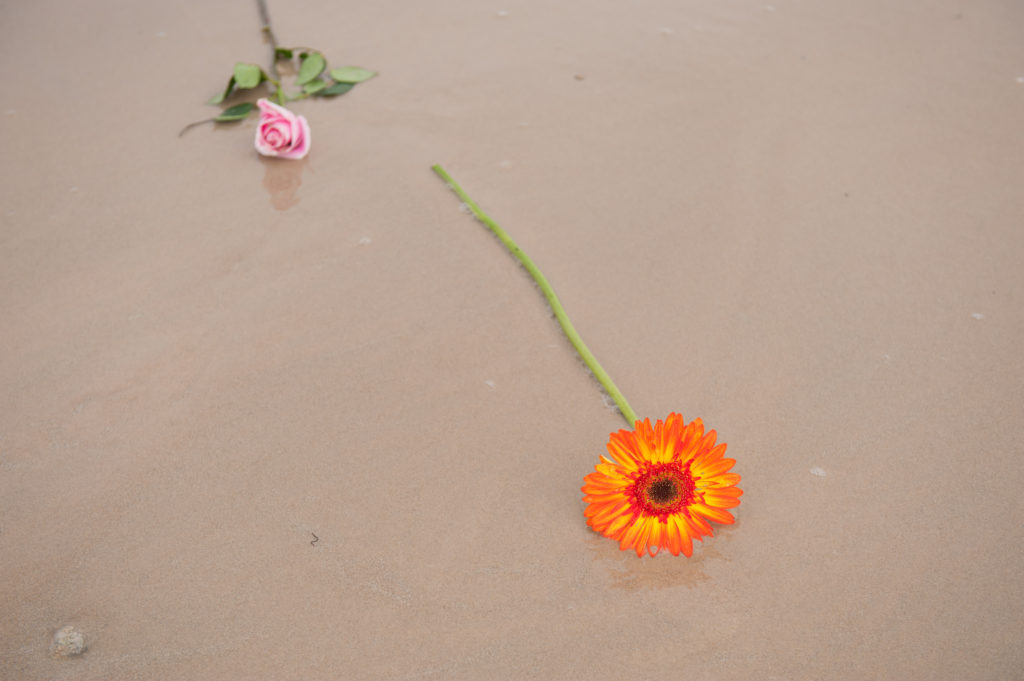
In 2014, my eldest son Grant died on holiday in Peru. Six months later, after the international formalities were finished, his sister Vanessa, brother Mark and I said farewell to him at Aldinga Beach.
I often took my three children to Victor Harbor when they were young. The Clydesdale-drawn tram ride to Granite Island was a hit. We climbed the hill with growing excitement to watch giant waves on the other side pound the rocks below. Heavy spray brought a frisson of fear that the ocean might claim us. Fish and chips were the order of the day. There were camel rides too on the sand beside the bridge, now being refurbished.

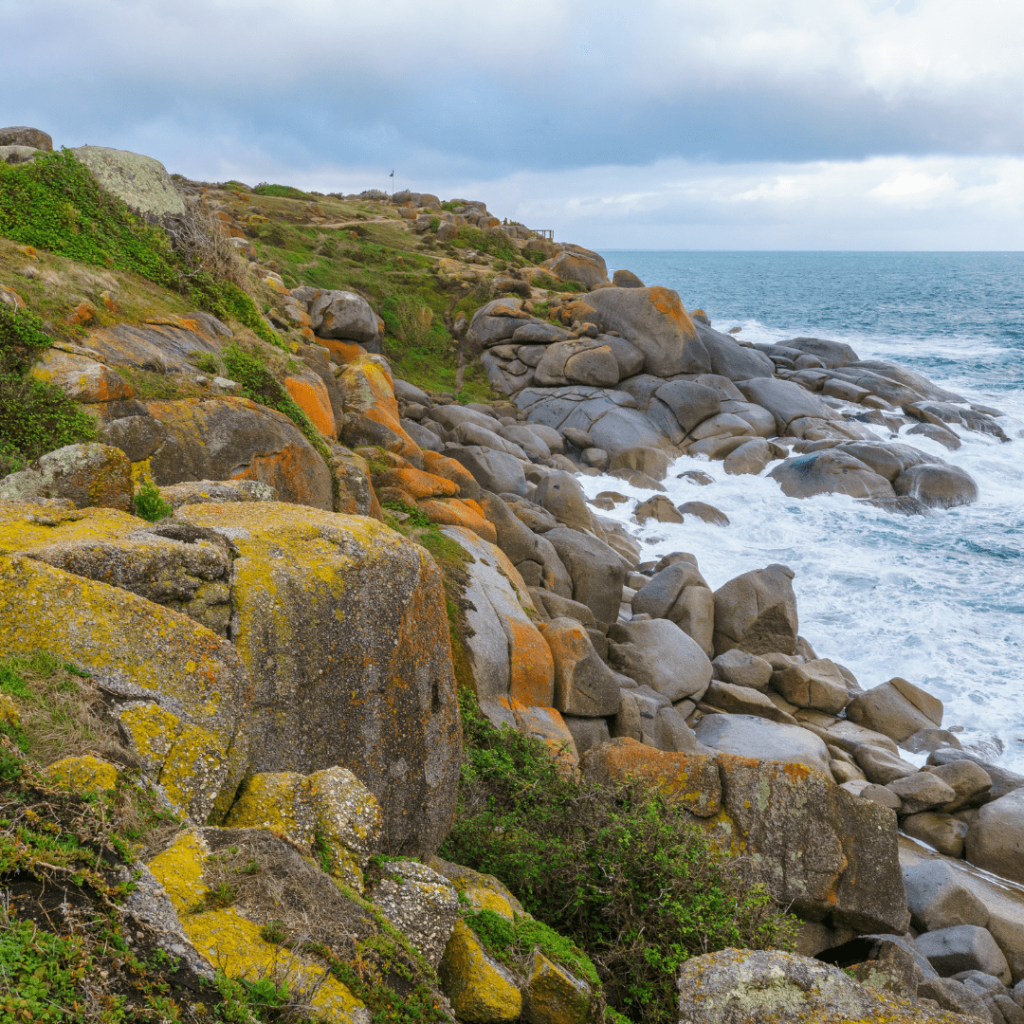

Place has power over the heart. In 2006 after many years abroad, on Grant’s last visit, the first place he wanted to go to was Granite Island. After an equally long time away, my daughter Vanessa recently returned to South Australia to live in Victor Harbor’s Encounter Bay. Family nearby at last. Sadly, my youngest son Mark seems forever lost to the Sunshine State, but you never know.
Fulfilment
As an anthropologist, I was lucky enough to hear and record First Nations* stories across Australia. In South Australia, this included the Kaurna people of the Adelaide Plains and the Fleurieu, the Adnyamathanha of the Flinders Ranges, and the Kokatha, Nukunu, Barngala, and Antikarinya people further north.
I worked across the Top End, with the Tiwi people on the Tiwi Islands, and the Larakia, Maranungu, Kungarakany, Wagaman, Limilngnan Warrai, Jaywon, Werat, Wulner, Ngalakang, Gagadju. In far north Queensland I met the Waanyi, Kalkadoon, Wonkumara, Maranganji, Mandandjani and Gungari people, and in NSW, the Barkindji and Dieri.
My long involvement with First Nations people changed me. I learned to rely on my intuition. This led me to trust a recurring dream I’d been having in which I was a wedge-tailed eagle soaring and riding the currents across this continent, restless and swooping but unable to settle. One night the bird landed at shore’s edge in Aldinga Beach. With a modest inheritance from my brother, who died in 2004, I moved to Aldinga Beach to buy a small beachside transportable that sat, much as I felt, like Dr Who’s Tardis on a large corner block, undeveloped and ripe for character enhancement.
I refurbished the garage as a creative space to finally fulfil my life’s dream to be a writer. I brought with me an understanding of Buddhism from Sri Lanka, where I took my three kids on a PhD field adventure. As a practising Buddhist, I started teaching meditation and had three groups, one at home, one at the Aldinga Community Centre and another with Aldinga’s University of the Third Age (U3A). Years of working anthropologically with other people’s stories led me to give regular life-writing workshops, first at Red Poles in Willunga, then in my studio.

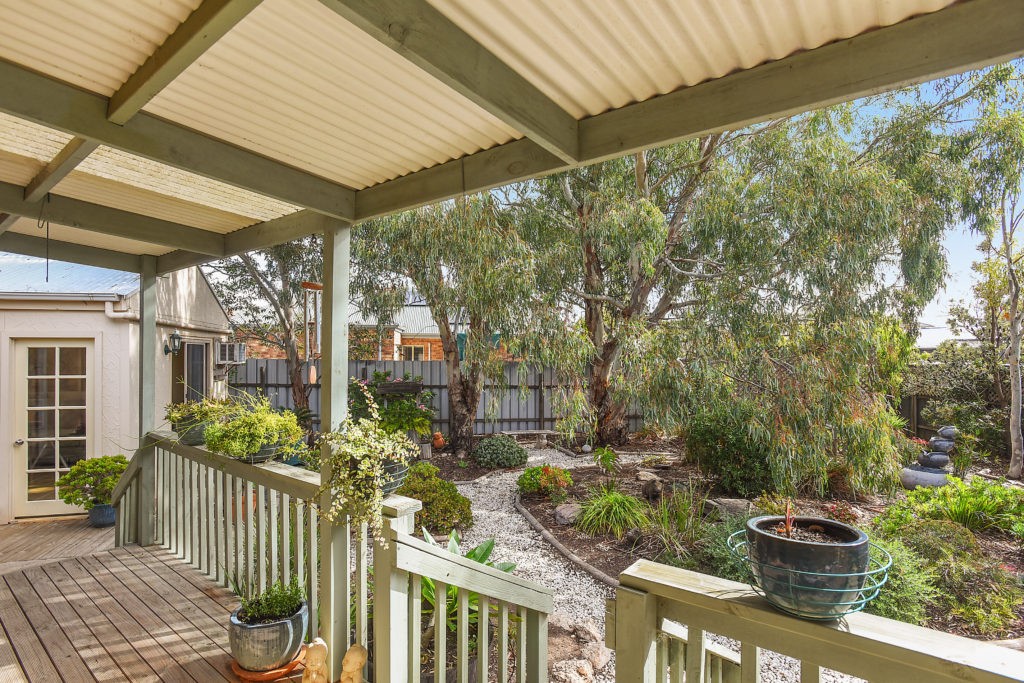
As my lush native garden took shape, with white gravel paths, a wishing well, water fountains for birds, a bridge over a stony creek and 23 trees (including three river red gums and a pepper tree that grew fast), I wrote the draft of my first novel, On Gidgee Plains. I started writing poetry, joined Friendly Street Poets and Ochre Coast Poets, published three chapbooks and quite a few poems in journals, anthologies, and online.
The Fleurieu cradled me through good times and profound pain. It has brought joy, contentment, and more friends through writing and poetry than I have ever known in my later years. While I may have skimmed its surface like a flicked pebble, the Fleurieu’s depth seeped into my heart to become part of who I am.
* First Nations name spelling may have changed over the years.
Personal images have been added to the original text.
The End
You can find a related story about my fragmented life here.
ACKNOWLEDGEMENTS ‘A Flicked Pebble’ was first published in ‘Fleurieu Past & Present’ (2021), an anthology of writing, poetry and art published by Sandwriters, Goolwa.

a unique and beautiful collection of poetry, prose and art that brings the Fleurieu to life.
If you wish to purchase this anthology, please click here. Or, contact me at lindy@wattletales.com.au.
Dear Maria, Thank you so much for reading and understanding what I was saying. Our bodies certainly do know the places we inhabit, they are embodied in us in so many different ways. It is physical, visceral and brings back memories whenever we return to places that trigger body memory quite powerfully.
Dear Julie, thank you for your usual in-depth reading of my piece. I’m so pleased you found it revitalising. I have had a fun life, somewhat out of the ordinary at times, but not a bad life when all’s said and done.
Thank you, Lindy, your words paint wonderful pictures of the Fleurieu.
Ah, Sand Writers, they were the days. Forever hopeful.
I attended your reading at the old Goolwa jail, you in the prisioners’ box as you launched The Old Girl Can Still Drive. What a shame that your upcoming book-launch needs cancelling. Bloody covid!
How devastating that you found need to sell your delightful house due to controversy over the Hindmarsh Island Bridge. I witnessed the build from the office I worked in on the Goolwa wharf. Put bums on seats I did, on boats which whispered through the Coorong eco style. We visited middens, and rambled across the Young Husband Peninsular to meet the sea’s mighty roar.
How I laughed at your rendition of floating naked like a cork. Such a comedian, and the next moment you were digging your feet into wet reddish sand- one of life’s simplest yet most splendid treasures.
Waitpinga- home of the wind. What a name and sensation having those cobwebs blown off. How tragic that the young gardener had not found his healing place. How lovely that you said goodbye to Grant, in yours. ♥️
What a life filled with adventure, and many races including Australia’s First Nations People.
Your story is totally revitalising, Lindy. Thank you so very much.
Love always
Julie Cahill. Xx
Thank you Heather, I don’t think my life had any more ups and downs than most, but it’s been and remains an interesting one. To me anyway. LOL
This is a wonderful piece about a marvellous, sad, creative, inspiring life. Thank you for sharing and the photos are beautiful and evocative.
I loved your tour clear and colourful guide through the Fleurieu and the snapshots into how your family and yourself are tied to this land and sea. Our bodies know and are known by our home lands – it’s cellular and almost atavistic. My body knew its origins when my feet touched the sod of my father’s and mother’s Aegean island homes. A big sigh of belonging!
As I now inhabit a part of this Southern Coast, walk it, write about it, swim on the Port Noarlunga Reef and visit my many marine life friends, reef fish are terrotorial so I find them in the same place, my body builds a new belonging. Besutiful grounding and love of our mother earth and sea.
I appreciate also Lindy, your anthropologist’s eye into the Indigenous peoples of this land. I did anthropology at uni and it helps clean up colonist myopia.