

Chaos
The COVID-19 pandemic, hereafter known as coronatime, has delivered uncertainty upon us from where we may incline towards chaos psychologically, socially, politically and economically. It is also possible to find sanity.
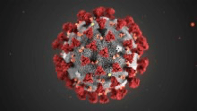

While the majority of the world is complying with political directives to maintain lockdown distancing rules and cleanse at every opportunity, we simultaneously witness televised punch-ups over toilet paper in supermarket aisles where we otherwise stand in disbelief before empty shelves.
What is going on here? Why struggle? Why hoard? In trying to think this through, I stumbled on a post by LinkedIn Editor, Scott Olster saying it’s okay to be uncertain in uncertain times. And the way our world has shut down definitely creates uncertainty.
Olster refers to a New York Times article by psychologist Siobhan Roberts entitled ‘Embracing the Uncertainties‘ in which she argues that uncertainty arises when people lose control over their environment. And, we have certainly done that in this coronatime lockdown.
Little surprise then that the media is full of ideas about how to retain control. But, there is another way.
Control
The worst thing about the pandemic for me is the media’s somewhat messianic approach in its daily information and advice bombardment. How to avoid boredom, how to satisfy our longings when we cannot meet our loved ones, how to manage children when families are home together. That last one gets to me. Are modern families so dysfunctional that being together for lengthy periods is no longer possible? Why do children have to be permanently entertained? What does it mean to say we are socially depriving toddlers if they miss a bit of pre-school or that school kids interrupt our careers?
The message overall is that there is a right and wrong way to get through this coronatime. We are lucky; they say because we are All Together which is complete nonsense that emanates from the mouths of people on good salaries in a context where millions are sick, jobless, broke, isolated and at extreme risk in many aspects of their lives.
Much of the media onslaught is insufferable talk-show fluff, replete with silly jokes and pretentious conversations by personalities whose opinions are, frankly, highly dubious. Why I mention media jabber-jabber is that it is — once again —about how to ‘manage’, ‘fight’ or ‘control’ everything in our environment.
May I ask, when did you last have absolute control over anything?
Fear’s imperative to take control
Even in serious discussions, the notion routinely appears that, as humans, we can control things. Psychologist Susan David in her YouTube video ‘How to be Your Best Self in Times of Crisis’ offers thoughts on how we might begin to come to terms with what is going on in an uncertain time by doing just that; taking control. She sensibly speaks of finding ways to make life feel better by establishing small pockets of control in our immediate environment. That sort of action can help.
But, doesn’t the sort of greedy fear that haunts our supermarket aisles tell us that fear is behind the behaviour? Surely it is fear that drives the struggle to control which is what stockpiling is; an attempt to control, to forestall scarcity, to stay on top of things.
The western certainty that we can control is a New Age sensibility. But mantras like ‘I am successful’ don’t work in the face of catastrophic events. But, fear comes not from feeling out of control but being out of control. At that level, it is a natural human response.
The thousands upon thousands of unfortunate people lining the streets outside Centrelink are out of control. Their fear is caused by reality, by a shocking situation that has potentially severe consequences. They are in a pickle. They lost their jobs overnight. Without warning. No amount of jocular how-to advice from the media will fix that. Good policy and outstanding leadership are what is needed for coronatime.
We need to shift focus. We need to ask, how we can survive coronatime when we simply cannot control the external circumstances of our lives.
Relaxing into uncertainty
For a person like me who grew up with a father who always said, ‘if you have any woes, Luv, read the newspaper, there’s always someone worse off than you’. The idea that we could, in fact, control our circumstances had not yet come into being.
Over the years, I’ve moved away from the need to control externals by developing techniques that help me through anxiety which is a slightly milder malady of uncertainty. These techniques include comfort eating, escaping through retail therapy or going for a long drive into the countryside. Unfortunately, that is a restricted activity now but even thinking about it reminds me that my problems are in the main, first world.
Being anxious comes precisely from the need to be in control. I hate waiting for things. I am not patient. I often think that events conspire against me and so on. Like others in my world, I am a product of this Western social universe in which the lockdown acts as low-grade, continuous stress. No wonder all the little things that previously might have irritated us, grow huge in our minds.
Does the need to control make me duplicitous when I say I am also weak? No. it makes me human. We are all human.
After many years of Dhamma study, practising meditation and teaching Buddhism, I have come to accept reality for what it is, which is how I stay (or return to) calm and relax into uncertainty. The Buddhist philosophy helped me come to peace at the loss of my adult eldest son. What I know is that severe dislocation is something we must allow in — accept and experience — before we can move on.
The struggle to control the uncontrollable is futile.
Take it as it comes
In Australia, we have so far been fortunate. As a nation, we have had to make some sacrifices, but to date, the spread of the Coronavirus has been minimal with few deaths compared to other parts of the world.
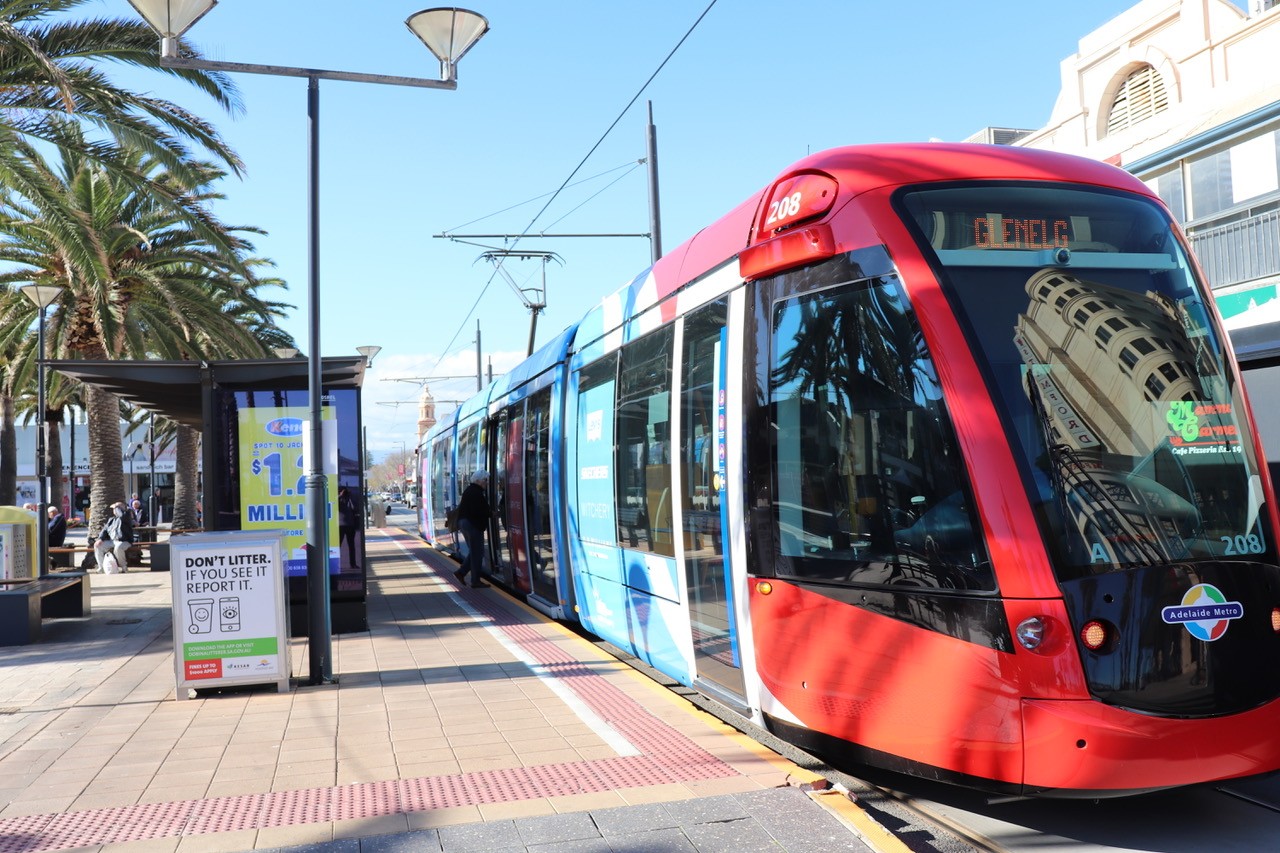
In South Australia, where I live, we have fared even better. These photos are pre-coronatime but, apart from the signs, they convey what one of the busiest beachside tourist attractions in Adelaide now looks, every day.

Being old, retired and physically safe in retirement living, despite the minor irritations of living with little acoustic protection from lives in other apartments, I am one of the lucky ones in coronatime. My environment is fairly predictable and I find myself concerned more for the future of democracy, of the world economy and things like war, destitution and starvation. Will things pan out politically and economically in Australia?
Social distancing for me does mean that I can’t go to my regular poetry and writing groups, gigs and workshops. Nor can I meet with friends for coffee, long lunches or day trips when I feel like it. As this little poem shows, the restrictions for me are benign, even productive.
The Freedom

After the shock, freedom
like being at home alone
with a book as a child
able to sprawl across your bed
for hours, meeting characters
on adventures, loving as if
to avoid heartbreak
but crying anyway.

With no-one to answer to
no fear arises. No need to defend
and parry or sharpen the wit
to protect yourself. No. You
are alone and safe at last.

Who's bored? Not I, my imagination
frolics even as I sleep
enticing me to wake, to rise
to write
to create magic on the page
the real and the surreal
colliding in the voluptuous
chorus of life. My life.

Stillness follows. Satiated
I smile, open my heart.
As time goes on
In Australia, we must not be complacent. Nor must we feel sorry for ourselves. My heart goes out to those who have lost work or livelihood during coronatime, or lost so much in the recent bush fires. I grieve for all the precious Australian fauna killed in those horrendous events. I hope nobody becomes homeless and destitute. For those who are ill, I wish you a speedy return to health and wellbeing.
But, as my dad would admonish us, look at the news. Suffering in the rest of the world is often overwhelming, without this pandemic sweeping through. Today, ABC News online posted an article about the devastation the Coronavirus will cause in the Middle East. Can you imagine what it would be like to experience coronatime in war-damaged Syria or an overcrowded refugee camp overflowing with the millions currently displaced in the world?
Yesterday, I watched a TED talk describing how the shutdown in India put 20 million people on the streets overnight. People who migrate to the city from impoverished villages to do casual, day-labour to eke out an existence week to week. Without work, they could starve. A further 10 million small traders were similarly affected.
Getting back to normal
Will we ever get back to normal? It depends on what one means by ‘normal’. It may take a long time to get back on our collective feet, but things are likely to be different. My suggestion is that we bring curiosity to what is going on around us, it is life. It is an experience and we will survive. Nobody knows what is around the corner.
Try this
If I have one suggestion for you this month, it is this. Write about your coronatime experience. It may not be a ghost, but it is a spook in your life, and you need to give it full attention.
Buy an exercise book. Record what happens or has happened to you. Describe how you feel about the impositions and restrictions. Don’t hold back. Notice your emotions as you write; they may just change as you go.
- Describe in detail what has happened or is happening to you. Name the disruptions — to work, home, family, health, career, studies, the whole catastrophe.
- Describe in detail the things that stand out for you, that have or had the greatest impact.
- List the issues that others — friends and family talk about. How do their thoughts and experiences affect you and your relationships?
- What do you fear most?
- What is working for you?
- What can you actually control?
Follow your progress day by day.
This is more than keeping a diary. Writing this way about things that bother you, especially when you have no idea what will come next, is grounding. It gets it out of your head and into perspective.
Stay Safe
lindy@wattletales
Thanks, Julie for reading and for your kind remarks. We are privileged, that’s for sure. Out of the fray, so to speak.
You have a wonderfully grounding attitude, Lindy. Love your work which is honest and inspirational.
Great suggestion about writing our way through the corona fiasco. Externalising thoughts is theraputic.
Clearing the clutter, is my terminology. No one need read our secrets. We can write out anger and grief then trample it in the mud or burn it on a pyre.
To write one’s thoughts is a way of sorting and catagorizing them, you know, popping them into order of importance.
Seeing our thoughts in words is advantageous, as seeing anything from another POV gives new persepective.
Thank you, Lindy.
Yes, SA is sitting comfortably in all of this, although we must not become complacent while the world fights.
Your mention of those misplaced on the streets, puts our own doubts in place while we sit germ-free inside ivory towers.
Your mention of people fearing uncertainty, and the millions who have lost livleihoods, are key points to supermarket frenzies.
And when the new normal arrives, I’m thinking most will adapt. It’s in our genes. Survival is in our blood, but never must we lose our humanity.
I’m thinking overall we will be more appreciative and more thoughtful toward one another. Fingers crossed. ♥️
Thank you Carolyn. I’ve noticed your remarks on similar lines in your Fb posts and have taken an occasional peek at your site as well..I have to apologise that my site has a main image missing this morning – am waiting for support to get it fixed 🙂
This is an awesome calming look at what we are currently experiencing. It’s never really a question of finding that ‘normal’ life again, because what is normal about the average person’s life anyway.
Living with Nature, caring for ourselves and our own family, and community, these are normal things, in Nature, anyway. How many of us live that life, these days?
I live what you have written here, Lindy, and the idea of writing it all down fits beautifully with what I’ve been working on this past months. https://carolyncordonwriter.wordpress.com/2020/04/22/the-actual-book-is-taking-shape/