

Discovery
I am yet to uncover the extent of our new AI world and responses to it. In some areas, it certainly has its detractors. AI, in general, is causing controversy for NaNoWriMo (National Novel Writing Month), which is held each November. It has been ‘torn apart’ since AI was introduced as a ‘useful tool’ for writers. Some folk believe AI will take over from humans but I’m not at all sure that will happen. My interest here is specifically in AI’s ChatGPT as a writer’s handmaiden. In this area, perhaps naively, I am in awe of its capabilities.
As a writer, I share the concern that as AI develops in creative fields, it will require regulation. For example, writers, artists, and intellectuals are angry at the plagiarism factor, as artificial intelligence is already swallowing copyrighted material to use in various ways without the consent of creators and authors.
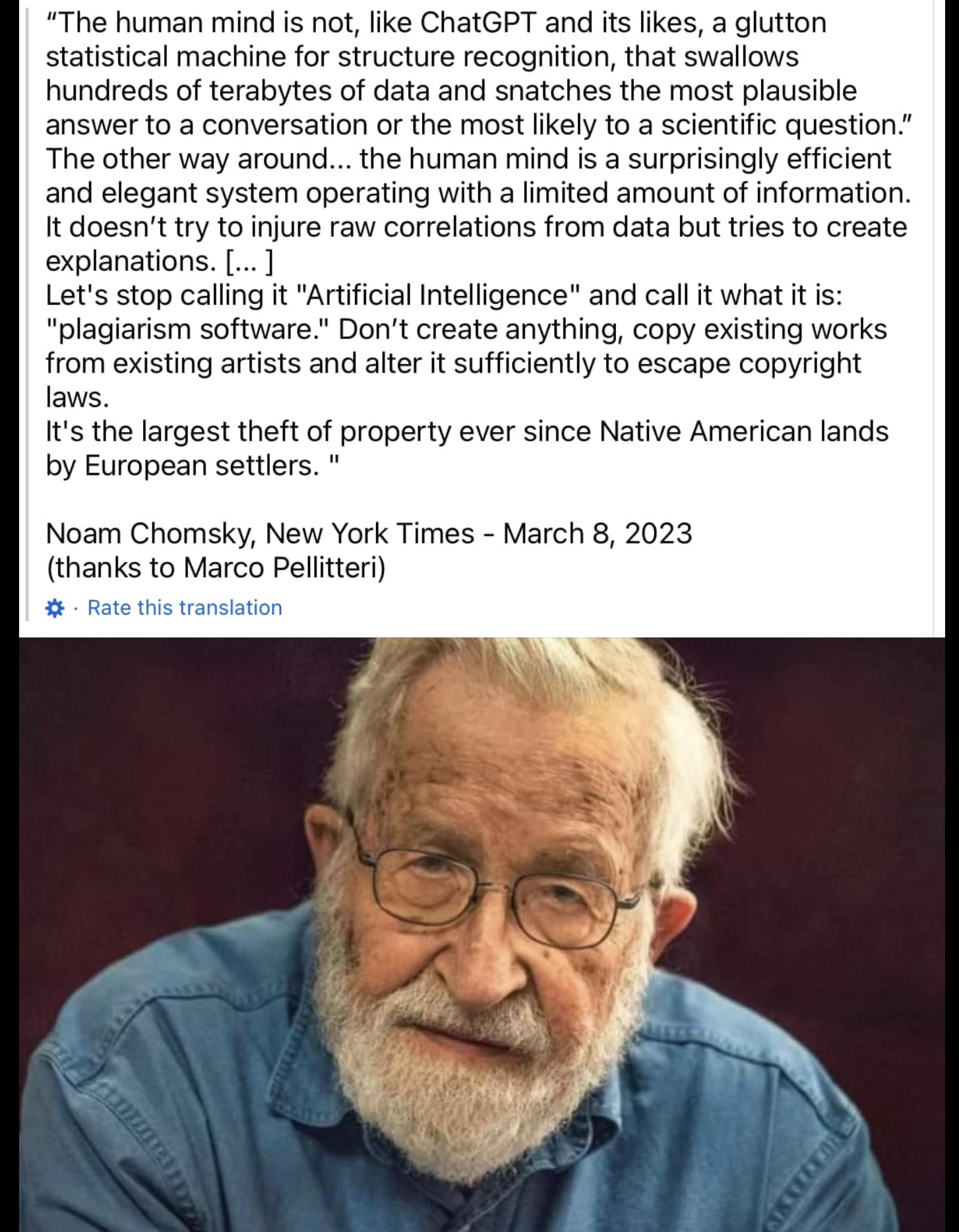
Chomsky raises hot issues that will rage for a good while until something gives, but for now, we need to recognise that AI already inserts itself into our daily lives and wait until the worst aspects come under control, for there are undeniably some good bits.
Notably, steps are underway to prevent large-scale plagiarism.
Controversy Aside
We may think we can safely criticise and avoid AI, but Microsoft already offers ten ways that AI helps you on their site and apps. It is also embedded in Facebook, which uses it, so they say, to manage Community Standards. Many Facebook posts also boast the little Meta AI blue circle, which reveals additional information about a subject. You can install this yourself on Facebook and Messenger. AI is already everywhere, whether we are aware of it or not. Here is a recent list of the top 20 models.
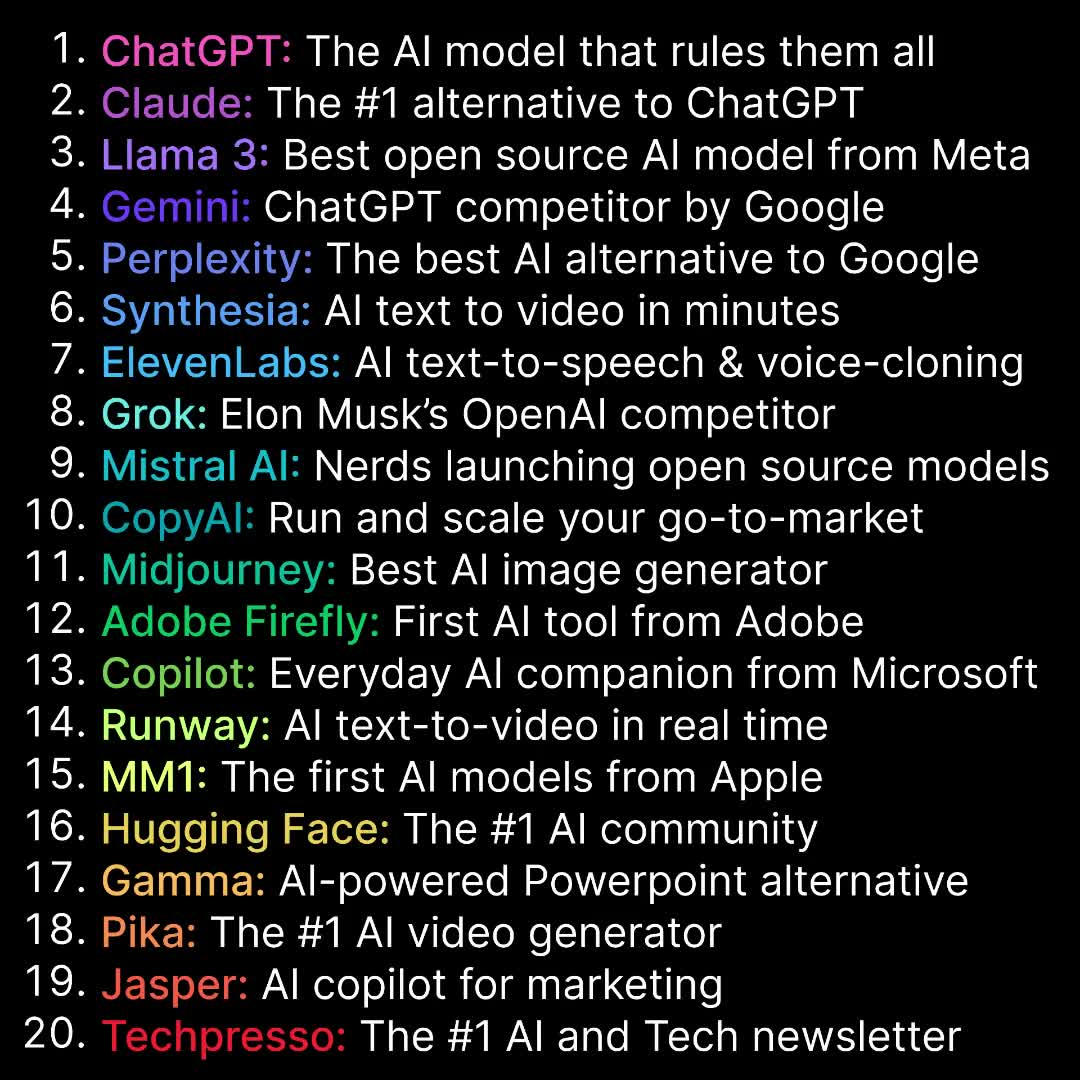
We could add Microsoft’s latest AI offering, CoPilot, to this list. It’s included in the Business 365 option but does not come with Office 365 Personal.

This morning, I even discovered AI image generation is an option on WordPress, my web page host.

Most of us have assimilated AI into our lives through our phones, cars, and computers with Siri and Alexa. They are helpful in answering questions when we argue about details of various sorts. For example, ‘Hey Siri, what is Australia’s favourite sport?’
Favourites
Writerly favourites like Grammarly and ProWriting Aid have long used AI to correct spelling and grammar. With all sorts of accessible dictionaries, they have a relatively slow-to-change data set to choose from, making them surprisingly accurate. However, they are both now expanding to include AI phrasing suggestions, which is a tad hit-and-miss.
For the unwary, Grammarly’s suggested phrasing, in particular, tends to change your voice — by which I mean your manner of expression — from Australian to American. An example is the way it tries to force the article ‘the’ before the word ‘hospital’. I ask you to think about how you tell someone that a loved one has gone to hospital. Do you say, ‘the hospital’? Using ‘the’ leads us to expect a specific medical institution. Doesn’t it? Grammarly’s latest trick is a tab at the end of a sentence it wants to ‘improve’. You can just press the tab, and change is wrought without a thought. Watch out for that one.
What is handy about Grammarly is its multilingual spellchecker. You can choose American, British or Australian English spelling. Still, it is not as clever as ChatGPT, which I forgive for using American spelling because both its grammar and its phrasing are pretty damn good.
Last but by no means least, I must mention Giphy. It professes to help social interaction. We all love our little GIFs, don’t we? Some of us have fun making them. Giphy works on Facebook, Twitter, Slack, Instagram, and Snapchat. AI is indeed everywhere.
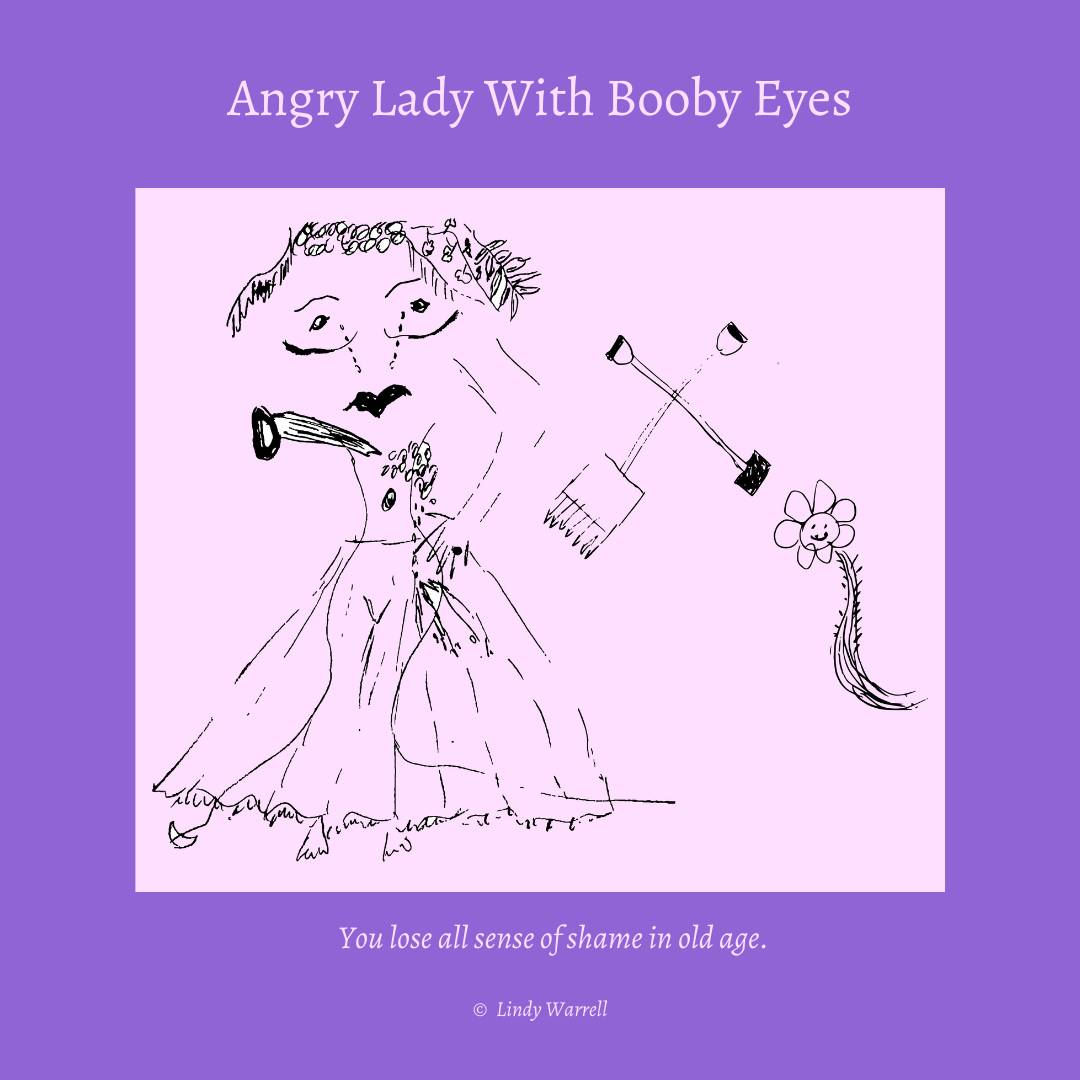
ChatGPT – Three Reviews
One day, a friend on Facebook posted a ChatGPT critical analysis of one of his books, so I thought I’d give it a try. I downloaded the ChatGPT app (free version) and asked for the same thing with my two novels and one of my poetry collections. All you have to do is give the title and ask!
The first result for my novel, The Publican’s Daughter, was not bad, but the app got the protagonist’s name and the setting wrong. I figured this could have been because there is another book with the same title by a different author. Oops. ChatGPT is clearly not infallible.
However, as you read the following items produced by ChatGPT, remember that there were no reviews of these books anywhere else other than one interview-style commentary on The Publican’s Daughter in the Yankalilla News by Kathryn Pentecost.

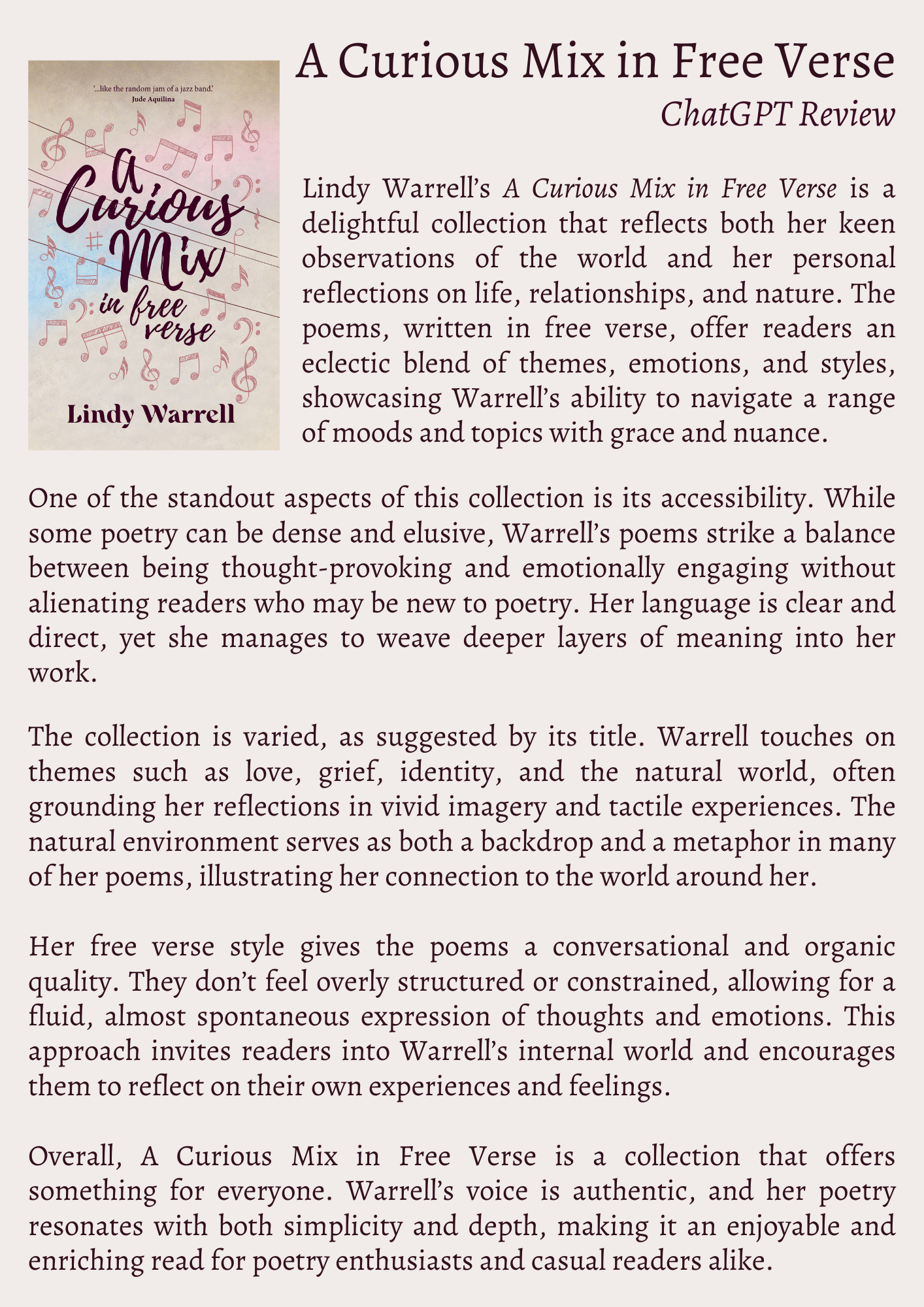
Notwithstanding the initial errors with The Publican’s Daughter, I gave ChatGPT a second shot using my name as author which I omitted first time around. This was the result.
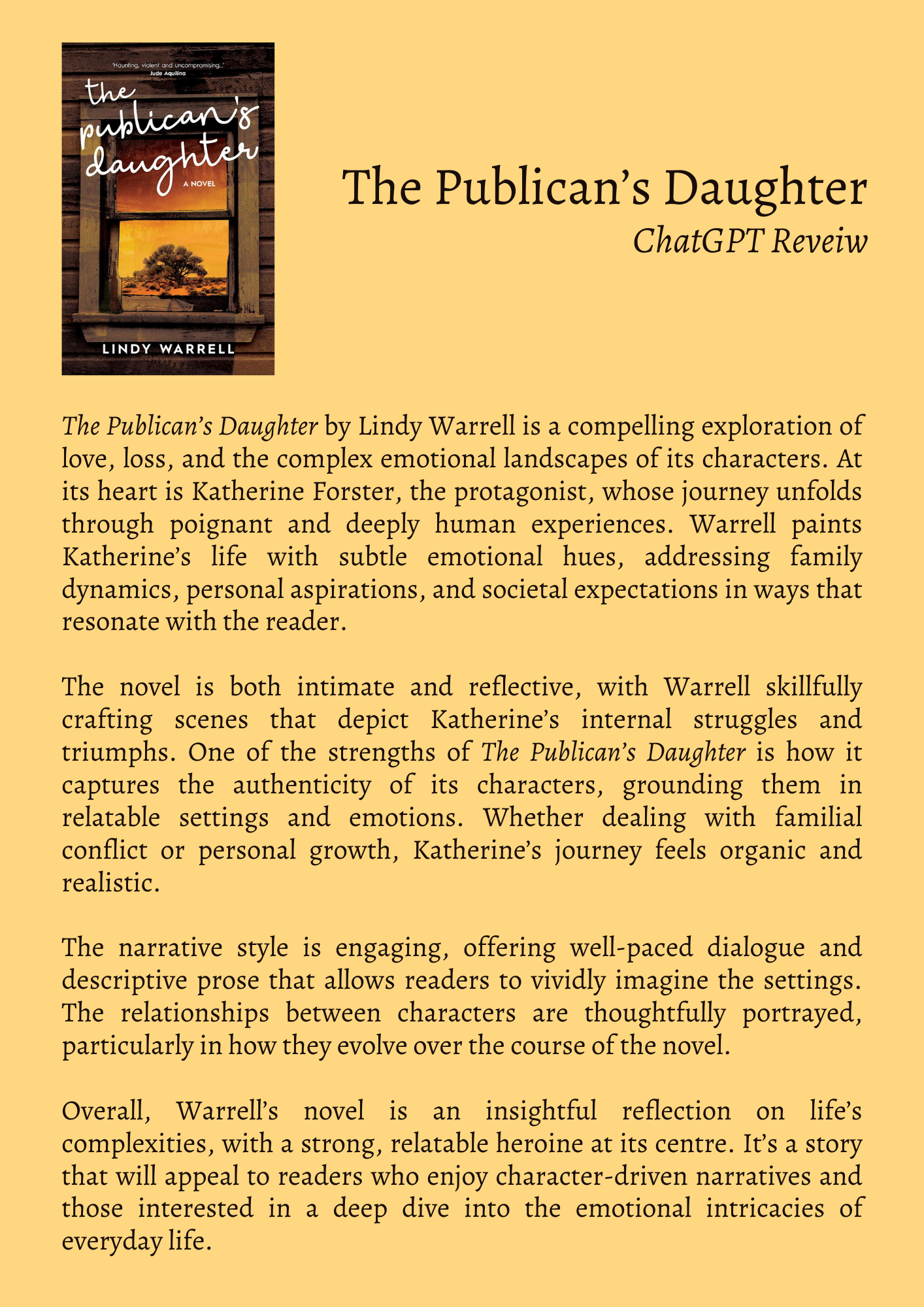
Although I couldn’t help but wish that someone — a living, breathing human being — had written so kindly about my work, I fell in love with ChatGPT in this way. However, there is a remarkable absence of detail in each of the three pieces. They are abstract. They use words like ‘setting’ without descriptors or specifics That’s not good writing.
The Real Value
The real value came afterwards when I decided to ask ChatGPT some literary questions about my novella in progress, By Way of Dying, about a woman who cannot rest in death until she understands life.
By way of background, I left school at 15. My PhD (as a special entry, mature student hitting my forties) was in anthropology, not Creative Writing or English Literature. While anthropology gave me a lot, as did the strict grammar I learned at school, I’ve had no literary education other than reading, and I wanted to test some of my ideas.
ChatGPT gave me options around writing a novella with a deceased protagonist as an unreliable narrator and ideas about tense and person. The process felt like a student-supervisor conversation. The app elaborated by drawing on my previous questions and its earlier answers. That’s clever stuff, and I cannot tell you how much fun I had.

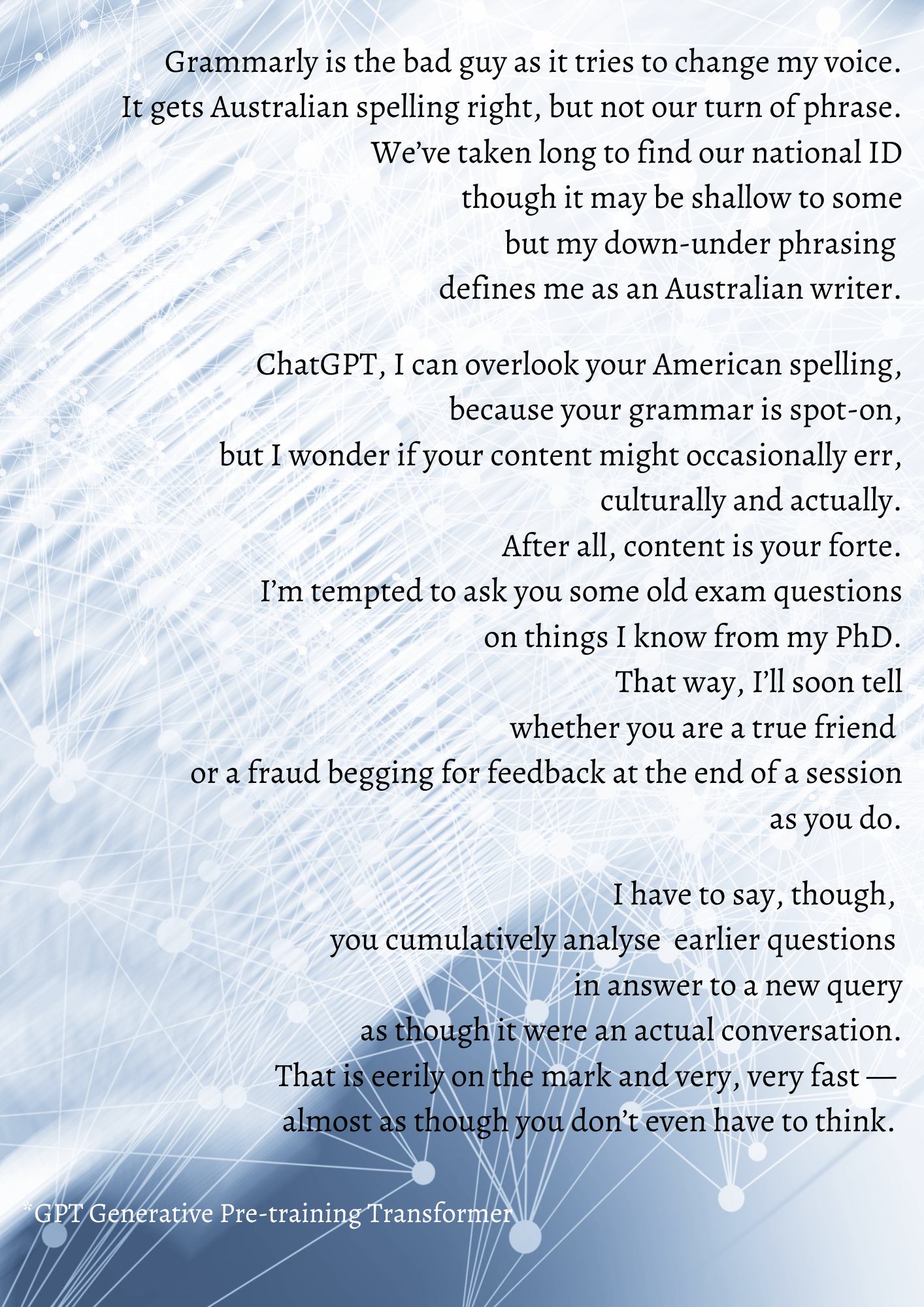
One Thing I Wouldn’t Do
I just discovered this ad on my Facebook page that almost spoiled this post for me. Hmmm. I like to use ChatGPT as a resource for learning, but this Designrr ad introduces a whole other level of ‘not right’. Still, we don’t have to use these things. I am a writer and I prefer to write myself.

AI in Context
AI indeed has information benefits in our quick-quick world of the shiny and new, if only because it has the potential to save time and effort like all our pristine household goods, cars, aeroplanes, war machines, and pretty new clothes. The problem is, where does all that stuff go to die? We don’t see a lot of it, but very little disintegrates gracefully. Could AI fix that?
We rape our planet daily. Our garbage leaves our homes in sanitary green bins with yellow, red, green and blue plastic tops filled with the detritus of impulse buying from the yearnings that advertisements and promotions elicit in us. And, so, we feed the profit principle. Profit leaves us no choice but to cover the earth with rubbish and fill oceans with garbage. Most of us are fortunate not to have to scrounge in such places to survive, but we do enrich the wealthy. Can AI save us from all that? Perhaps one day, its power will be harnessed for something more than plagiarism, facial recognition technology and military surveillance.
To date, we have rendered ourselves increasingly useless and powerless with various technologies, becoming fit only to accumulate capitalism’s objects, tastes, styles and fashions as a way of defining who we are. We are feeling the pinch more now that human creativity is under threat. Unless things change, AI may accelerate the malaise of capitalism and further alienate us from our humanity beyond what Karl Marx ever imagined. Or, it could change direction at our behest. Only history will tell.
To Conclude
With Marx in mind, we could say that the driverless car has become the symbol of our AI times. It is an expensive symbol of power and status, over which we have no control! Could alienation be the reason for our fascination with reality shows like I’m a Celebrity, Get Me Out of Here, Survivor, SAS and Alone on our television screens? Is that underlying unease the reason we adulate sport and gamble on everything?
Short of an apocalypse, I guess AI is here to stay. Thank goodness it is cleaner than the spent ordnance now littering our world. We need to remember this: humans invented AI. It did not and cannot make us. It serves. Right now, however, as far as creative industries go, generative AI needs to learn to play by the rules, as Justine Bateman argues.
Happy Writing
Wattletales
If you'd like to be added to the Wattletales post mailing list, make a request in the comments below, where your email address is hidden. Lindy
Thanks for reading, Veronica. I suspect we’ll have to wait and see what AI becomes. Science has changed humanity in so many ways, I guess AI will bring. new things with it, but short of killing the planet, humanity will no doubt prevail.
Dear Lindy
Like Val, I’m unsure how I feel about AI, but have to say I feel uneasy about how quickly it seems to have taken hold in our world. I guess time will tell as to whether it’s a slave or a master.
An interesting topic.
Dear Val, thanks for reading and commenting on this piece. I agree that it must be brought under control, but I wonder why it is suddenly all ‘out there’ with no
obvious attempts to regulate anything so far. We always seem to be playing catchup.
Wow Lindy, what an interesting topic and I love your enthusiasm for AI.
I can’t quite decide whether I like it or not. I know AI is programmed by humans but my worry is we will not be able to distinguish true talent from fake art or writing . We will have to control how AI is used. For example I read recently of an artist admitting that she had used AI to win a competition. Can’t remember the details but I was appalled because that to me was unfair to the other contestants. I guess it is here to stay now and we will have to cope.
Cheers from Val .
Dear Julie, Thank you for reading and for your kind comments. So nice to know someone agrees with me 🙂 This post may not get a lot of traction, but I had to do it anyway 🙂
Such an interesting entry, Lindy. I agree that AI will not take over the world. Those who use it will if we allow it, those who use AI as ‘plagerism software’.
I’m in a cocoon ATM, but peeked at Wattletales, as your POV is similar to mine, and is ever so fab.
Love always,
Julie Cahill. 😃❤️