During a foggy suburban trek on a July morning, I realised that life was a journey of exits and entrances and that the journey revolves not around what you can see and depend upon, but the twists and turns of the track, step by step.
Adelaide fog.
You Will Never Be Creative
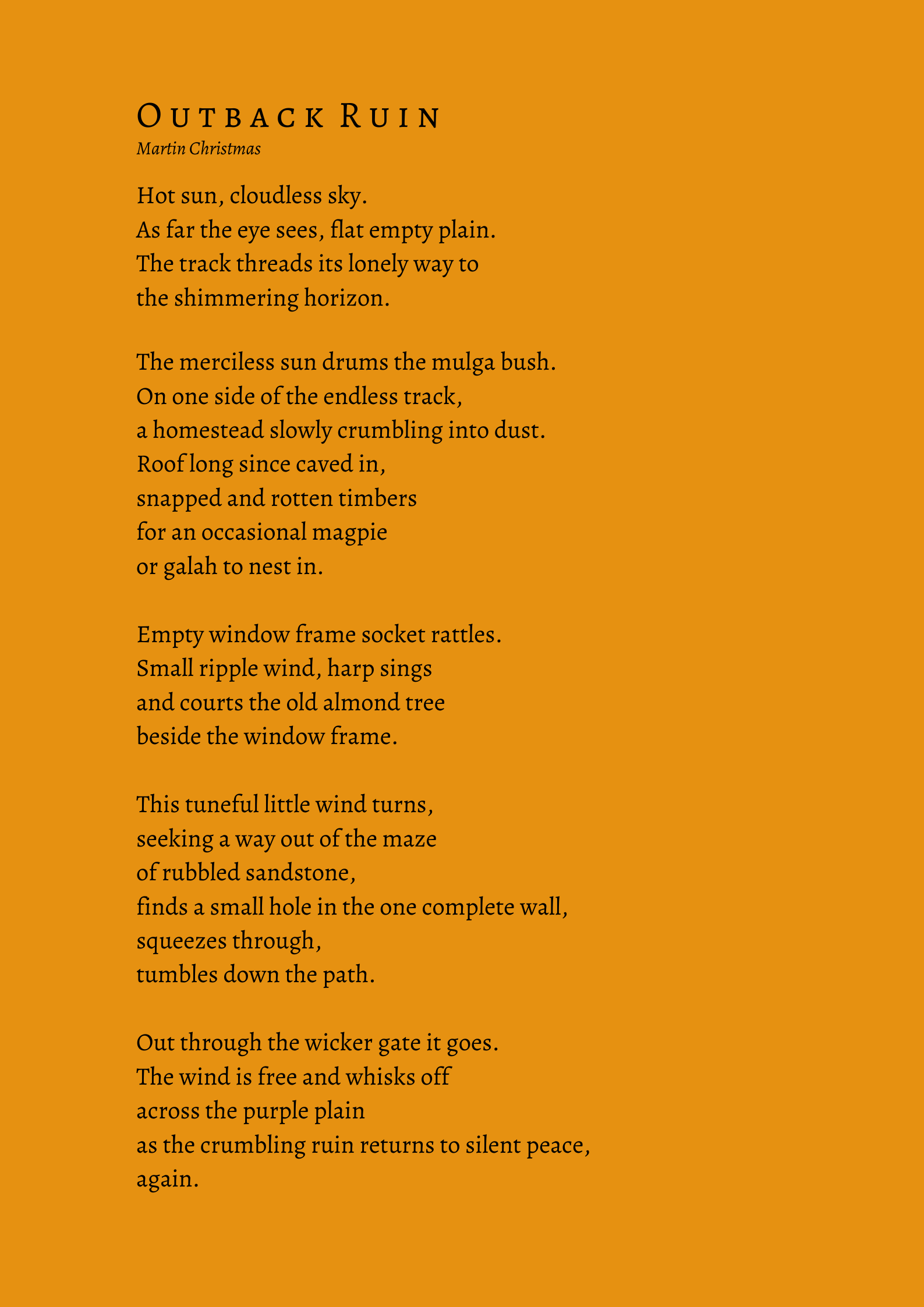
In year ten at high school (I was a very vulnerable seventeen-year-old), my teacher came up to me and said, direct to my face, ‘Martin, you will never be creative. You will not need English.’ I took this to mean that I was thick. ‘You will not be a verbal communicator. We will stream you into Book-keeping.’ The funny thing is that the same year, one of my short stories made it into the end-of-year school magazine; ‘Outback ruin’. The word ‘dyslexia’ had not come into general use when I was at high school. Having it has been a real gift as a theatre director, poet and photographer.
Being a Texas Featured Poet
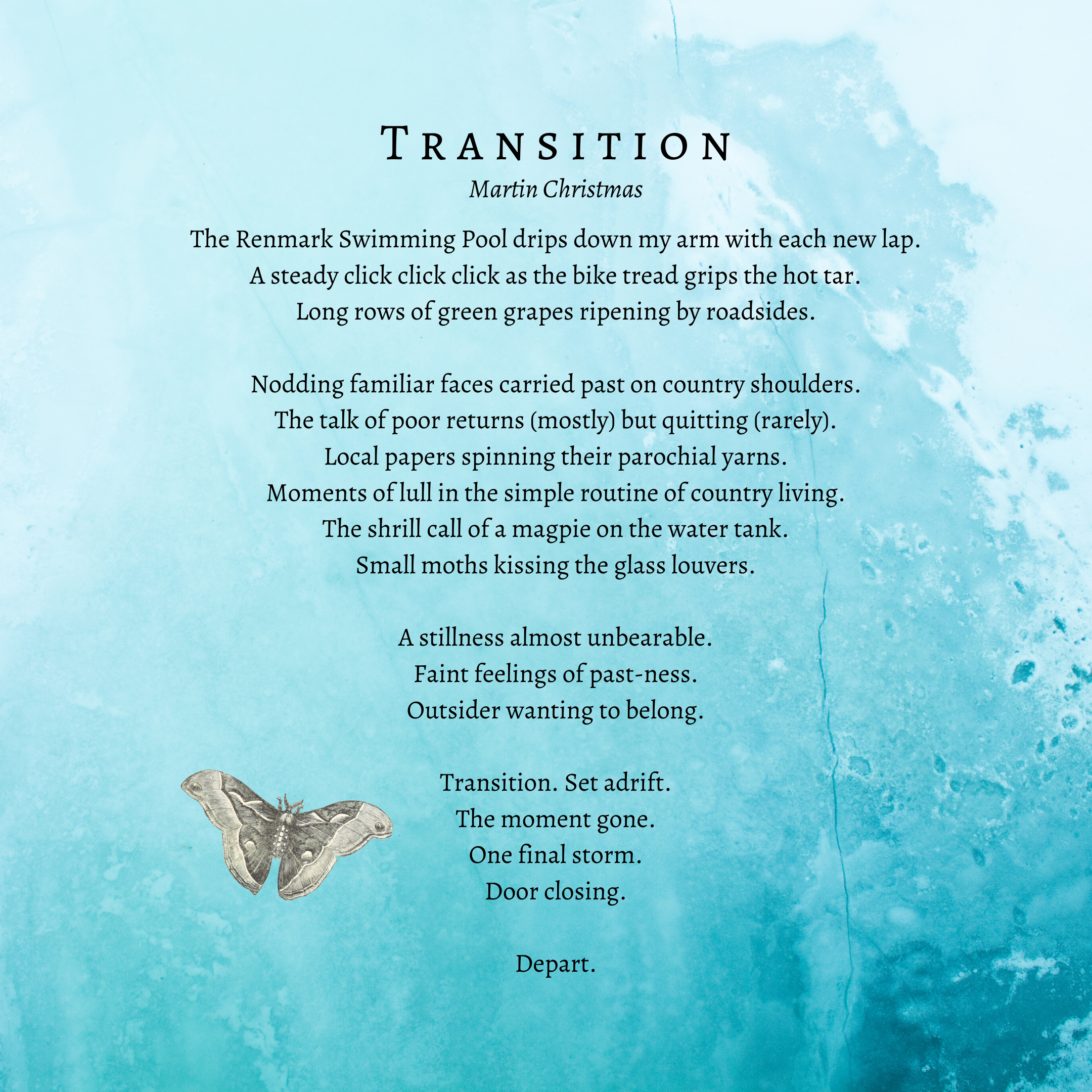
In 2018, I did a small amount of editing to the high school story, and submitted it as a poem with four others to the Red River Review (a well respected online poetry journal based in Texas, USA). A month later, all five of my poems were published, and I was their Featured Poet from Australia for the next three months.
Exit Stage Right
My first job out of school was in a government accounting office for seven years until I handed in my resignation. The following Friday afternoon, I stood up from my desk and walked out of the office to calls of, ‘Come back, Martin. You will never get a normal job again!’ I never did and went into the arts via freelance drama teaching in schools, and directing plays (I set up a community theatre group, SA Creative Workshops, to teach me how to direct).
Riverland Youth Theatre
In the mid-1980s, I returned from directing the theatre production, ‘Wagga Wagga High High’, through its Edinburgh Fringe season, the first-ever Australian cabaret show staged in Scotland. (I remember one day seeing the just-beginning comedian, Wendy Harmer sitting in the same train carriage). I was contracted by the Riverland Cultural Trust to be the inaugural Artist Director of the Riverland Youth Theatre.
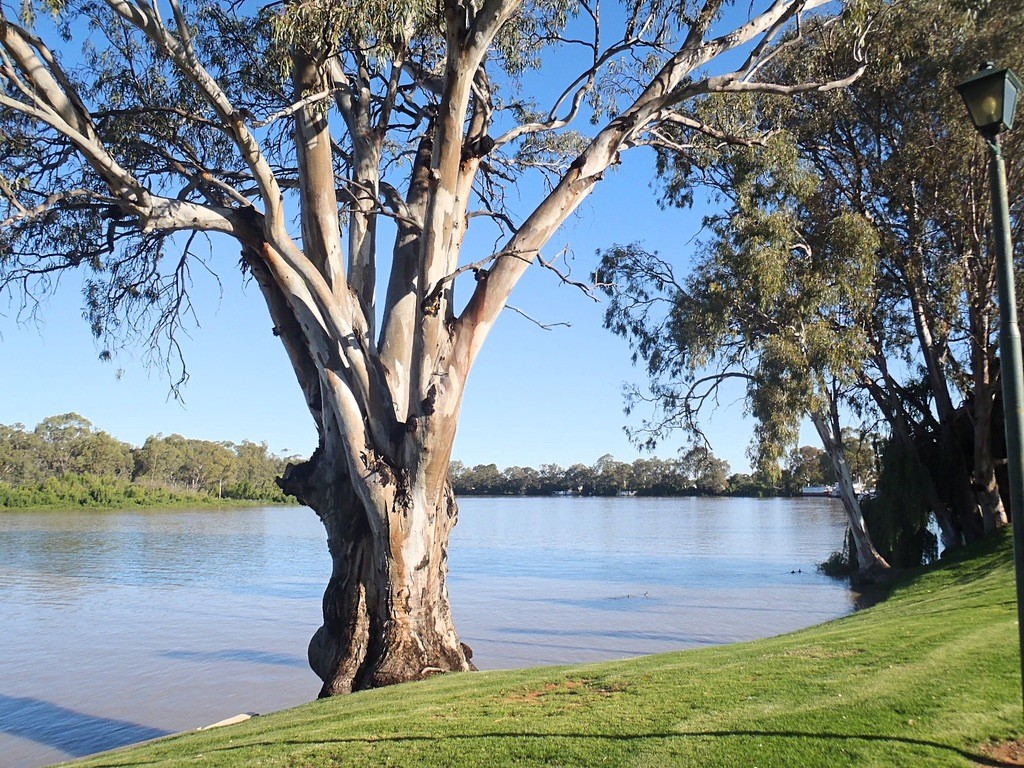
Murray River, Berri
Edinburgh to Melbourne to Berri (what an adventure that was). A small empty office with a phone. That was it. Just over five years later, I left Riverland Youth Theatre as the state’s only professional country touring youth theatre company. An enormous lot of hard work to be sure, entry to exit, but it would not have been possible without the cross-regional support of the community (parents, young people, councils, the media, state and federal governments and funding). It continues to this day, thirty-five years later.
The day I left the Riverland was very hard to absorb. Dad had just had a stroke and died three weeks later. Thirteen years of solo mum caring was about to begin. I still remember the Riverland with great affection.
The Cat That Entered and Exited
Arriving and departing has been a feature of my life. A fair way down the track, I have come to accept it as the norm.
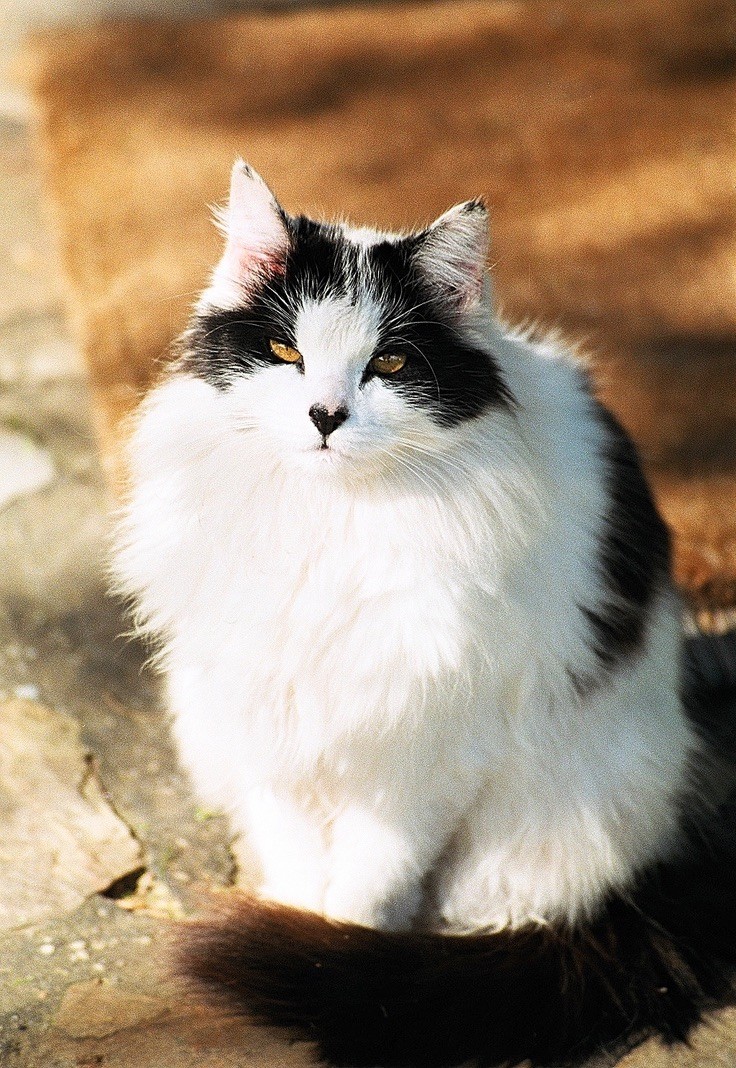
In 2007, the death of a much-loved cat deeply saddened me. It had wandered across the road to become a sort of pet tenant. Mum loved that cat a lot. A bit of a late-in-life replacement for Dad who had died many years before. Sooky looked after mum until her death. I looked after Sooky for three years until she also died.
Sooky
2019. A life-changing moment. The first copies of my first full-length poetry book, ‘Random Adventures’, arrives on the front doorstep via Australia Post. The cover photo was randomly taken at a cafe in Prospect a few years back while waiting for a friend. Who would have guessed it would have come into its own a few years later?
2020. Three days before the Adelaide book launch was due; the venue closed its doors. I also lost two country launches. When the pandemic restrictions have been further eased, the book will be launched, for sure!
Random Adventures book cover.
And, My Next Adventure?
At the moment, as a photographer, I am experimenting with nighttime use of extremely high light sensitivity ratings to capture unusual images of unusual urban centres. Already done are Adelaide, Semaphore and Port Adelaide.
The Dolphin Explorer, Port Adelaide.
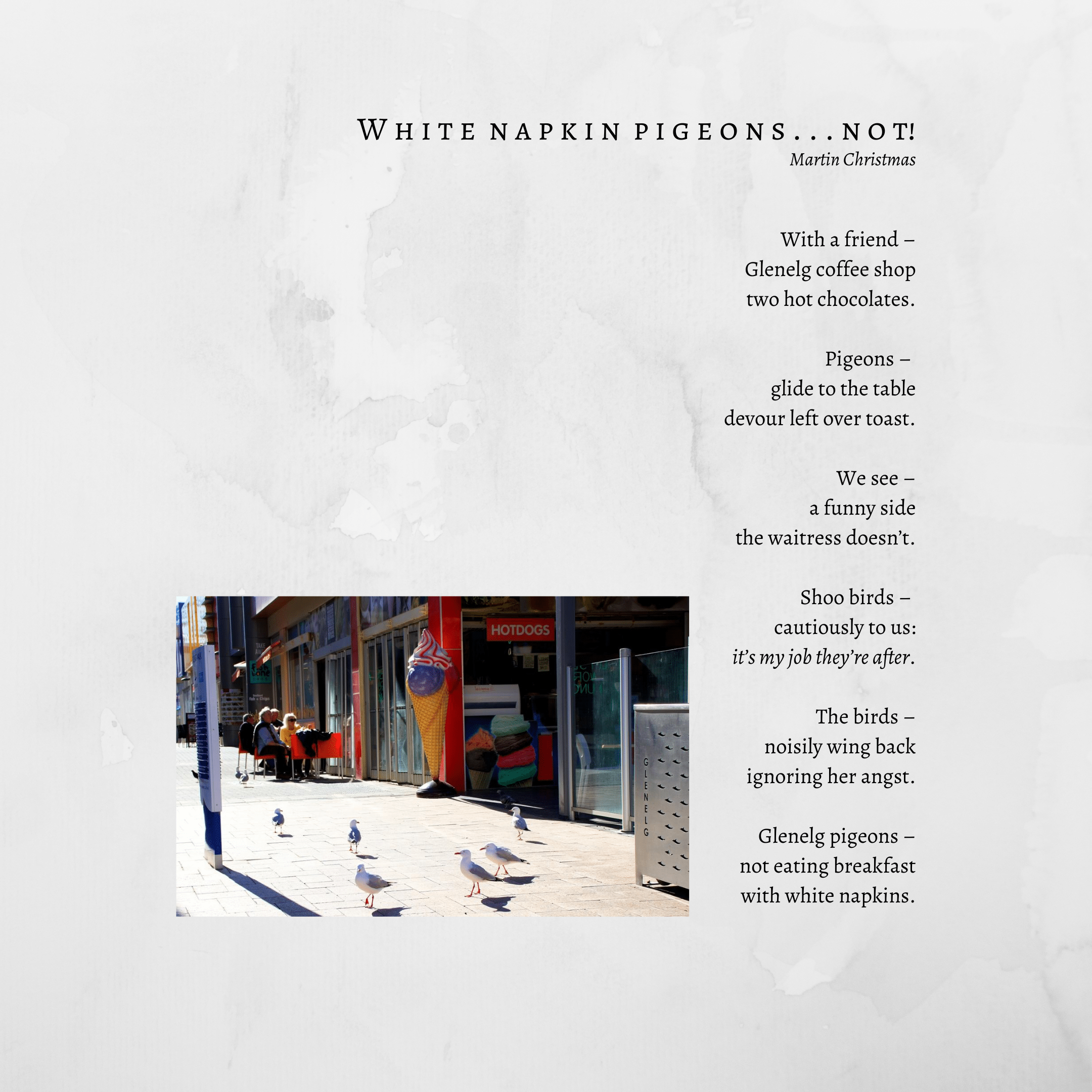
Where to next? Glenelg of course! But, will there be pigeons?
No white napkins! Maybe next time. Maybe in northern India or on the pilgrimage route, Camino de Santiago in Spain. Currently, I am editing a travel poetry book by a young poet just returned from these amazing locations. I will ask him about pigeons there.
Moseley Square, Glenelg at Night
Author Bio
Martin Christmas is a poet, photographer, and theatre director with more than 100 productions to his credit. His work appears in several Australian anthologies, and overseas online literary magazines including Red River Review (the USA), as a Featured Poet; StepAway Magazine (the UK); and Bindweed (Ireland). He runs a community poetry presentation workshop and teaches presentation elements to young poets. His poetry books are Immediate Reflections, The Deeper Inner, D&M Between 2 Men (with Andrew Drake), and Random Adventures. He has an MA in Cultural Studies.
ACKNOWLEDGEMENTS Outback ruin (Random Adventures, Ginninderra Press, (2019) Random Adventures (Random Adventures, Ginninderra Press, (2019) Photographs and poems by Martin Christmas.
My posts over the past two years have explored different ways we can think about life, poetry and fiction. I have asked how each creatively informs and interweaves with the other to bring insight into our writing and ourselves. Today, I look at how our minds bring forgotten and hidden stories to life and how life gives its gifts to memory.
Memories and Stories
So, come on a journey into the notion of mind with me as the control group. Not a very scientific approach, I know, but it suffices for talking about the workings of memory and story, life and the page. As a cultural anthropologist who meditates, I am intrigued by the interdependence of such nebulous things.
A Buddhist Approach
I know little about the psychology either of memory or mind and apologise in advance to specialists in those areas.
My approach is to call the activity of memory, our consciousness if you like, ‘mind’ — in the Buddhist sense. I take mind as a sensory organ that responds to both external and internal stimuli like sound, touch, taste, smell, thought and both physical and emotional feeling.
My meditation room altar in Aldinga Beach. A precious gift from Sri Lanka, the Buddha now sits beside me on my desk.
Mind in Buddhism, Ceta, (pr. ch), is seen as a sensory organ like the ears, eyes, nose and so on. Although insubstantial, the mind is not unlike the brain in that it can be understood metaphorically as having conductive pathways, tracks or signal traces which we might relate to memory. Like grammar, though, while it is necessary for comprehension, it is not the story.
Circuit board.
The mind remembers, forgets and performs the archaeological search otherwise known as recall, to produce memories which, in Buddhist terms, are ‘thoughts’. Both the mind and the stories it remembers are sublime; each as elusive as the other. As a sense organ, the mind responds not only to internal but also external stimuli, some of which vary in kind.
Listening vs Hearing
How often do we as individuals stop listening to someone the moment they say something that resonates with our experience? I think we all do it to a greater or lesser degree. I call this the ‘I remember when’ syndrome. In these acts of remembering, we pay less attention to our friend as we turn inwards to our memories and, more often than not, we will fail to comment on what they are telling us and start talking about ourselves.
I am sure I’m not the only person who is put off by the inflammatory phrase of disinterest: ‘I hear you’. However, I raise this not in judgement but to demonstrate for it tells us a lot about how memory, mind, or if you prefer, consciousness operates.
In meditation, specifically Buddhist inspired reflection, we learn how to relinquish the need to hold and examine our every thought as it comes to mind by learning to be mindful. Mindfulness practice trains us to attend to others wholly. From it, we learn not only to ‘hear’ but also to heed, or listen deeply for greater understanding.
Landscapes of Remembering
For Australia’s First Nations people, intricate connectors trace nature’s landscape, creating stories of place and substantive ideas of selfhood. In other words, through centuries, they have walked collective meaning into their world by telling the stories and enacting rituals of Ancestral travels to create a unique and numinous landscape.
Aerial view of dry river beds around Alice Springs.
In a related but inverted vein in The Practice of Everyday Life, French sociologist, Michel de Certeau speaks about the way we in the West create meaning as we walk the city. Within the pre-existing context of power’s grids and layout of the buildings, boundaries, roads and institutions that confine us, we lay down individuating meanings and thus embed ourselves in place in the everyday affair of living. My story is like that.
My Story as Example
When I drive around Adelaide and surrounds, my biography rears up to greet me. Admittedly, I usually drive alone, and, after years of meditation, I am attuned to how my mind is behaving. But I guess that even with others in the car, you might experience a similar thing.
Words are clumsy in explaining this but, every time I drive down Port Road, a straight, pine-tree-lined stretch of bitumen leading to the Port Willunga and Aldinga Beach Esplanade, my first, violent husband comes to mind. The angry detail of the past arises in my mind even though it is over 60 years since he taught me to drive there.
A place can evoke memories as alive today as they were when laid down. When I pass a couple of houses in Adelaide where I partied as a university student, I smell dope.
Profound external events have a similar effect. When my eldest son died at 43 in December 2014, my grief took me on an internal journey through his life from newborn to adult. If you asked me to tell that story from ‘memory’, I simply could not do it, but memories surfaced to meet the moment; in that moment.
Getting Real
If the mind is fundamentally a connector, no matter how real our memories, how true is our story, how much of what we remember can we trust? To answer this we need to look at how we tell stories.
The everyday stories we tell about our lives, both to others and ourselves, constitute our identity. Over time, they combine to give an impression of who we are in the world and there is no doubt that we edit as we go!
In developing a presentational self through stories, we create reality as we want it to appear. We create a persona; a front or a mask. However, when it comes to life-writing, we need to dig deep to go beyond such conscious constructions of self.
To find the truth, we need to bypass rehearsed stories, those we ‘see’ in our mind’s eye as though we were watching television with ourselves as the hero. Such stories do not read well on the page precisely because, as products of the intellect, they tend to bypass the senses.
Even in fiction, unless we pay attention to sensation, we can never access the rough, smelly, tasty, noisy, colourful, tactile and marvellous world we really inhabit, and through which we hook readers.
To take readers on a journey we must evoke the senses. But, how do we access the sensations to create magic on the page? The best lessons come from Life Writing instruction.
Original Memory
In fiction, we bring personal experience to play to evoke events and moments in a character’s journey. It is not just ‘write about what you know’. To make both fiction and a life story real for readers, we need to draw on what we know at the sensory level and let the intellect provide ornamentation.
In The Memoir Book, Patti Miller tells us that original memory is poetic, not prosaic! It works through metaphor and symbol by linking things that we otherwise keep separate when we think about them or analyse. Notably, as she argues, poetic memory is triggered by the senses.
Miller argues that, given a chance, the right circumstances or a sense-trigger, the mind searches the core of our bodies and souls to bring the past into the present replete with its smells, tastes, sights, sounds, thoughts and feelings; original feelings. The truest stories come after.
The Archaeology of Mind at Work
When poetic answers come, time disappears. Given that we are accustomed to seeing our lives as a chronology or ‘real sequence’, I find this pretty interesting.
Your memory or mind, Miller says, is a poet…
…it has stored experiences in imaginative patterns where the sound of marching music will lead you to the school verandah and the teacher leaning over you smelling of ink and the boy pulling a face in the next seat who later died in an accident. Go into life writing via this door of memory, rather than the door of topics, and you are entering into the imaginative, creative part of your mind. You are much more likely to write with vividness and clarity.
Patti Miller in Writing Your LIfe: p.79
Embodied Memory and Associative Recall
I spoke earlier about remembered stories, those we rehearse in order to show the world who we want it to think we are. Patti Miller shows us a productive way past that. What I am largely talking about here is embodied memory and, by extension associative recall. Similar ideas, slightly different descriptors.
Embodied memory, like Miller’s ‘original memory’ is something like knowing how to ride a bike, or drive a car without all the clumsiness that goes with learning to do these things. Embodied memory comes into play, as I described earlier, in the face of significant events like the death of a loved one. It can erupt unbidden in particular places or while watching a movie, as in deja vu.
Triggers often bring to mind something you had forgotten, which is so deep inside it is part of you, and I call this type of remembering associative recall. I first recognised associative recall when working in the field with Australia’s First Nations people and, the story stuck.
A man in his forties suddenly stood up to speak at a meeting about sacred sites on Country, that he and others had been working on with me for several weeks under intense political pressure. I was there to create the record.
Everyone became silent when, trembling just a little as though in awe he began to speak about the way he had tagged along out bush with his uncles and other Old Men as a kid, often a bit bored. He didn’t realise the significance of what they were passing on to him.
Close to tears, he went on to confide to those present that in recalling and telling those old stories during fieldwork and at the meeting, their true value struck him for the first time, like a bolt of lightning.
Speaking of Country brought him to the realisation that he was on the way to becoming an Old Man for the next generation. The external moment triggered memories that brought realisation; associative recall.
Summary
It might be strange to see the world through an anthropological and Buddhist lens, but it offers an alternative way of accessing the truth of ‘what we know’. It opens doors to our inner selves in ways that the intellect doesn’t allow. Of course, whatever we write must be scrutinised, crafted. But authentic detail comes from original or embodied memory.
If you are writing about your life, remembering the past can be both poignant and painful. Some people must take pills and potions. But for most of us, medication merely masks the truth. So if you don’t need it try writing about the bad stuff. That can be productive and helpful.
Try This
Take a piece of memorabilia, a precious object or a treasured photograph. Hold, touch, view and then reflect on it with eyes closed for 5-7 minutes. Put the item down, and write ‘stream of consciousness’ for 10 minutes.
Next, choose an item with an odour, aroma or fragrance that you either like or loathe. If you don’t have one at hand, close your eyes and focus on a smell that evokes a particular memory that resurfaces at each encounter. Examples include a storm building, fire the beach, the stench of alcohol, hospital, food, perfume, flowers or even formaldehyde.
When you’re ready, write whatever comes into mind about the moment evoked by this smell. Write furiously until you run out of puff, without pausing to edit or think. Then, take the two pieces together to create a poem or story.
Putting the two pieces together is a trick that bypasses the thinking process, and allows you to find wonderful new stories. Perhaps give one moment of recall to each of two characters. Play with it.
As always, I’d love to hear your thoughts, especially if you find the post and exercises useful.
I’ve always loved words, and I was certainly one of those kids who loved the library, at a time when having a book to read was one of the best ways to spend the hours of the day, away from school.
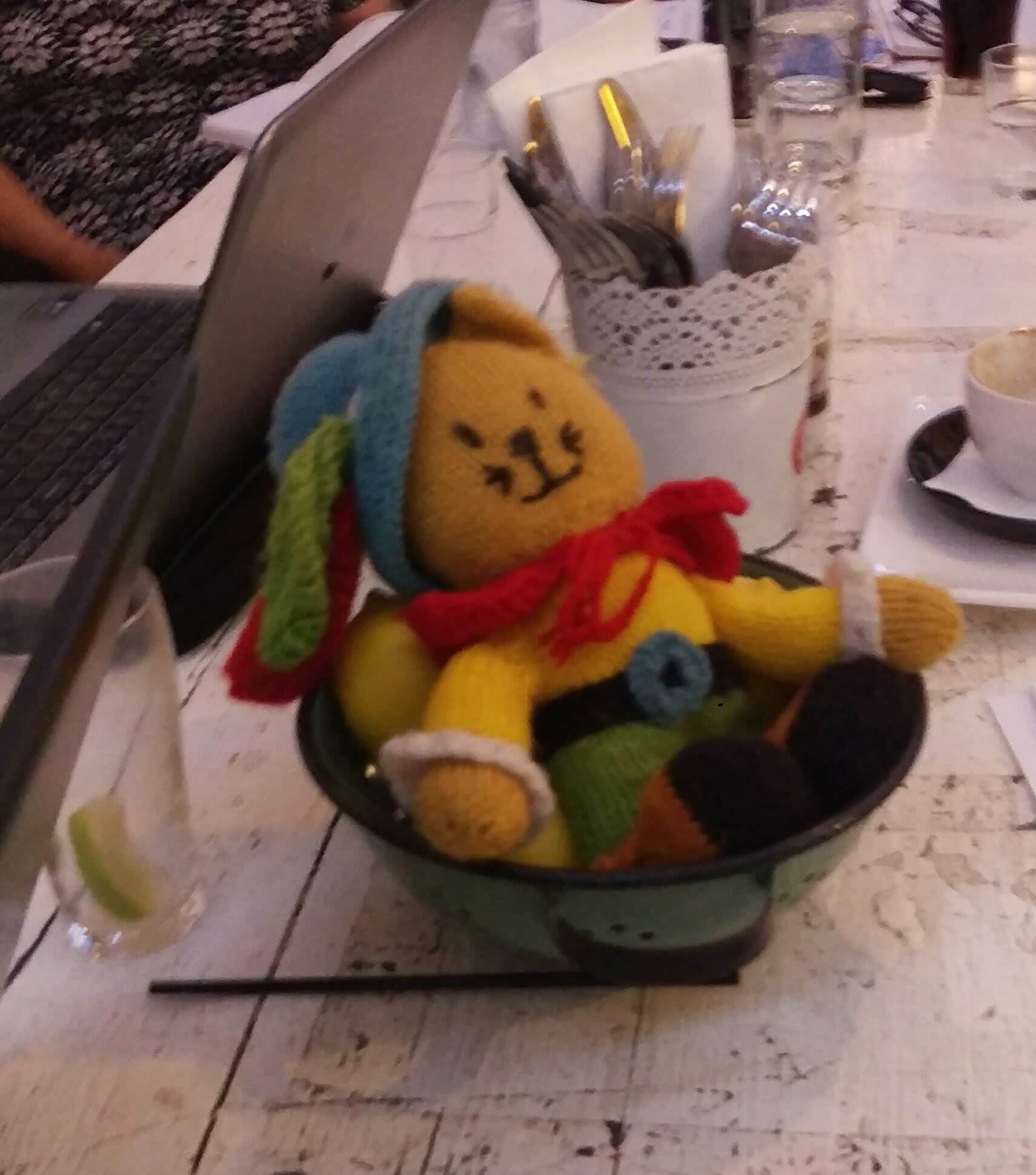
Meet Puss in Boots, my Muse who comes with me to all my gigs and meetings.
Puss in Boots
In high school, I discovered a talent for writing poetry, and while I didn’t go any further into it for quite a few years, once I started, I launched into poetry in a big way, as well as other types of working with words. Poetry is the one genre that feels most important for me personally, although I know writing a blockbuster that sells millions of copies would be a fine idea, financially
Money’s not Everything
Poets and megabucks don’t fit together naturally, so it’s fortunate that I’m not reliant on my poetry earnings to live the good life that I do! Life and living a good one are made up of many things — family and friends, a good sense of purpose, having things to do, look forward to, and enjoy.
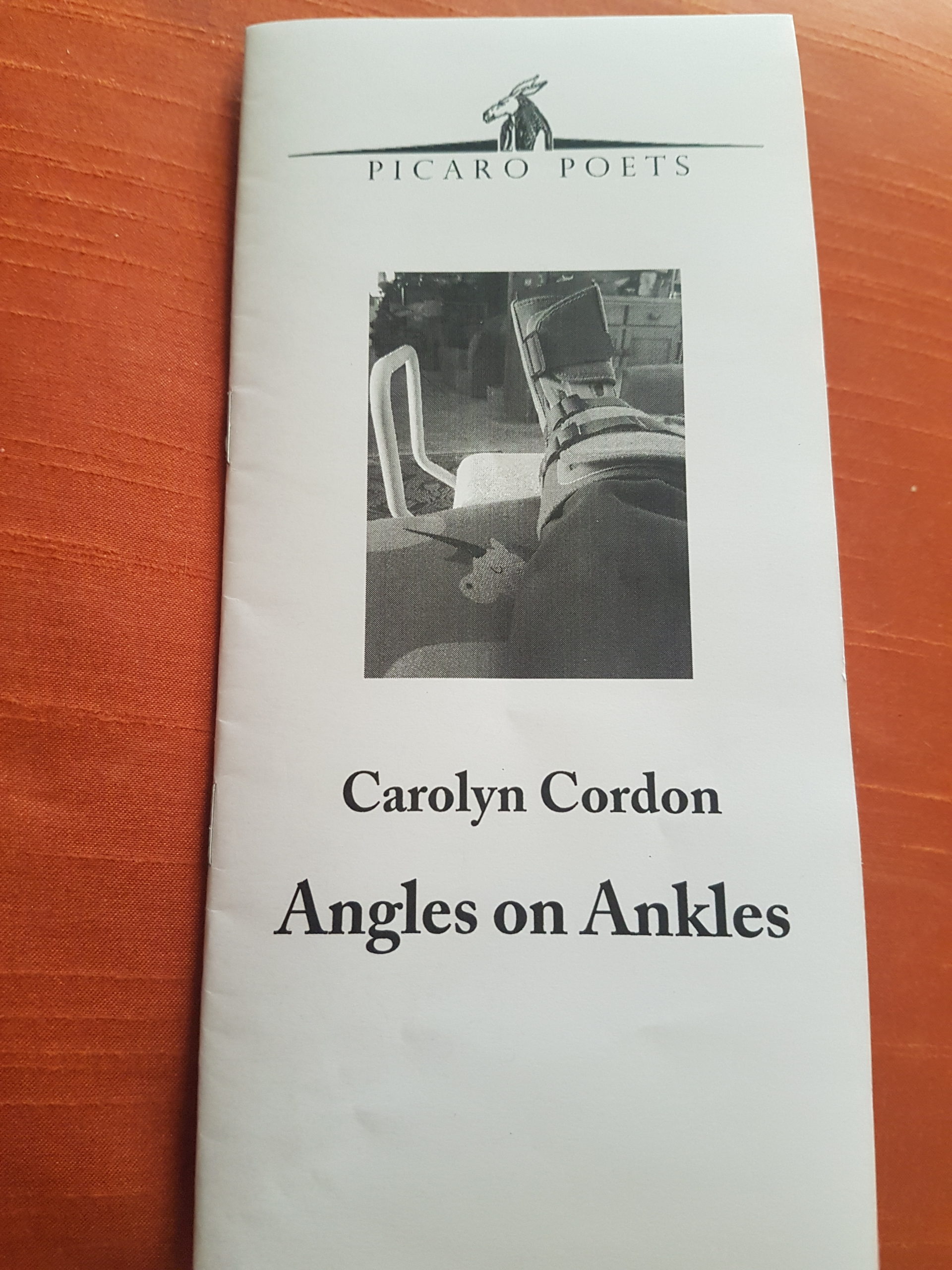
I’ve discovered a love of editing and putting together books. I started by self-publishing my books, including poetry collections, and other quite different genres. I have published two books published with well-known South Australian publisher, Ginninderra Press including Angles on Ankles.
Angles on Ankles by Carolyn Cordon
‘The Details’ tells a tale.
From Angles on Ankles by Carolyn Cordon
My first published book was actually a children’s school reader, published many, many years ago which still brings me a handy bit of money in Electronic Lending Rights, every year.
Money isn’t everything in life, though. Getting just the right word, in the right place, writing a Haiku so perfect it brings you back to the moment you wrote about every time you read it. That is what’s worth more than money.
Other Voices
One of the things I love about poetry in South Australia is how it seems to be opening up to a large variety of different voices, so that the older male white poet, though common, is not the only voice heard and read.
Not that there’s anything wrong with the male voice, of course, but it should never be the only voice available, particularly in a country such as Australia, where we have such a broad range of humanity sharing our land, white, coloured, straight, gay, and other, and many who have come to the English language at an older age, still able to do amazing and interesting things with their words.
Current Projects
One of the projects I’m working on at the moment is an anthology of words written in response to Covid-19, which has certainly brought some of those ‘other voices’ to me. I’m enjoying discovering and accepting these interesting words, written about situations alien to me, but written in ways that easily show the truth of what people have lived with.
This book ‘Plague Invasion – Creative Writing Responses to Covid-19’ is possibly the most important thing I have produced. I am proud to have had the idea for it and to make it happen. I have other ideas in my head too, and another poetry collection may well come to be next year, who can tell? Poetry happens when it happens; you can’t force it!
A new poem for the times by Carolyn Cordon.
Poetry in the Community
Attending, or running a poetry reading where a mix of complete newbies and well-seasoned poets join together to make beautiful music with their poetry, what a wonderful thing that is to do.
You can read from your own work, and listen to the words of other poets, some of them already known to you, some new voices, and exciting times certainly can come when a poet absolutely ‘nails it’, and you feel the frisson on hearing the best possible words to show something to others.
That’s what poetry is, or can be all about, finding the best possible words, and bringing to the reader, or hearer of to an experience that meant so much to you that you had to write it down, in a way that would bring the same moment to others.
My Favourite Things
I’m a great fan of quietly sitting with a poetry collection and exploring the poet through the words they have written. Finding exciting ways of looking at something, new and unusual ways. I love this, and also to be able to talk with the poet later, to let them know how good it was to feel the truth in their words; a lovely thing indeed.
One of my favourite things is being one of the coordinators of the Gawler Poets at the Pub. It has been going for over twenty years. Once a month, poets and poetry lovers come together in historic Gawler, at the Prince Albert Hotel. We often have a workshop in the morning and a reading in the afternoon. Poets at the Pub began with Gawler icon, Martin Johnson and his partner Cathy Young. It’s changed venues a few times, but the Gawler Hotel seems to be it for now.
My Blogs
I run several blogs which connect with others; writers, poets, and bloggers, and people interested in the things about which I write. My main blog is about me, and I am often there, writing about my writing life. Another is about being a dog owner and gardener, which I go to sometimes, with news of those things.
An essential blog for me is the one about MS, which I began soon after my diagnosis. It has been a valuable tool of discovery as I found out more about this new disease I’d been ‘given’. Learning and teaching about Multiple Sclerosis were also necessary and liberating when my body was letting me down. It let me show that I could still keep in contact with the world and stay exciting and useful. You can find this vital blog here.
My Stoic blog is the most recent. Stoicism means a great deal to me and seems to be the way I wish to live my life. A Stoic life to me is about doing the best I can when I can; working to help others, whether people, society or the world, one step at a time. That is how I wish to live my life.
An earlier, critical blog of mine is about sexual abuse. It is not lovely, but over the years, it has been cathartic and healing not only for me but also for others. If you’ve experienced abuse, you can feel as though nobody understands. Still, I know that my words have benefited others who have moved with me from victim to survivor because I write honestly about these matters.
That’s probably enough for now, except to say that blogging is an integral part of my journey through life.
Carolyn Cordon is a writer, poet, and editor. She is also a highly engaged community member, editing the monthly newsletter — Mallala Crossroad Chronicle, as well as self-publishing her books.
She has had eight books published, in a mix of genres, including two poetry collections published by Ginninderra Press. Carolyn’s keenest interests are community, and Nature.
ACKNOWLEDGEMENTS Photographs, images and and poems by Carolyn Cordon
A much younger acquaintance recently asked if I was content with my life. When I said ‘yes’, she queried if that was because I had given up my sense of adventure. Was it actually easier, though more boring, to settle for the status quo rather than look for something more? This made me stop and consider the highways, by-ways and detours travelled during my existence.
By Veronica Cookson
Sure enough, I never conquered Everest or sailed lonely seas single-handed, but I didn’t want to. Many years ago I read an opinion piece written by a much-loved actor during the 60s and 70s, who said that mothers didn’t have to do those things because they’d made their lone journey, climbed peaks, triumphed over pain and gained an affinity with the earth when giving birth. ‘Is that so’, I can hear you say, ‘women can do both, they can have it all’.
Well, I did both — not with a fulfilling career, but with menial jobs, at the same time being a wife and mother, struggling to cope. You could hardly call the pressure satisfying. I’d seen the same with my mother, six children, never enough money plus a husband with secrets and itchy feet.
Tempest, Flood and Drought
So, what have I accomplished? I didn’t have the knowledge to develop a life-transforming drug or the drive to open an orphanage overseas for unwanted babies. Yes, I gave birth — to two beautiful daughters (who’ve supplied me with a clutch of grandchildren), survived 25 years in an unhappy marriage, but no-one with a crystal ball or tarot ever predicted that I would be where I am today.
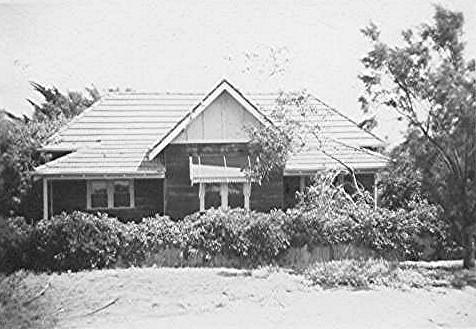
I live in a 1920s gingerbread cottage near the sea with husband David, whose arrival in my life is the best thing to ever happen to me.
Moana 1949
Moana 2020
Like a log cabin sitting among skyscrapers, this little weatherboard house is now the eldest in the area. Built by David’s grandfather, it’s name-plate reads Lutonia, labelled after his native Luton in Bedfordshire.
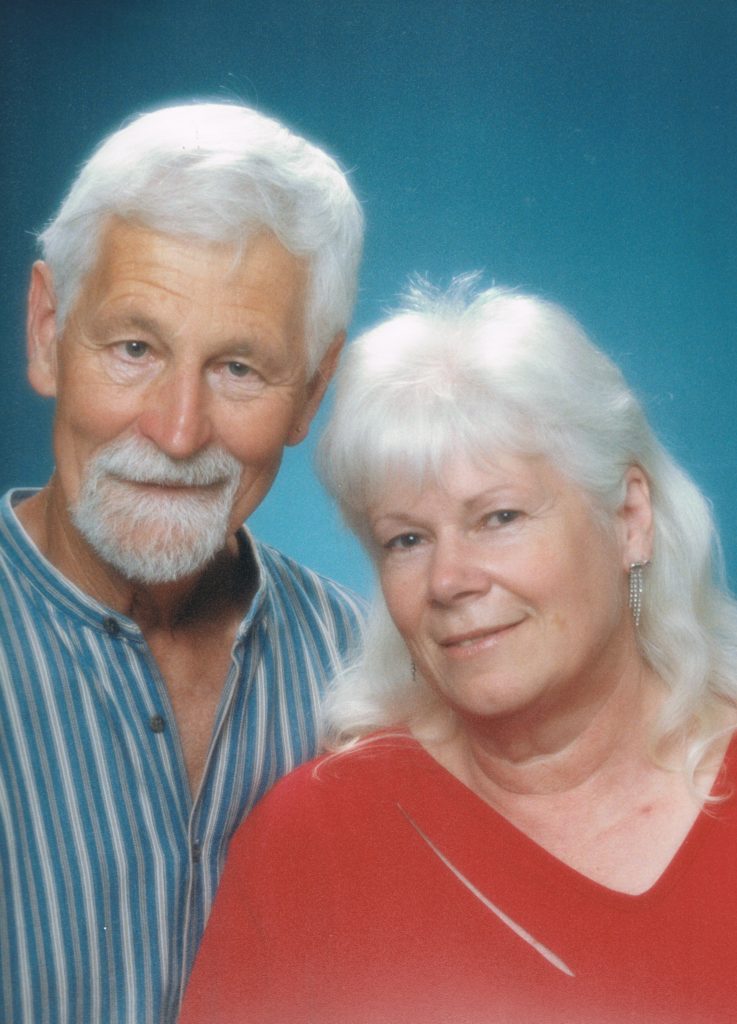
Veronica and David
David and I married on 8 November 2003 but when we first met I was already practising a long-held ambition, reading palms, travelling with a group of psychics, taking part in fairs locally as well as various parts of the state and interstate. This continued for around 20 years, but then with David by my side.
Palmistry was a fascinating part of my life. I had the privilege of meeting people who told me secrets not revealed to loved ones. They often shared sad but wonderful confidential stories.
I valued being part of that profession’s troupe, some of them as wacky as writers. A highlight of that time was the publication of my book, First Steps to Palmistry.
Sadly, the little paperback is now out of print but it was a thrill to see it on bookshelves.
Proliferation
After the myriad of jobs I did, working in offices, at a prawn factory, being a seamstress in a hospital, as a shop assistant and doing repairs and alterations at a dry cleaner, then back to office work in schools, I can recommend retirement. Retirement gives me time to pursue interests I couldn’t have undertaken previously.
David encouraged me to enrol in art classes when he knew that’s what I wanted above all else. He re-introduced me to writing which I’d given up as a school kid. He applauds my few little successes, from having poetry or prose published, to being invited to be a guest reader at forums like Coriole Winery’s annual Poetry in the Vines and Poets’ Corner as well as my spot here on Wattletales. A fulfilling challenge was being co-editor of the 2018 Friendly Street Poets Anthology, alchemy. David’s confidence in me has been a game-changer.
Vines and Tendrils
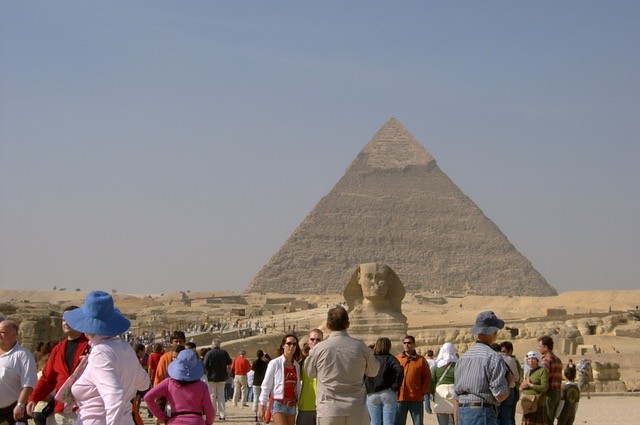
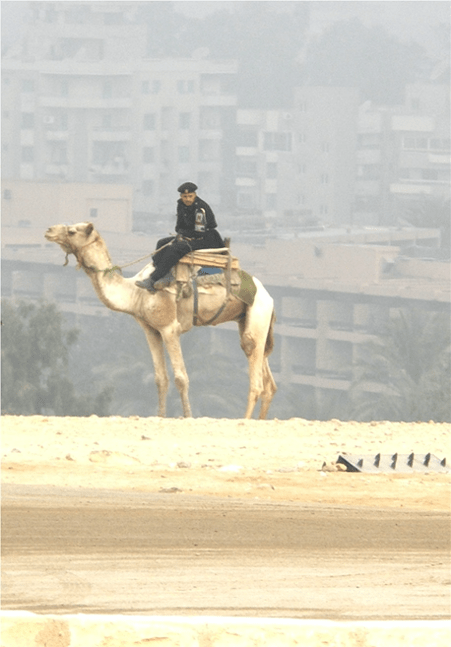
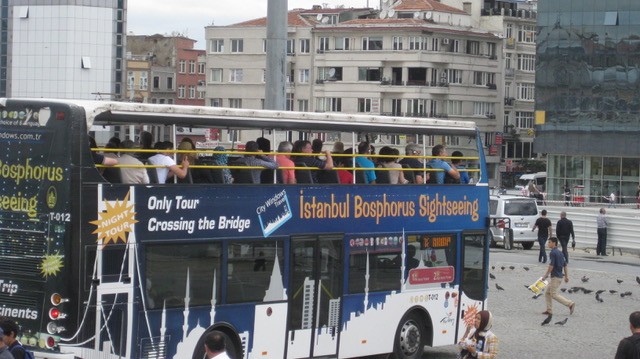
David and I have been fortunate to travel to a number of overseas countries, Egypt, China, the Adriatic, Italy and the British Isles. Those experiences have influenced much of my poetry. Sometimes we hired a car, but mostly we took bus trips, as below.
Buses at the pyramids
Tourists at the pyramids
Police at the pyramids
Previously published by Friendly Street Poets Inc., in ‘Dream Water Fragment’ (2017)
Cigarette ash and bread dough
Istanbul hop-on, hop-off bus
A Harvest of Riches
I am recording my family history in poetry, prose and prosy-poetry and below is a vignette from my childhood.
By Veronica Cookson
Cornucopia
My days are now simple. No longer is there an itch to burst out. I love to hear the magpies that rouse us in the mornings and spending precious time watching them, the rainbow lorikeets and rosellas at the birdbath. We travel and friends and family visit. There are plenty of shows to go to plus various group activities. Art, jigsaws and reading can take up a lot of time too.
If anyone asked me again whether I’m content with my life, I would honestly reiterate, ‘Hell yes’. I don’t have to prove anything to anyone, and no, I wouldn’t go back to another time or wish for more excitement, not for anything.
Author Bio
Originally from Port Lincoln, Veronica always loved poetry but didn’t start writing it until her 50s. Her poetry focuses a lot on family, travel and nature, and she often uses her early life as both inspiration and therapy.
Veronica’s sense of humour ensures her ‘country’ upbringing and quotes come to the fore in her ironic style, the funnier and more ironic the better — spying on family, friends and even her husband David, whose idiosyncrasies aren’t spared either.
ACKNOWLEDGEMENTS All featured photos, images, stories and poems the copyright of Veronica Cookson.
Now 77, I’ve moved on average, every 18 months throughout my life. To date, I’ve set up home in 50 dwellings in three countries — Australia, Japan and Sri Lanka — and numerous towns and suburbs across Victoria, New South Wales, South Australia, Queensland and the Northern Territory. I moved with my parents when I was young, with children till they left the nest and occasionally with, but mostly without, various husbands.
Tropical Cyclone.
My lifetime residential record includes eight hotels, three guest houses, a government hostel, a boarding house, a rooming house, a residential delicatessen and numerous free-standing houses, units and flats, not to speak of the occasional short-term outback donga. I’ve shared places, rented others, owned a few and now live in a retirement village. I’ve even had a stint in a high-rise public housing tower.
A decade or so ago, I compiled a list of my dwellings. I draw on a few below to highlight odd moments as a basis for considering the dislocation entailed in moving. It is sometimes hard to make a home.
Growing Up in Pubs
The photo shows the Transcontinental Hotel, Oodnadatta in far north SA where we lived in the early 1960s
In bios for poetry and writing, I often say I was born and bred in pubs. It is true. My father was a publican, and I list above the hotels I grew up in. I also worked as a receptionist, barmaid, waitress, cook or housemaid in the last four and, in others in various places when times got tough. Even as a mature university and postgrad student with three kids, I was weekend breakfast cook and housemaid at the Hotel Franklin.
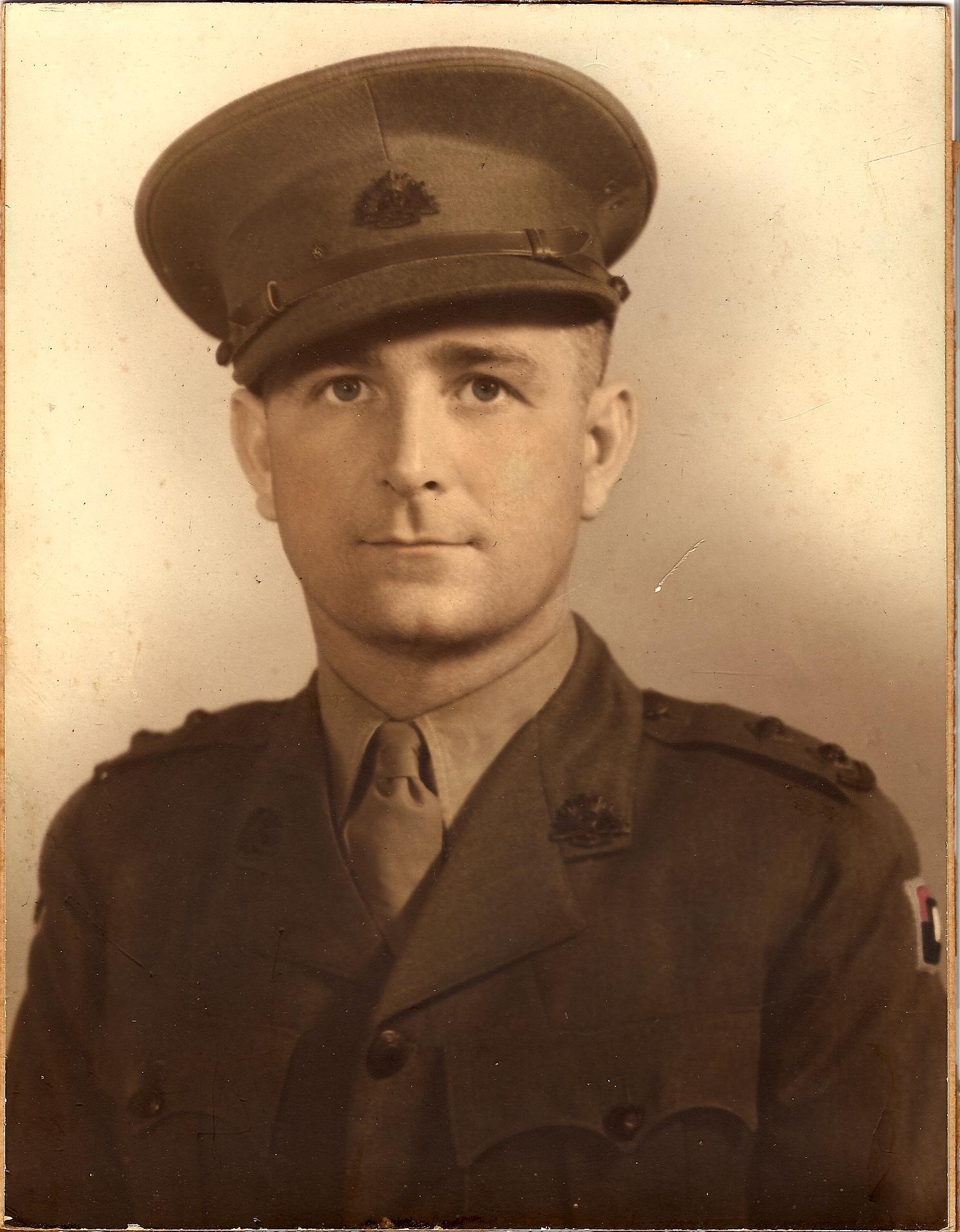
The Marunouchi Hotel in Tokyo, Japan, was commandeered for use by the British Commonwealth Occupation Force (BCOF) and refurbished for purpose and managed by my father, Stan Warrell, promoted to the rank of Major for the role.
I was a sullen and lonely child, and although I was safe, I was isolated and often alone in Japan and daydreamed a lot. I didn’t like my nursemaid. I wanted mum and was only truly happy when touring with her. However, our Japanese chauffeur Kanamtsu and a bellboy called ‘Micky’ whose Japanese name I never knew spoilt me. I adored them.
My bedroom.
Sullen or sulking?
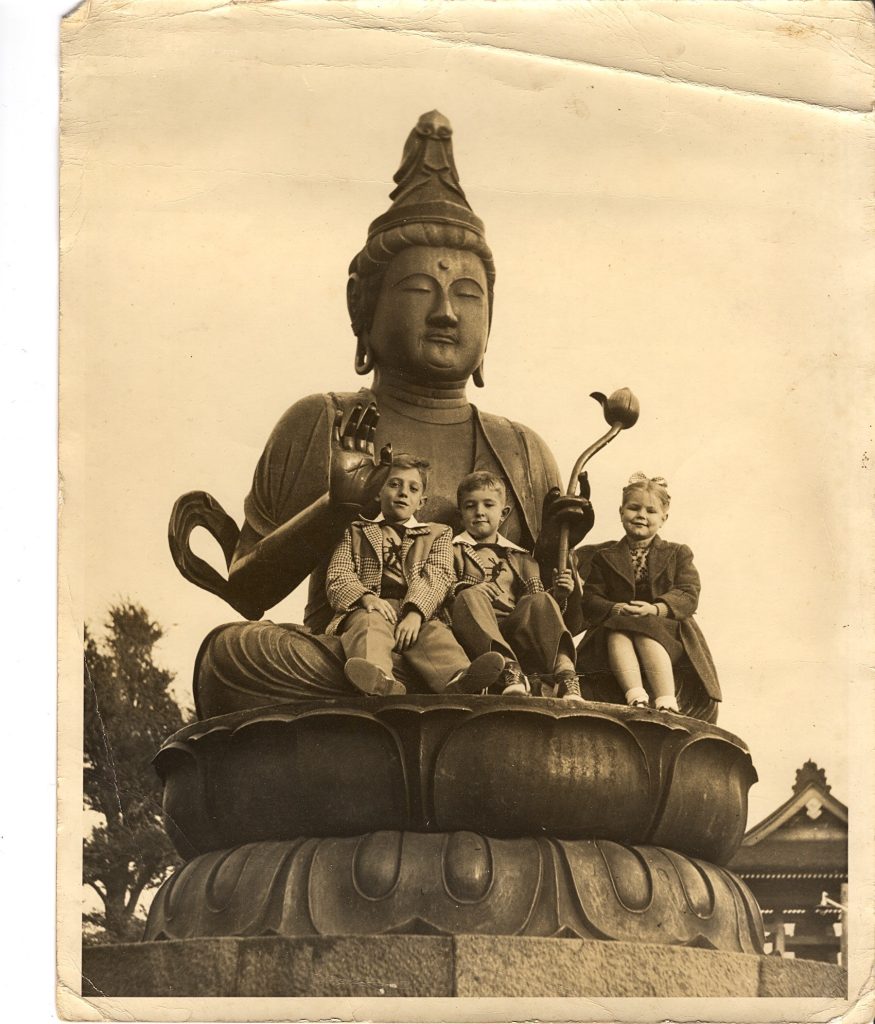
Me with two American boys.
Take a moment to think about the photo of me with two American boys, brothers and children of one of dad’s American counterparts. Nobody considered it wrong to pose children on a statue of the Bodhisattva, Konnan (Chinese, Quan Yin).
My parents took occasional weekend leave in Nikko, where dad played golf with his military friends while mum drank with their wives. I played with naked Japanese children in a nearby rockpool and learned to speak a little Japanese. An old woman my mother inaccurately calledmamasan took pity and fed me fluffy steamed rice when I visited her kitchen. I still love plain rice.
In the early 1950s, we moved into the NewAlbury Hotel. On the cusp of womanhood. I fell in love there with Elvis Presley and had one close friend whose father worked on the railways. Most parents did not approve of my hotel environment. It was in this hotel that my new brother spoilt my single-child status, but a lesbian waitress on staff befriended me and taught me how to play chess. I adored her. One day, she disappeared.
I later discovered that mum had sacked her to protect me. In her defence, years later, when Mum learned that my brother was gay, it made her love him more. In the New Albury Hotel, a fat, female cook took pity on me and allowed me to sit in her pantry to devour two packets of Arnott’s Milk Coffee biscuits after school. Nobody sacked her or the young, foreign kitchenhand who flirted with me before puberty.
Boarding House Life
For me as a child, the boarding house at 7 Redan Street, St Kilda, was my most nurturing home, even though my father, being in the Army, was away a lot. I adored this Redan Street dwelling. We lived here both before, and after my father’s military tour of Japan.
We had an upstairs room where we played a game, calling each other mummy frog, daddy frog and baby frog. After Japan, we sat cross-legged on the floor to eat at our prized Japanese chow table. I remember how big the double bed seemed. I slept on a divan. The building is now up for sale on Realestate.com as an expensive ‘illustrious c1888 solid brick Victorian residence’.
Guest Houses
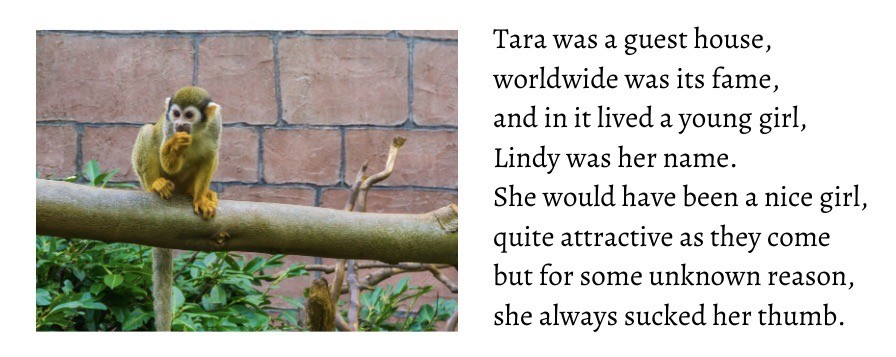
After the New Albury Hotel, my parents bought a guest house called Tara. A red-headed young journalist staying as a guest made me blush when he wrote this poem in my autograph book for my 13th birthday.
The photo shows a squirrel monkey sucking his thumb.
In my late teens, I lived in a couple of other guest houses, one in Bondi, the other in Rushcutters Bay near Kings Cross. I could write books about both, but I’ll just tell you that I nearly fainted one pay-night in a Bondi fish and chip shop while waiting for my hamburger to cook.
Two Sri Lankan students in Australia on the Colombo Plan kindly walked me home that night and took me on tour next day to see The Three Sisters in the Blue Mountains with their posh friend who had a car. They urged me to return to my violent first husband because, they said, a young woman should not be alone or without a husband in a place like Bondi. Bless them. I did try, but it was a disaster.
Another night, two Bondi cops stalked me in their police vehicle as I walked home on the then mandatory high heels from a bus stop after work in the dark. They invited themselves into my boarding house room. Intimidating, handsome and in lust. Finally, I squirmed my way out of trouble by agreeing to bring a friend on another night. Next day, I moved.
A Hostel in Darwin and the House that Changed Everything
In the early 1960’s I lived in a Government Hostel in Darwin in a group of buildings that extends from Mitchell Street through to the Esplanade. It is now backpacker accommodation.
A decade or so later, hippies invaded Lameroo beach opposite the hostel. While they hung in tree houses on the hill leading down to the beach, swam naked in the sea-baths, smoked dope and horrified everyone, I was busy playing housewife in a new police house in an outer suburb until in 1974, Cyclone Tracy blew it away. Soon after that, my marriage broke up and blew me off with three little children under four.
Dislocation
If we accept that the idea of home is a tale of many mansions: of growing up, love, loss, disaster, recovery and, ultimately a place of belonging, then moving is a story of change. A new location often brings the transformation of identity. A move can also entail a shift in status as in my marital breakup.
But there is more to it. Cyclone or not, whenever we move into a new house, our bodies are extracted from a web of places, people, networks, activities, feelings and attachments. We have to start pretty much from scratch making new networks and connections in a process that we loosely call ‘settling in’.
But moving dislocates. Despite the internet, moving house rips bodies and minds out of their previous environment. It is thus a much bigger deal than many think. Psychologists tell us moving is one of the highest stress factors after the death of a loved one. What they don’t say is that, over time, connections and memories fade; continuity is erased.
Few people think of themselves as organisms out of place when we move, but that is what we are. The first time I sought a visa to travel to Sri Lanka, the question asking who my father was, tickled my sense of the ridiculous but it tells us something about belonging.
In Sinhalese culture, when someone wants to know who you are, people use the phrase, ‘where is your village?’ (koheede gama?’) Together with Sinhalese surname endings this tells a tale of caste and family. In Aboriginal society, country and family constitute identity. There is consonance.
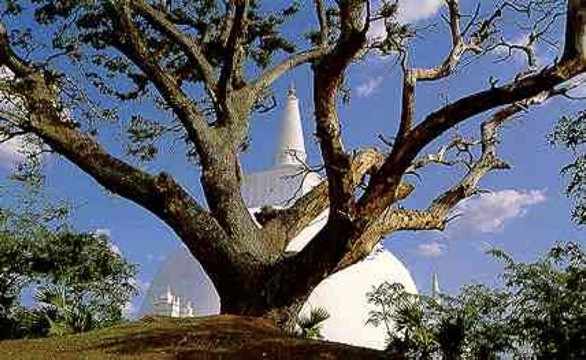
L= Buddhist Dagaba, or reliquary mound.
Packing itself takes a toll on both body and mind. Unpacking symbolises the discomfort of dislocation. Unless we’re smart enough to put the kettle, toaster and iron at the top of a box marked ‘kitchen’, we are powerless to find comfort on arrival. And, when the removalists leave, there we are, bereft with a new mountain to climb.
Packing cases by the door.
Just yesterday, I read an article in The Monthly, which makes a similar connection to the one I allude to above between Sri Lankan and Aboriginal culture. It may seem a bit off-topic, but it is an insightful read in its own right exploring as it does the significance of the body in space. Drawing on the work of Bas Luhrmann and David Gulpilil in my favourite movie ‘Australia’, the article speaks more broadly about things we often fail to notice.
Displaced People
Millions in this world stand alone to leave with nothing in their foray into the unknown. Their order of terror and courage is hard to conceive.
Despite my discomforts, I hope this short exploration of the dislocation of moving home resonates enough to let you consider with compassion what migrants, asylum seekers and refugees go through. Can you imagine being ripped from the bosom of loved ones, often to become stateless and homeless for years in teeming refugee camps, unable to re-embed yourself in the fullness of life?
In 2018 World Vision wrote that “Most people remain displaced within their home countries, but about 25.9 million people worldwide have fled to other countries as refugees. More than half of the refugees are children. In 2018, 13.6 million people were newly displaced, either as refugees or IDPs (internally displaced people).”
The figure of 25.9 million refugees worldwide is more than the entire population of Australia and, at the risk of repeating, half of these 25.9 million refugees are children.
UNHCR recently reported that 79.5 million people worldwide had been forcibly displaced by the end of 2019. See the details here.
In Summary
What has emerged for me in writing this post is that at worst, I had a safe but somewhat isolated childhood. I was lucky enough to be able to seek comfort in books and, all the while, I dreamed of being a writer. As a young woman, life was not as safe for me, but I always had the love of my family. Having no single place to call home meant that my parents’ deaths cast me adrift. I had nowhere to belong.
One of the reasons I take friendship so seriously I think is that I lack any sense of continuity in time or place. Apart from my children, few people in my life today have known me for much more than a decade. I have led a fortunate but dislocated life. What I have shared here is a mere taste of its diversity.
A Writing Tip
Try going through your life in terms of where you have lived and how. Make a list and see where that takes you as I have here. That would be a pretty good start if you are interested in writing your life story.
If you have a particular period in your life that stands out, write a memoir.
When I write, my characters are either my friends or my enemies. Sometimes, they are me, the child who read a lot and got lost in imaginary worlds, the little girl who fell in love with heroes and heroines who conquered the odds. For all their different faces and voices, I adore following their ups and downs as life trips them up, provides challenges or sends them to bottomless pits, hoping they’ll overcome.
In my youth, my heroes were human. They had a thousand faces and a limitless cast of voices. Back then, heroes did not need action costumes or bionic parts any more than Tarzan in his jungle home (what a metaphor). Even Superman was the very human, bespectacled Clark Kent beneath the flying red cape.
In this context, let me recommend Joseph Campbell’s groundbreaking book, The Hero With a Thousand Faces written in 1949. This brilliant work underpins the storyline for the same hero’s journey that you will read about today in various how-to-write-a-novel texts. Given his lifelong interest in mythology (1904-1987), I’m sure Campbell would love the irony of that.
On Amazon and for Kindle. A brilliant book for your collection.
The heroic quest is not always spatial and external. It may also be an internal, psychological or spiritual journey which is why I advocate the exploration of suffering in Questions Over Coffee. The external can be metaphorical and some narratives encompass both internal and external aspects of the hero’s journey which gives greater depth.
Life is Our Teacher
My poem The Passage in an earlier post shows that humans share a lot in life. But equally, we are diverse, and we traverse a range of often-difficult paths alone like our fictional heroes whether in film or on the page or TV. In our variety, we are fascinating creatures, whose lives are story-making factories that build character in much the same way as we bring fictional characters to life in our writing.
As humans, we bring diverse cultural and social backgrounds into a world that acts upon us as we act upon it. Dislocate us and we are out of place. As in life, so in writing, dislocation shows the true grit of a fictional character. We must put them in positions that force them to make choices and follow paths; some leading nowhere, others causing people to come together, break apart and, ultimately, change.
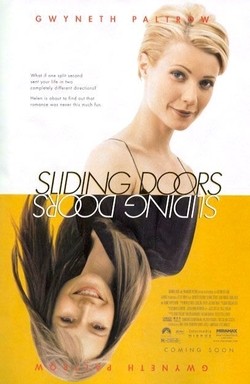
Like us, characters must choose which way to go. In that sense, sliding doors are part of any heroic journey.
Writers are the Puppeteers
I introduced the hero’s journey here to make the point that, we are much more than surfaces and our characters must be too. But, a hero’s journey is only part of the story. Creating a character with depth also requires more intimate techniques and this is where faces and voices come in.
I remember how my children laughed wickedly when they were young, mocking the way my face and voice changed, depending on who I was speaking to, on and off the phone. It was a valuable lesson to have innocent eyes see me like that. And I’ve been interested in the relationship between faces and voices ever since.
I suspect we all have a phone voice or what I’ve come to call my pompous voice because there is always so much more going on beneath the externals. For example, a pompous voice might indicate a character’s self-consciousness or denote insecurity in relation to their interlocutor. We must go beneath the surface to hear inner voices properly. But, first to faces.
Faces: the one-way gaze
Consider these photos.
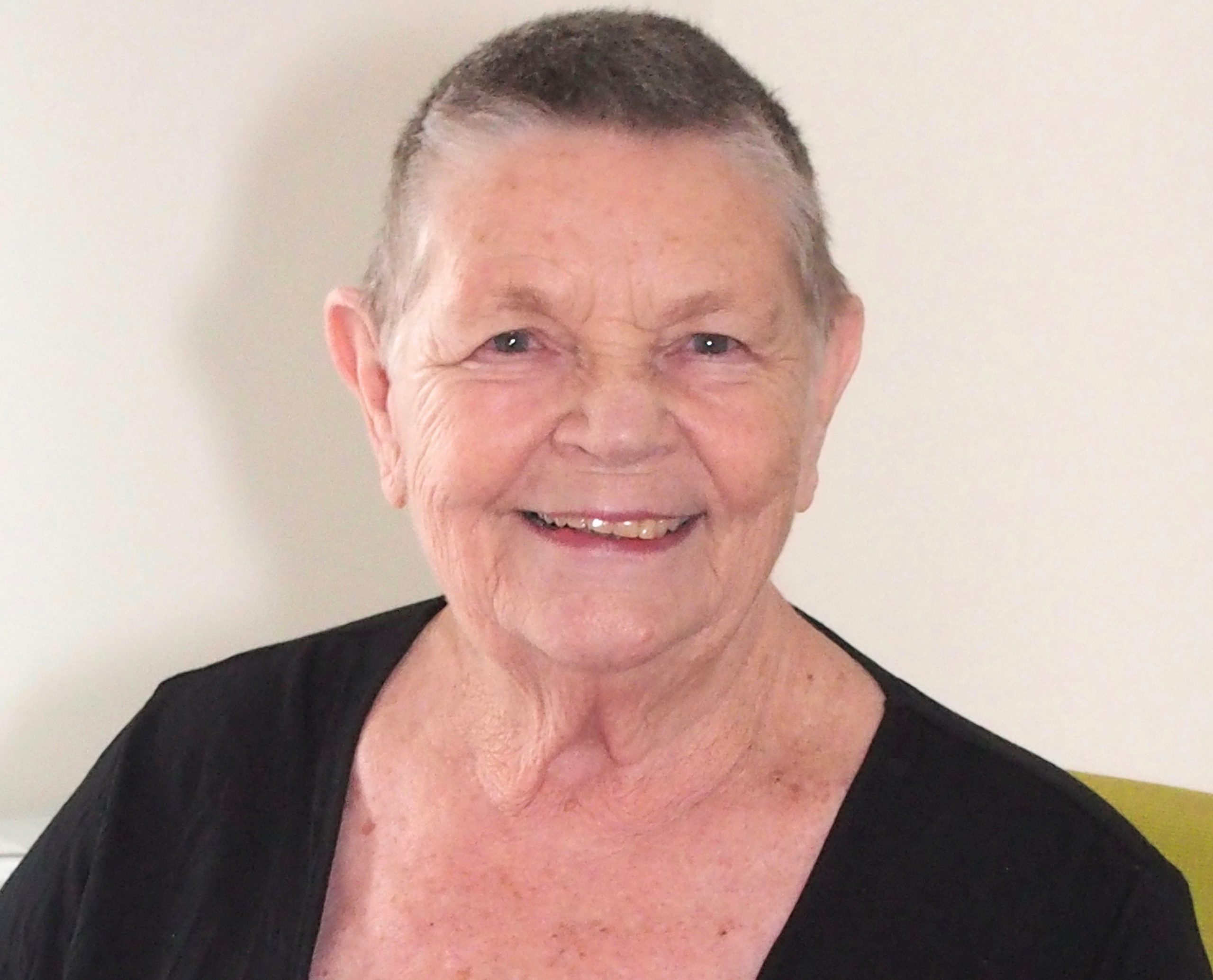
This is my web page profile picture. Do you think ideas about me would vary in terms of the age, status and social leanings of a viewer?
Here I am as a 1970s bride. If I used this photo as my profile picture would people read what I say differently?
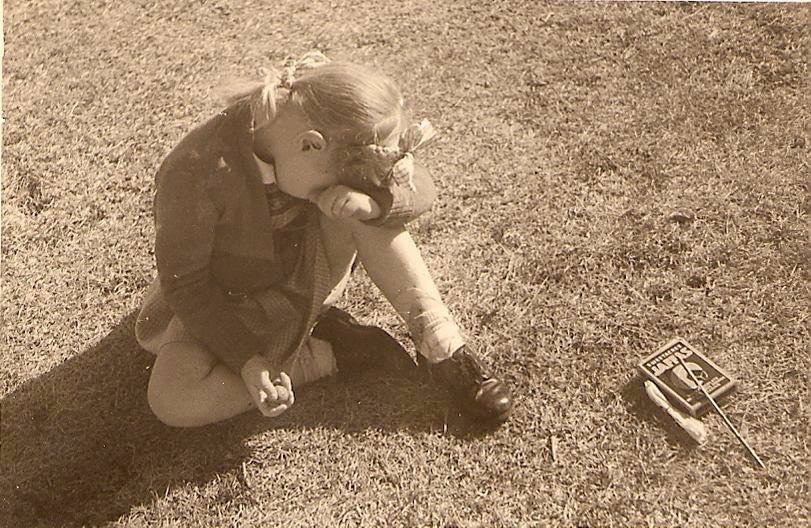
Here I am as a little girl sulking. Feeling invisible to the adults around me I hid my face.
Although the sepia photo is 70 years old, that sulky child still lives in me. While my hopes as a young bride were dashed, inside, I am still that young woman at times, full of optimism. The old woman I’ve become holds those (and other) earlier moments in memory along with a range of social roles: daughter, wife, mother, academic, poet and novelist, BUT
It still pisses me off to be treated as invisible.
Lindy
When people say things like ‘aren’t you clever for your age’ or, ‘it’s good to keep your mind active’, they are talking to my age, not me. Nowadays, I no longer hunch to hide myself away as I did as a child. I roar! Or, write a poem.
As humans, we are all complex and whole, not just types. Typology is for scientists, not artists. And that’s the point. We must not type-cast our characters and, even though we are puppeteers, we need to work with both faces and voices to develop subtleties of character.
Voices: in action
High Rise Society, starts with the 60-year-old, middle-class protagonist destitute and on the streets in Melbourne. When she gets public housing she is initially grateful to have found a home and seeks acceptance and friendship among her high-rise counterparts. But when her best friend dies unexpectedly, she begins to feel the new world she had begun to love, degrades her.
Although I don’t develop it here, as the story progresses, the protagonist Ruby develops two distinct voices: beneath her polite and open veneer lurks a mean inner voice of self-talk contradicting what she says.
Here is an excerpt from a first chapter scene in High Rise Society, showing a brash young social worker talking to high rise residents who she sees as her project. Here, I use dialogue to sketch context and voice as a shorthand way to convey character.
Excerpt
Social worker Gaye Bailey interrupts a private conversation in which old-timers Annie and Mary are initiating Ruby into high-rise life.
Lindy Warrell
End of Excerpt
Try This
Let me first ask, in this selfie-crazed world where we objectify ourselves to ourselves, are we what our photos portray? Are we merely a surface with faces posed in emulation of the rich and famous in ‘in’ settings as contrived as our Insta-pics? Or, are we more than that? Take a moment to reflect, then ask how many voices you have in your head. How many of these do you use in speech, and which do you heed inside?
Exercise:
Write a scene exploring two people on public transport who board and sit opposite each other. One person may be a black-jeans-wearing, tattooed youngster. The other a motherly or even grandmotherly figure in a cotton dress.
You decide who your characters are, and how they dress or behave, based on appearance to start. Whether you create two men of different generations, two women or a male-female pair or some other configuration doesn’t matter. However, it is best if you make at least one character completely different from you. Pick a type you have strong opinions about.
Sit quietly inside each of these characters, looking at the other. Then, working from one perspective at a time, write what each one is observing, thinking about the other. Remember, they are sitting opposite each other, possibly with knees or parcels and bags in close contact.
Write about the following —
The way your characters enter the bus, train or tram, choose their seat and sit opposite you.
What they look like, what ‘you’ (the other character) smell or feel or think.
What they might be thinking or feeling from their perspective.
If they speak, what do they say, how do they sound?
Is the voice what you imagined it would be?
Change places and do the same with the second character. In other words, be both of these people, each looking at and sizing up the other, and see what comes up.
In each of my posts to date, I have explored ways in which life informs poetry and fiction, using my life to exemplify. And there is no doubt that fiction and poetry, like film and other cultural events, inform who we are.
Xmas 2019
Stories in novels, movies or on television are texts in and of this world, whether they are set in the everyday world or imagined space as in sci-fi and fantasy. Have you ever noticed the resemblances between futuristic stories and good old westerns? Goodies and baddies prevail in both and, for me, that raises issues in reality and the imagination.
There is an inherent contradiction in trying to distinguish imagination from reality. Both are equally embedded in the real world — or, should I say, the world as we imagine it to actually be.
Do you see yourself in your writing?
Let’s start by asking, do you see yourself in your writing? And if so, how? This is one way to begin exploring what is real and what imagined.
Life in one form or another enters our writing whether you are, like me, realising dreams late in life, or just starting out. We cannot escape ourselves when we write. If we are not in our poems or novels explicitly, we are always there implicitly.
I think here of the way the movie director Alfred Hitchcock made an elliptical appearance in all his movies. It used to be fun trying to spot him. (If you’ve never seen a Hitchcock film, let me suggest Psycho. (You can view it on YouTube here for a couple of dollars. IMDB still lists it as an 8.5 film.)
As writers, everything we do, from the choice of topic to genre and style, speaks of us as living humans in a partly real and part-imagined world. I’d go so far as to suggest that we imagine most of our personal reality in much the same way as we do our fiction, albeit with different emphases.
Life and what we write
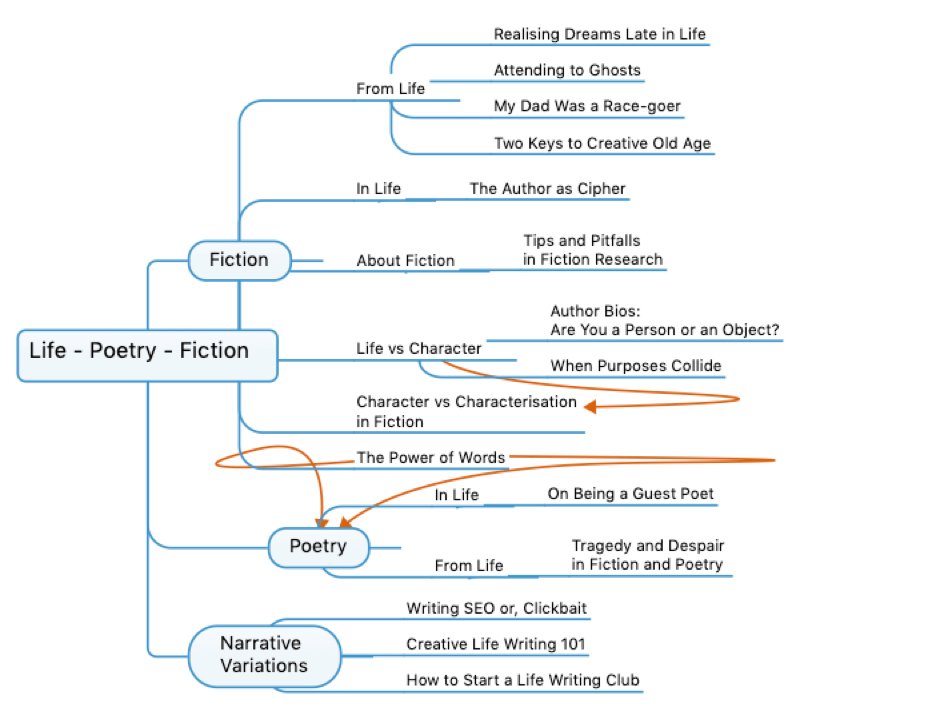
Below is a schematic representation of Wattletales posts since its inception. While I started with no plan about what to write, as you can see, somehow the posts interweave. They derive their meaning from my interests. What I know, what I write and how I am in the world are clearly represented in it even though I decided each month’s content ad hoc.
Even if I’d planned, the result would be similar. What I recognise now is that the theme of my posts has been one that explores the relationship between reality and texts, between what we take to be true and the stuff we make up. Until writing this post, I had not realised how much my thinking has been influenced by Michael Taussig.
As I’ve argued before in Life Writing 101, there is no such thing as a stable, enduring or fixed self. As a Buddhist I understand that one’s sense of self is a mere collection of stories we tell about ourselves, many of them contradictory. I have quoted him before, Michael Taussig (Mimesis and Alterity: A Particular History of the Senses, Rutledge 1993) puts this succinctly —
Now the strange thing about this silly if not desperate place between the real and the really made-up is that it appears to be where most of us spend most of our time as epistemically correct, socially created and occasionally creative beings. We dissimulate. We act and have to act as if mischief were not afoot in the kingdom of the real…
Michael Taussig
I argue that the way we construct ourselves is pretty close to how we create stories on the page. Our memories even play with time as we do on the page when we gather together themes or topics.
As for life, so for texts
Like the Author Bios post, When Purposes Collide is also in many ways key to what I am saying here because it discusses the same strange disjunction we make between our ‘real selves’ and our ‘constructed image’ for the web. Both are equally fiction.
Whether I’ve written about being creative in old age, Life Writing or the issue of character in fiction, my theme is a constant. Life, poetry and fiction are all part real and part imagined. So, whether talking about writing or writing about talking in fiction and in poetry is much of a muchness to me.
I concede that a few of my posts have been pragmatic, such as Writing SEO, or Clickbait, where I discuss the nature of ‘internet language’. How to Start a Life Writing Club and Tips and Pitfalls in Fiction Research are also more along the lines of advice. I call these pieces my flat earth writing. It is OK to occasionally stop analysing and just treat the world as though it is real but I suspect I would have been raising questions, even then.
There is no right or wrong way to write
Not everybody is interested in the way life plays with fiction and poetry and vice versa. Or whether things are real or imagined. Readers and audiences admire substantive work that unambiguously addresses the issues of the day as though they are real and otherwise enhances our experience of the world from another’s perspective.
We see this both in positive literary reviews (the establishment) and spoken word slams (the people) where intimate lives are often revealed. The former is more often than not written in the context of other texts, or a history of texts (a specialised history and language unto itself). In the latter, in spoken word slams, context is often taken for granted as being now, as though history doesn’t exist and this moment is all there is.
My questions are all about contradictions, dilemmas and, yes, struggles and the effort it takes to get these things on the page. It’s a truism to say that we must start with what we know. The struggle starts when we examine how we, as writers and our work are socially, politically and historically situated. In other words, when we check in to see whether our words have an impact.
The posts, Author Bios and When Purposes Collide indicate that we need to ask what are the insides and outsides of creative life at both social and personal levels. Deeper still, we might well examine the relationship between persona and the inner world as I have in this little poem called ‘The Poet’ which is a mix of the real and the imagined.
 My Poet

 I get in the way of my poet
 who's silent before I know it
 I think and think
 and try not to blink...

 I stare outside
 to forget, forget, forget myself
 till my poet pops up
 with right words

 it doesn't always work you see
 but there's a lot to like about me, me, me

 my façade for example
 goes for a ramble
 to all sorts of places
 among all sorts of people
 where it may well extrude by mouth
 but lest we forget it ingests
 by eye and ear and mind
 just to feed my poet
Understanding context
As an anthropologist, I write both poetry and fiction close to life. Stylistically I am a realist so I gravitate to issues such as ethics, truth versus verisimilitude, and the individual in politics and history. These are simultaneously topics of interest to me as a writer and the contexts in which I write.
Even when we take the world to be wholly real, there are dilemmas for the imagination.
Politics and Ethics
In life, there are some things we can be sure of and others that take the wind out of our sails. Politics and ethics certainly make things difficult for a writer who wants to write about other cultures, their own families or even themselves when they have children old enough to know what they say.
Ambiguity:
When my children were young, the dilemma of what I could and could not say about my role as a mother proved problematic. How could I tell anyone how if or when my kids did something outside the box? Could I write about such things? Or, would that be a betrayal?
Uncertainty:
Anthropology teaches that it is offensive to write for or about others from the safe and privileged space of one’s own world view. The risk is that we will compare and judge rather than objectively record and thus skew what we see.
To prevent that, we must examine with some rigour our place, our own social and historical situation, in relation to those whose lives we claim to represent in our writing. We must be aware of the way our position distorts the context.
Anthropologists today suspend their values and realities — to the extent that is humanly possible — to try and see the world from another’s perspective without judgment. In disciplines like anthropology, discourse about the right to write about ‘the other’ abounds.
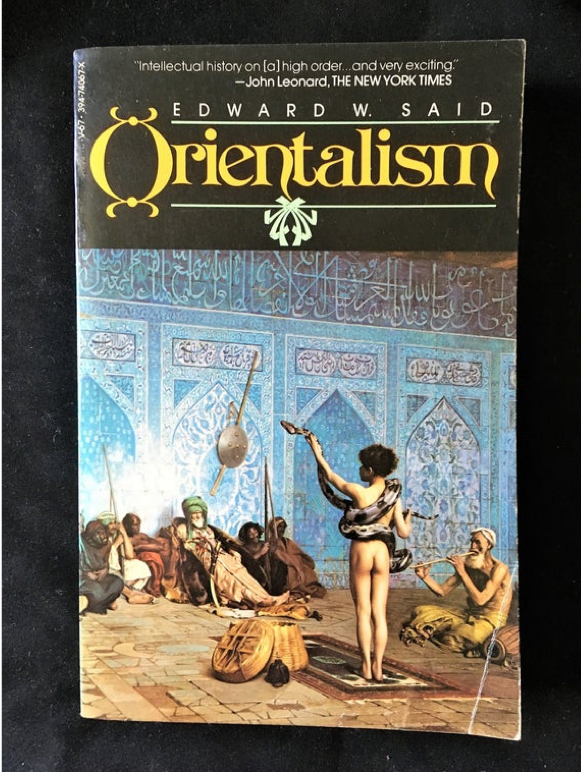
The first to articulate the political distortions that come from a politically dominant perspective found in earlier scholarly work was Edward Said in his groundbreaking text, Orientalism, London: Vintage 1979.
You can still get this on Kindle from Amazon
Orientalism presents a style of thought based upon an ontological and epistemological distinction made between “the Orient” and (most of the time) “the Occident.” Thus a very large mass of writers, among whom are poet, novelists, philosophers, political theorists, economists, and imperial administrators, have accepted the basic distinction between East and West as the starting point for elaborate accounts concerning the Orient, its people, customs, “mind,” destiny, and so on … the phenomenon of Orientalism as I study it here deals principally, not with a correspondence between Orientalism and Orient, but with the internal consistency of Orientalism and its ideas about the Orient… despite or beyond any correspondence, or lack thereof, with a “real” Orient.
Edward Said
The quotation is drawn from an anonymous online obituary from The Guardian. In the simplest terms, he speaks of the de-humanising or stereotyping potential of writing without reflection from a position of power and we must take note.
Truth and verisimilitude
In our scientific world, we learn to believe in ‘the facts’. Concrete truths, however, are often difficult to pin down in social worlds.
In fiction, if we wrote our stories with what I call the ‘and then, and then’ the way a child might, or with the detail employed by science, nobody would ever read our work. Novelists evoke. Their aim is to write in a way that gives readers their own experience, to create a story that reads as though it were true. And, we borrow from life and re-imagine it.
The space between the real and the imagined on the page is deeply ambiguous. We borrow from ‘the truth’ and write in the register of verisimilitude and add imagined things to create moments on the page that ignore temporality and space in order to represent atruth about human life as I have done in this poem called ‘Home’.
 Home

 My mother
 fills a crystal vase with flowers
 for the mantelpiece —
 lies drunk in congealing fat
 roast lamb and potatoes ruined
 on the lino floor.

 Always there after school
 she waits for me to tell her
 everything
 tells me I cannot live
 without her.

 She loves me
 my mother
 who hates my father,
 He says he loves
 his wife but gets me
 to put her to bed when
 she's 'like that'.

 Always a spotless kitchen
 fresh fruit on the table
 my mum in apron and perm —
 like TV ads
 but she never smiles.

 She holds on till dark
 to seek herself.
The individual and history
In life writing such as biography and memoir, as in fiction, we must situate ourselves or our characters, in context. Humans are social, political, ethical and historical beings and so are our characters. Context is more than setting, it is the entire world or cosmos that our characters act within. We cannot write complete contexts which are the very fabric of our being in the world and should be for our characters as well.
History once fell into the trap of recording wars, empires, explorers, governments and kings (almost all men) which effectively silenced not only their subjects but largely excised women from history. We don’t want to do that in our writing.
The Feminist example:
Until very recently, women’s lives did not rate in authoritative historical texts. In Australia’s official war photos, women on the front were not named. They were collectively and individually labelled; subjugated to their role such as ‘nurse’ and forever silenced, sacrificed if you like, to the history of the national war effort. The world of war was imagined as being ‘about men’.
But, when the voices of ordinary people speak out or write up as in social media nowadays, you get a groundswell for change. Imagined realities are threatened.
contemporary voices:
Consider the #metoo movement. When women are trapped and silenced as individuals in untenable circumstances by sexual abuse and domestic violence, political change is not possible. But whenever many speak together, something extraordinary happens.
Feminism created opportunities for women to speak up. Its struggle was to overturn cultural imaginings. And it worked and is working even better now. You only have to read the paper. Women are now moving to the front and centre of the historical and political stage which means, the world is being reimagined.
Then there is Greta Thunberg, the 16-year-old environmental activist who has inspired young people across the world to protest about climate change. She has been named Time‘s Person of the Year for 2019.
As the Buddha might say, life is always in a state of flux and is illusory. If we stick with the reality principle, wanting things to remain the same, we suffer. The outrage at Greta Thunberg from mostly white, middle-aged, established men is evidence of this.
Move over emperors and kings. Remarkable women are making a mark.
Politics and the individual
true stories:
Nothing is ever quite as it seems. History is not a straight line. Power plays everywhere competing to convince us of diverse flat-earth theories. It’s fascinating to see how the real and the imagined are distorted by power.
Let me tell you that when I went to university in my late 30’s having left school at 15, I was unaware that women then worked for two-thirds of a man’s wage for the same job. I had an early divorce from a violent man, but because I’d been married, even at 17, I no government or military entity would employ me. I wanted to be a policewoman.
Even when we were working in ‘women’s’ jobs, employers sacked us when we married. A friend of mine had an affair with an engineer in her office; she was sacked and he was not. Even after these embargos on women’s employment changed (I’m not sure if they were laws or mere customs, like changing your name upon marriage) we had to leave the workforce when we became pregnant. That was the real world.
even overseas:
When I started university as a special entry student I questioned the idea that ‘the personal is political’. During fieldwork in Sri Lanka, I was forced to reconsider.
In Sri Lanka, I felt like a ‘powerless’ single mother of three and student on a low scholarship income. However, my income made me relatively affluent and, because I was a researcher, people described me as a lecturer or called me by the honorific, ‘Madam’. They treated me as a ‘powerful’ representative of an ‘advanced nation’ and its interests. Could I then play ‘powerless’ in the face of a people who at that time had very little?
Everything is relative. We cannot be extricated from the social, political and historical contexts in which our lives take place. What we feel and experience is not necessarily the way others think of and experience us. We imagine our realities based on the specifics of our context.
Our stories are simultaneously private and collective, individual and historical and personal and political. Everything we write has ethical implications and, yet, the real world is half-imagined.
Respect those you write about
the power of words:
I’ll leave this post here with a reminder to always pay attention to the power of words; words are socially, politically, historically and ethically as situated as you, your words and the written word in general. Whether we write journalism, history, poetry or fiction, our words affect and could possibly harm others.
In order to write with respect, therefore, we must examine how and why we write and the degree to which we are writing what is real or imagined.
real and the imagined realities:
Nobody wants a review like that by Russell Marks in the current issue of Overland (No.237 summer 2019 pp 52-57). In an article provocatively entitled ‘Crocodile Tears: On Misreading Justice’ Marks critically examines a popular novel called Saltwater by Queensland Barrister, Cathy McLennan. As I read it, Marks exposes the implicit and explicit racism of a work in which a person in a position of significant power romanticises suffering.
Marks charges McLennan with a failure to understand the Aboriginal world about which she writes even though she is in a position of power over that world as a Magistrate. Her novel is apparently recommended reading, including at university level which says a lot about how misinformation can feedback into society if not checked.
Marks remark that the book’s …myriad problems could have excluded it from publication altogether’ is circumspect given his damning review. But what he has shown is how very important it is to examine one’s own context and understand the extent to which we imagine the worlds of others wrongly while believing our unexamined perceptions to be real.
As an aside
Have you ever played with mind mapping? As you can see from the map I shared above about my blogging tendencies, it can be very helpful in sorting out what’s what in your writing or your thoughts.
I use Mindjet’s Mind Manager. You can try it for free for 30 days and it is available for both Mac and Windows. There are cheaper options if you look around but it might help as you work on the exercises below.
What is real and what is imagined in your world
The first step in writing fiction and poetry is to be real on the page. A little bit of integrity goes a long way in all writing, even if only you read it.
Do you see yourself in your writing? If so, how?
List your major life turning points and the ethical struggles they represent for life-writing or fiction.
Examine what your writing says about you.
Re-write things that, when you read them now make you cringe.
Check your contexts: individual, political, ethical, historical — real or imagined.
Articulate the ways your life is embedded, no matter how slight, in all of your work.
If you have any ideas for topics you’d like to see covered here next year, please let me know.
Across the world, naming practices keep us in our place. This is the power of words and names.
The Example of Kinship
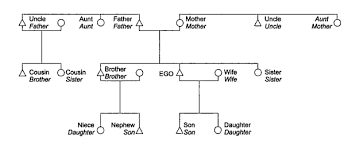
Aboriginal Kinship Structure
Take kinship terms. We reinforce their power every time we assume their roles. Kinship terms are words which embed us in our social fabric. As specific words that both define and construct the reality of family realtisonships, they have the power to orchestrate behaviour, determine lines of descent, respect and accountability. The expectations of kinship structures underpin many family disagreements. Even so, among immediate kin such as mother, father, aunt, uncle, sister and brother kinship terms give us a sense of belonging or sense of distance.
In some cultures, kinship categories differ along gender and age lines. These extrapolate to the public sphere. In Sri Lanka, for example, an older male bus driver will call a youth ‘younger brother’, malli or, ‘little younger brother’, podimalli. Aunts and uncles in some worlds are either on your mother’s side or your father’s side, not both as in the West. It’s not easy to get your head around the diversity of kinship relationships across cultures.
Differences aside, kinship is universally a taken-for-granted part of human reality. Think of our attitudes towards in-laws versus family ties which we see as ties of ‘blood’. Ideas of kinship define taboos such as not being able to marry certain categories of kin.
The study of kinship is complex, and naming practices vary from culture to culture. Everywhere, humans assume that the words they use to construct their realities are ‘natural’ and that is what I want to talk about here. My focus is on the construction of old age in a country like Australia.
The Real Me
Let’s start by looking at how we construct ourselves as we move through life.
In many ways, we construct ourselves through words. We embody the notion of ‘me’ in our words and in the way we tell stories about our experiences and preferences. Who among us has never said ‘I am the sort of person who…’? Who among us does not see ourself in relationship to others?
Salman Rushdie here identifies the fact that we construct our realities through the prism of relationships with others. Among other things, this contributes to the pain of grief. Loss of another is also the loss of a dimension of who we believe ourselves to be..
We are a collocation of stories held by others (opinions) and our own (remembered) stories. The truth is never clear-cut.
Etched as they are in our minds, remembered stories routinely play out as though we are the star in our very own TV show. They are well-rehearsed, told for a purpose (as a mode of self-presentation) and modified or refined for different audiences. Other people may not believe or agree but, in our minds, what we remember and talk about simultaneously constructs, constitutes and defines our sense of the ‘real me’. Remembered stories are part of how we want others to see us. They are our ‘front of house’ stuff.
Loss or failure undermines the solidity of our remembered stories. They are inviolable only when external reality matches our words. ‘I am a person who…’ loses it’s power when vulnerability assails us.
Constructed Realities and Fiction
Creating fictional characters is similar to the process we sue to construct our personal reality through words.
In life, we repeatedly stumble over events that cause us to wonder if we are mad. Of course, all that emotion and pain from a lost love, illness, losing a job — even retiring — becomes grit for our writing. As writers, we can draw on and enhance our experience then elaborate with flair and imagination. Storytelling is rarely just about ‘the facts’ whether in reality or fiction. One way or another a story is always about life, about the words we use to construct reality whether to believe, create a parable or write historical fiction, sci-fi or fantasy novels.
A novel examines not reality but existence. And existence is not what has occurred, existence is the realm of human possibilities…But again, to exist means: ‘being-in-the-world’. Thus both the character and his world must be understood as possibilities (i.e., qualities of a promising nature – i.e., something is going to happen).
Milan Kundera, The Art of the Novel (p.42)
Fictional characters are the same as us. Through our words as humans or as writers, our stories record the fact that we are in a constant state of becoming, transforming and, eventually, if we are lucky, become old.
When We Get Old
Quite aside from sudden shocks like natural disasters, accidents and illnesses that wreck us, we all must confront the inevitable but slow process of degeneration that comes with old age. At first, it creeps up on you. Then, like a surprise, it takes over and can occupy your days. It seems that when it does, we pass the threshold of interest. It is challenging to reconcile potentiality with the imminence of death; what a sobering thought.
In my retirement-living meditation group, I encourage participants, who like me, are elderly, to bring curiosity to the process of ageing. A newborn discovers his or her body, by laughing in fascinated wonder at toes and fingers or pointing to noses so why don’t we examine the ageing process in the same way. Being curious as bits and parts of us begin to fail can displace dread.
How Reality is Constructed in Everyday Life
The Example of Old Age
Old age is a whole new colourless world where labels become more prominent in constructing the elderly as being beyond the threshold of interest. Here’s how.
Our lack of strength and vivacity elicits terms of endearment from others.
Instead of calling us by name, they lump us together by age in interactions using labels like ‘luvvie’, ‘luv‘, ‘darling’, ‘darl’ or ‘sweetie’. We hear this at the supermarket as much as in hospital where I’ll admit; it matters less because in hospital you are effectively outside the social structure anyway — no good bucking the system there.
However, I recently told a waitress who called me sweetie as she prepared my latte that I was not at all sweet. I spoke without as mile. She was dumbstruck. At this café where ‘luvvie’, a British term, has come into vogue with the new owner, a recent immigrant from the UK, I told the young waitress that calling me ‘luvvie’ was patronising. She took a good while to comprehend. When I asked her why she used the term, she said it made her feel good. At least she was honest. But her honesty is telling in that it speaks to the complete irrelevance of her interlocutor.
My point is that going against the grain causes surprise, if not shock in a context where it is common to vacate the personality and social status of older people.
Feminising Old Age
Many of the terms used to address the elderly in shops, cafes and other busy places where staff run off their feet, are feminine. Sometimes these feminising terms are also used to with men, adding insult to injury.
A senior man playing with a puzzle. Note the emptiness in the brain region of the puzzle. It could even be the area of personality.
Youth offers life’s promise. Old age leads to death. In a world like ours, this is a distinction driven by markets in cosmetic beauty feeding the desperation to remain young forever. In this context, it is not surprising that old people are identified more with their biological decline than acknowledged for their many achievements and accomplishments. Other cultures may revere their elders, but not ours.
The dangerous thing here is the wiping of identity and the way, through words and labels, old people’s social value disappears. People forget in such constructions of old people that they are not a species apart, which is how it can feel.
Sticks and Stones
The old adage that ‘sticks and stones may break my bones but names will never hurt me’, is wrong. I grew up on that and believed it for many years.
An in-house joke among oldies who cannot let go of their former employed self is that they suffer ‘relevance deprivation’. If we have a PhD, nobody knows or cares. An old single woman is almost universally addressed as Mrs in clinics and hospital waiting rooms where they must at least use your surname. (Men have the universal moniker of Mr that never changes to define them in relation to others.)
But, for both men and women, if you were formerly a senior official, a creative person or someone of note, nobody cares. Your body becomes your identity.
The truth is that ageing is every bit as rigorous and formidable to the experience as adolescence. But it has no value because instead of blossoming and growing into character, it is a gradual fading. And, we hate to fade.
Those approaching elderly status are just as scared of the old as they are of the young they can no longer emulate without being ridiculous. This came home to me recently as I sat in the sunshine on the foreshore at Glenelg where I live. A petite woman in her sixties with thinning long white hair and wearing upmarket walking gear called out to me, ‘enjoying the sun luv?’ I said yes, paused for effect, then added ‘luv‘. She took offence.
Variations on the Theme
In my grandmother’s day, young women and old called each other Mrs So and So when they chatted over the fence. Days of such formality are far behind us, but it’s safe to say that today’s intimacy which finds us calling anyone by their first name would horrify previous generations. The term Mrs of course, then firmly connected women with a husband. And, if you were getting on a bit and still called ‘Miss’, there was something wrong with you. The name for that social malaise was spinster.
When I was young and impressionable, my aunt in Sydney, then in her late forties or early fifties called everyone ‘darl’ or ‘darling’. Being starved for love as I then thought myself, this language seduced me into thinking that she cared. Looking back, she used the term universally which suggests she was too lazy to remember names, something that requires effort. What a shame.
Finally, my mother railed all her life at the way my father and other men called her ‘mum’. A gendered kinship term that ideally defines a relationship between a parent and child. The way it was used then as in my poem, and often still is, shows how everyday words construct our realities. As you will see, my mum bucked the system.
Good On Yer Mum
'You're so good at lighting fires luv
I wish I could do it like you.'
His words seduced and in her youth
she let herself be fooled.
For years by day and night she lit
to keep the family warm
but all she got was praise by rote
that began to feel like porn.
'Here'yar mum' he'd say
passing her the keys.
'no-one else can drive like you,
you make it look a breeze.'
'But keep the window open mum
your side's always best,'
too vain was he to have his hair
tousled like the rest.
The butcher down the street,
now there was a kindly soul,
she loved the way he cut her meat
till he called her mum as well.
I'm not his bloody mother
she would rant about such men,
did they think she'd only married
to lose herself in them?
Once alert to the ruse
she began to refuse and said,
the matches are on the bloody shelf,the fire won't make itself.
One day there was no supper
for dad's Friday poker mates,
she sat at table against taboo
and won with an Ace-high straight.
'It must have been a fluke,' they said
'for a little woman to beat the men,'
in shock and awe they invited her back
and, behold, she won again.
'Your mother's as tough as old boots,'
my father confided in pride
but all she heard was, 'good on yer mum',
she thought he had a hide.
Try This
Think of a word someone else uses to define you. It may be a kinship term, or any other word or name. What does it say about your relationship? How do you like it?
Write a poem about that.
Examine any affectionate terms you use towards another and, write a poem about that too. We often offend unintentionally.
Final Note. Grammarly kept picking me up for using the term ‘old’ throughout this post. I had to laugh. The word ‘elderly’ is deemed to be OK.
What is the difference between character and characterisation in fiction? Is there something distinctive about each of us that persists throughout life and is that OK in fiction? Today I’m exploring the difference between character and characterisation in fiction. And how does character transcend characterisation?
I start with the premise that, in fact, we are all chameleons. Sure, we don’t change skin colour, but we can alter our self-presentation on an as-needed basis — Pjs in front of the television and business suit at work, that kind of thing. More than the chameleon, we can also enact different behaviours according to the situation and different situations force us to change demeanour.
Creating Fictional Characters
Many advise us to write dossiers to help us create characters in an imaginary or researched process that comes up with loves, hates, tastes, habits, quirks, appearance and history before we put pen to paper. In other words, invent backstory and get to know it thoroughly. The problem with this is that charcters on the page begin to have minds of their own!
In his brilliant book, Story, Robert McKee emphasises the importance of a character’s mettle in action. To McKee, a character is honed in action, emerging throughout the novel, giving it structure, from the choices made. He distinguishes this from characterisation which is the list model described above. For McKee ‘character’ is a moral entity, unknowable except in choice and action.
While Story is overtly for screenwriters, its insights work equally for fiction. McKee’s brilliance is in the way he interlinks the expected behaviour associated with social roles — the paraphernalia of characterisation — and the choices people make which don’t always match the externals or, by extension, the expected.
Beware of Static Characterisation
We cannot altogether avoid portraying people in terms of their social roles, so we need to find ways to convey that aspect too. When I chose the chameleon as the main image for today’s post, I was thinking of the multiple roles we play within our families: mother, daughter, wife and lover or father, son, husband and lover.
Beyond the family, we can work with uniforms and modes of dress according to profession or occupation. But, in character terms, in moral character terms, these are simply roles, and roles are static at any given moment.
Our characters not only have a role, vis a vis a protagonist such as a friend, enemy, supporter but in society. Here again, we are talking of conventional professions and occupations. They mean something and contribute to our understanding of who our characters are. Place of residence and activities like regular attendance at sports events count too. These sorts of static identifiers operate subliminally as ‘taken for granted’. They are important, but only half the story.
On Character as Metaphor
A character is no more a human being than the Venus de Milo is a real woman. A character is a work of art, a metaphor for human nature. We relate to characters as if they were real, but they’re superior to reality.
Robert McKee
Our characters are a ‘metaphor for human nature’. And that must be dynamic.
Static identifiers border on stereotype. They are shallow and will not excite your reader who wants their hero to fail and succeed and fail again. The reader needs to experience what a character goes through when they take a wrong turn, become miserable and then find their way, to receive both punishment and approbation. Readers want them to struggle as if in real life. Readers want their protagonist to want something so badly so they can be on their side in the quest for it.
McGee tells us how to bring the drama, the dynamics onto the page. The key to true character, he says, is desire. And behind that lies motivation. These are the hidden factors, the internals that drive momentum. In that sense, he says, a protagonist ‘creates the rest of the cast’. What an idea. It is one you cannot let go once you hear it. When developing a cast, you need to think about the statics, the roles but that is only on the surface.
No list of descriptors can transport a reader. No made-up history will either. Yes, any backstory will flesh things out, but it needs to be more than a dry statement of fact. It needs to be full of dashed chances and moral dilemmas that propel a character along their path which is your story. Put another way, you must show the moral character of a protagonist. How did they get themselves into a pickle? What led them out, which choices worked, and which did not.
It is precisely the unfolding of choices and outcomes leading to new ones that beguile a reader. We need to show external conflict, sure. But the internal conflict from drives, desires, beliefs and aspirations give our stories their rationale and shape so it makes sense as though it were real. And we must choose our cast wisely to make this happen.
On Character-isation and Symbolism
On the page, we don’t have the visual luxury of a cinematic screen. We must name things to stimulate our readers’ imagination. For this, we need symbols.
Symbols may be static viewed by themselves, yet they are powerful because they arouse emotion.
Think of the national flag. People die for such things. It is not merely a piece of coloured cloth. Symbols are culturally understood. We only need to name the symbol for a reader to fill in the gaps.
Settings are symbolic. Indeed, they can even be characters in our story as important as any other fictional person in it. Whether it is a landscape or cityscape, a house or a department store, the setting is a mighty clever trope in any story. So too, is the weather. All of these conspire together to orchestrate the story as a whole.
Just as a building can fall over, the weather can change, and fire and flood can destroy a landscape, we must still give readers a sense of the malleability of our characters in action in a place that suits the mood, or provides the right atmosphere. That means using the landscape and the weather as symbols too.
Remember that your own life offers great hints for creating a character. In my post On Being a Guest Poet, I talk about ways in which my poetry defines me. Here, I’m asking you what sort of dog are you?
What is Your Take on Dogs, and Character?
I recently attended a workshop asking us to use the physical and behavioural features of animals to ‘describe’ our characters. In High Rise Society, my novel in progress, many of my cast members have companion dogs that hint both at social status and personality. How our characters relate to or care for their animals gives us some moral leverage but, as a park is central to the story, the animals in this book are characters too!
Below are images are five dogs. Which one if any, do you think would suit an old lady in a retirement home? Perhaps a chihuahua would be best. Or, would that be functional rather than meaningful?
Which dog are you? Name the traits of both dog and yourself. Play with this.
Remember, we are looking for meaning here. And for ideas about character.
Working with one at a time, check out the breed. How is your person/character the same or different? Are there resonances of mood, nature, activity or social situation. Write about this.
Put two of these dogs and their owners together and write a scene or a story, keeping in mind Robert McKee’s advice as I’ve spelt it out above.
Have you always wanted to write about your life, but never known how or where to start? Well, read on with your writer’s heart. There are people like you in every community and suburb who’d jump at an opportunity to collaborate and learn if a club opened up nearby. People have stories to tell, stories from their lives that they want or need to share. So, how about starting a life writing club where storytelling can flourish.
Some of you may think taking a course or doing a workshop is the way to go. The notion that guidance is needed is hard to shake. But observation as a life writing coach showed me that coming together provides the primary impetus for getting our stories onto the page. Collaborative learning is great. The more input by each member, the more fruitful the outcome.
While book clubs proliferate nowadays, when it comes to writing, the situation is dire. You can find creative writing groups in church and community halls but many are simple appreciation societies. Most focus on creative writing. You may fancy starting or attending a writers’ Meetup but my experience is that you often encounter competitive souls there. That’s fine if that’s your gig and you can similarly attend the occasional workshops hosted by council libraries or, increasingly, by Writers’ Centres.
But you won’t find writing clubs on offer, especially not life writing clubs.
Advantages of the Club Format
A club is a perfect forum for life writing.
In simple lterms, a club is —
…a group of persons organized for a social, literary, sporting, political, or other purpose, regulated by rules agreed by its members.
Macquarie Dictionary
Notice that rules are ‘agreed by members’. No boss.
(You can, of course, incorporate your club and become a legal entity, but that is not what I’m proposing here. I’m suggesting a small, familiar and intimate gathering for the purpose of collaborating on your writing and storytelling. In Australia, each State has it’s own Consumer Affairs if you want to go down this path. )
In the end, it is not about how well you write, but how close to yourself you are game to get.
Clubs are equalizers and, as such, provide a nurturing environment for being OK being just who you are. No writing credentials necessary. When you write personal stories, you make a direct investment in yourself. And, when we write with purpose like that, the need to compare ourselves with other writers disappears. Life writing engages the reality of our lives and experiences and, when we share those, the group environemnt that a club offers, empowers everyone. Storytelling is the key.
If you decide to form a life writing club, don’t worry about differences in culture, age or background. Writing about one’s life in a group brings out commonalities of human experience within diversity. Indeed, in a well-run group, writers will feel safe to share which allows trust, warmth and congeniality to arise. And, it is there, that creativity flourishes.
Start-up Tips
The critical factor for success is to find people who are open to discovering themselves. They don’t need to be friends. But they join with a willingness to dig deep, be real and have fun in the process. Compassion, respect, fondness and friendship follow.
Members
Don’t worry about differences in culture, age or background. Writing about one’s life in a group brings out the commonalities in diversity. Indeed, in a well-run group, writers will feel safe to share and, there, creativity will flourish. An ideal number to get started would be seven to ten people.
Flyer
Create a flyer. It should give a date, time and interim venue plus a contact number or email for queries. The initial invitation is for people to get together at a coffee shop or café to talk about forming a club in your area. Post the flyer on notice boards; at Coles, in laundromats and storefronts. Go beyond your suburb but stay within cooee.
Post the invitation on Facebook or on any other social media. If you belong to other groups, spread the word there.
The flyer should tantalise with the promise of self-discovery and using phrases like —
tell your own story
tap into your creativity
gain perspective on the past
achieve personal insight
have fun
meet new people
help create a circle of safety for storytelling.
Promotions
So, start with a flyer. It should give a date, time and venue plus a contact number or email for queries. The invitation is for people to get together at a coffee shop or café to talk about forming a club in your area. Post it on notice boards; at Coles, in laundromats and storefronts. Go beyond your suburb but stay within cooee.
Post the details on Facebook, too or on any other social media. If you belong to other groups, spread the word there.
Initial Meeting
At the initial meeting, or over a couple of get-togethers, you can collaborate in drawing up the club’s rules. First thing will be to agree on times and periodicity, then venues and length of meetings. It is probably best to meet no sooner every fortnight or month, probably the latter is best because members will need writing time in between. You should allocate at least three hours.
Regular Venue
You can take turns meeting hosting meetings or book space at a community centre, in a library or gather in a coffee shop, café or pub. Be creative in choosing your venue but remember you will need privacy.
‘When someone goes on a trip, he has something to tell about’, goes the German saying, and people imagine the storyteller as someone who has come from afar. But they enjoy no less listening to the man who has stayed at home, making an honest living, and who knows the local tales and traditions.
Walter Benjamin
Basic Club Parameters and Rules
As a matter of respect and to ensure success, members must agree to maintain confidentiality and commit to the principle of nondisclosure. The former is well understood. The latter includes refraining from raising other people’s stories with them outside club meetings, despite it being shared within the group. Further, there is nothing worse after you reveal intimate details of your life for another person to say, ‘I know, I know, I had that too’. That is appropriating another’s experience it disempowers the storyteller and breaches trust.
Do not pre-circulate written stories. Although this is customary in creative writing circles, the magic of collective life-writing is precisely in the immediacy of face-to-face sharing.
Always keep a box of tissues on hand and a ‘pretend’ jar for people to put ‘air’ money in if they apologise for their story or writing. (Many people apologise about themselves in so many ways and the aim, here, is to help them gain confidence.)
Members should bring along an exercise they have discovered or made up (for ideas, see the of works list in last month’s post). The club’s work is for each member to contribute writing prompts as well as writing, sharing and providing feedback.
The exercise format is simple. First, read the exercise to the group and invite questions. Second, allot 7 – 10 minutes of writing time with the instruction that people should write straight from the (no dilly dally thinking time). Then share one at a time and discuss. Over time, people will have a number of small pieces of work (which should be named) to develop further.
A useful rule of thumb is for the writer to remain silent while others offer feedback.
As the club grows in confidence, you might introduce some creative techniques. Again, there is a lot written out there, and each member could research one creative writing technique to share with others at meetings. Members can revise their earlier work as homework, and as work refines, perhaps that can be shared by email for feedback. The process is cumulative.
Techniques
Life writing is a two-step process. Our first attempt when we write life stories is like talking to the page. It is an outpouring. The craft then is a matter of turning the writing around to entice a reader. Here is an exercise that allows you to practice doing that.
Exercise
Write for 10 minutes on a major turning point or sliding-door moment in your life. Write fast, straight from the guts as your memory brings that moment back to you.
Consider what you have written. Read it as though it were someone else’s story. Then tell the story again using the third person. Doing this should give you enough distance from the emotionto create yourself as a protagonist. In the end, you will become a character on the page.
Now re-write the story giving your character a fictional name and show him or her coming to that moment – what were they doing leading up to the moment. What did they want or fear? How did they feel (change) after that turning point? Better or worse? What new direction did they find?
Even as you tell your own life stories, you will need to change your perspective and give your readers a reason to read. They’ll want to know ‘what next’.
Life writing is writing about your life. It covers a range of sub-genres from travel and sojourn writing to memoir, autobiography and meditations on places or people. It can take the form of a personal essay, an anecdote or vignette. You can even use letters to tell your story.
Here is an example of a delightful meditation on a life moment. A couple of Scottish writers (James Boswell and Samuel Johnson) came up with the idea while lounging about a Scottish inn on a lazy Autumn afternoon, in 1773. It appears in Boswell’s Journal of a Tour to the Hebrides, and is far more than a simple record of an event such as ‘I went to…’. Notice how it evokes place, awe and wonder for the reader with a touch of humour.
MEDITATION ON A PUDDINGLet us seriously reflect of what a pudding is composed. It is composed of flour that once waved in the golden grain, and drank the dews of the morning; of milk pressed from the swelling udder by the gentle hand of the beauteous milkmaid, whose beauty and innocence might have recommended a worse draught; who, while she stroked the udder, indulged no ambitious thoughts of wandering in palaces, formed no plans for the destruction of her fellow-creatures; milk, which is drawn from the cow, that useful animal, that eats the grass of the field, and supplies us with that which made the greatest part of the food of mankind in the age which the poets have agreed to call golden. It is made with an egg, that miracle of nature, which the theoretical Burnet has compared to creation. An egg contains water within its beautiful smooth surface; and an unformed mass, by the incubation of the parent, becomes a regular animal, furnished with bones and sinews, and covered with feathers. – Let us consider; can there be more wanting to complete the Meditation on a Pudding? If more is wanting, more may be found. It contains salt, which keeps the sea from putrefaction: salt, which is made the image of intellectual excellence, contributes to the formation of a pudding.
When you write about your life, prepare to strip bare.
Venus of Willendorf
Why is Life Writing Creative?
In practice, life writing explores ways in which we construct and contest identity. It reflects the way our subjectivity becomes dislodged and reconstituted in the course of a lifetime. We construct our idea of self through stories, believing them to be real. Our identity, then, is a type of fiction. This means that we can approach writing about our lives much as we do a novel. Indeed, if you want readers, you will have to.
Life writing and the novel. Are they different?
Milan Kundera tells us that a novel —
…examines not reality but existence. And existence is not what has occurred, existence is the realm of human possibilities…But again, to exist means: ‘being-in-the-world’. Thus both the character and his world must be understood as possibilities. The Art of the Novel, London, Faber and Faber (1986:42)
As for a novel also, the art of life writing is about making a narrative, but it goes further. Etymologically, the term ‘narrative’ connotes ‘knowing’, so the process of writing about your life can mean ‘coming to know yourself’.
In psychological terms —
…narrative is not merely a literary form but a mode of phenomenological and cognitive self-experience, while self — the self of autobiographical discourse does not necessarily precede its constitution in narrative. (Making Selves 100)
In other words, there is no such thing as a stable, enduring or fixed self. As Buddhist teachings might say, the ego is a merely collection of stories we tell about ourselves. Many are contradictory. None is absolutely real. Michael Taussig puts this nicely —
Now the strange thing about this silly if not desperate place between the real and the really made-up is that it appears to be where most of us spend most of our time as epistemically correct, socially created and occasionally creative beings. We dissimulate. We act and have to act as if mischief were not afoot in the kingdom of the real… (Mimesis and Alterity: A Particular History of the Senses, Routledge 1993).
The Benefits of Life Writing
Creative life writing does two things.
Emotionally, it takes you to places you may never have been aware of. Life writing is a craft as well as an art. While it can be used for therapeutic purposes, it is not therapy. Nevertheless, it uncovers new layers of meaning and deep personal insights that lead to understanding and forgiveness for yourself and others.
Writing about your life provides an opportunity for you to open up to yourself; to examine your experienece on the page. At its best, it allows you to explore literary techniques to make your narrative sing; to attract, fascinate and perhaps even enlighten your readers.
Where to Start?
Life writing must start with the intention to be honest on the page. Without that commitment to emotional truth, your stories will be lifeless. To quote Virginia Wolf, ‘If you do not tell the truth about yourself, you cannot tell it about anyone else.’
The process has four essential steps.
1. Identify a good story
To do this, you need to avoid chronology, specified topics and ‘remembered’ stories. The latter are the tales we love to tell and change to suit different occasions and audiences. Most of these are the stories sedimented as ‘me’. We use these constructs in daily life as part of our presentation of self. They are underpinned with the idea, ‘I am a person who…’. Therefore, they do not entertain our readers.
To avoide these pitfalls, we can stimulate our deep or original memory, and find aspects of your life you had forgotten, often in unexpected places, you need to work with exercises. As I will explore next month, the second step will the be to explore creative literary devices and techniques to enhance your story.
I’ve listed some readings below to help you on your life writing journey and here are two exercises to give you a taste of how this works.
Exercise One: The Senses
Imagine a moment when you were a child, hiding or holding back in some way. Take yourself back there with closed eyes. Meditate on it for a minute or two.
Where are you? What happens? Who is involved? What do you see, hear, touch, taste and smell?
Open your eyes and write as fast as you can for about 5-7 minutes.
Exercise Two: Turning Points
A turning point involves a moment of revelation, an instant when you change your mind. A student of mine described her most important turning point being the morning when her abusive husband brought burnt toast in bed. In that instant, she decided to leave him. You might think of a turning point as a sliding-door moment. You need to identify what happened to cause you to change from from one way of being to another.
Write for ten minutes.
Exercises like this may seem random, but themes will begin to emerge over time. You may even surprise yourself if you write for two minutes on how your like your eggs cooked, and why.. Writing little pieces like this helps you to find themes which will help when you start to put your biography or memoir together.
2. Tell the truth
The first draft of our first attempt at life writing is often a self-oriented ‘splat’ on the page. It contains all the raw, emotional truth of the original happening or moment, the golden nuggets of life writing.
However, If you write chronologically, your story will sound like a child’s recounting of an event: ‘and then, and then, and then’ which is tedious to read. Working with exercises to jolt your mind bypasses the emotional outpourings and captures the original moment and your original memory will bring back sensory data and emotional depth. In those details lies colour, richness and your unique voice.
3. Contextualise
No story exists in isolation. Life is always personal, political and historical. We therefore need to situate our stories in time. This includes relations to others in our lives and, by research, our historical and political contexts. If you write about friends or family members there will be ethical issues. You’ll need to ask whose story it really is an whether you have the right to talk about others without their consent. I have touched on that before here.
4. Create a compelling narrative
Once you have a collection of stories about significant moments in your life, you will have the raw material to bring together. Themes will emerge over time to help you decide the best genre and style to use if you want to publish.
A Checklist for New Writers
Create a special writing space for you alone.
Create a ‘do not interrupt’ time out for writing.
Show up on the page every day for a specified time or number of words.
Keep a notebook (or recorder) with you at all times to record observations, ideas, thoughts or feelings, anything that takes your interest or fancy.
Write three unedited Morning Pages* longhand first thing to free up your creativity: anything goes, you can just grizzle on the page if you like
Take yourself on a weekly Artist’s Date,* (just you) – visit a special place that thrills you or gets your creative juices flowing – a flea market, aquarium, museum, bead shop, fabric store, garden centre, botanic park, art gallery, antique shop, pub, tourist venue…go sky diving if you want to!
For further inspiration, go to a favourite café or nook to reflect and write
Remember writers block is a caused by conflict between the creative mind and the rational editor – tell the editor to mind her business until your creative mind has finished what it wants to do. There is no such thing as a bad first draft!
*Julia Cameron’s famous self-help book that many published writers I’ve known started with, The Artist’s Way: A Spiritual Path To Higher Creativity. First published in 1992, the latest reprint was in 2016. An evergreen text still readily available online and in bookstores. This is where you’ll learn about Morning Pages and Artist Dates mentioned earlier.
Another evergreen influence on the craft of writing from the guts is Natalie Goldberg’s Writing Down the Bones. It came out in 1986 (latest reprint 2016) and has sold in excess of a million copies in translation around the world. It’s still on the shelves and online.
There are no doubt other, more recent works on the topic of life writing, but these books are groundbreaking, seminal works to help you get started.
Live — Read — Write well
To be continued in June
A final note: If you want to start a life-writing club, you will find tips here.
How can we use family history ethically in fiction? Do we have the right, the knowledge, or the relevant skill to portray others in our writing, without causing offence or being sued*?
I was a bit stuck on how to approach this topic, so I skived off and entered ‘wattletales’ into Google. I wanted to see if my site had any traction, which, I am delighted to say, it did. The only other entry I found was about a racehorse called Wattletale**. Wattletale ran nowhere in the one-mile, three-furlong High Weight Welter at Epsom in Mordialloc, Melbourne on 29 July 1908. I could have read that as predicting my failure as a blogger. But because my dad was a racegoer, I declared Google to be serendipitous. Like a game of chance, it showed me that it is time to fess up about how I exploited my father’s lifelong love of the gee-gees in my novel, On Gidgee Plains.
Photo by Melanie Shires
I begin with the question: is my father’s story mine to tell? What if I wanted to talk about my children, friends, or colleagues, can I do so without their consent? These are big, fraught issues. Last month, I spoke about the way my father’s voice inhabits me at times. My mother’s does too, but that comes naturally to me. Borrowing aspects and moments from their lives is different. It is a conscious choice. While I don’t write about my parents in the novel, I do borrow from their lives to develop fictional characters with greater authenticity to the story and its setting.
Would they mind? I don’t believe they would. They are now long gone of course, but, the ethical issue remains. I still wonder whether I am justified in using details from their lives. But, all things considered, I allowed myself to do so because my father was born in 1910, my mother in 1919 and, as we approach 2019, I am 75. Our lives were both formed by and contribute to Australia’s history. What a resource.
So, I pinched facts, but my story is fiction. It is not a record but a creative work where character flaws and features — and modified events, spaces and places — can be used to achieve verity while drawing out universal themes. If you start with a truth, you can add imaginative insight and embellish to portray life in a fictional way that will resonate with and evoke emotion in your reader. No betrayal.
Try this:
Close your eyes and meditate for a minute or two on a moment of conflict between you and either your mother or father. Where were you? What was the issue? Dwell there for a little while. When you are ready, write the story from your own perspective. Then from your parent’s perspective. It is best to work with one of your parents because, unlike siblings and friends, they create us, fill our minds with their words, stories, and ideas before we have any idea who we are ourselves. We are filled by them.
Did you find your parent’s voice? How similar or different were the two versions of your story, yours, and theirs? Could you hear how you ventriloquized your parent? Could you use the situation in your fiction without betraying anyone?
Remember this:
Before you borrow from life, be honest. The aim should always be not to cause harm so ask yourself which of the following is true —
Sticks and stones will break my bones, but names will never hurt me.
A few startling words on an unsuspecting body can threaten the integrity of the self.
The pen is mightier than the sword.
Always write with purpose. The lesson is that we must take care to consider others when we borrow from their lives for our own ends, even if they are strangers. Never over-reach to the point that someone sues you.
*If you have any doubts about the legality of what you write – check out Lynne Spender’s Between the Lines available through the Australian Society of Authors or from the Australian National Library (online).
**If anyone checks this link, the column in Trove appears to list Wattlevale but, there is a corrections column alongside which confirms it was Wattletale in the welter. Wattlevale was heavier and is in an earlier race listed.