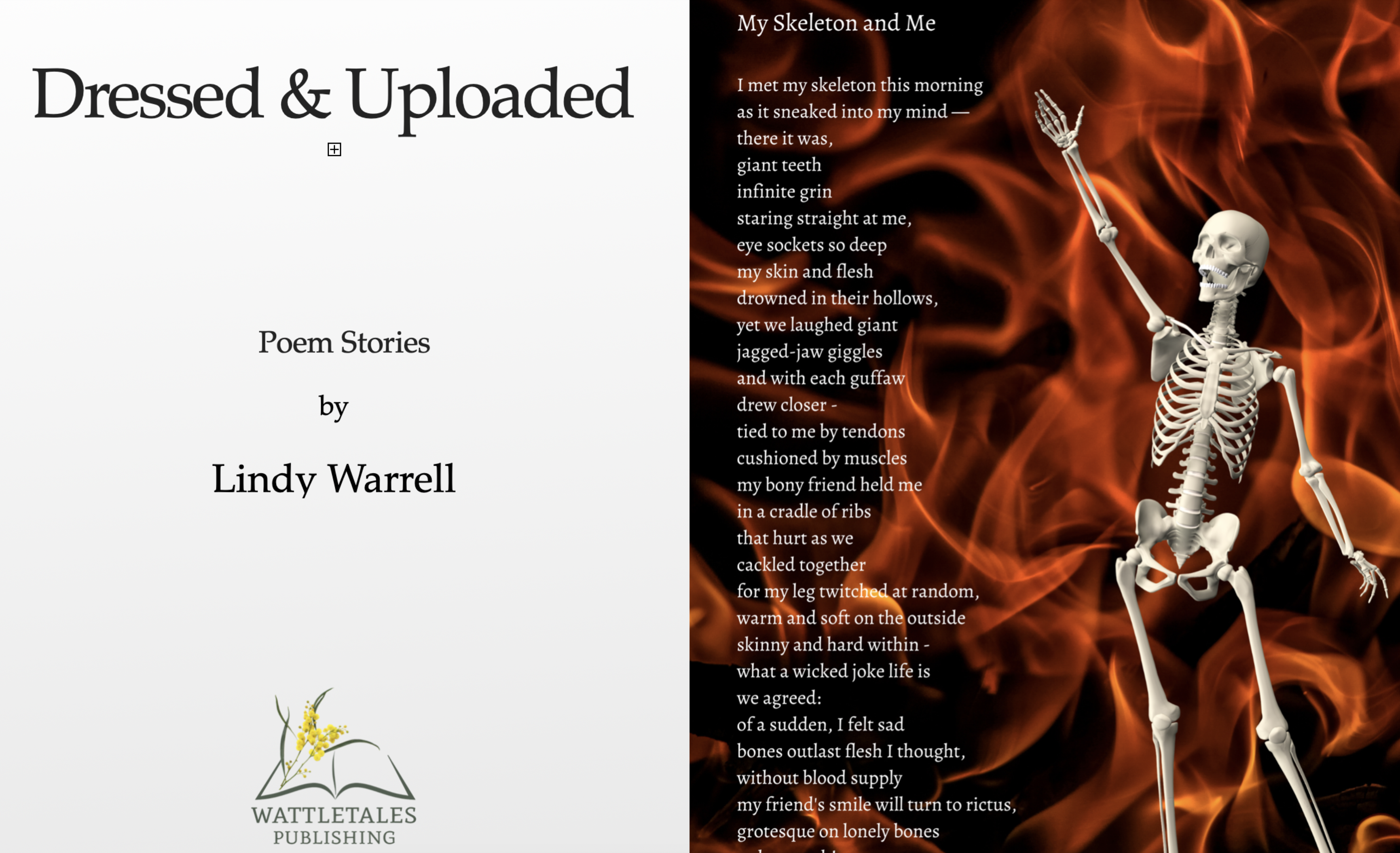
In the past few years, I’ve so enjoyed finding suitable background images for the poems in my posts (and those of my guests) that they started to appear together in a colourful, recurring dream that gave me the idea of creating a little eBook. This month, that dream became a new publication called Dressed & Uploaded. The subtitle, Poem Stories, refers to how I reverse the way I illustrate poems in my posts to comment instead on each poem’s significance to me.
A Small Gift
Dressed & Uploaded is free to download below as my little gift. You are also welcome to share the file if you wish. Many of you will recognise some poems, but I hope you find the presentation and commentary titillating.
The eBook is also available to purchase through Apple, Kobo, Libreka, OverDrive and Scribd or to borrow from SA Libraries on Libby.
The Launch
This post is Dressed & Uploaded’s official launch, giving me a chance to publicly thank my daughter, Vanessa Warrell, for copy editing and Jude Aquilina, Veronica Cookson and Susan Thrun Willett for writing wonderful promotional words for the inside cover. To give you a taste, this is from Jude —
Dressed and Uploaded speaks from the big fiery heart of a poet whose raw honesty, original imagery and no-holds-barred subject matter make for memorable reading. Lindy Warrell gives voice to the people of our era, to women, to the marginalised and to the forgotten. Lindy’s poetry also speaks to the inner self, especially through this genre of poetic memoir. Knowing yourself is the beginning of all wisdom, wrote Aristotle. Lindy’s blog Wattletales and this collection, Dressed and Uploaded, are visually attractive records of our time and valuable additions to South Australia’s poetic wealth. Jude Aquilina
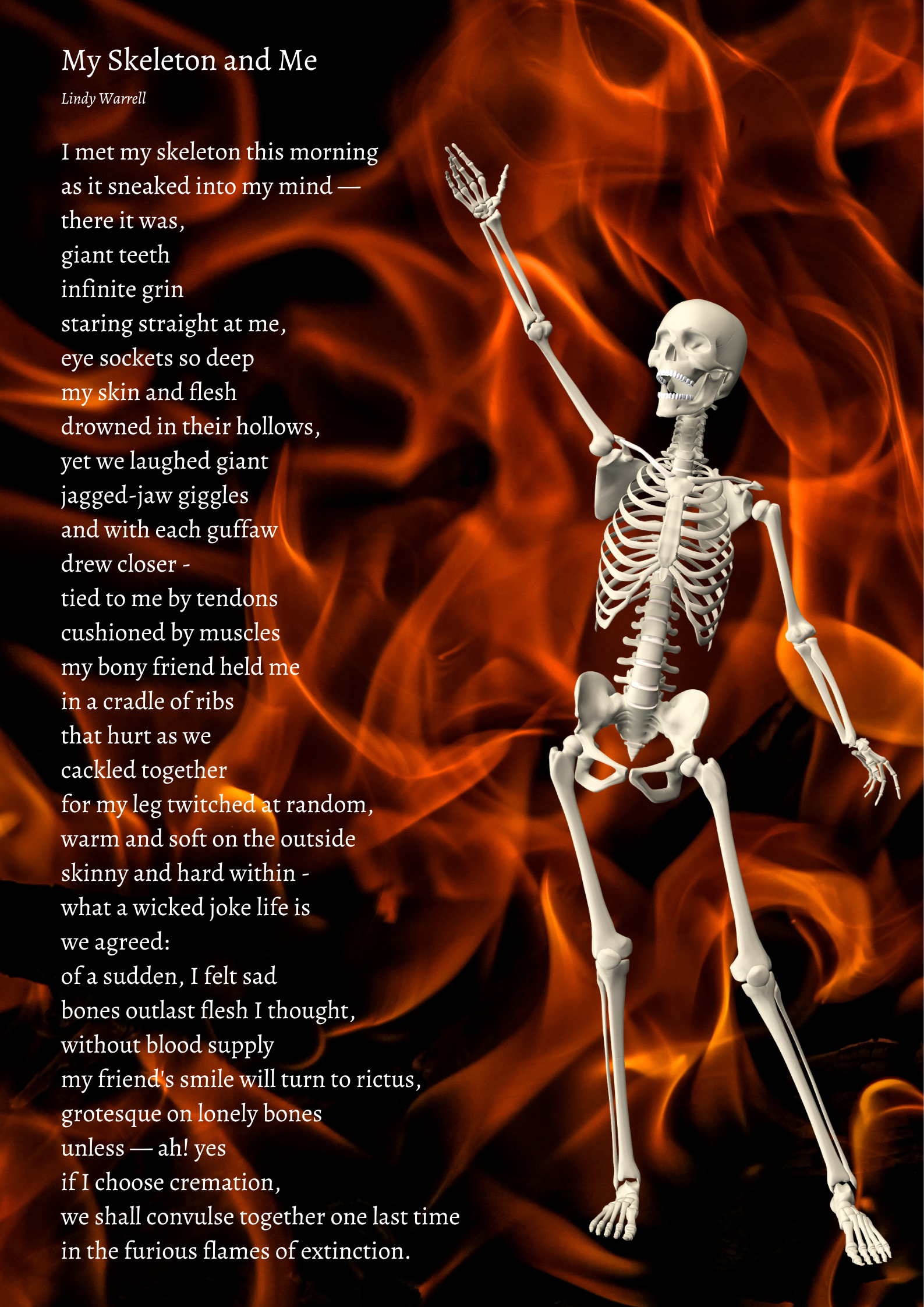
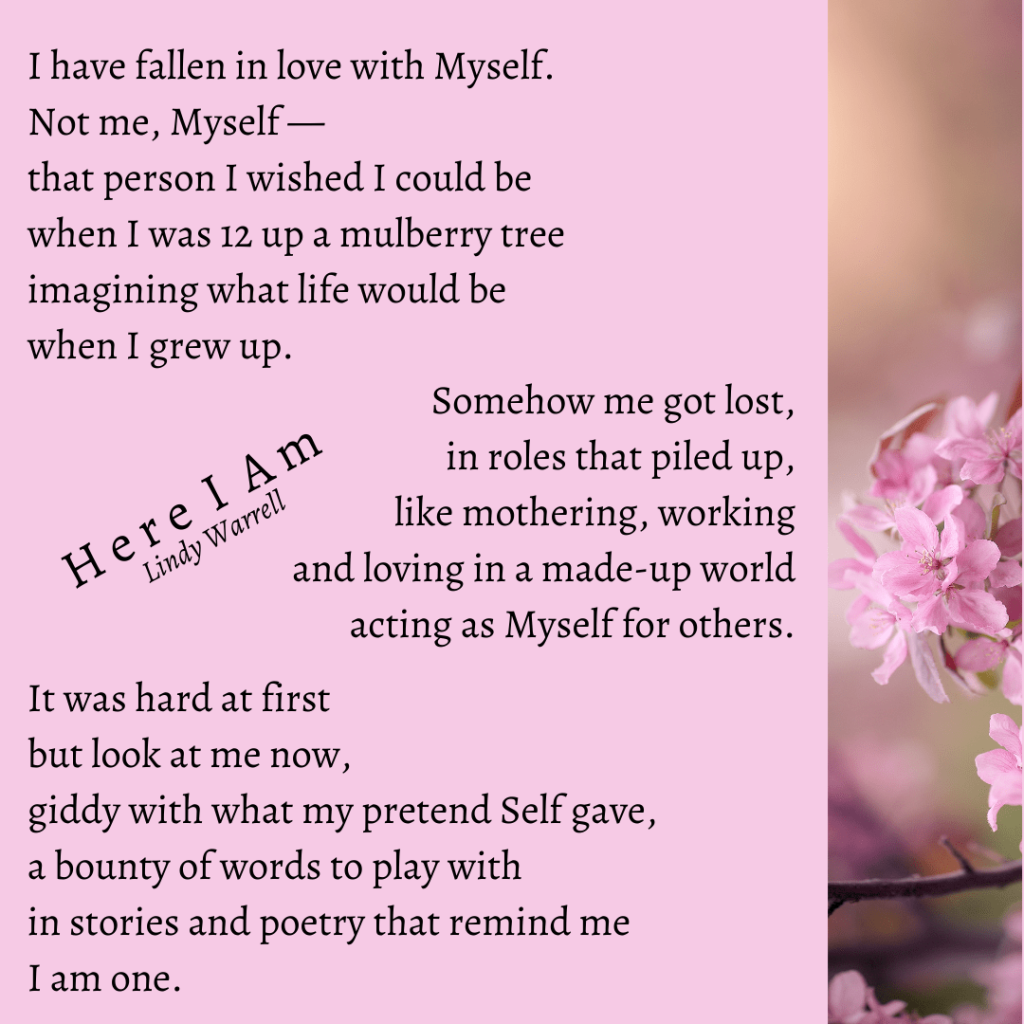
Formal acknowledgements are, of course, in the book itself. Here is the cover poem writ large.
While You’re Here
As this is a short post, I decided to celebrate the launch of Dressed & Uploaded by promoting my other publications, starting with my three chapbooks published in 2018 and 2019 by Ginninderra Press. To read a little more about each, click on the links below. To buy a copy, email me at lindy@wattletales.com.au. The books are $5 each, and postage for a single item is $1.50.
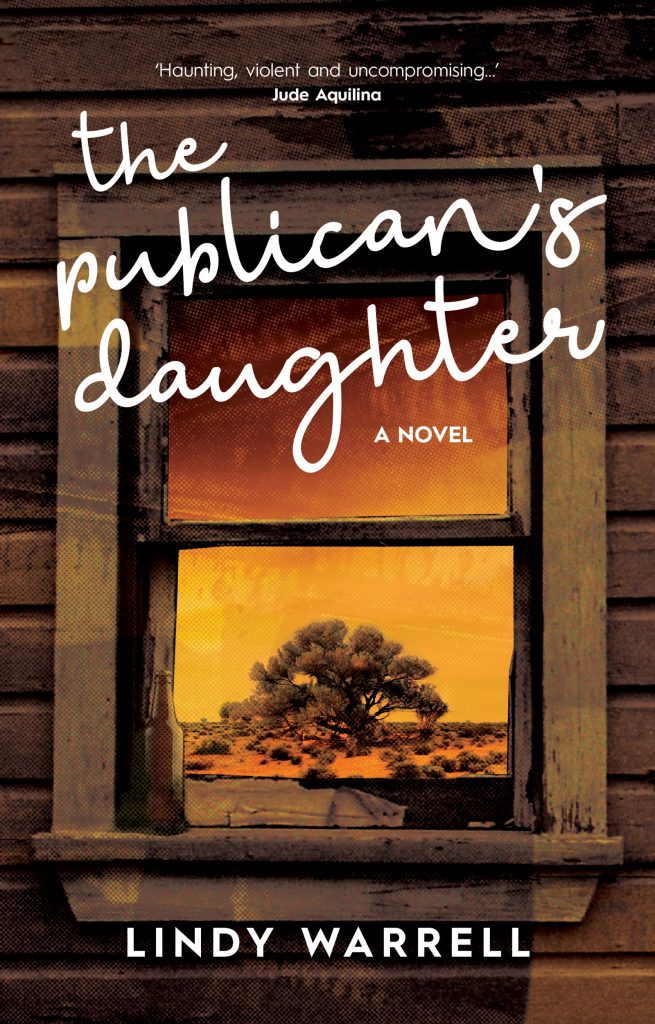
My poetry collection and debut novel were both self-published in 2022 under my imprint, Wattletales Publishing. The link for A Curious Mix takes you to a record of its wonderful launch party. The Publican’s Daughter link offers several reader reviews.
You will find these books in the South Australian Libraries collection in paperback and ebook.
You can also purchase both books (or eBooks) from your favourite supplier. Dymocks has priced the paperbacks of A Curious Mix at $29.33 and The Publican’s Daughter at $42.78. Booktopia is closer to the mark at $23.50 and $32.63.
To celebrate the launch of Dressed & Uploaded, I offer A Curious Mix and The Publican’s Daughter at the author price of $20.00 and $25.00, respectively, plus postage — email me at lindy@wattletales.com.au.
Publishing my first novel, The Publican’s Daughter, was the culmination of an extended process of writing, editing, learning and organising to fulfil my childhood dream to be a novelist. Its launch on 2 April 2022 was a humbling and vulnerable experience that gave me the chance to give my story new life by entrusting it to other hands and minds. Today, I thank the many people who contributed to making that launch an exceptional occasion.
Top Billing
Jude Aquilina launched The Publican’s Daughter with vivacity, humour and style. I owe Jude special thanks not only for giving the best launch anyone could wish for but also for writing a brilliant Foreword for the book. She encouraged me first with poetry and then this novel in its early draft form. Jude is a poet, teacher, workshop convenor and mentor with the unique and magical gift of making people believe in themselves.
Jude Aquilina
Nigel Ford MCIvan Rehorek, aka Avalanche
The inimitable and always entertaining Nigel Ford was our MC. Nigel is a poet and past Convenor of Friendly Street Poets in Adelaide, and he has given a lot to the poetry community of our city and its regions.
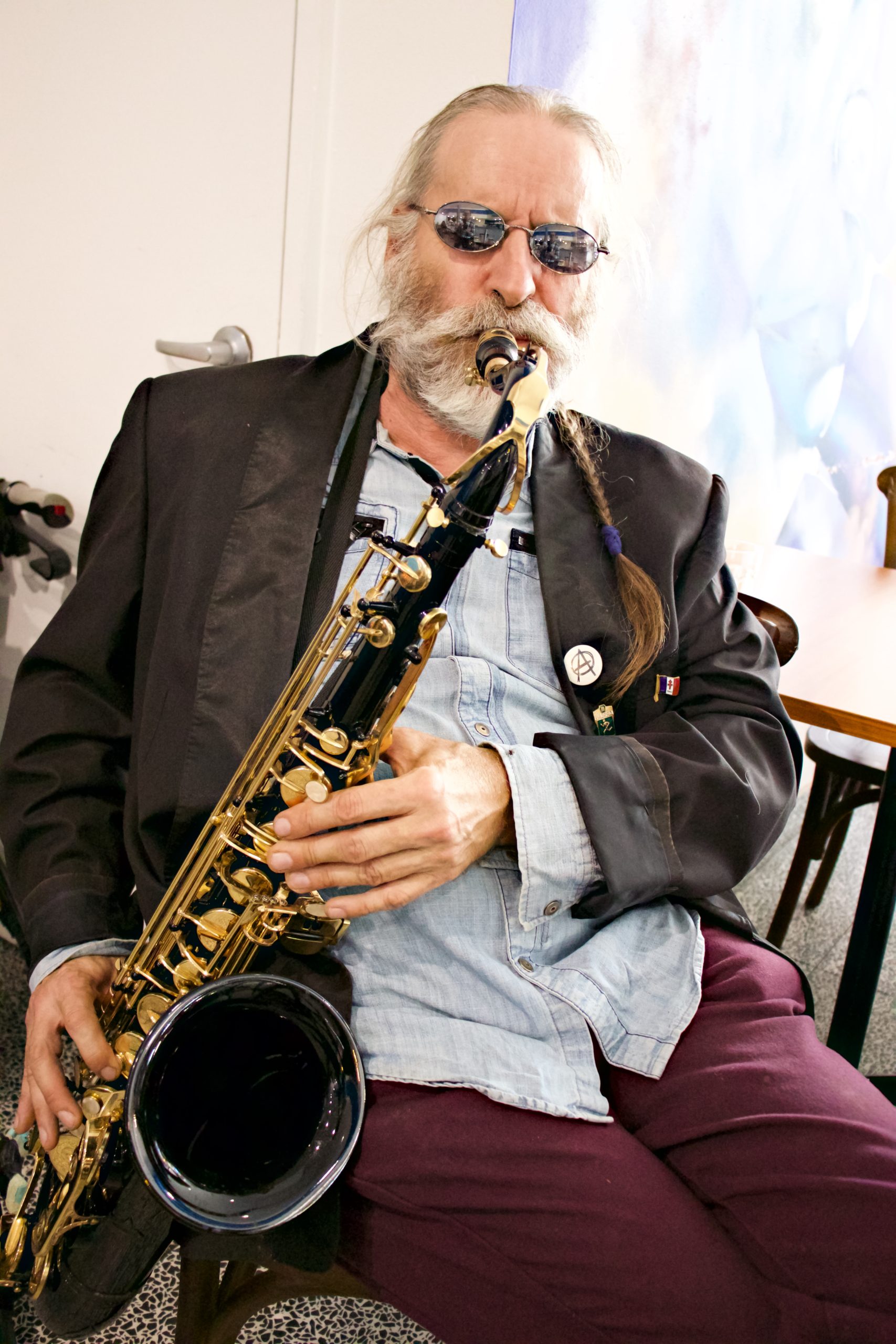
Ivan Rehorek is the poet, artist and musician whose gentle jazz flowed through our hearts on the day, bringing us joyfully together.
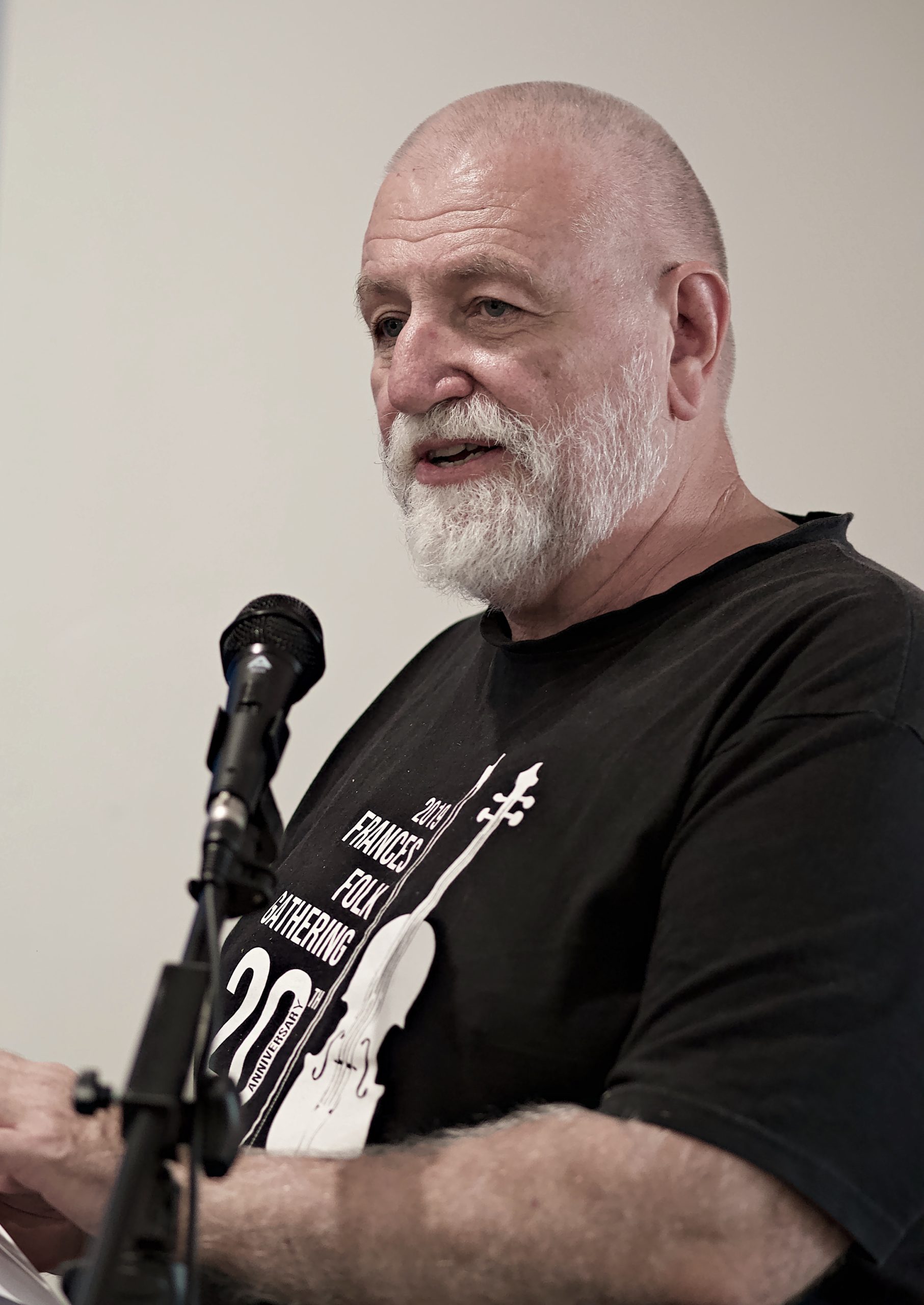
And finally, from behind his camera (where he said he prefers to stay), Martin Christmas, poet, theatre director and teacher, recorded the many smiles you see on this page.
Hidden Helpers
I can’t tell you how talented many of my helpers are, including artist and poet Veronica Cookson and poet husband David Cookson who worked on the book table with my daughter, Vanessa, a designer.
Veronica CooksonDavid CooksonVanessa Warrell
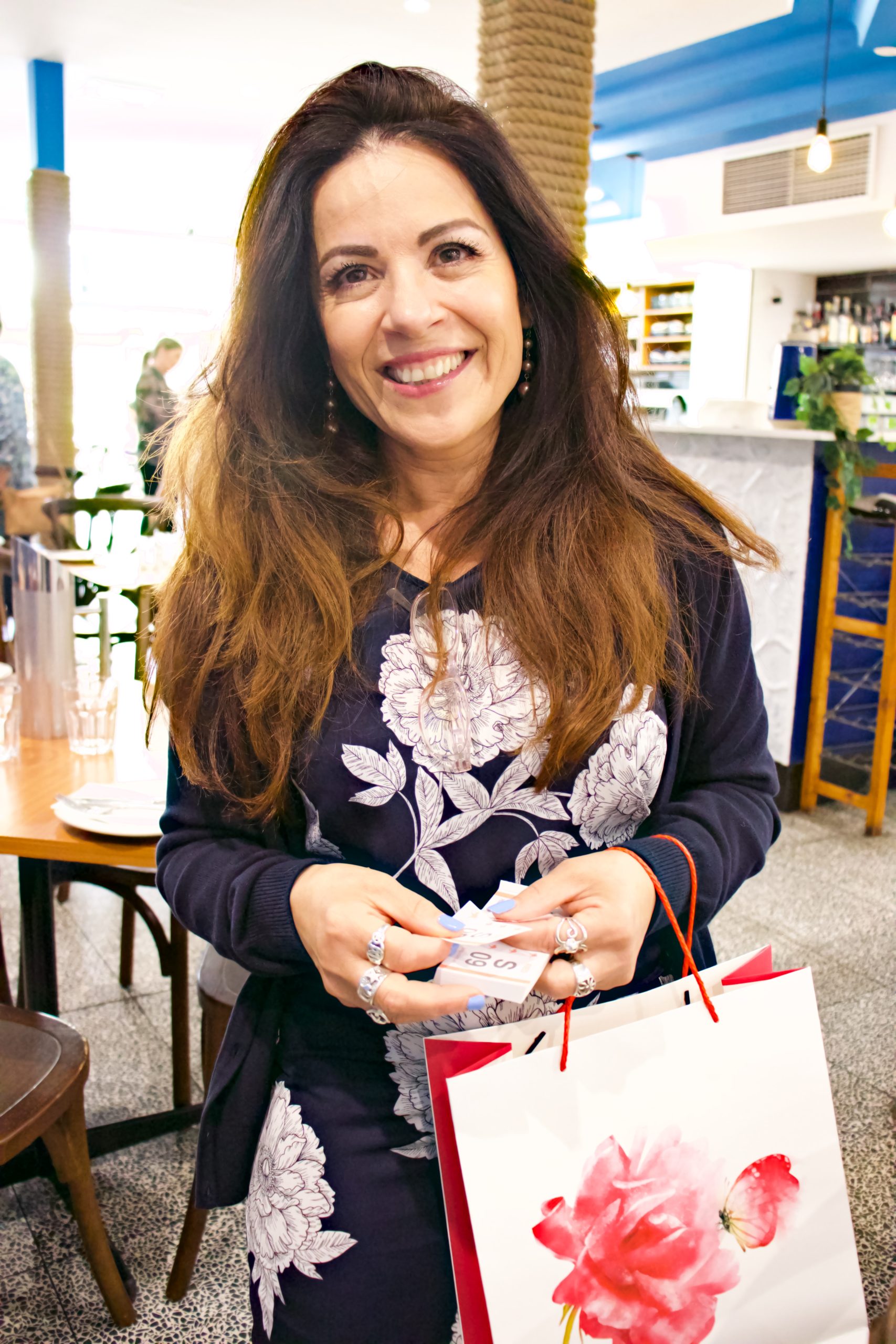
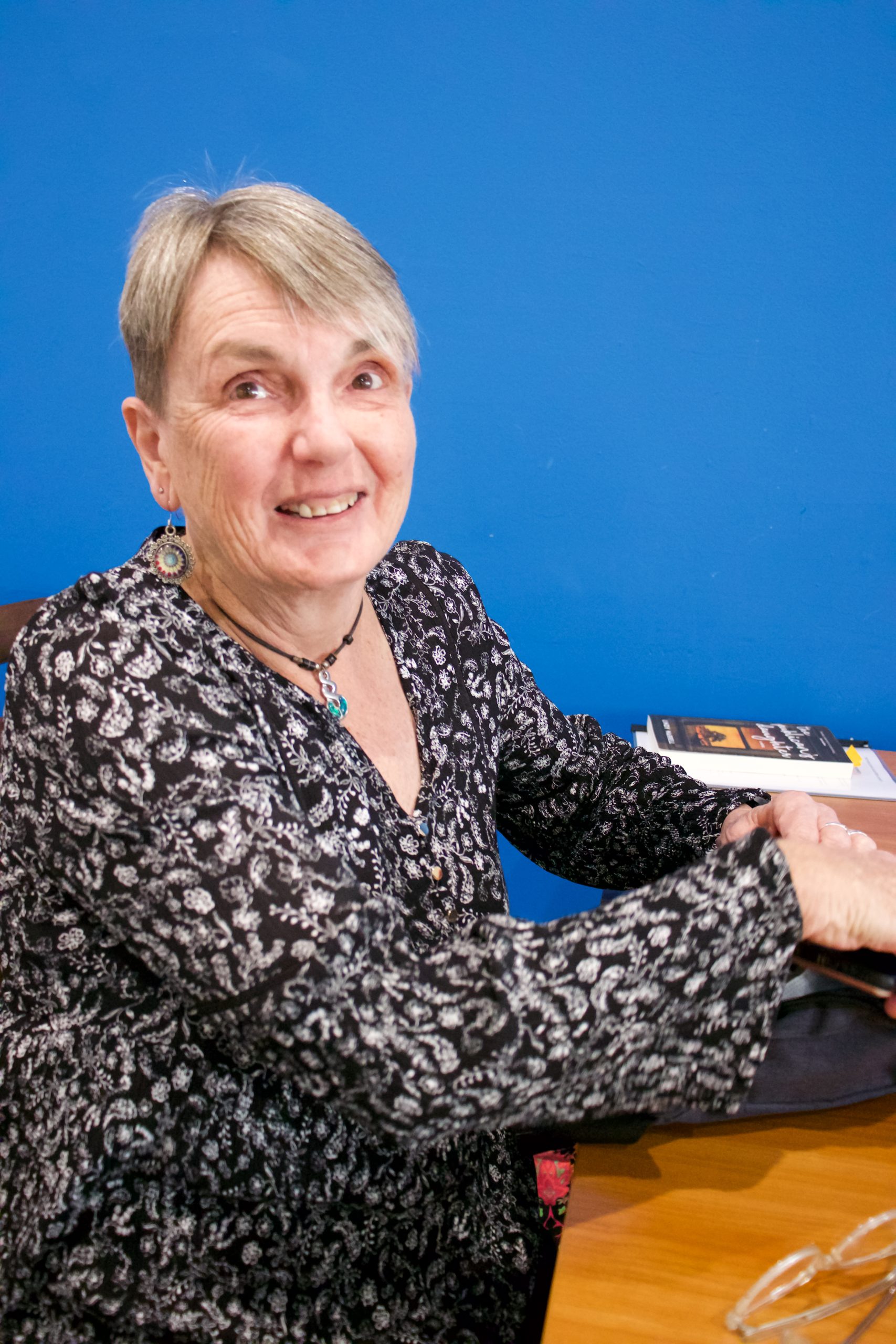
Writer and poet Inez Marrasso managed the lucky door prize, won by creative marriage celebrant Dorrie McNider. Another poet and writer, Helen Hutton, helped with the distribution of gifts after the formalities of speeches and readings.
Inez MarrassoDorrie McNiderHelen Hutton
The Venue
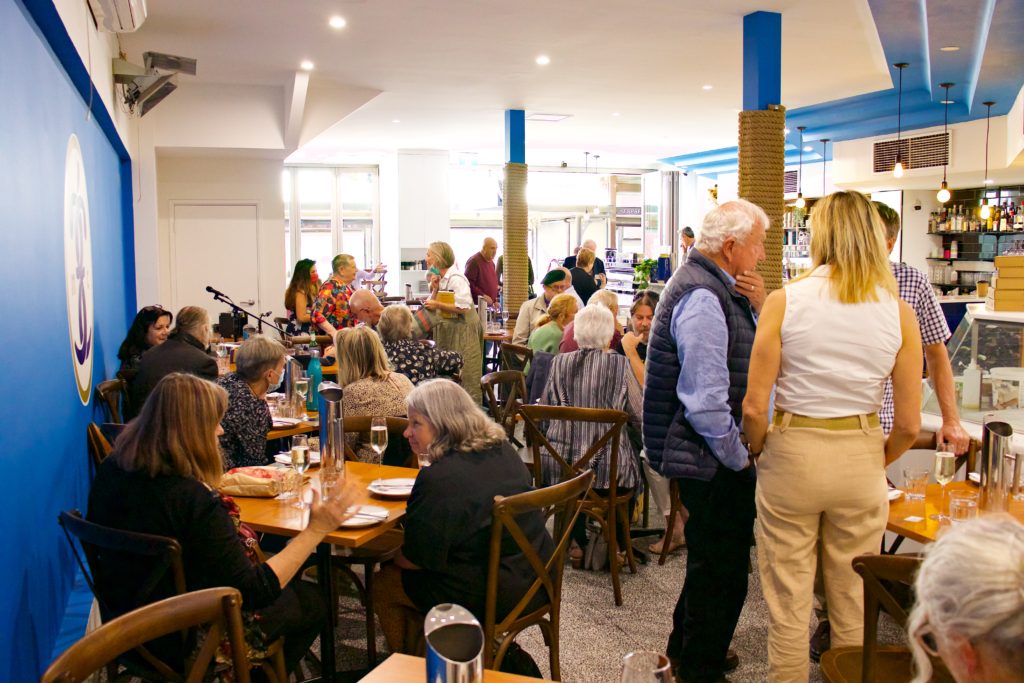
The launch was first scheduled for 12 February but postponed because of COVID. While a few people couldn’t come for the same reason in April, over 50 people attended.
Our host for the day, Rade, owns and manages Elatte Cafe and Restaurant on Jetty Road, Glenelg, our venue. I left the catering and setup to him. Rade himself unpacked book boxes for me and laid my books out on the table, and the table layout in the cafe was perfect. You can’t get a better welcome than that.
Rade of Elatte Cafe and Restaurant
With Rade at the helm, Elatte has the friendliest atmosphere and staff at the Bay. The coffee is unsurpassed. Delicious food, too. Rade’s chef prepared a delectable selection of Greek finger food, dolmades, zucchini fritters, and various homemade dips that had people’s mouths watering.
I posted my thankyou to Rade and his charming staff with this photo on Instagram.
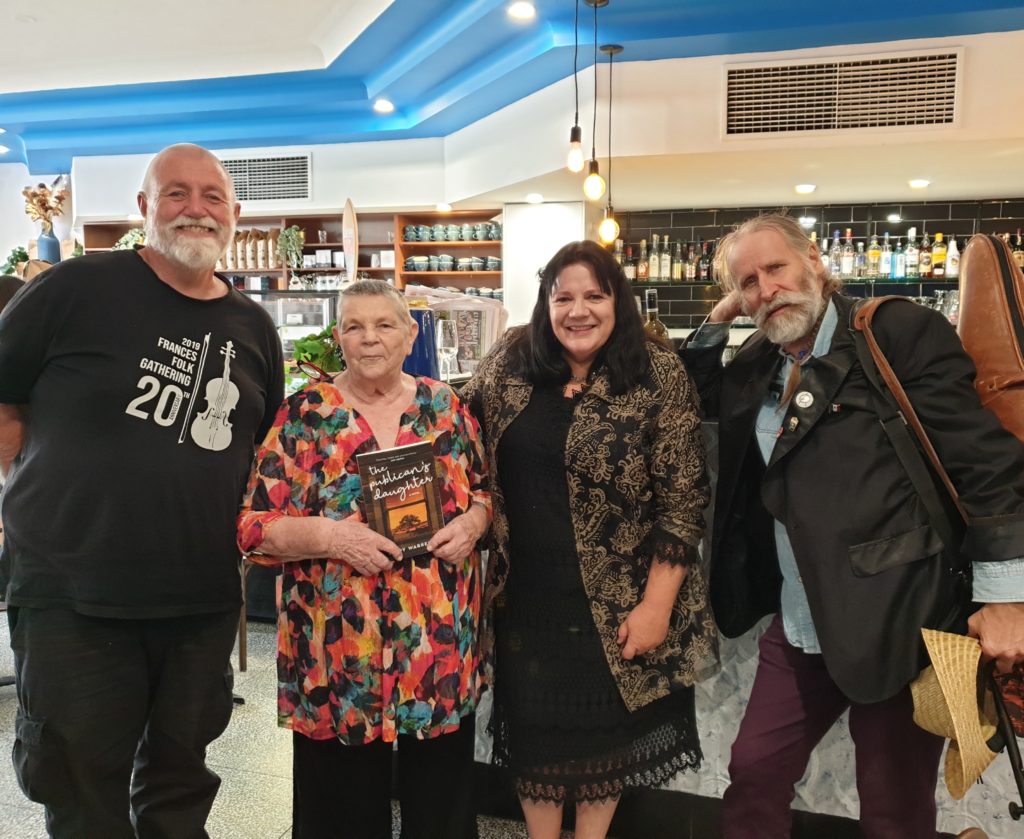
L-R Nigel, me, Jude and Avalanche (Photo by Helen Hutton)
Promotions
The postponement from February to April was productive. Scholar, artist and poet Dr Kathryn Pentecost generously offered to write a review of The Publican’s Daughter, and Yankalilla Times published her interview with me in April. I include it here because it indicates what the book is about and my reasons for writing it.
Download to read or click inside the menu to scroll up and down, left to right or rotate the page if necessary.
Through Christine Kennedy, Holdfast Bay Libraries kindly promoted my book by purchasing copies for their catalogue and made the title available from the South Australian online lending service known as OverDrive or, more recently, Libby.
And I am booked to do an Author Talk in the Kingston Room at Brighton Library on 2 June. Bookings will open closer to the day when Holdfast Bay libraries will promote the event.
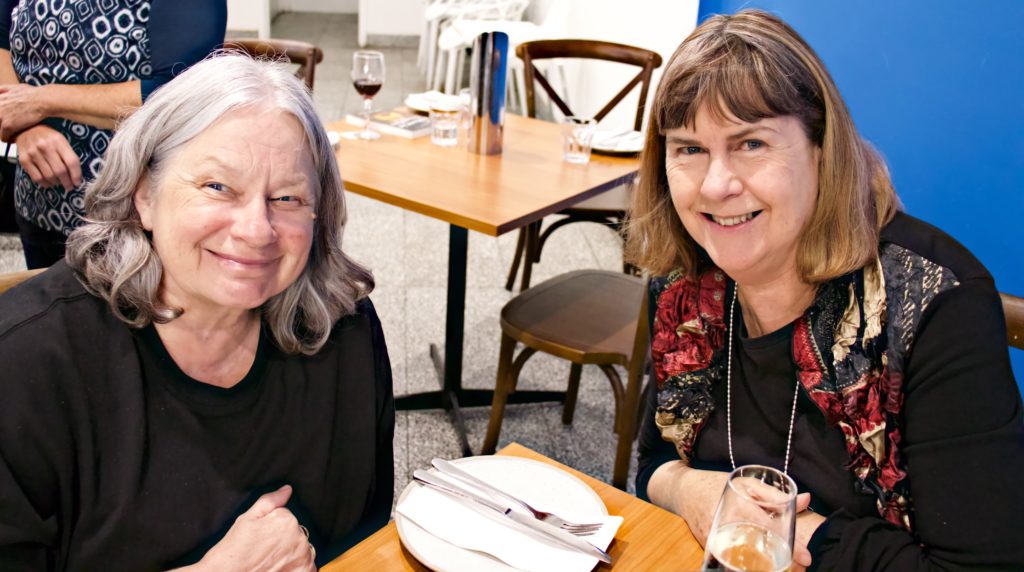
R-L Christine Kennedy from Holdfast Bay Libraries with her friend and reader, Marit Seils. (Photo by Helen Hutton)
In the meantime, on 10 May, I will be chatting about The Publican’s Daughter with Peter Goers on ABC Radio Adelaide’s talk show, Evenings.
The book is available online from Amazon, The Book Depository, Barnes & Noble, Booktopia, and Fishpond. Glenelg’s Dymocks has a few copies, and the ebook is on Kindle.
Getting Here
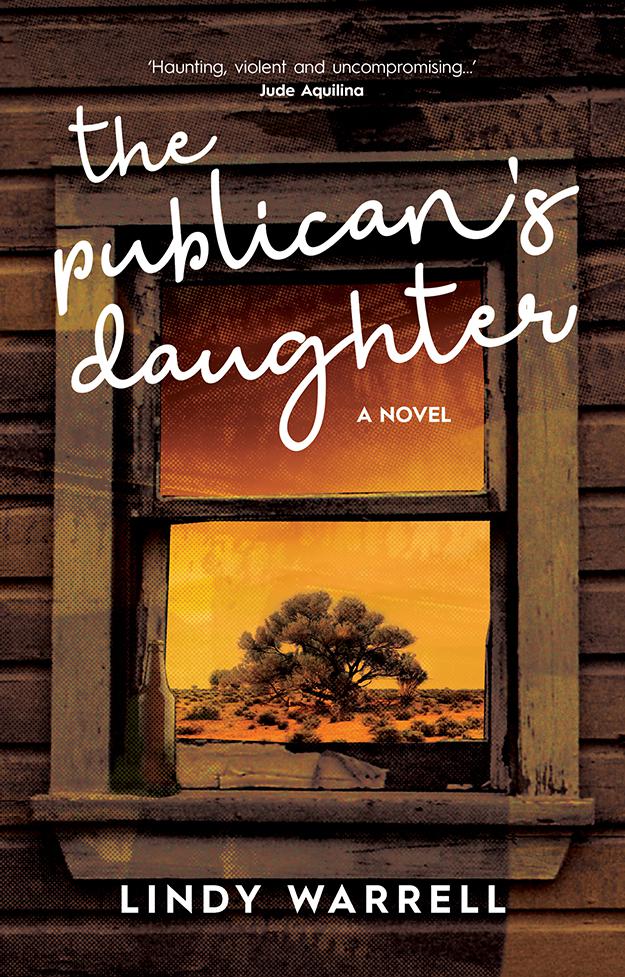
The Publican’s Daughter started life under the title, On Gidgee Plains. As you may know, the gidgee tree (Acacia cambagei) pictured on the cover is colloquially known as the stinking wattle, a hint that all was not good in the story’s fictional outback town of Wonnalinga.
When I decided to self-publish, Wattletales Publishing was born, and I changed the title, hoping to attract more readers online. But, the tree on the cover reminds readers that things in Wonnalinga are crook (as they used to say of Tallarook, a little town in Victoria) which is why both Jude Aquilina and Kathryn Pentecost liken it to the Australian classic, Wake in Fright (1961) by Kenneth Cook. Cook’s story was brought to life as a movie in 1971 and then as a mini-series in 2017.
The Publican’s Daughter is similarly about the dark side of the bush but from a young girls’ point of view.
An Invitation from Watletales Publishing by Lindy
Origins
Set in the early 1960s, The Publican’s Daughter is about a girl who is thwarted in multiple ways as she tries to find a husband. It has its tender moments, but the story emerged from rage, rage at the sexual predation and violence that trapped or harmed young women in my day, including me. I am in awe of the courage shown by today’s young women who speak out about these issues.
I am also in awe of the courage of First Nations people who have survived so much. When I first started to write, I realised that I could not tell a story set in the outback without incorporating aspects of that history into the whole. To do so would indeed be white-washing frontier history, and I am thankful that the book was approved as a story that had to be told.
Every Guest Brings a Gift
Every guest, every reader, brings the gift of renewal to your story, which is the secret of a book launch. I have so many people to thank that I can’t name everyone, but I want to mention a few guests who, like Jude, Nigel, Avalanche, and Martin (see links above), have shared their writing stories with Wattletales.
Veronica Cookson, DavidCookson and Inez Marrasso also contributed, as did my Interviewer, Kathryn Pentecost, who, unfortunately, could not attend.
It was a delight to see Rose Boswell and Luisa Redford at the launch after a long time. Their literary journeys are also on Wattletales. I first met Rose and Luisa in Aldinga Beach when I ran regular life writing workshops and Buddhist meditation gatherings in my studio.
Studio and Meditation Room in Aldinga Beach (my photo)
Warrell creates a superb cinematic drama set on Australia’s wide purple gibber plains. It is portrayed with raw honesty through a direct line into young Katherine’s mind as the city girl’s life becomes entwined in the conflicts of people and land. The Publican’s Daughter is a stark coming of wisdom story of love, loss, heartbreak, and joy. Shaine Melrose
I thank every single person who attended the launch for giving my first novel such a big fat welcome. It was such a memorable day; I feel blessed.
The Lesson
We are never too old to meet our destiny. I wanted to become a novelist as a child and dreamed of it most of my life, but the world got in the way, or so I thought. However, as my little poem below attests, nothing we experience is ever wasted.
ACKNOWLEDGEMENTS
All photos except where otherwise indicated are by Martin Christmas.
I remember reading an article about the Zagato racing team when I was about 12 years old. Their vehicle was based on an Aston Martin DB4. Based in Italy, the Zagato company modified many aspects of the vehicle, readying it for a racing career.
Sunset view from my porch in Yankalilla.
It was entered for its first race at the Goodwood racetrack in 1961, driven by the renowned driver, Stirling Moss, who came in a credible third. Moss was knighted in 2000 for his lifelong involvement in motorsport.
Aston Marton Zagato DB4 at Geneva Car Show
Same Car in Goodwood August 1961
I attended many racing events with my father at the Mallala racetrack, about 15 miles from home. Dad was the District Clerk of Owen and a knowledgeable and experienced road builder. Along with the District Clerk of Mallala, my father designed and built a motor racetrack on the recently vacated RAAF base. Hangars and base infrastructure were still intact, so the track wove its way past and around them. They hoped the munitions buildings were carefully emptied.
With this as background, I embarked on the journey of writing a book! Full of passion, I designed my cars with exotic paintworks, loud exhausts, and famous drivers. After about thirty pages, I came to a standstill. I cannot remember if I lost enthusiasm, the storyline, or my father’s reminder that it costs a lot to publish a book that stopped the project. I often think about that manuscript and whether it was readable and wish I could again see it.
Finding My Way
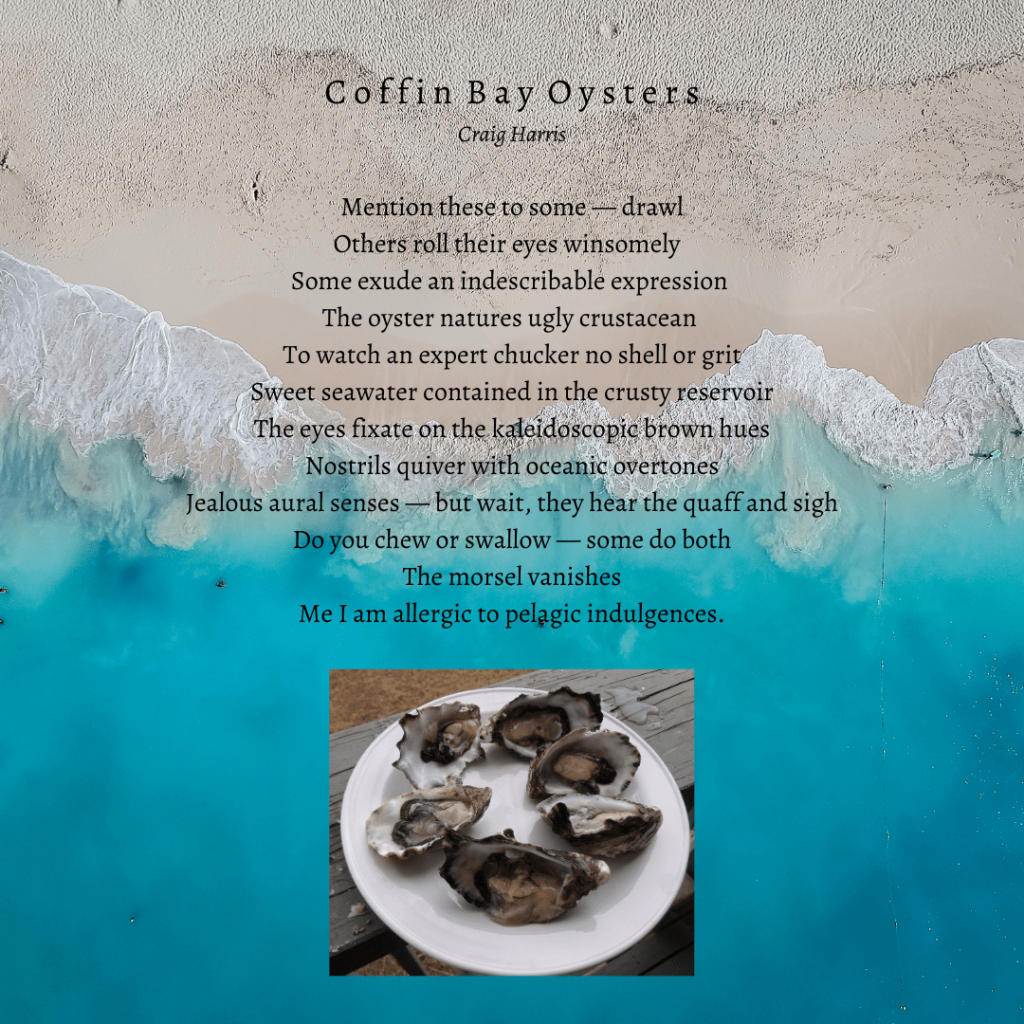
While I had a happy childhood, with holidays in Coffin Bay, during my school years, my reports would say ‘…has the ability but needs to apply himself’ or has the knowledge but does not take tests or exams seriously’.
Coffin Bay South Australia
But, before I left school (in July 1967), I joined the EFS (Emergency Fire Service), later known as the Country Fire Service CFS), and I have been volunteering with them for over 35 years. I have held many positions: Brigade Captain, Group Training Officer, Regional representative on the State Training Committee. And, I was presented with several medals, awards, and accolades.
My Career
My early career was centred around the dairy industry, where I made butter and powdered milk, later overseeing the boiler house. A career change into industrial emergency services lasted 33 years until I retired in July 2016.
I spent a total of forty-nine years in the fire industry! I was a recognised trainer during the early years, developing training material and student manuals specific to various locations. Later I took responsibility for developing emergency plans for fire, security, environment, marine, aviation, preplanning tools, risk and recovery. These plans were for the first responder through to the corporate sector.
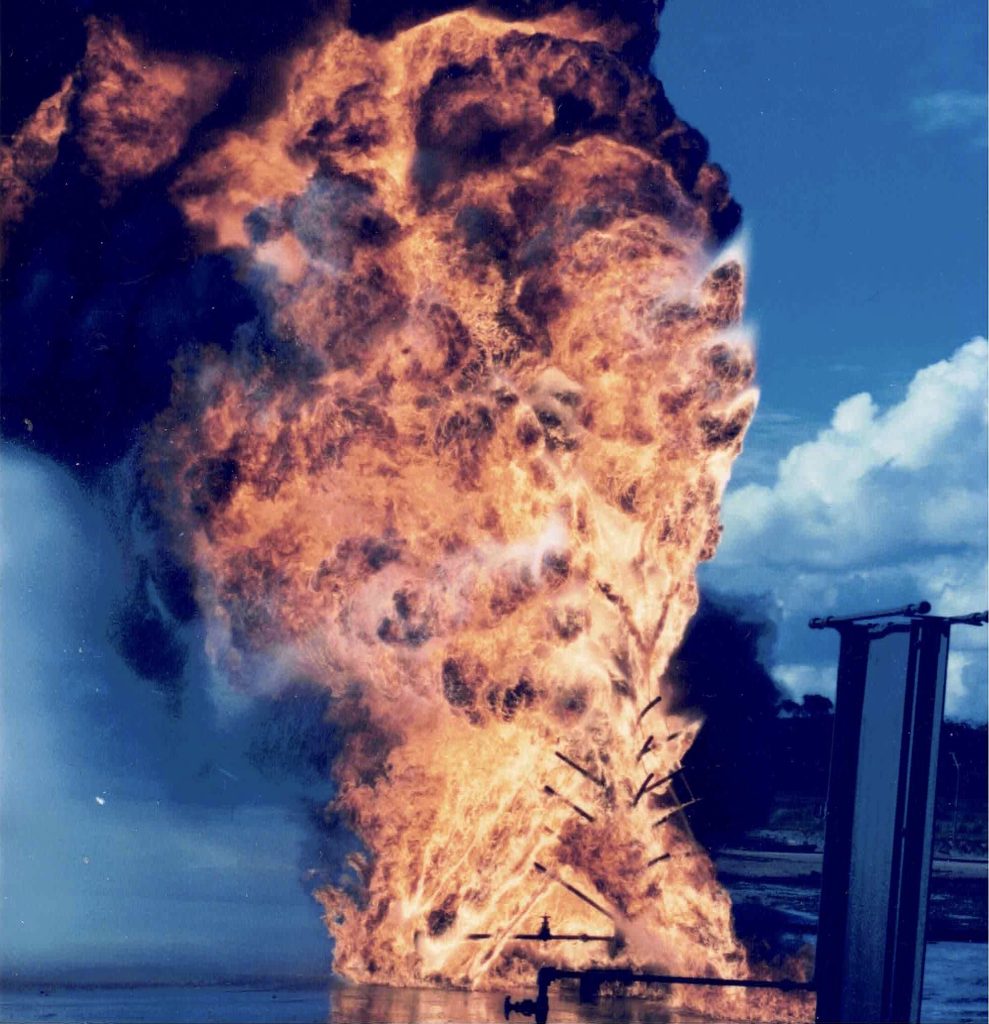
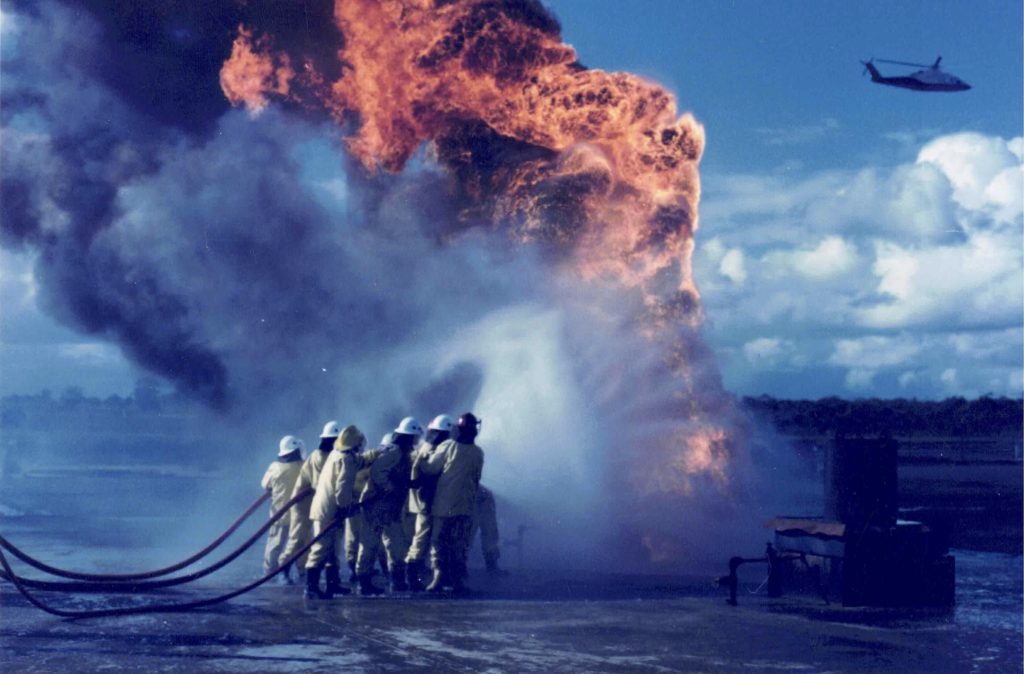
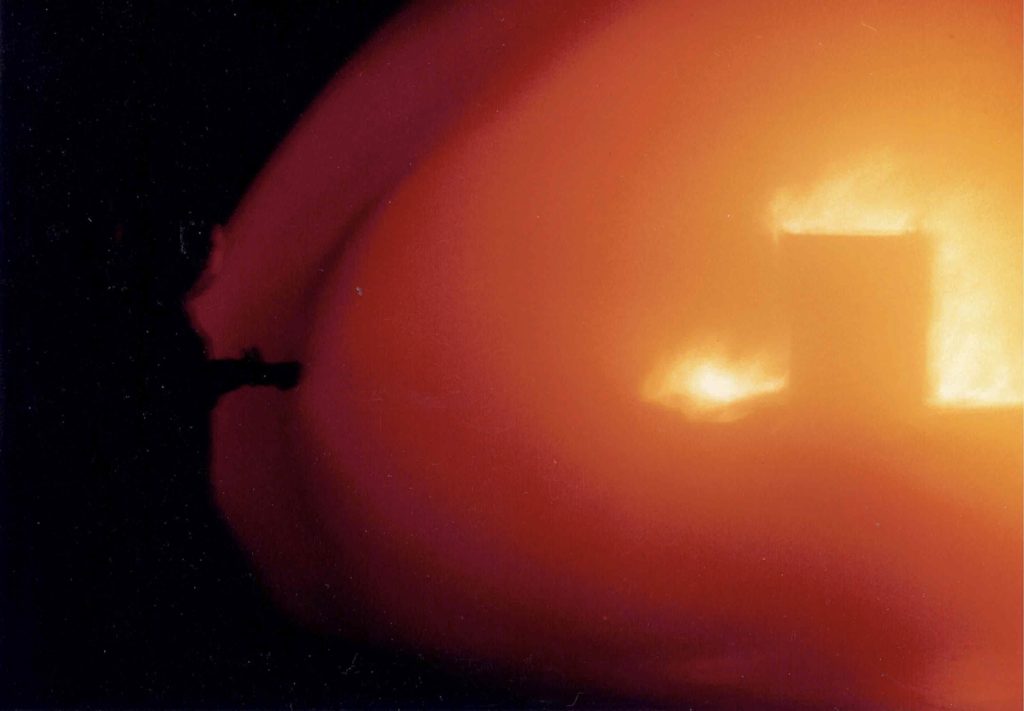
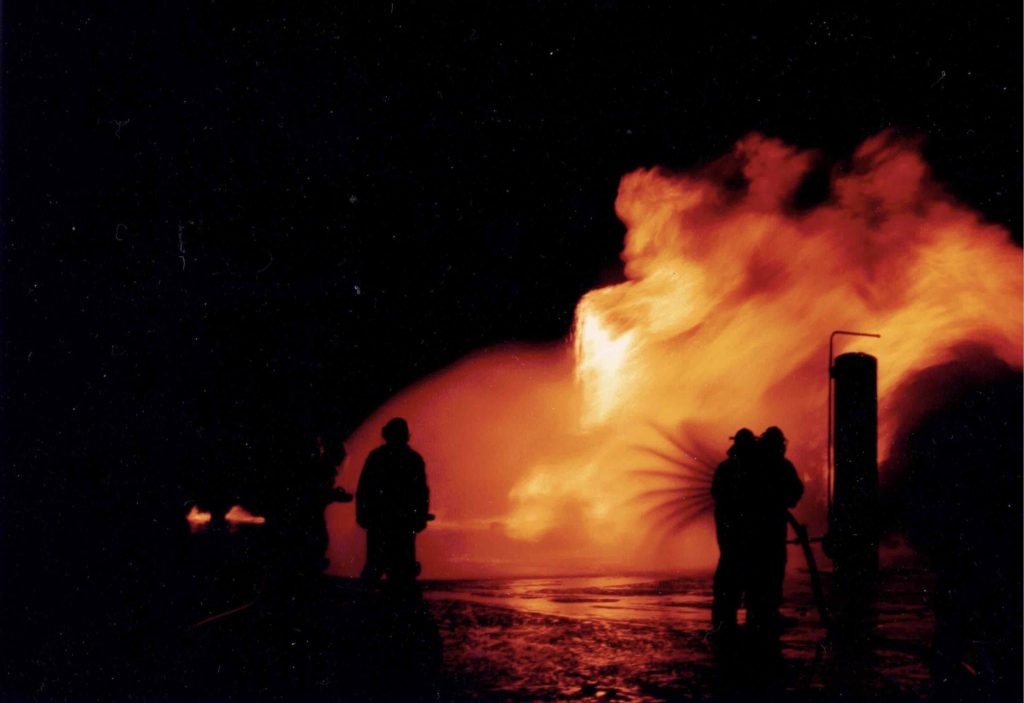
Hot pad fire training. All these fires are extremely hot. Night time firefighting has different conditions and risks.
Another significant part of my role was to conduct scenario-based training and exercises (drills). These exercises could be for a group as small as 5-10 persons through to several hundred, including police, ambulance, and both state and federal government agencies.
I was also invited to join teams and committees to develop large scale exercises. In one, the scale was large enough to involve several state premiers who escalated this onto the Prime Minister. Another was the sizeable annual military exercise conducted across several states with hundreds of personnel deployed.
In 2005, I received a bravery award for rescuing a work colleague who had succumbed to horrific burns, a sad and challenging task for a firefighter.
My working life shows that I was often required to author and develop critical documents, all of which received intense, high-level scrutiny (Especially by insurance companies). I enjoyed this technical writing style and the research necessary to deliver a paper of best practice. Continual improvement during document revisions was challenging.
My First Book
My partner’s Father is Marsden Hordern, an author of many books, including A Merciful Journey, Mariners Are Warned and King of the Australian Coast. His maritime history passion earned him an honorary doctorate in literature from the University of Sydney and many other awards.
He spent WW2 in the navy and sailed as a navigator in four of the early Sydney to Hobart Yacht races. He kept all his logbooks and many souvenirs, mementos, and photo collection.
Marsden is a remarkable man, a few weeks shy of his 99th birthday. He is in good health, has a sharp memory and still drives — in Sydney!
Several years ago, Marsden’s children and I urged him to expand his notes into a book. He answered, I am an old man; I haven’t got time for this; I am writing my life story and other submissions for naval journals.
At the same time, he recognised that his notes and collected materials were precious and should be published. The children declined, and I inherited the task! Immediately I thought I would organise his material to make it easier for another person to interpret and turn it into a manuscript.
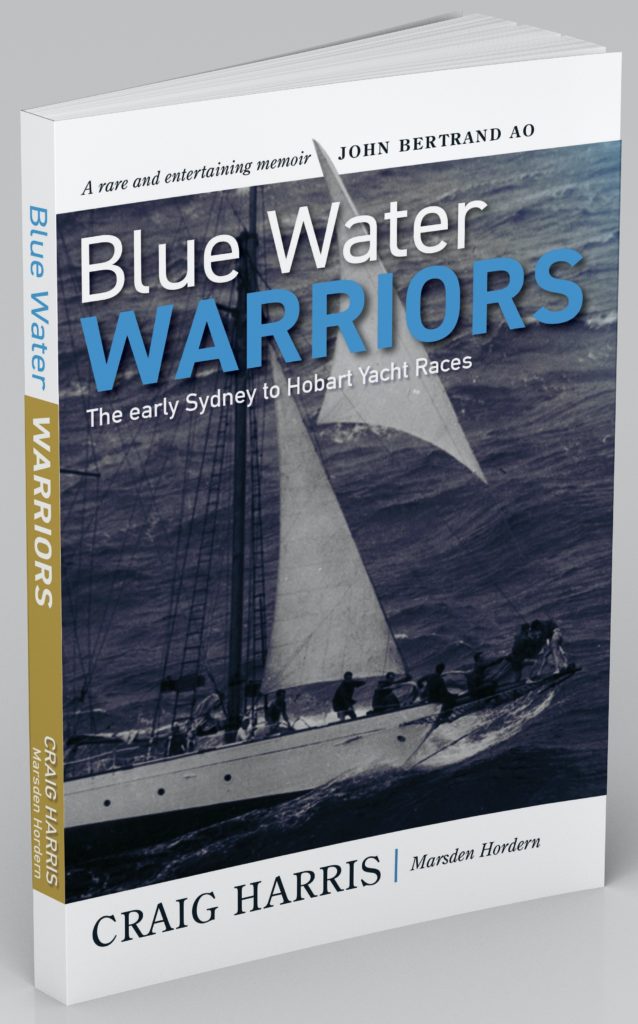
Then I realised the book needed a lot of other information, so I began researching. Before long, I started writing up notes and began to enjoy the challenge of developing the material into a book; Blue Water Warriors was born and slowly evolved into a manuscript.
On Self-publishing
I realised Blue Water Warriors would not be a best-seller, so I decided to self-publish. That was a big learning curve, along with a financial commitment. After the employee expense account bought an expensive bottle of red wine, the book made a small profit.
I did not completely understand the enormity of the project when I started. I soon adopted the approach ‘…that is possible to eat an elephant, providing you do it one bite at a time’. Determination and commitment are two of the critical tools needed for writing a book. The adventure has made me better educated and wiser.
Once the project was complete, I woke up in the morning feeling lost without any writing or research to do.
What Next?
Another project – But what? I loved reading fiction based on fact (faction), novels by Clive Cussler, Lee Childs and others. I have always been fascinated by the space race. Could I write a story with espionage involved in the narrative? Such a book, I thought, would centre on the USA, so a lot of research would be required.
I soon started a series of novels following a timeline beginning in October 1952. The Genius of Illusions is now waiting for a publisher or an agent to accept it; a problematic process indeed. Both The Master of Illusions and The Maven of Illusions are complete pending a final edit. And, The Maestro of Illusions is about 40% complete.
I am a member of the Australian Society of Authors, Writers SA and several writing groups. Belonging to these groups has expanded my knowledge and enjoyment of different writers and styles.
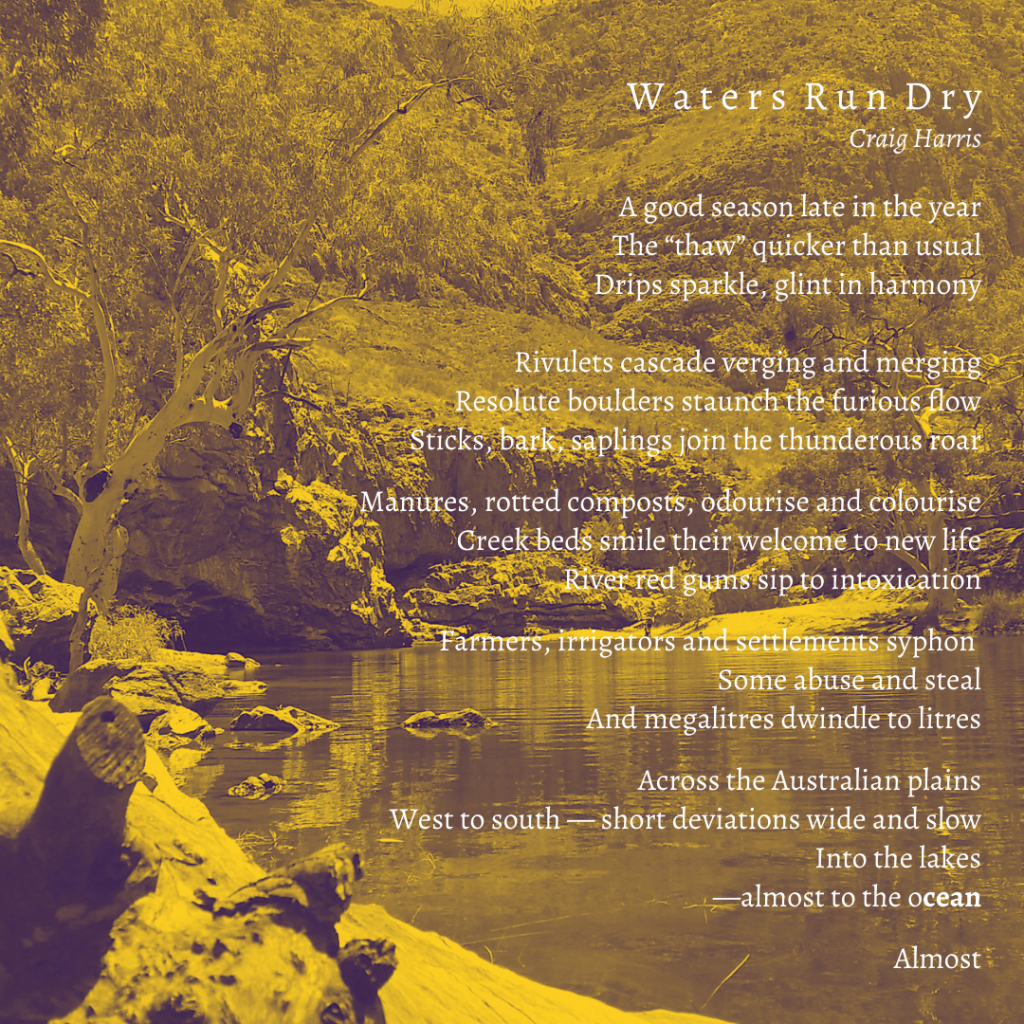
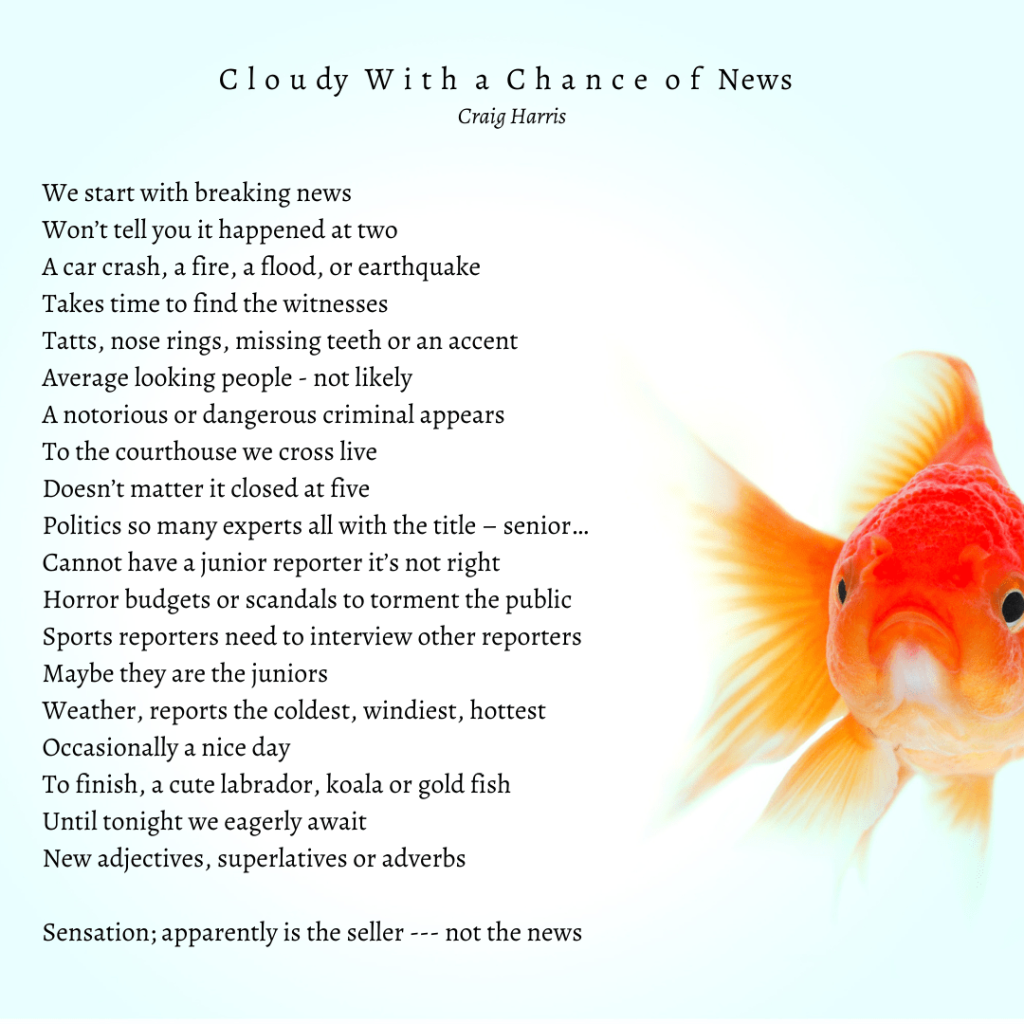
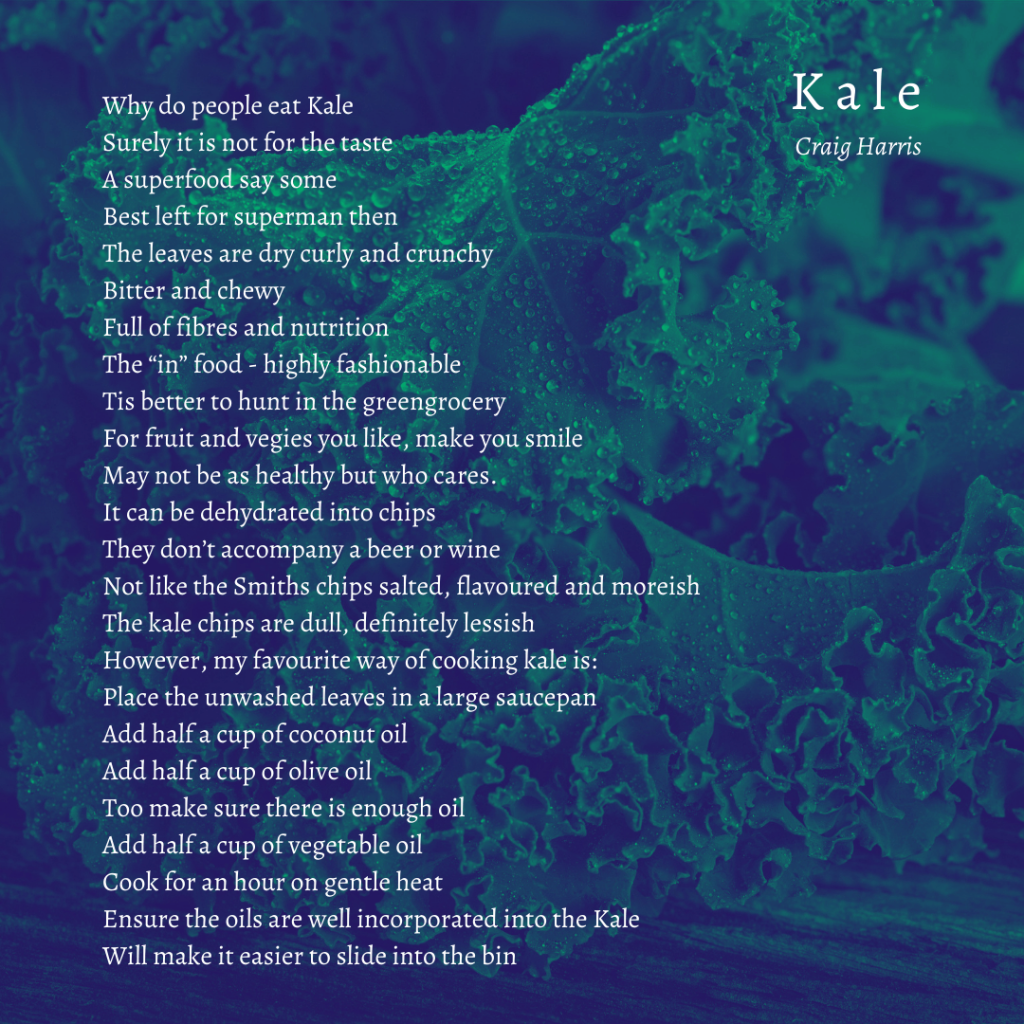
I now write many short stories, and about three years ago, I wrote my first poem. Here are two recent poems that focus on climate and the weather, making sense in terms of my fiery history.
My Hobbies
My hobbies include my V8 powered MGB roadster, and I have competed several times at the Mount Alma Mile hill climb.
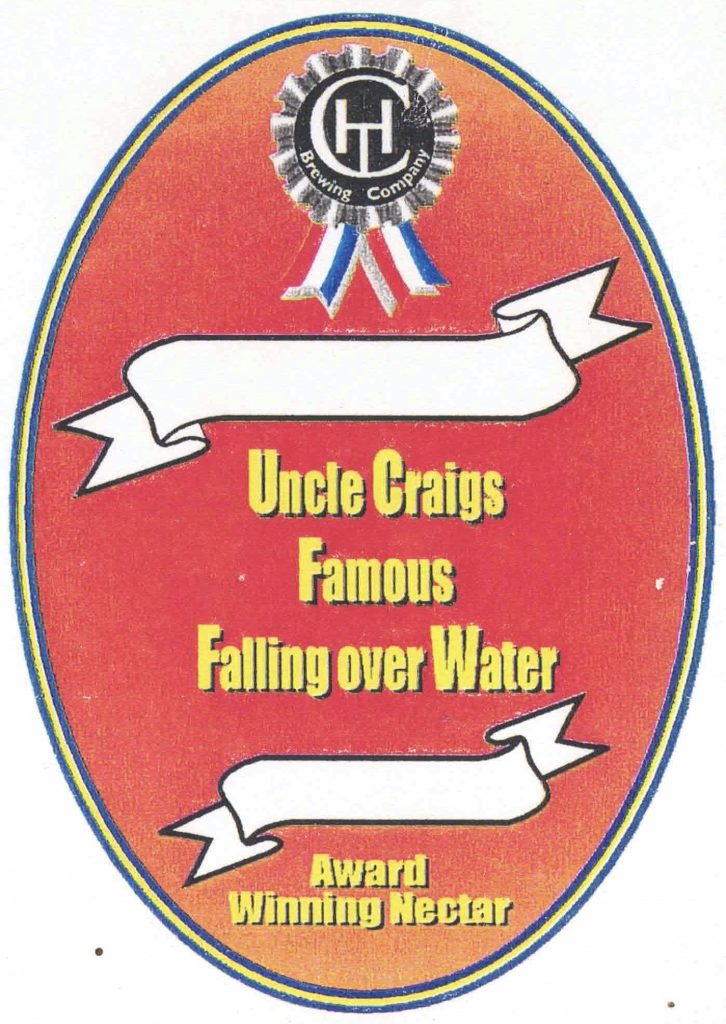
Another pastime is the intricate art of home brewing. With the SA Amateurs Brewing, I have won several state awards, and an Australian title.
And, poetry!
The Journey Continues…
AUTHOR BIO
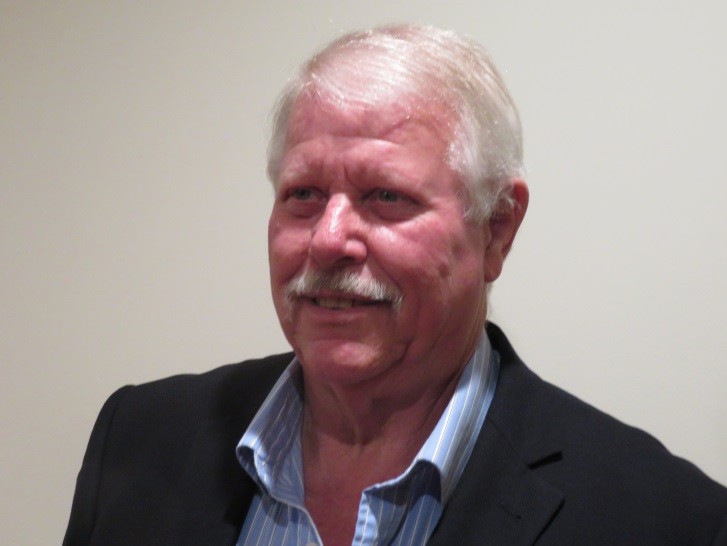
Craig Harris grew up in regional South Australia and spent happy childhood holidays at Coffin Bay.
After a long career in dairy and mining industries, principally in the outback, his retirement has provided time to research important historical aspects of Australia’s greatest ocean race for his book Blue Water Warriors.
Craig is an active member of several writers’ groups and has been published in several anthologies. Currently, he is authoring a series of novels on Soviet espionage during the cold war era of the space race. He enjoys writing poetry and short stories.
ACKNOWLEDGEMENTS: Text, poems and images remain the property of the author.
Once upon a time at University as a post-fieldwork PhD student, I declared that I would write a novel entitled, The Sexual Adventures of a Middle-aged Backpacker. A tenured academic, the idea of who in open-fly striped pyjamas amused me no end, retorted, ‘Nobody would ever read a title like that’.
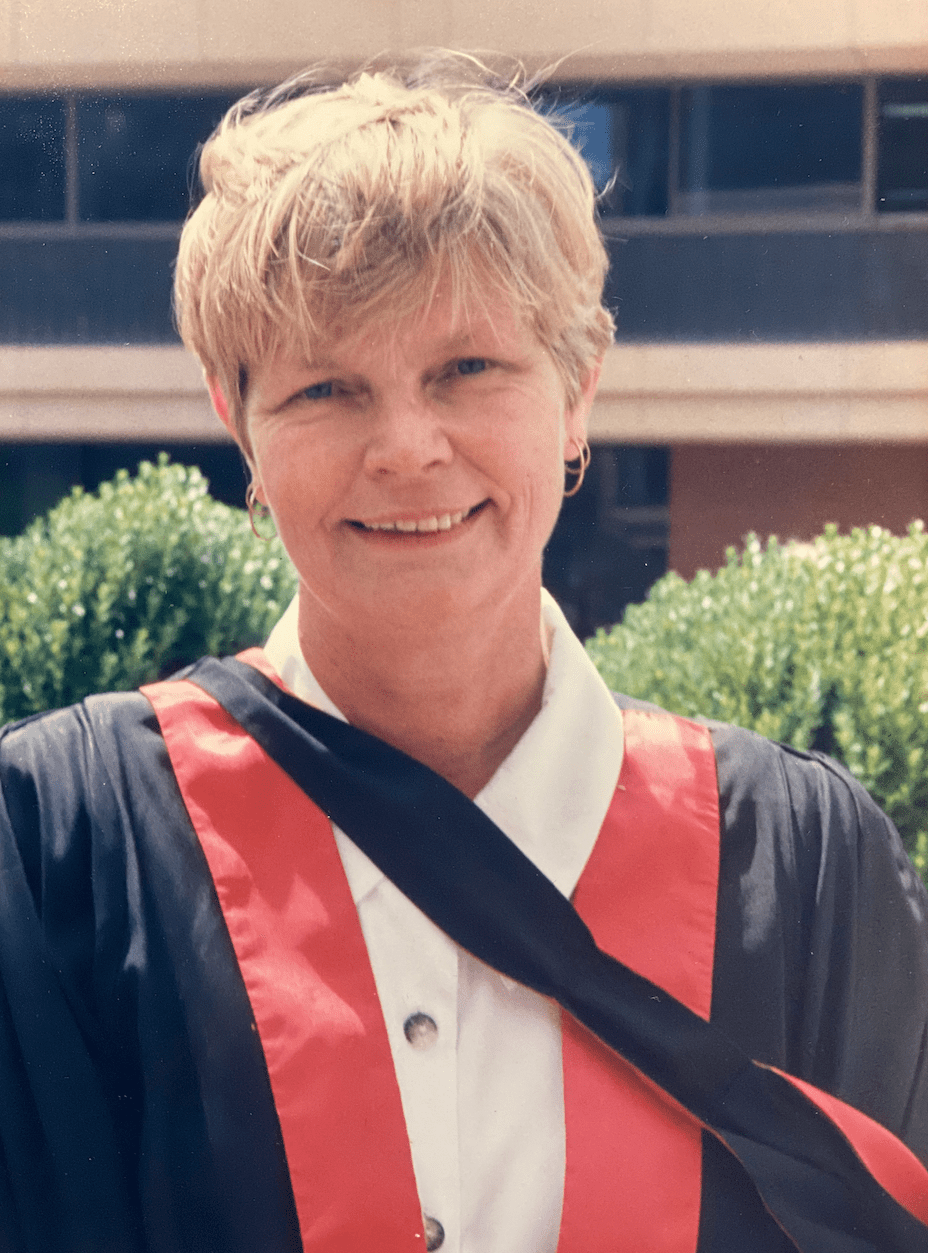
University of Adelaide 1991
That I never wrote the backpacker book is an indication of how quickly a girl can lose heart. The academic’s dismissal of my special-entry, middle-aged student idea touched a childhood button equivalent to my father cutting me in two with the words, ‘What would you know, you’re only a little girl’.
As an aside, another university doozie was my PhD supervisor saying, ‘You’ll have to learn to write like a man.’ That one too strangulated me for years. Yet, by the grace of my age-mate who left us last week, Helen Reddy, here I am. And I am, after all, Woman.
Medicating Distress
Another title I once promised friends was, The Grizzle and Giggle Club. It was to be a funny account of the way women console each other to cope with overburdened or miserable lives by grizzling and giggling (in mutual recognition), sans pills. Men seem never to understand the importance of this form of release; they try to fix things when we grizzle to them. No doubt they feel helpless when we say, ‘thanks but no thanks’.
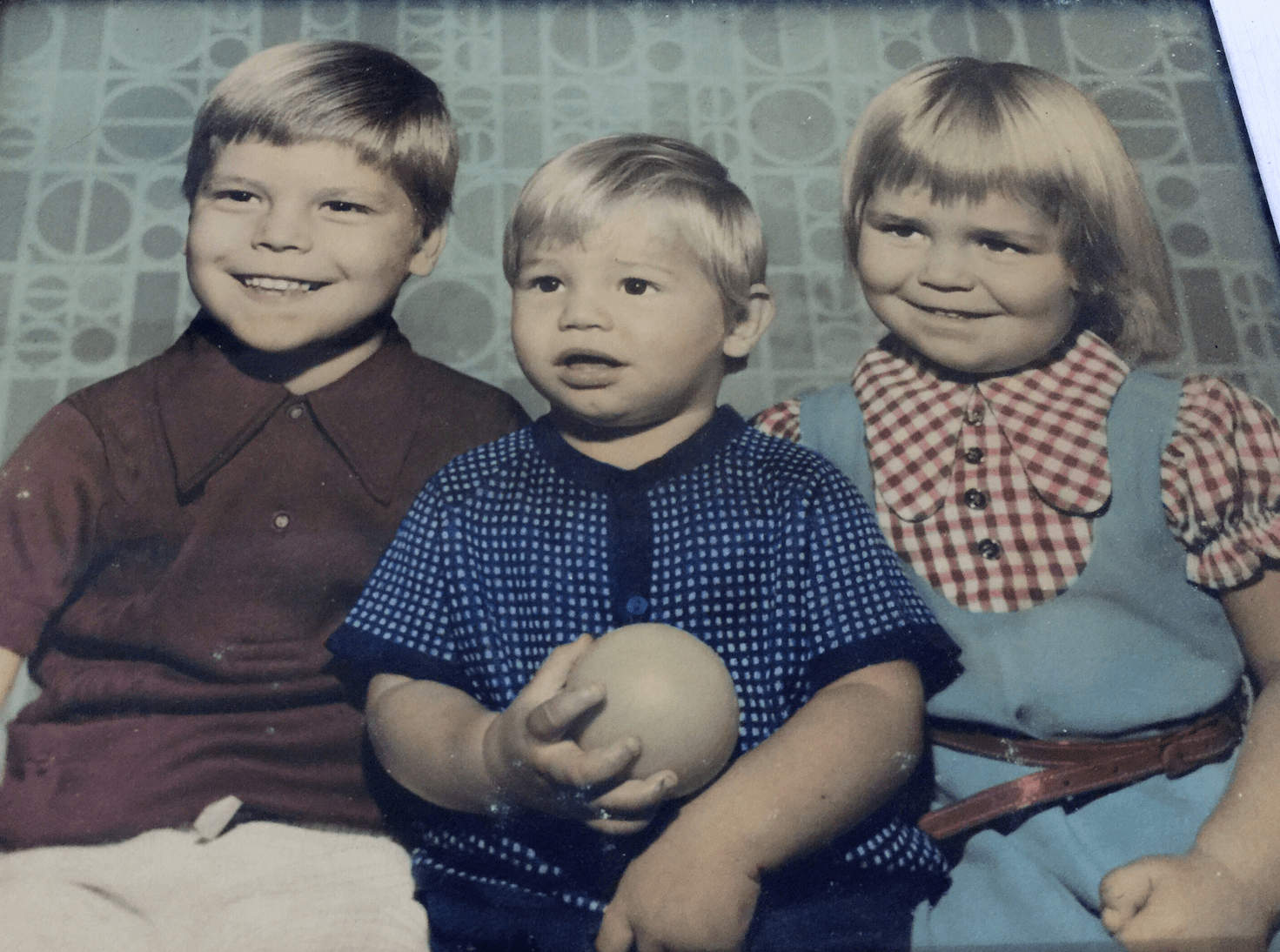
When the father of my children left me, my doctor prescribed Serapax. I’ll call him Dr Fixit. I took one little blue pill that day and lay, semi-conscious on my lonely double bed for the entire afternoon with three small children aged two, four and five crying and trying to rouse their comatose mother.
L – R Grant, Mark and Vanessa
From that day forth, I have denounced the medical tendency to medicate distress. The practice of prescribing away women’s misery is, in my view, an act of social control; keep them in their place. Thank goodness we can write!
Pompous vs Saleable Titles
As my mother once rightly pointed out, I’ve become a tad pompous over the last 30 years. Instead of thinking up engaging titles with a promise of fun as I once did, I have written one book called (obscurely) On Gidgee Plains. My second, now two-thirds complete is entitled (sociologically) High Rise Society. And, Beyond Ginza (a child synaesthete’s take on the British Occupation of Japan) is in the planning stage. Nothing light or amusing anywhere.
By way of showcasing each of these titles, I offer a snippet of writing from each, with suggested alternative titles. I ask you to decide which works best for you.
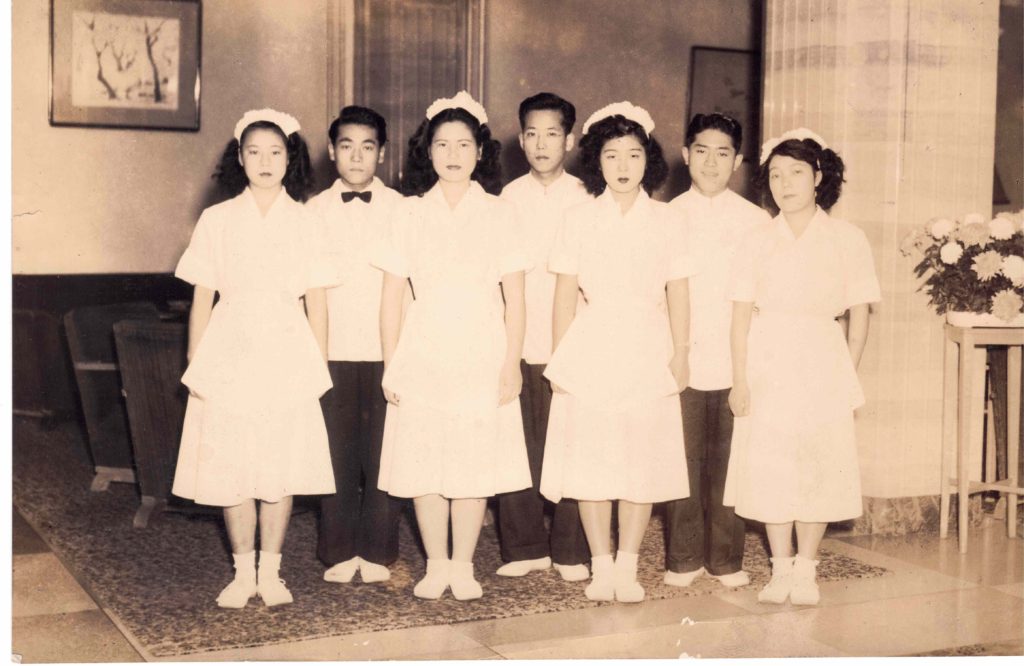
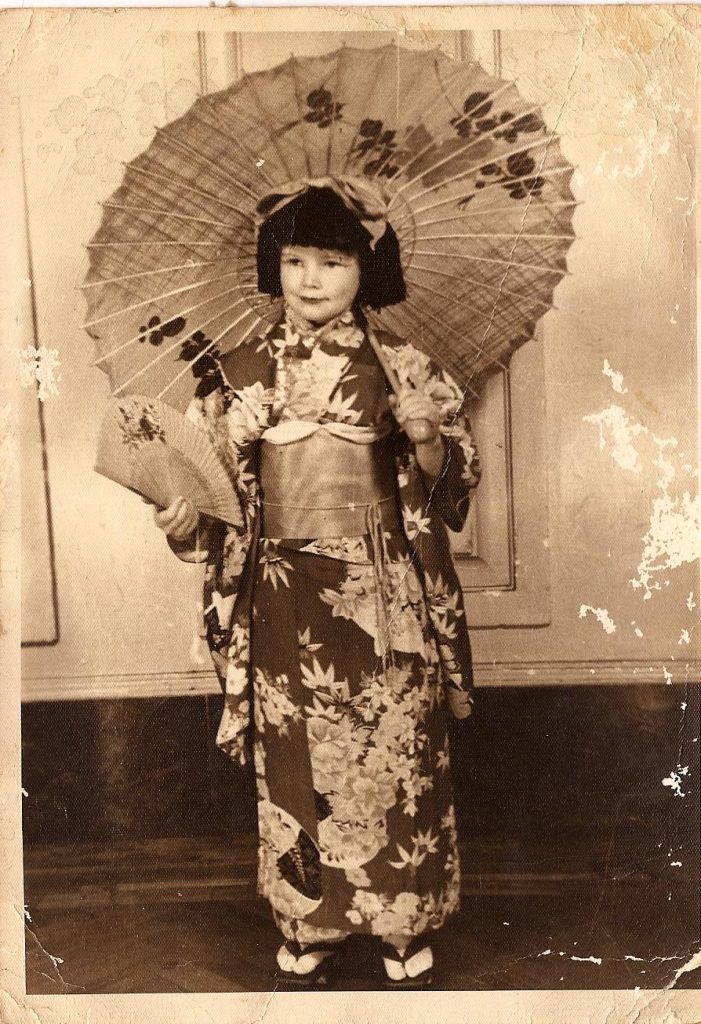
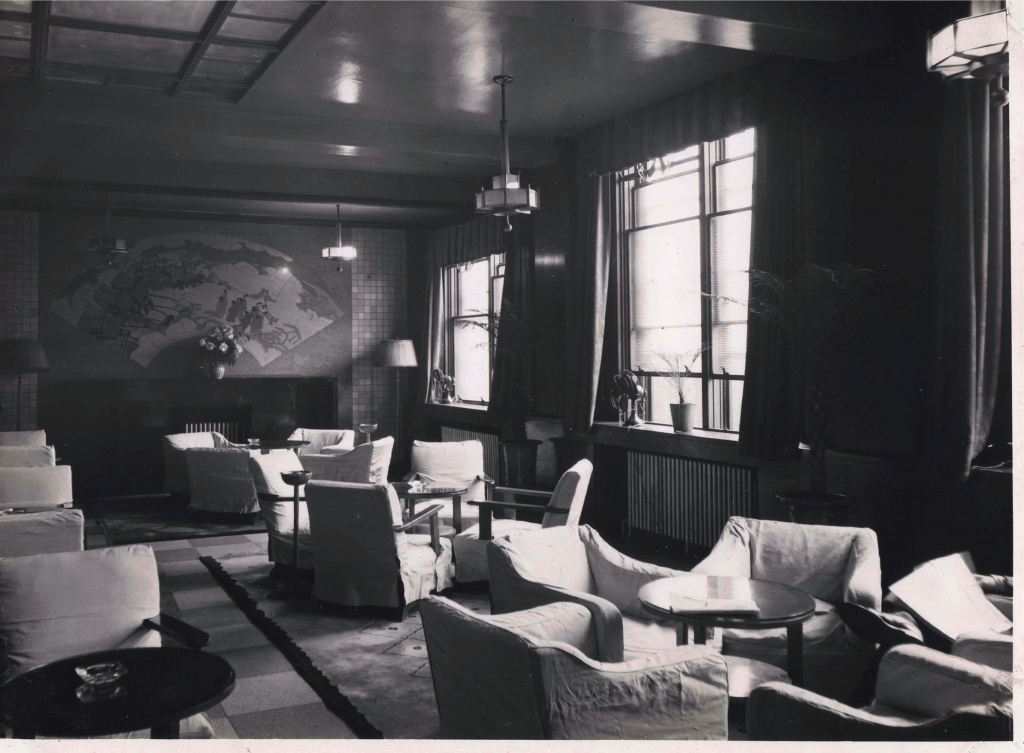
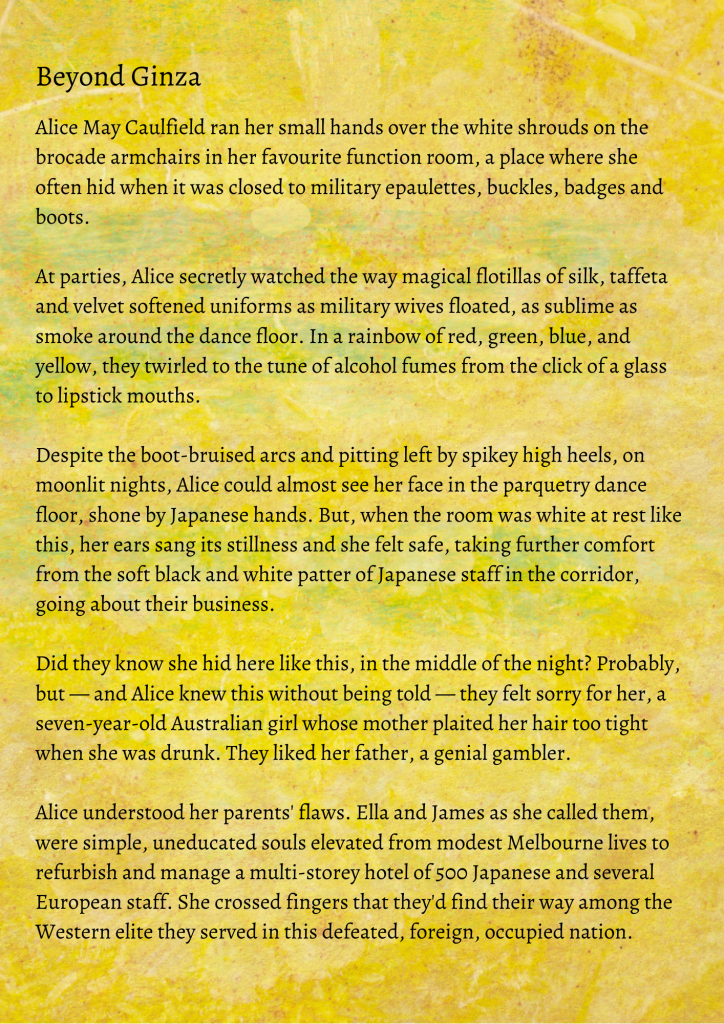
The vignette of possible opening lines below emerged in a workshop with Jude Aquilina where Jude denounced the original pompous title of BCOF Baby Blues. While the story is fictional, the idea comes from our time in Japan when my father refurbished and managed the Marunouchi Hotel in Tokyo for the British Commonwealth Occupation Force (BCOF) at the end of WWII. The photos are from my personal collection.
Black trousers, white aprons
Me in costume
Ballroom with parquetry floor
Function room
High Rise Society or Old Man Eucalypt and Kewpie Dolls
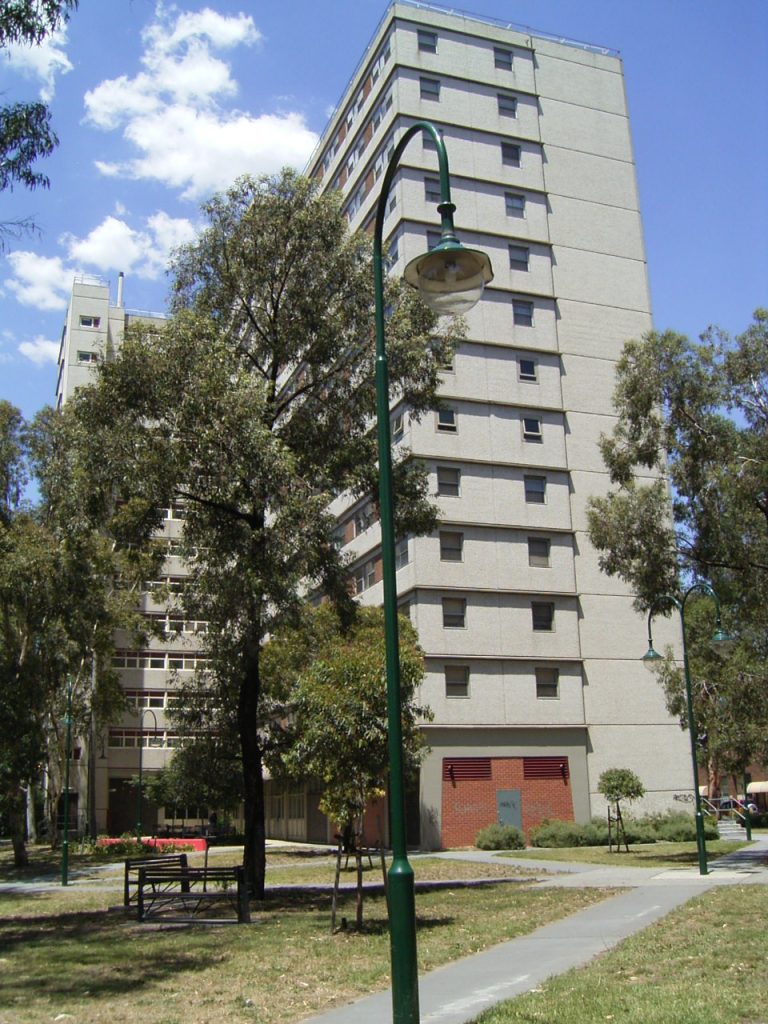
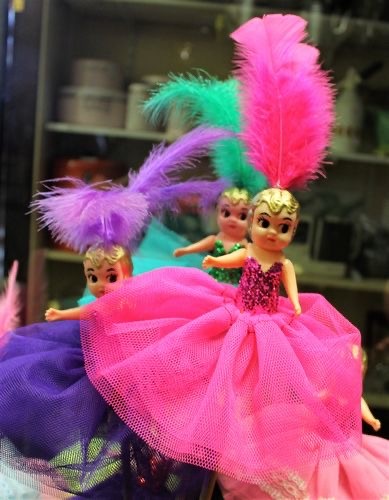
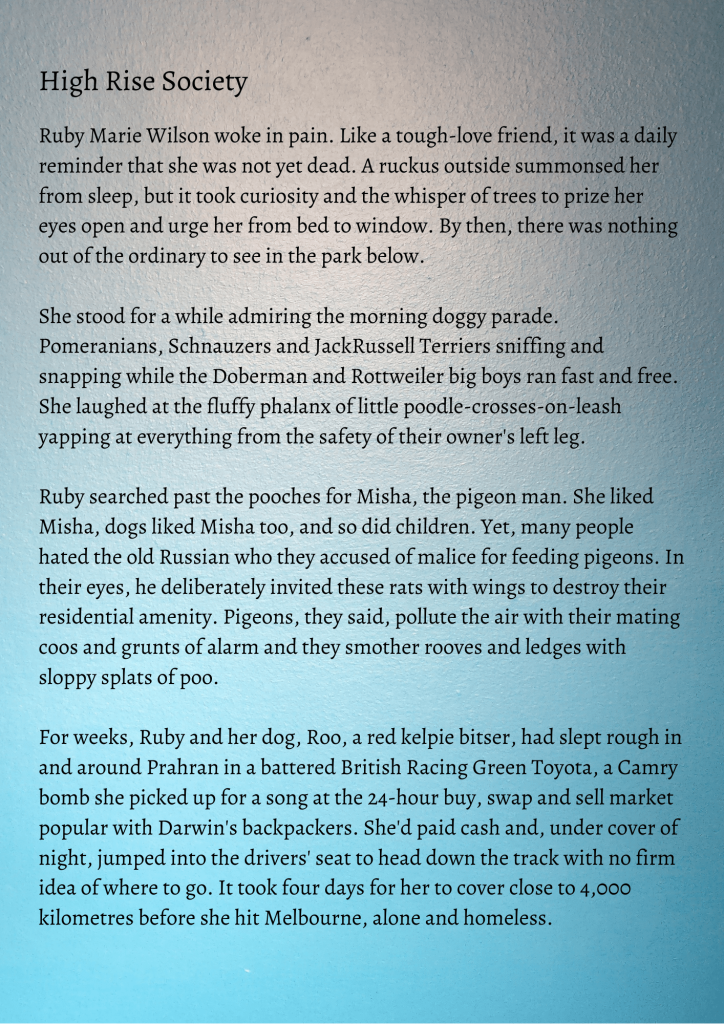
While the title, High Rise Society is sociologically descriptive, it fails to hint at the magical realism in this book. Triggered by the unexpected death of a kind soul called Misha whose body is not discovered for weeks, the story explores loneliness and isolation. When Misha dies, the protagonist is befriended by a wise tree and two drag-queens in what become transforming moments for her. Drag costumes remind her of the Kewpie dolls of childhood, and the tree has echoes of Snugglepot and Cuddlepie. (I am still playing with this one.)
Public High-rise Tower
Kewpie Dolls
On Gidgee Plains or The Publican’s Daughter
On Gidgee Plains once had a contract but may now be heading towards self-publishing. If I do that, I would call it The Publican’s Daughter, a better title to attract online readers. As I write this, I see that I seem to favour place or setting in my original novel titles. Changing this one to The Publican’s Daughter will strip the story from its locale, which is fundamental to it. Still, how many readers know about the gidgee tree (Acacia cambegei), known colloquially as the stinking wattle because it stinks when in flower. It is an ideal symbol for this dark tale, but pretty obscure for marketing so choices must be made.
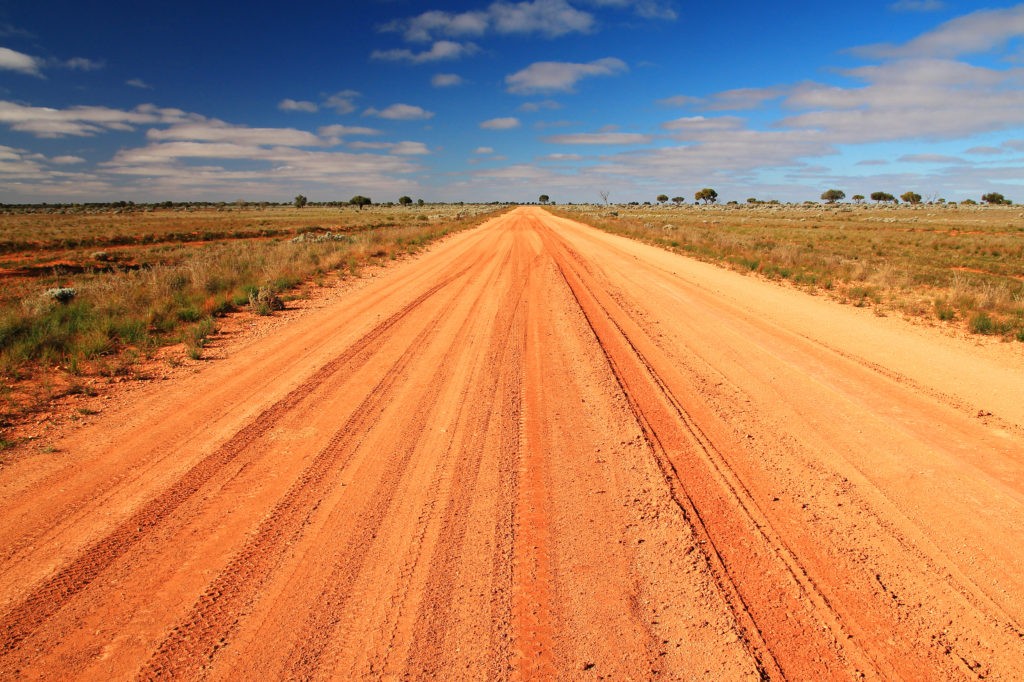
Australian red dust road.
Title Showcase: Flash and Micro Fiction
I wrote the short pieces in this section to go with the two titles I discarded years ago. The first is just over 400 words, a bit shy of a flash fiction word count which can be up to 1,000 words but a bit too long to be micro fiction. The second piece is micro-fiction, as it falls short of 400 words. It fascinates me that the two titles have stayed with me for 30-40 years without ever being written down. For a mind like mine that increasingly relies on the internet to remember things, that says something.
The Sexual Adventures of a Middle-aged Backpacker
Image: Black Afghan marijuana plant, aged before picking to become the hashish resin, Noir afghan.
The Grizzle and Giggle Club
Both of these small pieces could just as well have alternative titles such as ‘Noir afghan‘ and ‘Pink Ganja’ which may sound catchier but, to me, the dope is incidental to the deeper meaning of the stories. What do think? ‘The Grizzle and Giggle Club’ is bit shy of its original intention but I didn’t have enough words to grizzle much!
Image: Pink Ganja (pink for Mothers’ Day carnations)
Title Tips
1. Titles are fun but take care, play with them every which way, until you get them right.
2. In On Gidgee Plains, Katherine’s young lover, Jimmy, teaches her how to distance from her emotions by naming things, giving titles to bad stuff that happens in her family. The practice objectifies situations, takes disturbing events and makes them into things, separate from oneself. In that sense, naming things and creating titles can be therapeutic.
3. It doesn’t hurt to come up with a title before you start to write. It can always be changed, but when a title echoes inside of you, you know you have a winner.
Try This
Rummage around in the drawers of your life and find mistakes, failures, incidents, events or relationship blowups that you tend to chew over from time to time. Give these ghosts of yesterday, these life snippets, titles. Then write about them as though you are telling a story, turn them into fiction.
I have learned a lot in my publication journey. My first contract for On Gidgee Plains, signed in July 2019, was rescinded in January 2020. The publisher I was with ceased business. All author contracts, including mine, were cancelled and all I gained was this fantastic cover art and an ISBN. Handy if I choose to self-publish.
In business, these things happen, especially for sole operators and small entities like Small Press Network (SPN) publishers such as the publisher with which I signed. I read recently that if a new publisher lasts two full years, they are on their way. Mine didn’t quite make the two-year mark. I empathise with the publisher for whom business failure was a shattering blow.
Of course, I was devastated too but, in retrospect, my first experience in seeking a publisher was, to put it mildly, naïve and a bit haphazard. Still, I’ve learned along the way.
My journey — finding the right reader
I had played around with the concept for On Gidgee Plains for a long time but got writing seriously in 2013 when I felt I’d developed a decent storyline. I finished writing and editing as far as I could go in September 2016 at which time, I hesitatingly sought a professional reader.
Although my local writers’ centre offers manuscript assessment, I appointed someone I knew well because the book was close to me, precious, and I was not ready for the sort of slash and burn approach I might get from a total stranger. Bit silly, really, when most prospective readers are unknown.
I waited for four months to hear back, which was a stretch. My question had been, was the book publishable or not. The appraisal included a recommendation that I submit the novel for a national literary award. With such positive feedback, I became reckless. I believed my book to be ready to go out into the world. I accepted most of the editing suggestions (pleased they were few) and set forth on my publishing journey.
My journey — finding the right publisher
While I’ve published academic articles, reviews and poetry over the years, my publishing journey as a novelist was a new experience. Publishing is a competitive business. And it is slow. Very slow. Which means living in hope for long stretches, being patient enough to get on with other things while you wait.
Perhaps foolishly, I decided to bypass the agent idea. There are arguments for and against working with an agent. They take significant fees, but they also know the industry which is large and complex.
I chose to send my manuscript directly to the Big Five publishers as they are known in Australia who are open to unsolicited manuscripts on certain days and at particular intervals. These are —
Almost every publisher who accepts unsolicited manuscripts advises at the outset whether or not they’ll get back to you and how long they expect to take either way. I was optimistic. I was patient, but I waited in vain. Eventually, this door closed.
The next step
As deadlines passed, and rejections rolled in, I began searching in earnest for specific publishers, niche publishers that I thought might be interested in my story. I discovered Australia’s Small Press Network of independent publishers, and it was here that I had a modicum of success.
One SPN publisher wanted me to change the second half of the book. I declined. Another offered valuable advice. Like many new writers they said, I tended to overwrite, but I mustn’t lose heart because my book had many beautiful lyrical moments. More editing would do the trick.
To the uninitiated, ‘overwriting’ is pretty much a form of
telling rather than giving the reader credit for keeping up. It includes the
use of unnecessary tags like ‘he said’.
Getting positive feedback from these two publishers sent me back to my manuscript. I asked an editor friend with a literary editor’s eye, what she thought. She was fierce but armed with her detailed critique, I went through the novel with a fine-tooth comb, cutting 15,000 useless words. The original manuscript was 87,500 words. The word-count is now 72,500.
I touched base again with the publishers who’d wanted me to change the ending and asked if they’d reconsider the manuscript now that I had substantially edited it. They reviewed and accepted the revised version. It was soon evident that the publisher was struggling but I hung on until the bitter end. The thought of starting again did not appeal to me.
So, here I am in January 2020, heading towards 77 years of age next month and six years on from idea to failed contract. While it hurt, I have removed forthcoming’ from On Gidgee Plains on my books page — for now.
Author Promotion
If 2018 was the year of submissions, 2019 was the year of waiting, but I kept busy.
I kept up with my poetry as you can see in my new book, Life Blinks launched on 12 January. I got stuck into my second novel, High Rise Society and am making good progress there.
Most exciting of all, I attended a brilliant workshop series called ‘So, You Want To Write a Novel’ run by a well-known and respected Australian writer and poet, Jude Aquilina. She had us writing synopses, character profiles and much more that got me started on my a third novel entitled Beyond Ginza. I’ve collected books and undertaken research for this story and, I can’t wait to get into it. It spurs me on.
Other helpful workshops I attended covered the how-to of seeking publication and one on author branding. It was mandatory, workshop convenors said in unison, that writers develop a professional web page. And I did.
Wattletales, as you see it now, is my first web page. I am proud to have created it myself on WordPress.org. There is always so much we can learn. Yesterday I attended a Canva workshop and I’m booked to do one on promotion and publicity.
I still struggle with SEO (search engine optimisation) which means learning a whole new language, a whole new way to portray yourself. It also requires you to objectify the self, something I’m not doing here. Today, I’m telling the story of my journey towards the desired goal of getting my novels published. The dream is to have three novels published before I depart this planet.
My publishing journey Mark 2
My first publishing journey is a cautionary tale. Do not rush in with your novel before you are absolutely sure it is ready. I say this because, last week when the mere thought of again preparing my work to suit the requirements of different publishers exhausted me, I decided I’d give the previously discarded path of seeking an agent a go. Trouble is, that is as much work as going direct.
Nevertheless, I looked through the list of Australian literary agents on the Australian Society of Authors (ASA) website and happily selected three I thought might possibly accept my work until I read the submission requirements. One stated categorically that anyone who had submitted to more than three Australian publishers, need not bother to send their work. They would not read it.
Don’t lose heart. There are many valuable sites where you can get quite a bit of free advice. Try Jericho Writers on how to find an agent and Authors Publish for ideas on where to send your work. These are both top-shelf sites to help you on your way. A bit expensive for some of us to become a member, but if you can afford it, why not give them a try?
I’m still undecided about which way to go, direct or through an agent but one thing I am doing before I make up my mind is giving my manuscript another thorough proof and edit. Every time you return to your writing, you can improve it.
Traps for young players
A note to the wise, please avoid Austin Macauley Publishers who seem to get top billing via Google every time you search for a publisher. Austin Macauley gave me a thrill a few months after I started sending On Gidgee Plains out. They sent a signed contract (in duplicate) in a glossy folder with a letter of offer to publish. Their proviso was that, as an unknown writer, I would have to pay.
Pedlars of false dreams are out there
wattletales
There is a range of publishers who will produce your book for you for a fee, but you need to beware. Some, more often known as hybrid publishers, are genuine. Still, it is a fine line between partnership publication and a scam. Check them all out. You’ll find reviews on the internet and at your local writers’ centre or association. I consult the Australian Society of Authors website. It’s worth being a member.
Success, or slush pile?
All advice, from workshops, readings and online forums, is that we must, first of all, bring our manuscripts up to standard, not only for publishers but agents as well. Indeed, we need to do that before we submit to a professional reader. First work on your story.
When I started writing, I read a lot of how-to books. Here are my two favourites.
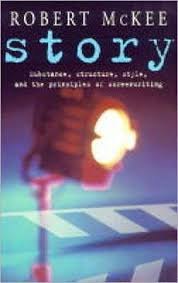
I think I’ve mentioned Robert McKee’s work entitled Story: Substance, structure, style, and the principles of screenwriting in a previous post. However, I cannot emphasise how important this book is. Yes, it says it is about screenwriting, but it is excellent for novelists because it explains in easy-to-use and straightforward language how to captivate your audience.
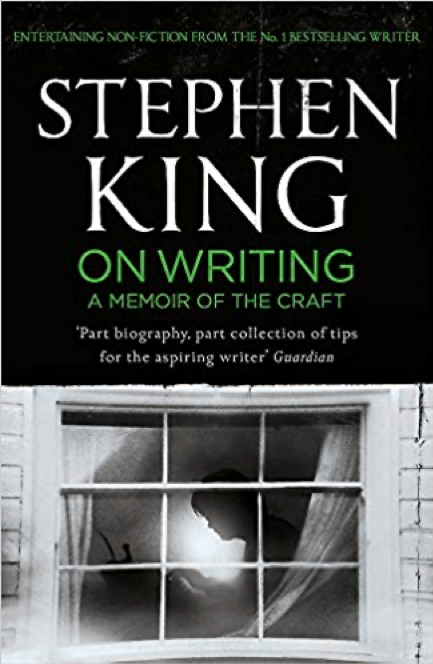
Stephen King’s book On Writing: A Memoir of the Craft is part biography, part writers’ helper but it is deeply honest and insightful. It is available on Amazon.
Before you send anything out, whether to publisher or agent, pay a professional reader, or engage an assessment service (again, find these through your local writers’ centre).
Be professional about getting published
When I started writing, the only app I used was Scrivener which I still use and highly recommend to this day as an aid to creative output Scrivener lets you save web pages, character profiles, research and other material right there where you write in the same project window. It also facilitates moving text so you don’t get lost as your manuscript grows as it does with an extra-long Word document.
writing is the first step
editing and proofing for publication come after the creative phase
wattletales
Before you think about sending your manuscript to anyone, even when you feel your story is working well, make sure you check it thoroughly for grammar, spelling and style.
No matter how good you are, be aware that grammatical rules change, and language is always in flux. When I taught at University back in the 1980s and early 1990s, I was amazed at the low literacy levels of students because, in my day, schools hammered grammar and spelling and punctuation into us. Not so, nowadays.
Now, language and rules change fast, but apps keep abreast of the game. It wasn’t until I proofed my first novel manuscript with the apps I’m about to introduce, that I realised my comma and inverted comma style was out of date. So, too was my use of articles and tags. And flowery overwriting! My mistake was to send my manuscript out to too many, too soon. It was not ready.
Getting your manuscript, your synopsis, author bio and even your covering letter all in tip-top order is a priority when seeking publication and there are tools to help.
Editing and proofing apps
I recommend three editing and proofing apps for writers. There are more, for both Mac and PC, but as a Mac-using writer, not a techie, I include only those I know best.
My process is to forget about editing and proofing while working in Scrivener. Still, as soon as I finish my first draft, I save to Microsoft Word where the long editing, refining and proofing phase begins.
Grammarly
You can use Grammarly for free. If you fall in love with it as I did, it’s worth paying for. I use the Premium version, which is not cheap, but I wouldn’t be without it. It checks both spelling and grammar at a much more sophisticated level than Microsoft Word. You can set your own language and goals for correctness, clarity, engagement and delivery according to what sort of what genre and effect, you hope to achieve.
I was over the moon just before Christmas 2019 when Grammarly announced that its Beta app for use on a Mac. You can use it online or embed it in your Word documents. It corrects your language on web sites, including social media sites.
ProWritingAid
I have a friend who swears by ProWritingAid. It is similar
to Grammarly but cheaper. They say it is better for novelists because it has
more proofs around style, but I don’t find it is as sophisticated as Grammarly.
Hemmingway
Authors often write long sentences, lovely long sentences, but they are brilliant only to the extent they transport their reader, rather than lose them. Hemmingway is the doctor for that problem. Hemmingway is another freebie which is excellent when you are working on a first draft. It is less about grammar and spelling and more about style.
Check this out
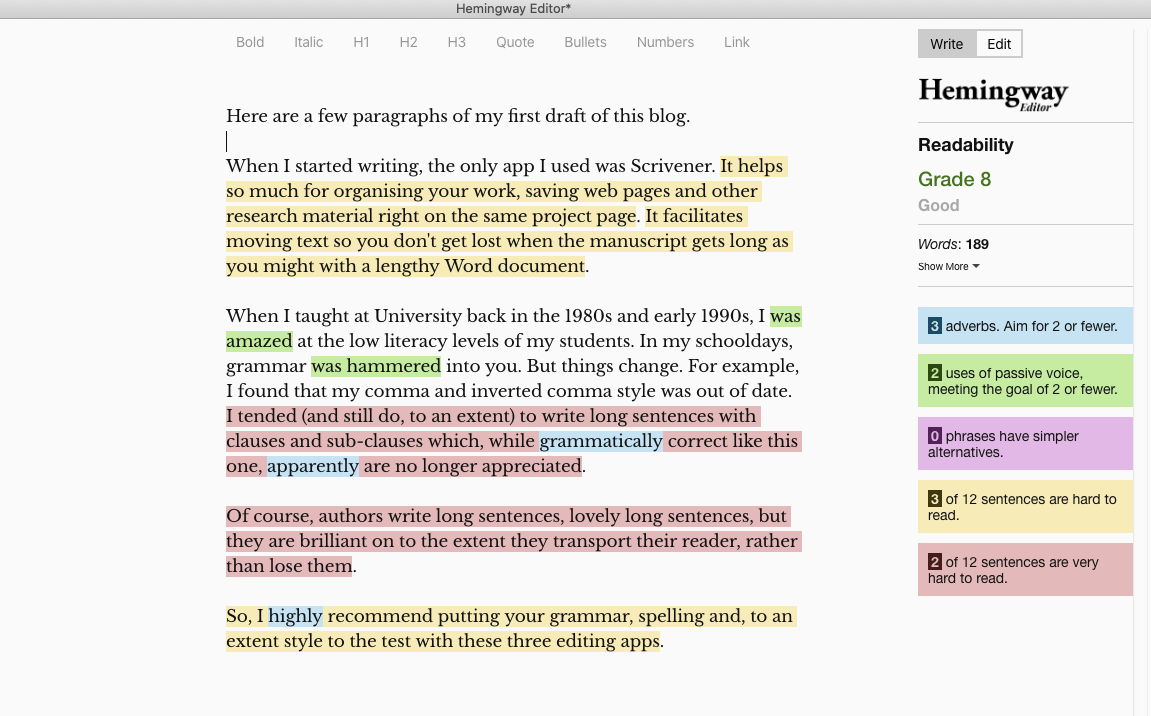
I tended (and, still do to some extent), write long sentences with clauses and sub-clauses which, while grammatically correct like this one, are apparently no longer appreciated by the reading public in this fast-paced meme-y world of ours.
So, here’s a pic of the first draft of a part of this blog. I thought it might amuse you because, right now, Grammarly is telling me my text is 100% perfect, but Hemmingway says, long sentences, lady! Fix that.
Try This
If you feel uncomfortable trialling new apps with your current project, bring out some old drafts and run each piece through Hemmingway. Then give Grammarly or ProWritingAid a try. See which works best for you.
I recommend a combination of Hemingway followed by Grammarly which has helped me (and a couple of my writing buddies) to stop overwriting.
Habits are hard to shake, but these clever companions make it easier to refine your writing and learn along the way.
In each of my posts to date, I have explored ways in which life informs poetry and fiction, using my life to exemplify. And there is no doubt that fiction and poetry, like film and other cultural events, inform who we are.
Xmas 2019
Stories in novels, movies or on television are texts in and of this world, whether they are set in the everyday world or imagined space as in sci-fi and fantasy. Have you ever noticed the resemblances between futuristic stories and good old westerns? Goodies and baddies prevail in both and, for me, that raises issues in reality and the imagination.
There is an inherent contradiction in trying to distinguish imagination from reality. Both are equally embedded in the real world — or, should I say, the world as we imagine it to actually be.
Do you see yourself in your writing?
Let’s start by asking, do you see yourself in your writing? And if so, how? This is one way to begin exploring what is real and what imagined.
Life in one form or another enters our writing whether you are, like me, realising dreams late in life, or just starting out. We cannot escape ourselves when we write. If we are not in our poems or novels explicitly, we are always there implicitly.
I think here of the way the movie director Alfred Hitchcock made an elliptical appearance in all his movies. It used to be fun trying to spot him. (If you’ve never seen a Hitchcock film, let me suggest Psycho. (You can view it on YouTube here for a couple of dollars. IMDB still lists it as an 8.5 film.)
As writers, everything we do, from the choice of topic to genre and style, speaks of us as living humans in a partly real and part-imagined world. I’d go so far as to suggest that we imagine most of our personal reality in much the same way as we do our fiction, albeit with different emphases.
Life and what we write
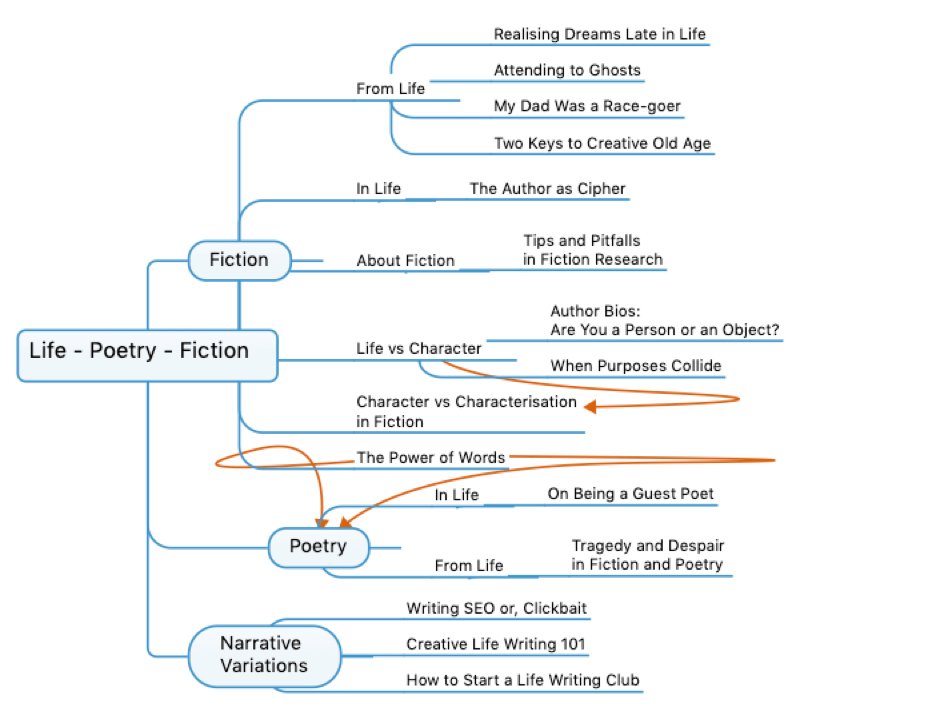
Below is a schematic representation of Wattletales posts since its inception. While I started with no plan about what to write, as you can see, somehow the posts interweave. They derive their meaning from my interests. What I know, what I write and how I am in the world are clearly represented in it even though I decided each month’s content ad hoc.
Even if I’d planned, the result would be similar. What I recognise now is that the theme of my posts has been one that explores the relationship between reality and texts, between what we take to be true and the stuff we make up. Until writing this post, I had not realised how much my thinking has been influenced by Michael Taussig.
As I’ve argued before in Life Writing 101, there is no such thing as a stable, enduring or fixed self. As a Buddhist I understand that one’s sense of self is a mere collection of stories we tell about ourselves, many of them contradictory. I have quoted him before, Michael Taussig (Mimesis and Alterity: A Particular History of the Senses, Rutledge 1993) puts this succinctly —
Now the strange thing about this silly if not desperate place between the real and the really made-up is that it appears to be where most of us spend most of our time as epistemically correct, socially created and occasionally creative beings. We dissimulate. We act and have to act as if mischief were not afoot in the kingdom of the real…
Michael Taussig
I argue that the way we construct ourselves is pretty close to how we create stories on the page. Our memories even play with time as we do on the page when we gather together themes or topics.
As for life, so for texts
Like the Author Bios post, When Purposes Collide is also in many ways key to what I am saying here because it discusses the same strange disjunction we make between our ‘real selves’ and our ‘constructed image’ for the web. Both are equally fiction.
Whether I’ve written about being creative in old age, Life Writing or the issue of character in fiction, my theme is a constant. Life, poetry and fiction are all part real and part imagined. So, whether talking about writing or writing about talking in fiction and in poetry is much of a muchness to me.
I concede that a few of my posts have been pragmatic, such as Writing SEO, or Clickbait, where I discuss the nature of ‘internet language’. How to Start a Life Writing Club and Tips and Pitfalls in Fiction Research are also more along the lines of advice. I call these pieces my flat earth writing. It is OK to occasionally stop analysing and just treat the world as though it is real but I suspect I would have been raising questions, even then.
There is no right or wrong way to write
Not everybody is interested in the way life plays with fiction and poetry and vice versa. Or whether things are real or imagined. Readers and audiences admire substantive work that unambiguously addresses the issues of the day as though they are real and otherwise enhances our experience of the world from another’s perspective.
We see this both in positive literary reviews (the establishment) and spoken word slams (the people) where intimate lives are often revealed. The former is more often than not written in the context of other texts, or a history of texts (a specialised history and language unto itself). In the latter, in spoken word slams, context is often taken for granted as being now, as though history doesn’t exist and this moment is all there is.
My questions are all about contradictions, dilemmas and, yes, struggles and the effort it takes to get these things on the page. It’s a truism to say that we must start with what we know. The struggle starts when we examine how we, as writers and our work are socially, politically and historically situated. In other words, when we check in to see whether our words have an impact.
The posts, Author Bios and When Purposes Collide indicate that we need to ask what are the insides and outsides of creative life at both social and personal levels. Deeper still, we might well examine the relationship between persona and the inner world as I have in this little poem called ‘The Poet’ which is a mix of the real and the imagined.
 My Poet

 I get in the way of my poet
 who's silent before I know it
 I think and think
 and try not to blink...

 I stare outside
 to forget, forget, forget myself
 till my poet pops up
 with right words

 it doesn't always work you see
 but there's a lot to like about me, me, me

 my façade for example
 goes for a ramble
 to all sorts of places
 among all sorts of people
 where it may well extrude by mouth
 but lest we forget it ingests
 by eye and ear and mind
 just to feed my poet
Understanding context
As an anthropologist, I write both poetry and fiction close to life. Stylistically I am a realist so I gravitate to issues such as ethics, truth versus verisimilitude, and the individual in politics and history. These are simultaneously topics of interest to me as a writer and the contexts in which I write.
Even when we take the world to be wholly real, there are dilemmas for the imagination.
Politics and Ethics
In life, there are some things we can be sure of and others that take the wind out of our sails. Politics and ethics certainly make things difficult for a writer who wants to write about other cultures, their own families or even themselves when they have children old enough to know what they say.
Ambiguity:
When my children were young, the dilemma of what I could and could not say about my role as a mother proved problematic. How could I tell anyone how if or when my kids did something outside the box? Could I write about such things? Or, would that be a betrayal?
Uncertainty:
Anthropology teaches that it is offensive to write for or about others from the safe and privileged space of one’s own world view. The risk is that we will compare and judge rather than objectively record and thus skew what we see.
To prevent that, we must examine with some rigour our place, our own social and historical situation, in relation to those whose lives we claim to represent in our writing. We must be aware of the way our position distorts the context.
Anthropologists today suspend their values and realities — to the extent that is humanly possible — to try and see the world from another’s perspective without judgment. In disciplines like anthropology, discourse about the right to write about ‘the other’ abounds.
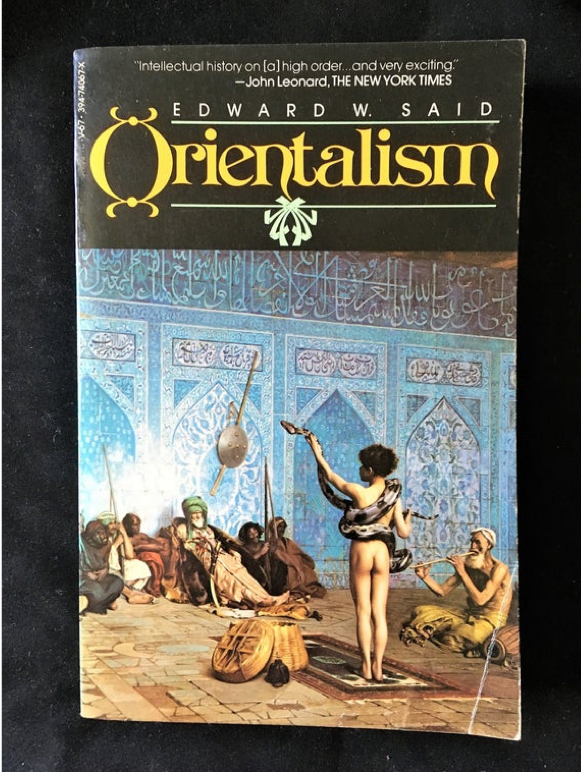
The first to articulate the political distortions that come from a politically dominant perspective found in earlier scholarly work was Edward Said in his groundbreaking text, Orientalism, London: Vintage 1979.
You can still get this on Kindle from Amazon
Orientalism presents a style of thought based upon an ontological and epistemological distinction made between “the Orient” and (most of the time) “the Occident.” Thus a very large mass of writers, among whom are poet, novelists, philosophers, political theorists, economists, and imperial administrators, have accepted the basic distinction between East and West as the starting point for elaborate accounts concerning the Orient, its people, customs, “mind,” destiny, and so on … the phenomenon of Orientalism as I study it here deals principally, not with a correspondence between Orientalism and Orient, but with the internal consistency of Orientalism and its ideas about the Orient… despite or beyond any correspondence, or lack thereof, with a “real” Orient.
Edward Said
The quotation is drawn from an anonymous online obituary from The Guardian. In the simplest terms, he speaks of the de-humanising or stereotyping potential of writing without reflection from a position of power and we must take note.
Truth and verisimilitude
In our scientific world, we learn to believe in ‘the facts’. Concrete truths, however, are often difficult to pin down in social worlds.
In fiction, if we wrote our stories with what I call the ‘and then, and then’ the way a child might, or with the detail employed by science, nobody would ever read our work. Novelists evoke. Their aim is to write in a way that gives readers their own experience, to create a story that reads as though it were true. And, we borrow from life and re-imagine it.
The space between the real and the imagined on the page is deeply ambiguous. We borrow from ‘the truth’ and write in the register of verisimilitude and add imagined things to create moments on the page that ignore temporality and space in order to represent atruth about human life as I have done in this poem called ‘Home’.
 Home

 My mother
 fills a crystal vase with flowers
 for the mantelpiece —
 lies drunk in congealing fat
 roast lamb and potatoes ruined
 on the lino floor.

 Always there after school
 she waits for me to tell her
 everything
 tells me I cannot live
 without her.

 She loves me
 my mother
 who hates my father,
 He says he loves
 his wife but gets me
 to put her to bed when
 she's 'like that'.

 Always a spotless kitchen
 fresh fruit on the table
 my mum in apron and perm —
 like TV ads
 but she never smiles.

 She holds on till dark
 to seek herself.
The individual and history
In life writing such as biography and memoir, as in fiction, we must situate ourselves or our characters, in context. Humans are social, political, ethical and historical beings and so are our characters. Context is more than setting, it is the entire world or cosmos that our characters act within. We cannot write complete contexts which are the very fabric of our being in the world and should be for our characters as well.
History once fell into the trap of recording wars, empires, explorers, governments and kings (almost all men) which effectively silenced not only their subjects but largely excised women from history. We don’t want to do that in our writing.
The Feminist example:
Until very recently, women’s lives did not rate in authoritative historical texts. In Australia’s official war photos, women on the front were not named. They were collectively and individually labelled; subjugated to their role such as ‘nurse’ and forever silenced, sacrificed if you like, to the history of the national war effort. The world of war was imagined as being ‘about men’.
But, when the voices of ordinary people speak out or write up as in social media nowadays, you get a groundswell for change. Imagined realities are threatened.
contemporary voices:
Consider the #metoo movement. When women are trapped and silenced as individuals in untenable circumstances by sexual abuse and domestic violence, political change is not possible. But whenever many speak together, something extraordinary happens.
Feminism created opportunities for women to speak up. Its struggle was to overturn cultural imaginings. And it worked and is working even better now. You only have to read the paper. Women are now moving to the front and centre of the historical and political stage which means, the world is being reimagined.
Then there is Greta Thunberg, the 16-year-old environmental activist who has inspired young people across the world to protest about climate change. She has been named Time‘s Person of the Year for 2019.
As the Buddha might say, life is always in a state of flux and is illusory. If we stick with the reality principle, wanting things to remain the same, we suffer. The outrage at Greta Thunberg from mostly white, middle-aged, established men is evidence of this.
Move over emperors and kings. Remarkable women are making a mark.
Politics and the individual
true stories:
Nothing is ever quite as it seems. History is not a straight line. Power plays everywhere competing to convince us of diverse flat-earth theories. It’s fascinating to see how the real and the imagined are distorted by power.
Let me tell you that when I went to university in my late 30’s having left school at 15, I was unaware that women then worked for two-thirds of a man’s wage for the same job. I had an early divorce from a violent man, but because I’d been married, even at 17, I no government or military entity would employ me. I wanted to be a policewoman.
Even when we were working in ‘women’s’ jobs, employers sacked us when we married. A friend of mine had an affair with an engineer in her office; she was sacked and he was not. Even after these embargos on women’s employment changed (I’m not sure if they were laws or mere customs, like changing your name upon marriage) we had to leave the workforce when we became pregnant. That was the real world.
even overseas:
When I started university as a special entry student I questioned the idea that ‘the personal is political’. During fieldwork in Sri Lanka, I was forced to reconsider.
In Sri Lanka, I felt like a ‘powerless’ single mother of three and student on a low scholarship income. However, my income made me relatively affluent and, because I was a researcher, people described me as a lecturer or called me by the honorific, ‘Madam’. They treated me as a ‘powerful’ representative of an ‘advanced nation’ and its interests. Could I then play ‘powerless’ in the face of a people who at that time had very little?
Everything is relative. We cannot be extricated from the social, political and historical contexts in which our lives take place. What we feel and experience is not necessarily the way others think of and experience us. We imagine our realities based on the specifics of our context.
Our stories are simultaneously private and collective, individual and historical and personal and political. Everything we write has ethical implications and, yet, the real world is half-imagined.
Respect those you write about
the power of words:
I’ll leave this post here with a reminder to always pay attention to the power of words; words are socially, politically, historically and ethically as situated as you, your words and the written word in general. Whether we write journalism, history, poetry or fiction, our words affect and could possibly harm others.
In order to write with respect, therefore, we must examine how and why we write and the degree to which we are writing what is real or imagined.
real and the imagined realities:
Nobody wants a review like that by Russell Marks in the current issue of Overland (No.237 summer 2019 pp 52-57). In an article provocatively entitled ‘Crocodile Tears: On Misreading Justice’ Marks critically examines a popular novel called Saltwater by Queensland Barrister, Cathy McLennan. As I read it, Marks exposes the implicit and explicit racism of a work in which a person in a position of significant power romanticises suffering.
Marks charges McLennan with a failure to understand the Aboriginal world about which she writes even though she is in a position of power over that world as a Magistrate. Her novel is apparently recommended reading, including at university level which says a lot about how misinformation can feedback into society if not checked.
Marks remark that the book’s …myriad problems could have excluded it from publication altogether’ is circumspect given his damning review. But what he has shown is how very important it is to examine one’s own context and understand the extent to which we imagine the worlds of others wrongly while believing our unexamined perceptions to be real.
As an aside
Have you ever played with mind mapping? As you can see from the map I shared above about my blogging tendencies, it can be very helpful in sorting out what’s what in your writing or your thoughts.
I use Mindjet’s Mind Manager. You can try it for free for 30 days and it is available for both Mac and Windows. There are cheaper options if you look around but it might help as you work on the exercises below.
What is real and what is imagined in your world
The first step in writing fiction and poetry is to be real on the page. A little bit of integrity goes a long way in all writing, even if only you read it.
Do you see yourself in your writing? If so, how?
List your major life turning points and the ethical struggles they represent for life-writing or fiction.
Examine what your writing says about you.
Re-write things that, when you read them now make you cringe.
Check your contexts: individual, political, ethical, historical — real or imagined.
Articulate the ways your life is embedded, no matter how slight, in all of your work.
If you have any ideas for topics you’d like to see covered here next year, please let me know.