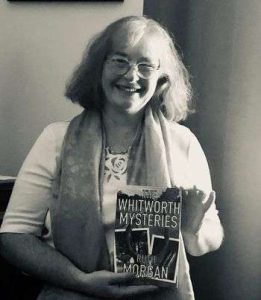
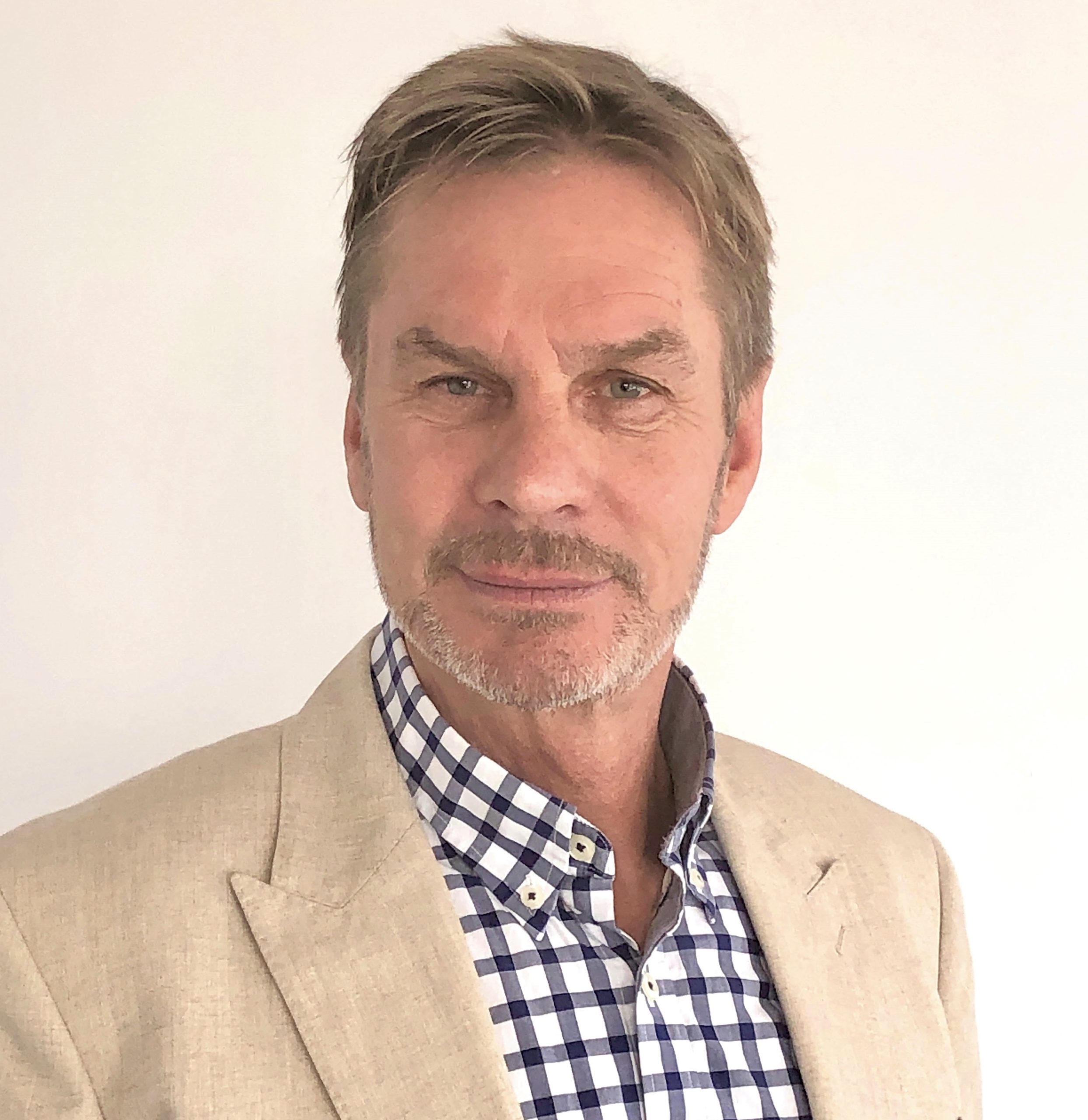
Creativity and the Bush by Ruth Morgan

Introduction

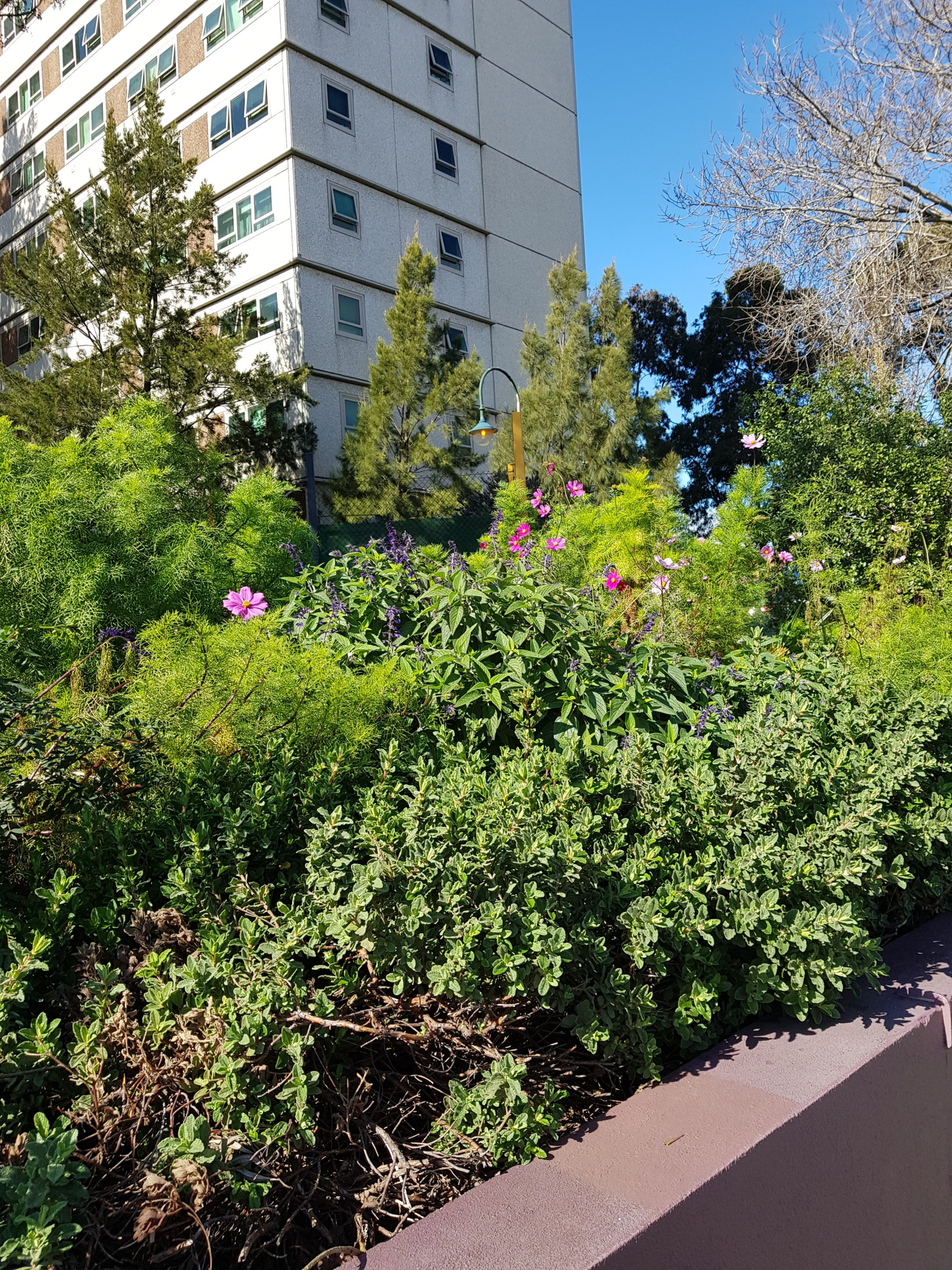
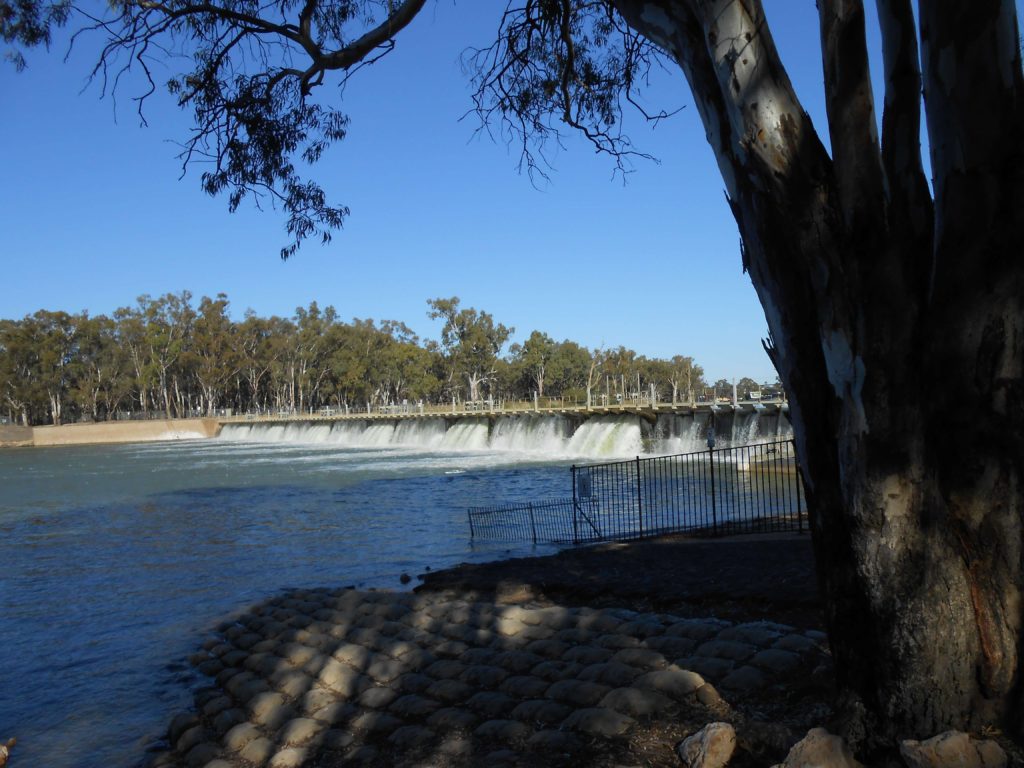
When the going gets tough, my mind and memories take me to the Murray River. I sit on a fallen ancient river red gum, dangle my toes in the murky brown waters and close my eyes. I can feel the breeze blowing against my skin. I hear the chatter of bird life in the trees; I listen to splashes on the water as a big fish chases a smaller one.

River and Saltbush

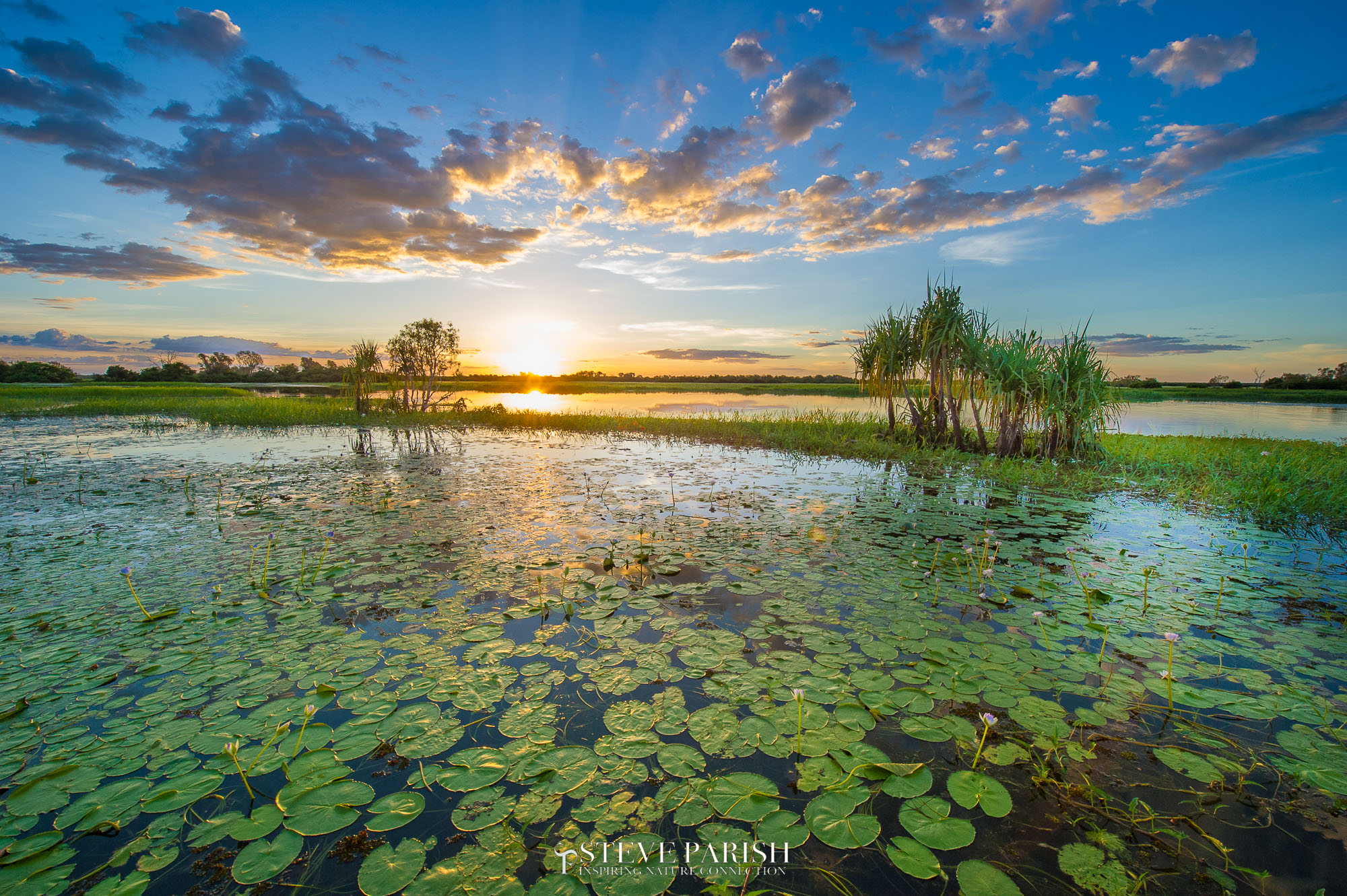
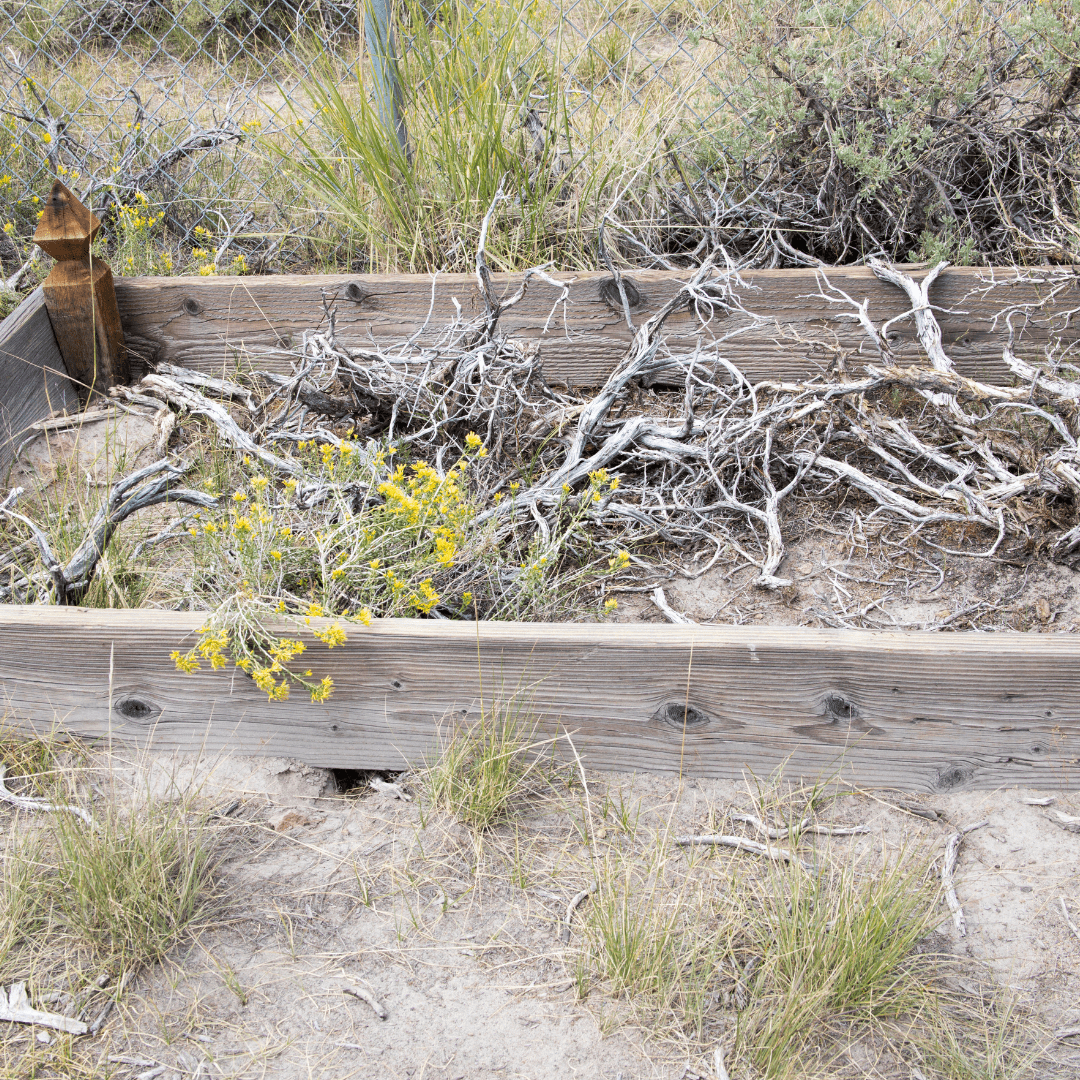
I open my eyes and see the ripples break the mirror surface. A sleek black cormorant surfaces and perches on a log spreading its wings out to dry. Growing in the sandy soils are rows of blue-grey saltbush. Surrounding them are paper daisies and delicate wildflowers.

The outback landscape of my childhood inspires my writing; the thread of the bush and the memories are a repeating theme. A love of solitude, resilience and self-reliance skills learned as soon as I could walk. My experiences of the landscape are so deeply ingrained that their subtle influence is almost cellular.

I enjoy exploring the way the bush makes some afraid and others relax. Its indifference challenges our sense of self, and how characters respond fascinates me. The bush is always an organic part of my stories, another character.

Home

My earliest years were spent on a station called Wilkurra. Home was a caravan and an annexe, a four-hour drive from town. The first part of the road was bitumen which changed to a graded dirt road half an hour into the journey, then into a dirt track. The surface was deeply corrugated, potholed or covered in red dirt as fine as talcum powder and as difficult to drive on. The old Bedford truck carried a winch and a shovel to get us out of trouble. Two large canvas water bags hung from the bull bar. In the back, a couple of jerry cans of fuel.

We had no running water, and apart from a diesel generator run only at night, no power. A Coolgardie safe hung in the branches of a nearby brush box tree. At the end of a dirt path was a long drop loo. No washing machine, and in an emergency, the nearest neighbours were an hour away over dirt roads which were impassable after rain. This is the situation my mother returned to with a six-week-old baby in tow.

My mother loved and feared the landscape in equal measure. She loved it because my father did, feared it because of the threat it could present to her daughter.

My father fenced in a space surrounding the caravan with chicken wire — a barrier to prevent me from exploring further. Dad understood the lure of the bush in a way my city-born mother couldn’t. He would sit me in my own small chair and squat opposite in the apparently restful position of the experienced bushman who rarely came across chairs and refused to sit on the ground where scorpions lurked.

‘Don’t go outside the wire.’ His work-roughened hand would gesture, outlining the boundary. ‘Children can drown in dams or be eaten by wild dogs.’ He never taught me to be afraid, never turned my love for the landscape into fear because with fear comes panic, and with panic comes death.
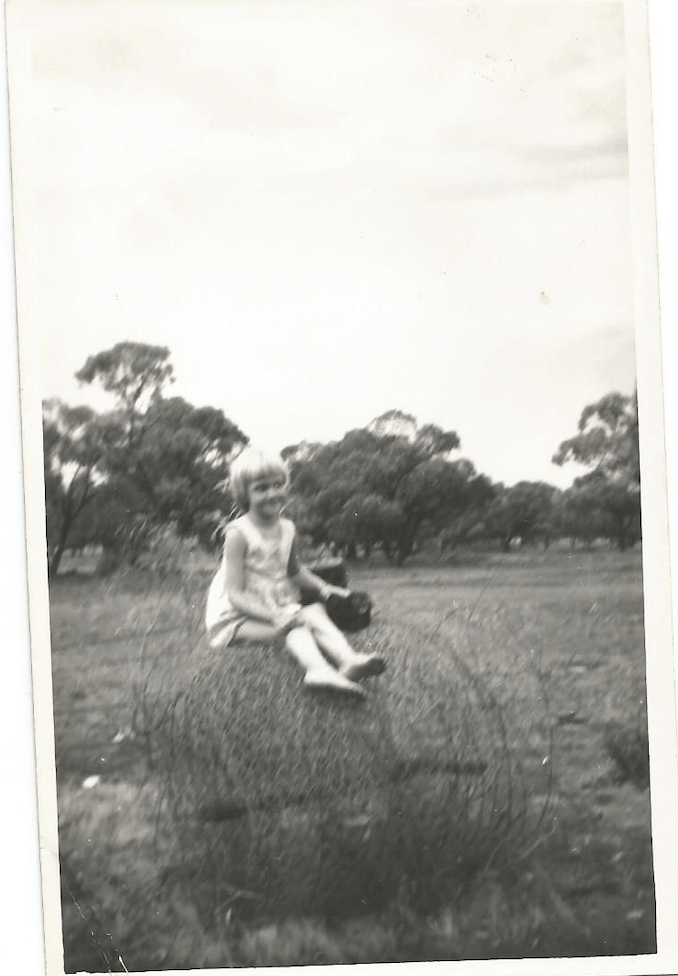
Blackie the chook and me at my favourite vantage point.

When I was three, my father told me a story. He’d been working at a nearby station and part of a search party looking for a lost child about my age. It had been the middle of summer when the temperatures were over 40C for days on end, and scorching winds whipped up the sand. No trace of the child was found until a year later when fabric fragments were discovered blown into saltbush. Nearby were tiny pieces of bone.

The Power of Stories

I learned at a very young age that stories taught and entertained me. Mum would often read to me, and I’d close my eyes and let my imagination take me to places I’d never been. Hinnie would stretch out alongside, waiting patiently until we could go and play. Hinnie was a bitser, a mixture of cattle-dog and who knows what. His origins were not important. All that mattered to a lonely child was that I was his, and he was mine. Someone who was there, who would sit patiently alongside me while I told him stories of the things we’d seen. We’d discuss interesting sounds or the meaning of animal prints in the soft sand, and he would listen intently.
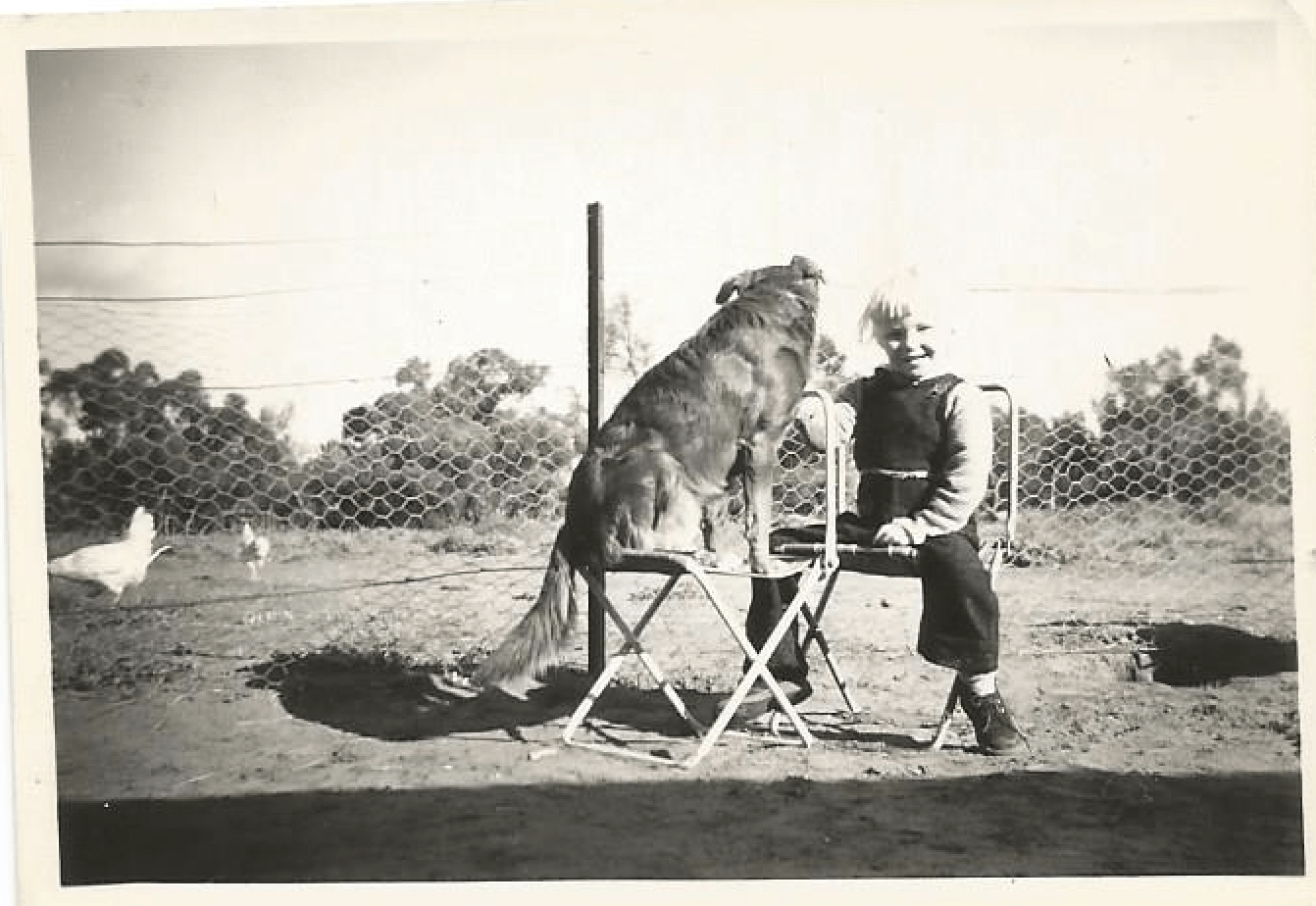
With Hinnie, my best friend.

Mum and I moved into Mildura so I could go to school. Dad remained working on the station, coming to town every couple of weeks. I went to preschool first which was a shock to my system. I was expected to talk to people and make friends without knowing how you went about such a thing! Other kids made it look easy, chattering away like a flock of corellas. In a group, I’d remain silent. The skill of socialising is learned very early in life. By the time I went to school, the pattern of being a quiet, self-contained individual was firmly set. It still is. I have wonderful friends as an adult, but I still find group situations uncomfortable though I’ve learned the skills to manage. I still prefer the written word and stories as a way to communicate.

Telling Stories

My mother encouraged me to tell stories, to look at something and see where my imagination took me. Stamps, paintings, the pattern on a piece of fabric, someone walking along the street. Moving into Mildura meant there was a library. My happy place. Somewhere where there were more books than I could read. Mum and I would go every Saturday morning to renew our supply. The wonderful librarians never restricted me to the children’s section but allowed me to roam.

Mum loved stories with happy endings. Dad loved adventure stories or thrillers and introduced me to Arthur Upfield. Upfield was an Englishman who travelled and worked in the outback, the creator of Bony. I was hooked and read every book I could lay my hands on. Desmond Bagley and Alistair Maclean followed. I loved the way they all used landscapes or the setting as crucial characters in the story.
The first thing I ever published — at the ripe age of 15 — was a poem in a school magazine. My mother was thrilled to see my work in print. I felt awkward and uncomfortable — I was letting someone into my head. The poem has only my initials and not my name. My mother was disappointed that I wouldn’t take credit for something she loved.

Recently I rediscovered the poem, and reading it took me instantly back to the classroom and the feeling of wonderment as my imagination took fire and flew.

The Importance of Writing

There have been periods in my life when I haven’t written and have lacked motivation, confidence, or time. There were always stories running through my mind and a pile of books to read. At the time, they were enough. I was married to someone who was dismissive of my desire to write. Somehow, despite him, I kept writing. Planning to become single, I decided to go to university and study social work. For five long years, all I wrote were essays. There were often comments from markers about the quality of the writing interspersed with suggestions to keep to the topic, and remember I was giving analysis, not telling a story.

Finishing my studies, I paused. I’d moved, was living alone and needed some time to work out what came next. Stories that had been lurking flooded my mind. I decided to follow my dream and write. The first story published changed my direction totally. Then a couple of years ago, I won a writing competition; the first prize was a publishing contract. My direction was set.

Dawn on the Murray River

Being Published

Having a book published was a life-changing experience in ways that I was not expecting. I thought it would be the pinnacle of my life, and I’d done what I set out to do, and there were my stories in print. If you believe being published will remove your anxiety that what you write is good enough and that you’ll never be troubled by your mind telling you that what you write is rubbish, you’re in for a shock.

I write because I can’t be happy if I’m not writing. I write because I have stories within that need to see daylight. When a story comes together, the characters work, and the setting is evocative of the country I love — that’s writing. That’s creativity fulfilled. Seeing it in print is a bonus, and my internal muse will say loudly, that’s done – next!

The Hanging Tree, Mildura

AUTHOR BIO

Ruth spent the first years of her life on Wilkurra Station, near Pooncarie in outback New South Wales. The red sand and blue saltbush have made an indelible impression on Ruth’s imagination.

Currently living in Northern New South Wales, Ruth tells stories of the characters and country she knows and loves. Her preference is crime fiction with a twist. The landscape is a crucial character in the stories, along with criminals and the police who hunt them. Themes of retribution, revenge, love and redemption are set along the Murray River, the Hay Plains and surrounding towns and countryside.

Learn more about Ruth and. her work at these sites —

ruthmorgan.com.au

https://www.clarendonhousebooks.com/ruth-morgan

https://www.facebook.com/100063465425465/ Ruth Morgan Writer
https://spillwords.com/author/rcmorgan/

Who Said That? Revealing the Poet on the Page.

Image and Story

I am of the view that poetry refracts who we are. If stories constitute us as humans, then poetry’s words and lines distil and distort them, yet find truth through variations of content, tone, imagery, and style. In this way, I am often my father’s ventriloquist, my mother’s mood or even an earlier self as I write. Such complexity bears no resemblance to frozen moments captured in photos like the one below. Our poetic voice works with a rich recollection of sensory details, people, places, and times.

The Essential Me

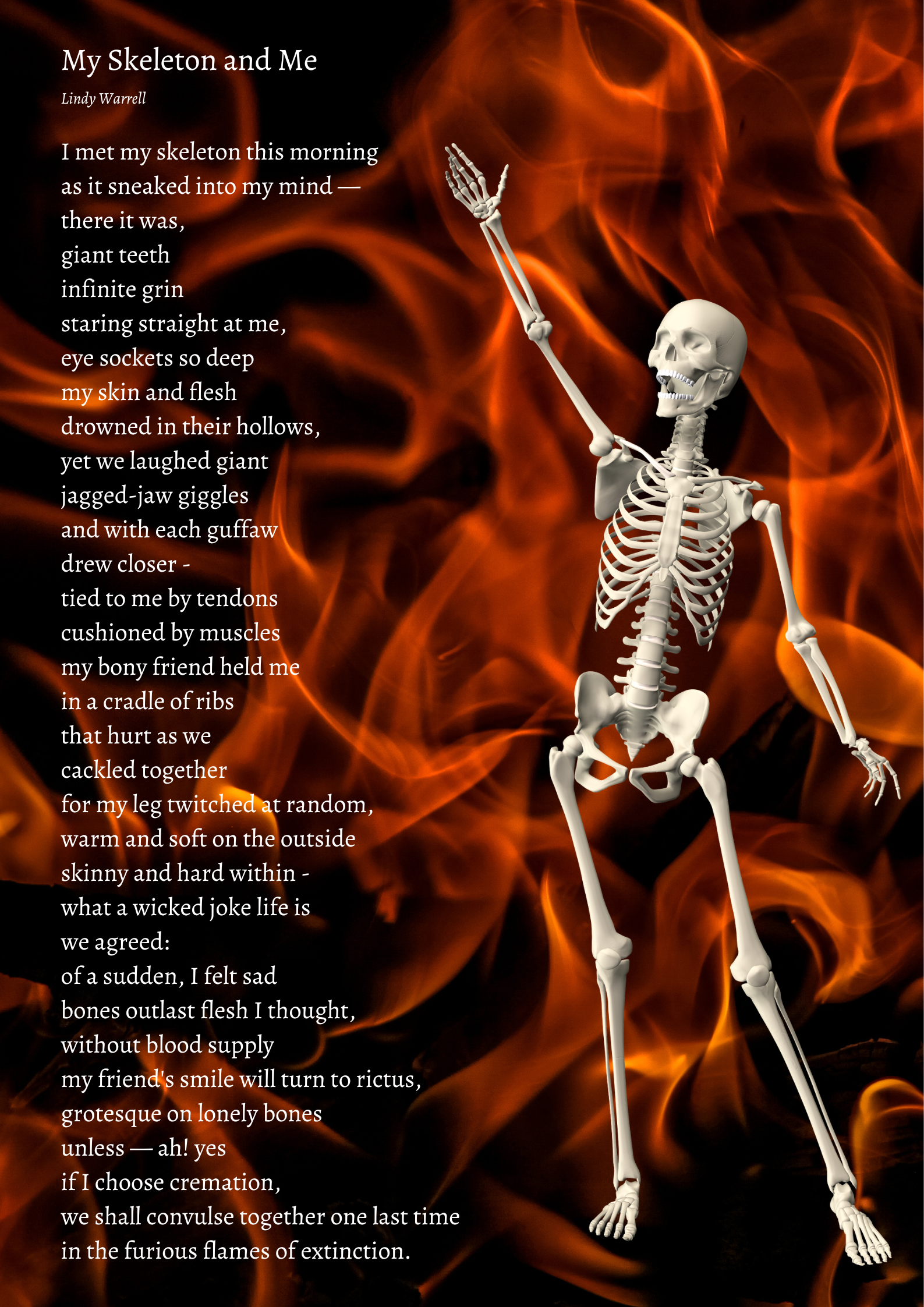
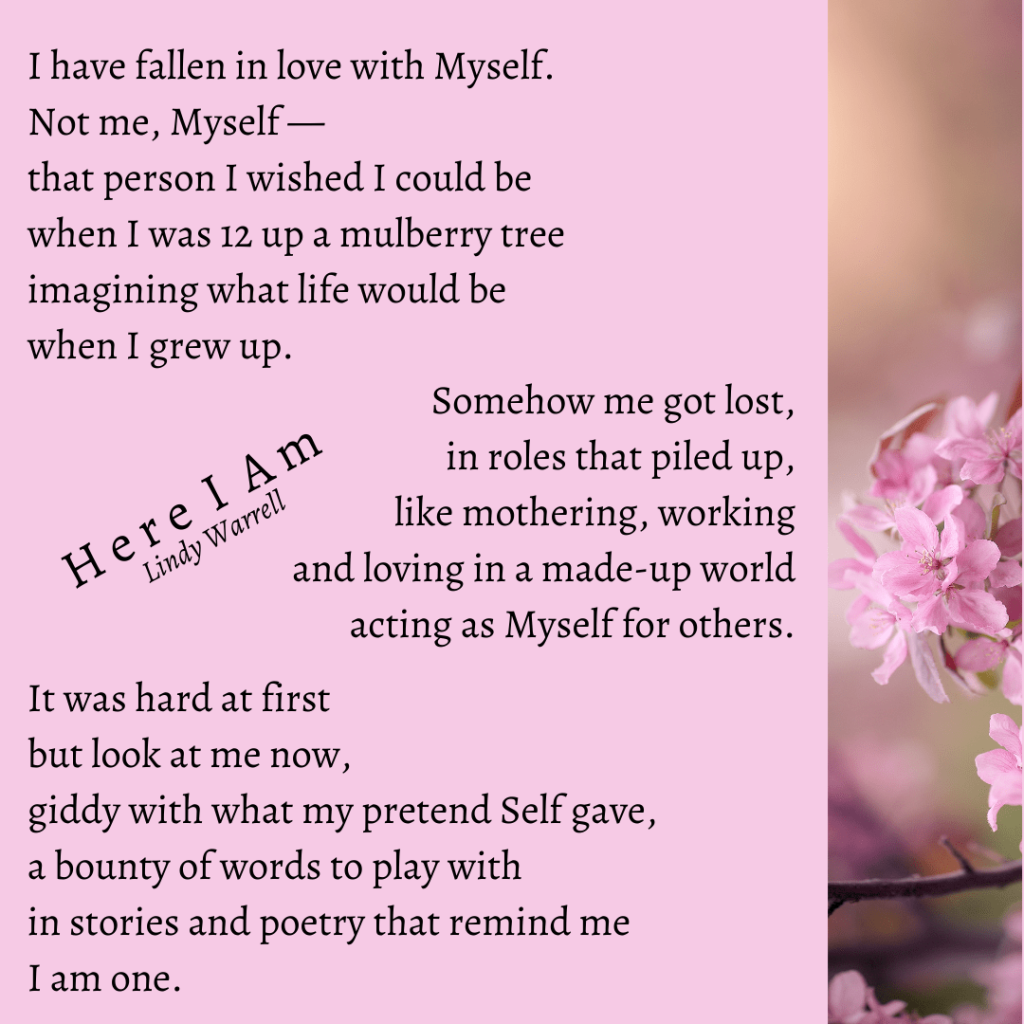
My favourite poem is ‘My Skeleton and Me’, where I appear alone, albeit with my skeleton. I post it here in contrast with other poems below. This one is just me. The poem earned a High Commendation certificate for the Nova prize thanks to Murray Alfredson, one of the Friendly Street Anthology Editors, in 2016.

This poem wrote itself in my mind during a lazy afternoon on my couch, where I experienced my skeleton as integral to my being and as my lifelong compatriot. It came to me during a period when I meditated regularly, so it was a close-to-the-bone moment of clarity, which made me giggle with delight. It still does.

Change and Continuity

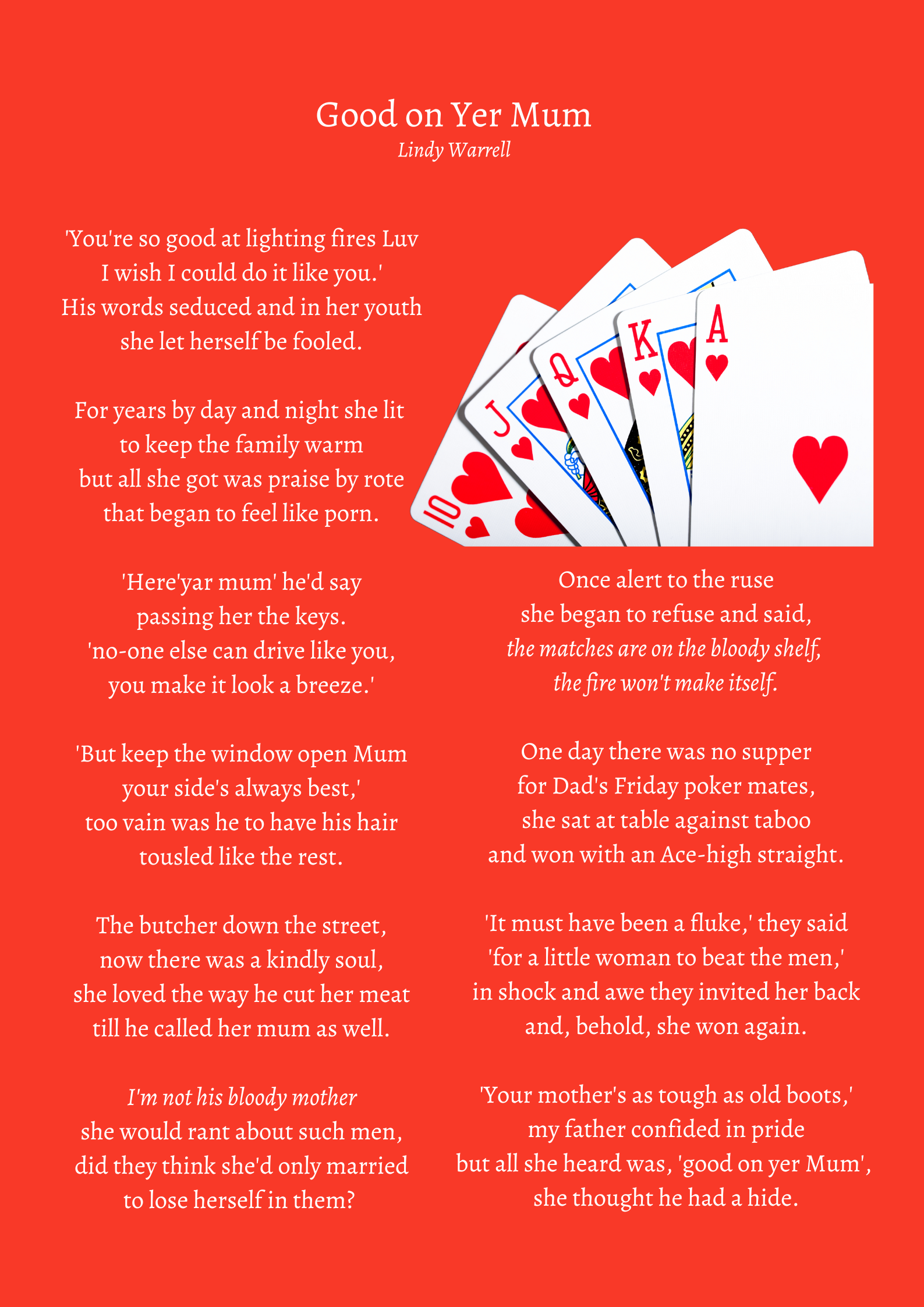
My parents seemed unchanged throughout my childhood and much of my adult life. Their gradual ageing became noticeable only after an absence. The setting for the following poem is a downstairs, inner-city flat in Melbourne where my parents lived after they married in 1938. Dad was a kitchen hand at the Hotel Windsor in Spring Street before becoming restaurant manager, and Mum was an apprentice hairdresser.

I was not yet born, but their oft-repeated words about those days allow me to portray something about the treatment of women in their time. My father’s voice and Mum’s reply still reverberate in me.

The poem records two actual moments but is not ‘real’. For example, nobody in my parents’ circle had a car until 30 years later. What is true is how Dad persuaded Mum she was the best at anything he didn’t want to do himself and that Mum joined the men’s poker school. Such remembered fragments make the whole.

As Confidence Grew

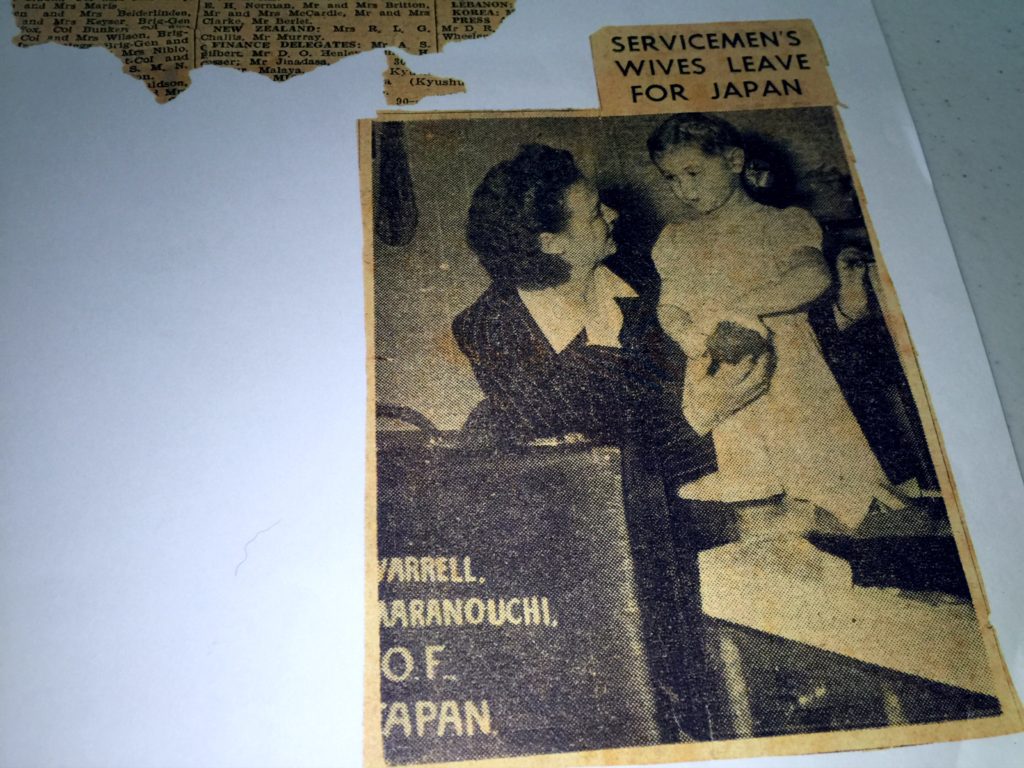
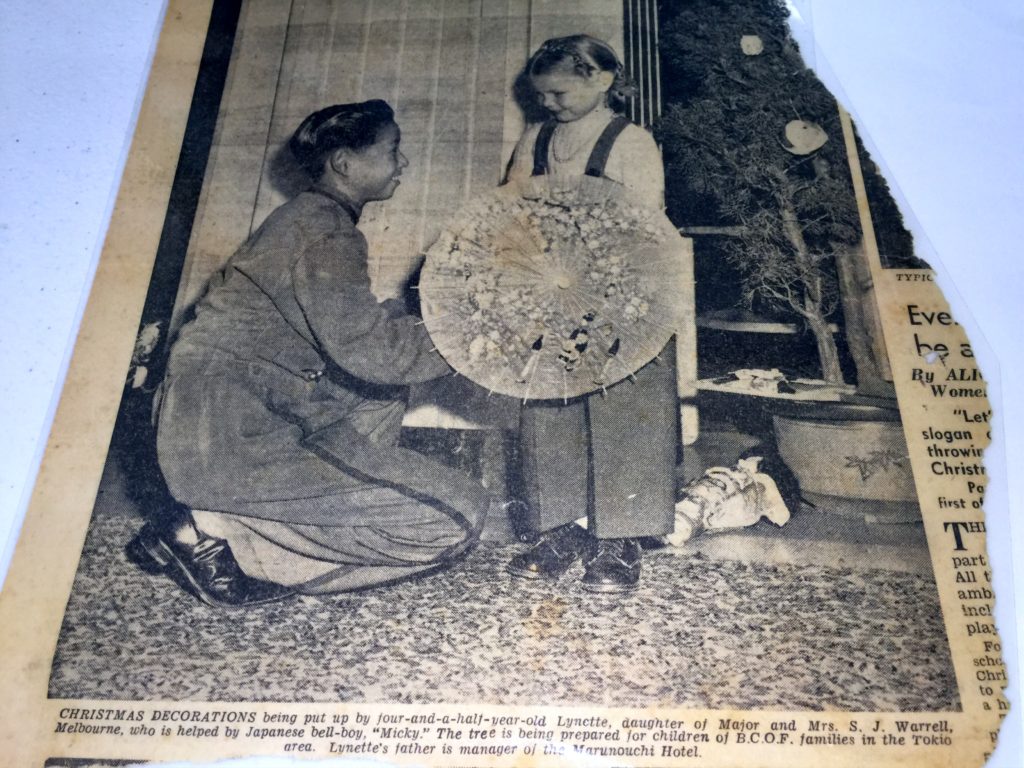
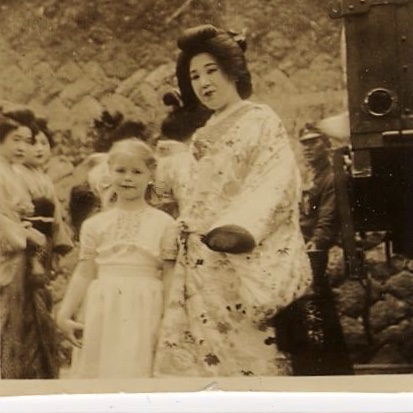
Only a few years later, the Australian Army promoted my father to Major in the Catering Corps and sent him to Japan with his family to refurbish and manage the Marunouchi Hotel in Tokyo, commandeered by British Occupation Forces.

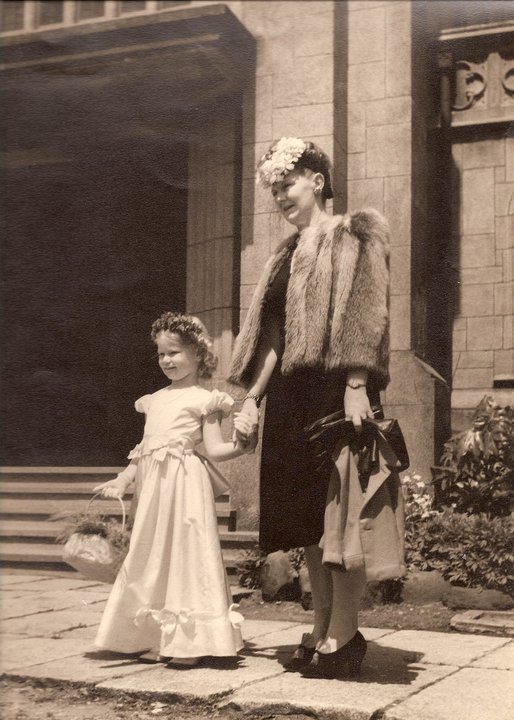
As a girl from inner-city Melbourne, Mum arrived in a world of top military brass wearing a fox fur stole to socialise with generals, high-ranking political figures, and their arrogant aides and staff. She stands in the second shot, full of confidence in mink. In her mid-to-late forties, the third photo is from Oodnadatta, which Mum always said was the best time of her life.

Here is my elderly take on Japan with a child’s eye triggered by a penchant for Arnott’s Gingernut biscuits and clotted cream; my little-girl romance with the post-war era in Japan is clear. (Should I live long enough, I hope to write a third novel about that period. My title is Beyond Ginza, and my protagonist is a seven-year-old girl with synesthesia. It is OK to wish.)

Found Things Go Deep

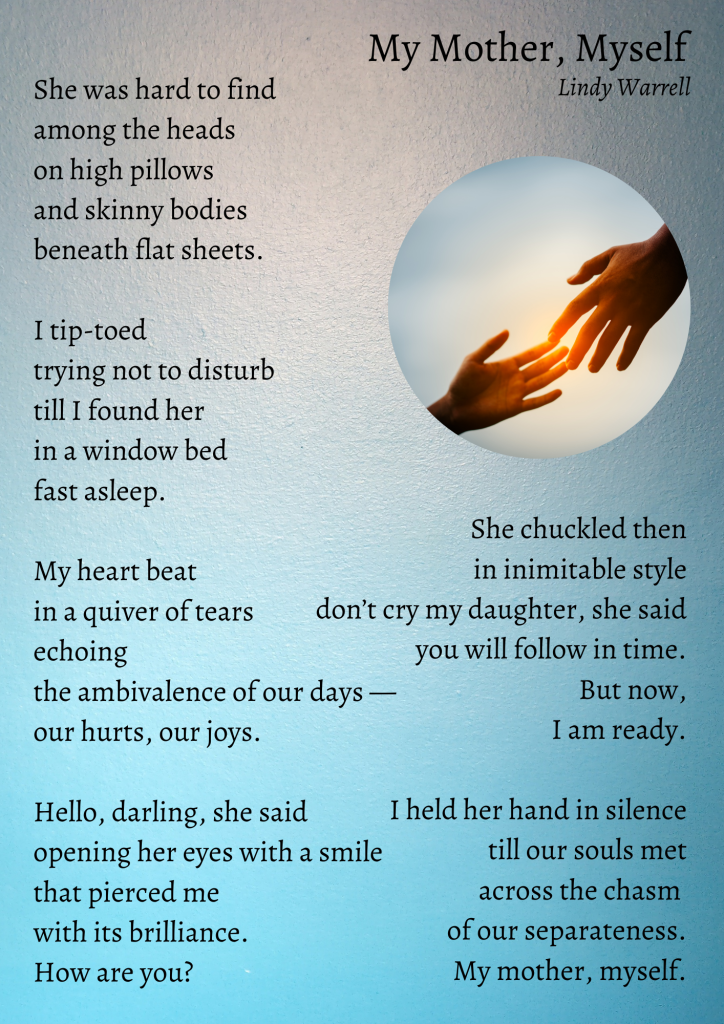
People always think the following poem is literally about my mother and me, and they respond to it with sympathy, kind voices, and even tears, but, strictly speaking, it is not real. Of course, relationships between mothers and daughters and, most likely, fathers and sons talk to universals, and I hope the poem does that. However, this poem arose from a random line I read somewhere about hands touching across the abyss.

To Finish

For ‘Nana in Sepia’, I used an old photo and shards of memory about my maternal grandmother and a child’s perspective to evoke an image of an earlier time.

I have talked mostly about my mother and maternal grandmother, the women who made me who I am. Indeed, like Mum’s mother, I raised three small children alone, albeit in different circumstances. My father’s voice only appears through words he gave me as I grew up, so I’d like to end with a poem about his parents for a bit of balance. It is another heritage-style poem about an old photograph, more ekphrastic than anything else. And, so, I give my father the final say.

For Reflection

We now know that memories are not fixed or frozen, like Proust’s jars of preserves in a larder, but are transformed, disassembled, reassembled, and recategorized with every act of recollection.

Oliver Sacks*

Happy Writing

Wattletales

ACKNOWLEDGEMENTS

*In The Marginalian

Lead photo by Martin Christmas

Lookout Now, Who Would Have Thought I’d Get to Eighty?

On Celebration

It never occurred to me I’d still be here to write this post commemorating my 80th birthday, yet here I am after recently renewing my passport with considerable but unjustified optimism. Last year I imagined all the different ways I might give myself a party for my coming of actual old age in 2023, but I chose instead to have a quiet one and had a memorable day with my daughter.

Me as a baby in tinted sepia.

We banqueted at the Asian Flavour House on Glenelg’s Marina Pier. The food was superb, the service sublime and the weather and setting perfect on the deck. The restaurant served me a fried ice cream dessert with a sparkler on top. Other guests and the waiter then joined my daughter to sing Happy Birthday. It was very special indeed.

Being 80 with my daughter on Marina Pier, Glenelg, 11 February 2023.

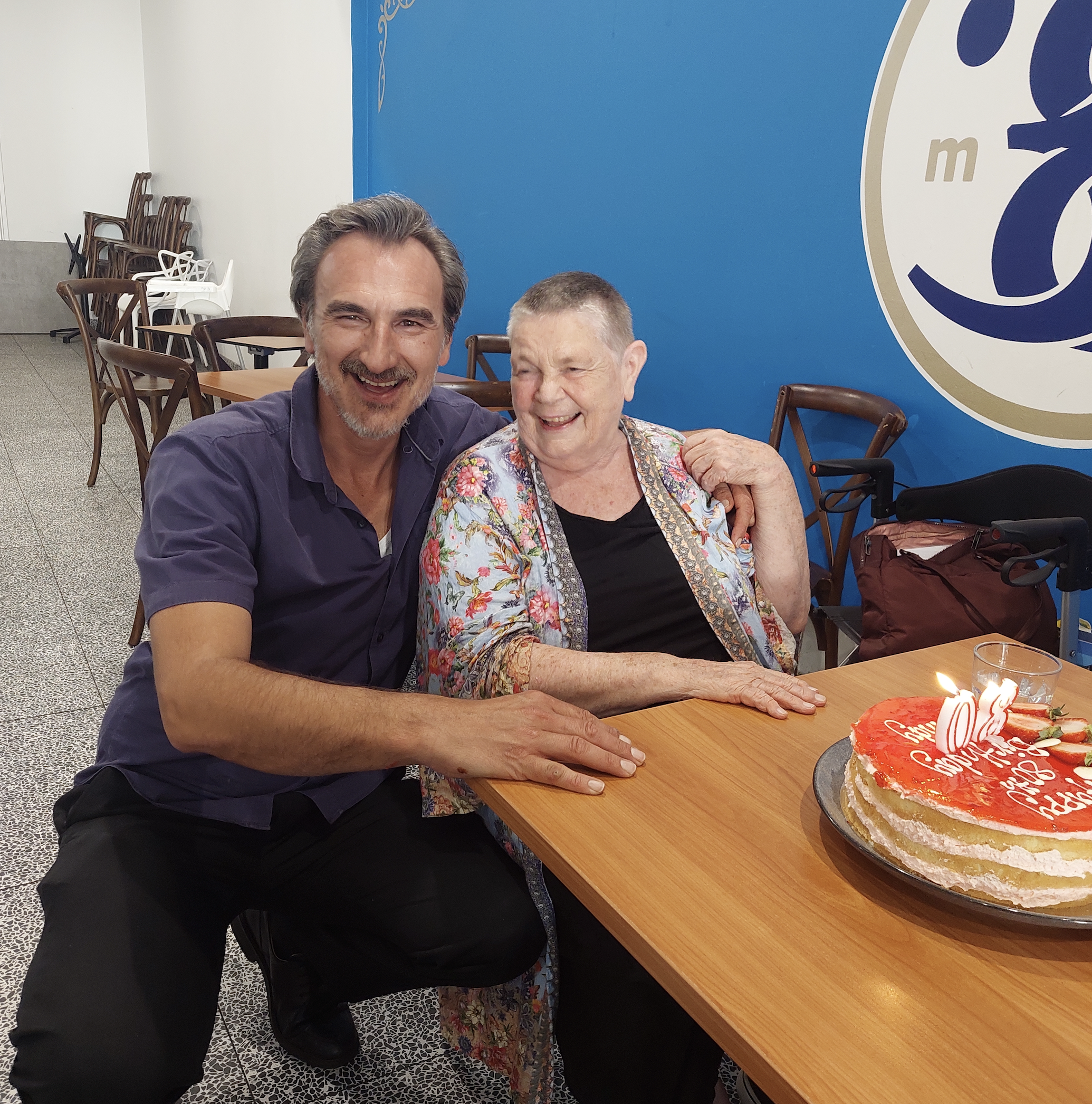
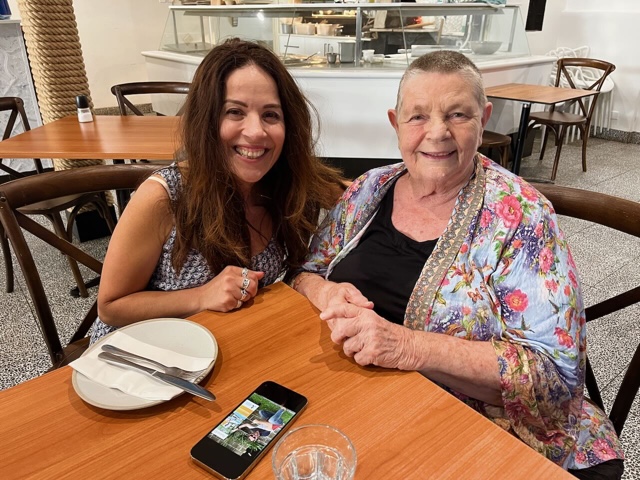
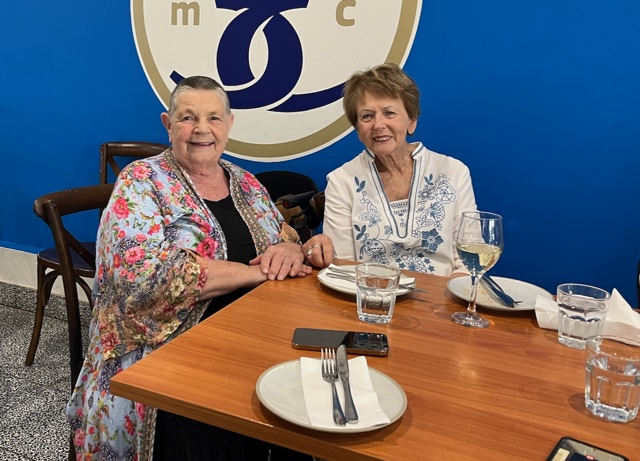
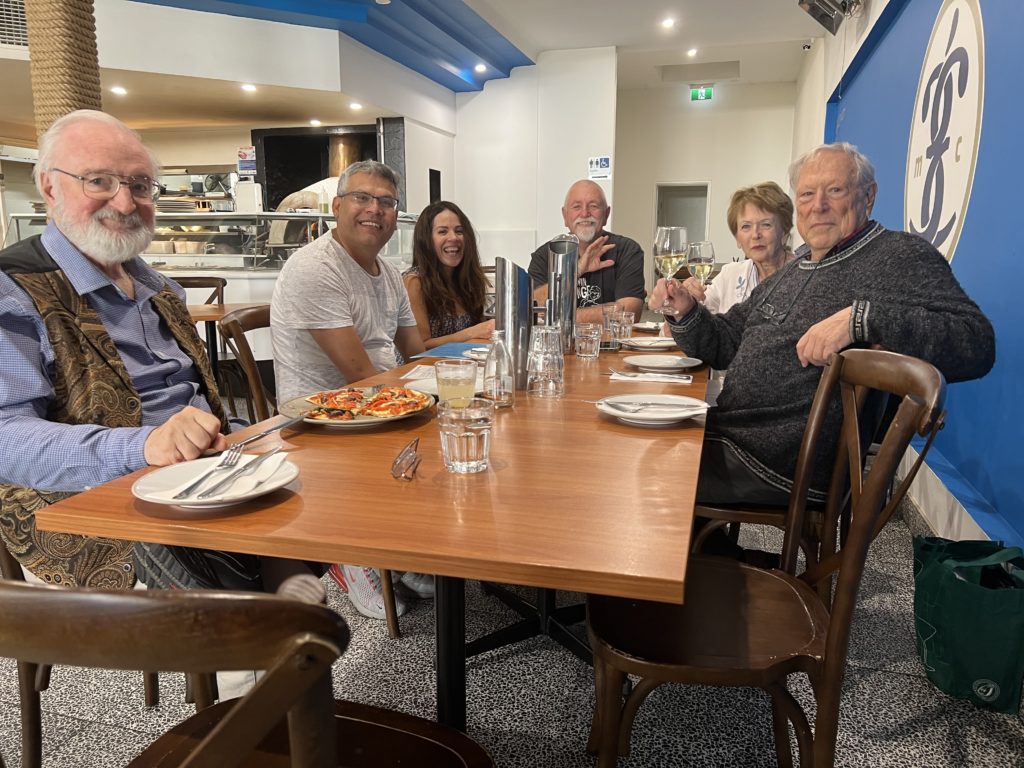
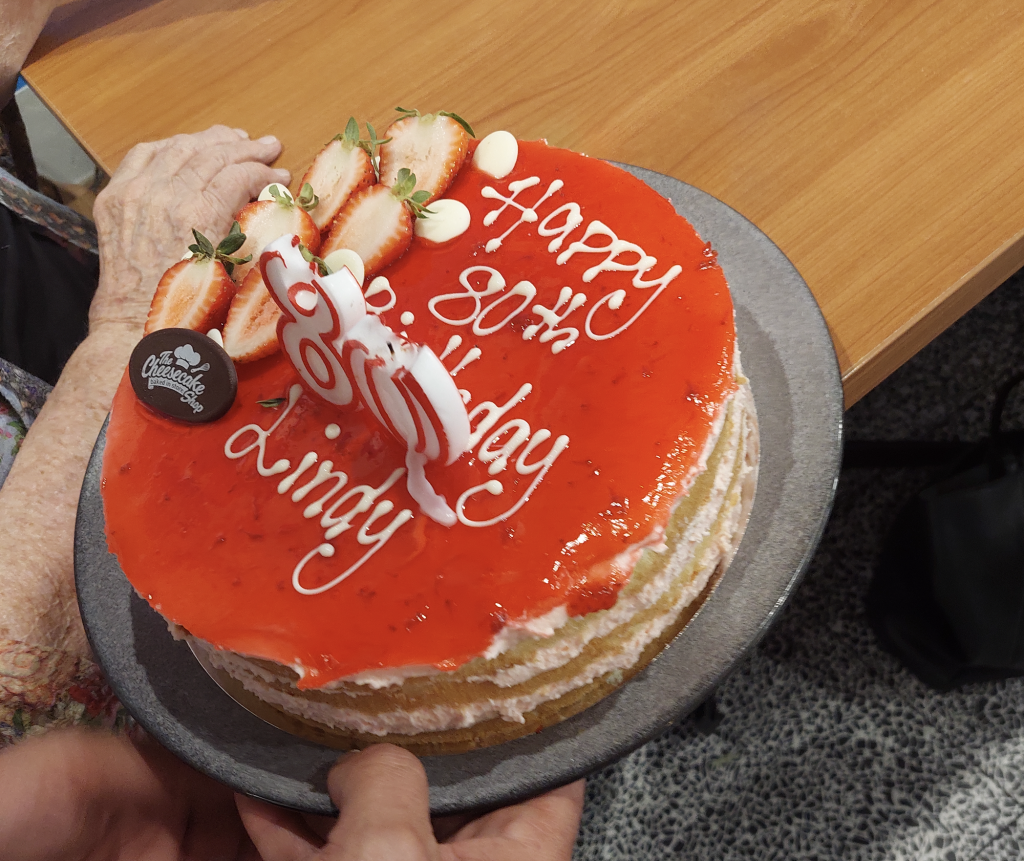
My TramsEnd poetry compatriots surprised me the following Saturday with a beautiful cake and glorious pot plant, cards and other gifts when we lunched at Elatte at The Bay after our regular meeting.

Rade and me.

Restaurateur Rade added his magical smile to the day as he did at both of my book launches at Elatte last year. After lunch, he organised the cake onto a platter, nicely sliced and generously provided plates, cutlery and serviettes. He always makes me so welcome.

Inez organised the cake, and Valerie brought the pot plant, but the gifts were from TramsEnd Poets. I thank everyone for the kindness they showed me.

The Candles

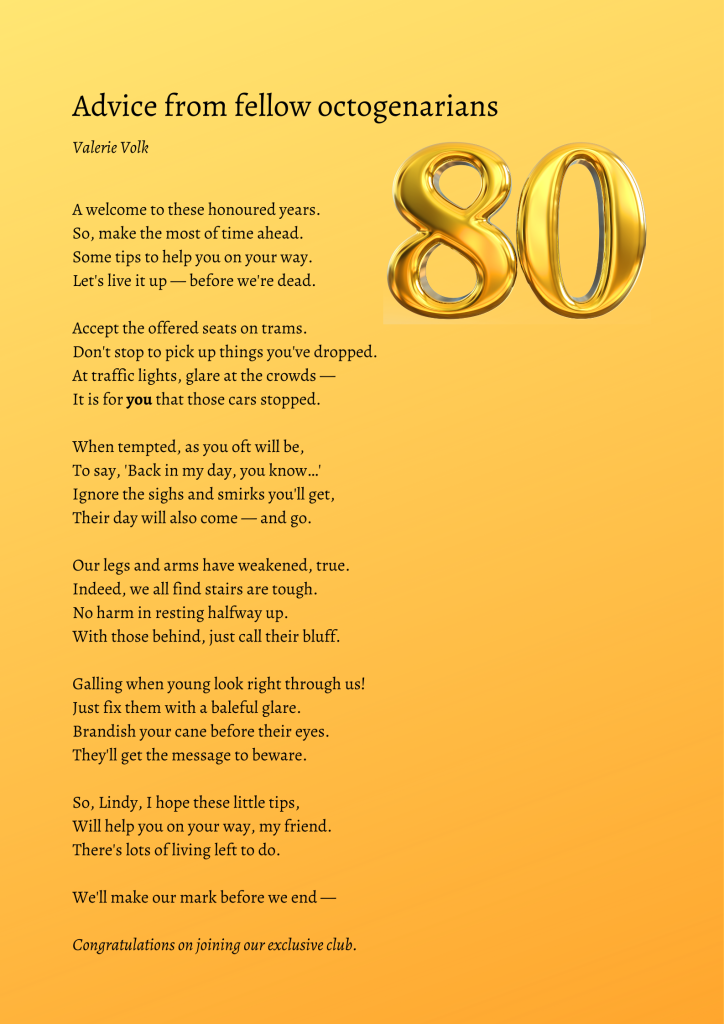
The 80 candles have a history, first used for David, then Valerie, and now for me. To accompany them, Valerie also wrote this delightful poem welcoming me to the octogenarian club. Who would have thought?

What a gift.
My lovely new TramsEnd Poets plant waiting for its forever home.

When I was a kid, I refused parties because I feared nobody would come, and I’ve remained pretty low-key about birthdays ever since. Turning 30 was my scariest; it signified that it was time to be an adult. When I turned 50, I celebrated quietly as for this one, but with my youngest son, Mark. We had lunch at home, and he gave me a single red rose, which I put on the table. My other two children were then living far away.

Childhood

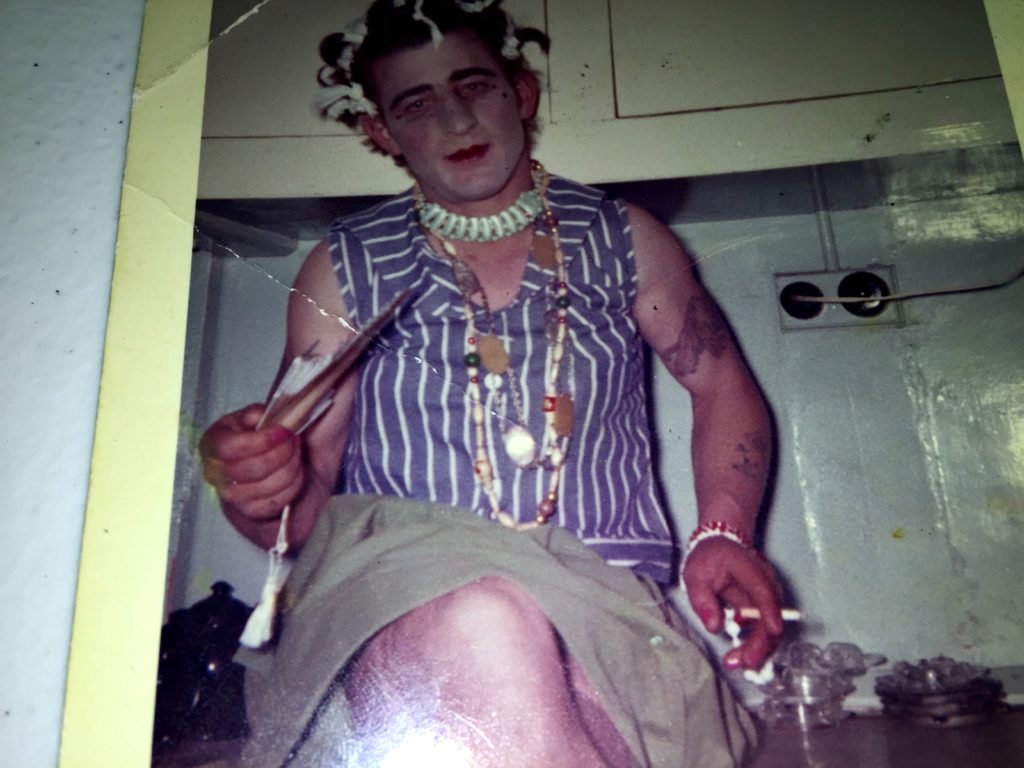
I have spoken about my childhood several times on Wattletales, so I’m not going in-depth here except to say that my peripatetic life has gone from occupied Japan post-WWII to Oodnadatta in my late teens and early twenties. Just two of my two worlds, about as far apart as you can get, as these collages show.

Marunouchi Hotel, Tokyo Japan with BCOF

With Mum. I was the flower girl at a prominent
American military wedding.

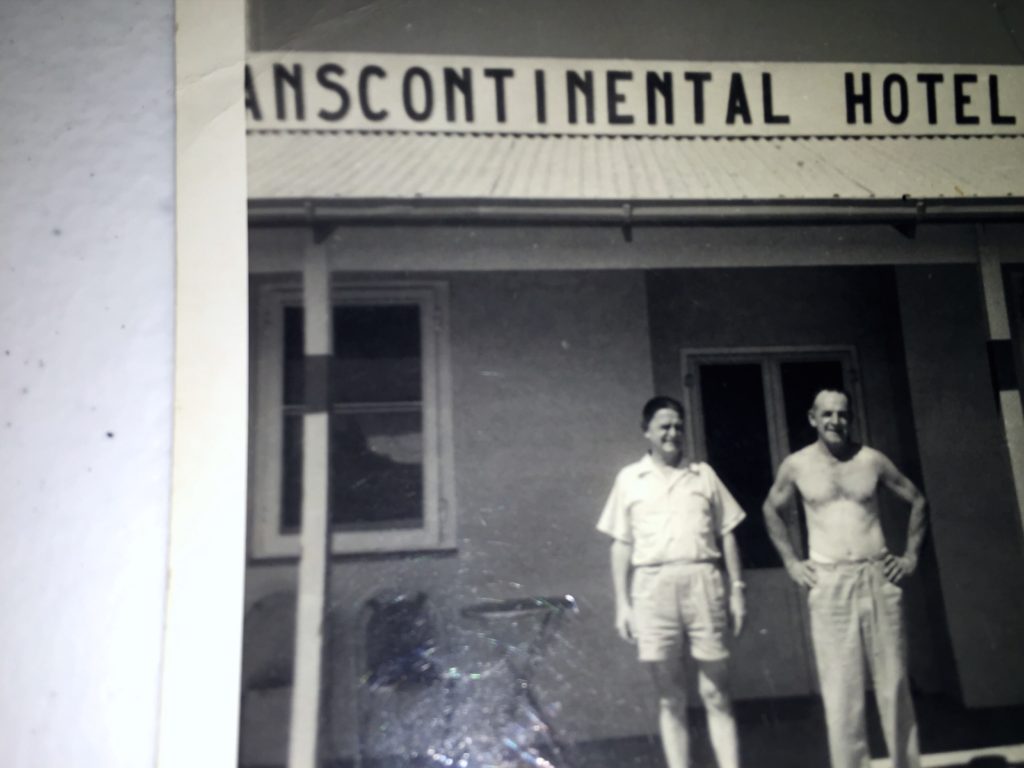
Transcontinental Hotel, Oodnadatta, SA

I continued to live and work in pubs at different times in different places over the years as a receptionist, cook, waitress, cleaner and barmaid. I worked in two well-known Glenelg venues in my early forties to save before going to Sri Lanka with my kids. Sometimes pub work was my mainstay, at others, a handy backup.

Trusty Land Rover and Giles

Change is the Only Constant in Life

As a teenager (a concept that entered the lexicon as I exited adolescence), I yearned to be 25. It seemed like the aspirational moment when I’d become an adult. I wasn’t a legal adult when I married a violent man at 17, a matter that required parental consent, which had no corresponding power to control my husband. At law, I could drive at 16 but not drink alcohol or sign documents until I reached the Age of Majority, at 21.

I once published a paper about the changing nature of Australia’s liquor laws,* exploring the age of consent for drinking alcohol. Since federation, the age limit has bounced up and down and was once 12. True.

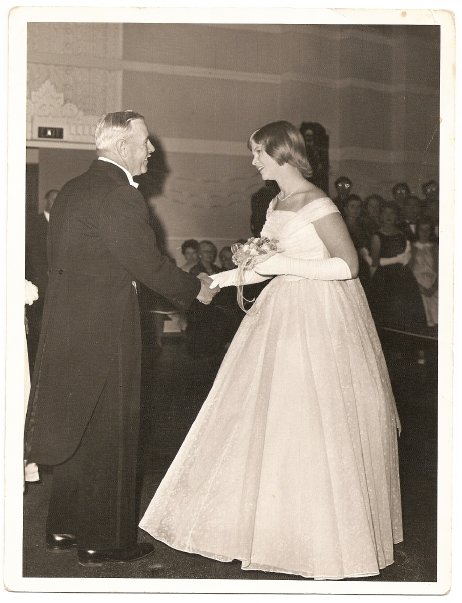
My debutante ball in Port Lincoln, aged 16,
when Dad managed the Pier Hotel.

When my three children and I lived in Sri Lanka during 18 months of field research in the mid-1980s, strings of young coconut leaves lined streets with houses where someone had died. This familiar sight inspired my kids to ask why so many people died in that country. The answer, of course, is that at home in Australia, we pretend nobody ever dies. As a culture, we mark death in enclosed cemeteries except for personal floral tributes at road accident sites which, like strings of young coconut leaves, wither in place. Death is a truth we tend to evade.

Soldiering On

I attempted unsuccessfully to survive marriage three times. I call my second marriage the real one because, from it, I had three wonderful children in 1971, 1972 and 1974. Their father left me when the youngest was still at kindy. I railed against my situation, playing the victim when I could. I assigned blame to mask a broken heart, although nobody thought I had one back then.

Yes, I was unhappy in the marriage and had been wish-dreaming that my husband would die because I lacked the initiative and courage to leave him. Dad encouraged me to do so while Mum, her best friend, and other older women advised the opposite, saying I shouldn’t do that to my children. I think the advice would be different today.

As a mother, I did what we must do. I put my head down to live and take care of my children. Solutions do not always exist, and life commands us to keep going, so I quashed dark thoughts. Deep down, I resolved to do nothing extreme that could hurt my children. Of course, there were other inadvertent ways of doing that. As it is, my children have their own stories, and all will differ from mine as they should.

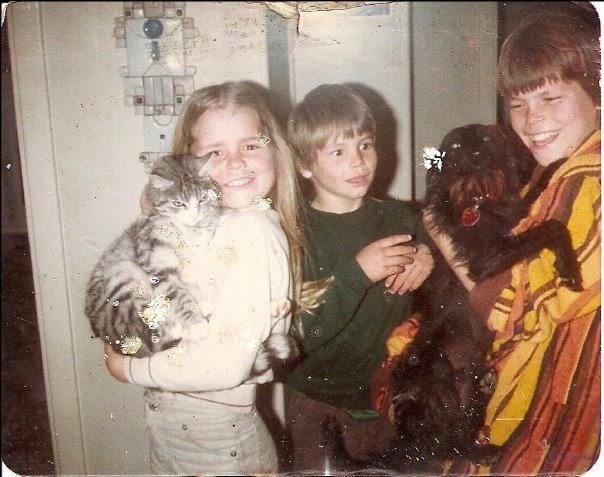
L-R Christmas the cat, Vanessa, Mark, Melly the dog and Grant.
We had to leave the pets behind to go to Sri Lanka.

My Salvation

After my marriage collapsed, I worked part-time managing a well-known Adelaide ballet school for my brother, Phillip Warrell and Rex Reid, both dancers. I caught a tram to the city every morning after eating a scrambled egg on toast till the monotony froze me in depression.

One day, a kind person (one of the well-heeled mothers) suggested I undertake tertiary study. ‘A clever girl like you’ is what she called me, who left school at 15. At her suggestion, I sat and succeeded in a university entrance exam that gave me a spot as a special entry student at the University of Adelaide.

On campus, I walked around feeling as though someone had stamped intelligence on my forehead. It was such a privilege. I loved university life, where I was finally free to devour books as I often did as a lonely child.

I made new and exciting friends and learned far more than the curriculum offered. Things I knew intuitively fell into place, and I revelled in a world rich in ideas and creativity. I even discovered feminism — for free because of Gough Whitlam.

Going Back

I was the first in my family to get a university education.

My father was born in Sydney’s Glebe slums in 1910 and walked barefoot three miles to and from school. If he got a pair of shoes for Christmas, he was thrilled. As a little boy, he became a bookie’s runner until he got his first ‘proper’ job labouring, earning ten shillings a week. Later, at 11, he joined the Navy and then the Army for WWII.

Mum worked in a woollen factory in Melbourne. She joked that she and her sisters had to pull fluff from their noses on the way home after work every day. When she died of lung disease, medical science said it was because she smoked. History ignored.

My first pay packet was six pounds from memory when I worked in a garage in Port Lincoln, pumping petrol aged 15-16. When we speak of inflation today, these figures tell us that our system is inflationary by definition, and one wonders where it might end.

The Simple Life

When I was a little girl in St Kilda, Melbourne, milk came on a horse-drawn cart. At the gate, the milky ladled fresh milk, which had a deep layer of cream, into domestic metal pails. When my children were little, the milky delivered milk in bottles to the front door, still creamy. There is no cream in the hundreds of milk brands now lining supermarket shelves. It is all about choice, they say, as competition helps profits to soar.

During my early teens in Mentone in Melbourne, before I left school, my parents and I sat around a little table, watching a wireless similar to the one pictured below to listen to serials. We had no television in Australia then and no mobile phones, not even cordless ones, and some of us didn’t have a phone at all.

Personal computers were unheard of, and you got your driving licence without a road test, as I did in Port Lincoln, South Australia. (Even after coming and going from SA, I still have the original licence number!) It was safe to go out at night. Men had punch-ups but didn’t end up in gaol, and nearly everybody smoked until the mid-1980s.

It wasn’t all good, but life was far simpler in my youth. Choices were fewer. If I go back to pre-adolescence, getting an icy treat meant choosing between a milk or water ice block in a square cone. They came in about three flavours. Milkshakes (my favourite was Blue Heaven) were a treat. Teenagers rarely had cars, and although I got my licence at 16 (before I could do any other adult things), I didn’t buy my first vehicle until I was 27.

Even when I had primary school children at home, people still played board games or cards at night or had singalongs, and families often did nothing more than watch little ones play. These activities brought generations together, whereas the push of technology and progress now separates us. Television did not then dominate as it does today, with multiplying streaming services and bewildering choices.

Progress

Where once a household had a single television set, it is now likely there’s one in every room. We don’t share computers; we have one each. This may be a generalisation, but I suspect capitalism’s impetus, like the technology it spawns, is to segregate and multiply the number of consumers it feeds in the name of profit that makes obscene levels of wealth disparity possible. Loss, in these terms, means less profit. Think about that.

Our economic system is a greedy monster that dehumanises as it grows, bringing isolation, loneliness, depression, and, for the young, a sense of disconnect, to which the only answer seems to be pills.

On a High Note

Of course, bad times and suffering exist at any age or stage, always interspersed with great satisfaction and happiness. As my dear Buddhist monk friend Bhante Ly would say, that is ‘the life’ (samsara).

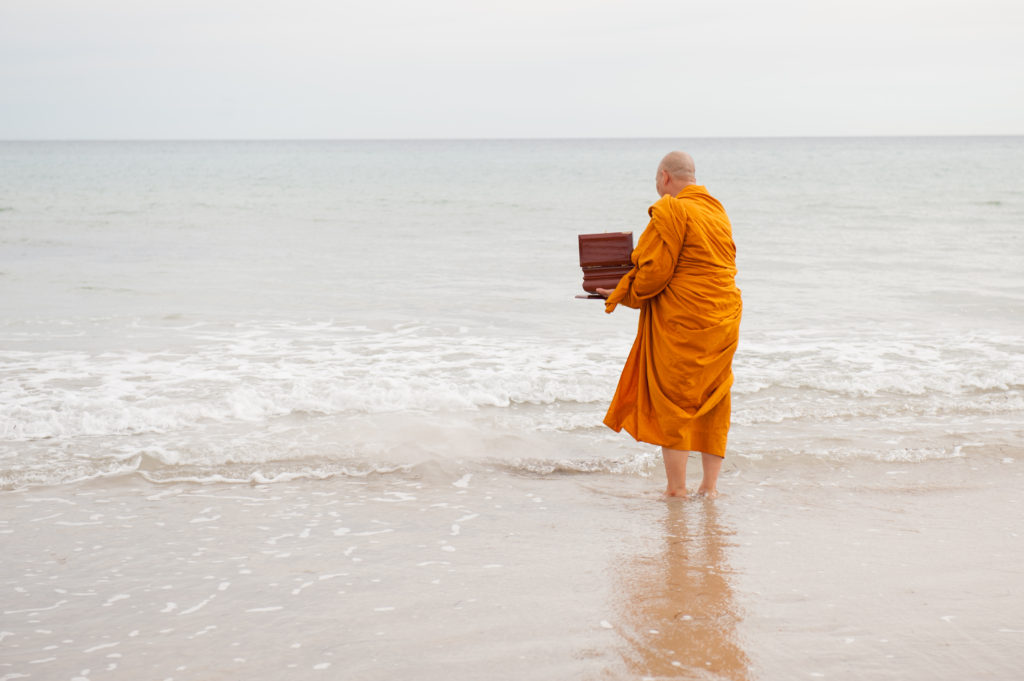
Bhante Ly blessed my son Grant’s ashes before we scattered them with flowers at Aldinga Beach.

My parents suffered extreme poverty during the great depression, and many of my friends experienced it as children here and elsewhere. As for World War II, we must never forget the suffering of the Jewish people or the devastation of frontier wars and war everywhere.

War separates and divides us as humans on an increasingly fragile planet. All we can do is live our best life with what we have for as long as we are lucky enough to be here. And I am indeed blessed to have come this far.

A beloved friend taught me we could overcome adverse circumstances, even severe illness and ageing, by maintaining curiosity. With this in mind, I try to treat each experience as new in the manner of dogs on walkies.

My advice now is to let small things fascinate you, the things that briefly flutter your heart or tickle your fancy. Take joy in a baby’s smile, a cat’s purr or a dog’s wagging tail and shiny, loving eyes. Relish sunshine after rain. See how leaves glisten. I love to luxuriate in freshly washed bed linen and take hot showers in cold weather. I have my down moments, but small things and my joy in writing remind me daily how fortunate I am to still be in this suffering world. 

Happy Writing

Wattletales

REFERENCES

* “Flirting with Morality in the Law: The Booze, The Bouncer and Adolescence Down Under’, in Anthropological Forum (1995) Vol.7 No. 7 pp.332-334

Secrets from One Night In Hospital

A Ward’s Eye View

My doctor recently sent me to the Emergency Department (ED) at Flinders Medical Centre as my oxygen saturations were extremely low. I have a lung condition, and I was struggling. It is not unreasonable to be jaundiced in one’s view of a hospital when ill. Pain, debility and loss of dignity in that environment all contribute to bias, even, I suggest, for those in private rooms in private hospitals. Forgive me then if I sound a little dark as I expose the borderline farce of my recent night in a public hospital ward.

My Sick Bed

The Journey Begins

I called a taxi on the day to take me to the ED to avoid being ramped in an ambulance. The waiting room was relatively quiet, and because I wasn’t too good, I was quickly ushered into a cubicle where a thoughtful specialist respiratory registrar admitted me. I then waited. And waited for a bed.

The nursing staff breezed in and out, regularly checking my oxygen status and heart rate and taking my temperature. Fortunately, even after being there for many hours, I wasn’t hungry as nobody offered sustenance, not even a cuppa, and I had to ask for water.

Once the hospital found a bed, an orderly wheeled me to a four-bed ward, each bay delineated by dark grey, folded all-around privacy curtains. The first hint that things might not be OK came when the orderly brought the ED blanket to the ward with me. Was it always like that, or was it a new cost-cutting measure? Worse was to come, and this is the tale.

The Setting

The Ward

According to the headboard in my bay, I didn’t exist. Indeed, it looked as though nobody had been in that bay for a considerable time. It was a grungy, scrappy affair.

Client Information Board in Bay

The next photo is of the ward taken from my bed. It may seem familiar or unsurprising, but closer inspection shows a large, suspicious puddle on the floor. The staff said the roof leaked. Indeed, rain during the night was heavy enough to wet my walking frame and the foot of my bed, let alone create a slip hazard for the infirm.

Please note the mysterious yellow stain on the ward’s windows.

Ward Clutter and Yellow Windows

The following two photos combine with the first to show a forgotten ward with dirty, peeling skirting beside my bed, plywood on the wall, and piles of pigeon poo on the ledge outside my window. At least I had a window!

The Bathroom & Toilet

The solid doors on the ward’s bathroom were so heavy I could barely slide them open and shut, especially while holding a walking frame with one hand. The door’s tiny, out-of-date snib was nigh on impossible to manoeuvre with arthritic fingers like mine. Standard accoutrements like a pad disposal unit, rubbish bin and spare toilet rolls were absent.

A further challenge confronted me about how to move the clumsy, over-the-toilet commode left in situ by the previous occupant. Even when the cleaners finished in the morning, they replaced it over the toilet as though that was where it belonged.

There appeared to be no daily bed-making routine or effective cleaning in the ward while I was there. One cleaner ran a dry mop over the floor, skirting around rather than under chairs and beds. Another came before lunch to remove the accumulation of unsanitary hospital gowns on the table under the yellow-stained window.

The Cast

Stage Lights Up

Let me introduce this little drama’s key players. Opposite me was an extremely unwell elderly man who slept heavily unless roused for treatment or food (which he refused). The aged woman beside him was desperately ill, too, constantly calling to go home. Although hooked up to oxygen and pumped full of pills and potions, I was comparatively fine.

Then there was the star, a mystery man in the bay to my right. Let me call him Jim, who kept his bay curtains closed tight day and night. He was the invisible man. 

The Invisible Star

The Drama

Scene 1

My first encounter with Jim was indirect. I needed the toilet. I’d completely forgotten Jim’s earlier announcement to the ward that he was going to take a shower. Indeed, he made a loud, sound spectacle of the fact, but I hadn’t expected him to be in the bathroom for two hours. A kindly nurse led me to a different ward on the other side of the building, quite a long walk, even with my walking frame, when I could hardly breathe. She explained he was ‘like that’.

In earlier times, senior nursing staff or even an orderly under a nurse’s direction might have marched the Jims of the world to and from the shower within an allotted time. But, according to a reliable source, the client (sic) nowadays can do no wrong.

Scene 2

Being separated from Jim by barely two metres and a thin curtain, I was intimately privy to his non-stop cacophony of self-pitying self-talk, shouts to nurses, wailing about pain, crying or moaning and screaming to unknown demons in his head, alternating with tuneless singing and ugly bursts of laughter. It was unpleasant, loud, and persistent.

At one stage during the night, I woke in shock at the sight of someone taking my walking frame from beside my bed. The poor bugger was trying to walk backwards with it. Not understanding who it was in the dark, I called out that it was my frame and pressed the nurse’s button. Jim then shouted at the nurse who came, saying they should take no notice of me because I was a mean bitch.

I detest nastiness, so I ‘made friends’ with Jim through the curtain, being conciliatory for not having realised that the walking frame ‘thief’ was the elderly man opposite’. Jim played along, being affable and understanding.

Later, a nurse explained that the older man opposite me, whose frame sat beside his bed, was severely disoriented and confused. All rather sad.

Scene 3

I got my first and only fleeting glimpse of Jim in the early hours, short and wiry, like an ageing jockey, lifting the chair beside my bed to take into his bay. He already had two, and with bleary eyes, I said the chair belonged in my bay. He raved, saying I thought I owned the place, then rang the nurse’s bell incessantly. In high victim mode, he bad-mouthed me to her in a loud whisper. Boy, did he give it a go?

Later in the morning, he attempted to seduce the young nurse as she discussed his imminent discharge. He wanted her telephone number and had some peculiar logic for why she should give it to him. A cunning manipulator, Jim knew the poor girl was out of her depth yet became obsequious when a senior nurse came to put an end to that bit of nonsense.

Shortly after that incident, I overheard the discharging doctor listing Jim’s ailments, and I felt sorry for him. We may all have multiple comorbidities as we age, but Jim was not that old, and he had a lot going on and should have been in a ward better equipped to deal with his idiosyncrasies. This was a failure of an underfunded and understaffed health facility that was probably severely over-stretched well before COVID.

Denouement

I confess to finding the ward’s disrepair and overall uncleanliness distasteful. The nighttime walking frame and chair antics entertained me. But, remember, I was a sick old lady too, and these things rattle you a bit.

As for Jim’s incessant noise, I am lucky to sleep through most sounds, probably from growing up in pubs. More so, perhaps because years of meditation taught me how to switch off the irritation factor. Noise, the Buddha might say, is merely sound — be grateful you can hear the world and the myriad ways it makes itself known.

The nurse who walked with me to the loo twice because of Jim’s periodical co-opting of the bathroom told me that nursing staff must also use ward toilets because black mould had taken over in the only staff toilet within cooee. She also confided that Jim had been in her ward for six weeks.

I asked why Jim got away with so much, and she replied it was easier to give in to clients like him. We laughed. The situation would be ludicrous if it were not so serious, as his needs took up so much of the limited nursing capacity.

Secrets in Plain Sight

In the abstract, we all know the health system is in crisis. But the secret in this tale is that neglect is now visible in crumbling facilities and probably was so before COVID. It takes time to get as bad as it is, and it reminded me of the sorry state of the old Adelaide Airport before we got the new one.

That is sad for me. I typed the mechanical and electrical tender specifications for the FMC prepared by Mark Tostevin & Associates of North Adelaide in the early 1960s, when I was in my early twenties. Back then, the future looked so bright.

While I have no complaints about the medical care on this one night over the 24-hour period I’ve described, I must also mention the 10-hour wait I had the last time I headed to the ED with four crush fractures in my spine in 2020. Ignoring my pain level, the ED doctor, who consulted me in a corridor at 2 am, sent me home at 5 am. I arrived at 5 pm the previous evening. 

The x-rays didn’t show what an MRI subsequently proved, that T6, T7, T8, and T9 had broken down. One was a 60% fracture, and the other three were slightly less severely crushed. That was tough.

The Moral of the Story

Getting old is inevitable, and bodily decline is an increasing part of that journey. Three of the players in my little drama, including me but excluding my friend ‘Jim’, were elderly, not to put a finer word on it, to appease grammar editors. When sick, we are often not in complete control of our faculties. I am lucky enough not to have lost it altogether yet, but time is closing in, so I wrote a futuristic poem about being in a nursing home. Let me end this story with that.

As for the Future

Flinders Medical Centre Precinct

Of course, SA Health has recently delivered two magnificent extensions to FMC, the Centre for Innovation in Cancer, which shines proudly over old buildings. Along Flinders Drive is a new, state-of-the-art Aged Care Rehabilitation and Palliative Care block joined by walkways from the old hospital and a discrete Older Persons Mental Health Unit.

The new Federal Labor Government has committed substantial funding for upgrading, and the SA Labor Government is also determined to create world-class facilities. May these welcome fixes come soon to rectify the maintenance decline I allude to here, which coincided with SA’s previous LNP government’s privatisation of hospital maintenance. No surprise there.

PS I noticed that the 2023 forward plan for Southern Health, which embraces FMC, speaks of patients in bureaucratic terms, not as clients as nurses are now required to do, but as consumers — a fascinating philosophical change.

TIP

Life is grist for a writer’s mill.

Happy Writing in 2023

Wattletlales

2022 A Wrap on My Almost Lost Year

Not All Is Lost

A couple of years ago, after discovering a website that hosted guests, I expanded Wattletales, initially my author page, to hear more about other people’s creative journeys. At first, I asked close friends to contribute to my blog as guests. When that proved successful, I found the confidence to invite others whose stories I fancied reading, and Wattletales is now a growing showcase of Adelaide’s artists, writers and poets, and I wish you all a very Merry Christmas and Happy New Year.

An Invitation

If, on reading this post, you are interested in including your creative story in the Wattletales creative showcase, please message me on Facebook or email me at lindy@wattletales.com.au.

2022 Guest Roundup

Four of my five guests this year — Steve Bell, Warren Porter, Susan Thrun Willett and Roger Rees — are from Sand Writers, a Goolwa-based writing group I enjoyed immensely as a member for a few years. Academic, artist and author Kathryn Pentecost, who hosts the South Coast Writers and Friends Facebook group, recommended Jade Wyatt.

February

Steve Bell

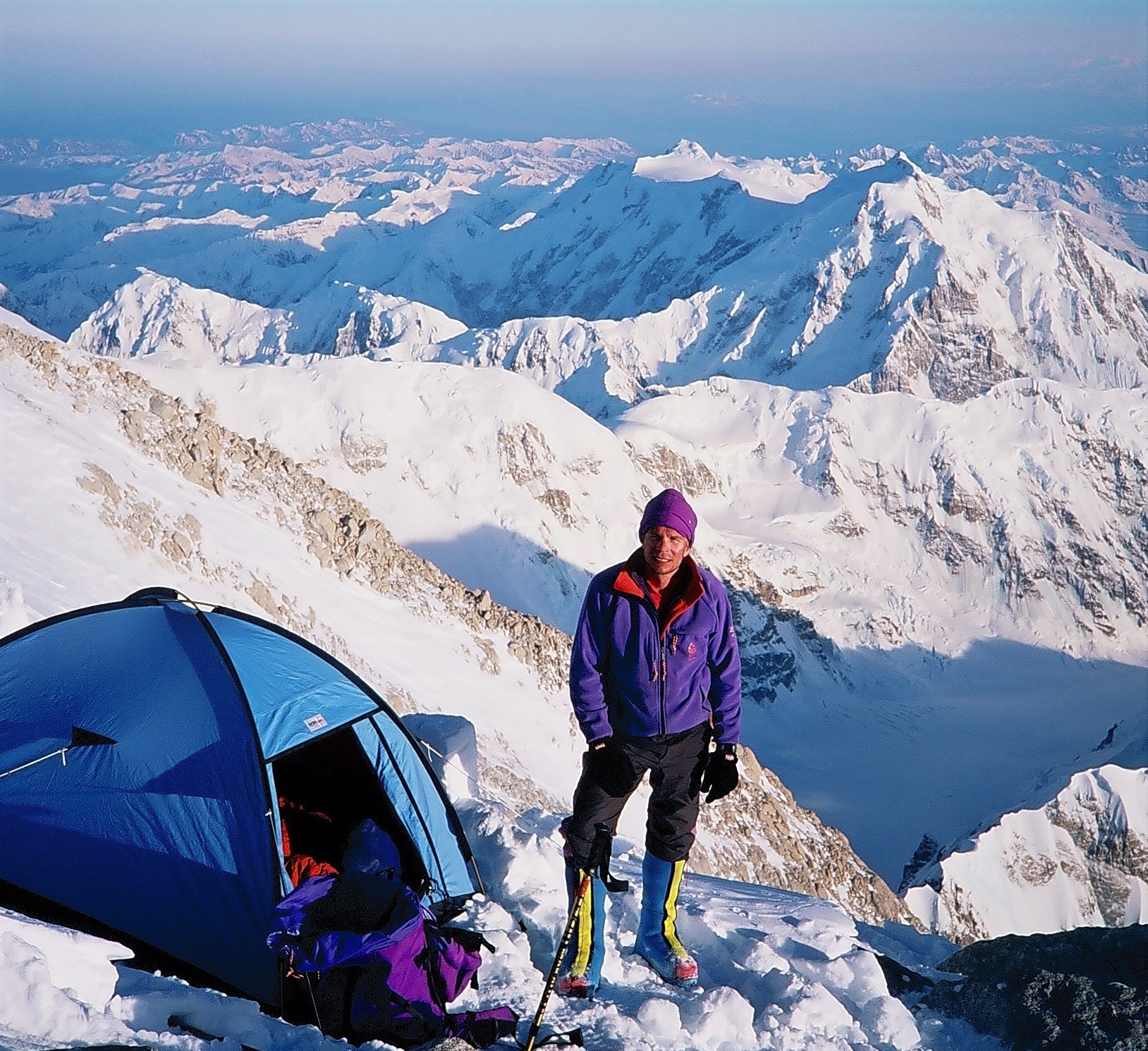
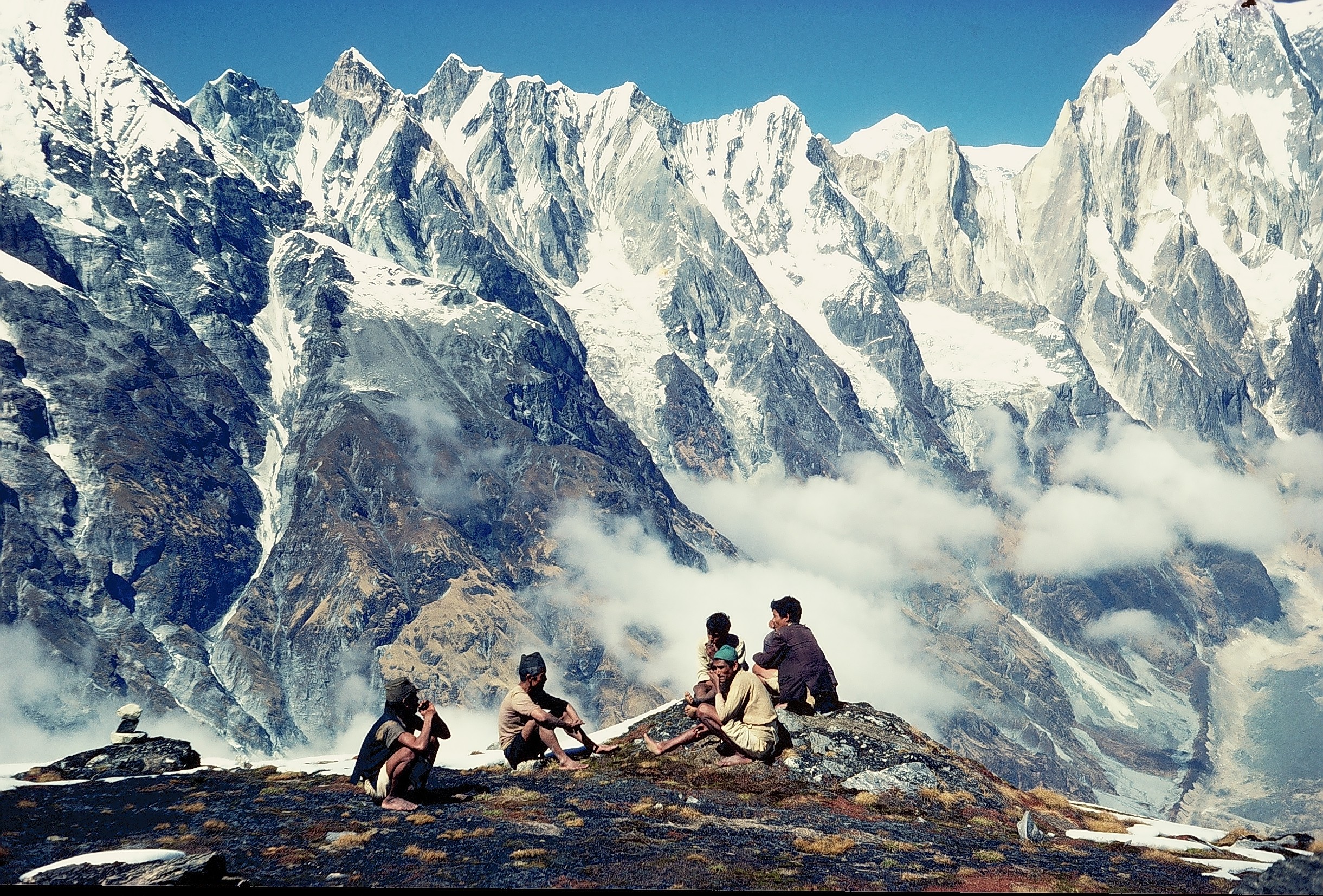
Our first guest this year was renowned mountaineer, now writer and public speaker Steve Bell. In his remarkable piece, Reaching for the Highest Fruit, Steve describes the perils and rewards of climbing to the highest points on our planet, the dangers and deprivations of which ‘open the mind to regions inaccessible in everyday life.’ Always a reader and good at English at school, Steve’s new adventure is writing, which he describes as a challenge similar to climbing.

March

Warren Porter

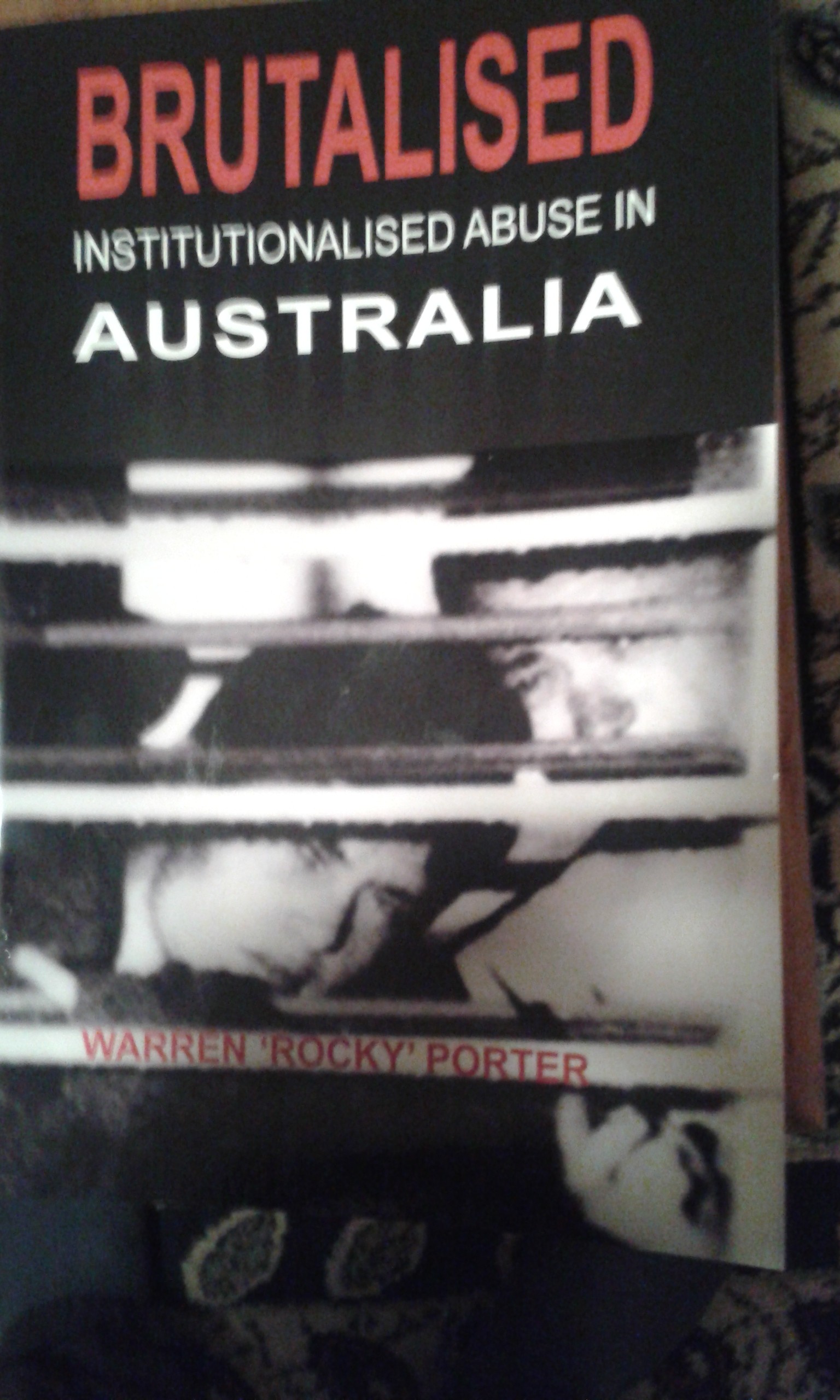
In his first article on Wattletales in 2021, Heading Out Along the Line, Warren told a story about finding a job in his youth as a fettler on the Trans-Australia railway line that crosses the Nullarbor. While the fettler story is a slice of almost-forgotten social history, Warren’s 2022 contribution, Blood on Their Hands, offers profound insight into the violence he experienced in state-run institutions as a child. It is a harrowing but necessary read, but Warren writes to help things change.

June

Susan Thrun Willett

In her poignant tale, The Free Pom, Susan Thrun Willett, evokes the poverty into which she was born in the UK before her parents migrated to Australia as Ten Pound Poms. Susan was only five, so she travelled for free, but her story shows she also has a free spirit. After putting herself through university, Susan became a teacher and deputy principal, teaching literature and language. She later taught English as a Second Language in the UK, the United Arab Emirates, Turkey and China. Now, she is exploring her creative writing seriously.

August (a)

Jane Wyatt (aka Elizabeth Snow)

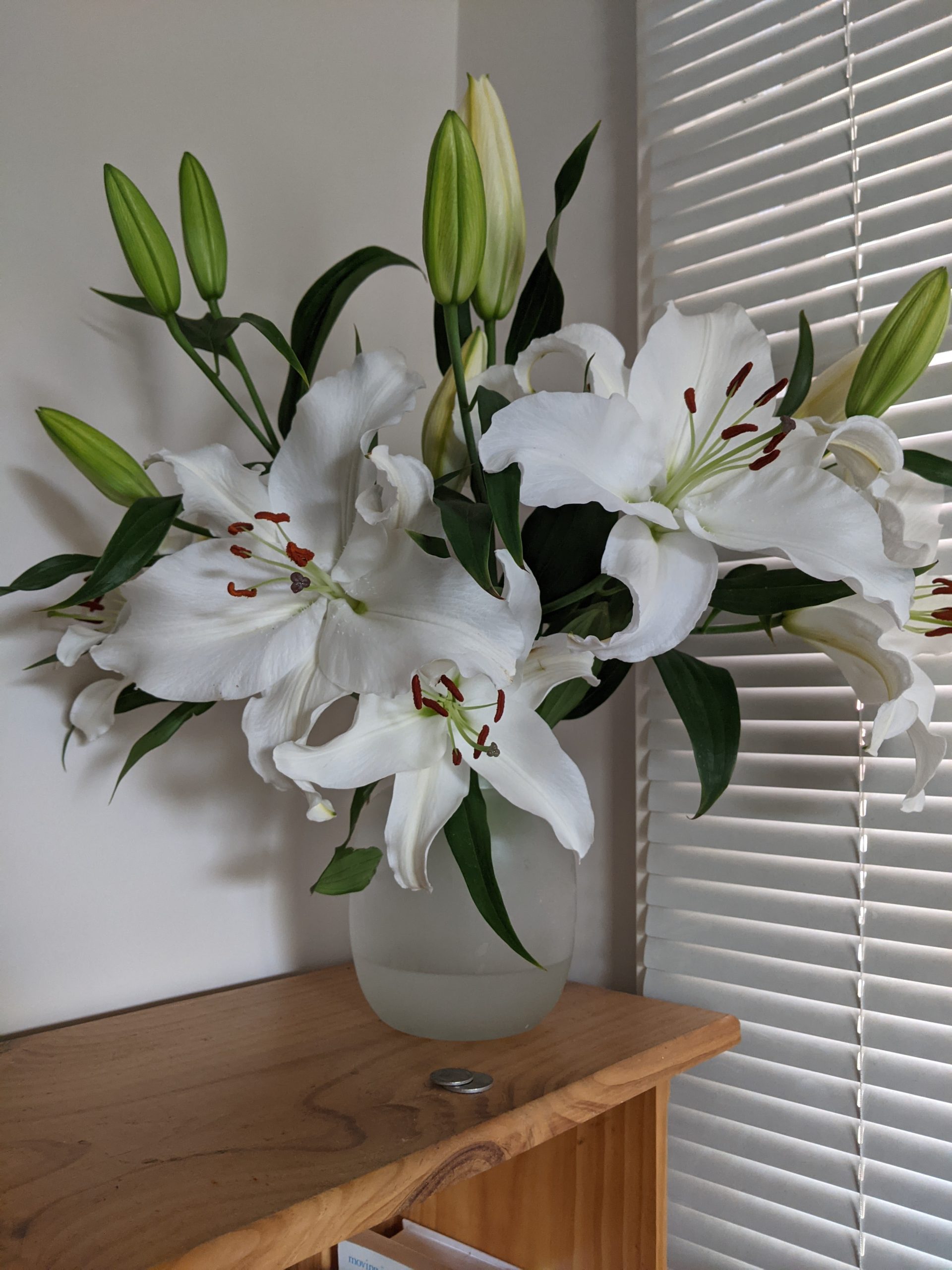
The Scent of Hope by Jane Wyatt (aka Elizabeth Snow) is a delicate story that starts with the ‘unashamedly ostentatious nature of lilies’. Their scent, she tells us, fills her with hope. Jane finds inspiration in flowers and words, which she describes as magic, and in her children and family. Jane’s prose is as poetic as her poetry, and any attempt to capture its beauty here is bound to fail but leaves us with the message that ‘hope is where flowers bloom’. 

August (b)

Roger Rees

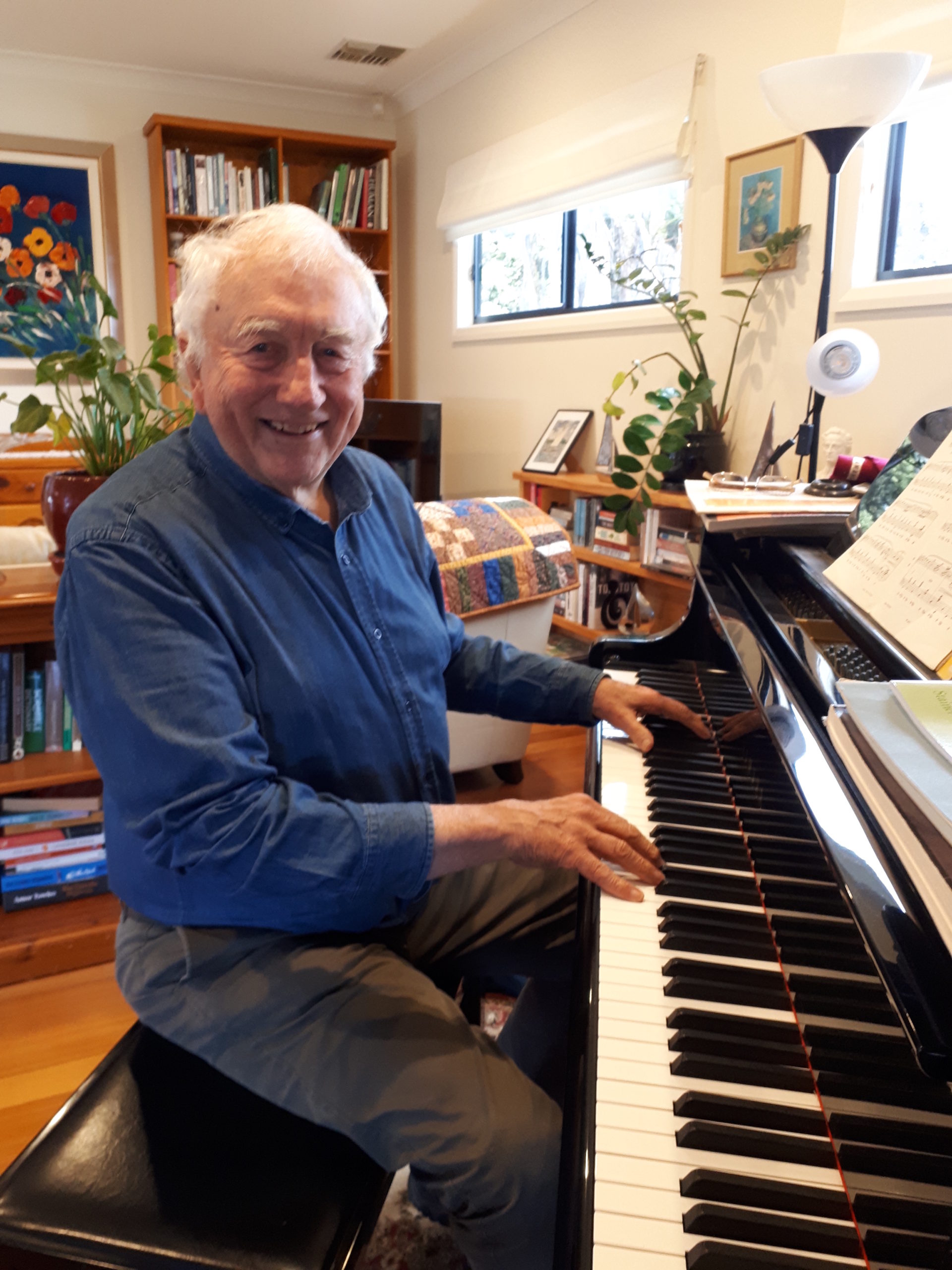
My last guest for 2022 was Flinders University Emeritus Professor and multi-talented sailor, musician and writer Roger Rees, who talks of science and creativity in People and Their Lives are Fascinating. Roger is a riveting writer of what I think of as literary portraits. In prose and poetry, he praises others for their achievements, personal courage, and creative contributions to life. Roger’s energy and original thinking are inspirational; as a pioneer in his field, he has shown how creativity contributes to healing.

A Memorable Year

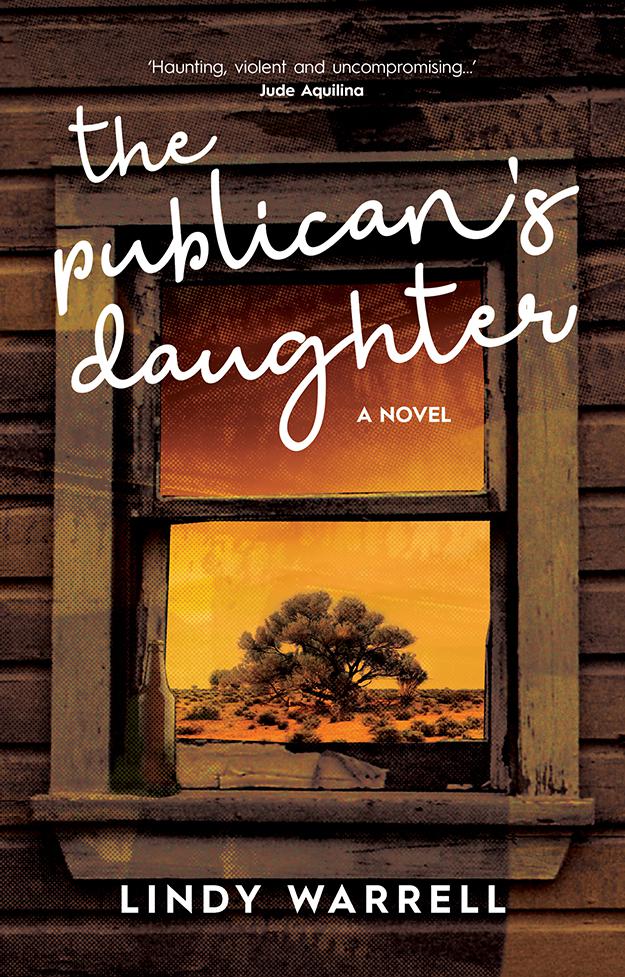
Despite losing creative time doing ‘business’, this year has been one of the most satisfying of my life, almost up there with being blessed with three children. At Wattletales Publishing, I saw my first novel, The Publican’s Daughter, and my first book-length poetry collection, A Curious Mix in Free Verse, in print. Both books are in the South Australia public libraries catalogue.

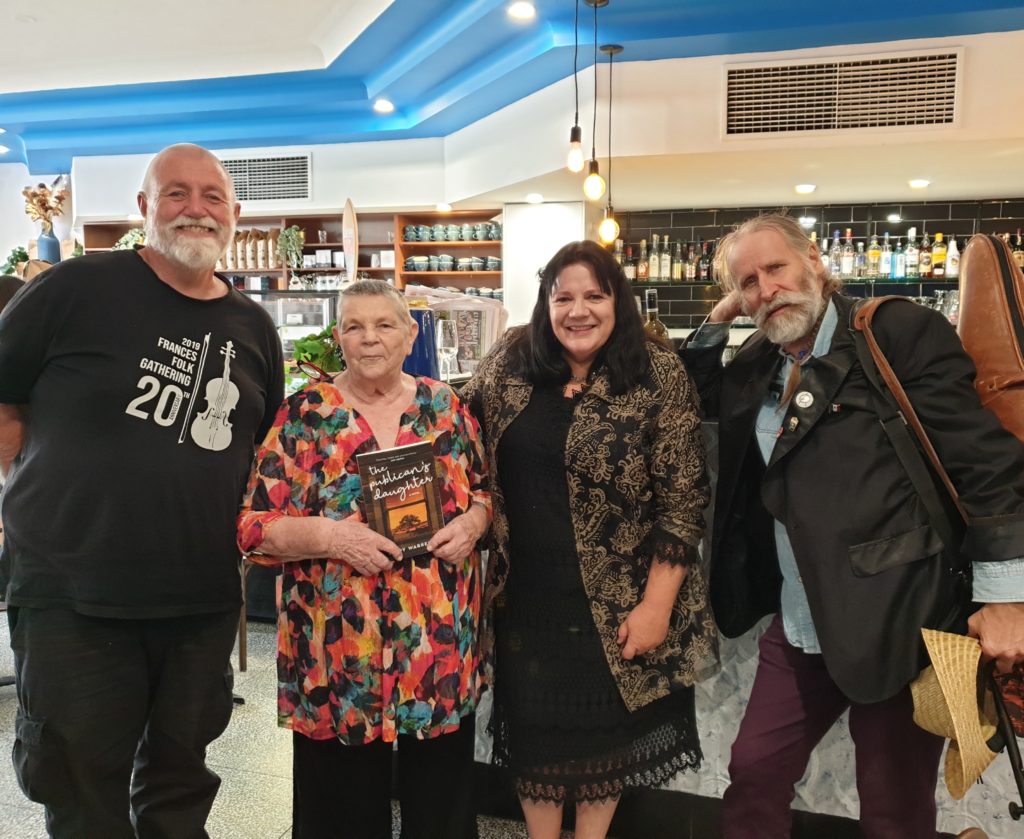
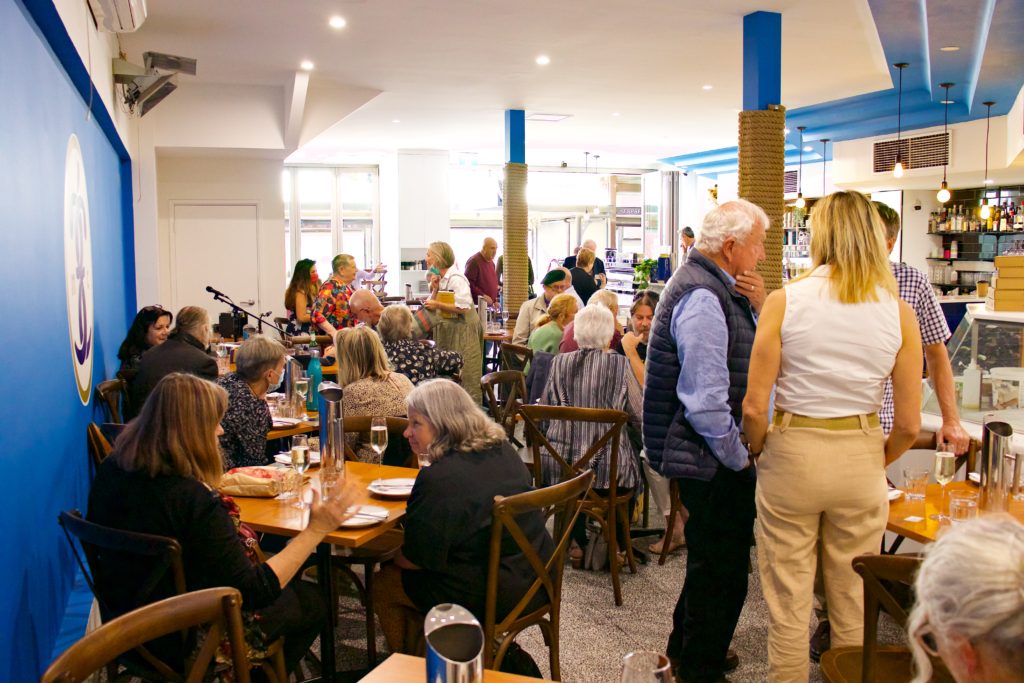
Jude Aquilina launched both books with Nigel Ford as MC at the Elatte Café and Restaurant in Glenelg. I thank Rade and the Elatte staff for looking after us so well on busy Saturday afternoons on both occasions.

Meeting Steve Parish

This year, I also had the distinct honour of being invited by acclaimed nature photographer Steve Parish to write about how the Australian landscape enters my writing. You can read what I wrote on Steve’s brilliant web page, Inspiring Nature Connection, which holds an encyclopaedic visual collection of Australian landscapes, flora and fauna.

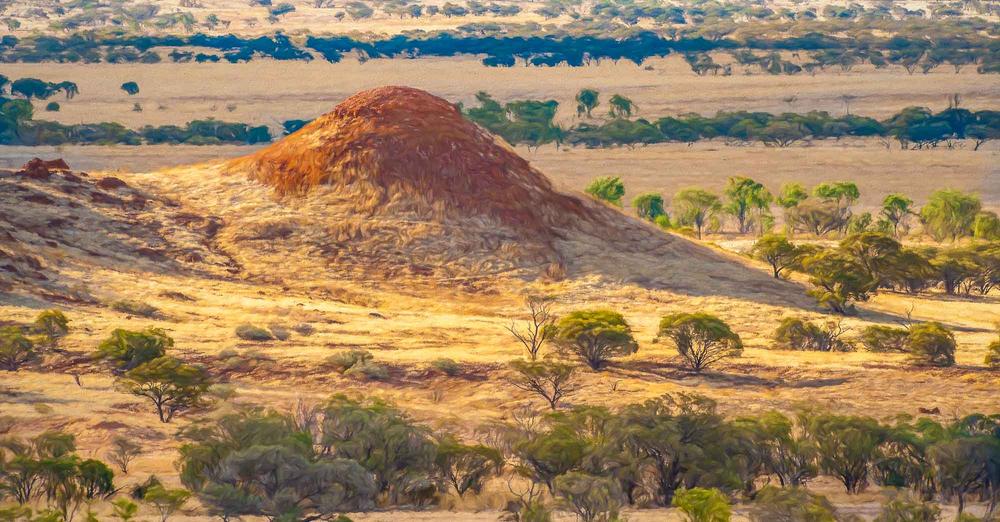
Cawnpore Lookout South West Queensland — A Steve Parish Photograph

Steve used this image of the Cawnpore Lookout in Queensland as the feature photo for my story. I fell so in love with it I followed up with a post entitled, Photos & Words — Is Their Creative Contrivance Numinous? Using Steve’s generously shared photographs, I asked what it is about images, be they art and photos or words in narrative and poetry, that is moving. Why did this photo bring me to tears?

Image as Symbol

The short answer lay on the map Steve sent me, pinpointing where Cawnpore Lookout is. It is at the heart of all the places in Queensland where I’ve been lucky enough to work with First Nations people, from the Cape of Carpentaria in the far north to Mount Isa, Cloncurry and Julia Creek and further south, past Boulia and the Cawnpore Lookout, to Eromanga, Quilpie, Charleville and other places to the east.

But the image symbolises more for me. While working out from Windorah, from Dajarra in the north to Boulia and Bedourie in the south, I returned to my hotel room after being incommunicado out bush for three days to a message saying that my mother had died. The people I was working with knew that she was old and unwell, and I’ll never forget the solace one man offered when he said with great kindness, ‘That old girl couldn’t wait, hey?’

Special Posts

This year’s posts include two reflective pieces, one honouring a dear friend and another to commemorate the passing of Queen Elizabeth II.

The first was a short memoir of my life on the Fleurieu Peninsula entitled ‘A Flicked Pebble’, initially published in Fleurieu Past & Present by Sand Writers and Art @ Goolwa.

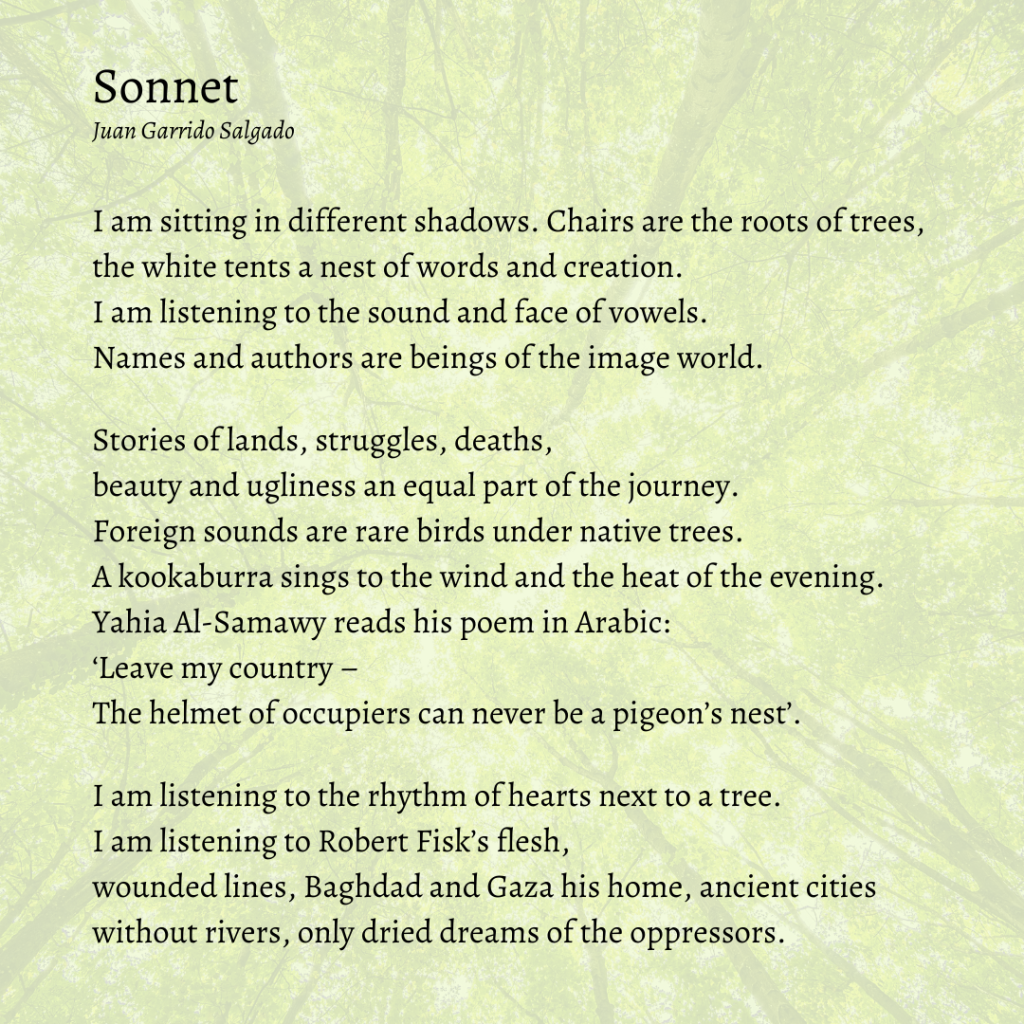
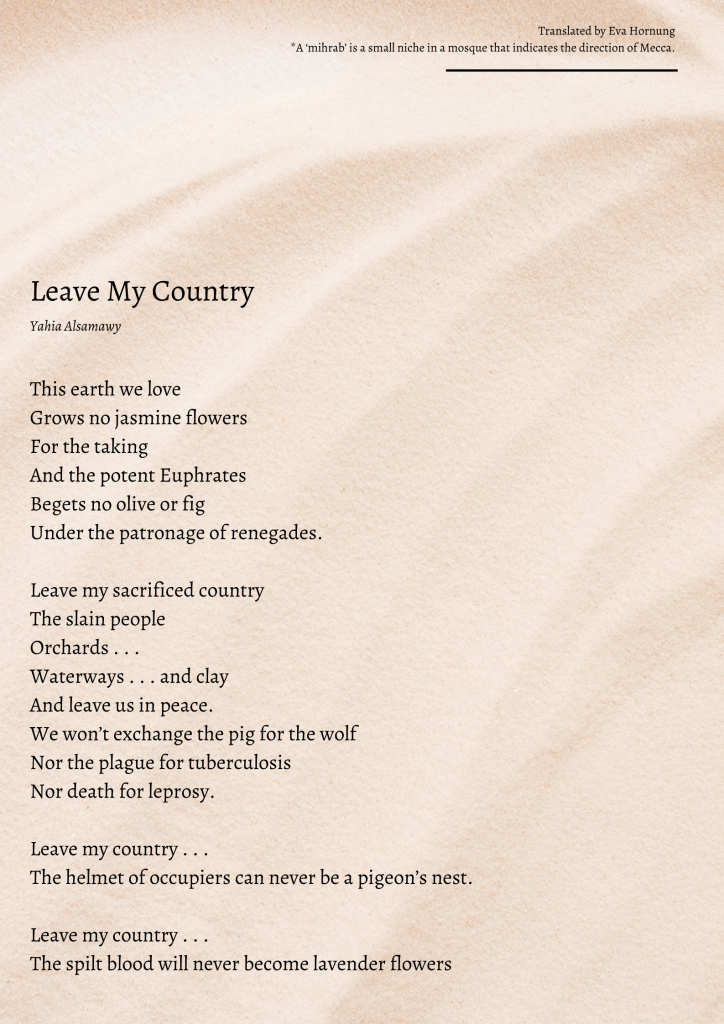
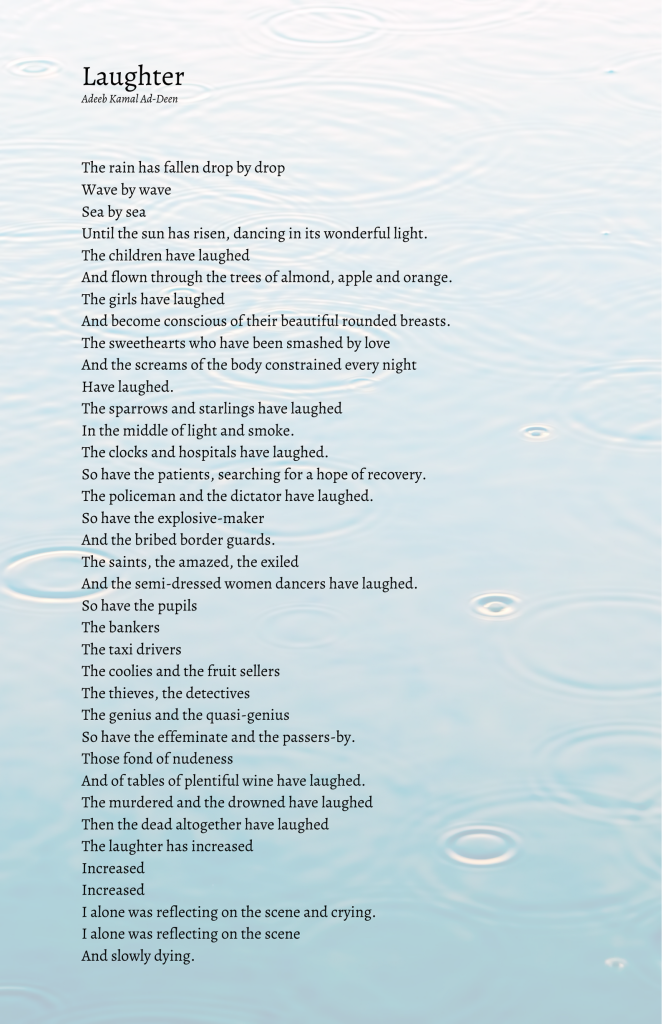
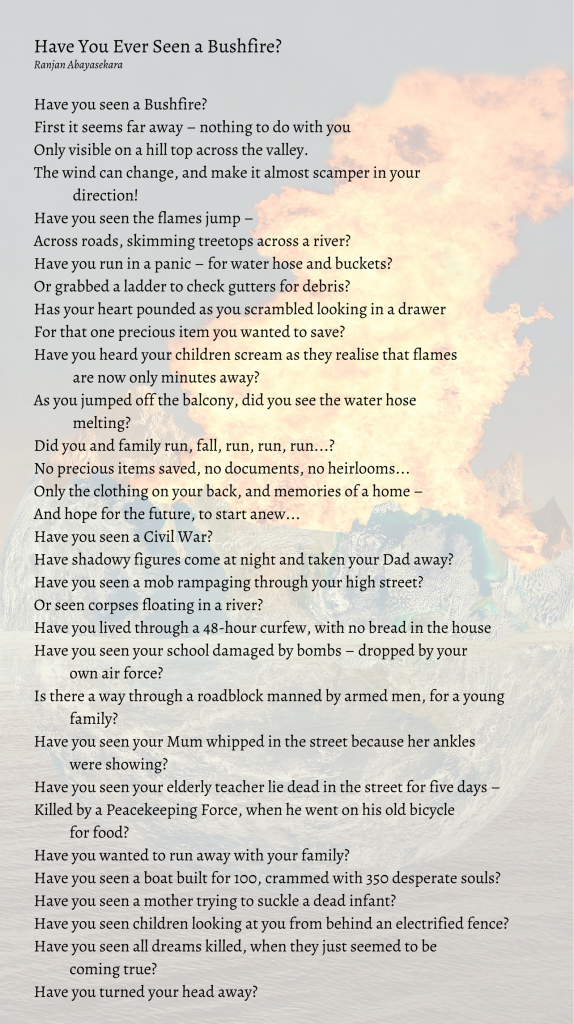
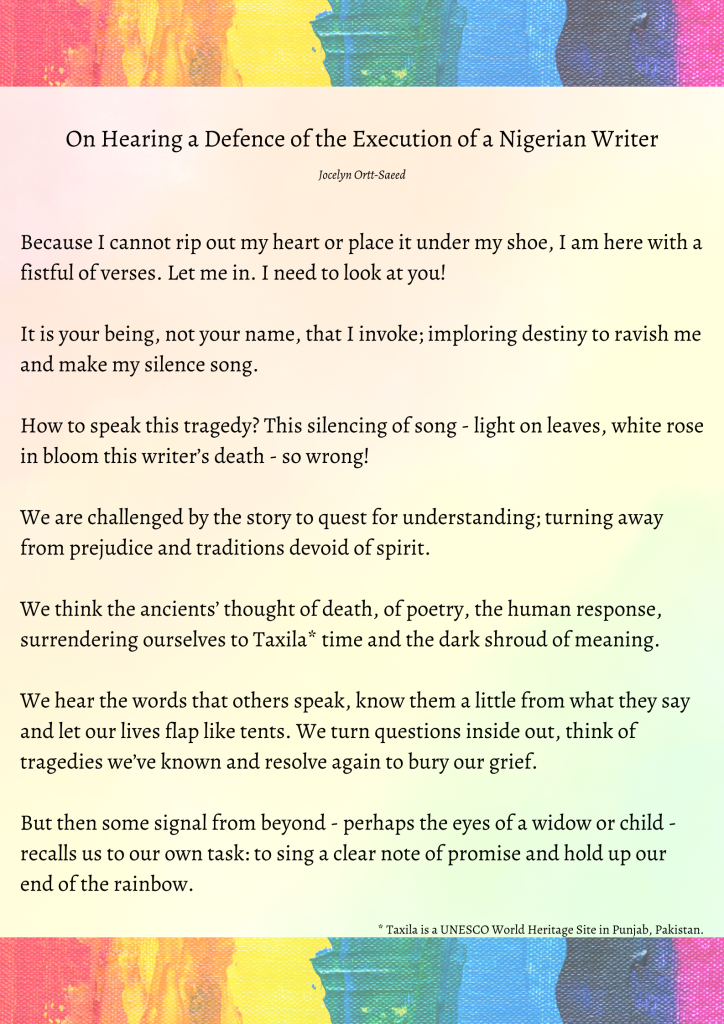
The second revisited Adelaide’s first International PEN‘s Day of the Imprisoned Writer on the lawns of the State Library in the city. Several internationally renowned poets living in Adelaide, Juan Garrido Salgado, Yahia Al Samawi and Adeeb Kamal Ad-Deen, allowed me to reproduce their poems for this retrospective.
In March, I commemorated my dear friend Margaret Luginbhul who died in Paris a few months after leaving Australia to live with her children. COVID prevented her from migrating two years earlier, then took her life three months after she moved.

Queen Elizabeth’s death moved me to write about the pomp and splendour of the royal funeral and the ritual surrounding her death with a focus on the opposing voices of grief and derision they aroused. As I show, her life loomed large as a background to my generation. These things are complex indeed.

A Recurring Wattletales Theme

While I wouldn’t usually cover all of my posts in a Wattletales annual roundup, I wanted to include those that covered issues in old age this year, as my most-read post on Independent Living did in 2021. As we all know, ageism is rife in today’s world, and it needs to be exposed, so I’ve included links to two new pieces that refer explicitly to the issue and two that explore what it means to have a long life.

This is Old Lady Speaking — Ageing Stripped Bare

Back then, I Grew Up in a Different World

Best Books from a Lifetime — A Big Ask

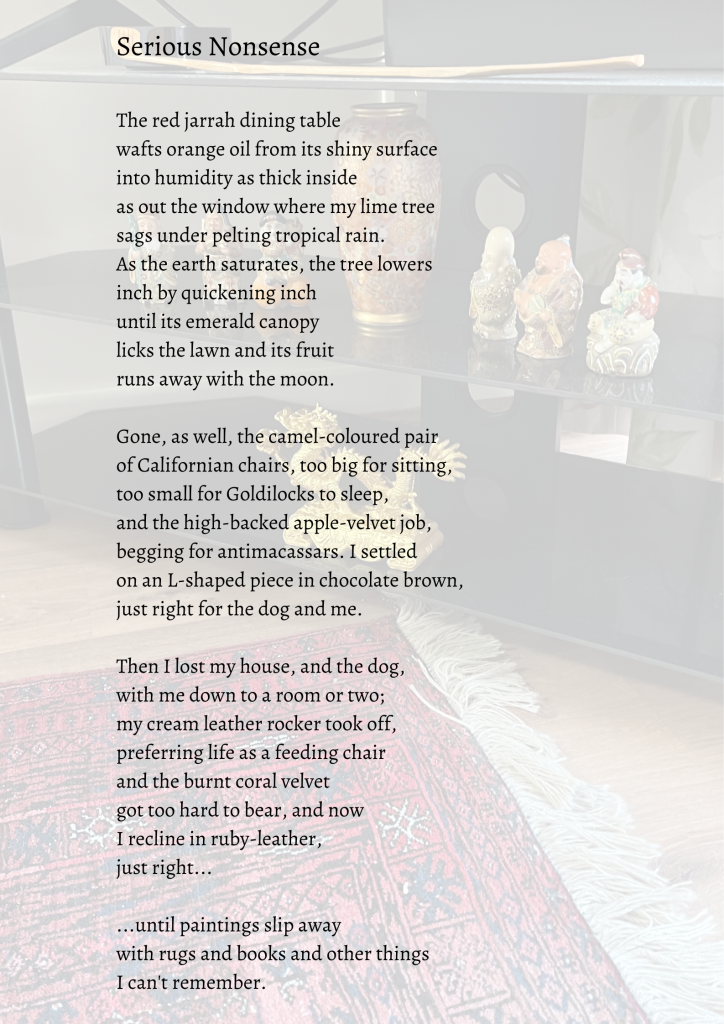
Serious Nonsense — On the Art of Being Uncomfortable

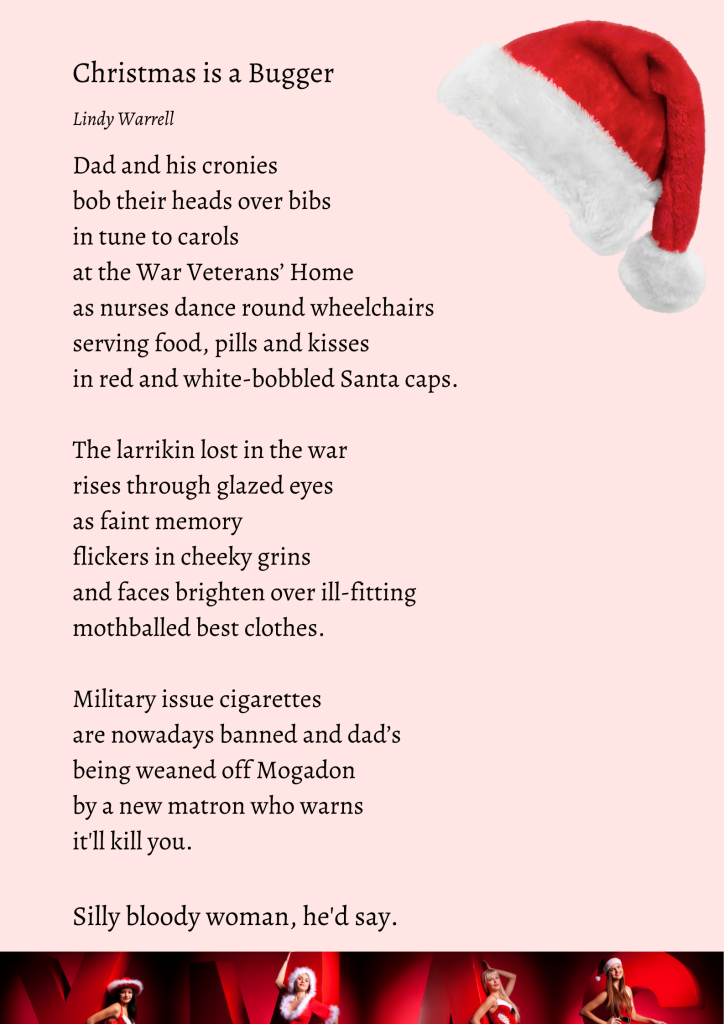
Forgive me if I finish with a poem I’ve posted before about having Christmas Dinner with my dear old dad in Adelaide’s War Veteran’s Home at Myrtlebank close to the end of his life.

A Curious Mix in Free Verse, Love and Laughter

Love and Laughter

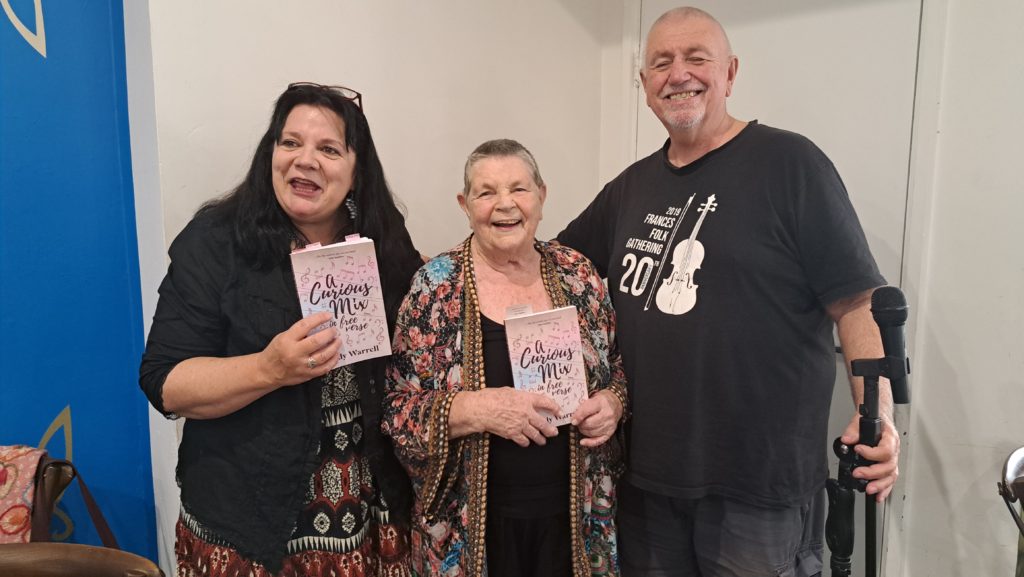
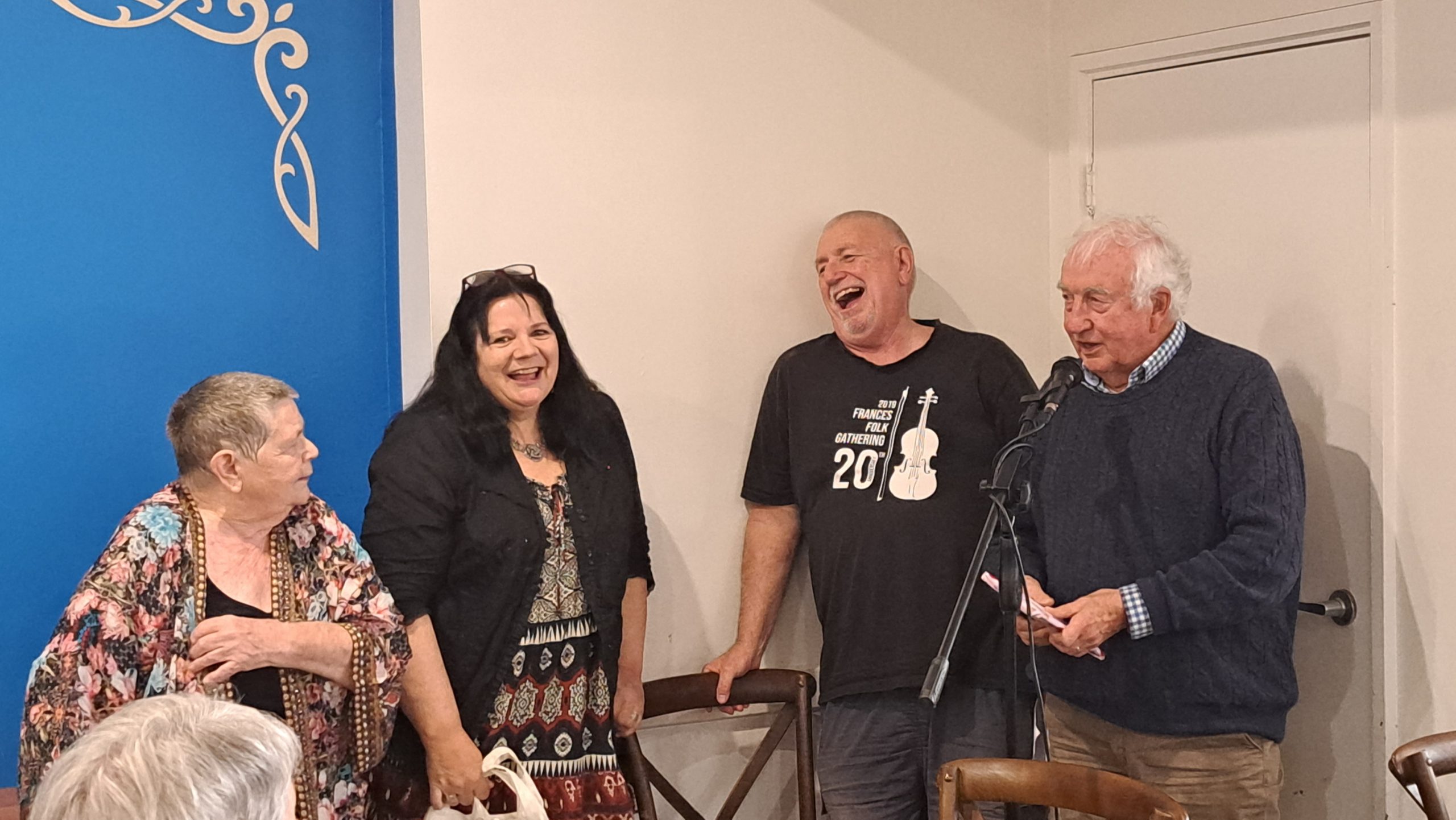
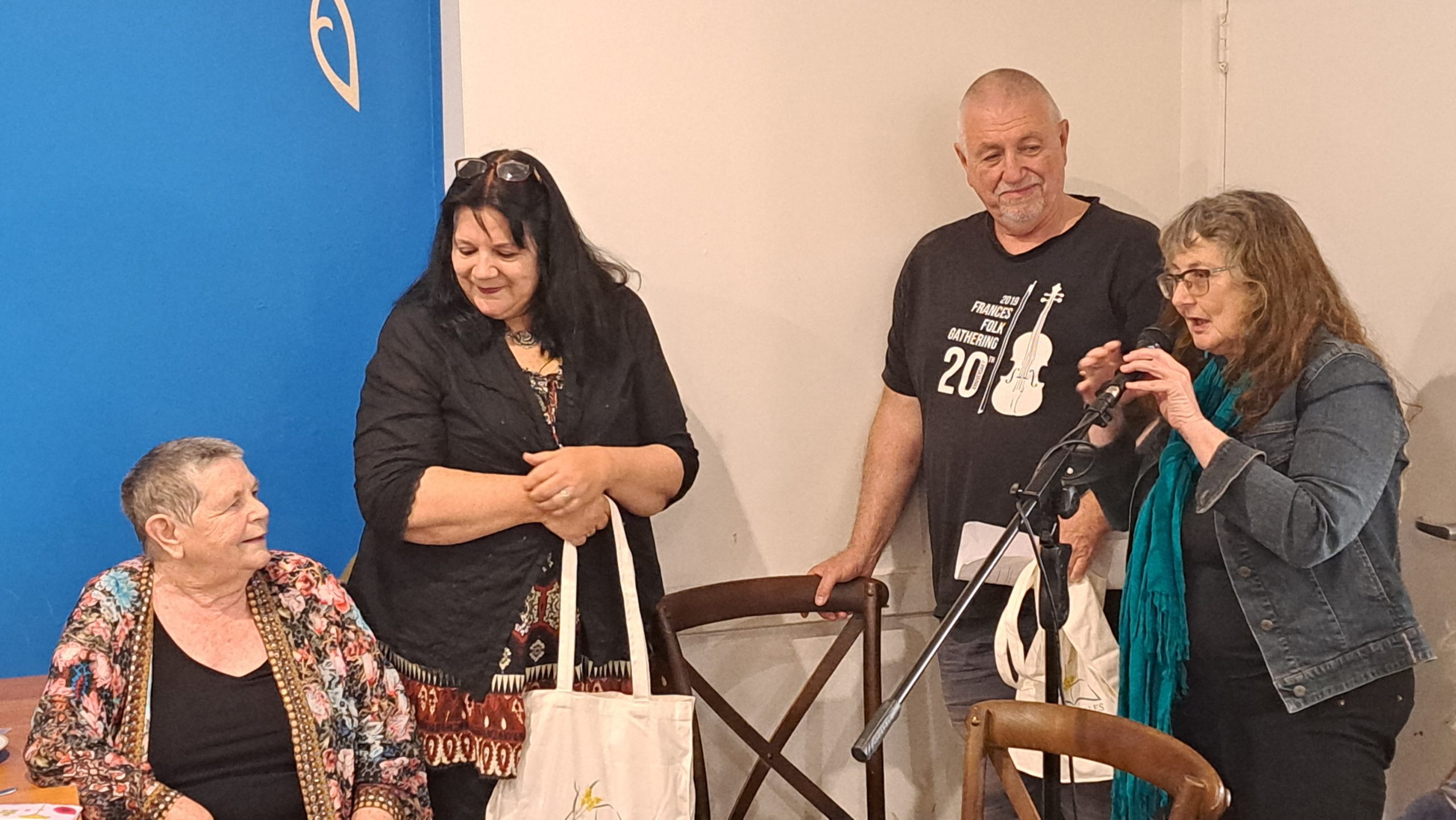
On 16 October 2022, with Nigel Ford as MC, Jude Aquilina set my little poetry book adrift in a room full of open hearts, wisdom and humour. The atmosphere was electric as friends, family and fellow poets received us and the book with love and laughter. Who could wish for more?

Jude Aquilina, Lindy Warrell, Nigel Ford

Jude has launched three of my five books with Nigel as MC. Individually or together, they each bring light into the darkness wherever they go with their profound generosity of spirit.

Jude writes splendid blurbs and introductions and reads closely, as evidenced by her insightful launch talks, and Nigel brings his jokes and expansive personality to keep people on their toes. He also shares his sound equipment, which is above and beyond. Click here to read more about Nigel‘s and Jude‘s poetry journeys.

Laughter was there at the get-go.

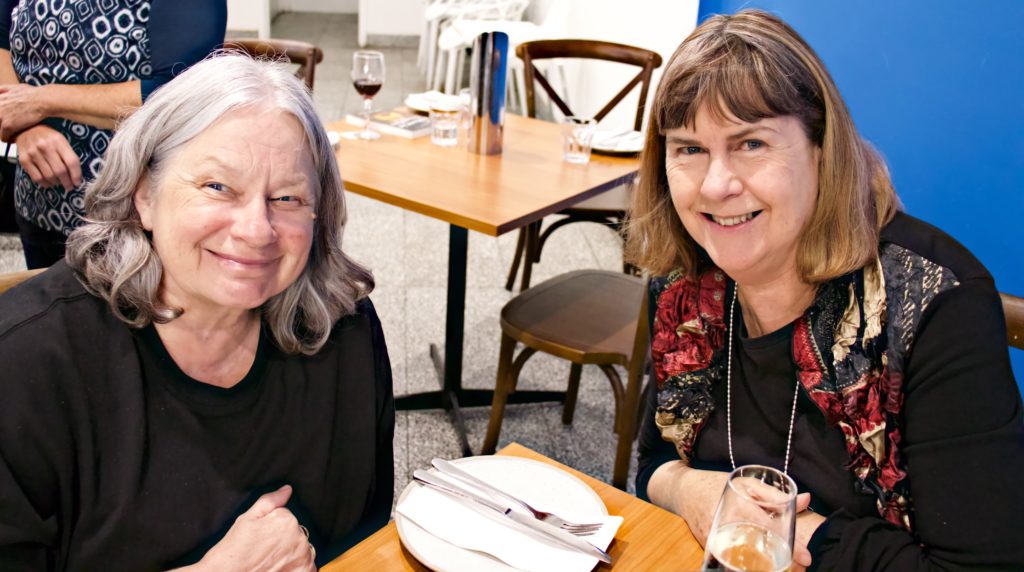
Underpinning the joy of the day was Mr Rade’s delightful Greek-themed cafe and restaurant, Elatte. At all times, it brightens the Bay strip as it does my life. I take my friends there for the best coffee in Glenelg or a meal, and TramsEnd Poets meet there monthly for lunch. I love that Rade agreed to host not one but two launches for me this year, the first for my novel, The Publican’s Daughter, in April, and on this occasion, A Curious Mix in Free Verse.

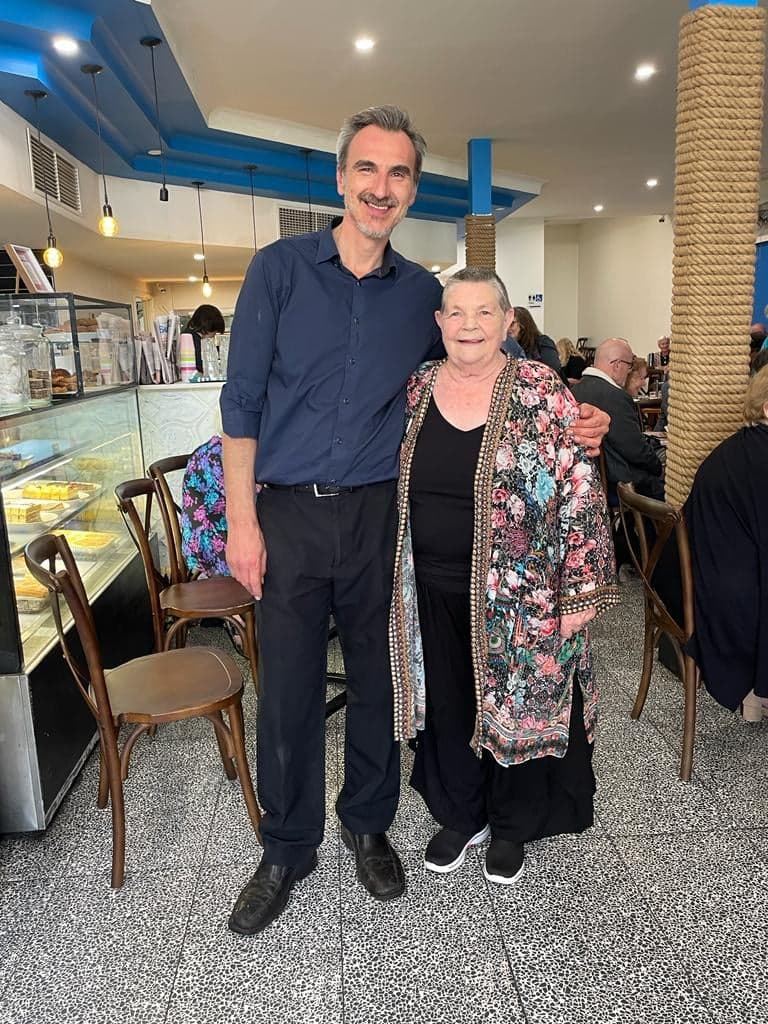
One of Rade’s sons took this marvellous photo of me with his dad.

Word Music

This mix of free verse is like the random jam of a jazz band, it makes you listen, smile and feel the rhythms of humanity. Jude Aquilina

As an early teen, all I had was Bill Hayley and the Comets until Elvis appeared. A few short years later, I was secretly horrified by the way girls screamed, swayed and swooned at a Bee Gees concert I went to with a cousin in Sydney, but when the group pulled up next to me on the street after the show waving and smiling and flirting from an open-topped car they got to me too! But my lingering love is for Elvis or, I now appreciate, the feelings his voice arouses even now.

In my late teens, country and jazz clamoured for dominance until, in Sydney’s underground bars on weekend afternoons, the pulse of the blues, piano, sax and scat in a fug of booze, smoke and men, jazz took the prize. How perceptive, therefore, of Jude to recognise jazz as the organising principle of A Curious Mix in Free Verse. Embodied truths come out in writing, whether we like it or not.

Why I write in free verse

Rhythms of Life

Jude also spoke of the rhythms of life, which resonated with me. I am a solitary soul, yet, late in life, through poetry, I have come to know and count as friends many of the wonderful people who brightened the day. Two special people rose to the microphone to add their words of encouragement, Roger Rees and Kathryn Pentecost.

As many of you know, Roger is prominent in Goolwa’s Sand Writers and is a man of many talents. In poetry and prose, Roger applauds others whose courage or achievements he admires in what I see as a unique form of literary portraiture. His brilliant gaze similarly enlivens his recent publication, Venturing Out (Moonglow Publishing). I admire Roger more than he knows, and his praise of my work humbled me.

Laughter with Roger Rees.

I first met Kathryn Pentecost of Delamere at one of her Yankalilla writing workshops. Since then, Kathryn has kindly let me share monthly Wattletales and occasional guest posts in her active South Coast Writers and Friends Facebook group. Kathryn also interviewed me about my novel for a review which was published in the Yankalilla Times. It also appears on Goodreads.

Warm smiles with Kathryn Pentecost.

I thank Katherine for her encouragement, her kind words and especially for promoting my Wattletales website as she did. Kathryn has just published her husband, Geoff Bromilow’s biography, entitled Born at Sea (Moonglow Publishing).

My Invitation & Your Gift

My Invitation

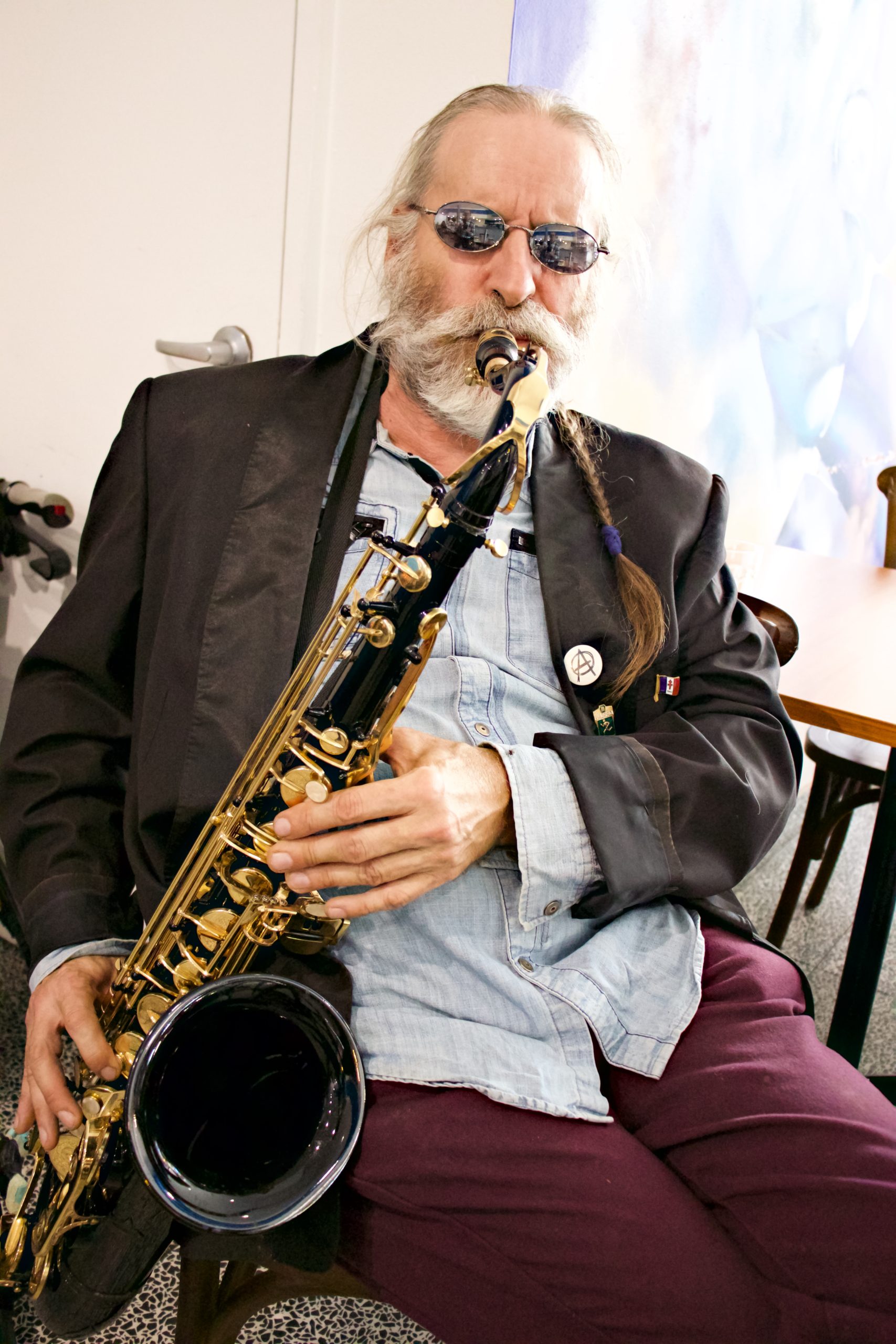
It was risky, inviting so many people to a second launch in the space of six months, and I thank all those who came. With COVID restrictions lifted and travel back on the agenda, many friends were away, but I thank everyone who made time for me. Unfortunately, Avalanche, who was going to bring his saxophone as he did for The Publican’s Daughter launch, was held up at work, but his music was with us in spirit, and I thank him for that.

I thank Roger and Jude for writing enticing blurbs for the book. I also thank Inez Marrasso, who took charge of the door prize tickets, Helen Hutton for taking photos and Veronica Cookson and my daughter, Vanessa Warrell, for taking on book sales.

But to everyone, thank you for your gift of attendance. Through you as readers, my book now has a life, and I am genuinely grateful.

Holdfast Bay Libraries

I also need to acknowledge Holdfast Bay Libraries for all their support. As some of you know, Christine Kennedy attended the launch of The Publican’s Daughter, and Alice Mariano also of Holdfast Bay Libraries attended this one, both out of work hours.

The two books launched at Elatte are now in South Australia’s public library catalogue, both as paperbacks and ebooks. For someone like me who grew up with my head in books, lived in libraries and found many fictional friends in books all my life, having my work in libraries is a deep honour.

Recommendations

A friend who could not attend the launch for health reasons told me after she read A Curious Mix… that my strengths are in social commentary and humour, so I thought I’d end with two poems from it to represent her nominated themes.

Should you be interested, A Curious Mix in Free Verse is available in paperback from The Book Depository, Amazon, Booktopia, Barnes & Noble and, as an ebook on Kindle, Kobo and others.

Social Comment

Humour

Happy Writing

Wattletales

ACKNOWLEDGEMENTS

Unless otherwise indicated, photos by Helen Hutton

On the Matter of Dressing Up and Down

The Prince and The Queen

Most of us shuck off our work or best clothes when we get home. Not so the Renaissance political philosopher Niccolò Machiavelli, who argued against the moral imperatives of his time by suggesting that violence and duplicity are the virtues of good rule. After the Medici sacked him in the 1500s, Machiavelli is reputed to have donned elaborate court finery at home to write his most famous work, The Prince. What is it with dressing up?

Corgis

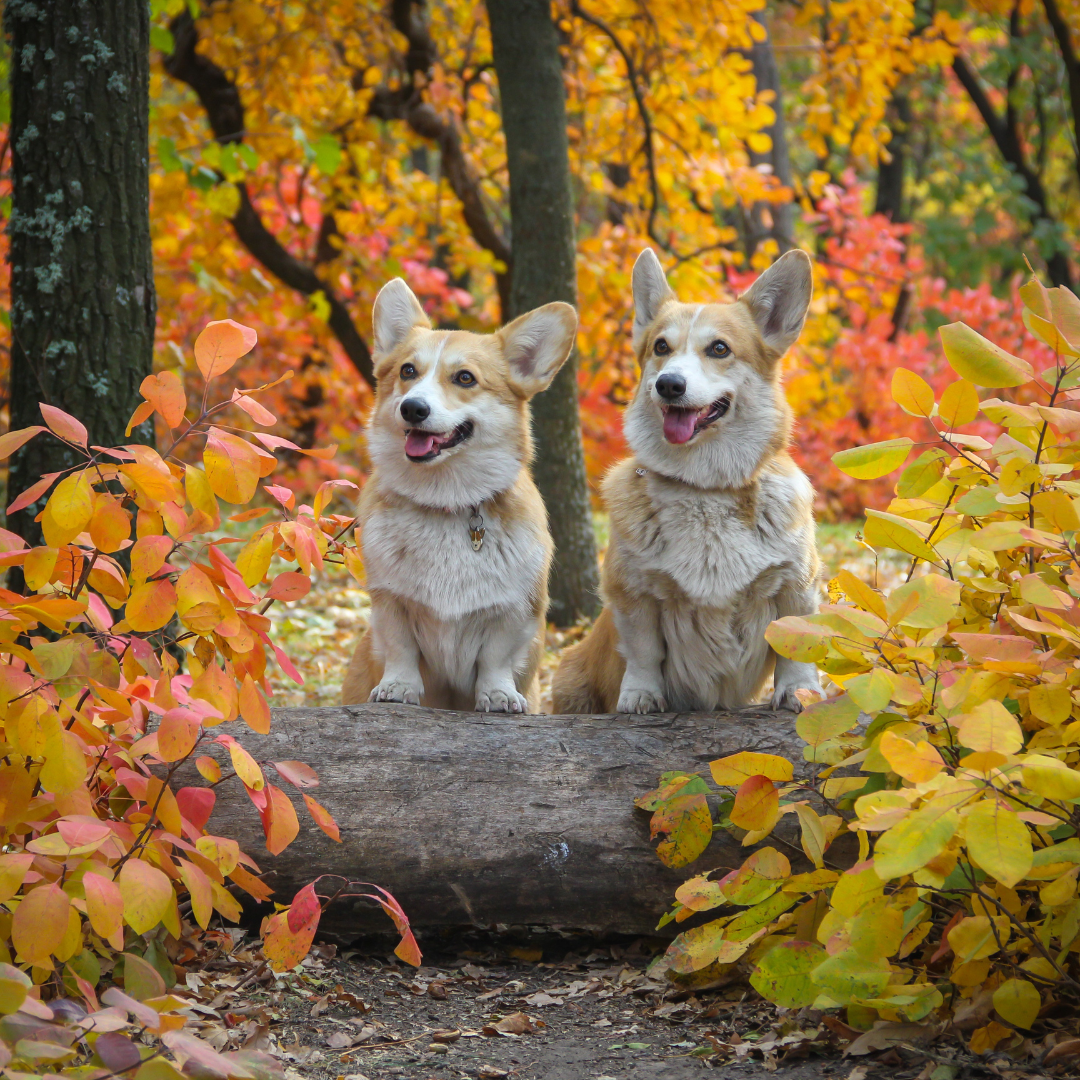
Machiavelli’s finery came to mind during the wall-to-wall television coverage of the passing of Queen Elizabeth II and associated ritual performances. Say what you will; it was a big show, a magnificent display of riches, jewels, finery, uniforms, military might, equine precision, and scrupulous detail, with the odd sentimental touch of flower mountains, corgis, and kids. Before long, splendid PhD theses will no doubt emerge on the power of symbolism to elicit the astonishing depth of reverence and emotion we saw in so many for so long across the planet.

Grief and Derision

Alongside grief, we also heard loud voices of derision for the pomp and pageantry from those for whom the same symbols stand for violence, oppression, and dispossession. Here in Australia, commentary erupted about it being time for us to become a republic which makes sense. After all, Australia’s ideal of us being a laid-back, secular, egalitarian culture, no matter how deceptive and misbegotten, hardly fits with the extravaganza we witnessed. We are much more football, meat pies, kangaroos and koalas.

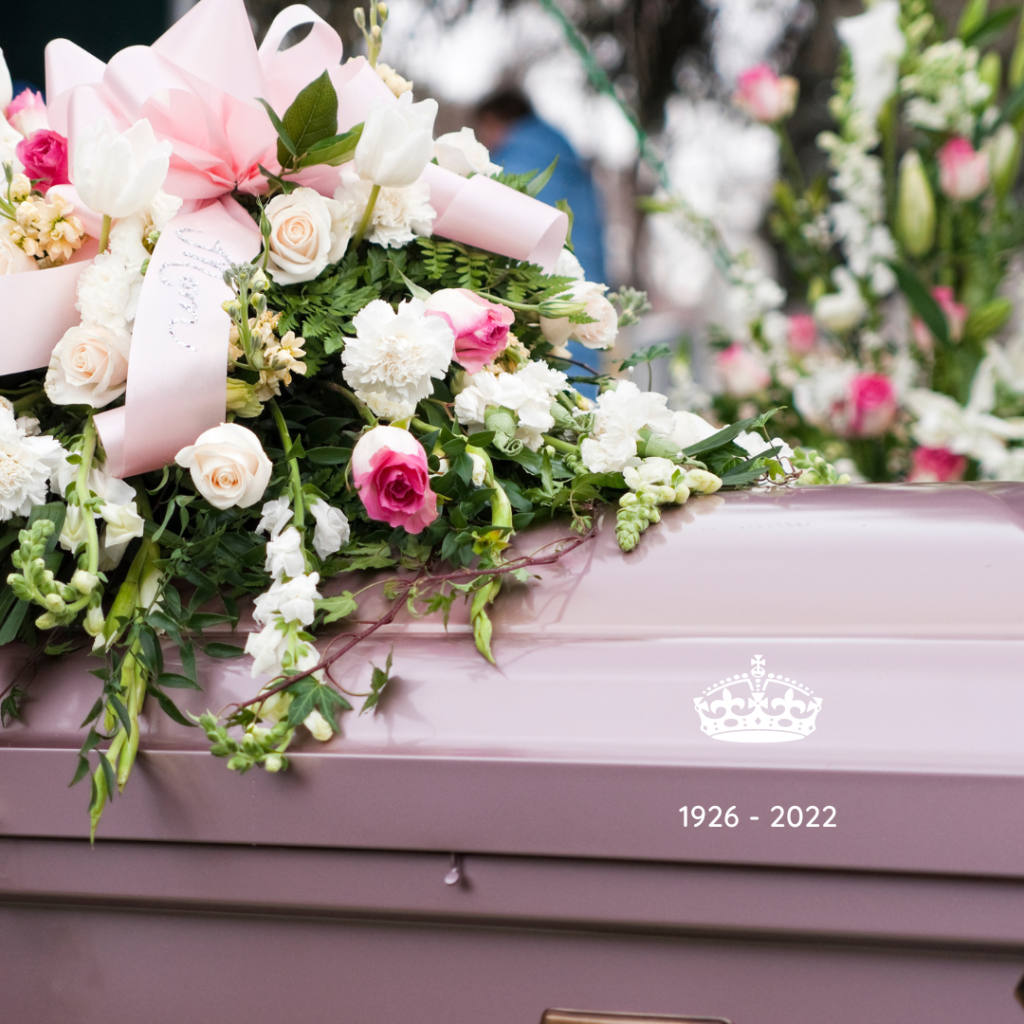
Queen Elizabeth II’s coffin.

It was fascinating to hear divergent voices of admiration and disdain, for, ironically, conflict is often vital in keeping ritual alive. Such dissonance between the two camps —those who cried and those who decried — is delightfully captured by the symbolic contrast between the late Queen’s genteel pastel taste in apparel, also reflected in her choice of coffin and flowers for her funeral and the mighty power of the 96-gunshot salute of Empire; discharged with military efficacy.

The Ever-present

Clothing has the power not only to express how we feel at a personal level or represent who we think we are socially but also silently inculcates in us moral things we need or ought to know as cultural beings, allowing us to intuitively read attire.

The Queen’s pastels and contrasting images with her in a bejewelled crown or military uniform were as familiar to me as my bedroom when I was a kid. Staff at the New Albury Hotel where we lived kept me awake at the age of 10 to listen to the young Queen’s coronation in the UK, crackling here on the wireless (as we then called the radio). Photos of her were everywhere and taken for granted for most of my early life, yet when we now see ubiquitous presidential images (think Saddam Hussein) in foreign lands, we consider it strange.

The Queen’s photos faded quietly from the scene but notice that bronze images of Captain Cook are seen to be in peril. Is it a gender thing?

In this country in my early years, there were more strategically placed representations of the Queen than statues of Captain Cook in public squares, she was ever-present. In my formative years, we sang God Save the Queen daily in school assemblies and stood to do the same at the cinema or any other public event. Her ubiquitously framed face smiled at us from corridor walls at school, in banks, shops and government offices and even in swimming pools, clubs and pubs. These are the ways we come to revere.

Today, TV and big screen representations dominate, and the young adore musicians, actors, and superheroes.

The First Royal Visit

I never asked why, but my mother, who shared her 21 April birth date with the Queen, despised royalty. She was disgusted that school children were ‘forced’ to travel by bus to line up for hours in the hot sun to see Her Majesty and Prince Phillip in 1954.

As one of those benighted children, I live to tell you that seeing the young Queen and her Prince Consort in Benalla NSW waving at us — at me — from an open-topped vehicle from not more than six feet away robbed me of breath in the few seconds it took for her to pass by. I was besotted. Unsurprisingly, therefore, while I would like to see Australia as a republic, I cried when the Queen died. That is the power of symbols in secular life, as in church. None of us grows up in a cultural vacuum.

Uniforms as Social Structure

I’m not fond of the glorification of war, yet also weep when I hear the Last Post because of cultural induction in childhood. At school in Melbourne, we were compelled to attend the Dawn Service in school uniform, often in freezing rain. It was common to hear people say that it rained on Anzac Day as though the ritual caused it to.

Since the mid-1980s, Anzac celebrations have become huge, yet my father, a Major in the Australian Army, refused to march to his dying day. He never said why but I gathered it was something to do with the Army not helping men who needed it. 

An Army cousin of mine fell in Vietnam the day before he was due to come home, and another served there in the Navy, as did the father of my children. We forget too soon that it took a fight for Vietnam veterans and, later, women to be included in the Anzac story, a conflict that in part helped revive Anzac Day celebrations.

While the Queen’s uniform-like adherence to pastels separated her from the rest of us and fashion trends, actual uniforms delineate and define groups such as the military. They, like the Queen, are special because they serve the rest of us in our regular clothes, even though we must look up to them. When the mighty are understood to serve the lowly like this, routine social distancing protocols are occasionally ritually reversed, reaffirming in contradiction the actual hierarchy.

As a slight aside, we upheld this tradition of reversal for a long time in the hotels where I grew up and seems still to be a feature of the hospitality industry if Masterchef is on the mark. At Christmas and other significant social moments, management always served the staff once the busy time was over. We didn’t, however, wear staff uniforms! Our subservience was implied by our actions.

Social Distancing

The absence of structure in everyday life is signified by casual clothes, like track pants and T-shirts. We dress up in uniform and down in trackie daks when we are among familiars.

But social distancing is as important as dressing up or down for sustaining mystique, so what can we make of the young royals and the new King Charles and his Queen Consort mingling with the public as they did during the ritual surrounding the death of Elizabeth II, albeit over a fence. (I can’t help remembering how women would chat over their back fence, calling each other Mrs — some things change.)

Nevertheless, in everyday life, being physically close to a person of great significance is a rare honour because we mere mortals are usually distanced from the powerful, not by a simple fence but by all sorts of protocols. It is the same in religion, where the sacred and profane are separated (think altar and pews). Both religious vestments and military garb do boundary duty. They are distinctive and highly structured garments for this reason.

The danger of that which should be kept apart mingling, either scared and profane or royalty and commoners, is considerable, which is why such happenings must be hedged around, fudged if you will. In esoteric rituals, this might be achieved by music, performance and sacred costuming (clothes!). In the case of the Queen’s funeral procession, the sleight of hand was in the magical concealment of high-level security.

Dressing Culture

Clothing across the planet, from the most ornate to loincloths and penis sheaths, always speaks of social hierarchy; apparel is a cultural artifact. The way things are worn defines boundaries. For example, how a sari or sarong is tied in South Asia speaks of culture and caste, while we think only of fashion or ethical shopping when it comes to that. Politics deviates a little but notice blue ties for LNP (blue is the colour of authority). While red is the ALP’s dominant colour Albanese has a flair with fashionable ties.

Closer to home, have you ever wondered why women must (or used to be compelled to) wear a hat in church, but men had to take theirs off? Is it because men are closer to God and may bare their heads, or are women thus defined as impure (must cover their heads in the presence of the divine) by contrast? The hat, in this case, is a boundary between sacred and profane. Dress codes always have something to say about social distinctions.

High Fashion’s Boldest Statement

Dressing up in lay life may have ethical options that avoid exploitation, but I am not sure this is fashion’s whole story. The Brownlow Medal red carpet ritual performance is a case in point, where footballers’ partners are announced as being ‘dressed by’ a named fashion designer, whether the garment is ethically procured or not.

The Brownlow event may just echo the Oscars, except that women at the latter gala are more often attending in their own right as possible contenders for a prize or as a presenter, suggesting that women in the movie business dress for themselves, their roles and prizes. So, why are partners of footballers forced to drape themselves glamorously on the arm of men vying to win best and fairest player on a field that women have barely got a toe in? It is a puzzle, isn’t it? Is there a Brownlow for women footballers yet?

What is a Dressing Down?

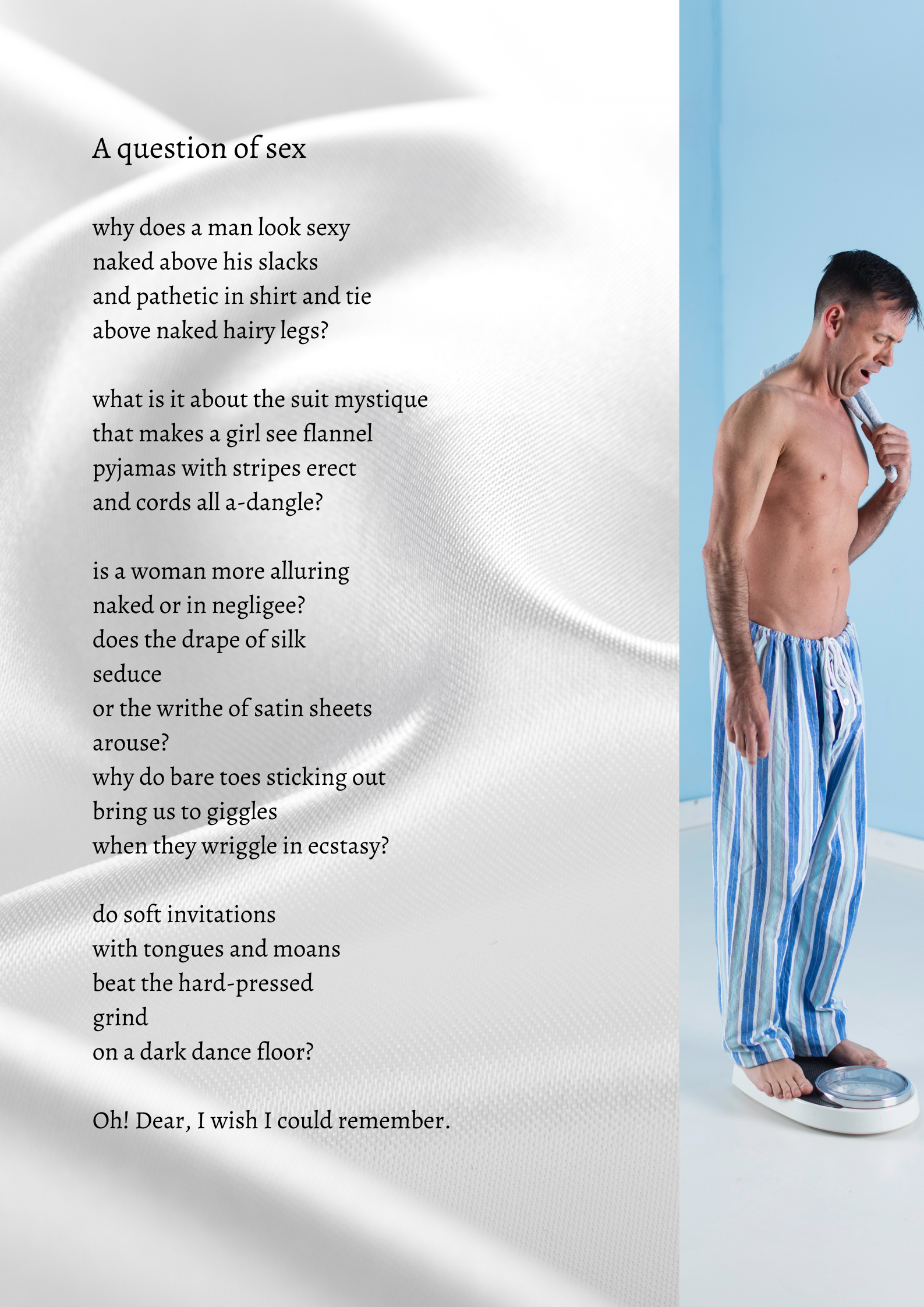
As for dressing down, we sometimes talk of stripping someone bare with our mind, imagining them naked if we fancy them, perhaps. In my mid-forties, I once got the giggles when my mind involuntarily conjured a pompous middle-aged lecturer in saggy, striped pyjamas. Imagining him like that, minus his suave, lecturer-relaxed-in-my-intellect style clothing, cracked me up. Thirty-odd years later, this poem spun from that episode. I should have called it dressing up, dressing down.

Published in A Curious Mix in Free Verse.

A Final Note

In part, I speak tongue-in-cheek in this post, but only in part. What fun it is to sit outside and pretend I’m not embroiled in the universal catastrophe of life like everyone else. But, remember this: dressing up our self-importance always means we are only ever a hair’s breadth away from being like Hans Christian Anderson’s emperor with his new clothes.

Happy Writing

Wattletales

Back Then, I Grew Up in a Different World

In Retrospect

I went to university in my late 30s as a special entry student to prove wrong all those teachers and bosses who treated me like an ignorant underling. Even then, at university in the 1980s, my postgrad supervisor declared that he’d have to teach me to write like a man. It would seem my being a female was a problem. Who’d have guessed?

This dolly collage on my desk represents the little girl in me who had an early childhood in Japan and the old woman I am now, not quite the Venus of Willendorf, but nevertheless, a survivor. They sit together on my desk as a reminder of what life does to us, begging the question; do we stay the same as we change? What, in fact, makes us?

I left school at 15 with a Victorian Intermediate Certificate. I got zero for sewing but excelled at shorthand and typing. My mind is nothing if not quick. Mordialloc High School placed me in the commercial stream, saying I wasn’t bright enough to cope with the humanities. (I was new and from NSW). Never mind that I consistently topped the class in English Literature and Grammar, which were then both compulsory subjects, and, as history has it, I later got a PhD in the humanities.

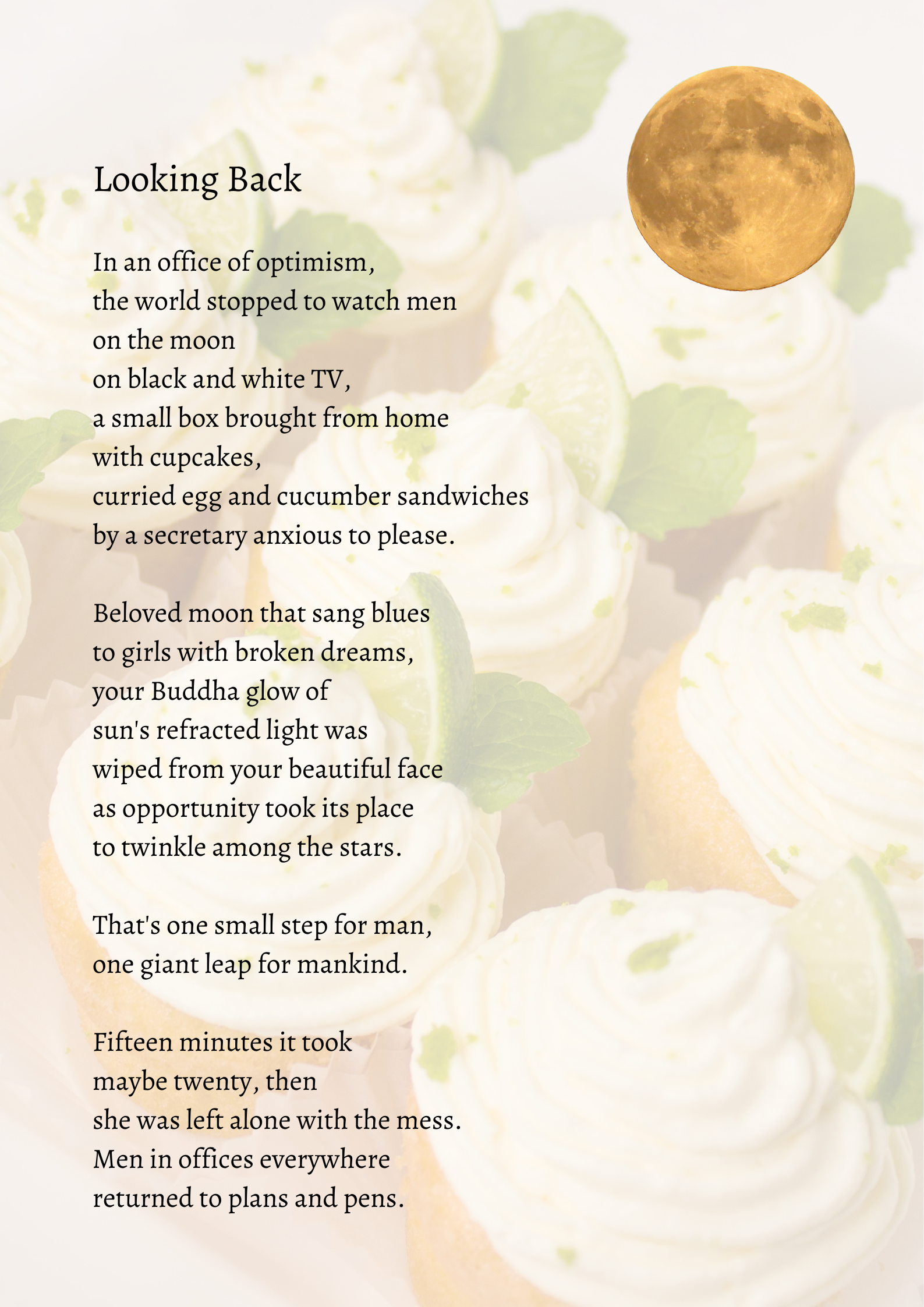
Back then, feedback on a research funding application for a project on the National War Memorial and the ADF’s role in post-war Japan suggested I had a creative streak. In its rejection letter, the selection panel commended my submission, saying that it would make a great novel. It’s funny how life prods but you still head in the wrong direction. I had other things to prove!

School

I left school in 1958. Back then, we were brainwashed by reciting times tables by rote, every day, over and over until they became bodily memory. Very handy before calculators and computers. Amazing how, as waiters in pubs, we could compute the cost of drinks and meals for a crowd without so much as pen and paper.

We were orderly at school, where co-ed meant segregating boys and girls to opposite sides of the classroom and yard. We stood as one when the bell rang and filed out of class in gendered rows. We’d find ourselves banished to the head teacher’s door to be greeted by a wooden ruler across our knuckles for passing notes in class. There was no sly grog, no smokes, and no drugs in school back then although occasional whispers could be heard of early pregnancy when a girl disappeared without warning.

Bodily memory!

Systematic inferiority was inculcated in us by means of these chalky terror tactics. Today, I assume teachers use different means. After all, school is an arm of the state and future citizens must be shaped accordingly as anyone who has read Foucault will agree.

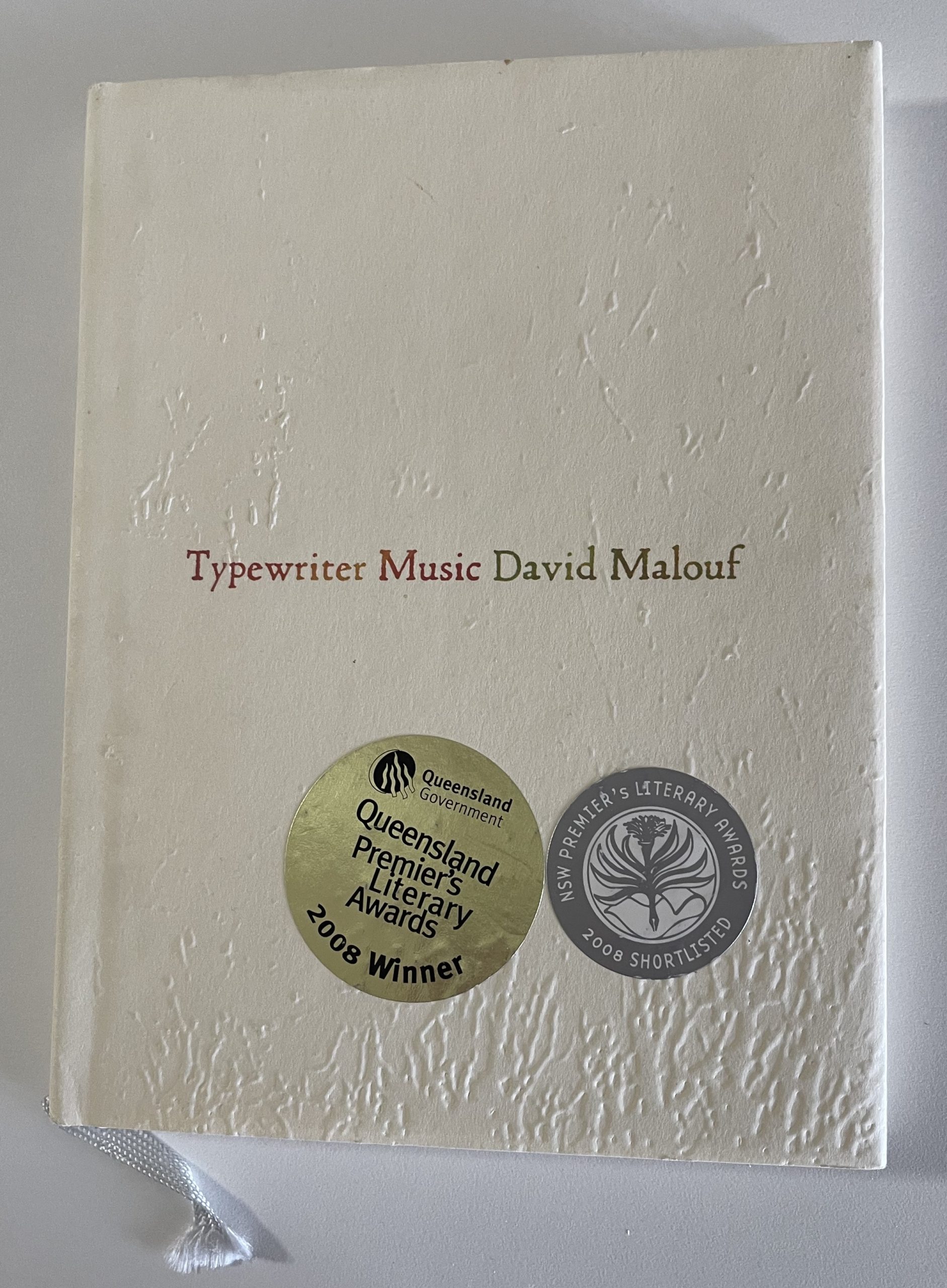
In this context, I thank David Malouf for his onomatopoeic valorisation of my humble beginnings as the fastest typist in the world in his poem and eponymous book, Typewriter Music. Not only does it brilliantly evoke the sound of a busy typewriter, but it also beats in my heart as a symbol of the art and craft of poetry itself. Well, what can I say, I’m a Malouf fan although my love of poetry was born in elocution lessons when I was a child. Do kids still have those? My parents wanted me to speak well in a British sort of way while today TV has taught us all to speak American.

My first profession was as a barmaid, housemaid, cleaner and rouseabout. Malouf had nothing to with that but these capabilities served me well, whenever money was tight. Throughout my tertiary years after entering university as a special entry student, I cooked breakfasts and cleaned in various hotels and motels and waitressed in others. A handy skill that helped me save a few extra dollars to take my kids with me to Sri Lanka when I did postgrad field research there.

The IQ test

At 26 years of age after my mother sent me to a psychiatrist because I wasn’t yet married, I took an IQ test hoping to find direction. In my day, being single at that age was an indicator that something was amiss. It was a thing for girls. The test report scored my IQ at 160 which is in the top 2% of the population, well past Mensa’s entry standard.

When I sat down for what was then a 1.5-hour exam the administering psychologist tried to reassure me that nobody ever finished it, so I shouldn’t worry. Patronising git. He nearly fell over when I completed the paper in under 60 minutes, yet his recommendation put me in my place, reminding me as it did that I was a mere girl by suggesting that I had the capability to become a nurse or a teacher. Higher aspiration was reserved for boys.

Mum really should not have worried. After all, I was briefly married when I was 17 to a violent man, a marriage that lasted only six months from which I was divorced at 21 (we had to wait three years). But, her concern by then was that nobody would want an ‘ageing’ divorcee, although I’ll never understand why she cared when she married at 19 and was miserable ever after.

I did marry again at 27 and rapidly produced three children, but I apparently married the wrong sort of man. He was Dutch and younger than me. Mum was never satisfied. I understand now that all she ever wanted was for me to fit in, but I never did.

Over time, I have come to attribute my lifelong inability to conform to gendered expectations to my IQ. A doctor recently told me that one’s Intelligence Quotient doesn’t change despite seniors’ moments which is heartening. But, now that I’m old I find myself being patronised even more than when I was young. Funny, isn’t it, how the world turns.

The Good Secretary

Nursing and teaching were not for me, and, IQ notwithstanding, I scored a highly-paid executive secretary job with my brilliant shorthand and typing skills. The role would nowadays be called office or business manager.

My new boss, the engineering son of a prominent eye specialist, said he decided I was suitable for the job the minute he saw me walking in the rain towards the entrance to his premises in Melbourne Street, North Adelaide, carrying an umbrella with books under my arm. My salary was equivalent to the then Prime Minister’s secretary.

I bought my first car, a little Nissan that I had to ask the dealer to drive home, but when my confidence grew to match my newly inflated ego, I traded the Nissan — wait for it — for a Holden Kingswood. To paraphrase Gough, well may you laugh.

Despite the confidence overlay, my educationally ingrained sense of inferiority still had me yearning for approval. This poem about that office tells the tale.

Moving On

In the end, I fought with my boss because I had no idea how to assert myself (nobody had heard of that word) and walked out, leaving him in the lurch as ill-educated, clever-dick upstarts are prone to do when jobs are to be had everywhere. I headed bush for a while and then to Darwin with a dollar in my pocket after I paid for the taxi from the airport. The driver took me to a boarding house where I found lodgings on the way and a government typing-pool job the next morning.

Before I caught the plane, Mum took me to Woollies to buy a new floral nylon dress with a fine-pleated skirt. She said nobody up there would guess where it came from (Darwin’s ‘frontier’ population was then 14,000). As soon as I could replace it with cotton, I did because nylon was full of static and stuck to my skin in the humidity. I notice today that manufactured fabrics proliferate, even in the sub-tropics. Attempts at subterfuge are now useless, shops are the same everywhere to the extent I sometimes wonder why people still travel.

About Cars

Getting a driver’s license when I was 16 was a breeze. I was living in Port Lincoln at the time, where Mum and Dad managed The Pier Hotel. My first job after school was pumping petrol at a local garage for six pounds a week (my father’s first salary was ten shillings a week). I then became Dad’s (sic) dining-room hostess and receptionist. I remember one day asking a customer wanting to book in for his name. When he said, ‘Robin Hood,’ I quipped with, ‘And, where’s Friar Tuck?’ I thought he was joking, he was not amused.

One day a local policeman whispered in my ear that it was about time I got my license. He’d seen me driving around in various young men’s cars. Just pop into the station, he said, and I did, to sit a test on the road rules, and that was it. Every time I return to South Australia, my original license number follows. No driving test then, although I believe they may force one on me when I turn 80 early next year.

I married my first husband when I was 17 and he was 33. He had a work vehicle and was away a lot, so bought me a black FJ Holden to get around Adelaide. It had convenient triangular widows that wound out so you could ash your cigarettes. Gear stick driving, of course, and little orange indicators that flicked up in the newer models, but I had to put my arm out of the window to turn, no matter the weather.

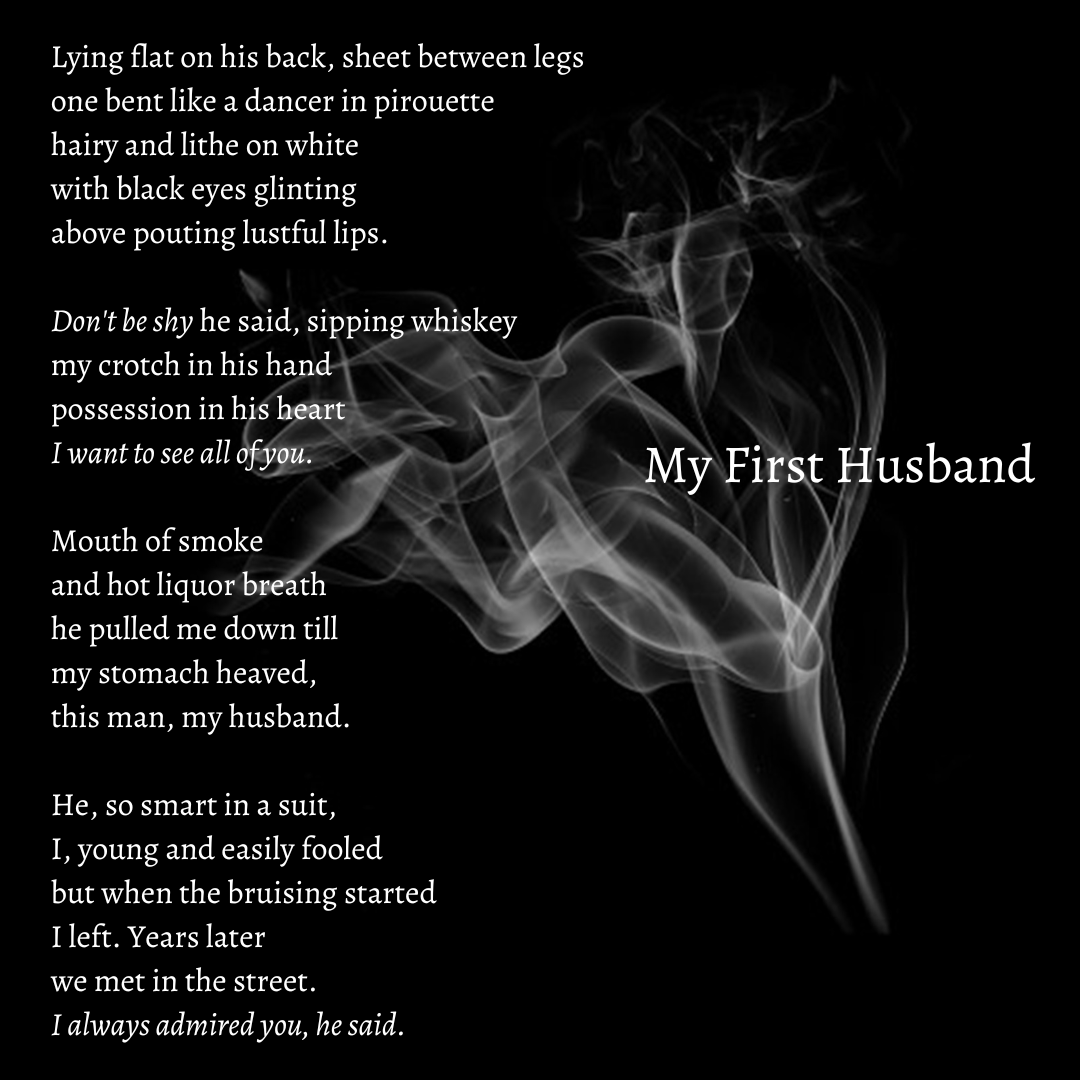
I remember my first husband well.

The Sky is Still There, But…

Who remembers the sweet sound of a washing machine agitator swishing and swirling back and forth in early morning silence, window dreaming, squeezing sodden clothes through a ringer to be hung on lines strung across the lawn, propped up by forked, grey timber poles you could lower to reach and heighten for the breeze (and occasionally fell flat on the ground, heavy from rain)? Rows of sheets, towels, white cloth nappies and neat rows of trousers, shirts, frocks, socks and undies soaked in the sun’s goodness. Even rain refreshed and a breeze shook away any residue after a fall.

Today, we can’t moon around while doing the washing. Instead, we must leave the little tiled cubicle most dwellings call a laundry at the behest of a pre-set washing machine cycle. No involvement, no control but lots of mechanical noise and, if a load gets out of balance, the washing machine beeps like a fridge door left open too long or your car when you put the key in the ignition before you close the door or forget your seat belt.

Daily irritations are the order of the day.

Machines determine how things should be done. If they break down, it is final. In this world of planned obsolescence, we are forced to replace them and pray the bloke who brings the new one will take the broken one away. Otherwise, we have to pay to dump things. Even middle Australia’s beloved icon, the Hills Hoist, is vanishing with the koala as we pile our laundry direct from washers into driers in tight spaces (think European laundries, hidden behind slats in corridors) for convenience’s sake. Talk about power bills. Who is making all that money I wonder.

The sky is still there and the air, but there’s no room for clotheslines in flats and high-rise residential dwellings. No matter how many settings there are on newfangled models that let you adjust times and temperatures for artificial fabrics, doing the laundry is not the same. Rain, fresh air and sun have been replaced by the claustrophobic tension of having to separate clothes and linen by fabric and colour according to their manufacturer’s specifications which are inconsistent with your washing machine’s options. Commerce rules.

Public Transport and a Public Private Life

Only those using public transport routinely feel the weather today. I remember well travelling from North Ryde in Sydney to the Haymarket and back every day for work, a long, high-heeled walk followed by bus, train, tram and another long walk. Both walks were downhill on the way into the city and uphill on the way home. Walking alone on a rainy night with footsteps behind was scary but standing under a streetlight with a brolly in the freezing dark was in its own way, thrilling.

I also sometimes miss those nippy mornings sitting over a two-bar radiant heater, shivering, clasping a cup of coffee for warmth until the orange glow was enough to defrost fingers and toes. We got by. At the other end of the spectrum, I worked in a Nissen Hut in Wet Season Darwin in the early years without air conditioning. We had fans at our feet, blowing paperwork and cigarette ash hither and yon in the oppressive heat.

We were allowed to go home if the temperature got over 100F, I think it was. But when an electrical storm broke through 98% humidity, we laughed and scampered out to dance like people in love in its heavenly tropical downpour.

At night in the Government hostel on Darwin’s Esplanade, we luxuriated in single rooms beneath the comforting whirr of rusty ceiling fans, the smell of mildew (on our clothes and walls) and the chirrupy sound of geckoes. At 21, newly divorced, I used to creep out at midnight to the common room to practice the piano. Becoming a pianist was something that all young Australian girls aspired to beyond lust for horseriding inspired by Mary Grant Bruce’s bush-for-girls stories. I’d given up in shame as a publican’s child, practising on the keyboard in front of guests and quit again in cowardice when the hostel mocked me as the phantom pianist.

Home

In Oodnadatta, I cooked in my parent’s pub on a fuel range in temperatures that regularly soared over 107F or 42C in summer. No airconditioning. Our only protection from the ambient inferno was flywire.

When I was a little girl of about seven or eight in Redan Street in St Kilda where my parents had a room in a guest house after WWII, I took comfort from the warmth of burning coal in a small hearth. Dirty, messy things they were. But, we had the fragrance of freshly baked bread wafting past on Clydesdale-drawn carts whose sweet, gold, steaming horse shit lined the streets. Bakers Delight offers neither aroma. Maybe my younger sense of smell was more acute.

Redan Street. Guest House is now a mansion. We lived in the top left. Photo by Google.

Those heroic horses also clip-clopped down Redan street with ice (yes, for the icebox) and small vats of milk with inches of thick cream on top. All the smells, tastes and sounds of my childhood, so pungent, distinctive and thrilling have been replaced by traffic’s roar and the beep, beep of a refrigerated Coles delivery van that chills your bread to a temperature suitable for fresh food causing faster mould growth and dripping cans that soon rust in your dry food cupboard.

While I can’t say I miss grubs in apples and cabbages, it worries me that we are daily bombarded with unnatural but perfectly formed fresh produce poisoned by pesticides. Apples from the tree smell so sweet and there was always that fearful tremor of excitement that you might encounter a worm. Can you get a whiff of a Granny Smith on a Coles shelf? I don’t think worms could survive there, our fruit is in cold storage for too long.

On The Medical Side of Things

How many of you remember having a smoke with your doctor? Were you ever offered a cigarette from his packet (always his back then) as he pushed the ashtray towards you to share? We may not have been treated well for women’s problems, especially if you were single and wanted the pill, or had either thrush or unwanted pregnancy, all of which aroused opprobrium, but sharing a fag gave us a contradictory sense of equality.

I remember in my early thirties having major surgery in the Wakefield Street Private Hospital in Adelaide and two nurses beside my bed when I got back to my room, all three of us giggling and smoking while I was still groggy from anaesthetic, the ashtray on my tummy.

My three babies were born in smoke, the first two in Calvary Hospital in North Adelaide and one in Darwin where the matron and a couple of nurses would smoke with me, while I cradled my baby in my left arm, fag in the right hand, gesticulating. Nobody ever believed I’d quit which I did with the greatest of ease, albeit a bit late to save my kids. I tried once before my third child was born, but my husband, brother and parents piled it on, telling me I was too cranky to bear so I should go back to smoking. True.

What they didn’t realise was that I was actually speaking up for myself for the first time in my life and it made them uncomfortable but, I gave in under duress. My stagecoach to honest self expression was slow to start.

Some things were bad back then, but the good stuff was being able to cradle your newborn in your arms when it was time to drive home from the hospital. No back-facing baby pods on the back seat. Dislocation now starts early! I would have hated what has become the safety norm for young parents today, but everybody drives more and the traffic is insanely dangerous in our brave new world so I’d comply.

I cycled my first two infants to kindergarten as pre-school was once known, and walked them all as little ones to school until they could ride themselves. It was a different world.

Enough for Now

I’m sure there’s more, but that’s it from me for now. If anybody has a tale about how different their young world was to tell in a Wattletales guest post, it would be most welcome.

TIP

What you leave out of your writing speaks as loud as words on the page.

Wattletales

Happy Writing

Serious Nonsense — On the Art of Being Uncomfortable

Putting a Light on the Strangest Things

I’ve changed the furniture in my life, like others change clothes, but not for fashion or status. Always seeking comfort in furniture, I’ve found that interminable discomfort ensues. What suits one place is undesirable in the next and, because I have moved a lot, there has been a lot of furniture under my bridge. However, it is not only when I move that I change furniture, so let me throw this delightful light on my furniture fetish.

This photo was taken in the shop — still with its price tag.

I’m not fond of yellow-glow lighting, but I adore my gold and crystal chandelier. When it was first hung, I often lay back on my pretend-sofa bed to gaze up at it. It still thrills me, reminding me as it does that I am a tart at heart. Not that anyone would guess now, but I once harboured lust for red patent leather high heels that would have made Julie Bishop blush, not to mention Hollywood’s Dorothy of the red slippers in The Wizard of Oz. Now, approaching 80, I have descended into the endless tedium of utility, except for domestic adornments and my eternal search for comfort.

Seriously though, when a piece of furniture stays with us, it learns who we are and then robs us of comfort. We think of furniture as inanimate, but I declare it has a mind of its own and is as fickle as we are. Do we not feel an urge to stand if we sit too long? And, doesn’t sitting beckon after we stand for a while? Life is in perpetual motion, as is my furniture.

When Things Stick

If we try to let go of an item we love, it clings. Sometimes, when hate is embedded in it, it will do the same thing out of spite. When an item is meant to move on, it will sell immediately on Marketplace; if not, you’ll have trouble giving it away.

A friend recently bought a new couch for the delivery of which she had to wait 18 weeks, as is the way in current climes where COVID and shipping delays rule. The delay meant she had months to sell her old sofa, but nobody on Facebook’s Marketplace wanted it despite price-lowering to the point of insanity. Her notice posted in our building attracted zilch interest, and Vinnies would not even come to look at it although it was a beautiful, new-looking cream leather piece of Italian design.

A volunteer organisation called Second Chances finally agreed to collect my friend’s old lounge but not until weeks after the new one was due to be delivered. She had to endure the squeeze of two sizeable sofas in a tiny space for a very uncomfortable while.

At the point when my friend decided in desperation to send her dear old lounge to the tip, it accidentally found an unusual home in a halfway house. Someone she knew who knew someone who worked in rehabilitation said they’d take it, and it now happily provides luxurious if temporary comfort for a rotation of unfortunate souls newly released from gaol. It once again basks in loving appreciation.

Katherine, Melbourne and Aldinga Beach

When I retired, I shipped my German-crafted microfibre aubergine two-seater, bought while I was in the chips in Katherine in the Northern Territory, to Melbourne where the boiler blew up in my second-storey flat and ruined it. It was my last sofa for a while. The end of an era.

A random selection of Katherine’s taste in cushions
on my short-lived aubergine piece.

I soon moved from that flat into a high-rise public housing studio for the elderly in Prahran, which has become the setting for my second novel, High Rise Society. There, I switched to a click-clack sofabed which soon came with me to Aldinga Beach in SA as a spare bed that my eldest son slept on in the outside studio until it gave up the ghost. A temporary sort of piece, it sturdily saw us both through tough times.

In Aldinga Beach, my first lounge suite was a locally manufactured three-piece suite in apple green, a good colour for healing which I suspect I needed then. Its settee was soon relegated to my outside studio and the two chairs to my bedroom because they were too lightweight for heavy-duty visitors. I replaced them with a pair of oversized Californian armchairs that were over $1000 each (on special) from now-defunct Le Cornus and I dare not tell how little they sold for at Unley Auctions three months later.

I finally found a two-tone brown and tan lounge at Nick Scali, just right for the dog and me, as they say in fairy tales. When I moved into a retirement unit, Nick Scali went with Clarrie to his new home.

Three Desks and Office Chairs

The Aldinga Beach house also saw three desks pass in and out of its doors. My first was a small glass thing until I bought a sociably round dining table which let me convert the old rectangular one into a desk with a lightweight rug cover, something I learned from my Dutch mother-in-law many years ago.

After a bit of a windfall when I went back to full-time work aged 69-71, I replaced the table with a white corner setting as though somehow, I was established. It was at this desk that I wrote The Publican’s Daughter.

The new Aldinga desk invited a posh office chair so I exchanged my comfortable Ikea with the expensively uncomfortable chartreuse job you see in the photo on the left, recently exchanged for white Temple & Webster’s comfort in Manson Towers, where my current desk is white glass. (The Aldinga Beach desk did not fit into my tiny unit. In fact, the removalists had to take it away to give away on moving-in day!)

It Gets Worse

Immediately after moving into Glenelg’s Manson Towers retirement village, I had to downsize. With arrogant disregard for ageing and flush with the proceeds of selling my house, I had bought in advance, a high fashion button-press sofabed from King Living Furniture. It was lovely to look at. Wonderful to sit on to read.

King Living for old ladies LOL

However, the name of the shop should have warned me; King Living furniture is clearly for kings, not old ladies like me. While the sofabed idea allowed me to use the bedroom here as a studio and it matched the uncomfortable chartreuse office chair, for daily life, it was a bugger of a thing.

Any fool knows that a sofabed must be made anew every night and stripped every morning but, as you can see, there are two long back cushions on this piece, too heavy for me to lift when I buzzed the bed to full size at night and I had nowhere suitable to store them or the bed linen in the morning. So, I once again sold high-dollar fashion for pennies and replaced it with a real bed which, with covers serves as a sofa during the day.

The Utter Discomfort of Furniture

As for armchairs, I bought a cream leather rocker to start village living. When it upset my arthritic hip before surgery, I swapped it for a lovely burnt coral velvet number for half the price from Harvey Norman and I loved that until I needed something I could sleep in overnight when unwell.

These two pieces quickly found the best of homes. A delightful, fresh-faced young tradie whose wife was expecting their first baby took the cream leather and a heavily pregnant about-to-be-first-time mum, the burn coral velvet, both to be used as feeding chairs. These two chairs literally ran away from me for a better life.

Now I have a ruby leather recliner from Wohlers and even it has become uncomfortable after I spent weeks sleeping on it with four crush fractures in my spine last winter. As the Buddha says, nothing stays the same, life is constantly arising and — dare I say it, in decay. Decay sounds better I think, than passing away — for now.

I wrote the poem Serious Nonsense a couple of years ago, long before I decided to expand the theme here.

Revealing Stuff

If we agree with the notion that one’s house is a symbol of the self, then my changing furniture is symbolic not only of my circumstances but also of my inner life as it has changed and changed and changed. Having moved so much, I can’t possibly talk about all the furniture I’ve left behind but I adored and mourn the jarrah table in the poem. I used to polish it lovingly with fragrant orange oil in Darwin at a time when I entertained a lot. Is it the table I miss, do you think?

I know that many spend changing lives in the same place, replacing some things, piling others on and filling garages with items they cannot bear to let go of. Some are probably borderline hoarders, others might feel that what they collect is their legacy. However, now that we live in a world that changes constantly and seems to go faster and faster every day, it is conceivable that I’m not as alone as a mover and furniture changer as I might once have been.

Cleaning out and moving on is my way. I pay speeding fines instantly to forget them and equally quickly dispose of anything that no longer has a function in my life. My wardrobe is regularly culled and I delete texts from my iPhone immediately after a conversation.

The same goes with cupboard and fridge contents and, sometimes, friends. I left my sex life behind when I shaved my head. I am a ‘clearer-outerer’, but not when it comes to memories. Those I cherish. Few know what a peripatetic and unusual life I’ve led, but I’ve loved every minute, as though I’ve wafted through it all, high on fragrant orange oil.

Tip

As writers, we need to render strange that which is normal or normalise the strange. Think about your furniture and see what you come up with. What does it say about you? How useful is knowing the complexity of these everyday things for your writing, settings and character development?

Happy Writing

Wattletales

People & Their Lives Are Fascinating by Roger Rees.

Science and Creativity

I have had a fortunate academic and professional career, strands of which persist in my creative fascination with other people and their lives. In particular, I love to explore the power of creativity to heal.

Roger and Tricia Rees

For 30 years, I was both the designer and Director of South Australia’s Community Rehabilitation Program for People with Brain Injury and the Institute for the Study of Learning DifficultiesDuring that time, I adopted a positive approach to people suffering from brain injury and related neurological disorders, using language which nurtured whichever brain system was impaired.

As a pioneer in this method, I passed new skills to students and wrote and broadcasted twelve scripts for the ABC Radio Science Show. These include Sailability and Recovery from StrokeMusic and the Mind, about strategies that helped Gabriel Gifford recover after an assassin’s bullet destroyed her entire left temporal lobe. Humour as Medicine demonstrates the extent to which the brain’s emotional circuits are nourished by humour.

Also, there is the script called Oliver Sacks — Virtuoso, a collaboration with Sacks that explores the way music, dance, and poetry play a significant role in the rehabilitation process.

Motor Neurone Disease (MDN)

My time with people with MND again demonstrated the power of the arts to make a significant difference, something I shared with the scientist Peter Scott-Morgan, diagnosed with incurable MND in 2018. He defied this disease by pushing the boundaries of science to transform himself with robotics to extend his life.

After becoming a Cyborg, Peter responded most warmly to this poem. A significant factor about writing it is that it provides both my students and me with an understanding of the stage-related process of this illness. Poetry is to the fore in the diagnosis of MND.

Demob Suitcase

In ‘Demob Suitcase’, I write to my father about what it was like to see him maimed by war and endure a brave but slow recovery. As a child, this was my first clear indication of what constitutes the uniqueness of the human spirit and how it can best be nurtured. Here is an excerpt.

On a Far East 1943 Pacific morning, as dawn broke, explosions heralded another battle. An erupting torpedo shell wound its way, a direct hit. You held your hands and forearms to protect your face; your chest became bloodied and ripped. That day your world changed, the sky descended, acrid smoke and tribes of clouds passed overhead as your flesh tore.

You were carried below the battle deck to your bunk. There would be no more handshakes, no more holding children aloft, no more piano playing, no more doing up buttons or tying shoelaces. You could no longer reach out and touch your case as it told of home and upon its canvas floated your hope, its contents, your dreams. But it took more than a shell strike to bring about your ruin.

You can read, print or download the full article here.

Suffering and Beauty

With Adelaide poet Jude Aquilina I had the satisfaction of being involved in SA’s Mental Health Week, which entailed working with, and presentations for people with mental health difficulties: depression, anxiety, bipolar disorders, alcoholism and schizophrenia. This little poem commemorates that occasion and expresses my admiration for Jude’s wonderful work.

Lindy Warrell often comments that I write a lot in admiration of creative people and others who inspire me with their courage and fortitude, as I do in this poem about someone who suffered indescribable pain.

Whether in prose or a poem, I am often inspired to write about suffering, whether from mental incapacity, ill health, war or incarceration.

The human spirit in the face of adversity is, in the end, what constantly fascinates me, as I hope these two poems attest.

My Life Today

I continue to work and write in retirement with the sense that I’ve led a charmed life with Tricia, my beloved wife, friend and companion. Living in Goolwa close to the sea is soul-satisfying.

I welcome each day at the piano, playing Chopin’s nocturnes, waltzes and mazurkas. I enjoy sailing my 25ft yacht, Wind in the Willows, where I am Toad, who bosses his crew. And I am grateful to have the opportunity to appreciate the world around me.

Roger at his piano

More fortunate than many, I live daily with the joy of knowing how nurturing language can give people courage in difficult times.

AUTHOR BIO

Flinders University Emeritus Professor of Disability Research, Roger Rees, is fascinated by neuroscience. He has written, broadcast and made videos about the effects of trauma on the brain. Roger likens people who experience brain injury to tight rope walkers since both need a safety net to survive. Roger’s shelves are filled with the poetry of Pushkin, Akhmatova, Blok, and Pasternak, Russian poets who, for centuries, endured the state’s hegemony. He has evidence that words and positive human contact, lubricated with laughter, offer the best safety net for brain injury victims, just as poetry helps people cope with cruelty and tyranny.

The Scent of Hope by Jade Wyatt/Elizabeth Snow

My husband bought me lilies for Valentine’s Day. They are enormous; white blooms unashamedly ostentatious; their heady, exotic scent rising like a sacred offering, dispelling the odours of attempted toddler toilet training, cat litter, and musty fingerprints of God-knows-what on unwashed walls.

Five children bring love, laughter, chaos, and wonder to my world, but they also push romance into the abyss beneath the couch cushions, along with creativity, silence, and reflection. We’re just too busy.

Flowers are a rebellion.

We can’t afford them. We don’t need them. They bring no practical value to our household. And yet their scent… Why does their scent fill me with hope?

Flowers take me outside. Beyond the walls of school drop-offs, dinner preparation, appointments, and fear, fear, everywhere; beyond my own skin, pain, age, and memories that flicker like fading candlelight. They take my hand and lead me to a place where green grows deep and bright, where blooms reach and hang in clustered colour, where the air carries water from sea and river, and the earth remembers.

Flowers are words.

Both hold the wildness of chaos and harmony, symmetry and serendipity. Both sing of a rich and mysterious beauty that we long for, yet never fully reach. Both are formed from love – a love which we cannot comprehend, yet know we need if we are to be truly alive.

Even as a child, words were always more to me than symbols through which we communicate. Words – both read and written – held a kind of magic, a hint of something intangible and vital. I wrote, not for my words to be read, but simply to stay connected to that mystery.

Then I grew up. I left school, got a job, found a partner. Life was good. Words and their magic became the silly, remembered fantasies of childhood. I got married, had a child, then another, and another. For ten years of my life, I built a world for my family out of myself, stretching skin wide and thin around a frame of brittle bones, hollowing myself out to become a place where they could be safe from the monsters outside.

But the monster was me. Like a wild, trapped thing, I savaged my way out from the cage I had created. The world I had carefully built collapsed, and I was lost, buried in the wreckage.

And there, in the silence left behind, I heard a sound I’d long forgotten.

Words. Humming like vibrations through the air, through my fingers. Hidden in the undergrowth, in the infinite. I listened.

I enrolled to study Creative Writing at Tabor Adelaide. I crawled into my first class, waiting for someone to expose me as the fraud I felt I was. But the pointed finger never came and, instead, I found a doorway to a world of rich and vivid colour – a world I remembered. I had been to this place before. I knew these wild paths, these sensations of movement and texture and rhythm, and this feeling of limitless possibility.

I breathed deep the sweet air of freedom and stepped through the open door. I began to write again. The dam wall had burst, and I wrote like a mad thing, poems pouring out from me with a roar. Soon I had gathered enough for my first anthology, Then There Was You – but I needed a new name for this awakened self. To be honest, I sought to be slightly sheltered from the raw intensity that somewhat frightened me. And so I became Elizabeth Snow. Not child, nor mother, nor wife. Elizabeth Snow – the woman who writes.

I have had two more children since I began to write again, but I will never again believe that I must sacrifice my own inner world in order to nourish theirs. Here is where I come alive, where words hold truth and power, and where my children may see what hope looks like.

Hope is where flowers bloom. It is where I grow, verdant and rebellious. Hope is an act of great courage – to choose to remain close to the source, close to love, even when the world tells us we are selfish or proud, or unnecessary. For me, to hope is to write. And to write is to live.

To know that which gives us life is itself a gift, and though we may choose to share it, we must never let it be lost.

Hope shows us not just a flower, but closer – the intricate design, the swirl of ivory on emerald, the undulation of petal and leaf; the scent of honey and pine; the silk of milk and green… Then, closer still, we see beauty, possibility, love. We see ourselves mirrored there, perfect, imperfect, flawed and flawless. Loved.

We are flowers.

We are words.

And we must never lose hope.

AUTHOR BIO

Elizabeth Snow is the pseudonym of South Australian writer, Jade Wyatt. In 2018, her poetry anthology Then There Was You was published by Elephant House Press. Jade has had several poems and items of prose published in the 2017, 2016 & 2015 Tales from the Upper Room Anthology. Jade lives with her husband, five children, five cats, a dog and two rabbits in the southern suburbs of Adelaide, and is currently working on her first fantasy novel, and a second anthology of poetry.

Photos & Words — Is Their Creative Contrivance Numinous?

A Word on Reality

What is it about an image, a narrative or poem, tactile only to the eye and mind, that has the power to move us so? Why do we let artistic contrivances fool us into thinking they represent reality? What about them gives us a spiritual lift when we know they frame, pan, or use sharp focus in soft light for visual effect? How do the contrived words of a writer arouse emotion? I can’t answer these questions, but I want to interrogate a few things to see what’s beneath this lovely flush of waterlilies.

Wetlands, Top End, NT

Our response to photos amuses me. ‘That’s the real me’, we say, eliding dimension from a small flat, shiny photograph. How is any representation real? Are words the things they represent? Indeed, isn’t reality a mystery? Is there not magic in this beautiful photo of a waterlily wetland with the sun rising (I think), as though imbued by divine power? Whether divine or not, there is magic in those glorious lilies.

I often wonder at the way the tourism industry has parcelled the planet we live on and the landscape we love into products. We always see the flower, not the watery murk beneath. TV advertising works hard to elicit yearning in potential customers with artificial constructs. For example, the promotional imagery for outback Australia fails to prepare us for the scorching heat, prickly grasses, sticky flies or the fine red dust in our baggage. Sound, smell, taste and touch don’t get a look-in. As anthropologist Michael Taussig tells us —

…the strange thing about this silly if not desperate place between the real and the really made-up is that it appears to be where most of us spend most of our time as epistemically correct, socially created and occasionally creative beings. We dissimulate. We act and have to act as if mischief were not afoot in the kingdom of the real. (Mimesis and Alterity 1992)

Engaging an Audience

Which of these two gorgeous photos by Steve Parish is the real Burrungkuy or Nourlangie Rock? Both are beautiful, and both are of that rock and its surroundings from different vantage points, but Burrungkuy is a sacred place not because it is natural but for the culture it hosts. The numinous quality we experience when visiting such a place comes from both nature and culture, and First Nation sacred sites remove any boundary between the two.

On Representation

Any representation is framed, parcelled, limited, and directed to an idea or a feeling in the producer; it is a contrivance, as anyone who has painted, taken photos, or written creatively knows. I still say I am a ‘realist’ writer, but have you ever read anything real? I once saw two versions of a story in a literary journal, one ‘real’ and the other contrived, a fascinating read. The purportedly real version was overly long on the page, confusing and boring to the point of making little sense. The representation or contrivance, by contrast, evoked a believable reality that was a pleasure to read.

I was a court reporter (stenographer) many years ago, an experience that taught me that people do not speak in ‘lines’ in court as they might in film or a novel where dialogue has multiple purposes such as conveying character, evoking emotion, heightening tension, building suspense, moving the action along or heralding something. On the page, dialogue is not about two people communicating. It is the author communicating with a reader. Writing and photography are similar; both are directed at an unknown gaze.

Nevertheless, when I taught life writing, I got people to write from their guts in exercises that provoked them to pour their reality onto the page. Splat. Like that. It is then easy to get to the kernel of things. The gold is always there, to be polished with the contrivances of the literary craft to give it style and embellish to turn the story around to face a reader, to show, not tell. This work must be done because to say, ‘It broke my heart’ talks about the narrator but has little to no effect on a reader seeking their own experience.

Heart and Mind

Stories and images can linger in one’s mind or heart and assume a flag’s numinous, almost spiritual qualities. A flag is really (sic) a piece of colourful fabric, but people have laid down their lives for one they love while burning one is an expression of rage. Why? Because, flags, like photos and stories or poems, are symbols that condense inchoate meanings in a way that arouses emotion.

To return to nature. When I lived in Oodnadatta in my youth, we often travelled up and down to Adelaide on The Ghan. There was no romance in buying a ticket, for they used to ask if we were male or female, black or white, so as not to permit the mingling of what then was supposed to be kept separate in cabins. True! 

But, waking up to the mauve and purple glory of the Flinders Ranges against a red earth foreground in the morning was one of those views that, 60 odd years later, is still as alive in my heart now as it was then as you can see in this little poem, written in 2017.

Outback SA

Take a moment. What do you see in this arial mage of the Lake Eyre and Simpson Desert area?

Lake Eyre/Simpson Desert aerials, Painted Desert west of Lake Eyre SA

Over the years, in different parts of the country, I have been lucky enough to fly over our vast landscape, witnessing a multitude of configurations not unlike this delightful photo of South Australia. The Queensland channel country and the Diamantina that flows towards Lake Eyre are most spectacular when it rains. I’ve always thought that such country, riven with channels, tree lines and multicoloured earth, is what inspired the original Coogee woollens I wrote about in this eponymous poem in my second chapbook.

Being There — Kakadu

Wetlands, Yellow Waters Lagoon, Kakadu NP NT World Heritage

Believe it or not, when I was in my early twenties, we used to water ski on Yellow Waters in Kakadu National Park during the Top End Dry Season. Crocodile hunters abounded back then and advised that it was safe. Crocodiles mate and produce their young between October and April — at the same time when waterlilies grow. If it does nothing else, this is a testament to the fact that surfaces cannot always be trusted.

In the early 1960s, the notion of national parks was seminal — if that — even among the educated classes. We knew nothing of the sacred nature of Kakadu.

If you think about it, it has taken over 200 years for this nation to publicly begin to recognise the numinous beauty of our land as understood by First Nations people. Steve Parish’s ground-breaking nature photography in particular has been instrumental in developing our appreciation of that and I was recently honoured when he invited me to write a piece for his website.

Then There’s Litchfield

Florence Falls Litchfield NP NT

On the other side of the track (the Stuart Highway) and a bit closer to Darwin is the magnificent Litchfield National Park, where I regularly swam for many years when I lived in the Territory. I took my eldest son Grant to the Buley Rockhole nearby when he once visited me from the UK, and he revelled in its beauty and took this photo of a black water goanna.

Taken by Grant Warrell

My favourite place to swim in Litchfield until I left the Territory was Wangi Falls which was closer to home than Florence Falls, and I mention this because Steve Parish’s photo elicited memories. Memories of sitting for hours beneath the fall, allowing the pounding rush of water to cleanse, destress, and make me feel whole again when I felt terrible. I loved that place, that fall and pool, which I understand to have traditional feminine associations.

A photograph often has the power to trigger memories, and take us back to love, and that is a decidedly spiritual experience.

My brother Phillip in 2000 at Wangi Falls when he wasn’t well enough to swim.

Numinosity, I would argue, lies in the interaction between the contrivance or creation and the observer or reader, even with tourism ads. Bugger the flies the heart says; I want to go there.

The tropical Top End of the Northern Territory is one of my great loves. The desert in the far north of South Australia is another. They are my history. Both exist as characters in my life, vibrant, living, breathing and giving. I mourn that I cannot be there now even where there might be green frogs in the toilets.

My brother died in 2004, and Grant in 2014. It was long ago that they visited me in the Top End where I always felt most like my true self. I have since renewed, of course, but I often wonder why I’m the one who has had the privilege of living a longer life.

ACKNOWLEDGEMENTS

I thank Steve Parish for sharing his photographs with me for this post.

Margaret, My Friend — A Unique Life

We Met in Melbourne

My friend Margaret Luginbuhl passed away in France on 26 March 2022. She was 83. I wanted to do a post to honour her, and I thank her daughter, Albertine, for allowing me to do so. Albertine kindly contributed some delightful memory gems about her mother when they were younger, showing that Margaret then was as steadfast, loving and wise as the woman I got to know in later years.

I met Margaret in 2004 when I left my beloved Darwin for Melbourne, where two of my three children then lived. Almost as soon as I got there, I began to have crush fractures of the spine and, at 61, found myself on a Disability Pension. I signed up for public housing, which came through quickly, and I found myself in a small studio at No 25 King Street in Prahran, where Margaret was my next-door neighbour. Over time, we became close friends, walking and talking and sitting beneath shady trees in Princes Gardens or taking coffee on Chapel Street.

Margaret often came with me to Brighton Beach when I took my little dog Lolo for walkies. She sat on the sand in those high-rise days, but in readiness for the south of France on one of her routine biennial trips to see her children when she was around 80 years of age, my friend bought a bathing suit and had a bikini wax. She was full of surprises, slim as she had become.

Margaret at Melbourne’s Brighton Beach

An Old Soul

Margaret was a dignified person of unique intellect, warmth and unflagging curiosity about everything and everyone around her, an old soul. I was proud that she chose me as a friend. We were only physically together for a little over a year before I returned to South Australia to live, but our friendship strengthened through time.

With her partner, Graeme Wilson, Margaret stayed with me in Aldinga Beach once, and we had short annual catchups when I went to Melbourne to be with my daughter for Christmas, but we stayed in regular contact by phone for years. We called each other at least weekly or whenever we wanted to share.

Despite the geographical distance, Margaret’s death affected me deeply. Over the years, our friendship had become an affair of the heart. We admired each other, and I always felt better after talking to her. My friend was one of the few people apart from my other two children who met and loved my eldest son before he died. That gave me great comfort.

I learned from our friendship that intimacy grows despite separation, and love persists across distance. And, because love, as a matter of the heart, is a physical experience, grief doesn’t consider absence either. We all know that when someone is no longer with us on this earth, even after habits form around their absence, the flow of love never ceases, and grief can sometimes catch us unawares because those we love in life are always part of who we are.

First published in Ol’ Girl Can Drive, Ginninderra Press 2017

A Place of One’s Own

While I struggled at first with a sense of failure for finding myself in public housing, Margaret relished it, and I learned from her. A place of her own represented independence, one of Margaret’s highest values. Like so many people in No. 25 and its sister building, No. 27, then dedicated to the elderly, residents felt secure, as did I with Margaret’s friendship. I have taken this remarkable fact as the premise of the novel I am now working on called, for the time being, High Rise Society which I’ll dedicate to Margaret, who thought it would make an excellent story.

The Romance

Margaret, a nurse, met engineer Graeme at ARAFMI (Association of Relatives and Friends of the Mentally Ill) when she returned from France to live at home in Australia.

Margaret and Graeme, circa. 2004 in my high-rise unit in Melbourne.

When Graeme was diagnosed with Parkinson’s disease a few years ago, Margaret finally relinquished her beloved unit to live with and care for him in his family home in Camberwell. While they tried to live together as a couple earlier in life, the fact that they were both bipolar meant they found it better to live apart. Yet, Margaret’s love was such that she wanted to be with Graeme when he needed her.

Albertine told me that in France, the year Graeme became ill, Margaret talked endlessly about illness, manic depression and death. She and her brother Simon and his son listened patiently for a few days until they reminded her that she was on holiday. They made up the 3M game — every time Margaret said maladie, manico depression or mort, she was deprived of one cigarette that day (not really, but just for the game). After a couple of days, Margaret allowed herself to relax into holiday mode. Knowing as I did how worried and sad Margaret was before she left, I was thrilled to hear this.

Margaret and Graeme’s romance lasted over 30 years. They delighted in the cinema, classical music, theatre and ballet; both were bookworms. They had so much in common. When Graeme’s condition deteriorated, he retired to a nursing home where Margaret visited him, tending daily to his needs until he passed away. Margaret’s grief was deep, but she found the energy and courage to find herself a flat in the private sector when Graeme’s children sold their father’s house and remained independent despite her declining health.

Then COVID came.

Margaret as Mum in Albertine’s Words

Margaret and Albertine in France 1995

Albertine flew out from France earlier this year to take her mother home, where she could look after her. I am glad that Margaret spent her last few months with Albertine and her son, Simon, and grandchildren. Despite her raw grief, Albertine offered these vignettes from earlier times with her mother. The central piece is, As I Remember Mum.

Across Time and Space

Margaret stayed in close contact with Albertine and Simon and their children across the oceans, not only by phone and mail but during her visits to France. Margaret told me they treated her like royalty. Seeing her children and grandchildren filled Margaret with an abiding, life-sustaining joy.

In 2019, my brave friend travelled to France with a broken and badly infected toe. She was still on heavy pain meds to keep her going until she returned to have the toe amputated. On her previous trip, she nursed herself to recovery from a double mastectomy for breast cancer.

Albertine told me that, after Margaret had the little toe removed, she called her to say, ‘You know, I think they ought to have a window at the Alfred (Hospital),  with all the pieces they’ve removed from my body on display.’ What a wry sense of humour.

Margaret in her Anne Street Flat in 1995

Curiosity is the Solution

Born in Australia on 9 August 1938, Margaret had three children, Albertine and Simon, who live in France, where Margaret lived until she returned to Australia after suffering severe mental illness. Her other daughter, Shauna, lives in Brisbane. Shauna’s daughter visited her nana in Melbourne in recent years, but Margaret did not meet her first great-granddaughter, four-year-old Tori, from Shauna’s eldest son. 

Margaret was an articulate and somewhat formal person, a stickler for etiquette and good manners. She once told me that mental illness was no excuse for unkindness or poor behaviour. Margaret’s erudition astounded me. Unlike me, she barely watched TV and read, always returning from the library with a wide range of books. Her favourite novelist was Isabel Allende, but she read non-fiction and biographies too. She was interested in everything.

Curiosity guided Margaret’s life. Even in illness, she once told me, the way to get through it was to be curious about whatever was going on. On her advice, I now bring curiosity to my ageing process. It has the uncanny effect of distancing you from yourself as you relinquish the fantasy of forever being young. Instead, you meet life with the question: what’s next?

The Storyteller

Margaret had an insatiable love of life and a remarkable capacity to tell stories. There was not even a smidgen of judgement in her bones. She’d sometimes ring to tell me about the suffering of a Middle Eastern taxi driver who had confided in her while she was his passenger. People on trams spoke to her of their woes. As Albertine says, Margaret attracted people — she had a distinct gravitas, but more than that, she listened with an open heart. No wonder people from all walks of life were drawn to her.

Margaret’s stories were up there with a good novel. She had an excellent memory for detail that comes from a genuine fascination with the lives of those she encountered daily. I miss her stories, her kindness, her steadfastness, and our laughs.

Margaret baked shortbread biscuits for her friends and anyone she respected or cared for every Christmas. She was a fine cook. For many years, Margaret taught English to migrants and was herself always learning. A few years ago, already fluent in English and French, she set out to refresh her Italian, and I met even more people in Margaret’s life through her stories.  

The Plan Stopper

Margaret had arranged to return to France to live after Graeme died, but COVID slammed Australia’s borders shut on her plans. Soon after, she had to move from the flat she had grown fond of to another less to her liking. It didn’t bother her initially because she saw it as a temporary thing as she’d already booked and paid for tickets to France. But ill-health and COVID conspired against her.

COVID 19 hit Melbourne especially hard. Mandatory lockdown, separation from friends, illness, and inability to go to the library or the Citizens Advice Bureau where she had volunteered for 25 years or attend her Italian lessons and other groups took their toll. She could not even go for coffee in Chapel Street, leaving Margaret bereft.

In a few short years, Margaret lost her partner, moved house twice, had breast cancer surgery, an amputation followed by a knee reconstruction while all along being at risk of blindness for which she had regular ocular injections. It was too much for her tiny frame, and her mental health began to suffer.

The Irony of COVID

One night, I took a call from France. Something in the back of my mind told me to answer it. Sure enough, it was Albertine. We had never spoken before, but for me, it was as though I knew her through Margaret. Albertine was concerned because Margaret had not been answering the phone.

When I told my daughter, Vanessa, of my concern and Albertine’s call, she suggested I contact the local police to do a welfare visit. Margaret was over 80, frail and alone, as I have described. The police were helpful and cheerily rang a few hours after I spoke to them to say that she reported herself as being alive and well. She told them that she would call me.

No call came that night, so I rang Margaret the following morning, but there was no answer. I was therefore relieved to get an email from Albertine saying that Margaret had been admitted to hospital. It confirmed my thoughts about the happy tone in the young constable’s voice — that Margaret had charmed him in her uniquely proud way.

Those who read Wattletales will know this poem was published on 20 March, days before Margaret died. As I originally wrote the poem for my friend, please forgive the repetition; it belongs here.

Soon after that, Albertine arrived in Australia to take Margaret to France to live, where she had wanted to go two years earlier, before COVID. I spoke to my clever, unique and wonderful friend just once after she had settled into a comfortable care home in Paris. I could hear in her voice that she had started to gain strength, but COVID took Margaret’s frail body within three months.

Sadly, Margaret can no longer play the French Pastry delicacy contest with her children. Each day on her French holidays, she’d select a favourite local pastry, a croissant or pain au raisin and try one or the other from a different bakery. She used to vote for the best one, but each day they got better, so her verdict would always be, ‘l’ll have to come back next year and start all over again.’

I am pleased that my dear friend left this world in the bosom of her children’s embrace.

Keep Writing

Wattletales

The Free Pom by Susan Thrun Willett

Introduction

A few years ago, I thought that if I ever wrote my autobiography, it would be called Living Life Backwards. However, I have come to realise that my early life as a five-year-old English migrant child and the ensuing years shaped who I was and, together with my life adventures, who I am now. I wouldn’t choose that title anymore. But those thoughts are for a different time.

Mum & Dad with me at about 3-4 outside the back of our house in Essex St, Darwen, Lancashire 

As ten-pound Poms (I was a free Pom!), Mum and Dad, both born in 1909, migrated to Australia from the north of England in 1953. Poorly educated and out of work, they grasped the opportunity of creating a better life in South Australia for my brother and me and, of course, for themselves. Education was not a priority for them, having left school at twelve years old and put to work in factories. What was most important to them was having a job and an income.

My brother Allan and me in our backyard. You couldn’t call it a garden.

Given that my parents would have been considered low-working class, I must highlight that they were all class; honest, hard-working, and compassionate. My gorgeous brother, who is ten years older than me, was fifteen years old when we arrived in Australia by boat and soon after accepted an apprenticeship to help our family income. Effectively I was the only ‘child’ in our household. I got the occasional threepence, sometimes sixpence, to spend, more often from my brother. I usually bought a thick slice of Fritz or some lollies at the local deli. I was spoiled within severe financial constraints, but there were no limitations on love and support.

When I was young, I wasn’t aware that we were rather poor compared to some others, because I was happy. Neighbours were living in similar conditions to ours. The only thing I can remember thinking — this was when I was at high school when I was probably more attentive to what other people may have had compared to us — I remember thinking that if a classmate lived in a brick house, they must have been rich; we lived in a non-builder-dad-built wood and asbestos house which was quite normal in our street and surrounding suburbs of that era.

It looks like I’m watering the bare house block.

Mistake?

I jokingly tell people sometimes that my birth was a mistake, and technically it was! Mum and dad’s first baby, a girl they named Sheila, died at three and a half months. My mum told me once and never spoke of it again. Sheila was born with a hare lip, and cleft palate, so required surgery to repair the abnormality. During the operation, they overdosed her with ether, the common anaesthetic of the time, and she died on the operating table.

My brother was born later, and because mum had had two caesarean sections, she was advised it would be dangerous to have another child. Consequently, she had her tubes tied to prevent further pregnancies. So, I hear you ask, how did I get into the world?

Well, ten years later, I simply snuck through. Perhaps the knots on mum’s tubes had loosened, or the material used to tie them dissolved; who knows? Thankfully mum got through her third caesarean birth successfully, and here I am. Mum always said I was the daughter she was meant to have, so I know that although my seed self defied a medical procedure, I know that I was never really a mistake.

*Regular socials were held at the I.C.I. (factory where dad worked) Hall at Largs Bay. Families took supper, and there was dancing, and we kids just had fun.

Surgery at 79 Years Old

Writing of operations made me think of my mother having a major operation to remove her cancerous bladder in 1988 when she was 79 years old. Below is a poem I wrote after seeing her immediately after surgery when she was still groggy with several tubes attached to her nose, neck, and body. A confronting scene for me, and a traumatic event for an elderly woman who had lost her husband, my dad, nine years earlier from a stroke and massive heart attack.

What a stunning couple my parents were.

A Young Woman

After leaving high school at sixteen, I married at nineteen, had two children at the age of twenty-two and twenty-four, completed a university degree as a mature-age student and became a secondary teacher. I became a widow at thirty-eight after an, at times, difficult marriage. In hindsight, I was too young and too naïve to get married, but we produced two beautiful children who have grown into fabulous people, so I do not regret those years of marriage. I grew up. I became stronger. I had two amazing teenagers to support.

My children as babies. My greatest achievements.

Literature, Writing and Me

When I think back about when I started to write, it’s quite difficult to really pin it down to a specific time. I began to write seriously about three years ago but had dabbled infrequently, before that time. I was always a reader, something I picked up from my parents. I remember the Heidi and Lassie series, and Enid Blyton’s Famous Five books, for example. And I loved my Rupert the Bear Album. I spent a whole Christmas Day one year, curled up in an armchair, reading a Heidi book I’d received as a present.

An Incident from my first year of high school, year 8, sticks in my memory. I wrote a story for English but about what I can’t recall. What stands out in my memory is that my teacher praised me for using the word ‘retrieve’. I’d heard the word while watching an episode of Lloyd Bridges’ television series, Sea Hunt, a fictional show based on scuba diving with all the usual conflicts needed for a drama series. Ironically, in that same essay, my work was corrected because I had spelled the word ‘Darwin’ as ‘Darwen’. But I had my sweet revenge as it was the name of where I was born in England, and ‘Darwen’ was the correct spelling. Obviously, the teacher was thinking of the Northern Territory’s ‘Darwin’, but he did apologise.

At high school and university, although there were quite a few years of marriage, and the birth of two children in between, I loved studying literature. Shakespeare (Henry V in year 8 had me hooked), year 10 and Shelly’s poem Ozymandias. Moving on to Keats, the Brontes, Thomas Hardy, Bruce Dawe, Oodgeroo Noonuccal, and many other writers, classic and modern, who took me into their worlds.

Now, here I am. I don’t model myself on any writer; I write what is in my imagination or where my feelings about social issues take me. When I re-read my work, I often wonder where it all came from. The mind is a wonderful library to be plundered.

AUTHOR BIO

Sue is a retired teacher and Deputy Principal who specialised in teaching English Literature and Language. She has degrees in Education and Educational Administration from Flinders University. She also holds a Master’s Degree in Teaching English as a Second Language (TEFL). Sue is the mother of two children whose grandparents were English and German immigrants. As well as a teaching career in South Australia and Victoria, her teaching has taken Sue to England, the United Arab Emirates, Turkey, and China. Living on the scenic Fleurieu Peninsula, Sue is now beginning to explore her writing more fully.

Caring for Speak Out Writers — International PEN in Adelaide

The Context

Journalism and media reportage in the lead-up to our forthcoming Federal election on 21 May is appalling. Whether in print, news media or related outlets and forums, we have a Fourth Estate riddled with bias, misrepresentation, tasteless jokes and nasty personal put-downs of politicians that any thinking person must find repugnant. It is cheap, rude and often bullying behaviour that patronises the population. I decided, therefore, that it is time to talk about writers who put their lives on the line to speak truth to power. The contrast, as you will see, is stark.

Adelaide musician, Sam Oshodi volunteered his time and talent to Adelaide PEN’s inaugural Day of the Imprisoned Writer on Nov 15 2006
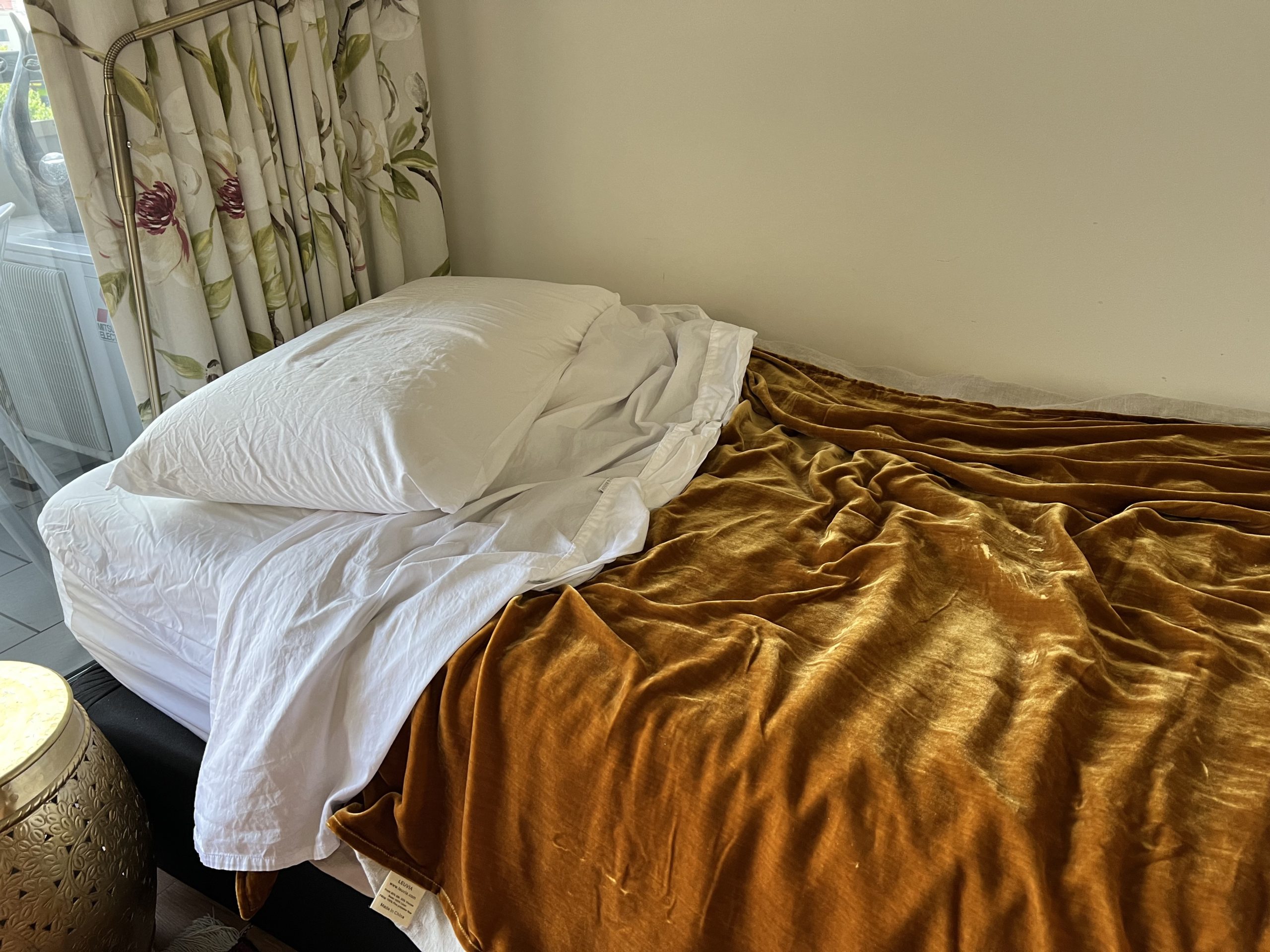
On 9 May,  Crikey.com also came out with a similar argument about the abysmal behaviour of journalists lately —

…while journalists are being imprisoned and intimidated in China, Hong Kong and Russia, and while Maria Ressa fights the raging spread of fake news in the Philippines and is arrested and charged for criticising President Rodrigo Duterte, some Nine bozo thinks that tripping up the opposition leader is Journalism At Its Best. Thus, we can see how far Australian journalism has disappeared up its own fundamental.                    David Hardaker

Such is the entitled idiocy prevailing in Australia in 2022 when hundreds of writers across the globe — sometimes over a thousand — continue to be harassed, silenced, exiled, disappeared, kidnapped, imprisoned, forced into hiding or detained annually without justice. Many live under the threat of death; some are summarily killed. Writers who speak out in countries where freedom of expression is considered the highest value are not exempt. We only have to think of the treatment of our fellow Australian, Julian Assange, which brings me to International PEN.

International PEN

International PEN (an acronym for Poets Essayists and Novelists) was founded in 1921 to promote literature. It was the first human rights organisation in the world. Today, it has 147 Centers in over 100 countries advocating for and supporting writers, readers, writing and freedom of speech.

PEN’s mission is to engage with and empower individuals, societies and communities across cultures and languages through reading and writing. It believes that writers can play a crucial role in changing and developing civil society by promoting literature, campaigning internationally on translation and freedom of expression, and improving access to literature worldwide at national and regional levels.

Membership is open to all published writers who subscribe to the PEN Charter regardless of nationality, language, race, colour or religion. International PEN is non-political and has special consultative status at UNESCO and the United Nations.

PEN centres operate on the ground through a committee structure: Writers in Prison, Writers for Peace, Writers in Exile, Translation and Linguistic Rights and Women Writers. International PEN monitors and advocates on behalf of writers in trouble worldwide and issues a Case List every six and twelve months. (You can download this .pdf to read now or save.)

Arbitrary enforcement of COVID-19 measures

Here is a taste of the latest case list readings — a point of comparison perhaps for those who grumble and groan in this country about lockdowns.

In the pretext of enforcing COVID-19 health measures repressive governments intensified attacks on freedom of expression and press freedom across the (African) continent. Human rights and freedom of expression organisations reported a sharp rise in attacks and restrictions on journalists, editors, reporters and digital content producers in Nigeria, Democratic Republic of Congo, Rwanda, Eswatini, Tanzania, Zimbabwe, South Africa, Uganda, Comoros, Kenya, Ghana and Ethiopia for their reporting on the pandemic and its effect on their respective populations. Journalists were assaulted, shot, had their equipment seized or destroyed, were arrested and detained arbitrarily; they were also harassed through bogus trials and some were forced to flee their countries. Others were banned from practice and media outlets were shut down for reporting on the pandemic. In Kenya, the police unlawfully stopped peaceful protests calling for police accountability over excessive use of force and extrajudicial killings while enforcing lockdown measures. (my addition)

The Adelaide Chapter

I first joined PEN in Melbourne and, when I decided to head back to Adelaide to live in 2005, was keen to join here, but there was no centre. On the recommendation of Melbourne PEN, I got in touch with author Nicholas Jose, the then head of Creative Writing at the University of Adelaide and, with his guidance and support, founded what was called an Adelaide Chapter of PEN.

I had wanted to create a centre, but Jose advised against it. He was an active member of Sydney PEN, and I was more comfortable working with Melbourne, so a chapter seemed to be a good compromise. Australia is not big enough for three centres. While there was a bit of rivalry between Sydney and Melbourne PEN, as there is in most things between the two states, both supported our chapter.

Once the group formed, our energies focused on the Writers in Prison Committee’s activities involving the inauguration of an annual International PEN Day of the Imprisoned Writer on 15 November 2006.
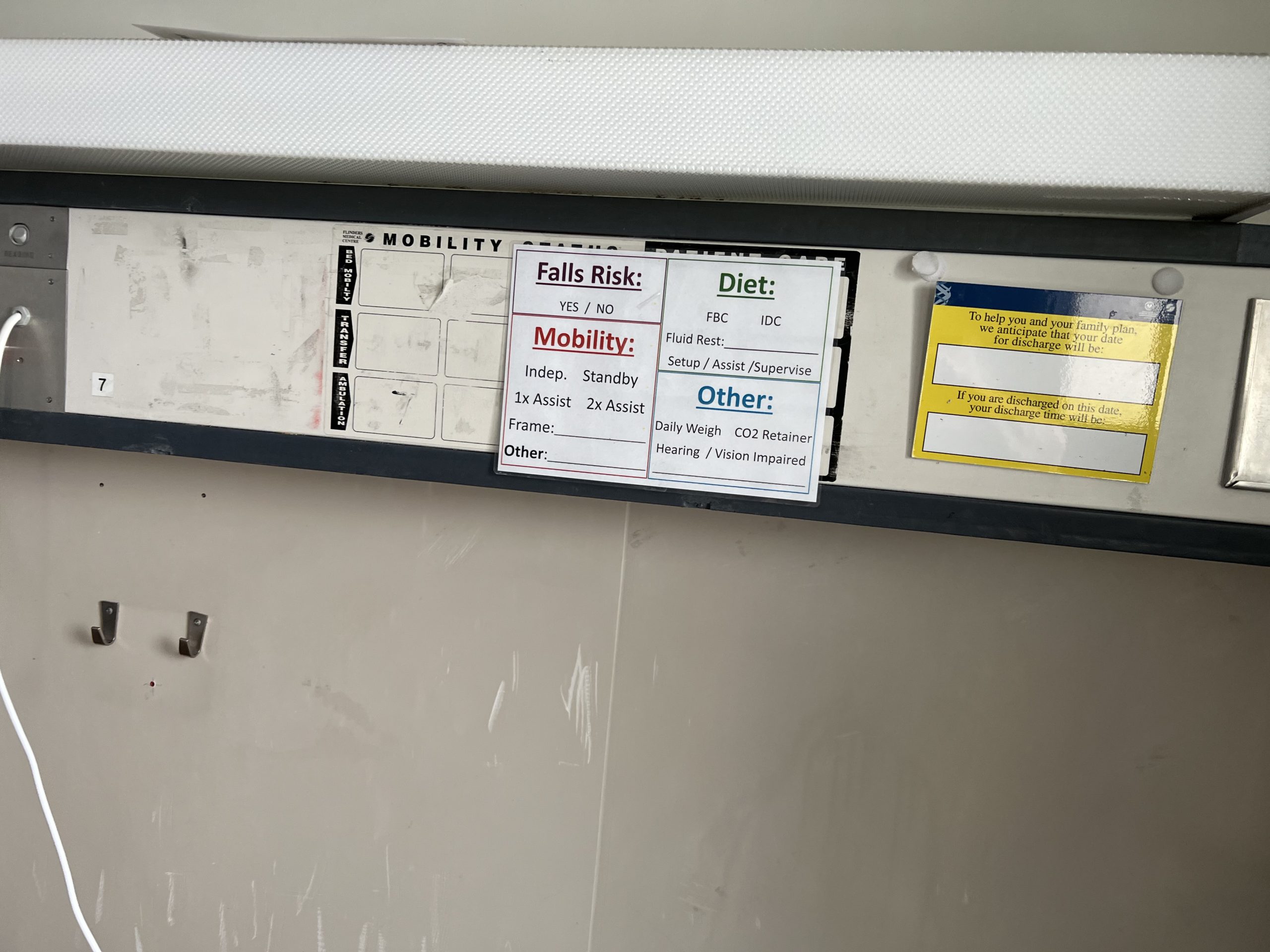
The Day of the Imprisoned Writer — Adelaide 2006
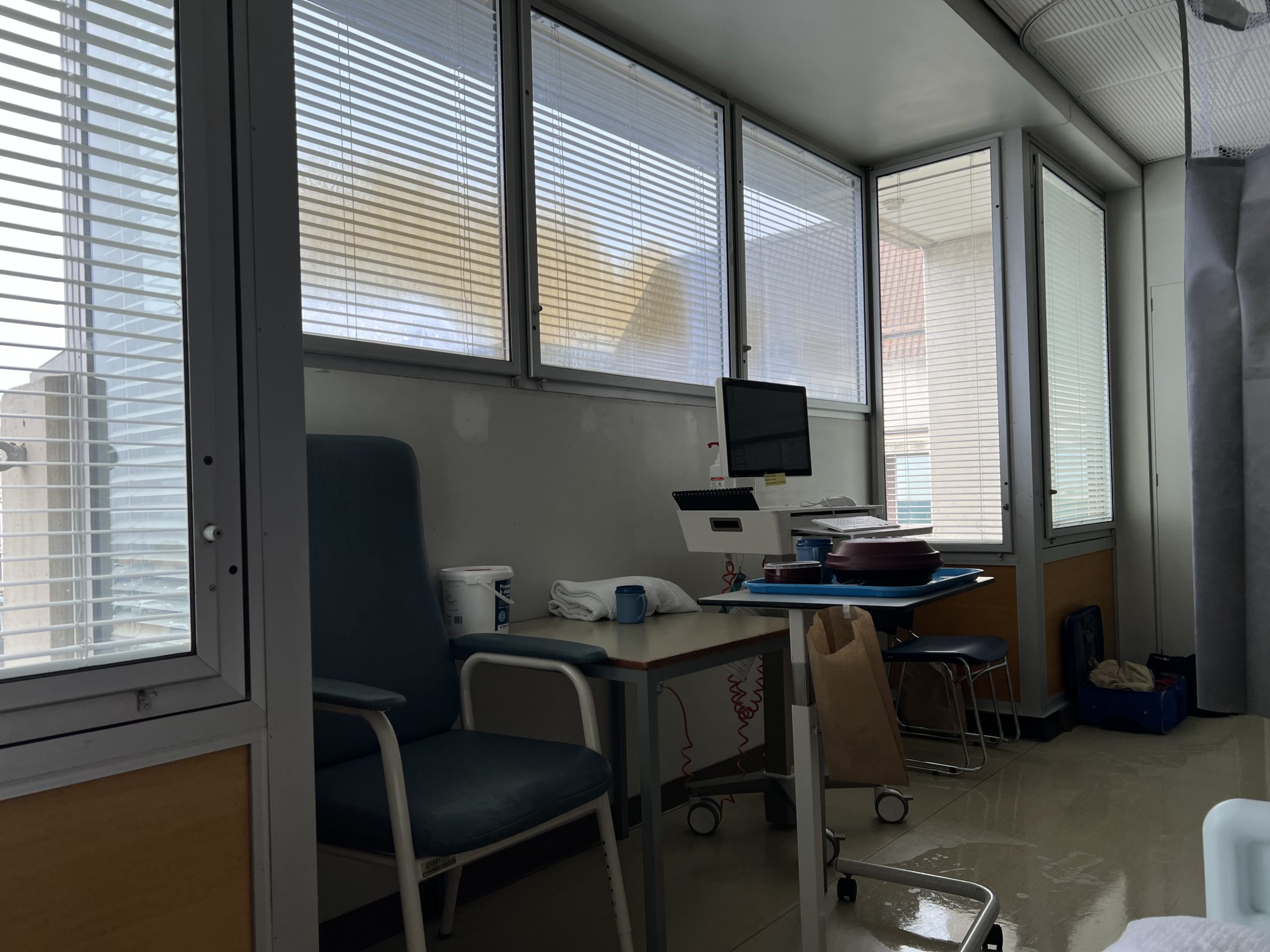
Sam Oshodi, pictured in the introduction, welcomed onlookers and introduced the day with his marvellous African drums.

Adelaide PEN International Day of the Imprisoned Writer 2006
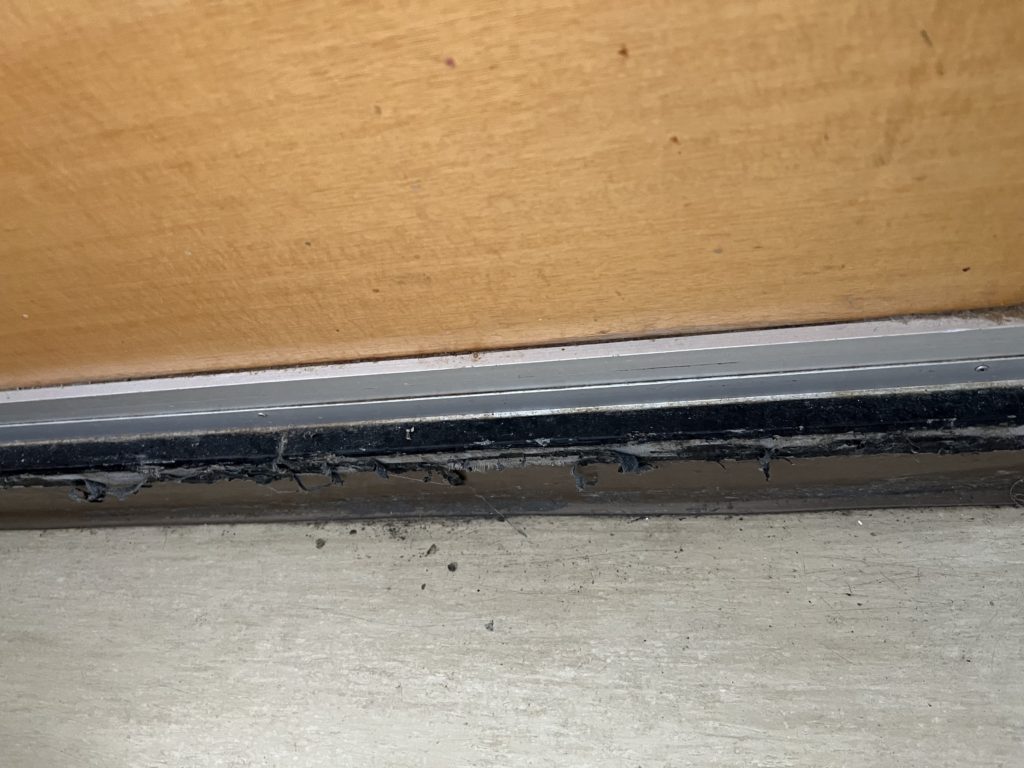
You will recognise some of the people in the audience, John Hill, then SA’s Health Minister, on the left and, next to him, author and poet Peter Goldsworthy. Mike Ladd, then of ABC Adelaide’s Poetica, is on the far right.
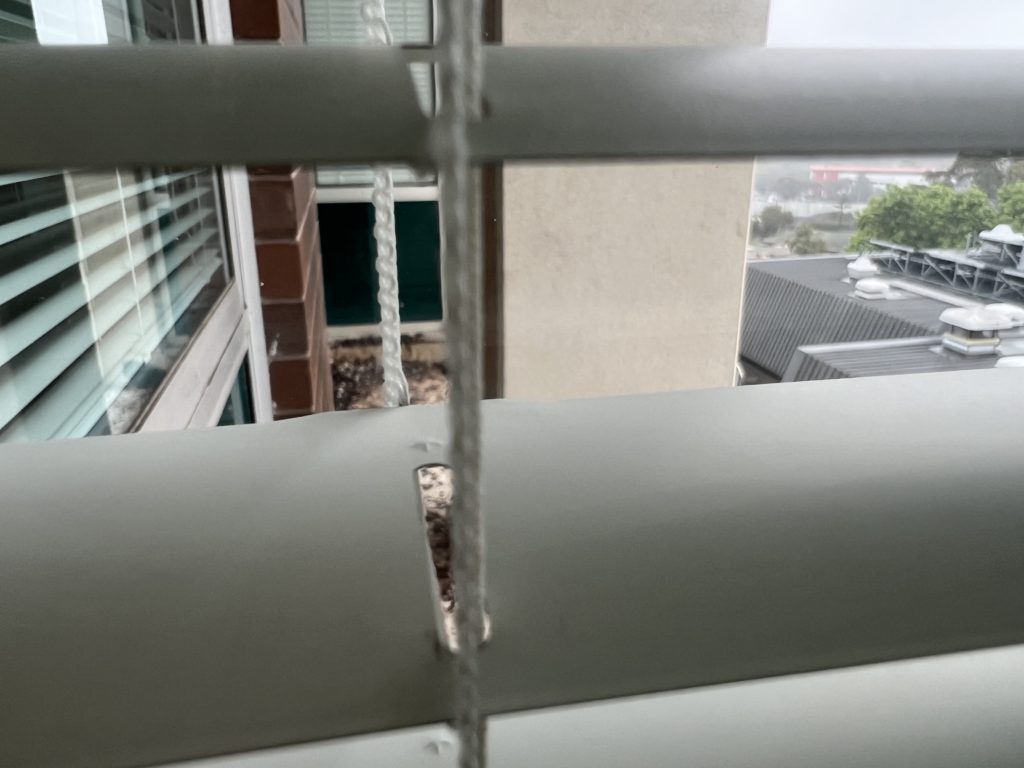

Jude Aquilina, another well-known Adelaide poet in the centre of the top photo, soon did a stint with masking tape over her mouth to represent the silencing of writers. Others took turns. in rotation. In PEN, an Empty Chair symbolises those who have died, disappeared or find themselves imprisoned for speaking out.

Dave Clark & Kate Townsend who since moved from The Singing Gallery in McLaren Vale to the Singing Gazebo Clarendon also gave their time and talent.

Australia’s National Human Rights Commissioner and Aboriginal and Torres Strait Islander Social Justice Commissioner at the time, Dr Tom Calma AO, was the keynote speaker. I once worked with Dr Calma’s family in Darwin so it was a thrill that he accepted our invitation. That is him holding papers in the photo below.

Click here to read Dr Calma’s speech, ‘Freedom of Expression, Censorship and Race Relations’.

Keynote Speaker Dr Tom Calma AO

At meetings, Adelaide PEN members also wrote regular letters to prisoners and sent greeting cards during the Xmas festive season. After two years, I stepped down as Chair, making way for others. Unfortunately, PEN is no longer active in Adelaide.

The Juxtaposition

I juxtapose the poems below with the inanities of today’s political media. The poignancy in each poem reveals a depth of suffering from poets who nevertheless have the courage to speak out against war and human rights abuses. We are fortunate that the first three poets live in Adelaide.

Apart from a brief introduction to each poet, I’ll let their poems do the talking.

Juan Garrido Salgado

Juan Garrido-Salgado at the Day of the Imprisoned Writer 2006
Juan migrated to Australia from Chile in 1990, fleeing the regime that burned his poetry and imprisoned and tortured him for political activism. He has published eight poetry books, and his work has been widely translated. He has also translated into Spanish works by a number of leading Australian and five Aboriginal poets for the anthology Espejo de Tierra/ Earth Mirror (2008). With Steve Brock and Sergio Holas, Juan also translated the Trilingual Mapuche Poetry Anthology into English.

In 2019, Juan read poems from his book, When I was Clandestine as part of a poetical tour at the Granada International Poetry Festival in Nicaragua and at a series of literary events in Mexico and Cuba. His most recent collection is Hope Blossoming in their Ink. (Puncher & Wattmann 2020).

With Judith Nangala Crispin and Anthony Lawrence, Juan judged the 67th Blake Poetry Prize. At Adelaide Writers Week in 2022, he contributed to ‘a ruthless muse’, a poetry performance with some of the finest and most dedicated of our local poets.

Read more about Juan here.

Yahia Alsamawi

Yahia Alsamawy at the Day of the Imprisoned Writer 2006
Yahia Alsamawy was born in Samaway in Iraq in 1949. He was a teacher, writer, poet, and part of a following to overthrow or challenge Saddam Hussein’s regime, which was successful for a while but failed in 1991. When Yahia heard about attempts to execute him, he fled alone to the Kuwait border and then to Saudi Arabia, from where he sent others to bring his family to join him. Then, after suffering years of threats and attempts to silence him, he brought his family to Australia.

Yahia has published many poetry collections and is considered a leading Arab poet who has won several prizes for his achievements.

I want to point out that, at Adelaide PEN’s inaugural Day of the Imprisoned Writer, Yahia read this poem in Arabic, followed by a reading in English by his translator, Eva Hornung. Just listening to the Arabic sent chills through me and brought tears. Yes, the language is poetic, but the anguish of Yahia’s reading touched me without understanding the words.

Read more about Yahia here.

Adeeb Kamal Ad-Deen

Adeeb Kamal Ad-Deen

Adeeb Kamal Ad-Deen studied Economics and English Literature at Baghdad University and has a Diploma of Interpreting (Arabic-English) from the Adelaide Institute of TAFE in South Australia.

He has published 25 poetry collections and, in 1999, won the major prize of Iraqi poetry. His work has been translated into many languages and reviewed in Iraqi, Tunisian, Lebanese, Palestinian, Yemeni and Moroccan. He has written Arabic translations of short stories and poems from Australia, Japan, New Zealand, China and the United States.

Read more about Adeeb here in English and here in Arabic.

Ranjan Abayasekera

I discovered Ranjan Abayasekera’s poem ‘Have You Seen a Bushfire’ in Another Country, a Sydney PEN anthology edited by Rosie Scott and Thomas Keneally (1984). The writings are primarily from refugees held in the Baxter Detention Centre. The Introduction reads —

This ‘other country’ is a place that poets map, “...a nightmare country which lies in the heart of Australia...a place where innocents are locked up for years without charge, without trial, without hope where children live behind razor wire without trees or dreams. It is a country where people sew their lips together in acts of courage and despair, and the fostering of hopelessness is law, deceit, the language, the breaking of the human spirit official policy. ... This is a country where people are driven mad by despair, die by their own hand, or slowly, day by day as the years wear on. It is a country where mercy has no place and children die of grief.

Another Country describes Ranjan Abayasekera as an electrical engineer from Sri Lanka, then working in Whyalla. He was active at the Baxter Detention Centre and founded the Centre’s Newsletter. In this poem, he brings Australia and Sri Lanka together because he feels that tragedy allows people to recognise their shared humanity.

International PEN Women Writers Committee (IPWWC)

It is not always easy to find women’s political poetry, especially in countries where women’s writing, like their voices, is frequently marginalised. The IPWWC was created in 1991 to redress this imbalance within International PEN’s framework and now enjoys representation in over 70 PEN Centres.

Dr Judith Buckrich, Vice-President of the Melbourne Centre of PEN in Australia until 2017 and Chair of IPWWC between 2003 and 2009 introduced me to PEN and provided the following poem by Jocelyn Ortt-Saeed.

Jocelyn Ortt-Saeed

Jocelyn Ortt-Saeed is a Pakistani poet living in Brisbane. Born in Australia and educated in Germany, she spent a large part of her life in Pakistan, and her poetry draws on the Suffi tradition.

A Final Word

I started with journalists misbehaving and juxtaposed that contemporary unpleasantness with uplifting poems of grief and wisdom from talented people who write with hope as they share their pain. We all need to be mindful of how fortunate most of us are in this country — excluding those in detention, as we all know. Are we complicit?

I survived Cyclone Tracy in 1974 and lived in Japan post WWII as a child, where I can still remember as I write, seeing white ash scenes of Hiroshima after the atomic bomb from a train window. I had ringworm smothered with Gentian Violet! And I lived in Sri Lanka during curfews just before the great turmoil that Ranjan Abayasekera’s poem highlights.

While I heard stories of earlier pogroms, flaming tire necklaces and floating bodies, I cannot conceive what it must be like to live through or survive war and persecution like the poets who have generously shared their work here and writers, including journalists worldwide, who are often imprisoned or killed for speaking out to power.

Tip

Each time we pick up our pens, we have a responsibility to write with integrity and bring truth into the light.

ACKNOWLEDGEMENTS:

‘Sonnet’ by Juan Garrido-Salgado in Hope Blossoming. Puncher & Wattman 2020

‘Laughing’ and photo with permission, Adeeb Kamal Ad-Deen

‘Leave My Country’ with permission, Yahia Alsamawi

Photos from Adelaide PEN’s 2006 Day of the Imprisoned Writer are from my collection.

Happy Writing

Wattletales

New Life in Other Hands — The Launch

Starting at the End

Publishing my first novel, The Publican’s Daughter, was the culmination of an extended process of writing, editing, learning and organising to fulfil my childhood dream to be a novelist. Its launch on 2 April 2022 was a humbling and vulnerable experience that gave me the chance to give my story new life by entrusting it to other hands and minds. Today, I thank the many people who contributed to making that launch an exceptional occasion.

Top Billing

Jude Aquilina launched The Publican’s Daughter with vivacity, humour and style. I owe Jude special thanks not only for giving the best launch anyone could wish for but also for writing a brilliant Foreword for the book. She encouraged me first with poetry and then this novel in its early draft form. Jude is a poet, teacher, workshop convenor and mentor with the unique and magical gift of making people believe in themselves.

Jude Aquilina

The inimitable and always entertaining Nigel Ford was our MC. Nigel is a poet and past Convenor of Friendly Street Poets in Adelaide, and he has given a lot to the poetry community of our city and its regions.

Ivan Rehorek is the poet, artist and musician whose gentle jazz flowed through our hearts on the day, bringing us joyfully together.

And finally, from behind his camera (where he said he prefers to stay), Martin Christmas, poet, theatre director and teacher, recorded the many smiles you see on this page.

Hidden Helpers

I can’t tell you how talented many of my helpers are, including artist and poet Veronica Cookson and poet husband David Cookson who worked on the book table with my daughter, Vanessa, a designer.

Writer and poet Inez Marrasso managed the lucky door prize, won by creative marriage celebrant Dorrie McNider. Another poet and writer, Helen Hutton, helped with the distribution of gifts after the formalities of speeches and readings.
The Venue

The launch was first scheduled for 12 February but postponed because of COVID. While a few people couldn’t come for the same reason in April, over 50 people attended.
Our host for the day, Rade, owns and manages Elatte Cafe and Restaurant on Jetty Road, Glenelg, our venue. I left the catering and setup to him. Rade himself unpacked book boxes for me and laid my books out on the table, and the table layout in the cafe was perfect. You can’t get a better welcome than that.
Rade of Elatte Cafe and Restaurant

With Rade at the helm, Elatte has the friendliest atmosphere and staff at the Bay. The coffee is unsurpassed. Delicious food, too. Rade’s chef prepared a delectable selection of Greek finger food, dolmades, zucchini fritters, and various homemade dips that had people’s mouths watering.

I posted my thankyou to Rade and his charming staff with this photo on Instagram.

L-R Nigel, me, Jude and Avalanche (Photo by Helen Hutton)

Promotions

The postponement from February to April was productive. Scholar, artist and poet Dr Kathryn Pentecost generously offered to write a review of The Publican’s Daughter, and Yankalilla Times published her interview with me in April. I include it here because it indicates what the book is about and my reasons for writing it.

Download to read or click inside the menu to scroll up and down, left to right or rotate the page if necessary.

Through Christine Kennedy, Holdfast Bay Libraries kindly promoted my book by purchasing copies for their catalogue and made the title available from the South Australian online lending service known as OverDrive or, more recently, Libby.

And I am booked to do an Author Talk in the Kingston Room at Brighton Library on 2 June. Bookings will open closer to the day when Holdfast Bay libraries will promote the event.

R-L Christine Kennedy from Holdfast Bay Libraries with her friend and reader, Marit Seils. (Photo by Helen Hutton)

In the meantime, on 10 May, I will be chatting about The Publican’s Daughter with Peter Goers on ABC Radio Adelaide’s talk show, Evenings.

The book is available online from Amazon, The Book Depository, Barnes & Noble, Booktopia, and Fishpond. Glenelg’s Dymocks has a few copies, and the ebook is on Kindle.

Getting Here

The Publican’s Daughter started life under the title, On Gidgee Plains. As you may know, the gidgee tree (Acacia cambagei) pictured on the cover is colloquially known as the stinking wattle, a hint that all was not good in the story’s fictional outback town of Wonnalinga.

When I decided to self-publish, Wattletales Publishing was born, and I changed the title, hoping to attract more readers online. But, the tree on the cover reminds readers that things in Wonnalinga are crook (as they used to say of Tallarook, a little town in Victoria) which is why both Jude Aquilina and Kathryn Pentecost liken it to the Australian classic, Wake in Fright (1961) by Kenneth Cook. Cook’s story was brought to life as a movie in 1971 and then as a mini-series in 2017.

The Publican’s Daughter is similarly about the dark side of the bush but from a young girls’ point of view.

An Invitation from Watletales Publishing by Lindy

Origins

Set in the early 1960s, The Publican’s Daughter is about a girl who is thwarted in multiple ways as she tries to find a husband. It has its tender moments, but the story emerged from rage, rage at the sexual predation and violence that trapped or harmed young women in my day, including me. I am in awe of the courage shown by today’s young women who speak out about these issues.

I am also in awe of the courage of First Nations people who have survived so much. When I first started to write, I realised that I could not tell a story set in the outback without incorporating aspects of that history into the whole. To do so would indeed be white-washing frontier history, and I am thankful that the book was approved as a story that had to be told.

Every Guest Brings a Gift

Every guest, every reader, brings the gift of renewal to your story, which is the secret of a book launch. I have so many people to thank that I can’t name everyone, but I want to mention a few guests who, like Jude, Nigel, Avalanche, and Martin (see links above), have shared their writing stories with Wattletales.

Veronica Cookson, David Cookson and Inez Marrasso also contributed, as did my Interviewer, Kathryn Pentecost, who, unfortunately, could not attend.

It was a delight to see Rose Boswell and Luisa Redford at the launch after a long time. Their literary journeys are also on Wattletales. I first met Rose and Luisa in Aldinga Beach when I ran regular life writing workshops and Buddhist meditation gatherings in my studio.

Studio and Meditation Room in Aldinga Beach (my photo)

Other launch guests, variously from Ochre Coast Poets, TramsEnd Poets, Friendly Street Poets and Sand Writers of Goolwa, have shared their stories on Wattletales. While not an exhaustive list, Steve Evans, Craig Harris, Steve Bell, Andrew Ballard, Geoff Aitken and Mike Riddle are all Wattletales’ guests. Shaine Melrose not only contributed her story to Wattletales but also wrote a wonderful blurb for the book as follows —

Warrell creates a superb cinematic drama set on Australia’s wide purple gibber plains. It is portrayed with raw honesty through a direct line into young Katherine’s mind as the city girl’s life becomes entwined in the conflicts of people and land. The Publican’s Daughter is a stark coming of wisdom story of love, loss, heartbreak, and joy. Shaine Melrose

I thank every single person who attended the launch for giving my first novel such a big fat welcome. It was such a memorable day; I feel blessed.

The Lesson

We are never too old to meet our destiny. I wanted to become a novelist as a child and dreamed of it most of my life, but the world got in the way, or so I thought. However, as my little poem below attests, nothing we experience is ever wasted.

ACKNOWLEDGEMENTS

All photos except where otherwise indicated are by Martin Christmas.

Happy Writing

Wattletales

This is Old Lady Speaking — Ageing Stripped Bare

Opening the Heart

A little girl, aged 23 months, recently smiled at me from beneath her bonnet as she toddled by with her parents on Glenelg Jetty in a fashionable pink gingham dress. I smiled back, saying, ‘hello baby,’ and the family stopped to chat. The little girl was carrying a baby-sized boy doll in preparation for her new brother, due to arrive soon. That moment was as satisfying for me as it was going to nightclubs, achieving professional goals or, more recently, standing up in front of an audience to get its take on my poetry.

My daughter, Vanessa, at the same age in a party dress made by her Oma.

To see such a happy family brought memories of my childbearing years. By the time I was 31, I had two toddlers, thirteen months apart, and a miscarriage soon after. A year later, I had a third child who liked to poke his head high under my ribs for the last few months of the pregnancy. My mother scolded me for breeding like a rabbit. I wondered as I waddled past a dress shop in discomfort one day if I’d ever get back into the sleek little number on display. I did until time took its chance with me.

A Long Life Has Benefits

The diversity of baby bumps around today fascinates me; some protrude naked from bikinis, others are swathed in Lycra, and a few, perhaps less fashionable, reside beneath loose summer dresses. I wonder whether appearing sexy while pregnant is easy.

Being pregnant was not all about baby bumps or glamour in my generation. We wore maternity dresses that hung stiff as an A-frame from neck to knee to hide our changing bodies with what felt like shame. On reflection, I give thanks that we were at least physically comfortable.

I reflect a lot now. My mind bobs from present to past and back in a way that revises views. There’s much to play with after a long life, and it brings joy to view things in perspective to find they don’t matter too much now. Shame diminishes with age, too, when one’s vital force has pretty much left the building, like Elvis. 

Body image has always been an issue for women, but I suspect it is a transforming one. When I was 13, I wore a blue check halter-neck dress once before throwing it away. So ashamed was I of my budding breasts that 50 odd years later, I wrote this poem.

The Inevitability of Ageing

Most people my age quit work long ago, and what younger people may not know is that being old is itself a job; it takes work to maintain body and mind. It does not matter how good one’s diet is, how well we exercise or follow health rules. The aging body declines.

In the medical world of the ageing and elderly, not everything is as it seems.

So, I decided to introduce the article below entitled ‘Body Ritual Among the Nacirema’, which was on the syllabus as a cruel joke to tease first-year anthropology students in my day. ‘Nacirema’ is, of course, ‘America’ spelt backwards, but the detail is precisely how an anthropologist might render the lives and activities of what was once called primitive society.

Taking an indirect queue from the article, I describe below some taken-for-granted medical processes to explore their power to disempower the elderly.

Age Stripped Bare…

Patients must strip then don a blue gown that opens at the back for day surgery. Our heads sport a blue mob cap, with feet covered in matching disposable slippers, like those used at crime scenes.

Thus clad, patients are invited into a nurse’s room for a consult about ailments and medications. This is followed by cognitive testing. My nurse told me she had to ask some ‘silly questions’ without advising me that she was actually measuring my mental acuity. Notably, cognitive testing is a treat reserved for concussion patients and, without discrimination or consent, the elderly.

When the nurse is finished with us, we return to the waiting area to be summoned next by an anaesthetist. My young male doctor explained what he would do to me in breathless haste designed to defray questions. So keen was he to be in command, he literally arced up when I asked what sedative he proposed to use.

At the Noarlunga Hospital’s day surgery hub (which offers a splendid service), patients (young and old) in blue are each issued a warm white cotton blanket to keep them from shivering while they wait in anonymity to be called for their procedure. I counted about 20 blue and white figures sitting in rows on straight back chairs with me, facing a blank wall with blank eyes as though attending the theatre. I experienced a strong urge to take a photo, but my iPhone was under lock and key. The identity strip is complete.

The only trace one leaves as an oldie, it seems, is the unknown result of an involuntary cognitive test.

…then Trapped

Whatever our age, as humans, our backs are vulnerable. We keep them to the wall when confronted, and most people don’t like having an open door behind them, but on the operating table, our backs and bums are exposed under bright lights, open to the gaze of several strangers.

Whether for day or life-saving surgery, the moments before you lose consciousness are curious. As you lie on the operating table, unable to move, a nurse’s hand creeps beneath your gown to affix sticky heart monitor leads to your chest while the anaesthetist inserts a cannula in your arm from behind. Your masked surgeon hovers above, asking if you consent to the procedure. Another nurse tells you to recite why you are where you are, what is about to take place and to repeat your full name and date of birth for the umpteenth time while checking your armband; probably a good idea.  

Recovery team members are always friendly. It is nice to come back into the world to the sound of your name, a call that proves you’ve survived. That first cuppa is sweet and hospital sandwiches remain one of my favourite old-fashioned foods.

Medical Pin-ball

At home, we oldies begin to feel like the ball in a pinball machine as our declining bodies usurp our time. Our calendars fill with appointments; for the GP, specialist clinics, podiatrists, dentists, ophthalmologists, physiotherapists and more. Hospital admissions become more frequent, and the possibility of ending up in a nursing home lurks.

Death is on the horizon as we spin from one speciality to the next, none of which communicates with the other. The risk is high for losing our sense of identity in proportion to the increasing height and weight of our medical files. The myriad determinants of what we are in various doctors’ notes in these bulging documents begin to define us.

Measuring the Mind

In youth and middle years, a therapist might be helpful as we confront disturbing things or need to find direction. However, at my age, it becomes tedious to repeat well-rehearsed stories that have long lost heat, as it were. Time, as they say, does heal even though memories linger and are frequently triggered, as I found with my little girl in pink gingham.

We spend more time reflecting on the past, but that does not mean that we have abdicated our former intelligent self. Indeed, it would be nice at times if others would treat us as people. Being old suffers more than invisibility; being unseen and unheard is dehumanising.

Yes, we make typos in emails and social media, but they are arguably more signs of deformed, arthritic fingers than a loss of faculties. Failing eyesight and forgetting the specs don’t help. And, senior moments are trivial in the scheme of things when one’s memory has reached capacity.

Comprehensively ignored is the wisdom that accumulates in a long life. Few are interested. We live in ‘going forward’ mode where specialist and expert knowledge abounds; reified. We search Google before we ask an older person anything of note. Valuing the experience of elders does not pertain.

Care

The assumption that we are unsafe to ourselves and others increases in medical circles as we age. At 70, 75 and 80+, we are again measured like we were as babies. Our General Practice nurse visits us at home to make sure we are coping with things like shopping, diet, personal hygiene, etc. These jollified interviews with kind practitioners make for a nice visit and may produce official supports you didn’t know about. But, it all adds up as a way of seeing old people as diminished physically and mentally.

Any recognition of intellect is predicated on age. Our achievements are deemed significant because we are old (aren’t you clever for your age), not because we are good at what we do. For the elderly, such thinking infantilises; denies old people their full status as adults.

Most people think I’m nuts when I say these things, but how could we describe it when someone asks with a false smile and the royal plural, ‘how are we today?’ Well, lady, I’m fine, I want to say, and I don’t care a whit about you. But we behave. We accept and say nothing. It’s easier than fighting with people in power who cannot understand or won’t listen (as my aunt used to say when her husband abused her). Any sign of anger risks a mental health assessment.

Of course, dementia can take us away.

Current studies are ongoing into the extent of ageism in health care in Australia. The health sector is the second most likely place for the elderly to experience ageism.

Over Time

When my children were little, I remember thinking about how they first moved out from my body and into the room, then moving from cradle to school in graduated steps towards the wider world. Being old — if we are lucky enough to make it to this unlikely state of grace — is the reverse.

I watched my mother approach her dying by closing in on herself. Where previously she walked longish distances every day, she ordered Meals on Wheels. No more shopping, no need to go out.

She started taking the phone off the hook to make a cuppa, eat and shower. ‘Sure enough,’ she’d say of a phone that never rang, ‘someone will ring the minute I can’t get to it.’ Bit by tiny bit, she moved closer to her inner world where there was no more worry. She didn’t entertain, had less need for people and towards the end, became peaceful in herself.

My gradual social withdrawal over the past couple of years could be due to COVID or be the result of my having to take greater care of my pennies. The pension doesn’t stretch to as many coffees and lunches with friends as I would like. But there’s also the fact that my calendar is filled with increasing numbers of medical appointments. Given how long it takes to get to the top of a specialist’s list, you can’t mess with those.

A Last Word

We who live long lives are lucky to experience the distress and wonder of human life. We are also fortunate to have the health care system that exists in Australia. Abroad, I once witnessed a patient die alone on a corridor floor, mewling in vain for succour. Here, infants, children, young people and adults of all ages with chronic and life-threatening conditions have a robust medical system that works well most of the time; often for free. It has its flaws, but doesn’t everything?

Writing Tip

Never fear grovelling in the underbelly of things when you write. It is so important to reveal what goes on beneath the surface, to open wounds and have a good look. We would never know what the sunnyside is, without the rain.

Happy Writing

Wattletales

To see more on a related topic, click here.

ACKNOWLEDGEMENTS

Some of the poems here have appeared in previous posts or one of my chapbooks, Ol’ Girl Can Drive, Soft Toys for Grown-ups, and Life Blinks. (Available from Ginninderra Press), and on Instagram.

Blood on Their Hands — A Synopsis by Warren ‘Rocky’ Porter

Introduction by Lindy Warrell

Warren Porter became an involuntary Ward of the State when he was four years old and was institutionalised and nicknamed Rocky in what he calls hellholes until he turned 18. For a lad who had no formal schooling, Warren is now a long-term member of Sand Writers in Goolwa, South Austalia and has written two books. The first, Brutalised is pictured below, the second is A Tormented Life. Blood on Their Hands is a holding title for this, the synopsis of Warren’s third book.

You can find more on Warren’s adult life and discover his joy as an adult, even in hardship as he tells his story of working on the Trans Australia Line as a railway fettler in his piece called Heading Out Along the Line. Warren has led a remarkable life, and his stories highlight and expose essential aspects of Australia’s history.

The Synopsis — Blood on Their Hands

Upwards, and possibly more than 500,000 boys and girls during the last century spent most of their childhood growing in institutions run by governments and the churches; hellholes as they were known. Four-hundred and fifty thousand of these children were Australian, 40,000 Indigenous and 10,000 were those sent out to Australia from England under the child migration scheme. How these children were dealt with by bureaucracies and laws meant to protect them is encapsulated in what’s written below.

For good or bad, many, many children were sent forth into the unknown, with a brief history of each one being presented to the superintendent in charge of the institution they were to remain in. There had been many reasons for why this happened to children: being born to single mothers, domestic violence, divorce, separation and family poverty. And for those made Wards of the State, it was mainly because these children were deemed uncontrollable, neglected or in mortal danger that landed them in institutions.

But, not all children finished up in these hell holes for having done something wrong. No. It was just the circumstances in which they found themselves; they were classified as status offenders!

For most children sent to these hell holes like me, life for them was never the same ever again. Years of sexual, physical and emotional abuse, neglect, and backbreakingly hard child slave labour forever live within our minds. We cannot escape the memory of the shocking atrocities we were forced to endure throughout those childhood years of ours.

There are also the memories of the hundreds of once innocent boys and girls who disappeared from out of those hell holes, never to have been seen or heard of ever again. They are buried there, in unmarked graves beneath those very grounds! The blood of these missing boys and girls is in the hands of the bureaucrats responsible for their disappearance.

Forgotten Children

By the time it came for us to be released back out into the community, we’d gained an inheritance of moral confusion, abiding anger, psychological scars, depression, distrust, recurring nightmares and the determination never again to allow anyone to treat us the way those criminals treated us as children!

It was sickening to learn that many who developed severe emotional problems and depression committed suicide. Others became addicted to hard drugs and alcohol; many went on to become some of Australia’s most hardened violent criminals. A lot of girls became prostitutes. Many to this very day, are wasting their lives away in prisons and mental institutions! And there are others I know of who still carry a chip on their shoulders, even after all these years.

Over the years, there have been many inquiries into the abuse of us children. It was found that most had suffered all forms of abuse (some not mentioned above). Children were left so hungry they were forced to eat scraps out of bins; others were only permitted to take a bath once a week and in shared water, same with taking a shower.

Children were locked in dark places to be punished so severely as to draw blood.

No Escape

Children were used as guinea pigs by the Commonwealth Department of Health, injecting us with full adult doses of vaccines, mainly to trial influenza vaccines and antigens for toxic effects. Tests were done first on us before allowing them to be used on children out in the wider community. These vaccines failed to protect us, the institutional children. Instead, we developed adverse reactions, mainly that of vomiting and abscesses.

There weren’t too many of us when as children in those fucking institutions, ever got the chance of receiving an education!

Over the many years I spent growing up in those notorious hell holes, I got to know hundreds of children and found most had been honest, decent boys and girls, who should never have been in these miserable joints in the first place. The authorities believed that these children were neglected and abused in their own homes.

Those fucking Morons! Why couldn’t they’ve gotten into those stupid heads of theirs, that even if these children were being abused at home, the abuse they suffered at home was nothing compared to the rapes and the brutality committed by the parasites in charge of the hell holes these innocent children were sentenced too.

This story is dedicated to the thousands of boys and girls who, like my dear brother Graham, sadly never had the chance to tell their stories about the rapes and the brutality they endured while as prisoners in those concentration camps. Concentration camps for children!

I blame these atrocities for so many children now laying graves. May they RIP.

Rest in Peace

AUTHOR BIO

It was the 24 of May 1948 when my mother dumped my brother Graham and me at W R Black Home for Girls in Chelmer QLD. Our lives changed forever. It burdened Graham until his early death in 1974 aged 28 and affects me to this day. I later found myself in the Presbyterian, the Salvation Army’s and for no reason Mt Penang Juvenile Justice Centre in Queensland. There was no schooling in those places.

Best Books from a Lifetime — A Big Ask

Stories about Stories

If you asked me, Lindy Warrell, to tell you what I prefer to read when it comes to the novel, I’d say I like quiet literary works centred on a protagonist’s journey. Such tales raise existential questions, embed philosophy and speak the truth about power. I also like books that excite, challenge and enlighten me. When it comes to books that open my heart and mind, like The Songs of Trees by the erudite yet lyrical David George Haskell, I am in awe.

Highly Recommended

However, when you’ve lived for nearly 80 years as I have, the number — and range — of books you’ve read is immense. Whittling them down for a blog post is no mean feat. Yet, my reading proclivities make it easy as I naturally gravitate to books I fell in love with, whether scholarly, poetic, literary or popular. As you’ll see, I am an eclectic reader who yearns to be transported and thrills to new insights offered by writers who take me on a journey into the unknown.

At university, I read tables of content and scanned indices as an aid to learning, but I am a free reader for the rest. Nobody could ever accuse me of being in thrall to fashion or rules. Whether anything I’ve read influences my writing remains moot, although everything I have read exemplifies or reveals my tastes and inclinations.

Books of Knowledge and Insight

Let me start with works by novelist and philosopher Aldous Huxley and his father, Sir Julian Huxley, who was a humanist and, scarily, a eugenicist. I found both in the Darwin Library when, aged 21, I used to shelf browse on wet season, pre-TV weekends, hungry for knowledge. As a girl who left school at 15, I struggled to understand, but reading stuff beyond my reach then challenged and excited me. To this day, I retain the thrill of profound insight about this thing called society from Brave New World (1932) that may even have led me to anthropology half a lifetime later.

Curiosity has led me in heaps of different directions over the years. And who can go past accidental discoveries? Ania Walwicz was such for me not long before she died in 2020. While I critiqued her book Horses on Goodreads, I have to admit that I never completely understood her.

I read Horses much as I read Karl Marx at University and Salman Rushdie at times, rolling with the words and allowing meaning to arise by osmosis. One exception to this was her critique of Australia, popularly known as ‘You Big Ugly‘, the penetrating insight of which had me laughing out loud with recognition, and I wrote ‘The Shame’ in its wake.

A Book That Changed Me

In 1966 French anthropologist Louis Dumont published a ground-breaking work called Homo Hierarchicus which he called an essay on the Indian caste system. I first read HH in the 1980s in my undergraduate years. As a hitherto uneducated Australian, I fought with everything he said (after I finally understood what that was), so entrenched was my cultural egalitarianism.

His thesis was that an encompassing hierarchy of superior and inferior, pure and impure, is natural to humans and social order. In contrast, possessive individualism in the West has turned society upside-down like the nursery rhyme hand game, here’s the church and here’s the steeple [fingers locked facing down, then invert your hands] open the door and here’s all the people. In other words, he identifies the underpinnings of our disconnectedness by comparison with India.

My fight with Louis Dumont persisted into my postgraduate writing, but I eventually thanked him for what turned out to be the Indian seeds of his innovative analysis of possessive individualism elaborated a decade later in From Mandeville to Marx (1977). Of course, I learned these things in other ways, but Dumont was my introduction to a critique of the taken-for-granted in my world, a protracted but profound lesson in humility.

Books the Way I Think

Nobel Prize-winner J M Coetzee’s signature novel, Disgrace, which won the Booker Prize in 1999, blew me away. His seemingly simple narrative style spoke directly to me as it took me to dark places in everyday life as though that was the most natural thing to do. I’ve read nearly all of Coetzee’s books and admire him greatly. As an author, he is unafraid to confront stark truths, and he trusts his reader enough to shock. How clever is that?

I defy anyone to say that Disgrace does not linger. I can see the setting, the horror of the rape and the symbolic role of dogs as though I read it yesterday. In all of Coetzee’s books, the prose is sparse, concise and piercing in its honesty. Reading Coetzee leaves me with the sense that he writes as I think. Had I the skill, I would emulate him.

In Journey to the Stone Country (2002), Alex Miller is another author who speaks my language. For a girl who grew up reading stories set elsewhere, I love the way Miller naturalises Australia as a setting. My first experience of that was with Peter Goldsworthy’s marvellous short story collection, The List of All Answers (2006). When I read about driving up Magill Road, I had permission from Goldsworthy to write about home.

A Book that Gave Me Permission to be Myself

Although I was acquainted with the classics from school and elocution classes, I came to contemporary poetry late in life through Jude Aquilina, primarily through Women Speak (2009), which she co-authored with Louise Nicholas. Who knew that a mammogram could find its way into a published poem or that vulvas could speak.

What a charming, magical and hilarious collection this is. It taught me that women could speak out, that their concerns are significant enough to write about.

Books as Lifelong Loves

After I forgave it for not being Sri Lanka where I lived and loved, I was in thrall to India when I visited that country a few years before Vikram Seth’s 1400+ page classic, A Suitable Boy (1993), came out. As one of the longest novels in a single volume in English, it is ostensibly about a mother wanting to find a suitable husband for her independent daughter, but it delves into the anguish caused by the partition of India. I sat on my flamingo-pink velvet armchair (true) with this tome for a fortnight (at night), cross-legged; transported. The story is now beautifully portrayed in a 2020 Netflix series of the same name, which made me love it all over again.

Nobel Laureate Naguib Mahfouz similarly drew me into Egypt’s history with his fascinating Cairo Trilogy*. The three books, Palace Walk, Palace of Desire and Sugar Street, tell the story of one family through generations in a society transforming. I could not put these books down, and I escaped into their pages.

Maybe I just like epics, but these writers write history and politics through family dramas full of people to love and hate, not unlike the popular TV series, The Crown. The scope and depth of these authors’ knowledge and research is astounding, their skill as storytellers unsurpassed. They are literary, not historical, novels that remain part of how I feel as a person.

* First published in 1952, and in English in 1990. As a collection at various times between 1966-2001.

Books We Must Not Be Ashamed Of

A writerly friend recommended Julia Cameron’s self-help book The Artist’s Way. Written for creatives, it came out in 1992 and is still in print and all good bookshops today. I bought it and tossed it aside with disdain for some time, but I learned so much when I finally got to reading it. I had dissipated my creative energy with what Cameron calls crazymakers, friends and family whose needs always seemed so much more important than mine. Such was my need to be needed earlier in life — a salutary lesson.

Learning to stand up for yourself comes late for some of us. I learned similar lessons through Buddhism and subsequently taught meditation for years. Here is a book I’d recommend to anyone who struggles to feel free, as it offers a way out.

Don’t Take Your Life Personally (2010) is a Buddhist-inspired text by the renowned American monk Ajahn Sumedho of the Theravadin tradition whose teacher was the beloved and enlightened Thai monk, Ajahn Chah. The title tells the tale.

A Quiet Book

Let me come back to the novel. I mentioned quiet stories in my introduction and recently read one that I loved, by the doctor and prizewinning Australian author Melanie Cheng, Room for a Stranger (2020). The story is about a relationship between an old Australian woman and a young Chinese student. She needs someone to help around the house; he needs cheaper accommodation.

Cheng transports us into a slightly run-down inner-suburban Melbourne cottage as she delicately explores issues of race, aging and the human need for comfort and a sense of belonging. This gentle and sensitive story of profound social and cultural significance exemplifies what I call a quiet book.

A Random Book To Complete This Collection

I want to sneak in a book called The Dialogic Imagination (M Holquist Ed 1981). It is a collection of four writings by Mikhail Mikhailovich Bakhtin, who I love so much I’ve used his name for an old Russian character in my current novel, High Rise Society.

Bakhtin introduces several unique concepts for writers; he explores how the novel changed from the epics of old where a hero went through all sorts of strife but emerged heroically unscathed (classical epics). In the new novel, he argues, the whole point is that protagonists change in light of the challenges they come across.

Bakhtin introduced the idea that every time we make an utterance, we select from ‘a world aswarm with names’ to create anew. He made it explicit that each sector of society has its own language. We only have to think of the self-referential language of the mainstream media and political discourse, the medical lexicon of diseases, causes and cures, academic jargon, the dialect of betting, horse racing and football or the argot of the streets. All conditioned by context and each other.

Bakhtin’s take on languages and utterances aside, I actually introduced him here as a somewhat derivative way of sneaking in a poem to end this post, based on Rabelais* and his penchant for list-making, which I discovered through Bakhtin. Reading reaps rewards.

*Francois Rabelais was a French Renaissance writer, physician, humanist, monk and Greek scholar. He is primarily known as a writer of satire, of the grotesque, and of bawdy jokes and songs.

This eclectic collection of writings has shaped me. But, there are many more writers to whom I attribute the way I think and even feel about the world and what it all means. Do stories embed themselves in you, as they do with me?

Happy Reading and Writing

Wattletales

Reaching for the Highest Fruit by Steve Bell

The Mountain Metaphor

Metaphors, it is said, should grow like fruit from a tree. I like the organic nature of this metaphor for metaphors, the best metaphors are indeed organic, even if they are mineral, like mountains, for instance.

View from an Alaskan Snowhole

In the realm of the metaphor, mountains are low-hanging fruit. They’re served in speeches, stories, and songs, such as The Sound of Music’s ‘Climb every mountain…’, which was a favourite film of my childhood. As a child, I was unaware of the heights of their metaphorical reach — until, through an unforeseen unfolding of fate, I became a mountaineer.

Lunch break. Just another day in the office for Nepali porters.

Like other regions of threatening vastness, mountains have been subsumed — in the form of religion, legend, and myth — into the cultures of those who live there. To this, recreational mountaineering has added another layer of folklore. Fuelled by an adventurous spirit and aided by a good head for heights, climbers have ascended nearly every mountain on the planet. Their endeavours have spawned a pantheon of literature. The inherent dangers and hardships of the activity open the mind to regions inaccessible in everyday life, and it’s here, in the highest, frailest branches of the tree, that the richest metaphorical fruit can be found.

Beginnings

By coincidence, my first climbing experiences were on trees. With their ridged bark, conveniently spaced branches, and a summit determined by how high you dared to go, it seemed like trees were made to climb. Climbing demanded courage, strength and skill, a heady combination for a boy anxious to prove his worth, even if only to himself. By climbing trees, I cured my childhood fear of heights, without knowing how the cure would serve me as an adult, nor that one day I’d climb to the highest places on earth.

19-year-old Steve Bell on the north face of the Grandes Jorasses in 1978

From Reader to Writer

Writers are readers first. In between climbing trees, riding my bicycle and collecting scars that I wore like medals of honour, I read books. I’d spend hours hunched over adventure stories such as those written by Enid Blyton or Robert Louis Stephenson, lost in a distant and dangerous place, my imagination running wild behind my nerdy, bespectacled eyes. Perhaps those books, as much as my tendency to fall off things (and survive), set me on track for a life of adventure.

Novels also sparked an interest in writing. I wrote my first story when I was twelve, for which my English teacher gave me a special commendation (I had to look that word up!). Later, after notching up some noteworthy ascents in the European Alps and Alaska, I punched out articles on my old Olivetti typewriter for climbing magazines for which, unbelievably, I was paid.

Annapurna III is the central peak. It was finally climbed in 2021.

To the Himalaya

I first went to the Himalaya when I was twenty-two as part of a three-person team attempting an unclimbed ridge on a 7555m peak called Annapurna III. It was my first and most devastating failure. I returned home with nothing to show for the two months of toil and the year of preparation that preceded it, and without success to brag about, there was little incentive to invest yet more time into the failed venture by writing about it. I had yet to learn that failure is a better teacher than success. Three decades passed before I was ready — now on a laptop rather than a typewriter — to exhume the experience and extract its priceless lessons.

Steve on Denali, Alaska, in 1997, the last of his seven continental summits.

After Annapurna, I took a break from mountaineering and dabbled in other things, including a stint with the British Antarctic Survey. Storm-beaten, tent-bound days were pleasurably passed in the varied company of books such as Hardy’s Jude the Obscure, Hemingway’s Men Without Women, and Erica Jong’s Fear of Falling, books chosen for their titles as much as their content. A short service commission with the British Royal Marines returned me to the mountains, now as a soldier-climber, and my first attempt on Everest in 1988.

Later, I set up a travel company, trained as a Mountain Guide and led climbers up mountains all over the world, culminating in an ascent of Everest long before there were any queues. Everest has since become a tourist route, its standing as a mountaineering challenge has diminished, ironically, by its status as the world’s highest mountain and ensuing collectability.

Everest from Tibet.

Writing Everest

As one of the few ultimates, Everest has spawned an entire genre of books, the majority of which tap into the mountain’s symbolism of aspiration, achievement, and triumph over tremendous odds. There are more than twenty routes to the summit, but most choose the easiest path. The same is true with its writers. Everest’s metaphor tree is laden with low-hanging fruit which is easily gathered and too often cooked to the point of cliché. Not that there’s anything wrong with this, for clichés often start life as excellent metaphors. Still, just as a climber can avoid summit queues by taking a harder route, the imaginative writer can climb above clichés and reap the rarefied harvest of the tree’s higher branches.

I don’t need an imagination, for I know what it’s like to fall, to be cold, to be trapped by a storm, to be hit by rockfall, to run out of oxygen on the summit, to have the air sucked from my lungs by wind, to sit next to a dead man and listen to his warning, to feel the friable edge of life crumbling in my frozen fingers. Each experience is a rung in the ladder I can lean against the tree. And, if I have a ladder, why not reach for the more succulent higher fruit?

Just as a fruit tart is more than its ingredients, a book is more than a collection of words. One hundred thousand of them masquerade as a manuscript on my hard drive. It’s been seen by a dozen or so agents and publishers but rejected because ‘There’s no market for it.’ They know their business, so I guess they’re right. The ingredients are all there, but I need to make something else out of them, something altogether more compelling, something sweet and sour that keeps the pages turning and ends with the reader sated yet wanting more. It’s taken me five years to work out how to do it. It also took me five years to climb Everest.

Steve during the first ascent of a climb on Mount Huntington in Alaska.

The Risk

Risk-taking has always been an ingredient in my life choices and, so it is, with writing. I could take the path of self-publication but without the filter of a publisher’s benchmark, it’s too easy and the reward unsatisfying, so I choose to scale the face of the unsolicited submission, to be an anonymous rock in the slush-pile mountain, determined to keep going even though I may fall from its precipitous face or be buried in an avalanche of slush. There’s no point climbing a mountain if it’s easy.

At least I have a ladder. Diaries and logbooks of my expeditions fill half a shelf of a bookcase. I dip into them occasionally, when I want to remember what it was like to be young and strong and scared out of my wits — a warrior on a campaign I feared I might not return from; when I, in the comfort of my home, want to climb up to the highest and thinnest branches of the tree and reach for the rare and exquisite fruit that few others have been fortunate enough to taste. If I fall off trying, at least I won’t die.

Steve with his wife Rossy on Kala Pattar in 2017. Everest behind.

AUTHOR BIO

Steve Bell is a writer and public speaker. As a teenager, he climbed many of the hardest routes in the European Alps before progressing to expeditions in Alaska and the Himalaya. He spent four months under canvas with the British Antarctic Survey, served with the Royal Marines Commandos, and qualified as an international mountain guide. In 1993 he led Britain’s first guided ascent of Everest. He founded the renowned mountaineering company Jagged Globe and led expeditions to all seven continental summits. He emigrated to Australia in 2004 and now lives on the Fleurieu Peninsula with his wife, Rossy.

Books

Seven Summits – The quest to reach the highest point on every continent (Mitchell Beazley 2000 / Gramercy 2006)

Virgin on Insanity – Coming of age on the world’s toughest mountains (Vertebrate 2016).

Read more about Steve’s adventures

Website: everestkeynote.com.au

Facebook: https://www.facebook.com/everestkeynote