

Ignorance
Children are naturally curious; they are, let’s say, biologically driven to learn. The joy of discovering fingers and toes and nose indeed drives them on. At school, the intense curiosity of childhood is channelled in definitive directions. It is where we all risk becoming the same or failing because we are not. Adulthood further cramps us as we discover, without trying, how little control we ultimately have over our lives. However, acknowledging the depth of our ignorance can spark our curiosity again, like magic.
When I write, I start at the surface, but as I put words on the page, others follow, taking me in directions that would otherwise not have come to mind. Clarity, for me, takes time to emerge on the page. If I think I know where I’m going before I write, I’m wrong. I discover what I want to say as I write, and that’s because I start in ignorance, which is pretty much how I’ve lived my life. Ignorance is, to me, the premise from which curiosity springs,
Wait Till You Get There
When I taught at Adelaide University, I learned something important from students who would come to me terrified at the beginning of their Honours year or as PhD students about to go abroad to do extended fieldwork.
Honours students had great expectations of themselves to ‘be an honours student’. They felt they had to be more than who they were, someone who’d just achieved a first degree with distinction. They thought they had to be something they couldn’t yet grasp. In other words, they wanted to be what they would become at the end of their honours year before they started. That’s a pretty scary thing to do to yourself, trying to be the future in the present. It creates a gut hole called panic.
Postgrads had a similar temporal displacement thing going on. Mostly, they did not know the country they were going to and, once there, had to find people to work with. That fear is similarly about trying to control the future when we simply cannot. That’s it. It’s not possible. We may be able to plan, but plans can go awry. In those pressured moments when the gut hole appears, we need to remember our decision-making capacity will be with us wherever we go. Preparation aside, trying to control what we can’t know is useless.
My philosophy is that we should avoid yearning to be who we’ve yet to become by staying in the here and now and starting everything from where we are. And that means starting in ignorance of what we are about to learn. That also goes for the act of writing. Whether we write an essay, a report, prose or poetry, we have to start somewhere, but the question is, are we inscribing what we know intellectually or creating something new? The latter must start from ignorance.
Years ago, an artist friend told me she had no idea what she was doing but kept doing it until her work manifested in an installation she could later ‘read’ and understand.
Different Types of Knowledge
As Executive Officer at the Darwin Menzies School of Health Research many years ago, I worked with the head of the Indigenous Department to help doctors and scientists understand that doing research is a privilege, not a right, especially when working in communities.
Our course challenged everyone. We were talking to senior health and medical professionals accustomed to gathering knowledge-as-object and being the knower. They liked to collect facts, put them in a pocket and walk away satisfied, whereas to work effectively with First Nations people, they needed to learn about themselves to understand others, especially in communities. We were not popular. The school soon brought in consultants to replace us.
We know that fact-finding is objective science at work, but it turns humans into objects and denies that the researcher’s humanity is integral to the resulting body of knowledge. Objectivity like this is part of patriarchy.

This quotation is from therockle.com. Read about Patrick Rothfuss here.
Collecting facts and data is very popular nowadays. Experts stand outside of whatever they are researching, which means measuring. Once upon a time, researchers measured the heads of tribal babes and deduced that larger or smaller heads meant intelligence or its lack. Nowadays, doctors measure old bodies on a routine basis (BP, oxygen saturation, height, weight, bloods), but they do not understand aging. Statistical results create a bodily mean, an average that we are all measured against, but we are more than our bodies.
The Magic of Words
When we write, each word on the page asks what comes next. Here is a poem I wrote many years ago in a workshop. We were asked to write about home. I knew my poem would not be full of nana-made marmalade, gardening and knitting, but I didn’t expect what emerged.

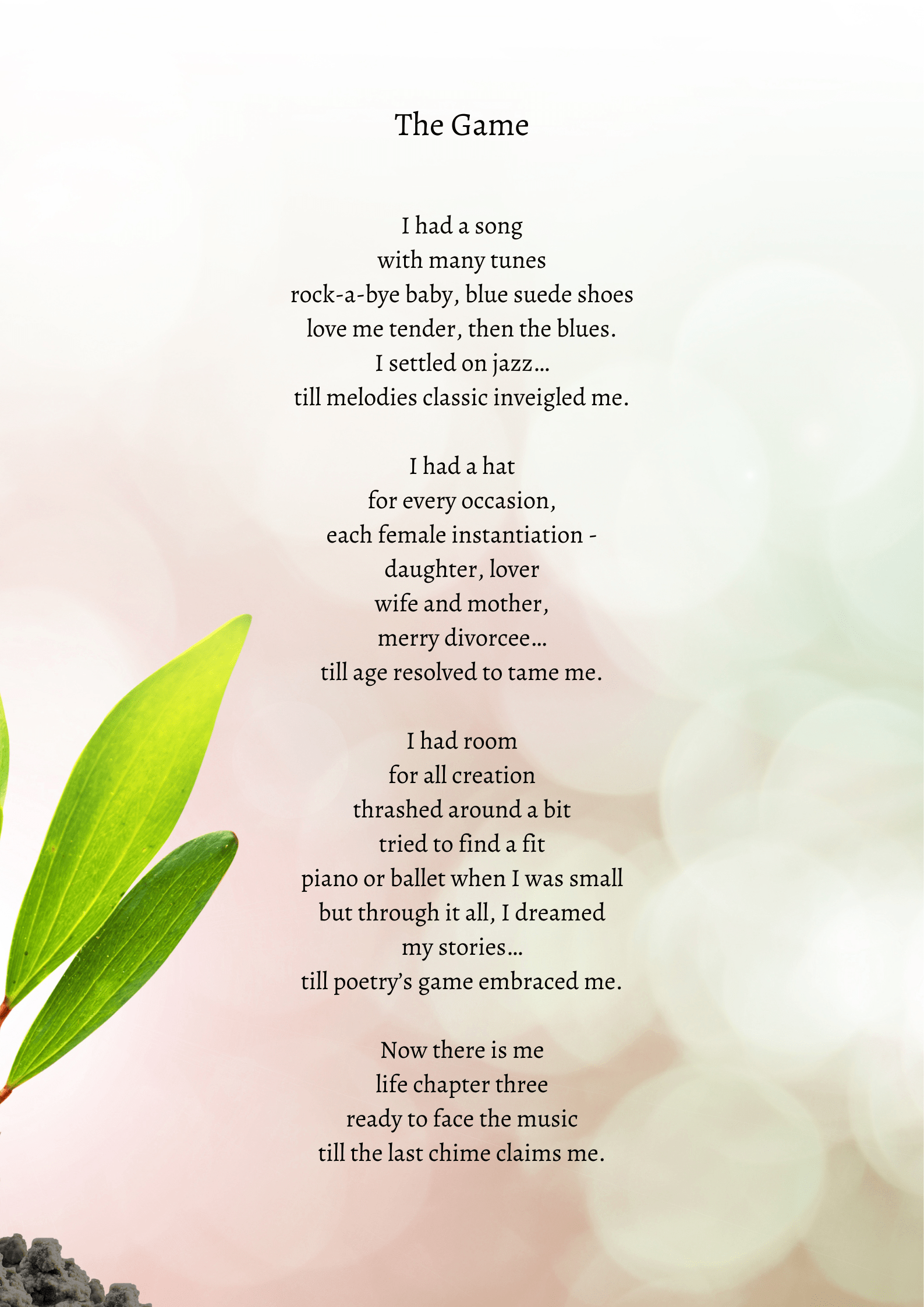
Looking back on one’s life produces a different effect. In the former example, the word ‘home’ was a trigger; in the following poem, The title’s question, The Game (of life), sent me on an archaeological expedition.
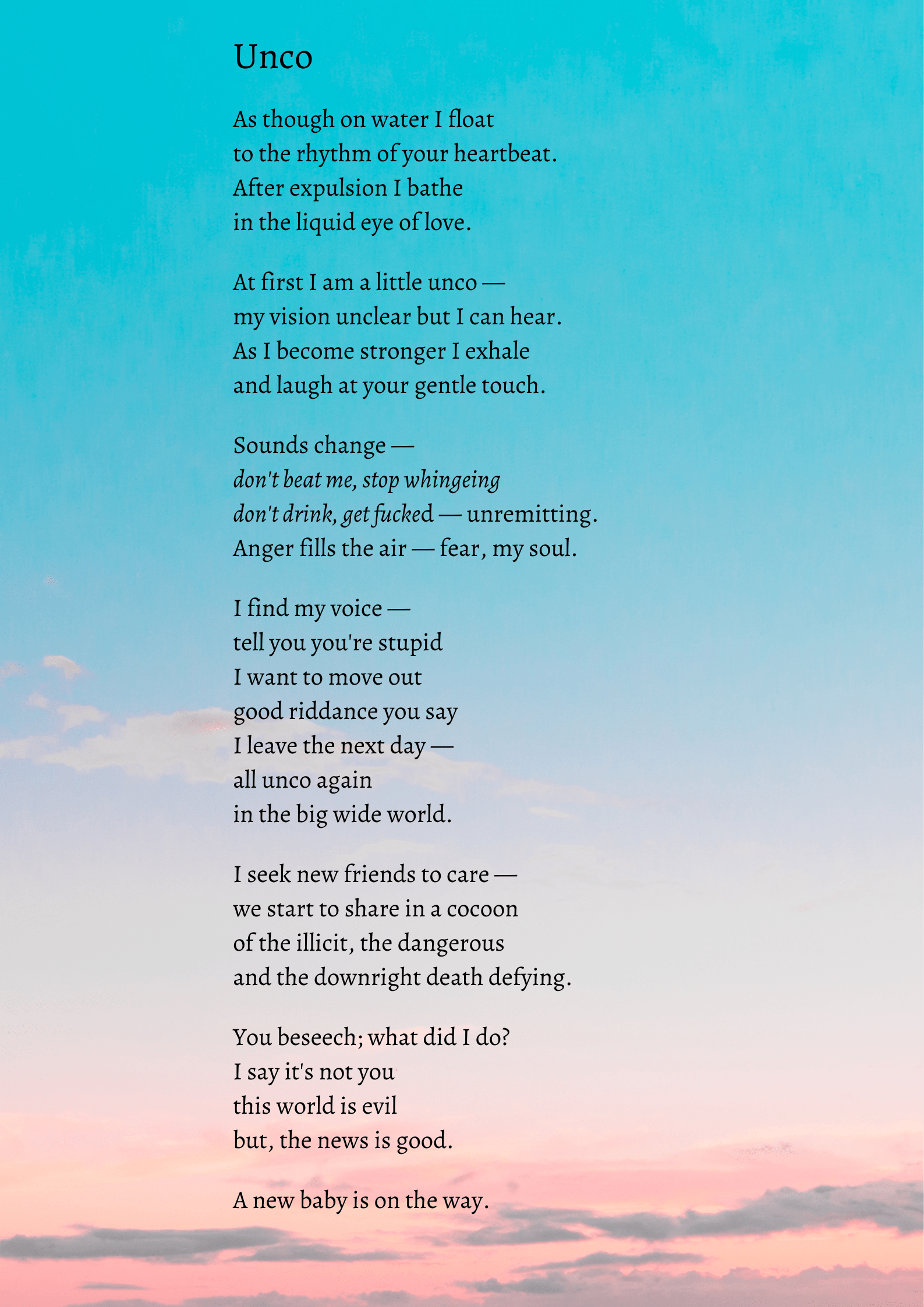
Staying open produces something else entirely. Where Home was a topic and The Game a question, I have no idea where Unco came from except that I heard the word and let it do the digging. Unlike the other two poems, Unco has nothing to do with my life. I include it here because it points to being forever in the moment, ignorant, uncoordinated, and unable to predict the future — as in life itself.
We Are All Different
Saying that we are all different is hardly novel. We all have different creative processes. I wrote this blog post because I wanted to know what I think. I trust my intuition, but when it comes to explaining how I come to clarity, I have to dig.
Writers speak of being a plotter or a pantser. Although I’m organised, I am, in essence, a pantser. I go where the moment suggests and learn what I’m trying to say along the way. When I wrote essays at university this was pronounced. I could never write an introduction until I’d found the conclusion. Other people know what they want to write and plan or plot accordingly. They are inscribers. Those with visual memory may be more like sculptors. Some writers may have no interest in how they get words on a page.
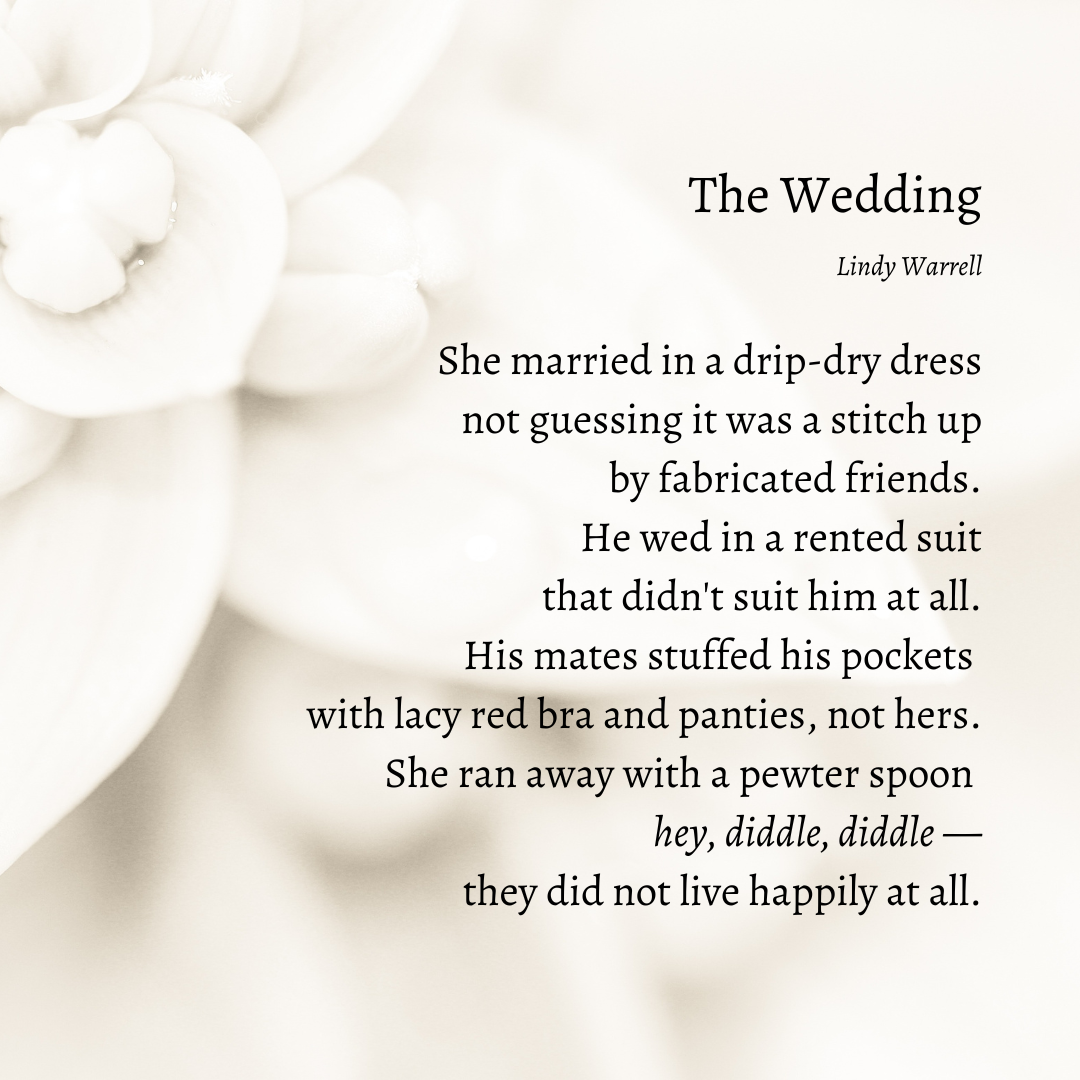
I’ve neither researched nor studied how my mind works nor why I sometimes write such odd poems. As for the following poem, I seem to recall it came about from the phrase, ‘she married in a drip-dry dress’ that popped into my mind out of nothing, which is to say, ignorance, but it took my fancy, and away I went, using it to excavate.
Happy Writing in 2024

Wattletales
Drop a request in the comments if you’d like to receive a link to our regular monthly and occasional guest posts. Your details will be hidden, but I can add you to the mailing list. Lindy
Thank you, Lin. I appreciate your reading and finding something on it you can relate to.
Lindy, I really enjoyed the post especially rhe point about not writing introductions to essays until you had done the conclusion..I too found myself doing this more often than not. I was struck too by what I will call the synchronicity of my reading your blog just after reading Nick Caves description of how he goes about writing song lyrics in his book, ” Faith Hope and Carnage.” Also appreciated the comments from other writers and the spirit of excitement they expressed as they wrote about the process of writing .Many had found renewed interest in their own explorations after reading your words.
Thank you, Julie, for your considered response to what I wrote. It is an exciting journey indeed and, like you, I love the journeys words take us on their magic.
Hi Lindy,
Your post reminded me of something Lear told Cordelia. ‘Nothing come from nothing,’ he warned her. But, like you, I think a lot of unexpected things come from nothing and catch us unawares. All we can do is follow, fascinated, to see where the trail of words leads us.
Like Alice, when we fall down that rabbit hole into the world of words, we begin a magical journey that can be terrifying, surprising, bewildering, delightful and a thousand other things. Most of all, it is beguiling and the questions, contradictions and confusions that confront us only serve as a catalyst to continue meandering through our minds and memories and moments in time, in order to discover what emerges and what it might mean, as we reflect on it.
Thanks for the openness of your poetry and for allowing us to enter into your world. And thanks for reminding us not to be afraid to explore our experiences and to set out on our own poetic journeys, even though we can’t be sure where the words will take us.
Love,
Julie xx
Thanks Veronica, for reading and contributing here. A lot of people prefer handwriting, I suspect for the reasons I’m speaking of, that it’s closer to ‘you’ as you write, not distanced by technology. Teh editing process of course is the next step. Nothing is right until we do that 🙂 Personally, I find the later editing process lots of fun…it’s amazing how the poem changes as we go.
I hadn’t ever thought about what kind of writer I am; I just am. I find that when I start writing, especially poetry, as I begin putting pen to paper, writing longhand, the process seems to bring more out, and I never know just where it’s going to go. Not everyone writes their stuff, but just go straight to the computer; I’m convinced that the act of writing makes the creative juices work. I usually make a note of things I want to include and then try to make it coherent, taking out repetitions, going through the thesaurus for other words and sometimes it even makes sense at the end. But my editing process is lengthy, and usually messy.
Thanks for your words.
Dear Val, Thaknyou for your kind feedbavk. Much appreciated. I’m glad hear that this little piece has got you writing again after being Unco 🙂
Thank you Lindy for your thought provoking blog on writing. Beautifully written as always and a pleasure to read. I have been a little unco lately and you have inspired me to write more.
Cheers Val xx
Dear Vwnita, Tahnks for reading. I appreciate your comment and sharing. You obviously got my first poem ‘Home’…I ewas lucky i other ways and sounds like your DAd adored you Dad did the right thing, I’m so glad you use your lovely creative mind now for poetry 🙂
I do like to learn new things. Once conquered I look for something new or make improvements. It was my mother who suffered the hardship of parents and alcoholism and she strived to give us the best she could. Her story matches yours except she became a ward of the State. You once asked why I was creative. Necessity! Make it or go without when you are the eldest of six children and the household had an income for one. . My father made anything we needed. My hands no longer able for craft so my mind has to take over.
Oh! Thank you for reading and commenting, Carolyn. I’m glad you found it stimulating…It’s so good to get such lovely feedback.
Wow Lindy,
What a lovely blog post; sharing your poems and how they got there, as much as it’s possible to know that!
You’ve opened up my mind to options, ideas, things!
Dear Julie, I sometimes feel that ppl will think I’m nuts when I write like this. But it’s true and I’m so grateful it works for you too. What generous feedback. Thank you so much.
So well written, Lindy. Your words describe exactly what happens to me too through writing. When I first joined Middleton Writers, I wondered if someone was witing through me with my developing organic style. Ignorance and curiosity filled pages and books.
Your words:
‘Trying to be the future in the present.’
‘I knew my poem would not be full of nana-made marmalade, gardening and knitting, but I didn’t expect what emerged.’
‘. . . till age resolved to tame me.’ So powerful.
‘I heard the word and let it do the digging.’
Love also your poem, ‘Home.’ Writing indeed brings truths to the forefront.
‘The Wedding,’ is totally brill.
Oh yes, Lindy, you have a way with words alright. Love your clarity, and your mind. ❤️
I wish mine was still intact, the pantser I also am. Fatigue is a thief of the worst sort. However, your words have mine again simmering in inspiration.
Thank you and
love always
Julie Cahill. Xx