

The Collection in Context
In April 2024, the NSW publisher of Studio Journal gladdened my heart by suggesting a collection of my poetry of the last fifteen years to be selected from six of the poetry volumes I’ve had published (his choices) plus a seventh section of new or unpublished poems chosen by me. The last was difficult: to go through the 1500 poems written during these years and cull to 25 final choices for the book was a trip down memory lane and both a delight and, at times, an embarrassment. The outcome was my thirteenth book, Marking Seasons, a selection from several decades of writing.

Back Cover Blurb
Marking Seasons is a record of one woman’s life in poetry. Poems dealing with love and loss, poems telling stories of the past, poems where characters reveal their own lives, or the poet responds to the natural world — this is a remarkably diverse collection. From tender and elegiac love poems to fondly nostalgic reminiscences of past days to the misery of deeply-felt family tensions to the sharply pointed, witty and even scurrilous retelling of classic fairy tales — there are poems in this collection for every reader.
Drawing on six poetry collections and a range of new and selected poems, some previously published and others appearing for the first time, this book offers poems from two decades of writing. With an observant and sympathetic eye, Valerie Volk brings scenes and characters from her world to life, real and imagined, sharing both the joy and the pain of contemporary life.

My Introduction to the Collection
Seasons come and go, and for any writer the awareness of passing time and inevitable change, though potentially depressing, is also stimulating. The creation of this volume, Marking Seasons, has been a fascinating chance to consider the poetry I have written over many decades and to recognise the changes that the years have brought.
It has also been a chance to remind myself that, as my late husband, a wise and perceptive reader, once had occasion to remark: Not all your geese are swans. True, but his comment, however kindly meant, led to the opening lines of this poem:
“Not all your geese are swans,” he said.

Now that’s a hard thing to accept,
especially when it comes to verse.
This child that I have laboured to create,
that I have carried deep inside,
swelling pregnant as it grew, developed,
took on a life that was its own,
no longer of my making,
in travail flung into the world …
While remembering and accepting the validity of his comment, this opportunity to review my life in writing has been a source of real pleasure, and I value the chance to share with others the poems in Marking Seasons.
From childhood on, time spent writing has been one of the greatest joys, as well as the greatest sources of frustration, in my life, and it’s significant that the original version of a poem included in this book, ‘Shedding’, was written forty years ago. The sentiments expressed in that poem are ones I feel even more acutely today!
Although my twelve published books are an equal mix of poetry and prose, it is to verse that I turn most readily when the need to write is too intense to resist. For, let’s face it, writing is a need, even an addiction, for those of us who experience the happiness of seeing words appear on paper. Or, in this age of modern magic, the screen of our computers.
It is our way of satisfying many deep demands. The wish to understand our own feelings is central: I have always agreed with Flannery O’Connor’s famous comment: “I write because I don’t know what I think until I read what I say.” Writing gives me the opportunity to explore, clarify and, ultimately, record what is in my mind. Equally important is the wish to communicate. I have always found it hard to comprehend the mind-set of those who can put their work away in drawers to be found years later by heirs and executors. The response of readers to what I have written is something I value deeply. It validates not only my work but even, at the most basic level, my existence. For me, it’s not Descartes’ Cogito ergo sum, but the more I write, therefore I am.
Since the unanticipated publication of my first book, In Due Season — poems of love and loss, written during and after the dying of a much-loved husband, I have found poetry the way of living my life on a deeper more conscious level and finding myself through discovering the past. People fascinate me, and my ancestors have provided a rich minefield of lives to explore (and create), though in that writing I turned to prose, and two historical fiction novels were the result.
Verse, however, has allowed me to do what I enjoy most, to live many other lives besides my own. In two verse novels, A Promise of Peaches and Passion Play – the Oberammergau Tales, people in all their richness and diversity have been the focus. A critic’s comment that Passion Play creates a tapestry of life and people similar to Chaucer’s capturing of medieval people is one that I cherish. Not always pleasant people, though, and the social and sexual deviants who are the characters in my Even Grimmer Tales are justified by my conviction that it is only by understanding people that we can deal with the oddities and evils in our society. And perhaps also, in ourselves. We may not like or accept these characters, but we need to know them.
Excerpts from later books, such as Marking Time, which tells of living through cancer years with another loved partner, have brought moving responses from others who have found my words articulated what they could not say. These poems are very different from those that come from Of Llamas and Piranhas, written during my travel time in South America. In many years of travel, I have revelled in a sometimes maddening, usually exhausting, ritual of writing a poem a day, wherever we may be. “Why?” friends ask in wonder and disbelief. I know that this is my way of capturing experience, often only trivia of the day, but something that will make it live for me in future years through the travel books that have resulted.
While the excerpts from the published books that have been chosen for Marking Seasons give a sense of these larger works, the selection of individual poems in the final section has been a most difficult task. From the thousands of poems I have written over the decades, to choose a set of 25 is equivalent to ‘Sophie’s Choice’ impossible to choose one child for saving. I am glad that Paul Grover, Studio editor, has made a perceptive and sympathetic culling of the ninety I offered, and I know that readers will understand the feelings that lie behind the closing lines of ‘Not all your geese are swans’:
No swan, perhaps. But oh so hard
to turn away
from what I have created.
Impossible to say
“You are rejected by your maker.”

Let other hands, more cruel than mine,
crumple these sheets, consigning them
into the rubbish bin where my fond heart
will grieve to see them go ……
Valerie Volk
May, 2024
Two Poems to End On
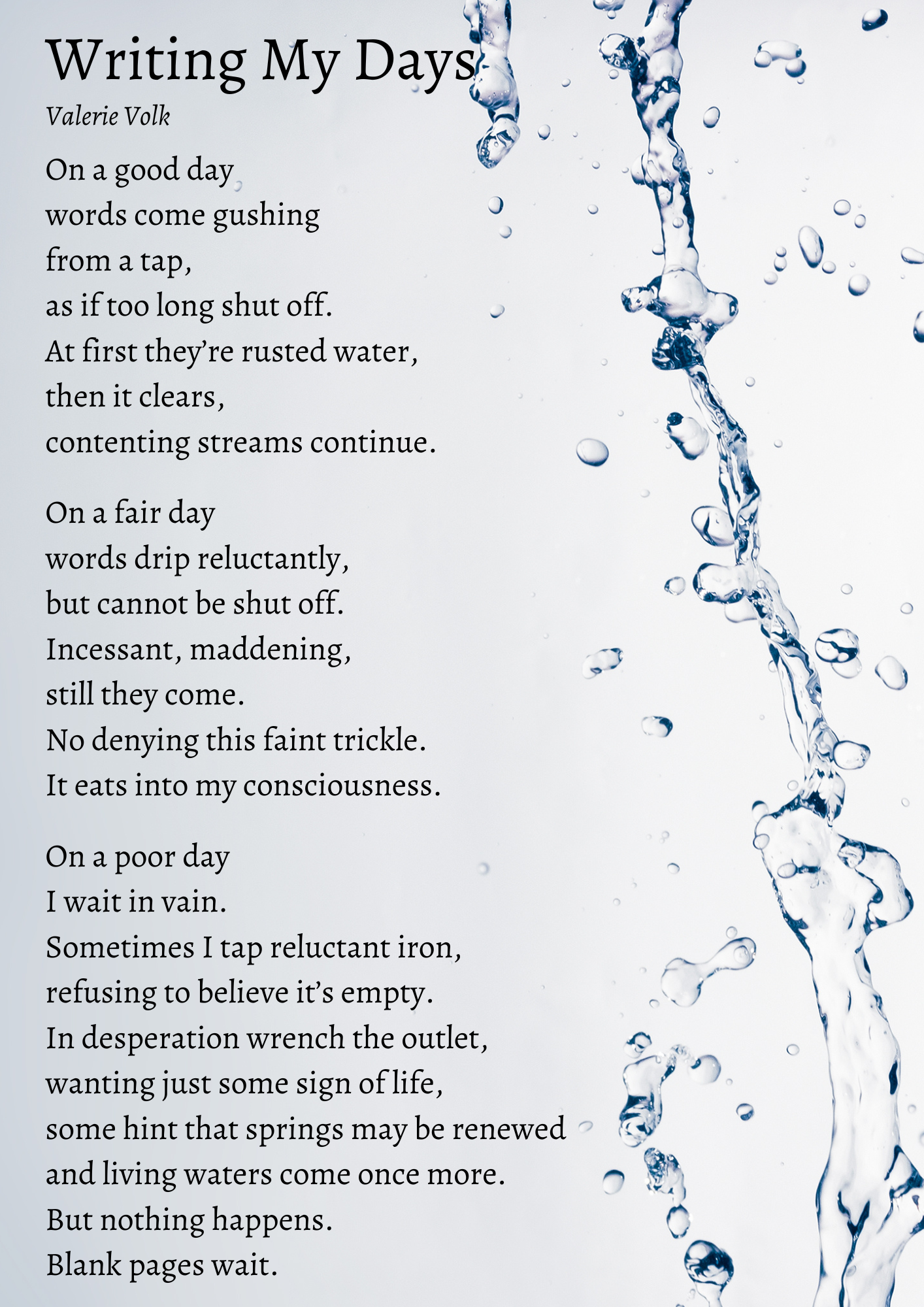
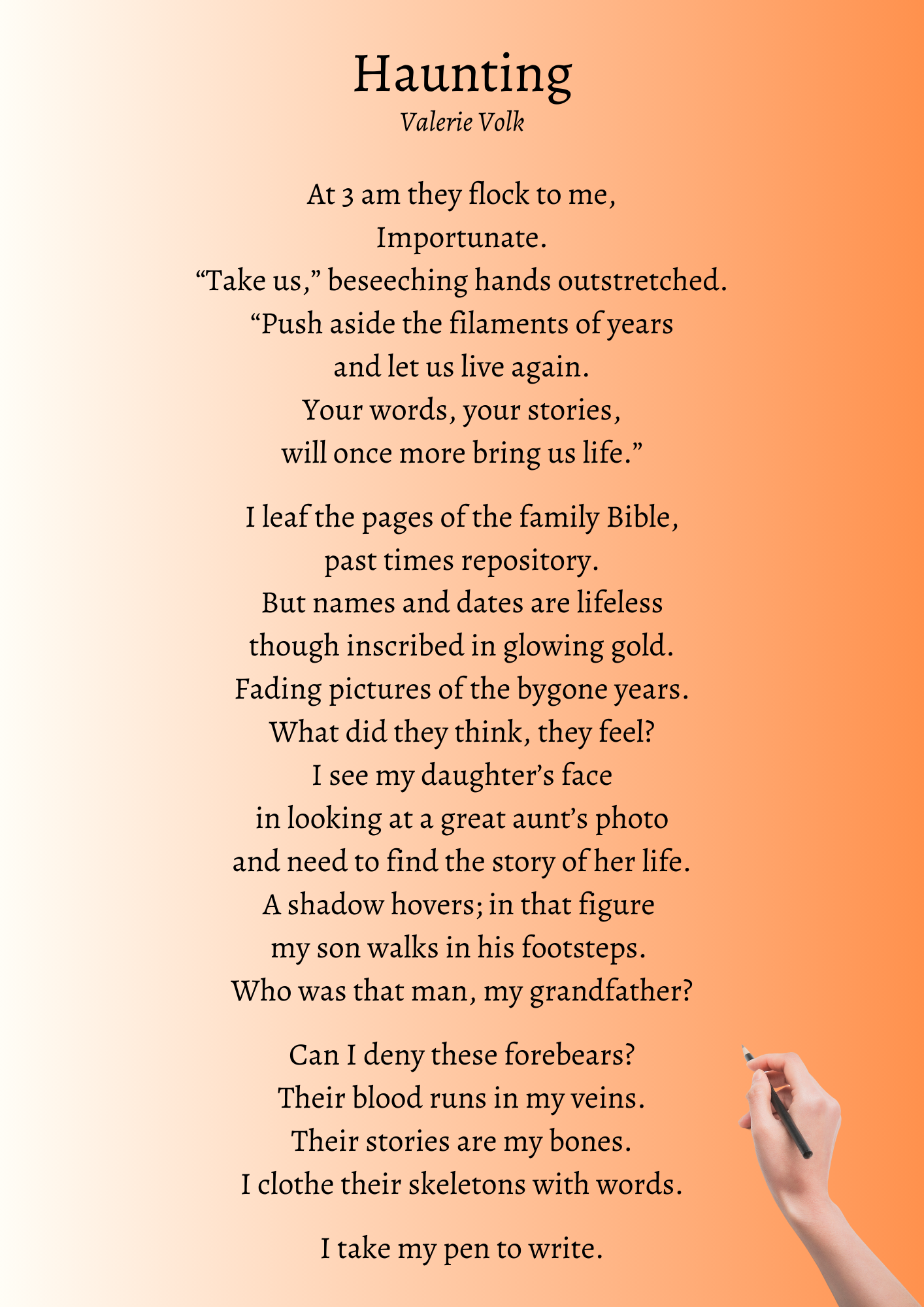
AUTHOR BIO
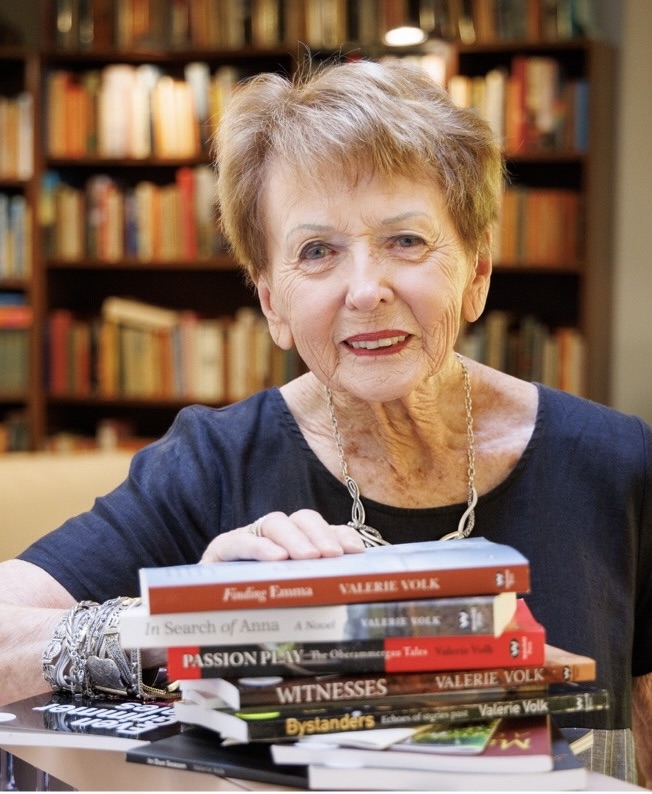
I’ve always been a closet writer. With an academic background in English, History and Education, when I retired from teaching and lecturing, I completed two long-held objectives: a PhD and an MA in creative writing.
Now I write! In recent years I have published several hundred award-winning poems and short stories and twelve books: historical, verse and biblical fiction, plus poetry collections and travel books.
When possible, I love to read and enjoy the cinema, plays, music (especially opera and jazz), travel, cooking — and the company of friends. But one of my greatest pleasures in life is simply to write!
To read more about Valerie and her writing, visit www.valerievolk.com.au
Thank you Valerie – it’s interesting to read just what inspires a writer to write. I have not written as much as you have, but I agree that the need can be pressing. I really enjoyed ‘Night Voyager’. Those hours spent thinking of words until I’m driven to ‘get them down’ or know I will have forgotten them in the cold light of day.
Congratulations on the unexpected accolade that birthed into Marking Seasons. That is truly remarkable. Good for you!
Thank you, Val. I really appreciated your comment – maybe one day we’ll meet in person as well as just crossing paths.
Dear Valerie, our paths have crossed on numerous occasions but I never had the pleasure of being introduced. I so enjoyed your blog and feel I know you more now.
I have always admired your writing but have never told you so.
Your poems always have such feeling and are so well written. And you certainly well qualified as a writer.
Thank you for your poems.
I so enjoyed the one about the geese.