

Girls on a spreadsheet
In case you missed it, which wouldn’t be hard, given that the matter lasted only a day or two in the news after police started to investigate. Year 11 boys (aged 16-17) at Yarra Valley High classified 40 of their female peers on a spreadsheet with photos as wifies, cuties, mid (average), (sexual) object, get out (dismissal) and, finally, unrapable. They shared the spreadsheet on social media. So, what does it mean for our culture when young males classify their female peers as unrapable?
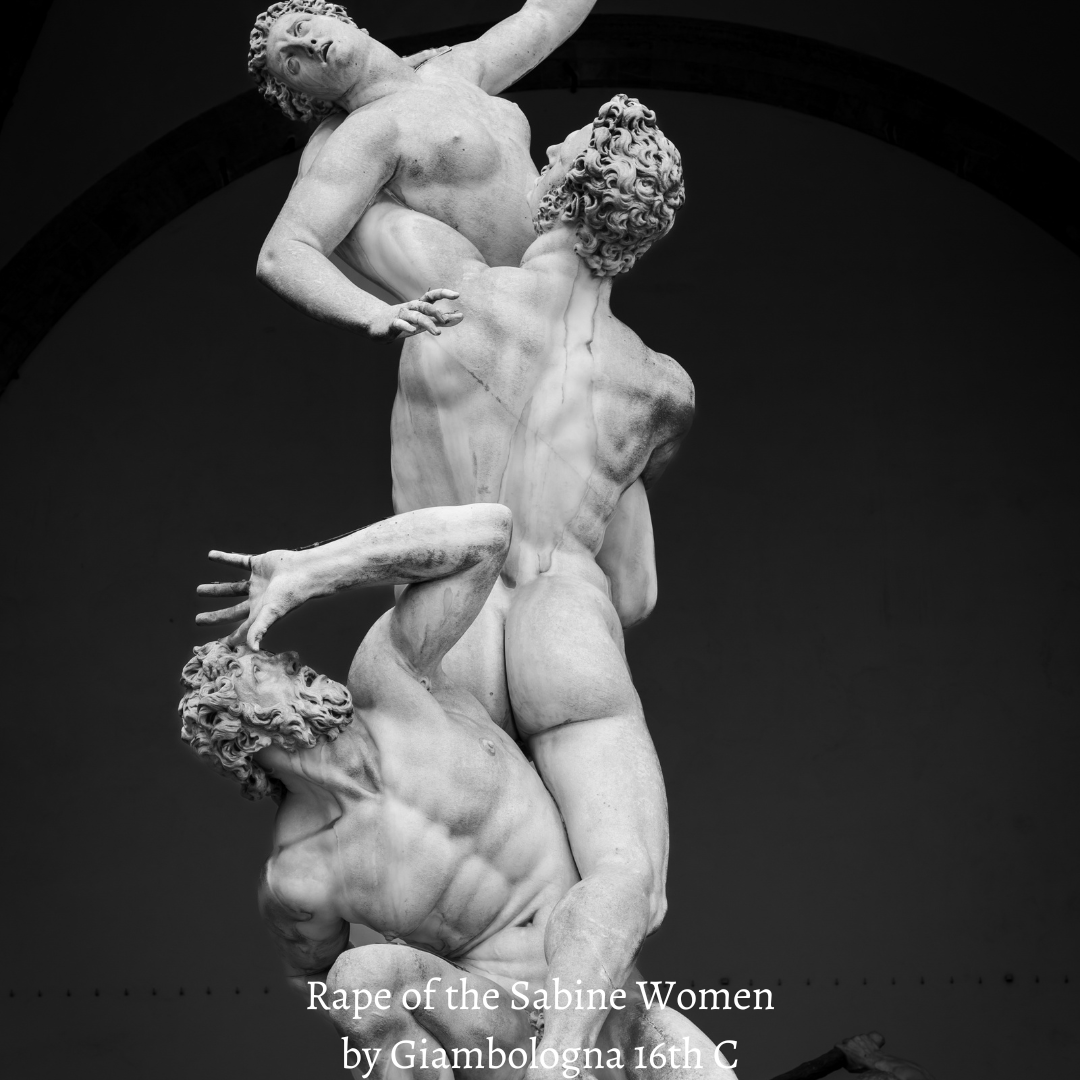
For centuries across the globe and in mythical heavens, we have heard stories about women taken by force. Typically, stealing women from another tribe to wed, as depicted in the statue above, is an offence against the men of the defeated village. Similarly, the rape of women in war is arguably as much about causing affront to the fallen by the victor as anything else.
Although we can only speculate on their aspirations in creating it, the Year 11 boys’ spreadsheet was not particularly original, as a friend pointed out to me. The movie about the rise of Mark Zuckerberg’s Facebook, ‘The Social Network’ (Netflix), depicts the Zuckerberg character creating a website called Face-Crush, designed to rate girls on their appearance. Notably, Face-Crush is fictional. Even so, the very name, Face-Crush, was enough for me. I couldn’t watch the whole movie after I saw that, but film is a powerful way to put an idea out there.
An Appalling Lack of Judgement?
What hooked me about the Yarra Valley classificatory system was the term ‘unrapable’. An article in Nine’s ‘Today’ suggested the term could be a potential threat, making me curious. Wouldn’t being unrapable make a girl safer, untouchable? Let me quote the school’s headmaster from that article —
“We are going to be consulting the police because the language used could be an inferred threat. I don’t think it was, but we need to get further advice on that … I’m hoping it was an appalling lapse in judgment.”
Classifying women in terms of desirability or its absence is to objectify them. That act is appalling, not a terrible lapse in judgment. In my view, the headmaster’s response is as deeply embedded in the sexist ideology that both informs and protects boys in our culture and which underpins the sense of entitlement that probably led to the spreadsheet.
Note the headmaster’s hesitancy: ‘going to’ consult the police, ‘could be inferred’, ‘get further advice’ and ‘hoping’. Nothing decisive there. No expression of concern for the girls. He just ‘hoped’ the boys didn’t really mean it rather than calling them to account.
The article also has a lot to say about adolescent male hormones affecting their judgement, that sort of thing, indirectly finding justification for an act that denies female humanity. Girls and women do not exist solely to satisfy male desires, even though, apart from the notion that someone is ‘unrapable’, the idea that they are is not new, as I’ve already said. Either way, a spreadsheet is not a threat, but its creation is a ghastly indication of privilege and a sense of the right to dominate. Why? Because the underlying assumption is that males have the right to define, which means both stereotype and dehumanise.
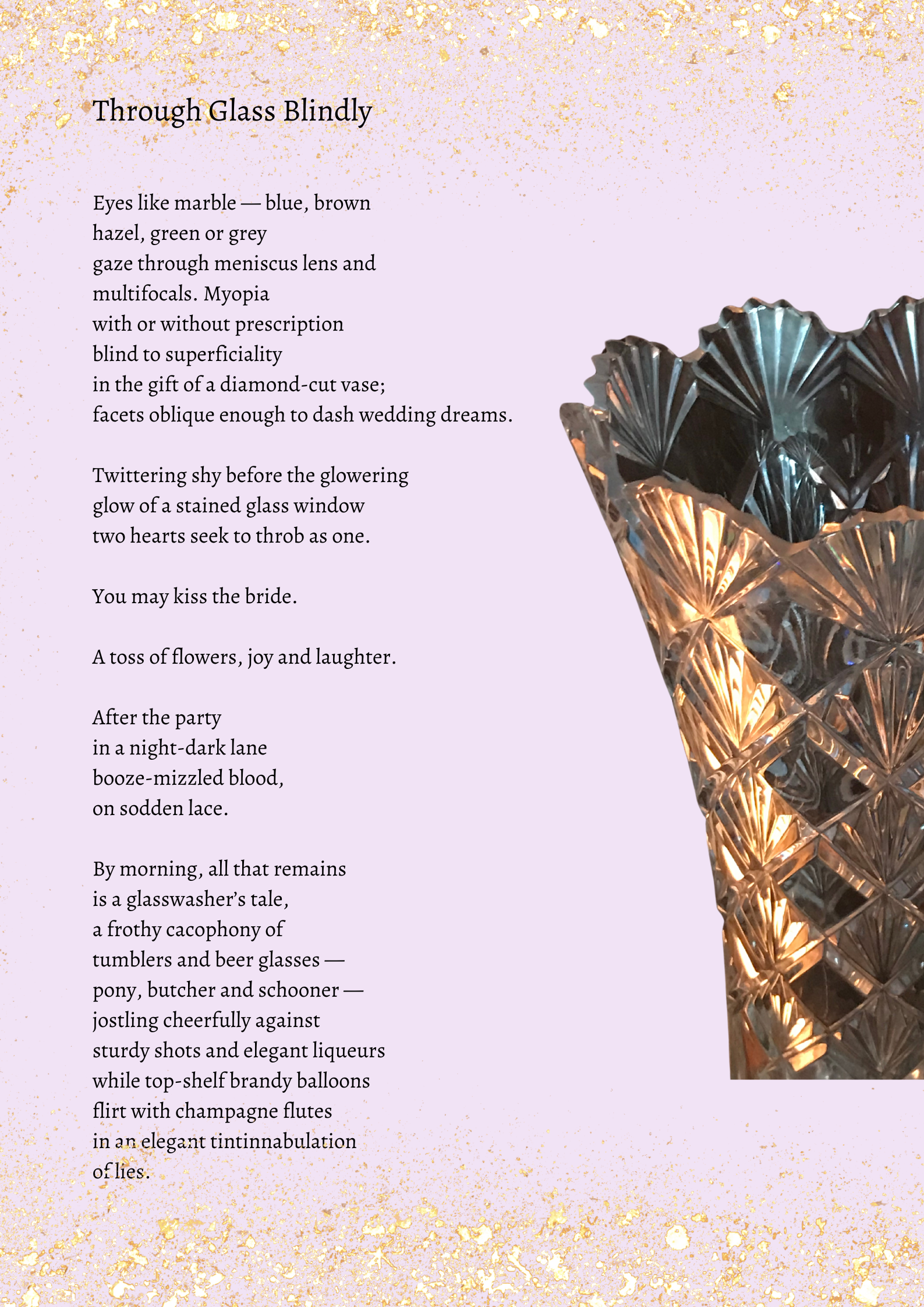
A proviso here. My eldest son once told me when he was in Year 11 that the girls don’t like ‘nice boys’. With his words in mind, I must accept the whole game is fraught but, as the following poem suggests, it starts with pink and blue. (Even though yellow is now popular, nothing much has changed.)

How do the girls feel?
I have yet to hear or see anything written about how such a classification might affect young women today and why it is so easy to dismiss. In my day, the primary categories were ‘good enough to f…k but not enough to marry’, and we were treated accordingly. Unsurprisingly, I rejoiced to learn I was not alone when in 1975, the incredible Anne Summers identified that very dichotomy in her groundbreaking classic, Damned Whores and God’s Police. The title tells the tale.
There is another thing that makes the Yarra Valley youths’ classificatory system worse than earlier iterations: they don’t speak of ‘wives’ — an honourable thing to be even if we now say ‘spouse’ — but of ‘wifies’. How infantilising is that when talking about half the human race that bears and raises children?
At My Peril
Today, we believe in equality; we no longer speak of husbands and wives but spouses. But equality is not real. When a woman steals another’s husband, she is castigated in the same way as a man who has it off with his mate’s wife. But if a man takes many women from other men, we tend to lionise his randiness jokingly. Famous political figures and sports examples leap to mind. On the other hand, a woman who sleeps around is called a harlot or a slut.
Violation
Interestingly, when women are raped in our culture, they tend to feel shame.
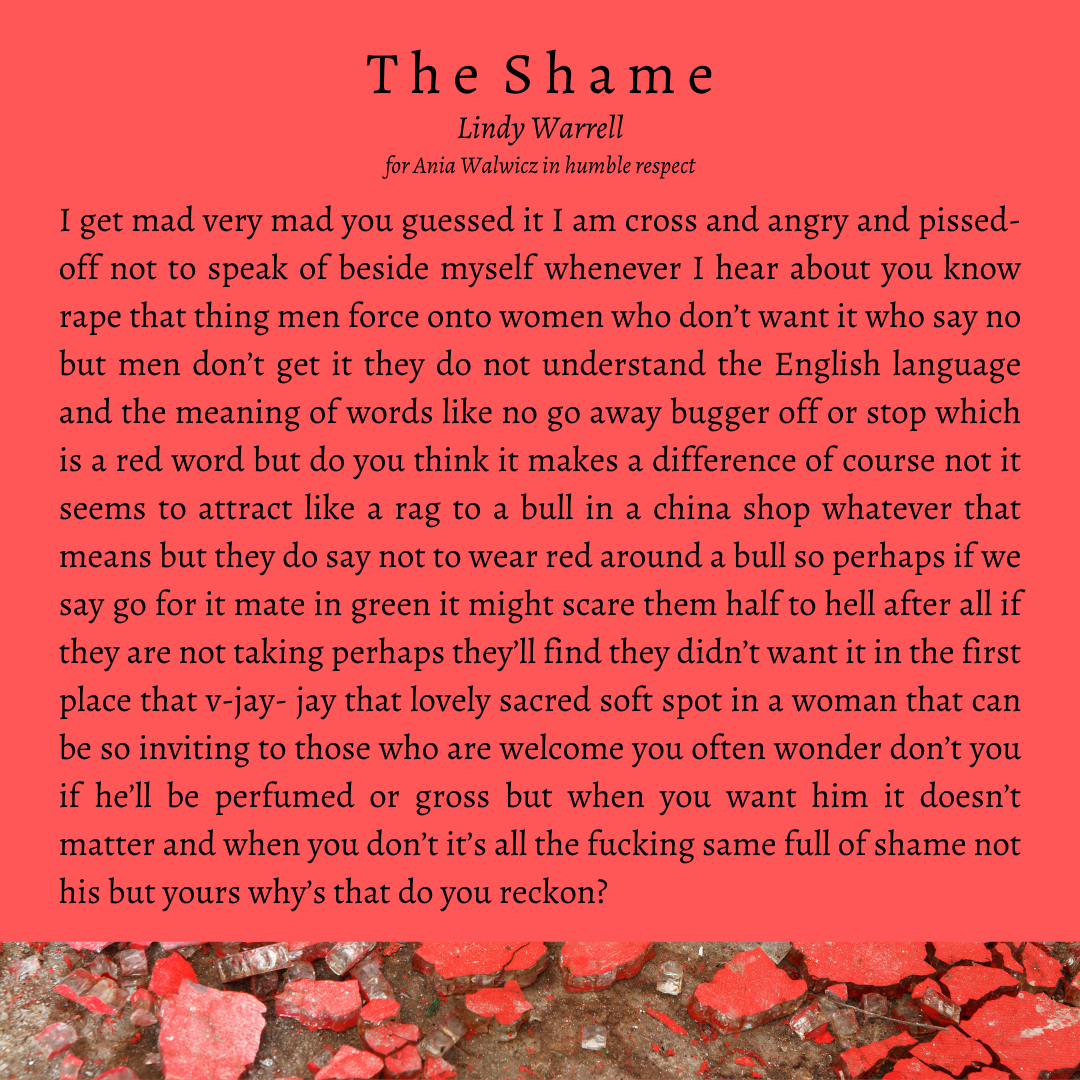
Of course, rape shames both men and women. But do rapists feel shame? Well, there’s one glaring example from recent goings-on in Parliament House that suggests they do not. Does it follow that being classified as ‘unrapable’ should make a girl feel good or safe from the trauma of rape? Well, no.
The notion that we are sexually attractive is important to young women and girls. In this context, such disqualification from desirability would be mortifying for a 16 or 17-year-old. You can’t deny the insult factor, and such things cut deep in youth. The term ‘unrapable’ has the potential not only to shame a young woman but also to lead her to feel sexually ostracised by the male gaze. How’s that for appalling? Isn’t it simply another form of violation?
What Others Say
One 40-year-old man interviewed for ‘Mamamia’ recalled having thought of a girl at school as hot but unlikeable. In his words as a youth, he thought, ‘Chloe’s really hot, but she’s the kind of girl you’d just rape.’ He acknowledged that boys separate physical attractiveness from other characteristics in a girl.
In the same article, a spokesperson from Relationships Australia justified this as follows —
People (sic) of that age group are saying things because they actually have no understanding about what it really is like. They’re aware that it’s wrong but they’re not part of their realm or their life so they start to become things you can bandy about.
She was speaking (ungrammatically) about boys, not all people. Presumably also, she means by ‘they’, the girls they know who they identified and shamed publicly by spreadsheet. The man who regretted categorising Chloe at school put his indiscretion down to hormones, much like the general thrust of the ‘Mamamia’ article.
I’ll let Relationships Australia have the last words justifying the boys’ behaviour.
The cool kids in school for boys, are the ones the girls like. It’s all filtered through a prism of sex. Why do I want to be cool as a teenage boy? It’s because I think chicks will like it. That is the one currency that there is.
What she does not note is that if the same works in reverse, i.e., that the cool girls are those the boys like, goodness help any school girl classified as unrapable. The power to define has far-reaching consequences.
The Last Word
I tried to think what might make a girl unrapable: too fat, too skinny, too old or young, disabled, disfigured, too clever. Or, maybe it refers to race, skin colour, religion, gender or social class. Was there a consensus among the boys about the unrapable criteria? How, exactly, do privileged boys in private schools define desirability? All sorts of prejudice may be in play, but everybody forgives boys for obeying their hormones instead of encouraging good sense.
In many traditional societies, adolescent male hormones were channelled into manhood by initiation rituals that we don’t have in ours. I once wrote an article about adolescent drinking as being a self-imposed rite of passage for boys and girls in this country, ‘Flirting with Morality and the Law: the Booze, the Bouncer and Adolescence Down Under‘*.
As I argue in that article, girls also have hormonal changes in adolescence, so I ask again whether anyone interviewed the girls who found themselves on the Year 11 boys’ spreadsheet. I would have liked to learn how they felt about being identified online as unrapable. How would you respond?
Happy Writing
Wattletales
If you'd like to be added to the Wattletales post list, make a request in the comments below, where your email is hidden. Lindy
*Flirting with Morality and the Law: the Booze, the Bouncer and Adolescence Down Under was first published in Anthropological Forum Vol.7 No. 1 pp.31-53 (1995)
Thanks for reading, Veronica. It has been around forever as you say, years of feminism has had little impact IMO. It is the sense of entitlement that still gets me.
Thanks for your article Lindy. Certainly it seems that things haven’t changed much over the years. This sort of thing has been going on forever and I have to wonder just where those boys picked up their attitudes, family, older friends? Certainly the stigma of being unrapable can affect a young girl, given that feelings of ‘self worth’ come from how we appear to others at an impressionable age.
Thank you, Val for reading. I’m glad but not surprised to learn we agree on this. These dreadful things seem to just be pushed under the rug as though unimportant but they are part of how the world constructs women and that’s awaful.
Thank you for your view on this topic, Lindy.
Interesting and provocative as usual and it certainly made me think deeply about the treatment of girls and women in the past and today.
The word unrapable is made-up and should not be in our language.
The young men compiling that list must be made accountable and should be ashamed.
How dare they rate girls using this language. I believe it is harmful to women and girls, and boys need to be taught respect. Starting at an early age.
After all everyone was brought into this world by a woman ♀️and that deserves respect.
Cheers Val.
Thankyou Jenny, for your kind comment. The male bias in stuff I read was so obvious but a lot of people still don’t understand. Glad you do. I saw a couple of X comments the other day say it was all feminism’s fault. Interesting. But, I do think we have lost define roles in life that once supported us, we are simply monads in a capitalist system.
In your cogent analysis Lindy, you have raised many issues and have informed me on this topic more fully than anything I have read /or heard on the radio, social media etc.
I wonder if we’ve moved on at all.
The ‘bloke’ in parliament has seemingly gotten away with SO much even with him being in court for another ‘possible’ rape conviction. Has the ‘Me too movement’ been swept under the carpet?
Thanks for reading, Julie. ‘Unrapable’ is indeed an atrocious remark. One that would hit deep I imagine for its target.
Thank you Inez. It’s not a popular topic of course, but given my own history, I just had to write something in this incident which is only the tip of the iceberg. The sexism it draws on is an ever-present undercurrent.
Thank you, Carolyn, for reading and commenting.
An interesting read, Lindy.
My how standards have changed in our society in three generations.
I guess womens’ demands for equality has given males the gumption to verbalize their impure thoughts to women as well as peers.
I never heard my father or grandfather demoralise women, or even say shit. Gentlemen now seem sadly to be dwindling, as freedom of speech degrades openly and more often.
‘Unrapable,’ is an atrocious remark. Let’s hope the culprits have realised they have also shamed themselves.
Love always
Julie Cahill.
Wow Lindy, great post.
This is so true, no one seems to care what impact this violation, by the Year 11 boys, has on the girls on their damned spreadsheet.
It’s despicable.
Thank you for writing about this
This awful matter has brought back to my mind an incident that happened in my much younger years, and while I’d prefer to forget it all, it’s impossible to do that, I just continue living my best possible life, now regardless of the me back then and all that happened.
The reality is that everything that happens to us all, has the chance to influence the person we may become, and to label women as these so privileged lads have done would have to have some kind of impact on the men they go on to be in later years.
Ignoring, or not realising the importance of such things that happen to these young women, surely this is not a good thing for creating an equal society in Australia.