

The Formalities
The question for today is, what is it like to be an anthropologist in the field? So, I decided to explore my experience as a consultant working with Australia’s First Nations People. I write personally yet in general terms because I can’t divulge details not in the public domain. The reasons for this are manifold, but it is primarily because I am not authorised to speak for Aboriginal people or tell stories that are not mine to share.

To elaborate, when undertaking site mapping and gathering social history for environmental impact studies and related projects, sacred and historical sites must be documented if they are to be protected. Whatever a report’s findings, the document masks the differential power between traditional knowledge, copyright, and intellectual property rights. The first must be respected, but the latter wins at law.
For example, if I record oral histories or stories about places, the copyright in the report is mine by virtue of writing it. The physical report, however, belongs to the commissioning body, while the information recorded is First Nations people’s cultural and sacred knowledge — oral traditional knowledge. Tension is inherent.
Definitions
I use the term Country in my title advisedly because it is often susceptible to misinterpretation as meaning ‘all of Australia’ by those wishing to excite fear and cause harm, as happens in the media around the forthcoming Referendum on the First Nations Voice to parliament. Wherever I worked, Aboriginal people spoke of Country as the place on the land(scape) they and their Mob belonged to. To them, the word defines the areas they are required by tradition to look after.
I could have included ‘nation’, an entity we often conflate in everyday speech with Australia as a country. However, while patriotism is fine, I didn’t want to introduce the concept of nationalism and its associated politics. It is enough to say that all citizens of this nation are Australians. Belonging to Country in the Indigenous way is something else altogether.

Nuts and Bolts
Being a consultant anthropologist requires business acumen to tender for projects against a brief, specifying costs, timelines and deadlines. You must carry professional indemnity insurance. While some lucky folk had their own Toyota or Mitsubishi four-wheel drive, as they were once called, I hired mine from Hertz. Vehicles then didn’t have the marvellous GPS coverage of today’s systems. I had to reset my clunky portable device every time I crossed state borders or moved outside the range of a previous pivotal setting. The old devices could put accurate site mapping at risk unless set correctly.
Consultancy projects frequently take you into remote areas. Basic bush tackle includes a gas bottle, a portable stove, a billy, matches, enamel plates and mugs, cutlery, a torch, batteries, a decent first aid kit, toilet paper and food. Plus, your bag, laptop and swag.
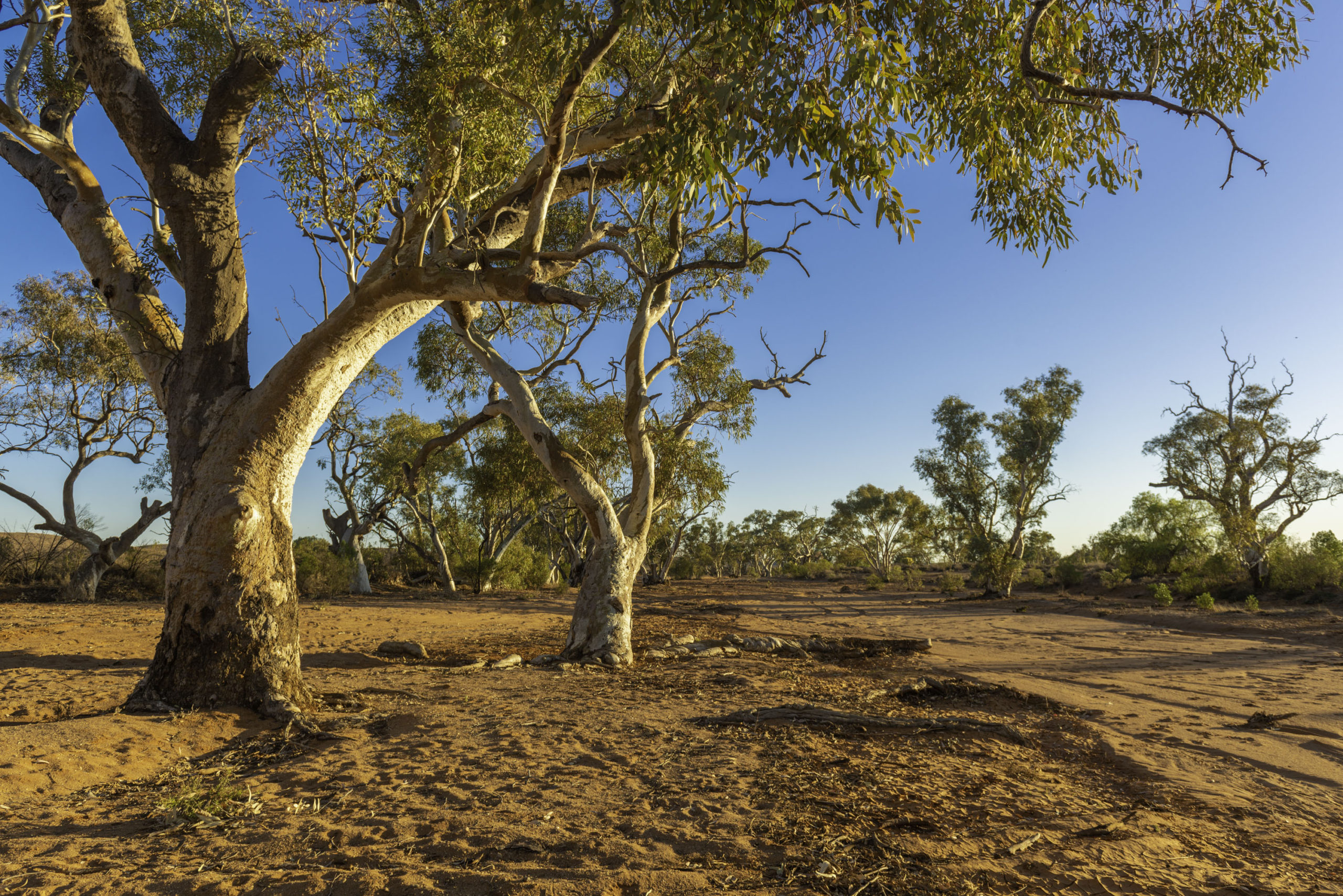
Project participants often took me to places only they knew where they’d hidden blackened barbecue hot plates. A feed of steak, onions, and snags with tomato or Worcestershire sauce cooked on old iron is the best, as is tea made in a tannin-stained billy boiled over a smoking fire to chatter and laughter.
I am grateful to the women Elders in the Northern Territory who encouraged me early on to wear loose-fitting dresses like them to let even the lightest breeze keep me cool in summer’s heat. I wore an Akubra and strong hiking sandals but avoided my profession’s jungle green fashion in favour of comfort. Like the women, I carried a strong stick, beating the ground to warn curious snakes of our impending presence.
On the Road
I love driving, but long hauls driving alone from Adelaide to the Queensland Gulf country via the Murray-Darling River basin or up and down The Track, as the Stuart Highway in the NT is fondly known, are exceptional. Experiencing the silence, the changing scenery, the solitude and an occasional off-road frisson of fear is awesome. I used to be proud as punch when my four-wheel drive got covered in red dust or mud; it spoke to me of adventure.

In my mid-sixties, I decided it was no longer wise to take other people, often older women and little kids, out bush alone. I have to say I was blessed never to blow a tire. However, I did get bogged in sand and mud a few times on longer trips, but stronger people (men and youths) got us out of trouble, thank goodness. One of my favourite poems came from a trip over the NT’s Daly River Crossing with a group of women, which resulted in one of my favourite poems, Ol’ Girl Can Drive.
The Wider Context
When First Nations People tell family and Dreaming stories to consultants hired for site clearance work, they are asked to prove who they are in kinship and biographical terms and demonstrate that they have the traditional right to speak for an area. Just imagine that for a moment. It is so invasive. Their traditional authority is questioned in favour of legal definitions.
Little wonder it causes deep concern to think that the information people provide might be misused or made public against their wishes; for example, in a court of law, should what they say be contested by another stakeholder’s legal representative. Such matters (think Native Title claims) can drag on for years. Can you imagine the stress?
Community Intrusion
Researchers often turn up in communities, expecting people to drop everything. Many remote communities are regularly bombarded by light planes and SUVs full of people wanting something from them: government officials, police, social and medical researchers, media and others. Visitors on a strict schedule often get frustrated (and show it) when the people they want to see are unavailable. In my day, few considered the inconvenience their visit might cause.
When you work with women, as I often did in places with no resident doctor, they care for others and often need to attend long-awaited medical and specialist appointments regardless of your schedule. A community may be in the middle of its ceremonial season, preparing a funeral or be in crisis. My point is that few of us experience the intrusions that Aboriginal people endure all the time. The context we enter when working in the field is life.

Going Fishing
In my day, sharing knowledge of stories and sites rewarded most First Nations participants little more than a free ride or two to an outstation and a modest day payment for their time. Longer trips were not too different in that regard. This may have changed, but as strangers, we should not be surprised to learn that we had to earn trust to achieve anything.
In anthropology, making sure we talk to the right people is vital, but at first, someone will point you in one direction, and another will send you to someone else, and this may continue until you think you’ll get nowhere.
I later learned that ‘going fishing’ is the metaphor for hanging around, being patient, and having a cuppa and casual conversation with whoever is willing so that people have time to observe and assess you before they decide whether to work with you. This happens even when you write well ahead, seeking permission and attaching a project outline with dates and times. Although you write to what you think is the right entity — an Aboriginal Association or Community Manager or call a recommended person — you still have to go fishing. It’s a different process.
Before long, someone with the authority to speak on behalf of the community takes you under their wing, and you know it’ll all be OK, just like that.

First Nation’s people understand well what most projects need, and they take the lead to show you what has to be recorded. Apart from your analysis, what you write is, in that sense, determined by them. After all, it is their knowledge you are recording. Once your report is written, you present it as a draft at a meeting of the entire community for discussion and approval before submission.
The involvement of lawyers at such meetings introduces another layer of complexity. All I can say here is — if the notion of ‘going fishing’ disrupts the gaze of professional anthropology’s participatory observation method — who is looking at who — the law has different eyes again.
Accommodation
The best accommodation in the world is a swag around a campfire. Falling asleep beneath a sky of lambent stars awakens awe. Further delight comes when someone in an adjacent swag tells you tales about Venus, the Morning and Evening Star, and the Milky Way. As you drift off to sleep, other stories might be told about snakes slithering into vehicles and swags to pretend-frighten you. First Nations people have a wicked sense of humour.
Some jobs entail repeat day trips from town. That’s the time for motel accommodation, which varies in quality nationwide. As they get to know you, a few people might visit to talk things over, explain further or just sit down for a while; at other times, you are entirely alone with your computer and poor TV reception.
Staying in a community is different again. Most have visitor accommodation with basic facilities, and when it’s time to eat, you quickly learn how poorly stocked the community store is for people for whom fresh food is a luxury.
A Sample of Projects
While I mention only consultancy projects here, I was lucky enough to also work with First Nations people at different times in different capacities out of Katherine towards the Kimberley region, on the Tiwi Islands and in the Queensland Gulf country.
Site Clearance
A government or developer typically commissions site clearances for environmental protection work. My first site clearance consultancy with First Nations people was in Port Augusta. I learned women’s stories about the Pleiades, known as The Seven Sisters Dreaming and the significance of ceremonial dancing. My report was one of the first to document this.
I also worked for a long time down The Track when I lived in Darwin, travelling to places like Rum Jungle (I love that name), Yellow Waters in Kakadoo, Litchfield Park and the Daly River crossing mentioned earlier.
Family Histories
When recording family histories, I was fascinated to see how people deferred to each other to recount different aspects of their biography, history and traditions. Complex kinship rights and obligations are enacted in this way.
One project funded by a National Estate Grant gave me great joy. My brief was to document women’s knowledge in the far north of South Australia. Anthropology had, till then, largely ignored women’s knowledge. Although the women were well-known and often related to each other, at their request, I documented their stories in seven separately bound reports under the encompassing title, This is Women’s Business: An Anthropological Report on Aboriginal Women’s Cultural Knowledge in the North of South Australia. They imposed the condition that their stories could not be read by anyone without formal consent.
A senior woman who became my friend wanted me to share her tragic family history of inter-racial love, war and loss with my mother, who grew up in inner-city poverty and experienced WWII. Mum was fading from life at the time. Such a profound gift.
Despite the initial awkwardness of getting to know people, I made many friends as a consultant and, over the years, had some of the most memorable experiences of my life in the field, professional challenges notwithstanding. Although my task was to take notes and ask questions of others, in the end, I learned more about myself from First Nations people than I could have imagined.
Pastoral Lease Forensics
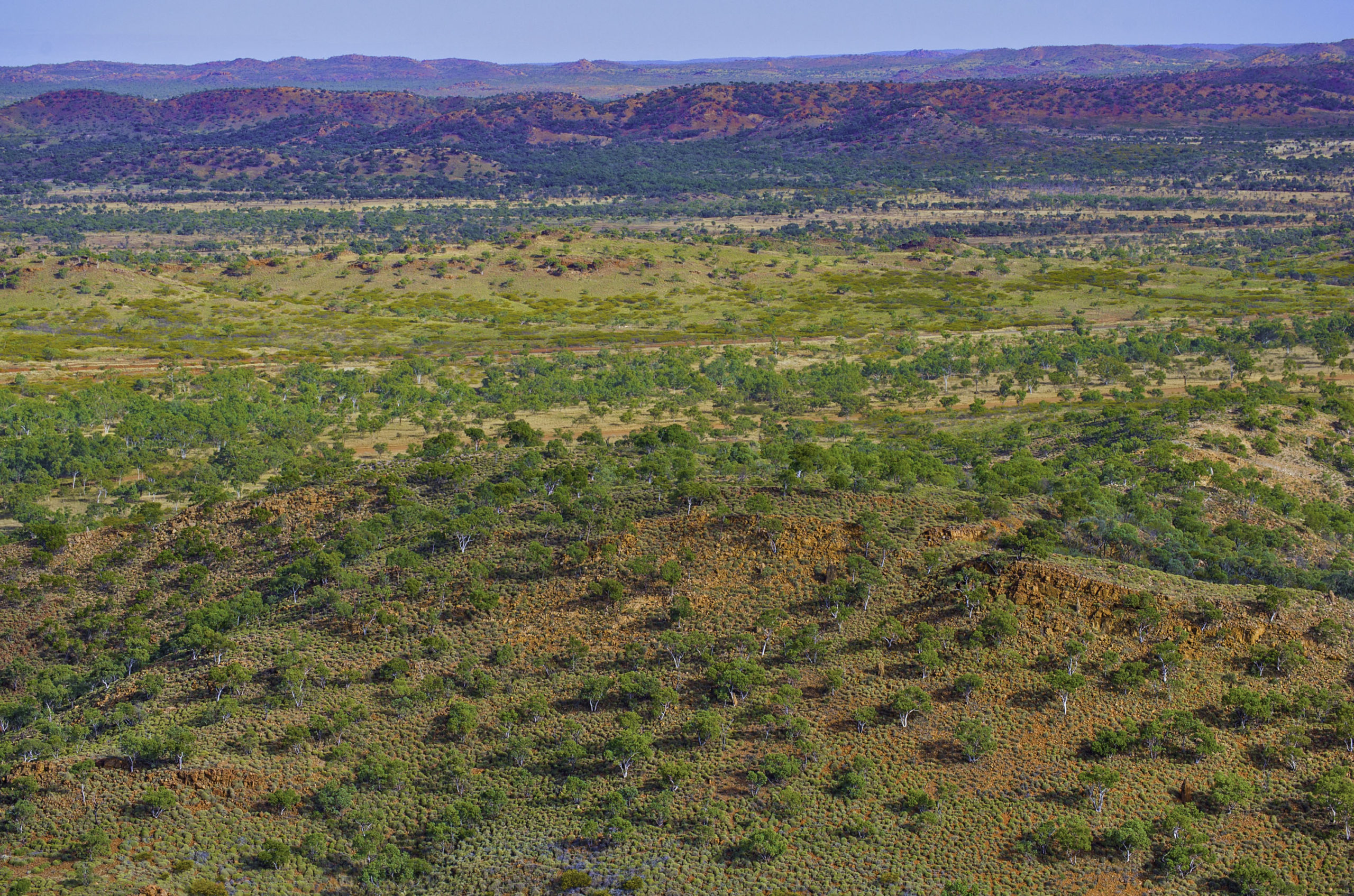
I spent periods in and around Mount Isa recording sites, stories and family histories for an Aboriginal organisation wanting to assert formal ownership of a pastoral property. I thoroughly enjoyed that project and was thrilled when I finally got the news that their claim was successful. The stony landscape in that part of the world is unique, different from the gibber plains of far north South Australia, but equally stunning in changing colours.
A Test Case
The NSW government commissioned me to undertake research along the route of a Bronzewing Pigeon story between the Flinders Ranges and Broken Hill. I was not to socialise at all with the participants or other parties after our field excursions. I was there to record stories and take photographs — no fishing required. The government had pre-selected the participants in consultation.
After the fieldwork, my brief mandated that I eat alone and isolate day and night for ten days to write up my findings. It was a tough gig. The government was keen to have a pristine piece of work as a test case to underpin proposed new sacred site legislation in NSW along the lines extant in South Australia. It was later enacted.

I documented the South Australian stretch of the storyline as we travelled by bus from Port Augusta to Broken Hill, stopping along the way. The NSW participants then shared their knowledge of the same story on sites out of Broken Hill. While working in Queensland a couple of years later, I learned that Bronzewing Pigeon also travelled up to Mount Isa and beyond. The next poem is my take on that story. The detail I use is on the public record; the poem is eclectic.

Research reports of any nature are peer-reviewed. Despite a moment of controversy when women in anthropology caught media flak in the wake of the Hindmarsh Island affair, my report achieved its aim. I was delighted to learn it was later lodged in the Aboriginal Institute of Aboriginal and Torres Strait Islander Studies (AIATSIS) Library by the authority of those with whom I worked for being a comprehensive record of the Bronzewing Pigeon story. It is available to view (not borrow) on request from any library.
Memories Linger
Often, we don’t understand an experience until it is in the past. We don’t analyse how we feel while dancing in a nightclub late at night. Only when we reflect in the morning can we see ourselves clearly. At times in my years as a consultant, I felt defeated, mainly by the politics of the scene, but when I look back, I see how fortunate I am to have had the experiences First Nations people gave me. It remains a miracle that they greet researchers so well.
It is thrilling to be taken to places you’d never otherwise see, drive across a landscape that breaks your heart with its diversity and rugged beauty and be entrusted with private family and sacred stories. That is to say, to learn some of the deeper meanings in the landscape. I cherish that experience and am grateful for the warmth, charm and care I received, often in difficult circumstances all around.
My mother died when I was a total stranger in far west Queensland, yet people there treated me with great compassion. There, and in other places, people often took me to the back of beyond, far outside the scope of my brief, to show me secret places especially significant to them, a privilege I shall never forget.
Homage to a Life’s Work
I first came across Steve Parish’s work at the University of Adelaide in the 1980s, a photographic record of the outback I fell in love with as a child who lived in books. I often gave his beautiful publications as gifts.
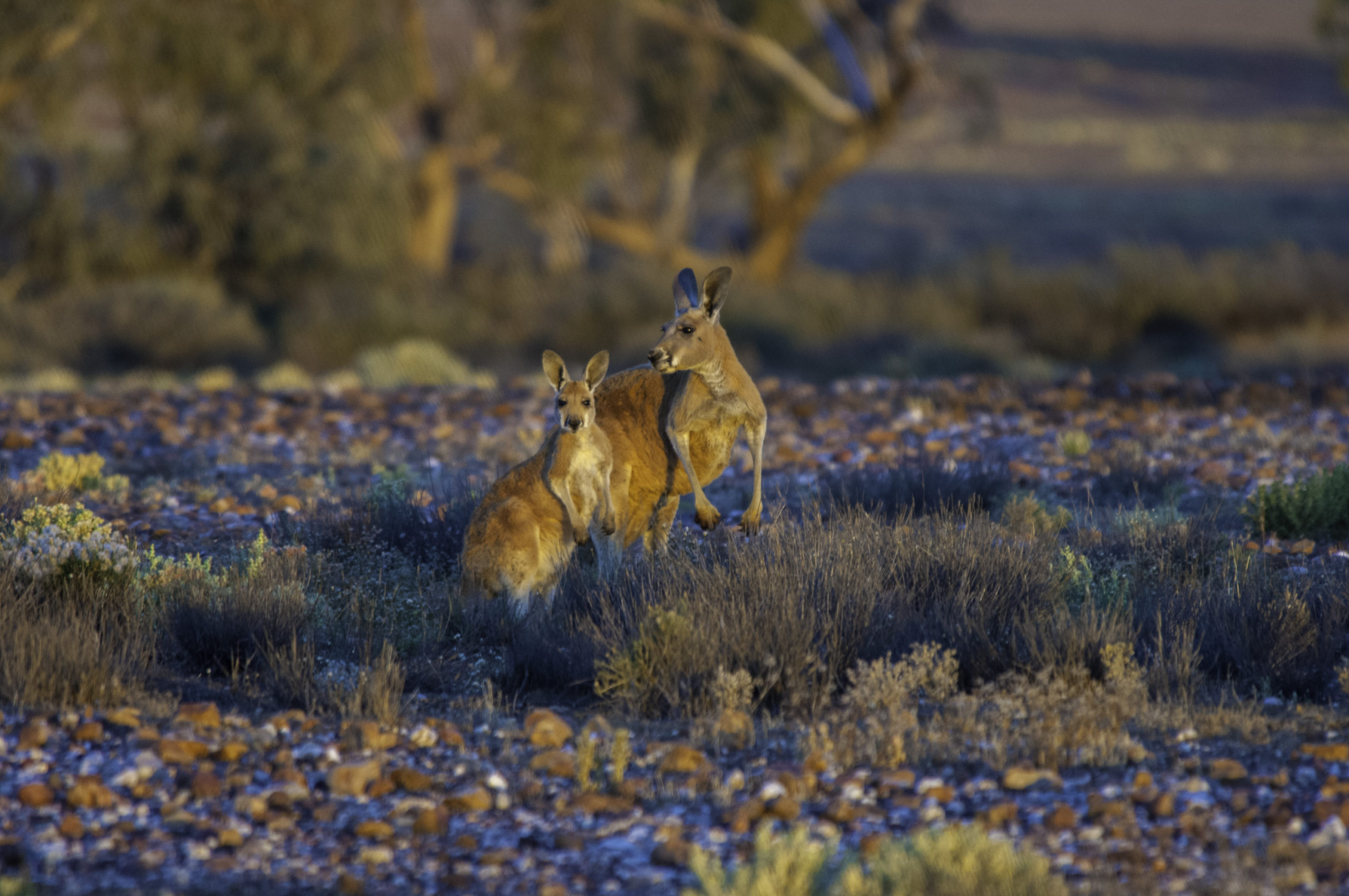
Last year, Steve invited me via Facebook to contribute a piece of writing to his webpage. I was both honoured and thrilled. He then generously offered his photos for use on my website, a perfect fit for this post in particular. Steve has spent his life capturing the beauty and diversity of the land and the creatures we all love and want to save from destruction by overdevelopment, mining and climate change.
Steve describes the photo below as one of his most treasured images. It is of a young bloke from Oodnadatta coming in last, riding like a winner at the William Creek races. Read Steve’s account here.
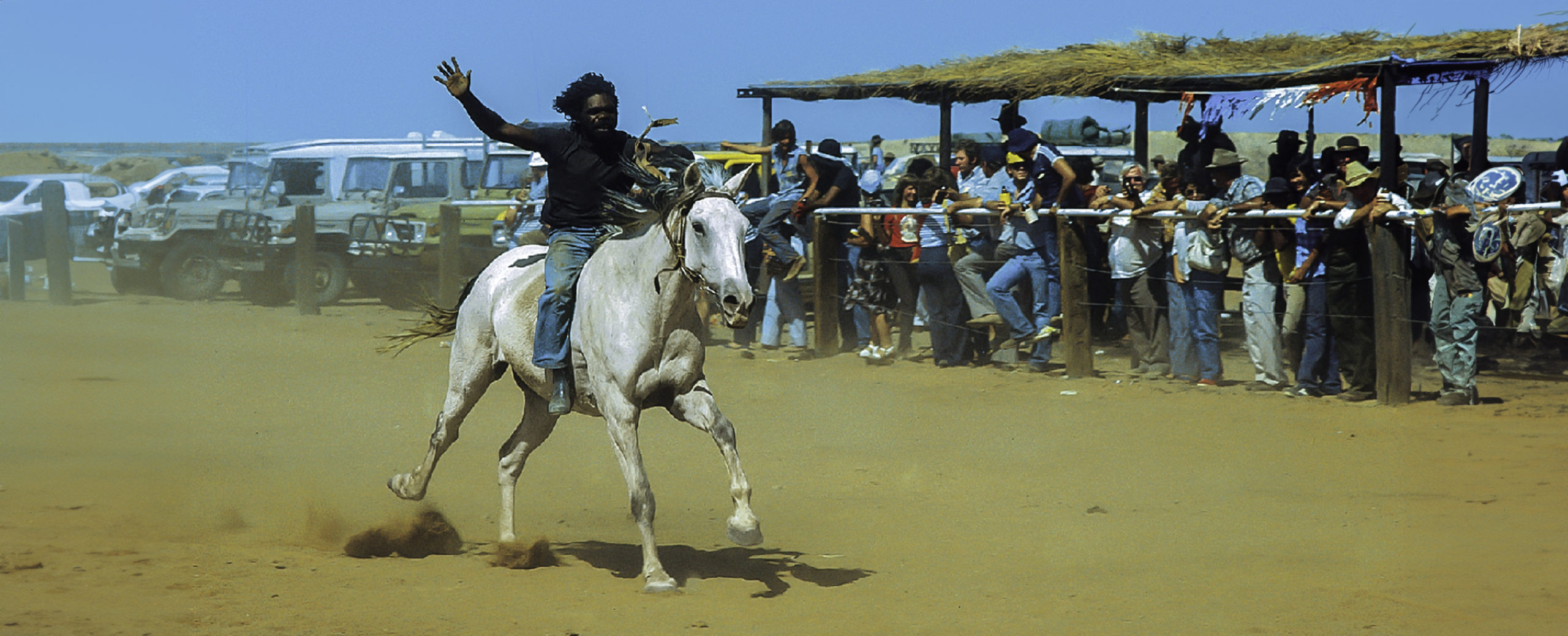
Thank you, Steve. Your photos bring this land alive. Here, they hint at the areas where I worked and demonstrate what it must be like for First Nations people to belong to and care for Country.
ACKNOWLEDGEMENT
All Photographs by Steve Parish.
‘A Distinctly Aussie Morph’ first appeared in 2013 in Jill Sampson’s Brindlebox Nature Reserve Project: Brindlebox Birds 153 (also read on Radio Adelaide with Julia Wakefield) and in Life Blinks, Ginninderra Press, 2019.
‘Goanna and the Snake’ in Life Blinks, Ginninderra Press 2019
‘Of Heat and Flies’ in Alchemy Friendly Street Poets Anthology 43, 2019
Happy Writing
Wattletales
Valerie, thank you for reading. I appropriate your thoughtful comments and hope the timing might change at least one person’s mind 🙂
Wow, Lindy! What a life you’ve had. And how superbly you’ve allowed us to share it. I’ve loved tracing your thought processes in the handling of your professional work and can feel the deep levels of involvement and satisfaction you’ve had in it. The evocative poems and Steve’s photos interspersed give us a new dimension of understanding and a feeling for both land and people. You’re right – the timing of this is excellent.
Dear Veronica, I’m so glad you liked it. If it helps to change one mind before 14 October, I’d be thrilled. Thanks for nice comments about the poems (I wanted to type pomes like DAvid but I reckon ppl would think I’m losing it LOL) Yes, I am blessed and it seems funny that until now, nobody much would know what I did for so many years 🙂
Lindy, this piece is so evocative. The photos are superb and I loved your poems, especially ‘Of Heat and Flies’ plus ‘Goanna and Snake’.
It is so timely, with October 14 coming, and I can only hope more people read your words and appreciate the preciousness of our country and it’s first nation’s peoples. How blessed you’ve been in your work.
Thank you
Dear Julie, Thanks for reading. I’m so pleased you picked upon the timing of this piece. That was intentional, if indirect. Most of the people I know who read will already be Yes people, but hopefully others will read it as well.
What an exciting life you’ve had, Lindy, as an anthropoligist. Evocative pics, but a navigation system that was up the waddle in outback Australia could have been catastrophic.
Your four wheel drive covered in dust, spoke of adventure.
‘I fly down the bitchumen reading my fortune in white lines.’ Brilliant.
The Leyland Brothers had nothing on you, gal. 😁
Billy boiled tea sounds superb. Don’t mind if I do.
A great contribution to Wattletales, with the referendum pending.
Love always
Julie Cahill. ♥️
Dear Val, I really appreciate you reading my posts, your feedback makes me feel as though it is worth while to keep writing.Thank you for that. Lindy
Thank you for your wonderful description of the outback Lindy. You have had an adventurous life and met some interesting people as you worked and travelled far. I loved your poems and Steve’s beautiful photography.
Always an interesting read.
I’m glad you found it evocative, Heather. Thanks for reading.
An evocation filled with love for these amazing places. Thank you for sharing your memories with me.
My pleasure, Belinda. Thanks for reading 🙂
Very evocative Lindy. Thanks for sharing.
Good to hear, thanks Geoffrey.
Timely. Memories for me as well. Thanks, Lindy.
Oh, thank you, Mandy. I hadn’t thought of it like that, but of course, the Australian outback is awesome and can be intimidating if you haven’t grown up with it — and even if you have, at times 🙂 Thanks for reading and commenting.
I loved this piece and your evocative poems Lindy. What you describe I can only imagine, being a townie and a bit afraid of the wild Australian places. Yet I have enough imagination and empathy to yearn for your courage. What a wealth of experiences in a life well lived!