

Across the world, naming practices keep us in our place. This is the power of words and names.
The Example of Kinship
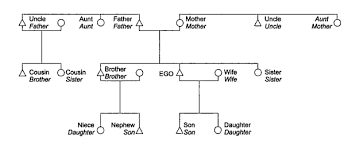
Take kinship terms. We reinforce their power every time we assume their roles. Kinship terms are words which embed us in our social fabric. As specific words that both define and construct the reality of family realtisonships, they have the power to orchestrate behaviour, determine lines of descent, respect and accountability. The expectations of kinship structures underpin many family disagreements. Even so, among immediate kin such as mother, father, aunt, uncle, sister and brother kinship terms give us a sense of belonging or sense of distance.
In some cultures, kinship categories differ along gender and age lines. These extrapolate to the public sphere. In Sri Lanka, for example, an older male bus driver will call a youth ‘younger brother’,
Differences aside, kinship is universally a taken-for-granted part of human reality. Think of our attitudes towards in-laws versus family ties which we see as ties of ‘blood’. Ideas of kinship define taboos such as not being able to marry certain categories of kin.
The study of kinship is complex, and naming practices vary from culture to culture. Everywhere, humans assume that the words they use to construct their realities are ‘natural’ and that is what I want to talk about here. My focus is on the construction of old age in a country like Australia.
The Real Me
Let’s start by looking at how we construct ourselves as we move through life.
In many ways, we construct ourselves through words. We embody the notion of ‘me’ in our words and in the way we tell stories about our experiences and preferences. Who among us has never said ‘I am the sort of person who…’? Who among us does not see ourself in relationship to others?

Salman Rushdie here identifies the fact that we construct our realities through the prism of relationships with others. Among other things, this contributes to the pain of grief. Loss of another is also the loss of a dimension of who we believe ourselves to be..
We are a collocation of stories held by others (opinions) and our own (remembered) stories. The truth is never clear-cut.
Etched as they are in our minds, remembered stories routinely play out as though we are the star in our very own TV show. They are well-rehearsed, told for a purpose (as a mode of self-presentation) and modified or refined for different audiences. Other people may not believe or agree but, in our minds, what we remember and talk about simultaneously constructs, constitutes and defines our sense of the ‘real me’. Remembered stories are part of how we want others to see us. They are our ‘front of house’ stuff.
Loss or failure undermines the solidity of our remembered stories. They are inviolable only when external reality matches our words. ‘I am a person who…’ loses it’s power when vulnerability assails us.
Constructed Realities and Fiction
Creating fictional characters is similar to the process we sue to construct our personal reality through words.
In life, we repeatedly stumble over events that cause us to wonder if we are mad. Of course, all that emotion and pain from a lost love, illness, losing a job — even retiring — becomes grit for our writing. As writers, we can draw on and enhance our experience then elaborate with flair and imagination. Storytelling is rarely just about ‘the facts’ whether in reality or fiction. One way or another a story is always about life, about the words we use to construct reality whether to believe, create a parable or write historical fiction, sci-fi or fantasy novels.
A novel examines not reality but existence. And existence is not what has occurred, existence is the realm of human possibilities…But again, to exist means: ‘being-in-the-world’. Thus both the character and his world must be understood as possibilities (i.e., qualities of a promising nature – i.e., something is going to happen).
Milan Kundera, The Art of the Novel (p.42)
Fictional characters are the same as us. Through our words as humans or as writers, our stories record the fact that we are in a constant state of becoming, transforming and, eventually, if we are lucky, become old.
When We Get Old
Quite aside from sudden shocks like natural disasters, accidents and illnesses that wreck us, we all must confront the inevitable but slow process of degeneration that comes with old age. At first, it creeps up on you. Then, like a surprise, it takes over and can occupy your days. It seems that when it does, we pass the threshold of interest. It is challenging to reconcile potentiality with the imminence of death; what a sobering thought.
In my retirement-living meditation group, I encourage participants, who like me, are elderly, to bring curiosity to the process of ageing. A newborn discovers his or her body, by laughing in fascinated wonder at toes and fingers or pointing to noses so why don’t we examine the ageing process in the same way. Being curious as bits and parts of us begin to fail can displace dread.
How Reality is Constructed in Everyday Life
The Example of Old Age
Old age is a whole new colourless world where labels become more prominent in constructing
Our lack of strength and vivacity elicits terms of endearment from others.
Instead of calling us by name, they lump us together by age in interactions using labels like ‘luvvie’, ‘
However, I recently told a waitress who called me sweetie as she prepared my latte that I was not at all sweet. I spoke without as mile. She was dumbstruck. At this café where ‘luvvie’, a British term, has come into vogue with the new owner, a recent immigrant from the UK, I told the young waitress that calling me ‘luvvie’ was patronising. She took a good while to comprehend. When I asked her why she used the term, she said it made her feel good. At least she was honest. But her honesty is telling in that it speaks to the complete irrelevance of her interlocutor.
My point is that going against the grain causes surprise, if not shock in a context where it is common to vacate the personality and social status of older people.
Feminising Old Age
Many of the terms used to address the elderly in shops, cafes and other busy places where staff run off their feet, are feminine. Sometimes these feminising terms are also used to with men, adding insult to injury.
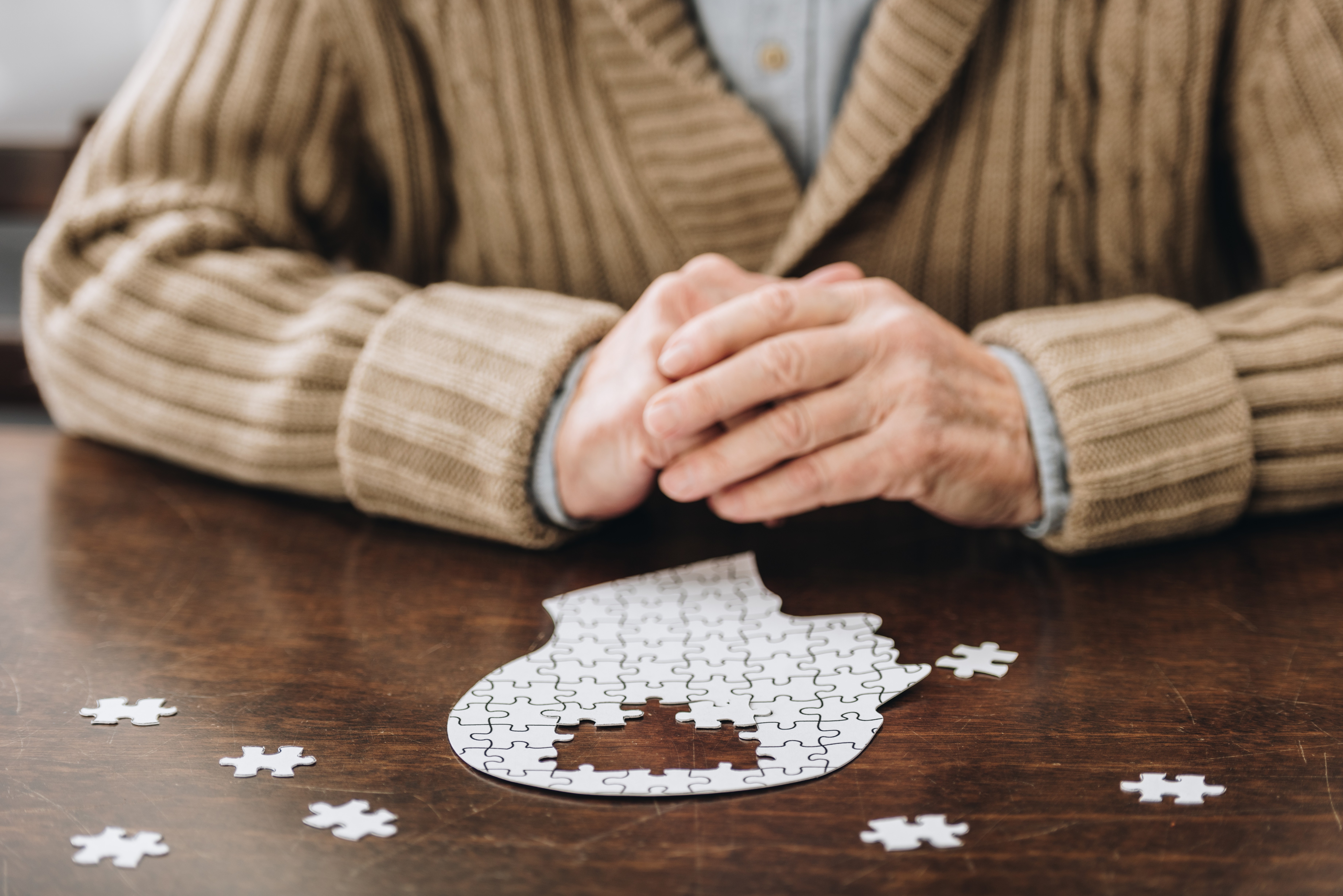
Youth offers life’s promise. Old age leads to death. In a world like ours, this is a distinction driven by markets in cosmetic beauty feeding the desperation to remain young forever. In this context, it is not surprising that old people are identified more with their biological decline than acknowledged for their many achievements and accomplishments. Other cultures may revere their elders, but not ours.
The dangerous thing here is the wiping of identity and the way, through words and labels, old people’s social value disappears. People forget in such constructions of old people that they are not a species apart, which is how it can feel.
Sticks and Stones
The old adage that ‘sticks and stones may break my bones but names will never hurt me’, is wrong. I grew up on that and believed it for many years.
An in-house joke among oldies who cannot let go of their former employed self is that they suffer ‘relevance deprivation’. If we have a PhD, nobody knows or cares. An old single woman is almost universally addressed as Mrs in clinics and hospital waiting rooms where they must at least use your surname. (Men have the universal moniker of Mr that never changes to define them in relation to others.)
But, for both men and women, if you were formerly a senior official, a creative person or someone of note, nobody cares. Your body becomes your identity.
The truth is that ageing is every bit as rigorous and formidable to the experience as adolescence. But it has no value because instead of blossoming and growing into character, it is a gradual fading. And, we hate to fade.
Those approaching elderly status are just as scared of the old as they are of the young they can no longer emulate without being ridiculous. This came home to me recently as I sat in the sunshine on the foreshore at Glenelg where I live. A petite woman in her sixties with thinning long white hair and wearing upmarket walking gear called out to me, ‘enjoying the sun
Variations on the Theme
In my grandmother’s day, young women and old called each other Mrs So and So when they chatted over the fence. Days of such formality are far behind us, but it’s safe to say that today’s intimacy which finds us calling anyone by their first name would horrify previous generations. The term Mrs of course, then firmly connected women with a husband. And, if you were getting on a bit and still called ‘Miss’, there was something wrong with you. The name for that social malaise was spinster.
When I was young and impressionable, my aunt in Sydney, then in her late forties or early fifties called everyone ‘darl’ or ‘darling’. Being starved for love as I then thought myself, this language seduced me into thinking that she cared. Looking back, she used the term universally which suggests she was too lazy to remember names, something that requires effort. What a shame.
Finally, my mother railed all her life at the way my father and other men called her ‘mum’. A gendered kinship term that ideally defines a relationship between a parent and child. The way it was used then as in my poem, and often still is, shows how everyday words construct our realities. As you will see, my mum bucked the system.
Good On Yer Mum


 'You're so good at lighting fires luv
 I wish I could do it like you.'
 His words seduced and in her youth
 she let herself be fooled.


 For years by day and night she lit
 to keep the family warm
 but all she got was praise by rote
 that began to feel like porn.


 'Here'yar mum' he'd say
 passing her the keys.
 'no-one else can drive like you,
 you make it look a breeze.'


 'But keep the window open mum
 your side's always best,'
 too vain was he to have his hair
 tousled like the rest.


 The butcher down the street,
 now there was a kindly soul,
 she loved the way he cut her meat
 till he called her mum as well.


 I'm not his bloody mother
 she would rant about such men,
 did they think she'd only married
 to lose herself in them?


 Once alert to the ruse
 she began to refuse and said,
 the matches are on the bloody shelf,
 the fire won't make itself.


 One day there was no supper
 for dad's Friday poker mates,
 she sat at table against taboo
 and won with an Ace-high straight.


 'It must have been a fluke,' they said
 'for a little woman to beat the men,'
 in shock and awe they invited her back
 and, behold, she won again.


 'Your mother's as tough as old boots,'
 my father confided in pride
 but all she heard was, 'good on yer mum',
 she thought he had a hide.
Try This
Think of a word someone else uses to define you. It may be a kinship term, or any other word or name. What does it say about your relationship? How do you like it?
Write a poem about that.
Examine any affectionate terms you use towards another and, write a poem about that too. We often offend unintentionally.
Final Note.
Lindy
Grammarly kept picking me up for using the term ‘old’ throughout this post. I had to laugh. The word ‘elderly’ is deemed to be OK.