

Opening the Heart
A little girl, aged 23 months, recently smiled at me from beneath her bonnet as she toddled by with her parents on Glenelg Jetty in a fashionable pink gingham dress. I smiled back, saying, ‘hello baby,’ and the family stopped to chat. The little girl was carrying a baby-sized boy doll in preparation for her new brother, due to arrive soon. That moment was as satisfying for me as it was going to nightclubs, achieving professional goals or, more recently, standing up in front of an audience to get its take on my poetry.

To see such a happy family brought memories of my childbearing years. By the time I was 31, I had two toddlers, thirteen months apart, and a miscarriage soon after. A year later, I had a third child who liked to poke his head high under my ribs for the last few months of the pregnancy. My mother scolded me for breeding like a rabbit. I wondered as I waddled past a dress shop in discomfort one day if I’d ever get back into the sleek little number on display. I did until time took its chance with me.
A Long Life Has Benefits
The diversity of baby bumps around today fascinates me; some protrude naked from bikinis, others are swathed in Lycra, and a few, perhaps less fashionable, reside beneath loose summer dresses. I wonder whether appearing sexy while pregnant is easy.
Being pregnant was not all about baby bumps or glamour in my generation. We wore maternity dresses that hung stiff as an A-frame from neck to knee to hide our changing bodies with what felt like shame. On reflection, I give thanks that we were at least physically comfortable.
I reflect a lot now. My mind bobs from present to past and back in a way that revises views. There’s much to play with after a long life, and it brings joy to view things in perspective to find they don’t matter too much now. Shame diminishes with age, too, when one’s vital force has pretty much left the building, like Elvis.
Body image has always been an issue for women, but I suspect it is a transforming one. When I was 13, I wore a blue check halter-neck dress once before throwing it away. So ashamed was I of my budding breasts that 50 odd years later, I wrote this poem.

The Inevitability of Ageing
Most people my age quit work long ago, and what younger people may not know is that being old is itself a job; it takes work to maintain body and mind. It does not matter how good one’s diet is, how well we exercise or follow health rules. The aging body declines.
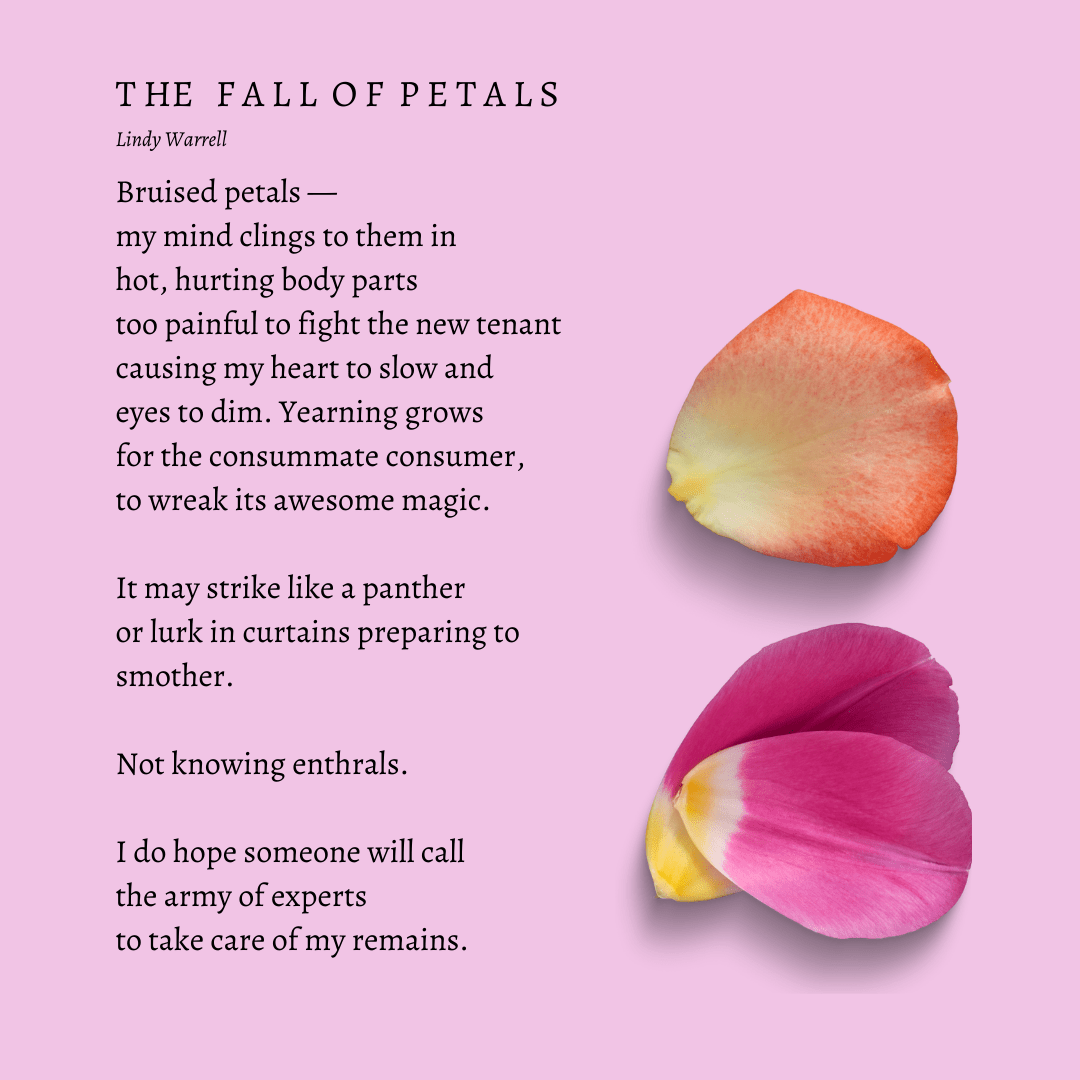
In the medical world of the ageing and elderly, not everything is as it seems.
So, I decided to introduce the article below entitled ‘Body Ritual Among the Nacirema’, which was on the syllabus as a cruel joke to tease first-year anthropology students in my day. ‘Nacirema’ is, of course, ‘America’ spelt backwards, but the detail is precisely how an anthropologist might render the lives and activities of what was once called primitive society.
Taking an indirect queue from the article, I describe below some taken-for-granted medical processes to explore their power to disempower the elderly.
Age Stripped Bare…
Patients must strip then don a blue gown that opens at the back for day surgery. Our heads sport a blue mob cap, with feet covered in matching disposable slippers, like those used at crime scenes.
Thus clad, patients are invited into a nurse’s room for a consult about ailments and medications. This is followed by cognitive testing. My nurse told me she had to ask some ‘silly questions’ without advising me that she was actually measuring my mental acuity. Notably, cognitive testing is a treat reserved for concussion patients and, without discrimination or consent, the elderly.
When the nurse is finished with us, we return to the waiting area to be summoned next by an anaesthetist. My young male doctor explained what he would do to me in breathless haste designed to defray questions. So keen was he to be in command, he literally arced up when I asked what sedative he proposed to use.
At the Noarlunga Hospital’s day surgery hub (which offers a splendid service), patients (young and old) in blue are each issued a warm white cotton blanket to keep them from shivering while they wait in anonymity to be called for their procedure. I counted about 20 blue and white figures sitting in rows on straight back chairs with me, facing a blank wall with blank eyes as though attending the theatre. I experienced a strong urge to take a photo, but my iPhone was under lock and key. The identity strip is complete.
The only trace one leaves as an oldie, it seems, is the unknown result of an involuntary cognitive test.
…then Trapped
Whatever our age, as humans, our backs are vulnerable. We keep them to the wall when confronted, and most people don’t like having an open door behind them, but on the operating table, our backs and bums are exposed under bright lights, open to the gaze of several strangers.
Whether for day or life-saving surgery, the moments before you lose consciousness are curious. As you lie on the operating table, unable to move, a nurse’s hand creeps beneath your gown to affix sticky heart monitor leads to your chest while the anaesthetist inserts a cannula in your arm from behind. Your masked surgeon hovers above, asking if you consent to the procedure. Another nurse tells you to recite why you are where you are, what is about to take place and to repeat your full name and date of birth for the umpteenth time while checking your armband; probably a good idea.
Recovery team members are always friendly. It is nice to come back into the world to the sound of your name, a call that proves you’ve survived. That first cuppa is sweet and hospital sandwiches remain one of my favourite old-fashioned foods.
Medical Pin-ball
At home, we oldies begin to feel like the ball in a pinball machine as our declining bodies usurp our time. Our calendars fill with appointments; for the GP, specialist clinics, podiatrists, dentists, ophthalmologists, physiotherapists and more. Hospital admissions become more frequent, and the possibility of ending up in a nursing home lurks.

Death is on the horizon as we spin from one speciality to the next, none of which communicates with the other. The risk is high for losing our sense of identity in proportion to the increasing height and weight of our medical files. The myriad determinants of what we are in various doctors’ notes in these bulging documents begin to define us.
Measuring the Mind
In youth and middle years, a therapist might be helpful as we confront disturbing things or need to find direction. However, at my age, it becomes tedious to repeat well-rehearsed stories that have long lost heat, as it were. Time, as they say, does heal even though memories linger and are frequently triggered, as I found with my little girl in pink gingham.
We spend more time reflecting on the past, but that does not mean that we have abdicated our former intelligent self. Indeed, it would be nice at times if others would treat us as people. Being old suffers more than invisibility; being unseen and unheard is dehumanising.
Yes, we make typos in emails and social media, but they are arguably more signs of deformed, arthritic fingers than a loss of faculties. Failing eyesight and forgetting the specs don’t help. And, senior moments are trivial in the scheme of things when one’s memory has reached capacity.
Comprehensively ignored is the wisdom that accumulates in a long life. Few are interested. We live in ‘going forward’ mode where specialist and expert knowledge abounds; reified. We search Google before we ask an older person anything of note. Valuing the experience of elders does not pertain.

Care
The assumption that we are unsafe to ourselves and others increases in medical circles as we age. At 70, 75 and 80+, we are again measured like we were as babies. Our General Practice nurse visits us at home to make sure we are coping with things like shopping, diet, personal hygiene, etc. These jollified interviews with kind practitioners make for a nice visit and may produce official supports you didn’t know about. But, it all adds up as a way of seeing old people as diminished physically and mentally.
Any recognition of intellect is predicated on age. Our achievements are deemed significant because we are old (aren’t you clever for your age), not because we are good at what we do. For the elderly, such thinking infantilises; denies old people their full status as adults.
Most people think I’m nuts when I say these things, but how could we describe it when someone asks with a false smile and the royal plural, ‘how are we today?’ Well, lady, I’m fine, I want to say, and I don’t care a whit about you. But we behave. We accept and say nothing. It’s easier than fighting with people in power who cannot understand or won’t listen (as my aunt used to say when her husband abused her). Any sign of anger risks a mental health assessment.
Of course, dementia can take us away.
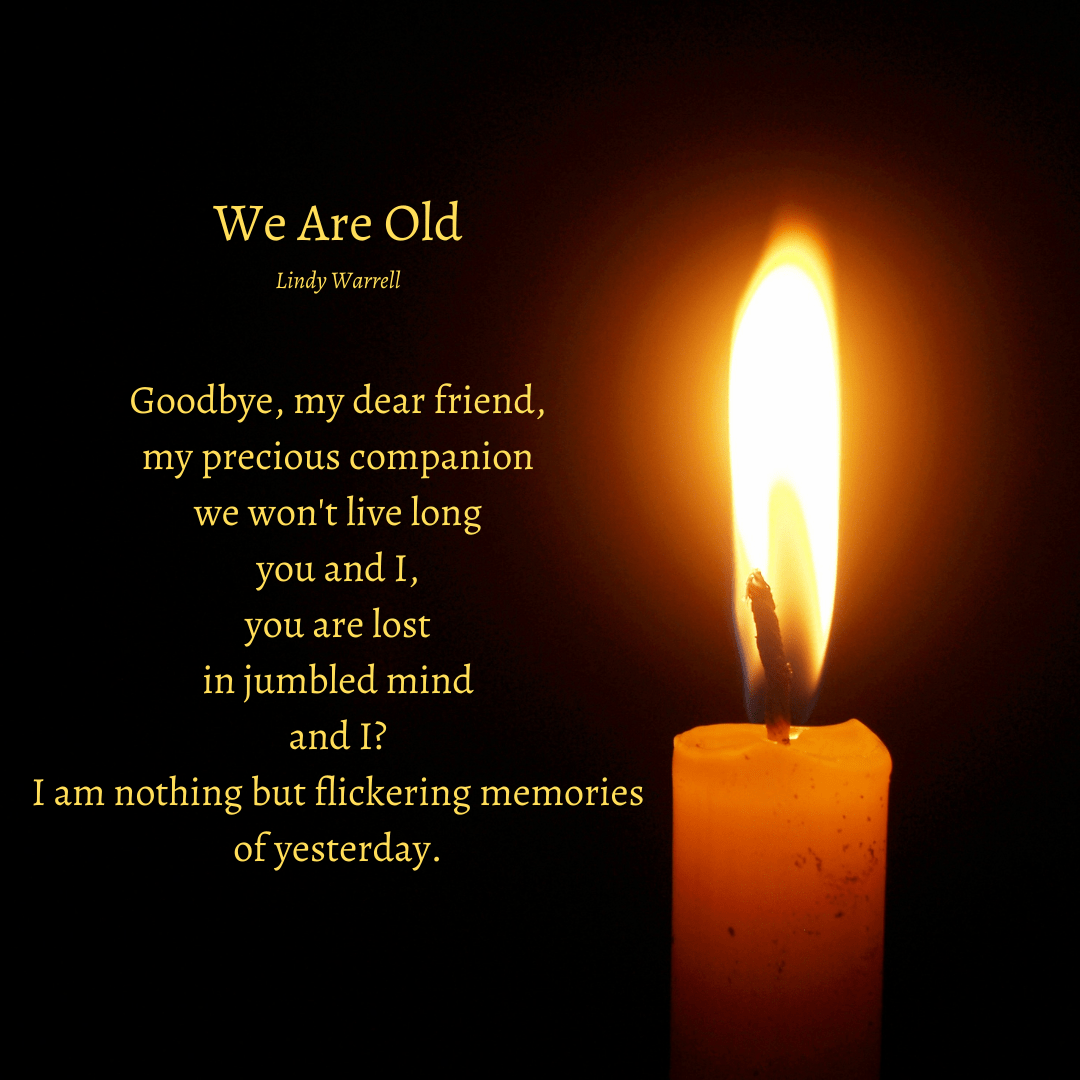
Current studies are ongoing into the extent of ageism in health care in Australia. The health sector is the second most likely place for the elderly to experience ageism.
Over Time
When my children were little, I remember thinking about how they first moved out from my body and into the room, then moving from cradle to school in graduated steps towards the wider world. Being old — if we are lucky enough to make it to this unlikely state of grace — is the reverse.

I watched my mother approach her dying by closing in on herself. Where previously she walked longish distances every day, she ordered Meals on Wheels. No more shopping, no need to go out.
She started taking the phone off the hook to make a cuppa, eat and shower. ‘Sure enough,’ she’d say of a phone that never rang, ‘someone will ring the minute I can’t get to it.’ Bit by tiny bit, she moved closer to her inner world where there was no more worry. She didn’t entertain, had less need for people and towards the end, became peaceful in herself.
My gradual social withdrawal over the past couple of years could be due to COVID or be the result of my having to take greater care of my pennies. The pension doesn’t stretch to as many coffees and lunches with friends as I would like. But there’s also the fact that my calendar is filled with increasing numbers of medical appointments. Given how long it takes to get to the top of a specialist’s list, you can’t mess with those.
A Last Word
We who live long lives are lucky to experience the distress and wonder of human life. We are also fortunate to have the health care system that exists in Australia. Abroad, I once witnessed a patient die alone on a corridor floor, mewling in vain for succour. Here, infants, children, young people and adults of all ages with chronic and life-threatening conditions have a robust medical system that works well most of the time; often for free. It has its flaws, but doesn’t everything?
Writing Tip
Never fear grovelling in the underbelly of things when you write. It is so important to reveal what goes on beneath the surface, to open wounds and have a good look. We would never know what the sunnyside is, without the rain.
Happy Writing
Wattletales
To see more on a related topic, click here.
ACKNOWLEDGEMENTS
Some of the poems here have appeared in previous posts or one of my chapbooks, Ol’ Girl Can Drive, Soft Toys for Grown-ups, and Life Blinks. (Available from Ginninderra Press), and on Instagram.
Thank you, Julie, for being a regular reader and for always giving me feedback that lifts me and makes me want to keep going.
Thank you LIndy. Loving Mini-Me in her party dress. ‘There’s much to play with after a long life’ — great phrasing. I laughed at ‘what sedative are you going to use?’ You show ’em, girl. Your poetry is magnificent. ‘The Passage,’ through the universe is nothing short of brilliant. You ARE clever, dear friend. What chuckles you must have between fits of exasperation, with young medics who know fractions of your knowledge. ‘When one’s memory has reached capacity…’ Yours, Lindy? Never! A great read which proves undoubtedly that you are of sound mind, even with your bottom pressed to the wall. 🙂 Love always, Julie Cahill
Thank you for reading Inez. I’m glad it touched you. You’ve got a way to go yet 🙂
‘We are Old’ brought me to tears Lindy, and ‘The Passage’ is so true, like a teardrop, fleeting. I love how ‘not knowing’ how it might happen, enthrals you 🙂 this made me smile and that shame diminishes with age. Rage, rage against the dying of the light!
Thanks Veronica. Yes, not all the poems on Wattletales are new to everyone each time, but what’s interesting to me is that they were conceived and written ad hoc at different times and yet, when I find a thing I want to write about, they suddenly find relevance in a new context. To me, that’s weird. It’s as though my mind thinks all these things that produce a poem, but I take a good while to know why it thought them in the first place LOL
I couldn’t help but say out aloud when reading this ‘YES!’ Aging is hard and we are meant to be grateful when someone tells us that we’re looking good. And we should – we spend so much time taking care of ourselves that we must look good. I’ve seen a couple of these poems before, but they are as clever now as they ever were. Thank you for sharing.
O.k. that’s good to hear. All the best with your health and your writing, Lindy.
Thank you, Val. I’m so pleased you enjoyed the piece. We must fight to be listened to!! I had no idea you just had a hip replacement. I hope all goes well with your recovery. I’ve never known a twinge of pain in nearly four years since I had mine done.
Hi Lindy, thank you for sharing your thoughts on old age. I completely agree with all your honest opinions on the subject. Just recovering from a hip replacement I was constantly amazed while in hospital that if one was over 80 it was assumed that your brain was dead and you were incapable of making any decisions. But you are correct in saying we are fortunate to have our health system in place. I smiled while reading your clever writing. A great read.
Oh, Alison, thank you for reading. I got a thrill to see your comment come in this morning. Much appreciated.
I love “The Passage.” Such a clever poem: the way you have shaped your language so that it fits the outline, yet reads like natural speech. There is nothing forced about it. Especially as the vast population that is the boomers age, now it is more vital than ever to listen to the perspectives of older people. Thank you for raising your voice and lifting your pen, Lindy.