

Introduction
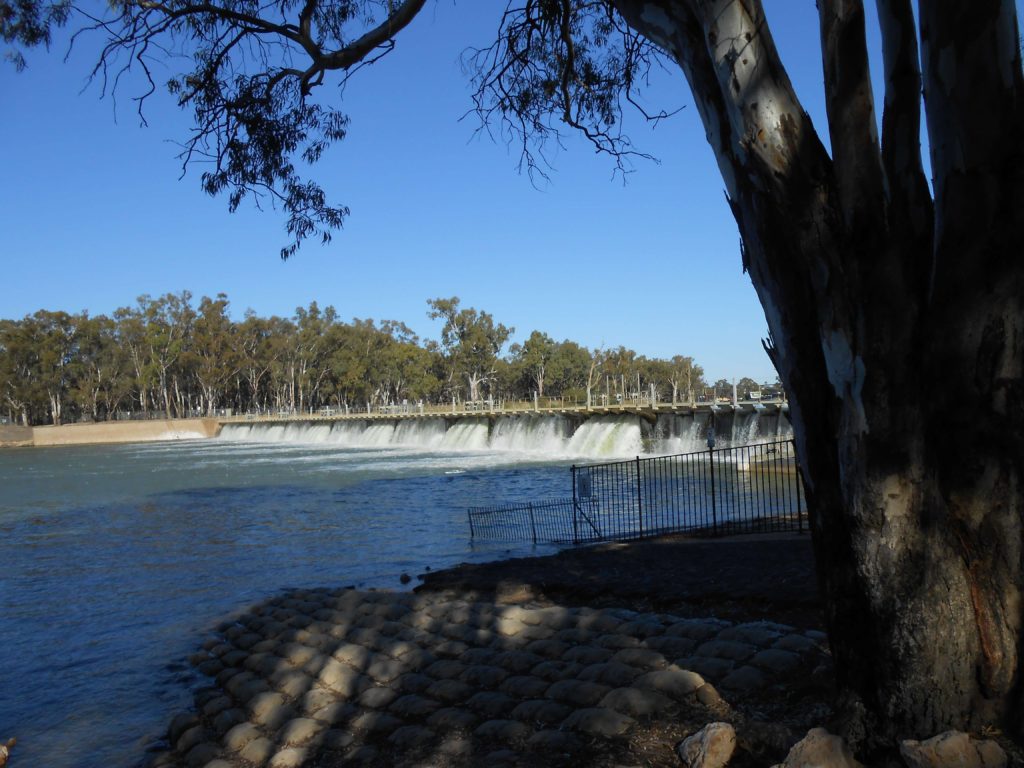
When the going gets tough, my mind and memories take me to the Murray River. I sit on a fallen ancient river red gum, dangle my toes in the murky brown waters and close my eyes. I can feel the breeze blowing against my skin. I hear the chatter of bird life in the trees; I listen to splashes on the water as a big fish chases a smaller one.

I open my eyes and see the ripples break the mirror surface. A sleek black cormorant surfaces and perches on a log spreading its wings out to dry. Growing in the sandy soils are rows of blue-grey saltbush. Surrounding them are paper daisies and delicate wildflowers.
The outback landscape of my childhood inspires my writing; the thread of the bush and the memories are a repeating theme. A love of solitude, resilience and self-reliance skills learned as soon as I could walk. My experiences of the landscape are so deeply ingrained that their subtle influence is almost cellular.
I enjoy exploring the way the bush makes some afraid and others relax. Its indifference challenges our sense of self, and how characters respond fascinates me. The bush is always an organic part of my stories, another character.
Home
My earliest years were spent on a station called Wilkurra. Home was a caravan and an annexe, a four-hour drive from town. The first part of the road was bitumen which changed to a graded dirt road half an hour into the journey, then into a dirt track. The surface was deeply corrugated, potholed or covered in red dirt as fine as talcum powder and as difficult to drive on. The old Bedford truck carried a winch and a shovel to get us out of trouble. Two large canvas water bags hung from the bull bar. In the back, a couple of jerry cans of fuel.
We had no running water, and apart from a diesel generator run only at night, no power. A Coolgardie safe hung in the branches of a nearby brush box tree. At the end of a dirt path was a long drop loo. No washing machine, and in an emergency, the nearest neighbours were an hour away over dirt roads which were impassable after rain. This is the situation my mother returned to with a six-week-old baby in tow.
My mother loved and feared the landscape in equal measure. She loved it because my father did, feared it because of the threat it could present to her daughter.
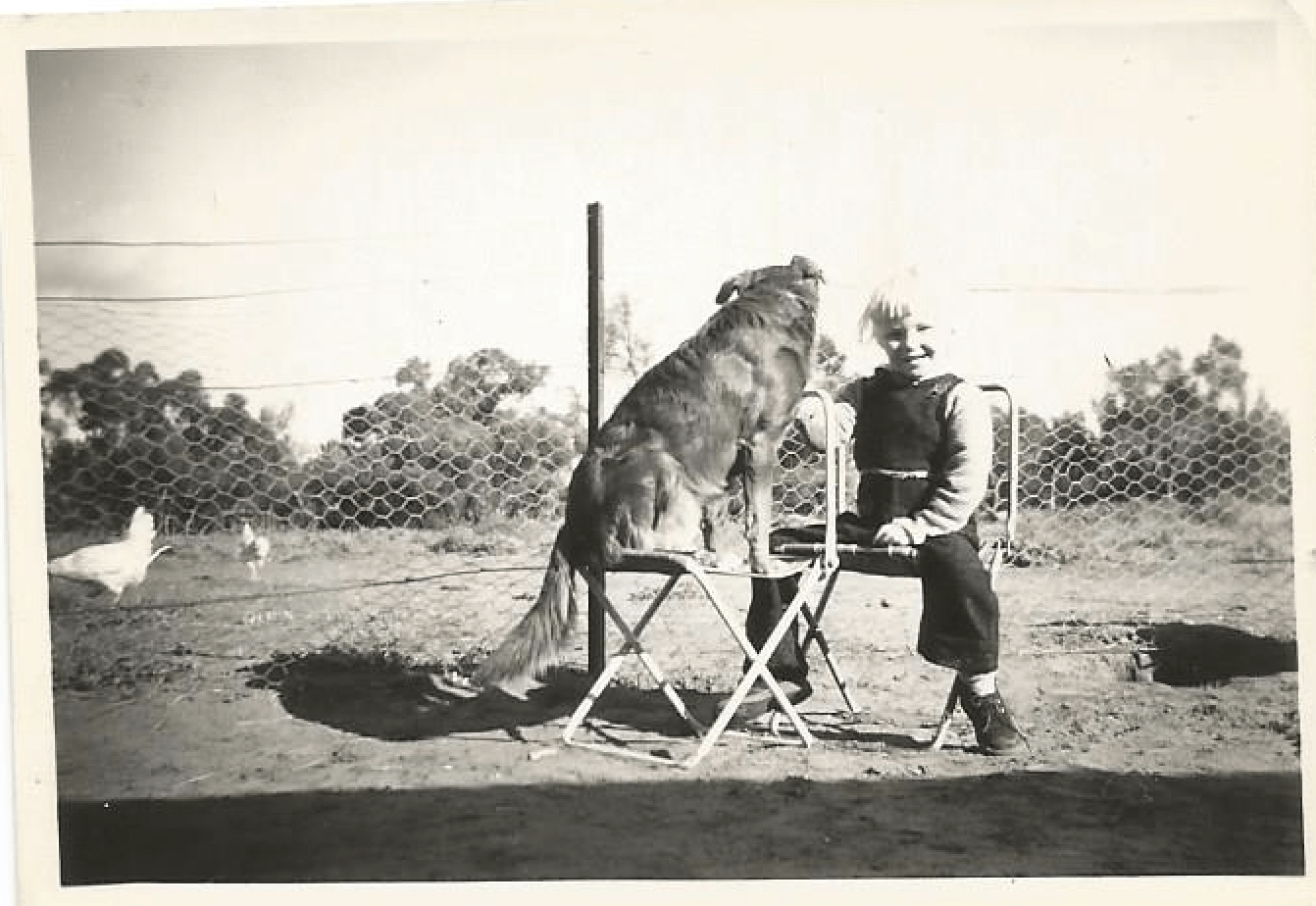
My father fenced in a space surrounding the caravan with chicken wire — a barrier to prevent me from exploring further. Dad understood the lure of the bush in a way my city-born mother couldn’t. He would sit me in my own small chair and squat opposite in the apparently restful position of the experienced bushman who rarely came across chairs and refused to sit on the ground where scorpions lurked.
‘Don’t go outside the wire.’ His work-roughened hand would gesture, outlining the boundary. ‘Children can drown in dams or be eaten by wild dogs.’ He never taught me to be afraid, never turned my love for the landscape into fear because with fear comes panic, and with panic comes death.
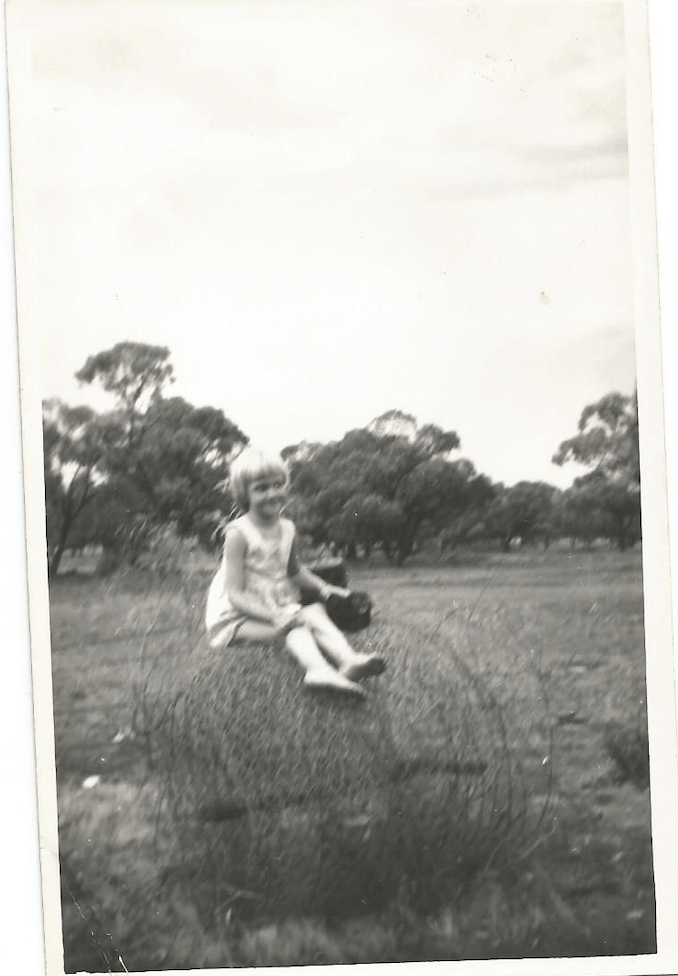
When I was three, my father told me a story. He’d been working at a nearby station and part of a search party looking for a lost child about my age. It had been the middle of summer when the temperatures were over 40C for days on end, and scorching winds whipped up the sand. No trace of the child was found until a year later when fabric fragments were discovered blown into saltbush. Nearby were tiny pieces of bone.
The Power of Stories
I learned at a very young age that stories taught and entertained me. Mum would often read to me, and I’d close my eyes and let my imagination take me to places I’d never been. Hinnie would stretch out alongside, waiting patiently until we could go and play. Hinnie was a bitser, a mixture of cattle-dog and who knows what. His origins were not important. All that mattered to a lonely child was that I was his, and he was mine. Someone who was there, who would sit patiently alongside me while I told him stories of the things we’d seen. We’d discuss interesting sounds or the meaning of animal prints in the soft sand, and he would listen intently.
Mum and I moved into Mildura so I could go to school. Dad remained working on the station, coming to town every couple of weeks. I went to preschool first which was a shock to my system. I was expected to talk to people and make friends without knowing how you went about such a thing! Other kids made it look easy, chattering away like a flock of corellas. In a group, I’d remain silent. The skill of socialising is learned very early in life. By the time I went to school, the pattern of being a quiet, self-contained individual was firmly set. It still is. I have wonderful friends as an adult, but I still find group situations uncomfortable though I’ve learned the skills to manage. I still prefer the written word and stories as a way to communicate.
Telling Stories
My mother encouraged me to tell stories, to look at something and see where my imagination took me. Stamps, paintings, the pattern on a piece of fabric, someone walking along the street. Moving into Mildura meant there was a library. My happy place. Somewhere where there were more books than I could read. Mum and I would go every Saturday morning to renew our supply. The wonderful librarians never restricted me to the children’s section but allowed me to roam.
Mum loved stories with happy endings. Dad loved adventure stories or thrillers and introduced me to Arthur Upfield. Upfield was an Englishman who travelled and worked in the outback, the creator of Bony. I was hooked and read every book I could lay my hands on. Desmond Bagley and Alistair Maclean followed. I loved the way they all used landscapes or the setting as crucial characters in the story.

The first thing I ever published — at the ripe age of 15 — was a poem in a school magazine. My mother was thrilled to see my work in print. I felt awkward and uncomfortable — I was letting someone into my head. The poem has only my initials and not my name. My mother was disappointed that I wouldn’t take credit for something she loved.
Recently I rediscovered the poem, and reading it took me instantly back to the classroom and the feeling of wonderment as my imagination took fire and flew.
The Importance of Writing
There have been periods in my life when I haven’t written and have lacked motivation, confidence, or time. There were always stories running through my mind and a pile of books to read. At the time, they were enough. I was married to someone who was dismissive of my desire to write. Somehow, despite him, I kept writing. Planning to become single, I decided to go to university and study social work. For five long years, all I wrote were essays. There were often comments from markers about the quality of the writing interspersed with suggestions to keep to the topic, and remember I was giving analysis, not telling a story.
Finishing my studies, I paused. I’d moved, was living alone and needed some time to work out what came next. Stories that had been lurking flooded my mind. I decided to follow my dream and write. The first story published changed my direction totally. Then a couple of years ago, I won a writing competition; the first prize was a publishing contract. My direction was set.

Being Published
Having a book published was a life-changing experience in ways that I was not expecting. I thought it would be the pinnacle of my life, and I’d done what I set out to do, and there were my stories in print. If you believe being published will remove your anxiety that what you write is good enough and that you’ll never be troubled by your mind telling you that what you write is rubbish, you’re in for a shock.
I write because I can’t be happy if I’m not writing. I write because I have stories within that need to see daylight. When a story comes together, the characters work, and the setting is evocative of the country I love — that’s writing. That’s creativity fulfilled. Seeing it in print is a bonus, and my internal muse will say loudly, that’s done – next!

AUTHOR BIO
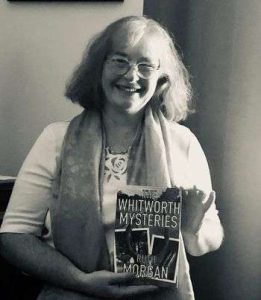
Ruth spent the first years of her life on Wilkurra Station, near Pooncarie in outback New South Wales. The red sand and blue saltbush have made an indelible impression on Ruth’s imagination.
Currently living in Northern New South Wales, Ruth tells stories of the characters and country she knows and loves. Her preference is crime fiction with a twist. The landscape is a crucial character in the stories, along with criminals and the police who hunt them. Themes of retribution, revenge, love and redemption are set along the Murray River, the Hay Plains and surrounding towns and countryside.
Learn more about Ruth and. her work at these sites —
https://www.clarendonhousebooks.com/ruth-morgan
https://www.facebook.com/100063465425465/ Ruth Morgan Writer
Thank you Veronica, such lovely comments! We write based on what we know. I guess I always relate well to those with a solitary background and so many of my characters work alone. I can’t even imagine what it would have been like to have lots of siblings. Regardless there are so many stories to tell and a variety of backgrounds is essential. Thank you again.
Thanks for reading, Veronica,I love the way we all have such different backgrounds yet love to write.
Thanks Ruth…your writing is so relatable and you have a gift for getting the message across. It’s lovely to hear your voice coming through so clearly and I can imagine every scene. My childhood experience was totally opposite, with many siblings and never enough time to myself, except in my imagination.
Thank you Lindy for bringing Ruth’s story to us.
Thanks Julie for your lovely comment. I’m glad you enjoyed the blog. It’s lovely to share and have other people react in such a positive way.
Thanks for commenting Julie, I was so thrilled when Ruth agreed to write a piece for Wattletales. I’m sure she’ll reply to you soon. Lindy
Thank you Lindy, for introducing another fab writer.
Gosh, Ruth, the essence of the bush smashes your words into utter clarity.
How sad is the story of the lost child; how graffic is your telling.
Your love for your parents and for the bush have ingrained in me and no doubt other readers, our harsh yet gentle landscape, and the meaning of family. Hinnie was a lovely touch- the old cattle dog we all may now hug through your voice.
Thank you so much.
Julie Cahill. ❤