

The Real Me
The mere thought of considering ‘my writing life’ conjures a whirlwind of possible angles and the word ‘my’ is a special concern since it could be an excuse for all sorts of vanities. It’s claimed that every writing act is to an extent autobiography, that the author is always present, even if faintly. I like to take an oblique approach, even a slightly absurd one, at times. Is that the real me? For better or worse, then, here we go.
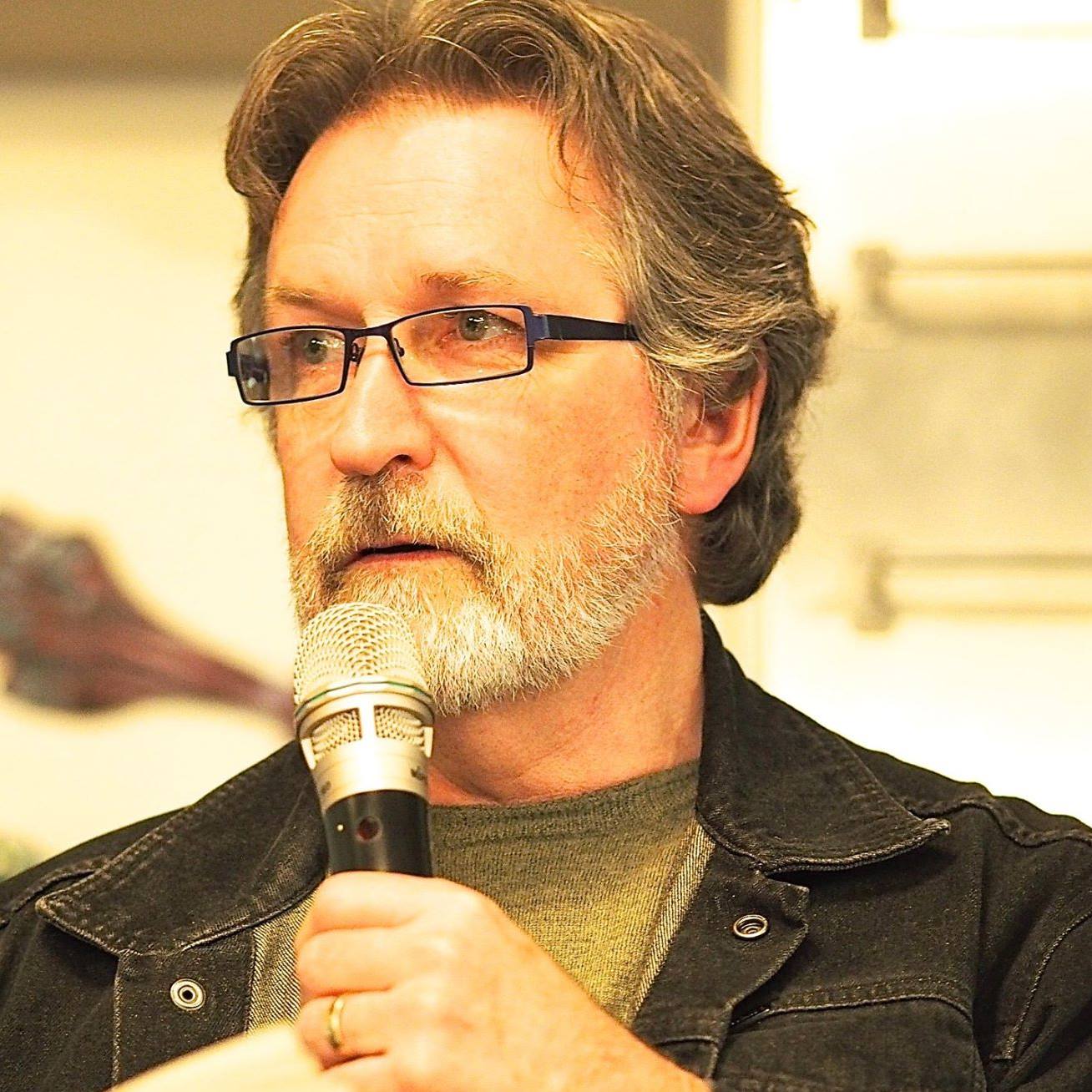
For me, meeting a good poem or narrative is like walking into a theatre that might seem small at first but then keeps on opening wider. Maybe that’s why stories captivated me early on as a kid. I indulged as a listener and then a reader and, eventually, as a writer, trying to work out the best way to effectively corral words in poetry and prose. It was rewarding but also frustrating.
Encounters with Stories at Home
My mother read to me at night until I was about five years old. She’d eventually leave me to read on my own in those precious last minutes before my light was turned out. Some nights, radio serials drifted through our small SA Trust Home in the mid-north country town of Kadina as I resisted sleep. At breakfast, there were more, such as The Hopalong Cassidy Show. Perhaps it helped that we had no TV until a few years later. (Yes, I’m that old!)
As a charity shop volunteer, Mum could bring home children’s books, plus British motorcycle magazines (maybe why I’ve ridden bikes for 50 years) and comics, which I devoured. My parents bought a small encyclopedia set, and I’d sit with its red and green volumes for hours when I was six or seven. My younger sister and I would also make up adventures involving our few toys (we probably only had two or three of those each): another chance to create plotlines and develop character interactions, even if rather simple.
In the country towns of that era, parents sometimes bought an old car for their backyard so their kids could play in it. I think it reflected what happened on local farms, where abandoned trucks and cars might sit for decades. My neighbours bought a big, black 1940s Dodge with a curved roof where my friend Glen and I would take stationary trips to cities, beaches, and wherever our imagination desired. Seeing this, my Dad acquired a little Singer two-door of similar vintage for our own yard. Again, it was a car that would go nowhere yet everywhere.
Our stories took us beyond our small world — until our curiosity brought us to wondering what would happen if we shattered the front windscreens of both vehicles. The cars were promptly removed, and so were the long imaginary drives, but the stories survived in our conversations as if they’d been real.
A Life Near the Sea
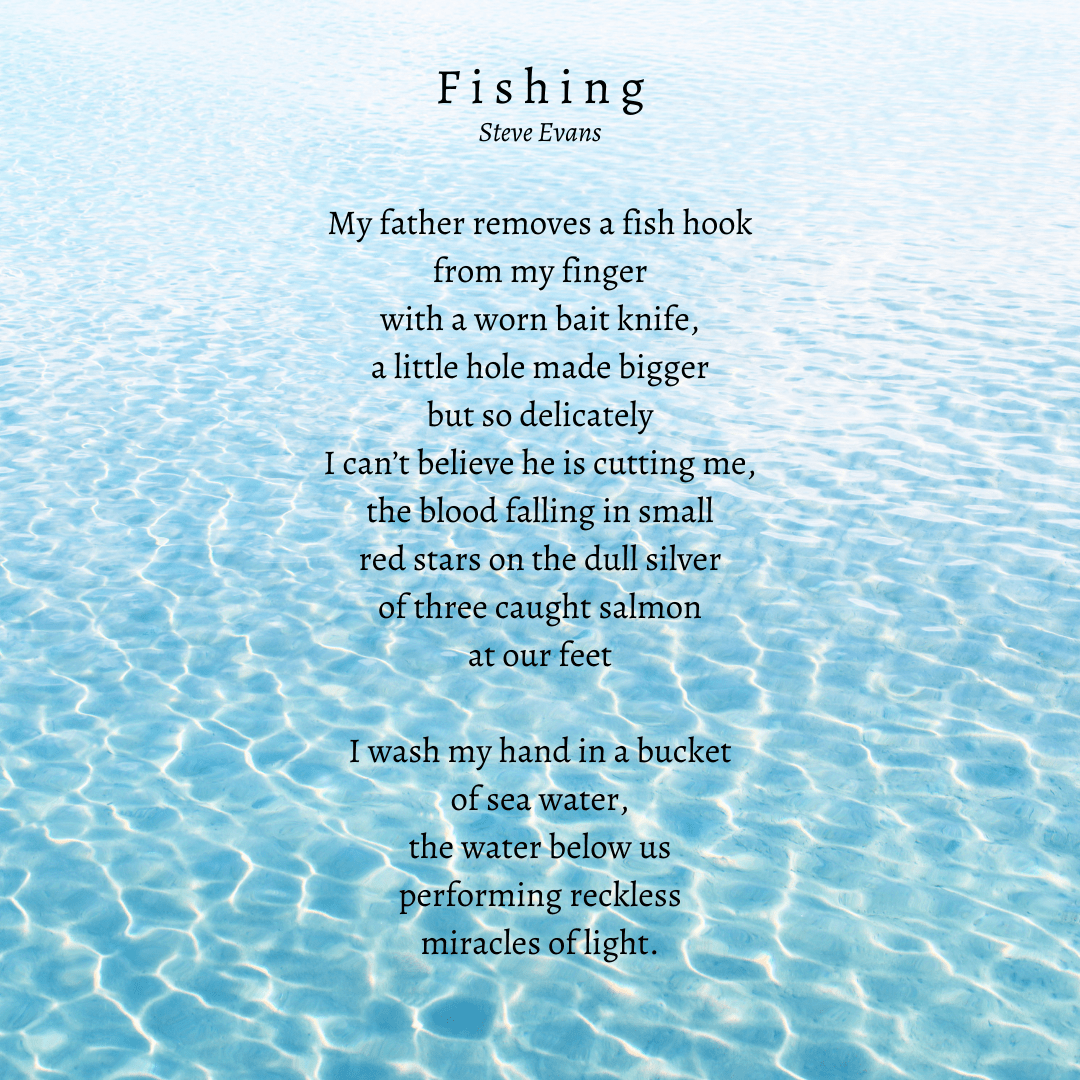
I was always a sea-side kid. Swimming and fishing were constant parts of living in coastal towns, and I often went out in our small boat or to the local jetty with my father. Fortunately, he was patient with me and my frequent fumbles.
More Books, and School
When I was eight, we moved to Port Lincoln, and I quickly came to love the public library. I was ravenous for books and quickly moved beyond my nominal reading age. Mum bought me Biggles books and similar works, but the library had more mature material that I craved, and she was happy to let me borrow it. None of my friends could be much bothered with books, though, which was pretty understandable given the other temptations — riding our bicycles, swimming, tree-climbing, and so on.
That year, I wrote a story for a school assignment, making its subject a noble soldier in a tale informed by limited understanding of the American Civil War I’d gleaned from a library book. My teacher showed it to the other teaching staff and marked it as 10+6 out of 10. That was it. I had already fallen in love with words, both their delights as vocabulary and in storytelling. Now I thought I could actually write too.
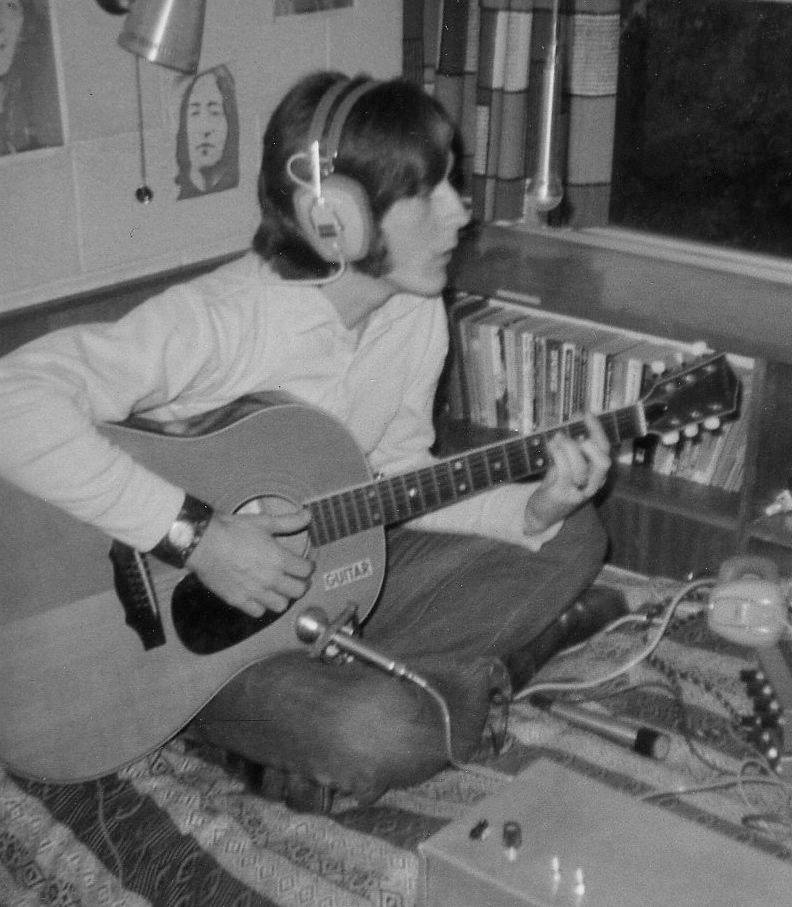

In addition, when I was nine, my teacher, Mrs. Huppatz, read some poetry to the class (by Banjo Patterson, I think) and asked us to write our own. I can still remember the thrill of composing my poem that night, sitting cross-legged on my bed with pencil and paper.
After that, I wrote stories and poems in growing numbers. I dived into editing and writing for school magazines and at the beginning of my final school year, in Port Pirie when I was 17, I wrote a novel without stopping to think that I might not know what I was doing. I have no idea where that went or even what it was about.
An Unexpected Change, with More Writing
In Adelaide afterwards, studying a BA was my excuse to widen my reading and to connect with the poetry scene, including public readings. The latter bloomed in late 1975 with the emergence of the Friendly Street Poets.
By that time, I was on a different course. Plans to be a teacher had been shelved through illness, and I had picked up clerical work in an accounting office, where they insisted I study accounting, funnily enough. So began 20 years in a field I’d never intended, completing three tertiary courses, including a Bachelor of Economics.
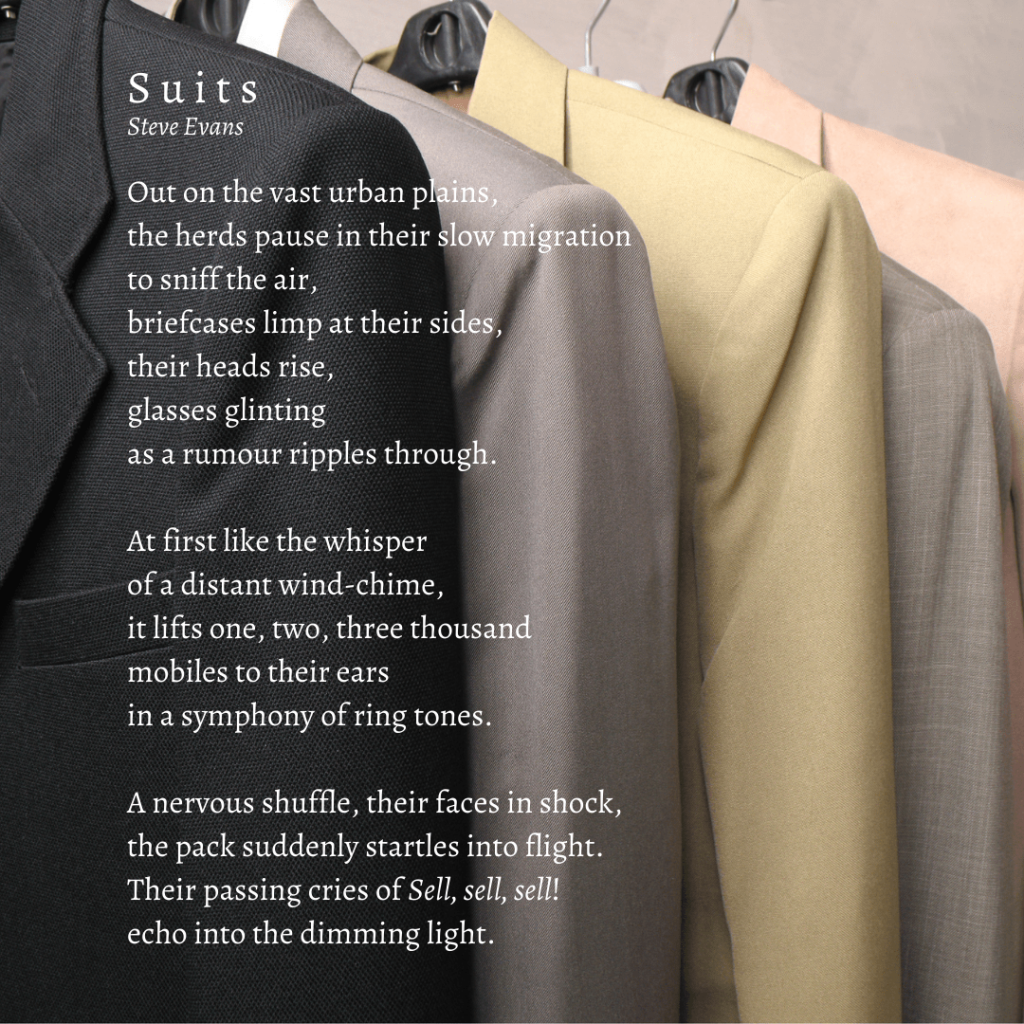
Although my career was in commerce, I was writing and publishing poetry and the occasional short story, and stayed connected with Friendly Street. One of my best memories was being part of a Festival reading and looking into the audience to see Lawrence Ferlinghetti and Alan Ginsberg. My first book, Edison Doesn’t Invent the Car, was published; then Algebra, and others.
Backed by an Arts SA grant, I returned to places where I was raised in order to draft a collection, Bonetown, later shortlisted for the national John Bray Poetry Award. Its poems are partly about living by the sea and country town life. I rode my Suzuki 1100 for the research trip with a bag strapped to the back (which I lost for a while) and stayed in cheap hotels and motels.
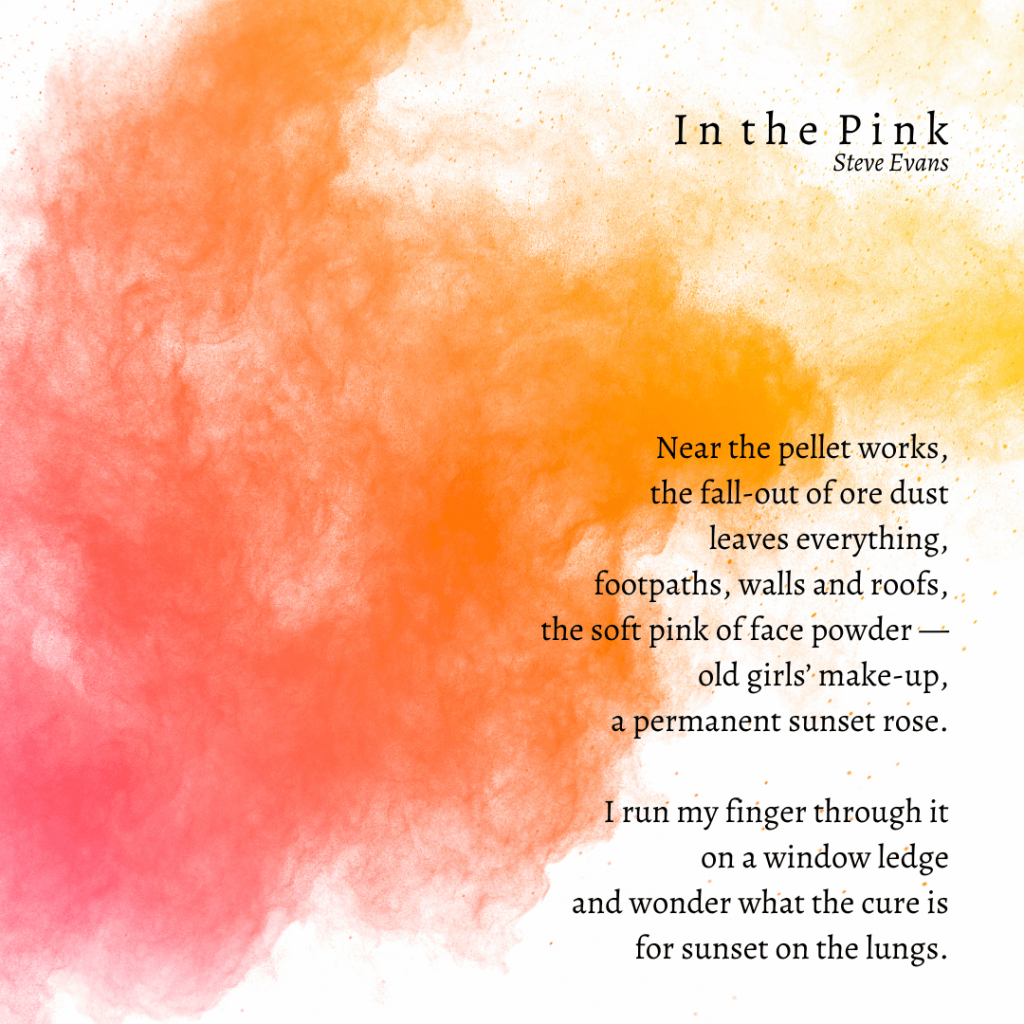
A highlight was 2:00 am in my Whyalla hotel after the local apprentices’ awards night. They let off fire extinguishers, jumped from the balcony onto the roof of a police car, banged on my door, and broke into the bar despite it being locked behind a thick metal partition. There was also the steel-works’ pollution evident in the street. I got poems out of both.
A Soulmate, and No More Accounting
The next big change in direction in my life was twofold. Firstly, I attended a master class run by the wonderful Dorothy Porter and there met Kate Deller. I was single again at the time but kept my distance out of shyness. That didn’t last long as our paths crossed at the Friendly Street Poets readings. Secondly, a while after we had moved in together, Kate pointed out that the University of Adelaide was to begin an MA in Creative Writing. We devised a budget to carry us through a study year and, with her encouragement, I quit accounting.
At the end of that year, I lucked a contract job at Canberra University teaching creative writing. I finished my MA remotely and then won a full-time job university job back in Adelaide where I completed a PhD on narrative, and a teaching qualification. Now I was in my element — teaching, writing, and researching. I even got a gig as editor of the creative writing section of an international accounting journal, which I still have after 20 years!
Since then, I’ve published more books of poetry and one of short stories, hundreds of reviews and editorials, and many individual poems. I edited some of those books with Kate, who fell ill and passed away in 2016 (herself an author/editor of some 15 books by then).
I left full-time work at that time and currently focus on writing and running courses in the community, recently with Maria Vouis, about life writing. I have several new poetry collections and novels smiling hopefully at potential publishers, and more manuscripts in the works. I received a grant to research the most recent novel in Bordeaux but COVID-19 put paid to that. Still, that novel is finished.
What I Like
I especially value originality in writing, whether mine or others’. I’m disappointed if it flat-lines. Formulaic plots, diatribes, polemic rants, gushy sentiment, and chest-beating, or timid observations commonly lack enough artistic effect. A bit pompous, Steve? Well, it is a matter of personal taste, I know, so there is that ‘horse for courses’ aspect. Others may beg (demand?) to differ, but I want a poem, for instance, to take an unexpected turn and offer a new way of seeing, a twist.
What else? Clarity. You can’t establish a fruitful contract with the reader if you’re speaking Martian or droning or being obscure. I’m not talking about what some call ‘difficult’ poetry. That’s a debatable term. I believe a writer is entitled to expect the reader to do some work and not have everything handed to them in the plainest language or terminology and not to be lazy or opaque.
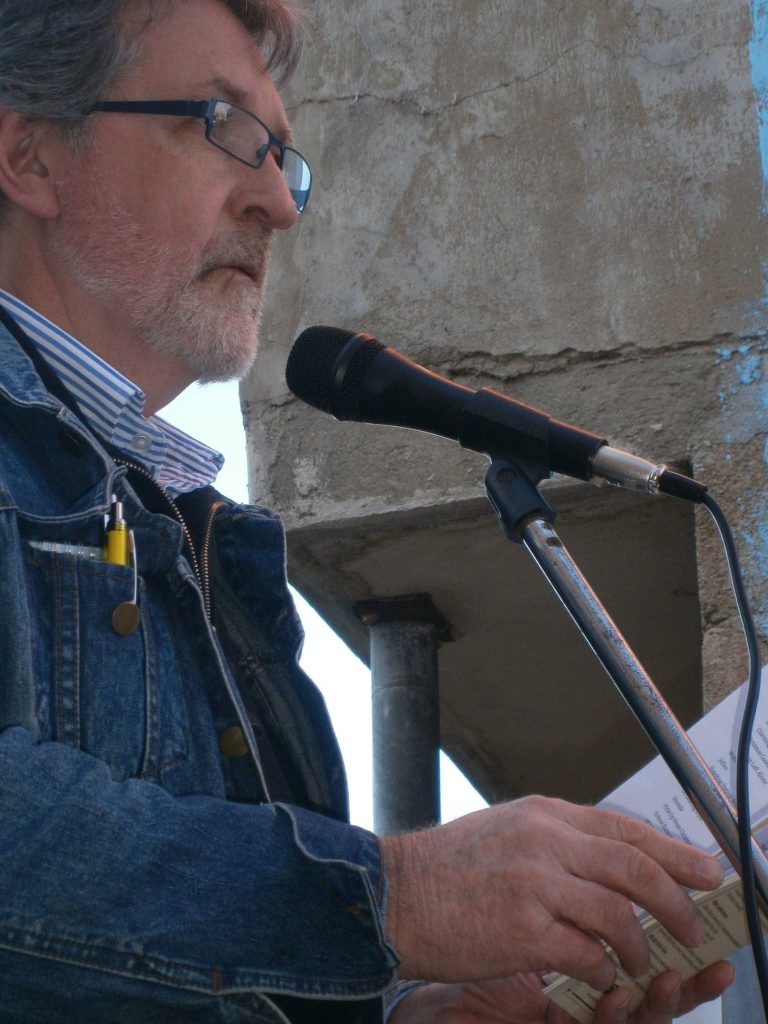

Then there’s the breath of a poem. Each poem creates its own rules or expectations for how it is best read, but you neglect the importance of pauses, rhythm and sound at your peril. Breath might arise from form, or word length, or punctuation, or where a line breaks, and it can make all the difference. Reading aloud tells you so much about whether a poem can be improved in this regard.
Trying to get these aspects right is part of the beauty of language, especially poetry, which has kept me hooked for decades. I’ve written, co-authored, or edited some 18 published titles now. I’ve also had the pleasure of editing a number of manuscripts where you don’t see my name on the cover. I selfishly look forward to a bit of magic in every new piece I read. I guess I’m in this writing lark for good, as a reader and a writer.

AUTHOR BIO
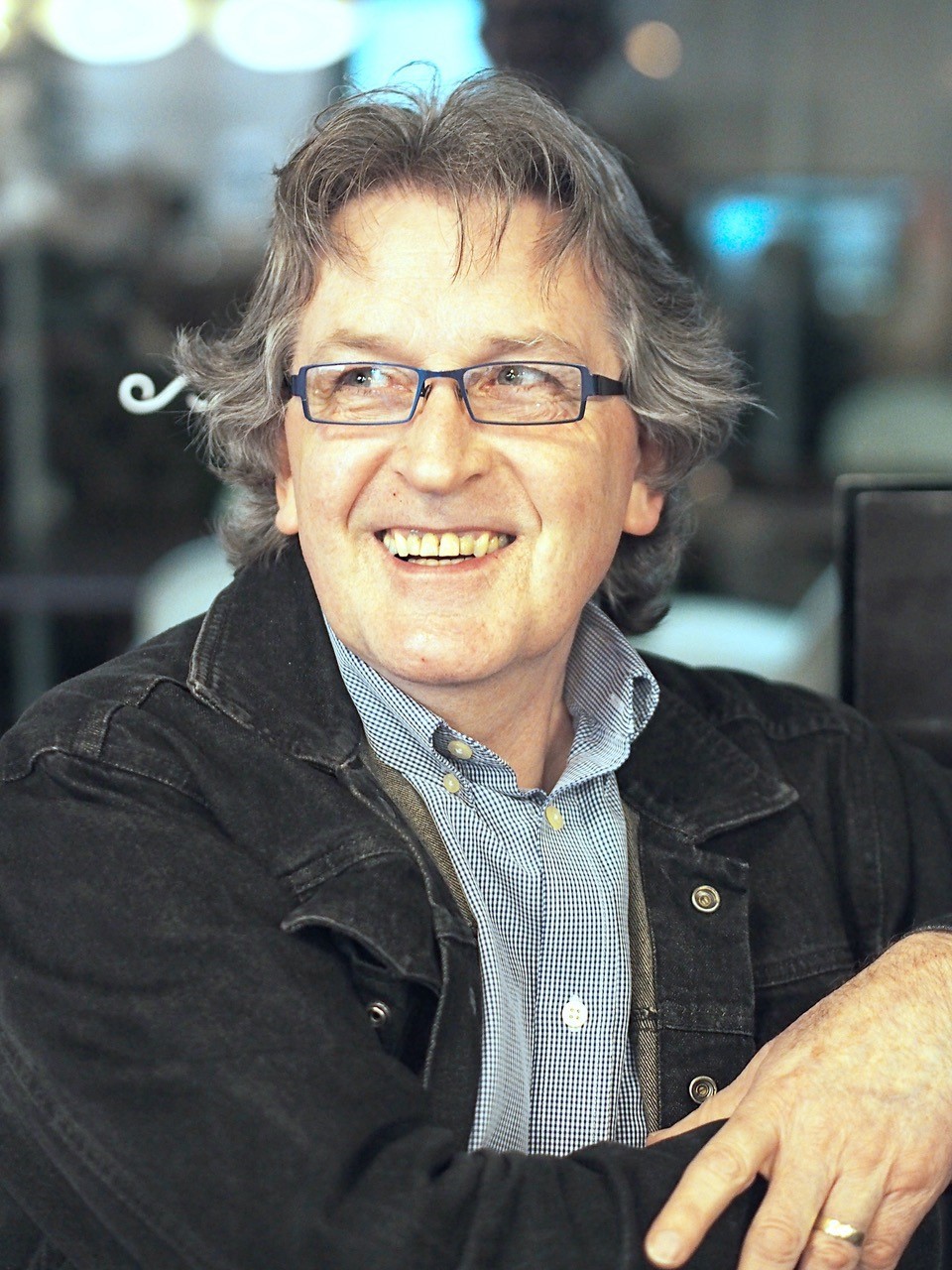
Steve Evans was Director of the Creative Writing Program and also Head of English at Flinders University for several years. He now runs community writing workshops.
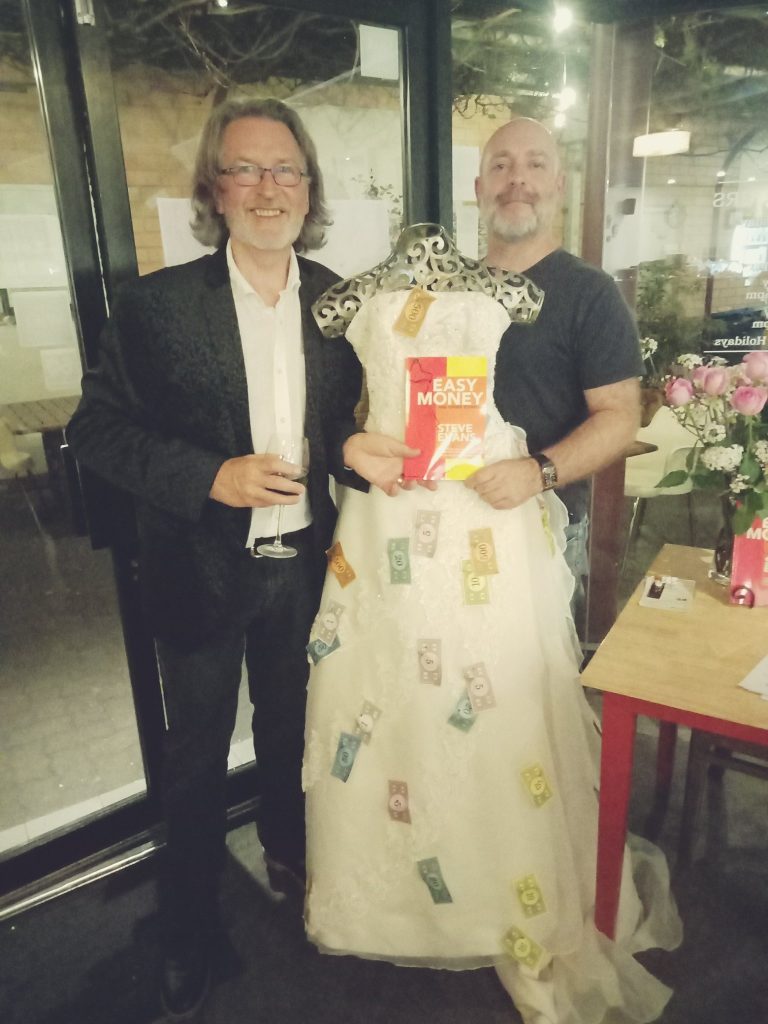
His own writing includes general adult fiction, romance, detective fiction, poetry and nonfiction. Major prizes include the Queensland Premier’s Poetry Prize and a Barbara Hanrahan Fellowship, and he has written or edited 18 books. Easy Money and Other Stories was launched in 2019.
Steve is also a reviewer, literary editor for an international journal, and has been on the organising committee for a number of literary festivals and arts panels.
ACKNOWLEDGEMENTS: Text, poems and images remain the property of Steve Evans.
Your support for Wattletales is welcome and appreciated Maria, thank you.
Agile metaphors: ‘water…performing reckless miracles of light’ and ‘sunset on the lungs’, detonate a chemical buzz in the brain. A lens into how creatives amalgamate their passion and their cash flow profession is helpful. A skilful, supportive mate, mentor or peer in a creative partnership and the synergistic effect on talent, and opportunities is priceless. I feel very blessed to have experienced that synergy of creating and delivering five ‘Your Story Life Writing Workshops’ with Steve from 2019 -2021. Fruitful teamwork. Thank you Lindy also for your invaluable insights and mentoring and to Friendly Street Poets for their support. Our achievements are built on the convergence of so many connections and supports.
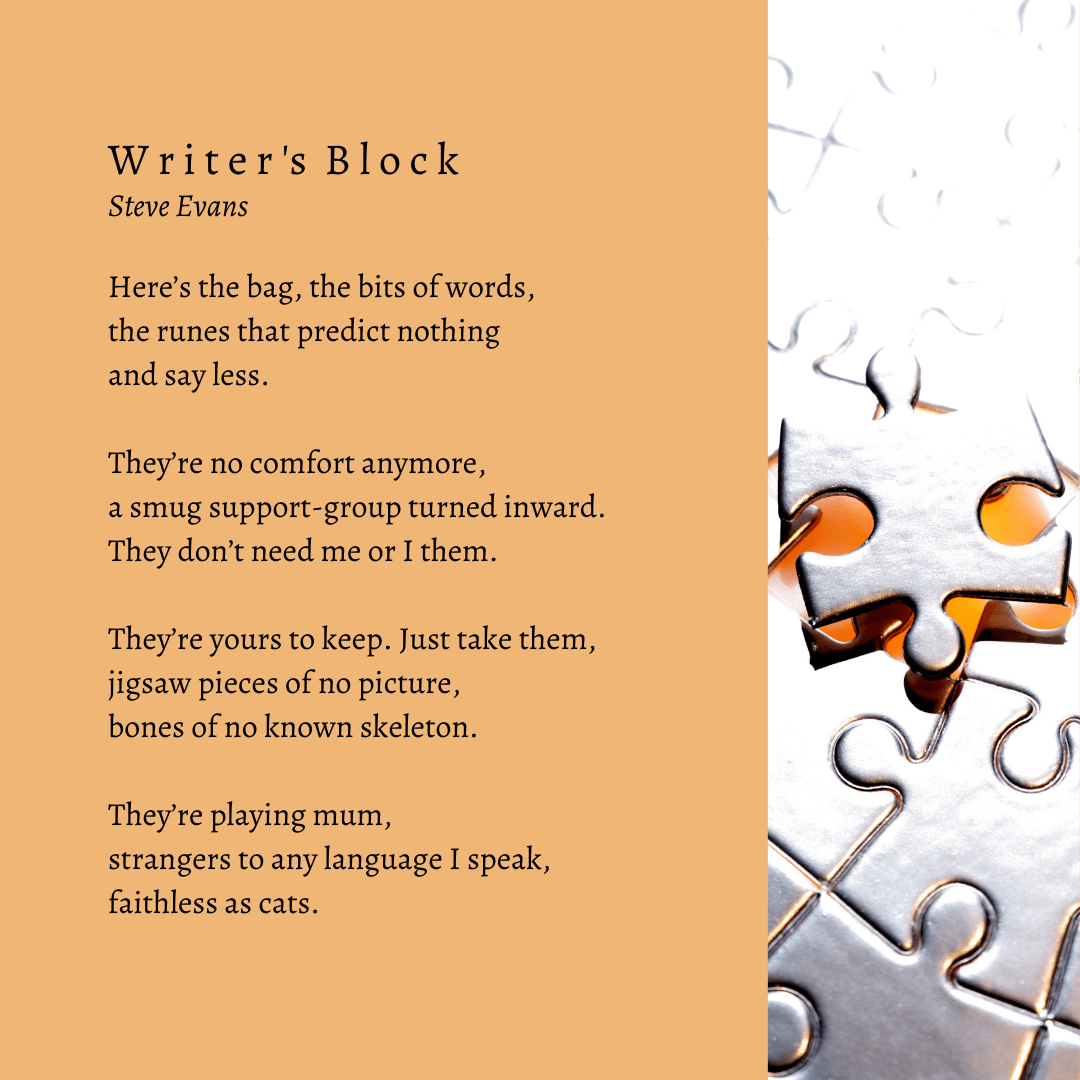
Steve, I loved your piece and can relate to much of what you say, though your writing is in another league entirely. Your poems ‘Writers Block’ and ‘In the Pink’ I especially enjoyed. The whole is interesting and I wanted to keep reading. I hadn’t ever heard of parents buying old cars to keep in backyards for kids to play in. Our family had difficulty just having a car for everyday use. You are obviously in the right place, doing just what you’ve always been meant to do.
Thanks, Veronica
Steve, what a great piece. I love the wry humour in Writer’s Block. And the phrase ‘sunset on the lungs’ about the Whyalla pellet-plant. Your childhood and life made you born to write. So, glad you ditched accounting!
Some people shine uninterrupted light into dark corners and Steve Evans has been such a man for me (and I suspect others). I remain indebted to his noble authority and this self-portrait is a mere scratch.